DD
MM
YYYY

PAGES

DD
MM
YYYY

spot_img

PAGES

Home Blog Page 3155

Dangote Refinery is 45% Completed, Not Licensed Yet – NMDPRA

0

Farouk Ahmed, Chief Executive of the Nigerian Midstream and Downstream Petroleum Regulatory Authority (NMDPRA), has cautioned against over-reliance on products from the Dangote Refinery, highlighting significant issues that are stymieing the operation of the multi-billion dollar oil plant.

Despite high expectations, the refinery has struggled to operate at full capacity, repeatedly delaying its market debut, with the latest postponement pushing the launch to August. This situation suggests that the facility faces considerable challenges in providing the stable, high-quality output that many had anticipated.

Elaborating on his warning, Ahmed noted several critical concerns regarding the Dangote Refinery’s current status. He said the refinery remains in the pre-commissioning stage and has not yet received its operating license.

“We haven’t been licensed yet,” Ahmed stated, adding that the refinery is still in its preliminary stage.

“I think we have about 45% completion,” he said.

Farouk further noted that the refinery’s current Automotive Gas Oil (AGO) production falls short of West Africa’s sulfur content requirement of 50 parts per million (PPM).

“Dangote Refinery, along with other major refineries, produces between six hundred and fifty to one thousand two hundred PPM. Therefore, in terms of quality, their products are inferior to imported ones,” he said.

One of the significant issues raised by Ahmed is the potential monopoly that Dangote Refinery could create in the Nigerian market. He pointed out that Dangote had requested a suspension or cessation of imports of AGO and Dual Purpose Kerosene (DPK), demanding that all marketers rely solely on his refinery.

“That is not good for the nation in terms of energy security, and it is not good for the market because of the monopoly,” Ahmed warned.

This request to monopolize petroleum products alludes to the belief that Dangote’s industries thrive primarily on state-backed monopolies, and wouldn’t compete in a free market.

Clashes with Other Oil Sector Stakeholders

Meanwhile, Dangote Industries Limited (DIL) has been involved in disputes with other stakeholders in the oil sector, accusing them of sabotaging its efforts to operate at full capacity. For instance, DIL has criticized the Nigerian Upstream Petroleum Regulatory Commission (NUPRC) for claiming that International Oil Companies (IOCs) are willing to sell crude oil to domestic refiners.

This comes after Dangote alleged that IOCs are not willing to sell to local refiners, compounding his refinery’s struggle to source crude oil.

Devakumar Edwin, Vice-President at DIL, directly contradicted NUPRC CEO Gbenga Komolafe’s statement, asserting that the Petroleum Industry Act (PIA) ensures a “willing buyer-willing seller relationship” for crude.

Edwin explained that while only one local producer, Sapetro, sells directly to DIL, others rely on non-Nigerian trading arms that add unnecessary costs.

“These international trading arms are non-value adding middlemen who sit abroad and earn margin from crude being produced and consumed in Nigeria. They are not bound by Nigerian laws and do not pay tax in Nigeria on the unjustifiable margin they earn,” Edwin said.

Edwin recounted instances where IOCs’ trading arms refused direct sales, insisting on involving middlemen, which led to protracted negotiations until NUPRC intervention. He noted that these trading arms prioritize foreign buyers, leaving Nigerian refiners waiting.

“The trading arm of one of the IOCs refused to sell to us directly and asked us to find a middleman who will buy from them and then sell to us at a margin. We dialogued with them for nine months and in the end, we had to escalate to NUPRC who helped resolve the situation,” he added.

Edwin also highlighted that IOCs consistently hinder DIL’s access to local crude, often offering it at a premium of $2-$4 per barrel above the official price set by NUPRC. In April, DIL paid $96.23 per barrel for Bonga crude, including a $5.08 NNPC premium and a $1 trader premium. In contrast, they bought West Texas Intermediate (WTI) crude at a significantly lower premium of $0.93 per barrel.

Speaking of solutions, Edwin stressed the need for the NUPRC to re-evaluate pricing policies to prevent price gouging and ensure a transparent and efficient crude supply system. He urged the NUPRC to address these pricing issues to prevent monopolistic practices and ensure fair competition in the market.

The repeated delays in Dangote Refinery’s market debut and the ongoing quality and supply chain issues, have raised concerns about its ability to meet Nigeria’s energy needs reliably. Also, its struggle to secure a sufficient crude supply at competitive prices further complicates its operational challenges.

These backdrops have put the refinery’s ability to sustain operations and deliver high-quality products independently in question.
Nigerian Government and Labor Unions Settle on N70,000 Minimum Wage for Nigerian Workers

0

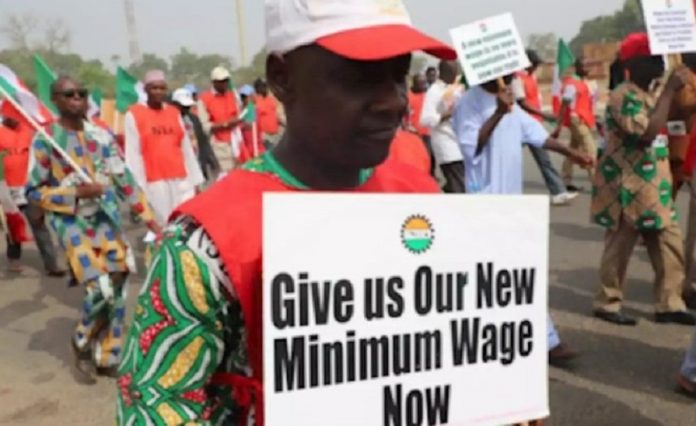
The Federal Government of Nigeria and organized labor unions have agreed on a new minimum wage of N70,000 for Nigerian workers. This decision was reached after extensive negotiations and a nationwide strike by labor unions demanding better pay and working conditions.

The announcement was made on Thursday following a crucial meeting between President Bola Tinubu and leaders of the Nigeria Labour Congress (NLC) and the Trade Union Congress (TUC) at the State House, Abuja.

The Minister of Information and National Orientation, Mohammed Idris, briefed newsmen about the outcome of the meeting, confirming that both parties had agreed on the new minimum wage.

Idris also noted that subsequent reviews of the minimum wage would now occur every three years, as opposed to the current five-year interval.

Before this agreement, the Federal Government had initially offered N62,000 as the new minimum wage. But labor unions demanded N250,000, a substantial increase reflecting the rising cost of living in the country.

The journey to this new minimum wage has been fraught with tension and conflict. Labor unions have been vocal about their dissatisfaction with the previous salary, leading to several rounds of negotiations.

Backstory

Earlier this year, labor unions embarked on a nationwide strike to protest the inadequate wages and poor working conditions faced by many Nigerian workers. The strike action was aimed at pressuring the government to address the dire economic situation and implement a more livable minimum wage.

Comrade Joe Ajaero, President of the NLC, stated, “We had to take to the streets to make our voices heard. Nigerian workers deserve better pay, and we will not stop until we achieve that.”

The strikes caused significant disruptions across the country, affecting various sectors of the economy and highlighting the critical need for a resolution.

In response to the strikes and mounting pressure, the Federal Government proposed increasing the minimum wage to N62,000. However, labor unions rejected this offer, deeming it insufficient given the economic realities faced by workers.

“The government’s initial offer was not enough. We need a wage that reflects the current cost of living and allows workers to live with dignity,” said Comrade Festus Usifo, President of the TUC.

Challenges with Implementation at State and Local Govt. Levels

The major challenge of implementing the N70,000 minimum wage lies with the states and Local Government Areas (LGAs), many of which have been vocal about the unsustainability of such an increase. The previous minimum wage of N30,000, which expired in April, had not been fully implemented by many states, citing financial constraints.

Currently, several state governments have argued that their revenues are insufficient to meet the new wage demands. This has raised concerns about the practical implementation of the N70,000 minimum wage across the country.

Following the meeting at the Presidential Villa, labor leaders who had insisted on an N250,000 minimum wage, said they had accepted the offer because of the other incentives attached and the president’s promise of a review every three years.

These incentives are expected to include various measures to alleviate the financial burden on workers and improve their overall welfare. The specifics of these incentives have yet to be fully detailed but are anticipated to address critical areas such as housing, healthcare, and transportation.

While the new minimum wage is a better offer toward improving the living standards of Nigerian workers, its successful implementation has presented a fresh challenge that many states will find difficult to tackle.

Although there has been an increase in federal allocations to states and local governments, stakeholders have said that only a few states in the country can fully implement an N70,000 minimum wage.

The implementation is deemed more challenging in the light of a recent Supreme Court ruling, which upholds the autonomy of local governments, ordering that their allocations be wired directly into local governments’, not state accounts.

Against this backdrop, there is mounting concern that most LGAs will not be funded enough to implement the new minimum wage.

However, compared to several other African countries, the N70,000 minimum wage, which is only $43, is considered poor by many Nigerians who also noted that it can’t buy up to a bag of rice.

“In 2014 it was 18k equivalent to $100 and could buy you 3 bags of rice (you can start a rice retail business with that),” a concern Nigerian posted on X.

“Today at N70k it’s equivalent to $42 & can’t buy you a bag of rice, this is the definition of regression…”

Central Bank of Nigeria (CBN) Announces Sales of $21m to BDCs As the Naira Hits N1600/$1

0

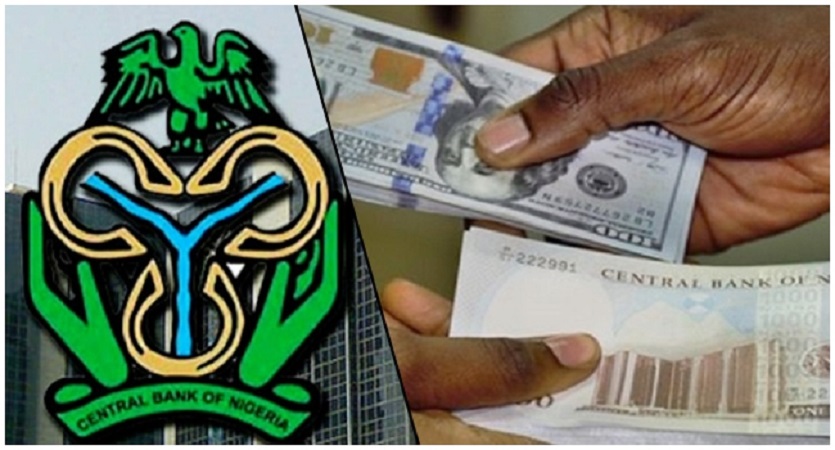
In another move to cool the mounting pressure on the naira, the Central Bank of Nigeria (CBN) has approved the sale of foreign exchange (FX) to eligible Bureau De Change (BDCs).

This decision comes amidst soaring exchange rates, which saw the naira hitting a staggering N1600/$1 on Thursday. The CBN’s latest intervention aims to meet the demand for invisible transactions and curb the volatility in the FX market.

The apex bank, in a circular signed by A. A. Mahdi, Acting Director of Trade and Exchange, announced that $20,000 would be sold to each BDC at a rate of N1,450/$1. This rate represents the lower band of the trading rate at the Nigerian Autonomous Foreign Exchange Market (NAFEM) from the previous trading day.

The approved rate for BDC sales is intended to stabilize the naira and ensure that FX is available for legitimate transactions.

“Following the ongoing reforms in the foreign exchange market, with the objective of achieving an appropriate market-determined exchange rate for the Naira, the Central Bank of Nigeria (CBN) has observed the continued distortions in the retail end of the market, which is feeding into the parallel market and further widening the exchange rate premium,” the circular read.

To prevent excessive profiteering, the CBN has mandated that BDCs sell FX to eligible end-users at a margin not exceeding 1.5% above the purchase rate from the CBN. This means BDCs can make a maximum profit of N21.75 per dollar sold.

Background of CBN’s FX Interventions

This measure marks the fifth attempt by the CBN to sell FX to BDCs following a prolonged suspension in 2021. The initial ban was lifted earlier this year after the revocation of licenses for over 4,173 BDC operators in February. The sales timeline is as follows:

  • February 2023: The CBN sold $20,000 to each BDC at a rate of N1,301/$.
  • Second Attempt: The allocation was reduced by 50%, with FX sold at N1,251/$1.
  • April 2024: The CBN conducted two sales, first offering $10,000 at N1,101/$1, and then another $10,000 at N1,021/$1.

The current rate of N1,450/$1 is the highest at which the CBN has sold FX to BDCs this year, highlighting the naira’s significant depreciation.

However, the CBN’s strategies, including injections of dollars into the FX market, have struggled to tame market volatility. The disparities between the official and parallel market rates have continued to widen, with the margin reaching up to N200 sometimes.

The current measure, involving the sale of $20,000 to each of the 1,583 approved BDC operators, means an injection of approximately $21.58 million into the retail end of the market.

The Unending FX Market Challenges

The Nigerian FX market has been plagued by significant challenges, including speculative trading, demand-supply mismatches, and economic uncertainties. Efforts by the CBN to manage the market through various interventions have met with limited success, often only providing temporary relief.

Market analysts believe that the consistent pressure on the naira is partly due to structural issues within the Nigerian economy, including dependency on oil revenues, foreign exchange reserves management, and macroeconomic policies. The continuous rise in exchange rates has compounded inflation, particularly affecting food prices, and has put additional strain on businesses and consumers.

While the CBN’s latest move is seen as a critical step toward stabilizing the FX market, experts have argued, for a long-term solution, that more comprehensive economic reforms are needed. These include diversifying the economy, improving local production capacities, and implementing policies that attract foreign investments.

In the immediate term, analysts say the success of this intervention will depend on the ability of the CBN to effectively monitor and regulate the activities of BDCs to prevent abuse and ensure that FX reaches the intended end-users.

Nigeria’s Big Problem With JAMB Cut-off Mark of 140 (out of 400) for Universities

2

Nigeria’s Joint Admissions And Matriculation Board (JAMB)  has pegged the 2024/2025 admission cut-off mark for universities, and polytechnics & Colleges Of Education, at 140 and 100 respectively. Sure, some leading federal universities will likely put the numbers at around 190 even as the Board will be doing all possible to ensure some forgettable schools do not admit below 140. The highest score possible is 400.

First, I admire the current leadership of JAMB. The team has served Nigeria on many domains. Yet, I have a question: why should Nigeria make its pass mark 35% to be admitted into its universities? At least when we wrote JAMB, the typical cut-off was 210. Yes, there was a pass in the exam. So, reading this era of 140 is unfortunate.

And the most troubling: our future teachers are expected to pass with 25% when those going to work in fintechs, banks, etc will need at least 35%. How does that help Nigeria? Does it mean that teachers are not expected to be average?

 Without the online agents attacking my view, I have two simple suggestions: 

-Nigeria must hire independent consultants to see if JAMB is setting a standard these kids cannot meet, for us to be giving admission to a 25% score.

-If the consultants determine that the exams are just at parity, JAMB must push for a new power to set a minimum pass mark of 50%. 

Unless we take a stand, we are in a vicious cycle where we are not pushing kids to aim more and pass exams with at least 50% score.

OpenAI Unveils Mini Version of Its Most Advanced Model

2

Open AI, an Artificial Intelligence Company and maker of popular AI Chatbot ChatGPT, has launched a new model “GPT-4o mini”, marking the company’s latest effort to expand the use of its popular chatbot.

Described as “the most capable and cost-efficient small model available today”, OpenAI plans to integrate image, video, and audio capabilities into the GPT-4o mini in the future.

The mini AI model is an offshoot of GPT-4o, OpenAI’s fastest and most powerful model to date, which was launched in May this year. The “o” in the GPT-4o stands for “Omni”, and this model boasts improved audio, video, and text capabilities, with the ability to handle 50 different languages with enhanced speed and quality.

OpenAI announced that GPT-4o mini is available starting Thursday to free users of ChatGPT, along with ChatGPT Plus and Team subscribers, and also disclosed that it will be available to ChatGPT Enterprise users next week.

Key Features of GPT-4o Mini

1. Size and Efficiency:

Miniaturized Model: GPT-4o mini is designed to be a smaller, more efficient version of GPT-4o. This makes it suitable for devices with limited computational resources, such as smartphones and loT devices.

Optimized Performance: Despite its smaller size, it maintains a high level of performance, offering a balance between computational efficiency and output quality.

2. Applications:

Wider Accessibility: The mini model can be deployed in a broader range of applications, including mobile apps, smart home devices, and edge computing scenarios.

3. Capabilities:

Natural Language Understanding: It retains advanced natural language understanding capabilities, making it effective for tasks such as text generation, translation, summarization, and conversational Al.

4. Deployment:

Cloud and Edge Compatibility: The model can be deployed both in the cloud and at the edge, offering flexibility in how and where it is used.

Integration: OpenAl provides tools and documentation to help developers integrate GPT-4o mini into their applications seamlessly.

By offering a smaller model, OpenAl aims to democratize access to advanced Al, enabling more developers and companies to utilize cutting-edge technology. The development of a miniaturized model demonstrates OpenAl’s commitment to innovation, pushing the boundaries of what is possible with Al while addressing practical deployment challenges.

This move is likely to accelerate the adoption of Al across various industries, as the reduced computational requirements lower the barrier to entry. The introduction of GPT-4o mini reflects a broader trend in the Al industry towards creating more efficient, scalable, and accessible Al solutions.

There is no doubt that the competition in the Al chatbot space is intensifying as companies like OpenAl continue to roll out updated versions of their products.  As advancements in artificial intelligence accelerate, more companies are entering the market with innovative chatbot solutions, each striving to offer unique features and enhanced capabilities.

OpenAl, a pioneer in the field, has been at the forefront of this competition with its powerful models, such as GPT-4 and the recently launched GPT-40 mini. These models have set new standards for Al performance, incorporating advanced capabilities in text, audio, video, and multilingual support.

By continuously updating and improving its models, OpenAl aims to maintain its leadership position and attract a diverse user base ranging from individual users to large enterprises.