DD
MM
YYYY

PAGES

DD
MM
YYYY

spot_img

PAGES

Home Blog Page 3171

Russia to Legalize Crypto and Blockchain Mining

0

Russia is set to embrace the digital currency revolution by legalizing cryptocurrency and blockchain mining, a move that could redefine its financial landscape. This legislative shift is not merely a nod to the burgeoning crypto industry but a calculated response to the increasing sanctions that have pressured the nation’s economic transactions on the global stage.

The State Duma, Russia’s lower house of parliament, is poised to review and likely approve a bill that will regulate cryptocurrencies similarly to foreign currency within its jurisdiction. This bill, alongside separate legislation on crypto mining, is expected to pass swiftly through the legislative process and be enacted by September 1. Anatoly Aksakov, head of the Duma’s financial market committee, has expressed confidence in the draft laws, highlighting that cryptocurrencies are an “objective phenomenon” that cannot be ignored.

The urgency of these measures is underscored by the United States’ threats of secondary sanctions on foreign banks, which have complicated Russia’s ability to engage in foreign payments. In response, Russian lawmakers have passed a bill permitting businesses to use Bitcoin and other cryptocurrencies in international trade, while maintaining the ban on crypto payments within the country. This selective legalization aims to leverage the decentralized nature of cryptocurrencies to bypass geopolitical barriers and sustain international trade flows.

Moreover, the Central Bank of Russia, which had previously proposed a blanket ban on cryptocurrencies, has softened its stance. The bank now supports the experimental use of cryptocurrency and mining in cross-border settlements, albeit with a cautionary note against public promotion of digital currency services by financial organizations. This change in policy reflects a pragmatic approach to overcoming challenges in international payments, exploring all options, including those previously considered unpopular.

El Salvador has proposed using Bitcoin for trade operations with Russia. This initiative comes as a strategic response to navigate around the extensive economic sanctions imposed on Russia, offering a glimpse into the future of international trade where cryptocurrency plays a pivotal role.

El Salvador, which made headlines in 2021 by becoming the first country to adopt Bitcoin as legal tender, continues to embrace the cryptocurrency as a means to diversify its financial options and strengthen its economic independence. The country’s proposal to use Bitcoin in trade with Russia is not only a testament to its commitment to cryptocurrency but also reflects its neutral stance on the Russia-Ukraine conflict.

The recent legislative developments in Russia, which include the legalization of Bitcoin mining and the allowance of cryptocurrencies for international trade, align well with El Salvador’s proposal. This synergy could pave the way for a new era of trade relations that bypass traditional financial markets and offer countries like El Salvador an opportunity to forge new pathways in the global financial landscape.

El Salvador’s approach is indicative of a larger trend where nations are exploring the potential of digital currencies to solve complex trade challenges. As the world watches, the country’s experiment with Bitcoin could set a precedent for how nations engage in trade negotiations and manage international relations in an increasingly digitalized economy.

The legalization of crypto mining is particularly noteworthy, as it could catalyze the establishment of a domestic cryptocurrency market. With Russia’s vast energy resources, the country has the potential to become a significant player in the global crypto mining industry. This move is expected to attract investments, boost the crypto sector, and address issues related to energy consumption and illegal activities associated with unregulated mining operations.

As the world watches, Russia’s legislative foray into cryptocurrency and blockchain mining could set a precedent for other nations grappling with similar economic sanctions. By legalizing these digital assets, Russia is not only seeking to mitigate the impact of sanctions but also positioning itself at the forefront of a financial paradigm shift. The implications of this decision will reverberate through the global economy, potentially altering the dynamics of international trade and finance.

As Russia charts its course through uncharted financial waters, the world awaits the ripple effects of its bold embrace of cryptocurrency and blockchain technology. The full impact of this legislative change remains to be seen, but one thing is clear: the digital currency landscape is evolving, and nations are beginning to recognize the transformative power of blockchain and crypto assets.


Stacks (STX) and Filecoin (FIL) Continue to Lose Investors to DTX Exchange (DTX) After Lackluster Performance

0

Due to their lackluster performance, Stacks (STX) and Filecoin (FIL) investors are shifting to other potential opportunities. Stacks (STX) is down around 50% from its all-time high and is currently trading at $1.93; similarly, Filecoin (FIL) has crashed and is down 60% from its recent high.

Meanwhile, the DTX Exchange is seeing a huge inflow into the presale from the investors of Stacks (STX) and Filecoin (FIL). According to the transaction reports, more and more investors are booking their positions in STX and FIL and shifting to the DTX Exchange, which they see as a much better opportunity.

Stacks (STX) Trading At A Major Resistance of $2

Stacks (STX) showed good strength during the recent price recovery but is now again stuck at the price resistance of $2. This level has worked as both resistance and support, which makes it a key level to watch. Stacks (STX) is still below the 200-day moving average, which is the indicator of long-term price movement. If the price has to start its new upswing it has to cross the 200-day moving average.

When we look at the fundamentals, the Stacks (STX) Network stands out with its unique identity, which has significantly boosted its market value. Stacks are connected to the blockchain network and use the Proof-of-Transfer (PoX) algorithm. This algorithm is practical because stakers can earn Bitcoin by holding Stacks (STX ) in their wallets.

Is Filecoin (FIL) Headed For An All-Time High?

Filecoin (FIL) is one of the worst crypto performers of all time. Filecoin (FIL) has decreased around 98% from its all-time high, and now the price is showing signs of weakness again. The $3.35 level is working as major support for Filecoin (FIL), and the immediate resistance is the $4.82 level.

The Filecoin (FIL) price drop occurred for several reasons. Negative market sentiment and increased regulatory scrutiny played a big part. Tough competition from other decentralized storage networks also added pressure. On top of these, any performance issues within the Filecoin (FIL) network, like slower adoption or technical challenges, can shake investor confidence.

DTX Exchange Gaining More Holders Everyday

Amid the slow market price action and coins like Stacks (STX) and Filecoin (FIL) showing weak price action, the DTX Exchange now has more than 7,000 holders. This number came out after the DTX Presale crossed $1.1 Million mark in just under two months.


DTX Exchange is a revolutionary trading platform offering access to over 120,000 assets with leverage up to 1,000 times. It ensures complete anonymity since it doesn’t require KYC checks during registration.

The platform runs on the DTX token, which offers several benefits to its holders. These perks include priority customer support, the ability to vote on governance issues by staking tokens, and lower trading fees. These incentives have proven to be attractive, with millions of DTX tokens already sold.

DTX Exchange’s ongoing presale has successfully raised over $1,100,000 and is expected to reach $2 million by the end of August 2024. Early investors have already enjoyed a 100% return on investment, and this figure is likely to increase as the presale continues.

Learn more:

Visit DTX Presale

Read Whitepaper

Join The DTX Community

Nigeria’s Evolving Policy Evolution As The Nation Decides To Subsidize Food

1

Comment: Sir, why do you call this food distribution subsidization by the Nigerian government a “good policy” considering that a more sustainable thing would have been to give the resources to farmers to produce food?

My Response: For me, it is a good policy because in the short term and today, people need to eat. Anything that can help people will have food is a positive. More so, we funded farming at the highest in the history of Nigeria (by amount of money given to farmers), yet, we ended up with mass hunger in the communities of farmers. Simply, there is no evidence that billions of Naira which Nigeria put in “briefcase” farmers added any value to Nigeria’s food security. 

Today, people are hungry. Subsidizing food (they’re not giving it free) is a good policy because we have been making points that Nigeria must find something to subsidize. Recall that in June last year, the government made a point that subsidies would be removed in our economy. I have argued that no nation runs that way, as you must find something to subsidize.

Nigeria decided to remove the forex (Naira/USD) subsidy. Nigeria went and removed fuel subsidies.  Nigeria also decided to remove electricity subsidies. My position was that if you remove those subsidies, you would destroy the economy and cause massive hunger in the land. Why? These things are related and no nation, I repeat, runs a 100% market-driven economy. 

But over months, the nation did not shift even though we knew that fuel subsidy was modulated (the price was not correlating with forex movement). Nothelessless, subsidies were removed across the sectors. With those subsidies gone, the economy froze: more than 3,00 companies collapsed and Nigeria lost N1.7 trillion revenue from them in 2023. Then, with whatever they were making gone, inflation hit, as demand remained high in the economy.

But yesterday, Nigeria brought back fuel subsidies, but instead of the old traditional subsidies at the pump, it decided to subsidize crude oil for local refineries as it would cover whatever deviation the Naira payment on US dollar would have been with its joint venture partners.

And today, it brought food subsidies. While the amount of food is nothing, the key is this change in policy, and acknowledging that pragmatism must drive policy, over political purity and orthodoxy. So, it is a good policy; 10 trucks per state mean nothing, I expect Nigeria to be flooded with food because Nigeria must subsidize food. 

Yes, if those trucks are not enough, people will ask for more. Get me right: every country subsidizes things and Nigeria cannot be an exception. But where it has decided to pick food, it needs to flood Nigeria with food. 

My preference would have been energy and fuel: subsidize for manufacturers so that they can reopen their companies and improve supplies in the market. But today, I am fine with food.

THORChain and Jupiter Prices Soar While This New Exchange Token Can Leave Competitors in the Dust

0

Amid Bitcoin price recovery and Ethereum ETF launch hype, the crypto market is displaying a notable uptrend. Leading the trend are exchange tokens like THORChain (RUNE) and Jupiter (JUP), which have bullish price gains and promising predictions from several market experts.

Parallel on the road is the emerging DTX Exchange (DTX), ready to compete with existing DEX exchanges like THORChain (RUNE) and Jupiter (JUP) with a hybrid trading model and a suite of cutting-edge tradFi features, powered by Artificial intelligence.

Let’s explore the price performance of THORChain (RUNE) and Jupiter (JUP), with the brighter prospects of DTX Exchange that poise it to become the next biggest marketplace in the tradFi sector.

Jupiter (JUP) Price Leads Amid New Token API Launch

Jupiter (JUP) has emerged as the top performer in the ongoing market rally after the launch of its new Ecosystem Token API, aiming to transform token data accessibility. By August 2024, the JUP team plans to phase out its old APIs and encourage users to adopt the latest technologies and the new system.

Moreover, Jupiter’s (JUP) price is believed to make notable strides as the community a reduction in the supply of JUP tokens. According to a recent announcement by the co-founder of Jupiter, known as Meow, a proposal has been submitted to reduce the Jupiter (JUP) supply by 30% which currently lies at 10 billion tokens.

These trendlines have pushed the JUP token under the spotlight with explosive gains. The token price has soared by 12% in the last 24 hours and displays 36% gains on the monthly chart. After closing way above the $1 support level, market experts believe that the Jupiter (JUP) price will display a bullish rally beyond $2 in the upcoming days.

THORChain (RUNE) Displays Resilience With 15% Monthly Gains

THORChain (RUNE) displays a promising trendline with 15% gains on the monthly chart. While the RUNE token is facing fears as it tries to surge past the $4.75 resistance, analysts predict a promising trendline following the community demands about the exchange’s top features, including smooth cross-chain transactions and decentralized liquidity management.

Despite surging bearish sentiments, THORChain (RUNE) indicates bullish potential with an RSI value of 60 and exponential moving averages all indicating a strong buying signal. THORChain (RUNE) price is ready to display a massive showdown as the price navigates through the $4.75 resistance toward a $5 price level.

1000x Leverage DTX Exchange (DTX) Becomes The Next Jackpot

Security and gas fee concerns are not unique to Jupiter (JUP) and THORChain (RUNE) marketplaces but to many other deFi exchanges. Such an ecosystem reduces trader growth and downgrades the reliability of exchanges, triggering poor token performance and a declining user base.

The hybrid model and ability to eliminate security and gas fee concerns sets DTX Exchange (DTX) apart from Jupiter (JUP) and THORChain (RUNE) exchanges. The platform leverages the features of blockchain layer-1 along with robust security protocols to help traders seamlessly navigate through markets of their choice without any security risks.

DTX Exchange (DTX) aims to transform the traditional trading approaches, offering an all-in-one trading solution. The platform boasts 120k+ assets from diverse financial markets including forex, cryptos, stocks, equities, and CFDs with lightning-fast execution speed and AI-powered automation strategies, empowering traders to take up to 1000x leverage for maximum gains with minimum capital.

DTX Community Celebrates $1 Million Presale Milestone

As global investors shift focus to DTX Exchange’s cutting-edge technologies features, the project has raised a mind-blowing $1.1 million in batch 2 of the public presale. The project is poised to become the next biggest exchange due to its scalable and robust infrastructure with advanced and revolutionary strategies and industry-relevant technologies.

The DTX token is ready to skyrocket after its anticipated Q4 CEX listing, potentially reaching beyond $1, promising 100x returns to early stakeholders. Emerging among leading exchanges in diverse financial markets, DTX tokens will become major stakeholders in the crypto sector, promising sky-high gains.


Learn more:

Visit DTX Presale

Join The DTX Communit

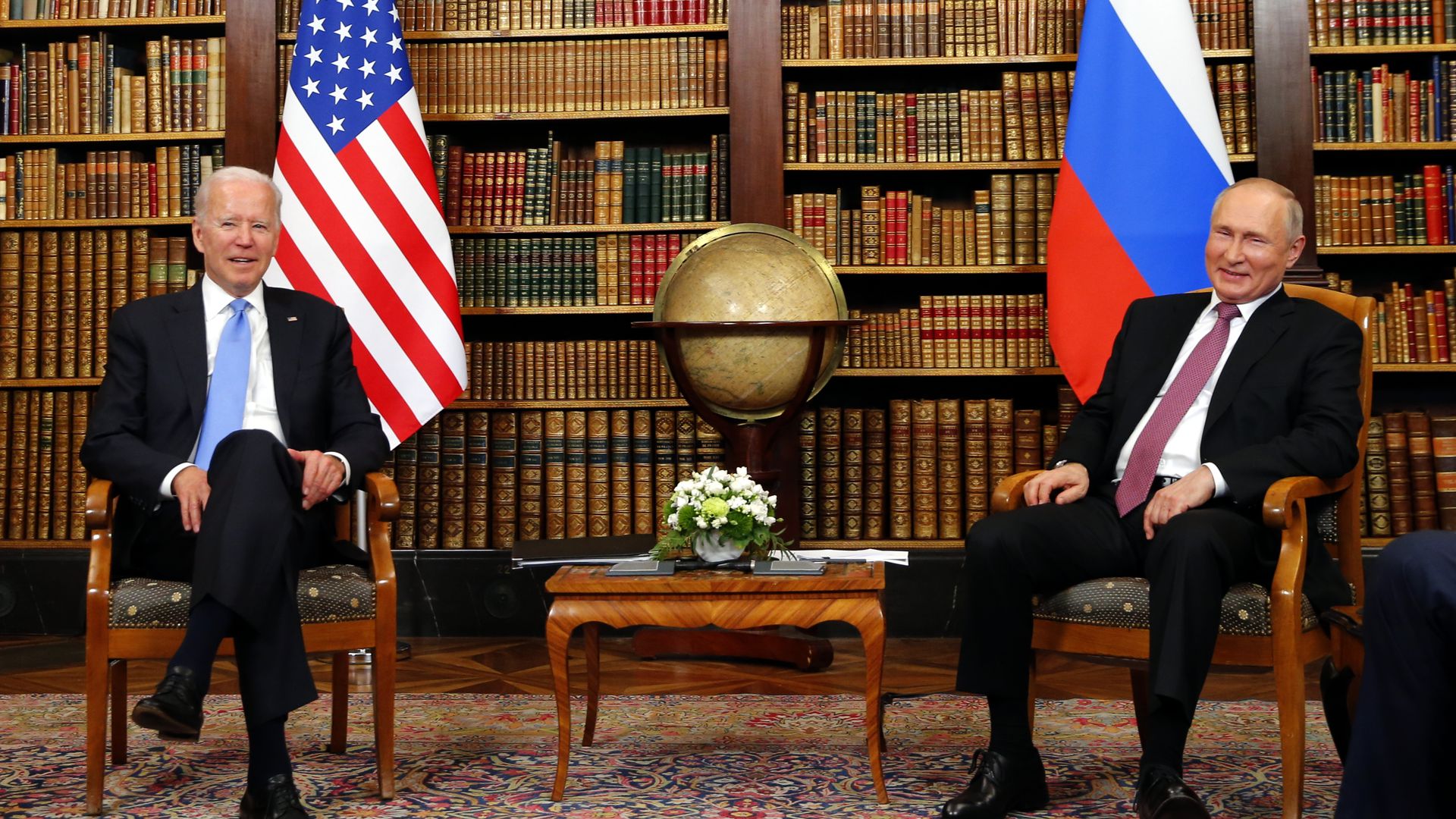
Analyzing the Tensions Between Russia and the West

0

The recent developments in the geopolitical landscape have brought to the forefront the delicate balance of power between Russia and Western nations. The announcement by the United States of its plans to station missiles in Germany has elicited a stern response from Russian President Vladimir Putin, who has vowed to take “mirror measures” in retaliation.

This situation harks back to the Cold War era, where a similar arms race and display of military might between the U.S. and the Soviet Union characterized international relations. The dissolution of the Intermediate-Range Nuclear Forces (INF) Treaty, which had been a cornerstone of arms control since 1987, has opened the door for both nations to potentially deploy intermediate-range ground-based weapons that were previously banned.

Putin’s warning came during a naval parade in St. Petersburg, where he indicated that Russia may deploy new strike weapons as a counteraction to the U.S. plans. This development is a significant shift from the previously imposed unilateral moratorium on the deployment of such weapons by Russia.

The U.S. withdrawal from the INF Treaty in 2019, citing Russian violations, and the subsequent Russian withdrawal, has led to increased tensions and the possibility of a new arms race. The U.S. plans, as part of its commitment to NATO and European defense, include the deployment of SM-6 missiles, Tomahawk cruise missiles, and developmental hypersonic weapons in Germany by 2026.

The strategic implications of these developments are profound. The placement of U.S. missiles in Germany is seen by Russia as a direct threat to its national security, prompting Putin’s declaration that Russia would consider itself free from the constraints of the moratorium. The potential deployment of Russian strike weapons in response could alter the security dynamics of the entire European continent.

The situation is further complicated by the fact that most of Russia’s missile systems are capable of carrying either conventional or nuclear warheads, adding a layer of complexity to the already tense relations between the two powers. The mention of nuclear-capable weapons raises the stakes significantly, as it brings into question the specter of nuclear escalation and the dire consequences that would follow.

The international community watches with bated breath as these events unfold, hoping for a resolution that can avert a crisis reminiscent of the darkest days of the Cold War. The need for dialogue and diplomacy is paramount, as the alternative could have catastrophic implications for global security and stability.

The dialogue between the US and Russia, and the decisions that follow, will be closely watched by the international community. The hope is that through careful negotiation and mutual understanding, a new era of arms race can be averted, and a stable, peaceful geopolitical landscape can be maintained.

As the world grapples with these developments, it is essential to remember the lessons of history and the importance of maintaining a balance of power that favors peace and cooperation over conflict and confrontation. The coming months will be crucial in determining the trajectory of Russia-West relations and, by extension, the future of international peace and security.