DD
MM
YYYY

PAGES

DD
MM
YYYY

spot_img

PAGES

Home Blog Page 3176

OpenAI Buys Rockset to Advance AI Analytics Database

0

In a significant move that underscores the growing importance of AI in enterprise solutions, OpenAI has announced the acquisition of Rockset, a company renowned for its real-time analytics database technology. This acquisition marks a pivotal step for OpenAI as it seeks to enhance its retrieval infrastructure and make AI more helpful and accessible to users and developers across various industries.

Rockset’s technology is distinguished by its world-class data indexing and querying capabilities, which are essential for businesses that rely on real-time information. By integrating Rockset’s technology, OpenAI aims to empower companies to transform their data into actionable intelligence, thereby enabling them to build more intelligent applications and leverage AI to its fullest potential.

The acquisition, which was completed with OpenAI’s shares in a stock deal, valued Rockset at several hundred million dollars, reflecting the substantial value and potential Rockset brings to OpenAI’s enterprise offerings. This move is one of OpenAI’s largest acquisitions to date and is expected to significantly bolster its position in the AI market.

Here’s a simplified breakdown of how Rockset operates:

Data Integration: Rockset connects with various data sources such as transactional databases, event streams, or data lakes. This integration allows Rockset to ingest data continuously and in real-time.

Automatic Indexing: Once the data is ingested, Rockset automatically builds indexes on the latest data. These indexes are crucial for enabling fast search, aggregations, and joins, which are often required by applications that need to respond in real-time.

Serverless Data APIs: Rockset provides serverless data APIs that facilitate millisecond-latency queries. This means that developers can quickly build and scale applications without worrying about the underlying infrastructure.

Query Your Data: Users can run SQL queries across their datasets with ease. Rockset supports a variety of operations including joins, filters, and aggregations, all without the need for upfront schema definitions.

Build Data Applications: With the ability to query data directly, developers can create intelligent applications that leverage Rockset’s capabilities. For instance, applications like personalization engines, gaming leaderboards, and IoT apps can benefit from Rockset’s real-time data processing.

Brad Lightcap, COO of OpenAI, expressed enthusiasm for the integration, noting that “Rockset’s infrastructure empowers companies to transform their data into actionable intelligence. We’re excited to bring these benefits to our customers by integrating Rockset’s foundation into OpenAI products”. Similarly, Venkat Venkataramani, CEO of Rockset, highlighted the alignment of visions between the two companies and the shared goal of building safe and beneficial AI.

For existing Rockset customers, the transition is promised to be smooth, with assurances of no immediate changes and a commitment to ensuring a seamless process. This acquisition not only represents a strategic expansion for OpenAI but also signifies a broader trend in the AI industry towards consolidation and integration of technologies that can deliver more sophisticated and comprehensive AI-driven solutions.

As the AI landscape continues to evolve, partnerships and acquisitions such as this one will likely become more common, as companies strive to stay at the forefront of innovation and meet the ever-growing demands of the digital economy. OpenAI’s acquisition of Rockset is a testament to the company’s commitment to advancing AI technology and its applications, making AI more powerful and useful for everyone.

Flutterwave Recommits to Core Enterprise Payments And Remittance Services Amid Workforce Transition

0

Flutterwave, a leading African Fintech company, via a blogpost has announced a strategic shift in its operational focus to reinforce its core business and expand its growing remittance segment, Send App.

This decision which was made at the end of 2023 includes reallocating resources and restructuring teams to better capitalize on market opportunities. Consequently, as part of this strategic shift, Flutterwave faced the difficult decision to let go of 3% of its workforce.

Part of the blogpost reads,

“At Flutterwave, we’ve continued to build solutions that enable us to be the bridge between Africa’s payments landscape and the rest of the world, helping multinationals across the world drive growth in Africa and African businesses take flight across the world. By the end of 2023 we made a data-backed decision to recommit resources to our core business; enterprise payments. We also committed to doing more with our growing remittance segment; Send App. As a result, we have rebuilt the teams to more efficiently utilise the opportunities in these markets.

“Consequently, we’ve made the difficult decision to support the transition of 24 Wavers accounting for 3% of our workforce. These Wavers are some of the most hardworking people you’d meet. We put in the work and I can confidently say that at Flutterwave, we have a competent workforce where everyone actively contributes. But once the data and the business is pointing us to a specific direction, it would be counterproductive for us not to listen and create the right mechanisms to move faster on the opportunities awaiting us.”

Moving forward, Fluttereave assured a smooth transition for laid off employees, offering several support measures which includes;

Final Payment: An average of three months’ gross salary, based on the country of employment, along with monetized unutilized leave days.

Education and Training: Continued free access to professional training platforms for 12 months post-transition.

Career Support: Three months of free outplacement services.

Stock Options: An additional six-month vesting period for employees with stock options.

Healthcare: Three months of free healthcare.

Mental Health: Access to mental health and career coaching services for three months post-transition.

Notably, Flutterwave is also addressing employee concerns to remain competitive. The company is implementing a new compensation framework, featuring base pay adjustments and performance-based bonuses. The new compensation structure places the company at the 95th percentile for junior employees and 85th percentile for senior employees.

The payment giant aims to remain the payment gateway of choice for enterprise businesses expanding into and across Africa. It further announced plans to continue improving its solutions and strengthening our ability to give its customers the best-in-class services they deserve.

Looking ahead, Flutterwave plans to enhance its services and expand its team in key areas such as risk, compliance, engineering, and finance. The company is also preparing to operationalize new licenses for Send App to broaden its geographic reach.

Flutterwave remains committed to being the leading payment gateway in Africa, emphasizing its mission to impact future generations and create a lasting legacy.

Bitcoin Price Declines to Lowest in More Than A Month, Analysts Predict Bearish Price Action

0

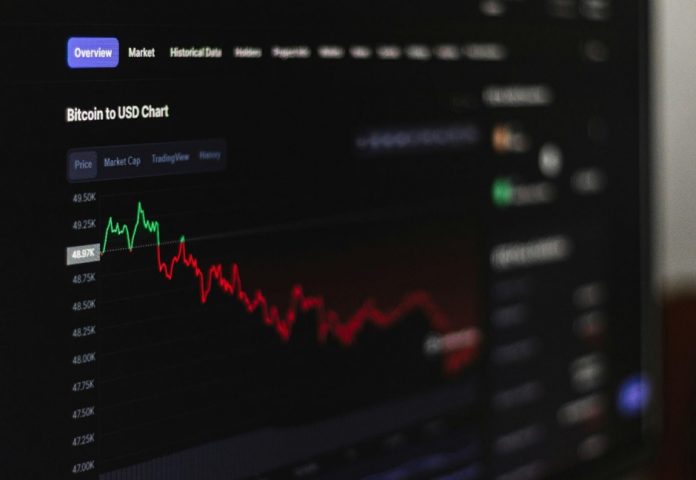
The price of Bitcoin has continued to decline over the past weeks, plummeting to its lowest in more than a month, at $60,860, before trading at $61k price, as analysts project a further plunge in price.

The falls have been reportedly spurred by sell-offs and significant dumping activity among some of the digital asset’s largest holders, and also due to negative ETF flows and poor macro data from prior weeks.

According to Whale Alert, which monitors the digital wallets of some of the world’s largest BTC holders, Bitcoin Whales have moved millions worth of treasuries. One Whale reportedly moved 10,500 BTC worth some $675 million on Saturday. Also, Whale Panda, another crypto whale tracker, noted that there have been 18 days of dumping among large BTC holders.

This has seen the price of the digital currency down by nearly 5% in the last seven days but remains on a +100% spike in the past year. On June 23, the average Bitcoin transaction fee reached $1.93 per transaction, its lowest level since October 2023. From the peak of $73,000, Bitcoin prices have slid by nearly 17%, while trading at $61,209 as of the time of writing this report.

Notably, Bitcoin’s decline has also seen broader bearish markets as major crypto tokens traded in the red on Monday as negative ETF flows weighed on the asset. The other major cryptos such as Ethereum fell by(4.04%), XRP (2.97%), Dogecoin (XRP (2.97%), Avalanche (5.19), Tron (1.12%), Cardano (3.68%), Solana (7.28%), BNB (3.79%), Toncoin (4.89%) and Polygon (4.41%)

As the global cryptocurrency market shed tens of billions of dollars in value, the overall global crypto market cap has slipped 4.7% in the last day, bringing its market cap to $2.24 trillion.

Contrary to the current trends, the surge in BTC prices has been on the back of strong ETF inflows in the crypto asset. The price of the crypto asset has been met with mixed reactions as several analysts and traders predict further price decline.

Prominent crypto analyst Willy Woo wrote on X that he predicts the price of Bitcoin to cool down between 1-4 weeks, suggesting that the price of the digital asset will likely plunge further before it retraces for a significant pump.

Despite the uncertainty about the price of Bitcoin, there are still several analysts, who believe that a bullish retracement will soon emerge, stating that the price of Bitcoin’s bearish move was necessary in the bull run.

Bitcoin expert Carl Menger says the current bearish price action is a gift, which he describes as a healthy correction. Also, crypto trader Macro Johanning shares similar views, stating that he expects BTC to go down further to range low, with reversal possibly arriving within the next two or three weeks.

Understanding Ethereum Price Movements: Key Factors Influencing ETHUSD

0

Understanding the factors that influence the ETHUSD price can help traders and investors make informed decisions. Several factors influence the price of Ethereum, such as market conditions, technological innovation, and factors at the macroeconomic level.

Market Trends and Sentiment

Fluctuations in the market, as well as the psychological aspect of investors, have a great influence on the price of Ethereum. It is necessary to note that when the broad market is bullish, cryptocurrencies such as Ethereum experience an increase in price. On the other hand, when it is a bearish market, the prices are generally lower. Understanding market sentiment involves analyzing various metrics:Understanding market sentiment involves analyzing various metrics:

  • Trading Volume: High trading volumes could also be an implication of high investors’ interest and this could be a catalyst for price changes.
  • Market Capitalization: When Ethereum market cap rises it usually means that the confidence of the investors has increased.
  • Historical Price Trends: Price trends that have occurred in the past can be used to forecast future price trends and can therefore assist a trader in identifying when there are possibilities of a spike in price or a drop in the price.

Also, social media and news channels act as significant sentiment influencers in the market conditions. This means that any positive news regarding Ethereum including partnerships, technological developments or regulatory approval for the digital currency are likely to increase investors’ confidence and thus drive up the prices. Whereas negative news sometimes results to panic selling hence causing prices to drop.

Technological Developments

Ethereum has had considerable fluctuations in its price due to technological advancement and changes in the Ethereum network. There is one point which is worth mentioning; the shift to Ethereum 2. It identified goal 0 to work on the scalability, security, and energy efficiency of the network. This is to improve the network’s performance and assist in the attraction of more users and developers.

  1. Ethereum 2. 0: Proof of Stake (PoS) is a significant upgrade over PoW. The benefits of PoS for Ethereum include decreased energy consumption and faster transaction processing, which may lead to more investors being attracted.
  2. Smart Contracts and DeFi: DeFi and smart contracts remain a significant part of Ethereum’s future. The use of DeFi platforms that are based on Ethereum’s blockchain means more demand for ETH is created, which in turn, leads to a rise in the price of ETH.
  3. Layer 2 Solutions: Optimistic Rollups and zk-Rollups are some of the ETH scaling solutions that seek to address scalability concerns by handling transactions in an off-chain manner. These solutions can minimize the gas fees and number of transactions within the network, thereby increasing the efficiency and attractiveness of the network.

Combining ETHUSD / Ethereum price chart with these technological factors may offer the best perspective of how these advancements impact the Ethereum price. For example, when a large update is released or a new decentralized finance project is built on Ethereum, there may be clear jumps in the ETHUSD / Ethereum chart in response to investors’ positive sentiment.

Macroeconomic Factors

Ethereum’s price is also influenced by broader economic trends and global financial conditions. Several macroeconomic factors can impact ETHUSD, including:

  • Inflation and Currency Devaluation: Cryptocurrencies like Ethereum are often seen as hedges against inflation. When fiat currencies lose value, investors might turn to Ethereum to preserve their wealth.
  • Interest Rates: Central bank policies, especially interest rate changes, can affect Ethereum’s price. Lower interest rates generally lead to higher investment in riskier assets like cryptocurrencies.
  • Global Economic Stability: Economic uncertainties or crises can drive investors towards cryptocurrencies as alternative investments. Political instability, trade wars, and other global issues can also affect investor behavior and influence Ethereum’s price.

Understanding how these macroeconomic factors interact with market trends and technological developments is essential for predicting Ethereum’s price movements. By staying informed about these dynamics, investors can better navigate the volatile cryptocurrency market and make strategic investment decisions.

Regulatory Environment

The level of regulation is also one of the factors that affect the cost of Ethereum and is also one of the main factors. Cryptocurrencies’ acceptance by governments and financial bodies worldwide has offered opportunities for the Ethereum value in the regulation process, both opportunities and threats. It also underlines the fact that specific and favourable regulatory policies are necessary for investor confidence and to attract institutional investors that otherwise would keep the prices down. However, high regulations or prohibitions may have an effect of creating market risks and hence, reducing the participation level and hence, the prices.

For example, when the US or the EU proposes friendly policies towards cryptocurrencies, as it was the case recently, the ETHUSD / Ethereum price charts would usually respond to this development with more volatility. On the other hand negative regulatory news such as crackdown in China has negative impact of pulling down the markets. Hence, in analyzing the potential of Ethereum and its price outlook, it is necessary to familiarize oneself with the changes in the regulation.

Conclusion: Navigating Ethereum’s Price Landscape

Any individual interested in the Ethereum market needs to understand all the various factors that contribute to the price of Ethereum. The fluctuations in the ETHUSD / Ethereum price chart are influenced by market trends and developments, technological advancements and their reversals, macroeconomic environments, changes in regulations, and supply-demand dynamics. Thus, with the help of such control, the investor will be able to track these factors and be aware of the further processes, which will be useful for making correct decisions about the price of the given object. As the Ethereum market advances, it will be critical to have a balanced view of these factors if one is to succeed in the price volatility environment.

What Should I Do To Raise Funds for My Company? [video]

0

During Tekedia Mini-MBA Live on Saturday, one of our co-learners dropped this question. I have responded to her in our classboard, and am happy to share, as it could help someone.

Question: “What Should I Do To Raise Funds for My Company?”

Ndubuisi: watch video