DD
MM
YYYY

PAGES

DD
MM
YYYY

spot_img

PAGES

Home Blog Page 3189

Nigeria’s Public Debt Soars to N121.67tn As Oil Revenue Tanks

0

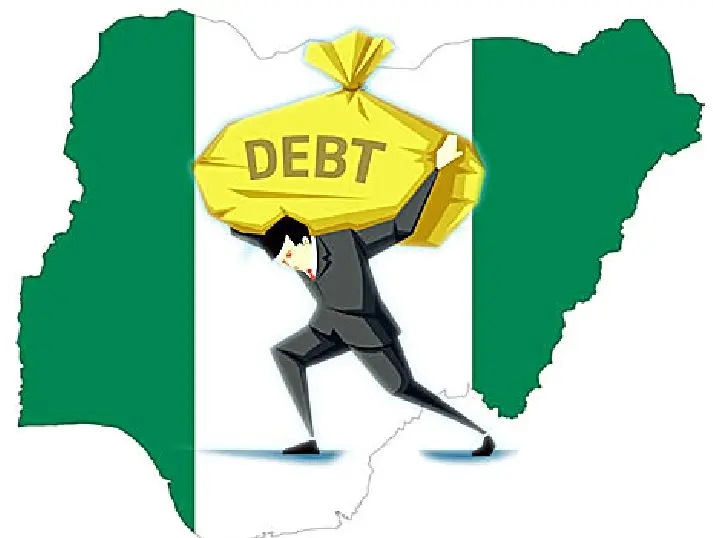
Nigeria’s Debt Management Office (DMO) has announced a substantial increase in the nation’s total public debt, which has surged to N121.67 trillion (approximately $91.46 billion) as of March 31, 2024.

This significant rise comes against a backdrop of declining oil production, the country’s primary revenue source, and escalating economic challenges.

The latest figures reveal a significant increase in the total public debt recorded at the end of 2023, which stood at N97.34 trillion (approximately $108.23 billion). This represents an increase of N24.33 trillion or 24.99% within just three months. The primary driver behind this sharp rise is the devaluation of the naira, which has effectively reduced the debt in dollar terms by $16.77 billion or 18.34%.

Breakdown of Domestic and External Debt

As of March 31, 2024, Nigeria’s domestic debt accounted for 53.96% of the total debt, amounting to N65.65 trillion (approximately $46.29 billion). The external debt component stood at N56.02 trillion (approximately $42.12 billion). Excluding the impact of naira exchange rate movements, domestic debt saw a notable increase from N59.12 trillion at the end of December 2023 to N65.65 trillion in March 2024, an increment of N6.53 trillion or 11.05%.

The DMO attributed the increase in domestic debt to new borrowing aimed at part-financing the 2024 Budget deficit and the securitization of a portion of the N7.3 trillion Ways and Means Advances from the Central Bank of Nigeria (CBN).

The DMO’s statement elaborated: “Excluding Naira exchange rate movements in Q1 2024, only the Domestic Debt component of Total Public Debt grew from N59.12 trillion on December 31, 2023, to N65.65 trillion on March 31, 2024. The increase was from new borrowing to part-finance the 2024 Budget deficit and securitization of a portion of the N7.3 trillion Ways and Means Advances at the Central Bank of Nigeria.”

Declining Oil Production

The burgeoning debt profile comes at a time when Nigeria is grappling with a significant decline in oil production, its major source of revenue. In May 2024, Nigeria’s total oil production saw a slight uptick, rising by 1.45% to reach 1.46 million barrels per day (mbpd), compared to 1.44mbpd in April. Despite this increase, the production level still fell short of the country’s OPEC quota of 1.5mbpd and the 1.7mbpd benchmark set for the 2024 national budget. The drop in oil output has exacerbated the country’s economic vulnerabilities as it limits government revenue.

Bayo Onanuga, a presidential spokesman, highlighted the severity of the situation, noting that the government currently spends an alarming 96% of its revenue on debt servicing. This staggering figure underscores the immense financial strain on the country and raises questions about the sustainability of its debt management strategy.

Recent Borrowings

Nigeria’s public debt has also been fueled by recent borrowings totaling $4.95 billion from the World Bank over the past year. These loans, aimed at addressing critical infrastructure and social issues, include:

  • A $750 million loan was approved on June 9, 2023, to enhance Nigeria’s power sector performance.
  • A $500 million loan was approved on June 27, 2023, to scale up the Nigeria for Women Programme.
  • A $700 million loan was granted in September 2023 for the Adolescent Girls Initiative for Learning and Empowerment project.
  • A $750 million loan was approved on December 14, 2023, to boost electricity access through distributed renewable energy solutions.

The latest funding, totaling $2.25 billion, includes $1.5 billion for economic stabilization reforms and $750 million to enhance non-oil revenues and protect oil and gas revenue. Additionally, the Nigerian government anticipates further loans, including a $500 million loan to improve connectivity and market access, a $750 million loan contingent on the reintroduction of previously suspended taxes, a $500 million loan to address challenges faced by Internally Displaced Persons (IDPs), and a $2.7 billion loan from the African Development Bank (AfDB) for economic and budget support.

While the rising public debt profile has been defended by the government, referring to other countries equally borrowing, critics have argued that there is nothing tangible to show for it. They said most of the loans taken by the Nigerian government have been used to service debt, pay salaries, and fund the extravagant lifestyle of public office holders.
Emirship Tussle: Federal High Court in Kano Overturns State Actions on Kano Emirates Council Law

0

In a landmark ruling that has further complicated the already contentious emirship tussle in Kano State, the Federal High Court in Kano has nullified all actions taken by the Kano state government to repeal the Kano Emirates Council Law.

This decision, which has unleashed far-reaching implications for the state’s traditional leadership structure, has sparked a fresh wave of controversy, shedding light on broader issues of governance, legality, and jurisdiction in Nigeria.

The backstory

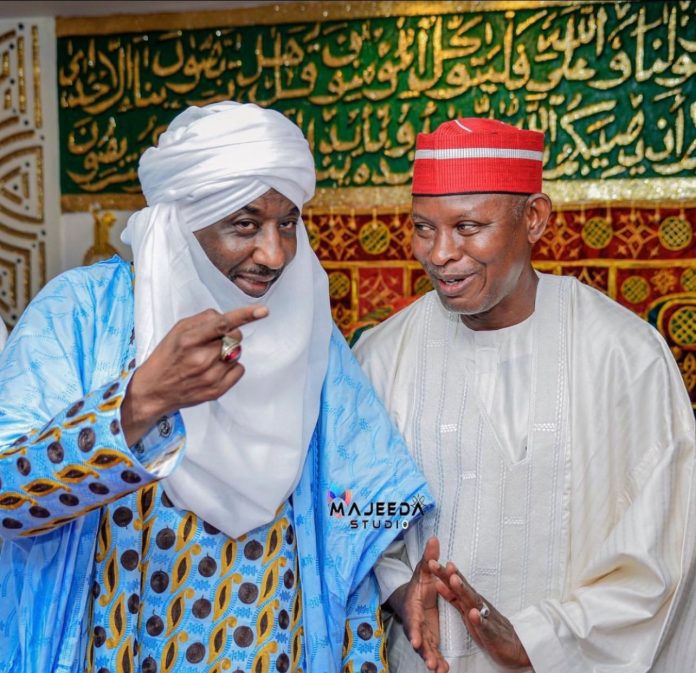
The recent legal battle stems from the Kano House of Assembly’s decision to repeal the Kano Emirates Council Law. Following this legislative action, Governor Abba Kabir Yusuf implemented the repeal by dethroning Alhaji Aminu Ado Bayero as Emir of Kano. Additionally, the governor reversed the creation of four new emirates—Bichi, Rano, Karaye, and Gaya—and sacked the emirs appointed by his predecessor, Dr. Abdullahi Umar Ganduje. The repealed law was also cited to reappoint Muhammadu Sanusi II, who had been dethroned by Ganduje in 2020, as the 16th Emir of Kano.

Aminu Babba Danagundi, the Sarkin Dawaki Babba and a kingmaker in the former Kano emirate challenged the legality of these government actions. Represented by his counsel, Chikaosolu Ojukwu (SAN), Danagundi petitioned the court to declare the government’s actions null and void, arguing that the procedures were flawed and politically motivated.

The Court’s Ruling

On Thursday, Justice Abdullahi Muhammad Liman ruled in favor of Danagundi, setting aside the Kano state government’s actions and ordering all parties to maintain the status quo. Justice Liman criticized the defendants for disregarding an interim court order and emphasized the need for adherence to legal processes.

Justice Liman said the defendants were aware of the interim order granted by the court but chose to ignore it and went ahead with the implementation of the law. He further warned that he would assume his coercive powers to enforce compliance with his order, highlighting the judiciary’s role in upholding the rule of law.

However, due to his recent elevation to the Court of Appeal, Justice Liman transferred the case to Justice Simon Amobeda for continuation.

The Judgment’s Controversy and Jurisdiction Issue

The ruling has ignited significant controversy, with critics labeling it a “black market judgment”, which appears to have cast fresh stench on the Nigerian judiciary.

The issue of jurisdiction has been a central point of contention throughout the legal tussle. Legal experts assert that the Federal High Court lacks jurisdiction over matters related to emirship, traditionally considered outside its purview.

Earlier, rights activist and senior lawyer Femi Falana, SAN, had strongly criticized the Federal High Court’s intervention.

“The intervention of the Federal High Court in the dispute arising from the deposition of Emir Ado Bayero & co as well as the restoration of Emir Sanusi Lamido Sanusi is a brazen repudiation of the decision of the Supreme Court,” Falana said.

Citing the case of Tukur versus the Government of Gongola State (1987), Falana recalled the apex court ruling that “The question raised in this claim is not a fundamental right question” because “the right to be Emir is not guaranteed by the Fundamental Rights provisions of the Constitution and the Federal High Court has no jurisdiction whatever in the matter.”

The Kano state government has accused former Governor Umar Ganduje of using federal influence to manipulate the court’s judgment. This accusation adds another layer of political intrigue to the legal proceedings, suggesting that the battle over the emirship is as much about political power as it is about traditional leadership.

Last week, the Federal High Court in Kano ruled against the Kano State government and others challenging the court’s jurisdiction over the matter. Delivering the ruling on jurisdiction, Justice Abdullahi M. Liman held that the court has jurisdiction to entertain issues concerning the applicant’s fundamental human rights, relying on Section 42 sub-section 1 and Section 315 of the 1999 Constitution as amended.

But Falana further noted that since the apex court has ruled that the right to be an emir is not a fundamental right under Chapter Four of the Constitution, the Federal High Court in Kano should have declined jurisdiction. He argued that the allegation of infringement of fundamental rights was ancillary to the substantive reliefs concerning the deposition and reinstatement of the embattled emirs.

The controversial court ruling is seen as a reflection of broader issues within the Nigerian judiciary. The Kano and Federal High Courts have been issuing conflicting orders on the emirship dispute. The case has highlighted the perception of judicial overreach, prompting critical concerns about the integrity of the Nigerian judiciary.

Legal experts believe the judgment has significant implications for the Nigerian judiciary, particularly as it overrules the precedent set by the Supreme Court.

“Today in Kano, Abdullahi Liman, a judge of the Federal High Court, has overruled longstanding Supreme Court precedent, assumed jurisdiction he does not have to grant reliefs the parties did not ask for in exercise of powers that he lacks. Anyone who does this is a rogue, not a judge,” Human rights activist and lawyer, Chidi Odinkalu, said.

BlockDAD’s Keynote Unveils X1 Miner App, $2M Giveaway Outperforming Ethereum Addresses and Solana Prices

0

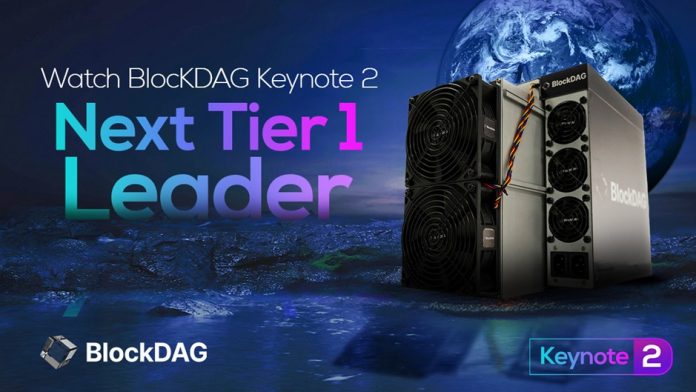
Following an awe-inspiring keynote from the moon, BlockDAG‘s market and tech innovations herald new developments. This article explores the resilience of Ethereum addresses, Solana’s market struggles, and BlockDAG’s creation of top-tier mining rigs. It also highlights BlockDAG’s presale exceeding $52.3M from selling over 11.6 billion coins, showing how blockchain technology and digital currencies influence global financial landscapes and investment strategies.

Ethereum’s Price Stability Amid Selling Pressure

Ethereum’s price has remained stable despite recent selling pressure, with on-chain data indicating strong buying interest. Whale addresses holding large amounts of Ether have increased, reflecting rising confidence among big investors. A crypto analyst points to this surge in Ethereum addresses as a sign of a potential price rally. The activity in Ethereum addresses, coupled with positive sentiment from the approval of Ethereum ETFs, suggests a bullish trend, drawing comparisons to Ethereum’s past performance.

Solana Price Bearish Trends – Unable to Break Resistance

Despite market volatility, Solana faces bearish trends, repeatedly failing to breach its resistance zone. Since mid-April’s market correction, Solana has traded within a narrow range, marking a clear liquidation point. The SOL coin’s recent correction shows increased bearish sentiment. Technical indicators like the SMA act as resistance, while the RSI presents mixed signals, hinting at a possible bullish move above the oversold range. If market conditions favor bulls, Solana’s price might regain momentum and test higher resistance levels. Otherwise, it could face further bearish trends.

BlockDAG’s Revolutionary Mining Solutions & Price Surge

BlockDAG’s Keynote 2 from the Moon introduced its X1 Miner App and X10 Miner, showcasing highly efficient, eco-friendly mining rigs. BlockDAG’s advanced DAG-based hybrid protocol enhances security and speed while reducing power consumption across all rigs. Achieving an unmatched rate of 10 blocks per second, BlockDAG ensures robust mining rewards. For those hesitant to invest in traditional mining hardware, the X1 mobile app offers an alternative, allowing users to mine up to 20 BDAG coins daily from their smartphones.

BlockDAG is testing the X10 miners with key cryptocurrency influencers, with reviews expected soon. Work on refining the Blockchain explorer continues, with features like Smart Contract Transactions and Asset Balances in development. Transparency and trust are central to the BlockDAG community, reinforced by clear policies and no hidden fees. BlockDAG has launched a $2 million giveaway to engage its community, inviting those with at least $100 of BDAG coins to participate in various activities. This initiative, along with a 1120% price surge from Batch 1 to 18, has driven BlockDAG’s rapid market growth and attracted significant investor interest, pushing the presale to $52.3M, with over 11.6 billion coins sold.

Final Thoughts

As we examine Ethereum, Solana, and BlockDAG, it’s evident that BlockDAG is shaping the future of cryptocurrency with its exceptional mining rigs and remarkable 1120% price surge. The active Ethereum addresses indicate a bullish market driven by savvy investments, while Solana’s fluctuating price highlights market volatility. However, BlockDAG stands out with its sustainable and efficient mining rigs. These trends highlight a future where innovation and adaptability drive the cryptocurrency sector forward, with BlockDAG leading the way.


Invest in the BlockDAG Presale Now:

Presale: https://purchase.blockdag.network

Website: https://blockdag.network

Telegram: https://t.me/blockDAGnetwork

Discord: https://discord.gg/Q7BxghMVyu

Why Manufacturers are finding it difficult in Nigeria

0

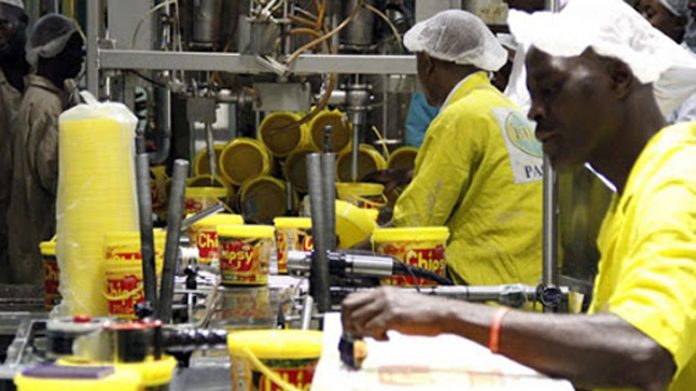
The manufacturing sector in Nigeria has always been a critical component of the country’s economy, contributing significantly to its GDP and providing employment opportunities. However, the year 2024 has presented a unique set of challenges that have made operations difficult for manufacturers in Nigeria. This article delves into the various factors contributing to these difficulties and explores the potential pathways for overcoming them.

Economic and Policy Challenges

One of the primary challenges faced by manufacturers in Nigeria in 2024 is the macroeconomic instability characterized by foreign exchange volatility, inflation, and high-interest rates. These factors have created an unpredictable business environment, making it difficult for manufacturers to plan and budget effectively.

One of the most critical operational inefficiencies is the inconsistent power supply, which leads to frequent blackouts and forces manufacturers to rely on expensive backup generators. This not only elevates production expenses but also affects the reliability of manufacturing processes, leading to potential delays and reduced quality of products.

The Manufacturers Association of Nigeria (MAN) has highlighted the declining manufacturing growth rates, which have plummeted from 2.4% in 2021 to just 0.48% in Q3 2023. This downward trend is a reflection of the struggles faced by manufacturing powerhouses globally, indicating that Nigeria is not immune to the challenges affecting the industry worldwide.

The cost of energy remains a significant concern for manufacturers. With the removal of fuel subsidies and the unification of the foreign exchange market, energy costs have risen, further straining the financial resources of manufacturing firms.

Furthermore, the exit of multinational companies such as Procter & Gamble and Unilever has signaled a lack of confidence in the Nigerian manufacturing landscape. This exodus can be attributed to several factors, including foreign exchange instability, high-interest rates, and average capacity utilization hovering around 50%.

Operational and Structural Issues

Operational inefficiencies, such as the lack of reliable electricity supply, have also plagued the sector. Manufacturers have had to rely on alternative energy sources, with diesel prices accounting for a significant portion of their expenditure. The inconsistent power supply has not only increased production costs but also reduced the competitiveness of Nigerian-made products.

Additionally, access to finance remains a daunting hurdle for many manufacturers. Unfavorable lending terms and the absence of risk-sharing mechanisms have stifled growth and innovation within the sector. The limited understanding of the manufacturing sector by financial institutions has further exacerbated the disconnect between the needs of manufacturers and the support provided by the banking sector.

Limited fiscal space for public investment and difficulty attracting private investments have constrained the ability to make essential infrastructure improvements. Infrastructure funding remains insufficient, falling short of both the World Bank’s suggested benchmark and the yearly requirement specified in the National Integrated Infrastructure Master Plan for 2021-2025.

Insecurity remains a challenge and jeopardizes national stability, negatively affecting economic activities and undermining investor confidence. Despite increased spending on security, the issue persists and impacts the manufacturing sector.

Despite these challenges, there is a moderate improvement in the sector’s outlook, with the Manufacturers CEO Confidence Index (MCCI) showing a rise in confidence levels for the first time since Q3 2022. This improvement is partly due to selective reforms and the appreciation of the Naira, which has moderately reduced the cost of imported raw materials and machinery.

To sustain this positive momentum, it is imperative for fiscal and monetary authorities to focus on enabling business productivity. The Central Bank of Nigeria (CBN) must allow market dynamics to determine the Naira’s exchange value and shift forex allocation policies in favor of manufacturers and exporters. Reducing benchmark interest rates to promote reasonable access to credit and implementing reforms in the power sector are also crucial steps towards resolving the constraints faced by the manufacturing sector.

The manufacturing sector in Nigeria is at a crossroads in 2024, facing significant challenges that threaten its growth and sustainability. However, with the right strategies and support from the government and financial institutions, there is potential for recovery and progress. By addressing the issues of macroeconomic instability, operational inefficiencies, and access to finance, Nigeria can create a more conducive environment for manufacturers to thrive and contribute to the nation’s economic growth.

Nigerian Digital Bank, Carbon, Shuts Down Debit Card Operations

0

Carbon, a leading Nigerian Fintech company, has announced the discontinuation of its debit card operation in Nigeria.

This decision marks a shift in the company’s services offering within the highly competitive financial technology landscape.

In a post by Nairametrics, it was disclosed that Carbon’s discontinuation of its debit card operations was announced by the company’s Co-founder Ngozi Dozie, who did not specifically state the reason for the discontinuation.

He wrote,

“When I take a step back with the benefit of hindsight (and a card operation bill denominated in USD$), I question why practically all neobanks are pushing cards or even getting into it. Was this the right strategy for all of us, or was Carbon just unlucky?”

The above statement suggests that the co-founder is analyzing whether entering the debit card market was a sound strategy for Neobanks in general, or if Carbon’s difficulties were unique due to specific circumstances.

This could imply that the challenges faced by Carbon may not necessarily reflect a flawed strategy but rather specific adverse conditions that it may have encountered.

Carbon, formerly known as Paylater, has been a prominent player in Nigeria’s fintech sector, offering a wide range of financial services including personal loans, bill payments, and investments.

In June 2021, the company announced that it had signed a five-year partnership with Visa to offer both digital and physical issuance of Visa cards to its customers. The partnership came a year after the digital lending company became a digital bank offering a range of financial services including savings and payments.

During the launch of the card, Carbon said in a statement,

“From anywhere, users can request a debit card within minutes on the Carbon app and get them in record time in Lagos and other locations in the country. They will also be able to manage their card activities right from the app. At the tap of a button, customers can freeze and unfreeze their cards, giving them instant control over security.”

With the launch of the card, Carbon hoped that the introduction would build on its millions of customer base, by offering a more complete banking experience for people with different needs, whether they are saving money at industry-high interest gains, sending money at no extra cost, making payments online and offline, or spreading payment for things they need the most but can’t afford at once.

The shutdown of Carbon’s debit card operations in Nigeria is a significant move that highlights the dynamic nature of the fintech industry. While this may pose short-term challenges for its users, Carbon’s commitment to enhancing its other financial services indicates a strategic pivot aimed at long-term growth and sustainability. Customers can expect more innovative solutions as Carbon continues to adapt to the evolving financial landscape.