DD
MM
YYYY

PAGES

DD
MM
YYYY

spot_img

PAGES

Home Blog Page 3192

Crypto Bull Run Could be A Trap in 2024

0

As we navigate through the second quarter of 2024, the cryptocurrency market presents a landscape of both opportunity and uncertainty. Investors and enthusiasts are keenly observing the market dynamics, trying to decipher whether the current trend is a genuine bull run or a deceptive bull trap.

A bull run is characterized by a sustained increase in market prices, driven by strong investor confidence and a general consensus about future price appreciation. The crypto market has seen its fair share of bull runs, often associated with fundamental catalysts such as technological advancements, regulatory clarity, and institutional adoption.

On the other hand, a bull trap is a false market signal that occurs when a declining trend appears to reverse and head upwards, only to resume its downward trajectory. This can lead investors to make premature and often costly decisions based on misleading indicators.

The year 2024 is particularly significant for the crypto market due to the anticipated Bitcoin halving event, a mechanism that reduces the reward for mining new blocks by half, effectively diminishing the new supply of Bitcoin and historically triggering a price increase. This event has previously set the stage for substantial bull runs, and many expect the same outcome this time around.

However, the market is also rife with speculation and hype, which can lead to bull traps. The rapid climb in prices, especially among altcoins, has raised concerns about the sustainability of the current growth. Forbes Advisor India highlights the importance of cautious investment in altcoins, suggesting that thorough research and understanding of market trends are crucial for navigating these volatile waters.

InvestorPlace echoes this sentiment, pointing out that while Bitcoin has shown resilience, many altcoins remain undervalued, presenting both risks and opportunities for astronomical gains. The publication emphasizes the need for strategic investment decisions, especially in light of multiple market catalysts converging in 2024. BitScreeners’ analysis suggests that the crypto winter may have ended, signaling the potential for a bull run, with its peak expected towards the end of 2025.

Moreover, the approval of Bitcoin exchange-traded funds (ETFs) and the potential approval of Spot Ethereum ETFs in the United States are expected to enhance trading volumes and liquidity, further bolstering the market. These developments, coupled with the growing interest in altcoins, present a compelling case for a potential bull run. Altcoins such as Ethereum, Solana, and Dogecoin are being closely watched by investors for their technological advancements and use cases, which could lead to diversification and potentially higher returns.

On the flip side, the concept of a bull trap looms over the market. A bull trap occurs when a declining trend appears to reverse and head upwards, only to resume its downward trajectory, trapping investors who bought in anticipation of a bull run. Analysts caution against the euphoria that often accompanies regulatory approvals and market events, suggesting that these may already be priced into the market. The possibility of a correction following an initial surge is a scenario that investors should be prepared for, as it could precede the actual commencement of a bull run.

The debate between a bull run and a bull trap is further intensified by the mixed signals from the market. While some analysts predict a parabolic surge in prices, others advise a more cautious approach, emphasizing the importance of due diligence and a measured investment strategy. The market’s forward-looking nature means that traders who have “bought the rumor” might be poised to “sell the news,” potentially leading to a short-term pullback before any long-term gains materialize.

Data Ethics in AI Development: Balancing Innovation with Responsible Data Use

0

Artificial Intelligence (AI) is transforming technology, this goes without saying. It is offering groundbreaking advancements in fields like healthcare and finance. Yet, its rapid progress raises ethical concerns about how data is collected, stored, and used. If this topic piques your interest, take a break from using your IviBet account to see what the hype is all about.

Guidelines for Responsible Data Use

To handle these ethical challenges, there are guidelines and frameworks for responsible data use in AI:

1. Transparency and Explainability

Making sure AI systems are clear about how they collect, process, and use data is really important. When AI decisions are understandable, it helps people know why things happen, which builds trust and makes sure everyone involved is accountable.

2. Data Minimization

Data minimization means collecting only the data needed for a specific purpose. This helps reduce privacy risks. It does so by prioritizing relevant data and avoiding unnecessary storage that could cause harm.

3. Fairness and Non-Discrimination

Ensuring fairness means finding and reducing biases in AI models to avoid unfair outcomes. Techniques like fairness-aware machine learning and continuous monitoring can help fix biases. They can do this at every stage of an AI system’s life.

4. Security and Integrity

Ensuring data security is crucial in ethical AI development. Think strong cybersecurity measures, encryption protocols, and strict access controls. All of these protect sensitive information from unauthorized access and misuse.

Case Studies in Ethical AI

Several notable examples show the ethical dilemmas and approaches in AI development:

1. Facial Recognition Technology

Facial recognition technology raises worries about privacy and bias. This is especially true in law enforcement and surveillance. Ethical guidelines stress the need for strict rules and clear transparency in its use.

2. Healthcare AI

AI applications in healthcare raise concerns about privacy, consent, and using medical data. Ethical guidelines stress patient autonomy, anonymizing data, and securely sharing medical information.

What Do Regulatory Frameworks Do in These Cases?

Regulatory frameworks are crucial in setting ethical standards for AI development. Laws like GDPR in Europe and CCPA in the US establish rules for data protection, transparency, and individual rights. They need clear consent for data collection. This also refers to strict security measures and accountability from AI developers. Following these laws ensures legal compliance and fosters trustworthy data practices. As a result, it reduces ethical concerns.

Corporate Responsibility and Accountability

Corporate responsibility is important in AI development. Companies need clear policies on data privacy, bias, and transparency. Following frameworks like IEEE’s or industry guidelines promotes accountability and ethical decisions. Integrating ethics into business strategies helps manage AI risks. It also encourages innovation that meets societal expectations.

Public Perception and Trust

Public trust is vital for ethical AI adoption. Concerns about data misuse, bias in algorithms, and opaque decision-making can erode trust. To build trust, engaging openly with consumers, policymakers, and advocacy groups is crucial. You need to have clear communication about data practices and follow ethical guidelines. You must also highlight AI’s societal benefits that boost confidence. Educating the public on AI’s ethical implications promotes informed discussions. It also empowers advocacy for responsible AI advancement.

Ethical Challenges in Emerging Technologies

Technologies like self-driving cars, finance AI, and predictive policing algorithms bring ethical issues. These include the likes of safety, privacy, fairness, and accountability. Solving these needs teamwork across disciplines, regular ethical checks, and laws that keep up with tech changes. This helps avoid problems and lets us use new tech wisely for everyone’s benefit.

Global Perspectives on AI Ethics

AI ethics is a worldwide issue that goes beyond borders and cultures. Each region and country has its own way of regulating AI and setting ethical rules, depending on their values, laws, and technology. Some focus on protecting data privacy and individual rights. Meanwhile, others prioritize innovation and economic growth. To align global views on AI ethics, countries need to work together, develop standards, and agree on ethical principles. This collaboration fosters discussions that respect different ethical viewpoints. It also encourages responsible AI development worldwide.

Ethical Considerations in AI Research

Ethical issues in AI research cover informed consent, data protection, and how findings are shared. Researchers must follow ethical rules to safeguard participants and avoid harm. They must also keep research honest. Review boards and guidelines help ensure studies meet ethical standards. AI research can grow responsibly and help AI develop ethically. This is possible when ethical principles that are part of research methods and findings are openly shared.

Education and Training in AI Ethics

Education and training in AI ethics are really important. They help today’s and tomorrow’s professionals handle ethical challenges when using AI. These programs should focus on ethical thinking, critical thinking, and practical skills. Training can give technologists, policymakers, and leaders the knowledge to make smart decisions. These can be ones that respect society’s values and reduce ethical problems. We must encourage a culture where people understand ethics and act responsibly. Education helps create a workforce that can advance AI technology in a way that’s ethical and good for the long term.

Future Trends in AI Ethics

The future of AI ethics will be influenced by new technology, rules, and what people expect. Important trends include better ways to govern AI and more ways to keep developers accountable. There should also be a focus on making AI more human-centered. Ethical concerns about how AI affects jobs, healthcare, and fairness will keep influencing laws and how companies work. To prepare for the future, we need to stay on top of these issues, always checking if our actions are ethical. We must be ready to adapt to new challenges and find ways to use AI responsibly. By doing this, we can guide AI development in a direction that helps society and avoids problems as much as possible.

Challenges in Ethical AI Development

Developing AI ethically has many challenges. These make it hard to follow good rules and guidelines. The issues come from how technology works, what’s right and wrong, laws, and what society expects.

1. Bias and Fairness

Dealing with bias in AI is still a big problem. Sometimes, AI systems can make biases worse by using biased data, which can lead to unfair results. To reduce bias, we need to use different kinds of data that represent everyone fairly. We also need strong methods in AI programming and to keep checking for biases at every stage of an AI system’s life.

2. Privacy and Data Protection

Protecting people’s personal information is really important in AI development. Laws about privacy are strict—they demand that we collect, process, and store data carefully. To follow these rules while using data for AI, we need strong ways to make data anonymous, safe ways to handle it, and clear policies on how we manage it.

3. Transparency and Explainability

AI systems can be like black boxes, which means it’s hard to see how they make decisions. When we can’t see inside these systems, it makes it tough to trust them or know how accountable they are. Finding ways to make AI algorithms more transparent and explainable is tricky. It involves creating AI models and decision-making systems that people can understand easily. This challenge is not just technical but also about doing things right and ethically.

4. Regulatory Divergence

The rules for AI differ a lot around the world. This makes it hard for big companies that work in many countries to follow the laws everywhere. Each place has its own rules about how data is used, how AI is held accountable, and how it’s managed. This means businesses and groups working on AI have to deal with lots of different laws and figure out how to follow them all.

5. Ethical Decision-Making Frameworks

Creating rules that everyone agrees on for AI development is tough. This is because people have different ideas about what’s right and have different priorities. Making fair guidelines that consider everyone’s needs and values means experts from different fields need to work together. They must listen to everyone’s opinions and keep talking to each other.

Key Takeaways

Using data ethically in AI development is really important. It helps innovation grow while keeping our values intact. When developers follow guidelines that focus on privacy, fairness, transparency, and security, they can reduce risks and make people trust AI more. AI is changing how industries work and our everyday lives. So, using data responsibly is key to making sure AI grows in a way that’s good for everyone.

New Projects Profit-Sharing Model Is Attracting Investors As Cosmos and Near Protocol Holders Join the Show

0

In a market where Cosmos has significantly declined over 20% in just a week, Near Protocol has been grappling with complicated technical analysis and security issues, Investors are having a rethink where to put their funds for a better ROI. Rollblock remains unbeatable even though it is still at the presale stage. Developed to tackle the major issues affecting the gambling industry, Rollblock is seen as one of the top DeFi coins capable of experiencing 20x rallies in the coming weeks. At stage 3 in the presale, the RBLK token has rewarded early buyers with significant ROI.

Rollblock Profit Sharing Model, a Selling Point in the Ecosystem

Rollblock (RBLK) is revolutionizing the online gambling sector with its innovative GambleFi protocol. Unlike traditional gambling platforms, Rollblock eliminates the need for intrusive KYC checks, allowing users to sign up with zero stress. The project, combined with cutting-edge blockchain encryption technology, ensures that user data remains secure and private.

Also, Rollblock is the world’s first community-backed GambleFi project promoting investors’ interest in the casino world. The project is built on trust and transparency, ensuring that all transactions are not only permanent but also immutable. Investors who have seen the potential rank Rollblock as the best DeFi coin to invest in 2024.

One of the attractive features is the profit-sharing model, which ensures that up to 30% of the weekly revenue is used to purchase the token from the open market. After that, half of the tokens bought are used as a staking reward and the other half is burned to stabilize the price. This burning mechanism is designed to keep the circulating supply in check. As such, it makes RBLK a top DeFi coin to invest in.

Currently, RBLK is in stage 3 of the presale and sold for $0.014. So far, over 3,000 users have raced to sign up with the team raising over $750,000 in presale. Overall, with plans to list in Tier 1 CEX exchanges in Q3, Rollblock remains one of the best DeFi coins to invest in for significant gains in 2024.

Near Protocol Price Drops As Holders Search for Alternative

Near Protocol has been said to be a major competitor against Ethereum, with a major focus on scalability and user-friendly applications. According to the market data, the Near Protocol price has dropped by 42% in the past month and 26% in the past week. However, the Near protocol’s technical pattern indicates a bullish run might be around the corner, with a head and shoulders formation forming, which could lead to a strong uptrend.

With Near Protocol’s recent challenge due to its complex technical ideology in security concerns, investors are migrating to RBLK’s alluring presale. So far, the Near Protocol market sentiment is bearish with the coin trading below the 50-day and 200-day EMA. Having seen only 11 green days in the past month, investors are considering their options.

Cosmos Price Consolidation Eyeing Strong Rebounds

Cosmos (ATOM) set the pace in the creation of an “Internet of Blockchains,” creating different chains of networks to enable communication and seamless sharing of data. This interoperability aspect is a crucial part of building a more connected and efficient blockchain ecosystem in the DeFi market.

While the Cosmos price has dropped in the past week,  analysts are optimistic about its future, predicting significant growth as more projects adopt the Cosmos SDK for building their blockchains. According to CoinMarketCap data, the Cosmos trading volume is surging which might trigger a rebound. The RSI of about 30% indicates that ATOM is oversold, suggesting a potential rebound. With the current movement, Cosmos will witness a resurgence soon, making it one of the top DeFi coins to buy.


Discover the Exciting Opportunities of the Rollblock (RBLK) Presale Today!

Website: https://presale.rollblock.io/

Socials: https://linktr.ee/rollblockcasino


Paystack Introduces Virtual Terminal in Ghana, Kenya, Côte d’Ivoire And South Africa

0

Paystack, a Nigerian financial technology company that offers payment processing services to businesses, has introduced its virtual terminal payment feature in Ghana, Kenya, Côte d’Ivoire, and South Africa.

This innovative solution aims to streamline the payment process for businesses in these regions, by enhancing efficiency and convenience.

Overview of The Virtual Terminal

Paystack Virtual Terminal is a simple, hardware-free solution for businesses that accept in-person payments, such as retail stores, restaurants, or pay-on-delivery services. It streamlines payment processes by integrating Paystack’s seamless online checkout experience directly into users’ physical location, complete with real-time payment notifications to alert them about transactions.

With Paystack Virtual Terminal, merchants can generate unique QR codes for any customer-facing staff, such as cashiers, delivery riders, or sales agents. When a customer scans the QR code, they can choose to pay via any of Paystack’s multiple payment channels- Mobile Money, Cards, Apple Pay, and more. After the successful payment, the staff member gets an instant confirmation via WhatsApp, and the customer can be on their way.

Notably, the Virtual Terminal is optimized for the most popular payment channel in the country where it has launched.

In Côte d’Ivoire, available payment methods include; MTN MoMo, Wave, Orange Money, Visa, Mastercard, and Apple Pay. In Ghana, available payment methods include; MTN MoMo, Telecel Cash (Previously Vodafone Cash), AirtelTigo Money, Visa, Mastercard, and Apple Pay.

In Kenya, the available payment methods include M-PESA, Visa, Mastercard, American Express and Apple Pay. In South Africa, the available payment methods include Scan to Pay, SnapScan, EFT, Visa, Mastercard, American Express, and Apple Pay.

Paystack Virtual Terminal Benefits For Businesses

Increased Accessibility:

By eliminating the need for physical POS hardware, the virtual terminal makes it easier for businesses to accept payments in various settings, including pop-up shops, markets, and remote locations.

Cost-Effective:

The virtual terminal reduces the costs associated with purchasing and maintaining traditional POS equipment.

Enhanced Customer Experience:

Customers benefit from a quick and convenient payment process, which can enhance their overall experience and satisfaction with the business.  Also, each virtual terminal account comes with a beautiful, auto-generated poster that one can print from the Paystack dashboard and prominently display to inform customers about the wide range of payment methods available to them.

Business Growth:

By offering a flexible and efficient payment solution, the virtual terminal can help businesses expand their reach and increase their sales.

Launched in October 2023, Paystack rolled out the virtual terminal to further expand into offline payments, as well as position itself for faster growth of its “pay with bank transfer” feature, which is witnessing rapid adoption as everyday customers use it as their primary mode of payment during checkout at offline businesses, such as supermarkets or restaurants.

Virtual terminal is part of Paystack’s broader strategy to expand beyond web-only payment collection. The introduction of the feature in Ghana, Kenya, South Africa, and Côte d’Ivoire is expected to have a significant impact on the payment landscape in these countries. By providing businesses with a versatile and secure payment solution, Paystack is contributing to the growth and development of the digital economy in Africa.

With its user-friendly design, robust security features, and cost-effective nature, the virtual terminal is poised to become an essential tool for businesses looking to thrive in today’s digital world.

California Court Diverges from NY Ruling, Ripple Trial Proceeds—How 5thScape is Leading the Crypto Charge

0

A Californian judge has demurred from a New York ruling, thus has taken Ripple’s securities lawsuit to trial. This decision complicates earlier legal decisions concerning XRP. Another legal issue is defamation charges to be brought against Ripple CEO Brad Garlinghouse. The legal issues are still confusing, but Ripple is still a significant player in the market.

Conversely, 5thScape is on its way to becoming one of the industry leaders in the crypto world. It provides innovative blockchain VR games that set new trends with the 5thScape. Some get attracted to the company due to its innovative technology in the market. That’s as Ripple’s litigation continues, and 5thScape showcases its strong prospect. This case can define further actions that governments will take regarding cryptocurrencies or otherwise.

5thScape: Pioneering Innovation in the Crypto Industry

5thScape is a revolutionary Metaverse GameFi project that aims to redefine the VR gaming landscape. It operates on the Ethereum blockchain and offers a comprehensive VR experience. The project features a diverse library of 3D VR games spanning various genres, including MMA, cricket, soccer, and archery.

Beyond gaming, 5thScape envisions a thriving VR ecosystem with a decentralized and robust tokenomics system powered by the 5SCAPE token.

Its games are optimized for immersive VR experiences, allowing players to lose themselves in adrenaline-pumping action or strategic finesse. 5thScape’s innovative approach sets it apart. Combining VR gaming with blockchain attracts attention from both gamers and investors.

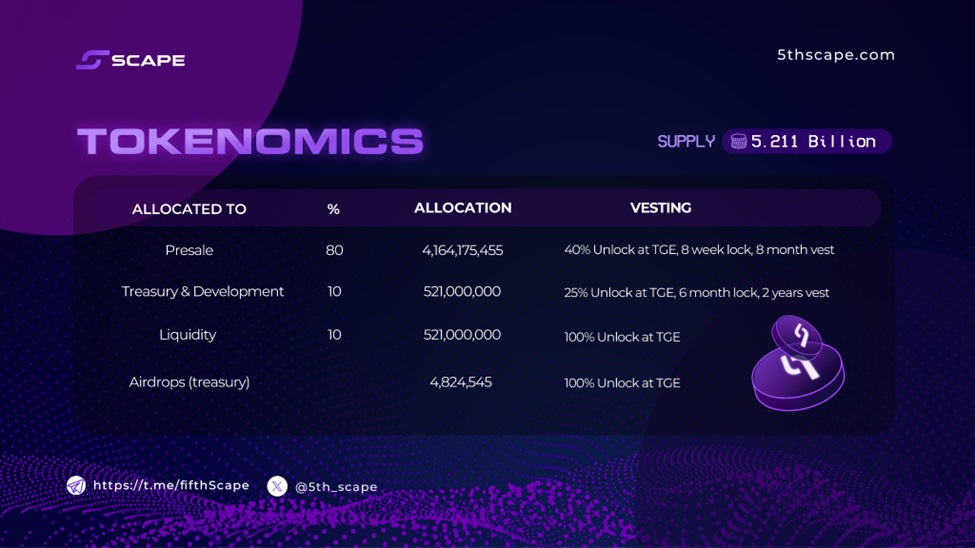
The 5SCAPE token serves as the universal currency within 5thScape. As the project continues to roll out games and expand its ecosystem, it aims to disrupt the AR/VR market with its headset and gaming chair, potentially driving the token’s value to $1.50 by 2030.

>> Click Here To Buy 5thScape Now

California Court Diverges from NY Ruling: Ripple Trial Proceeds

A California judge ruled that a civil securities lawsuit against Ripple will proceed to trial. This decision denies part of Ripple’s motion for summary judgment. The lawsuit alleges that Ripple’s CEO, Brad Garlinghouse, violated state securities laws in 2017 by making “misleading statements” during a televised interview about the sale of securities.

While several other claims were dismissed, one individual state law claim survived and will be addressed at trial. In a parallel case in the Southern District of New York (SDNY), Judge Analisa Torres ruled that XRP did not meet all the prongs of the Howey Test when sold directly to retail participants on crypto exchanges. The crypto industry celebrated this ruling as a step toward regulatory clarity.

However, Judge Phyllis Hamilton in California diverged from Torres’ opinion. She disagreed that XRP sold to non-institutional traders was not a security due to their lack of profit expectations from others’ efforts.

Ripple’s market position remains uncertain due to ongoing litigation.  Amidst the chaos, 5thScape is rising to fame as its value doesn’t depend solely on market factors.

5thScape’s Market Leadership and Growth

5thScape is a revolutionary Metaverse GameFi project combining virtual reality (VR) gaming with blockchain technology. It operates on the Ethereum blockchain and aims to redefine the VR gaming experience.

Beyond gaming, 5thScape envisions a thriving VR ecosystem. It features a decentralized marketplace where developers and content creators can showcase their work, monetize their creations, and contribute to the platform’s growth.

5thScape’s presale raised over $6 million in the first round, exceeding the target of $5 million, demonstrating strong investor confidence in the project’s potential. The native token, 5SCAPE, serves as the backbone of the ecosystem. It grants access to playing VR games, participating in the marketplace, staking, earning rewards, and governance rights.

Disrupting the AR/VR Market

5thScape plans to launch its own VR headset and gaming chair, potentially driving the token’s value to $1.50 by 2030. The outcome of Ripple’s legal battle could influence the broader crypto industry, including 5thScape. Regulatory clarity remains crucial.

Moreover, 5thScape aims to be a dominant player in the VR ecosystem, leveraging its innovative technology and community-driven approach.

Therefore, 5thScape’s fusion of VR and blockchain positions it as a market leader.

Concluding Thoughts

As Ripple navigates its complex legal challenges, 5thScape emerges as a formidable force in the crypto world. By pioneering the integration of VR gaming with blockchain technology, 5thScape is setting new industry standards and drawing significant attention from both gamers and investors.

With its innovative VR ecosystem and the potential for substantial growth, 5thScape is well-positioned to lead the next wave of crypto advancements, demonstrating resilience and foresight in an ever-evolving market.