DD
MM
YYYY

PAGES

DD
MM
YYYY

spot_img

PAGES

Home Blog Page 3192

Gaming Tokens Seem To Be The Bulls Amongst The Bears; SAGA, BINARYx, Rollblock & Gomining Outperform Bitcoin And ETH This Week

0

The recent market downturn has been rough on crypto investors, as hopes of riding altcoin pumps to the moon have fallen down to earth with a bump. The crypto gaming niche might be the exception, however, and coins like SAGA, BINARYx, and Gomining have been bucking the bearish trend.

Rollblock ($RBLK) is another gaming token that has gathered massive amounts of attention from gamers and investors alike, as RBLK moves through presale. Rollblock is on a mission to bring the power of Blockchain to the $450 billion GambleFi space. Experts are tipping RBLK for huge gains of up to 100x in the second half of 2024, let’s find out why!

Saga ($SAGA) Market Cap Rebounds From Lows

Smart money remains bullish on Saga (SAGA), which allows Web3 developers to create scalable and interoperable Blockchain apps. Saga price has been in decline since launch but bulls have recently pushed the token from $0.87 to $1.4, nearly doubling the price in the time that Bitcoin has been chopping. This could be the beginning of a massive Saga rally and $3 could be right around the corner.

BinaryX ($BNX) Finding a Solid Base At $1

BinaryX ($BNX) has been building out their GameFi platform to allow web2 developers to bridge to Web3. This will be an essential part of crypto gaming infrastructure going forward and bulls are taking positions in BinaryX.

BinaryX price has looked to stabilize at around $1.19 and $1 should be a good base to fall back on. BinaryX could hit new time highs sooner than many expect once the altcoin market heats up, with experts predicting that BinaryX will soar past $1.8 by the end of Q3.

Gomining ($GOMINING) Bounces On Market Dip

Gomining allows for ownership of the Bitcoin hash rate as an NFT on the Ethereum/BNB chain. Gomining has seen tremendous interest as it simplifies Bitcoin mining for potentially millions of users and taps into the massive RWA (real world asset) market.

Gomining price took a dive with the rest of the market but has bounced over 8% this week. A run to Gomining’s yearly highs of $0.4 looks inevitable but will depend on Bitcoin’s return to strength.

Bitcoin (BTC) and Ethereum (ETH) Chop Continues

The blue-chip crypto coins Bitcoin (BTC) and Ethereum (ETH) have started to recover from the recent correction but gains have been tame compared to the gaming sector. Bitcoin’s price has been suppressed by relentless selling from the German government, and Ethereum investors are waiting for the spot Ethereum ETFs to launch soon.

Until then, it is likely that the summer slump will continue to cause Bitcoin and Ethereum declines, and therefore, investors are looking at a new GambleFi token built on the Ethereum blockchain.

Rollblock ($RBLK) Set to Disrupt the Crypto Casino Space

Rollblock ($RBLK) merges the best of traditional, centralized casino sites with the cutting-edge technology of Web3. With all bets inscribed into the Ethereum Blockchain, players can rest easy that their bets won’t be tampered with. A native crypto coin RBLK integrates seamlessly with the platform and is tipped to become one of the hottest P2E launches of the year.

Onboarding is rapid and 100% anonymous, as players register with only an email address and a crypto wallet. Rollblock accepts a huge number of cryptos such as Bitcoin, Solana, and USDT and for a limited time will top up accounts with deposit bonuses of up to 200%!

Rollblock offers a huge choice of games, including over 150 AI-powered games, from familiar classics like poker and roulette to new and exclusive launches such as Dashing Derby.

In-game rewards are paid out in RBLK, Rollblock’s native token. Thanks to an innovative tokenomics supply and revenue-sharing feature, this is sure to become an obvious long-term hold for savvy investors.

Each week the casino will use a portion of its profits to buy back RBLK on the open market. These coins will then be split between being burnt, with the rest allocated to stakers. Those who stake their coins can enjoy staking rewards of up to 30%, some of the highest APY in crypto.

The presale is in stage 3 and coins are selling fast. Priced at only $0.0154 and with over 77% already sold, RBLK will not be available at these prices for much longer. RBLK has already sold over $1 million in tokens and shows no sign of slowing down.

Analysts are calling for a pump of up to 880% before the end of the presale so investors are urged to take a spin on Rollblock before prices go vertical!


Discover the Exciting Opportunities of the Rollblock (RBLK) Presale Today!

Website: https://presale.rollblock.io/

Socials: https://linktr.ee/rollblockcasino

Apple Forced by Epic Callout to Approve Epic Games Store in the EU

0

Apple has approved the Epic Games Store for operation in the European Union, following public complaints from Epic Games about alleged repeated rejections that the gaming company argued violated EU law.

On Friday morning, the Epic Games Newsroom took to social media platform X (formerly Twitter) to accuse Apple of twice rejecting the Epic Games Store notarization submission due to the similarities between Epic’s “Install” button and Apple’s “Get” button, as well as the “In-app purchases” labels.

“Apple has rejected our Epic Games Store notarization submission twice now, claiming the design and position of Epic’s ‘Install’ button is too similar to Apple’s ‘Get’ button and that our ‘In-app purchases’ label is too similar to the App Store’s ‘In-App Purchases’ label,” the Epic Games Newsroom initially posted.

These posts quickly gained traction, receiving over 811,400 views and 5,000 likes.

Epic Games argued that naming buttons “Install” and “In-app purchases” is a standard industry convention and that Apple’s actions were “arbitrary, obstructive, and in violation” of the EU’s Digital Markets Act (DMA).

Shortly after going public with these complaints, Epic Games announced that Apple had accepted the Epic Games Store notarization submission.

“Update: Apple has informed us that our previously rejected Epic Games Store notarization submission has now been accepted,” the Epic Games Newsroom posted on X Friday afternoon.

Epic Games CEO Tim Sweeney also shared the news, expressing relief that “development is back on track” but also criticizing delays in using Apple’s TestFlight program.

A representative from Apple confirmed to NBC News that the Epic Sweden AB Marketplace app had been approved. However, Apple has requested that Epic Games make the Marketplace interface less similar to Apple’s App Store in future updates.

Responding to a request for comment, Elka Looks, director of corporate communications at Epic Games, referred to the latest Epic Games Newsroom post on X, which says: “Apple has told some press channels that, though they have approved our current EGS iOS App for notarization, they are still demanding Epic change the user interface in a future version. Epic is disputing this.”

The Epic-Apple Antitrust Battle: A Long and Winding Road

The recent development is just the latest chapter in the protracted legal and regulatory battle between Epic Games and Apple, a conflict that has significant implications for the broader app ecosystem.

The confrontation began in August 2020 when Epic Games introduced a direct payment system in its popular game Fortnite, bypassing Apple’s in-app purchase system and its 30% commission fee. Apple swiftly responded by removing Fortnite from the App Store, prompting Epic to file a lawsuit accusing Apple of monopolistic practices.

Epic’s lawsuit claimed that Apple’s control over the App Store stifled competition and innovation, arguing that the 30% commission fee was exorbitant and unfair. Apple defended its practices, stating that its App Store policies ensured security and privacy for users.

Courtroom Drama and Regulatory Scrutiny

In September 2021, a U.S. district court ruled on the case, delivering a mixed verdict. The court ordered Apple to allow developers to direct users to alternative payment methods, which was seen as a win for Epic. However, the court also ruled that Apple was not a monopolist and did not need to reinstate Fortnite or allow Epic to implement its own in-app payment system on iOS.

Both companies appealed aspects of the decision, prolonging the legal battle. Meanwhile, the conflict drew the attention of regulators worldwide, including the European Commission, which opened an investigation into Apple’s compliance with the DMA.

The Digital Markets Act, A New Opportunity for Epic

The EU’s Digital Markets Act (DMA), designed to curb the market dominance of tech giants, has been pivotal in Epic’s efforts to re-establish its presence on iOS. Under the DMA, platforms like Apple’s App Store are required to allow greater flexibility and competition, paving the way for Epic Games to launch its own store on iOS with reduced commissions to Apple.

While this regulatory environment has facilitated Epic’s recent success in getting its store approved, the friction between the two companies remains palpable. Apple’s insistence on further changes to the Epic Games Store interface suggests that this conflict is far from resolved.

This ongoing battle between Epic Games and Apple is expected to have far-reaching implications for the tech industry. For developers and consumers, the outcome could significantly alter how digital content is purchased and consumed on major platforms.

Epic’s determination to challenge Apple’s policies reflects a broader push for more equitable revenue-sharing models and greater developer autonomy. As the dispute continues to unfold, it will likely influence regulatory approaches in other jurisdictions and inspire similar challenges against dominant tech platforms.

For now, the approval of the Epic Games Store in the EU marks a significant, albeit temporary, victory for Epic Games. However, with both companies entrenched in their positions, the faceoff is expected to continue, shaping the future of digital commerce and app store policies.

Epic has vowed to continue calling Apple out.

Concerns Arise Over Job Market as Xiaomi Unveils AI-Powered ‘Dark Factory’ with ability to operate 24/7 without human workers

1

Xiaomi CEO Lei Jun has announced the imminent operation of a new generation factory in Changping, Beijing, designed to produce smartphones with minimal human intervention.

The facility, described as a “dark factory,” is set to revolutionize manufacturing with its ability to operate 24/7 without any human workers.

This highly automated plant will use advanced robotics and AI to manage the entire production process. The factory’s machines are not only capable of continuous operation but can also collaborate, ensuring seamless and efficient production. It boasts an impressive capability to produce one smartphone every second, theoretically reaching an annual production capacity of 31.5 million units if operated continuously throughout the year.

Xiaomi has invested 2.4 billion yuan (approximately $330 million) in developing this cutting-edge production process. The new factory spans an area of 81,000 square meters and has been certified as a “national intelligent manufacturing enterprise” with an annual production capacity of 10 million flagship smartphones. Initially, it will focus on producing the upcoming Xiaomi MIX Fold 4 and Xiaomi MIX Flip models.

The Downsides of Automation

While the technological advancements of Xiaomi’s dark factory represent a significant leap forward in manufacturing efficiency and innovation, they also highlight growing concerns about the impact of AI and automation on the job market. The factory’s ability to function without human intervention raises critical questions about the future of employment in the manufacturing sector.

The primary concern is job displacement. As factories like Xiaomi’s new facility become more common, the demand for human labor in manufacturing diminishes. Analysts believe this shift can lead to significant job losses, particularly in regions heavily dependent on manufacturing jobs.

It is also believed that the move towards automated production could result in a substantial number of workers being left without employment, exacerbating economic inequalities and social challenges.

Economic Implications

Experts have warned that the economic implications of widespread automation are profound. While companies benefit from reduced labor costs and increased production efficiency, the broader economy could suffer from reduced consumer spending power. Workers displaced by automation may struggle to find new employment opportunities, leading to higher unemployment rates and potential declines in economic growth.

Additionally, the rise of AI and automation in manufacturing underscores the growing skills gap in the workforce. As factories increasingly rely on advanced technologies, the demand for highly skilled workers capable of managing and maintaining these systems grows.

However, the transition period may leave many current workers without the necessary skills to adapt, further complicating the employment market.

A Step Toward the Future

Xiaomi’s new smart factory is marketed as a small step in the company’s broader exploration of future technologies. However, it represents a significant milestone in the journey towards fully automated manufacturing. The company’s investment in AI and robotics aligns with a global trend towards increased automation across various industries.

To address the rising concerns, business leaders noted that as the world progresses towards more automated systems, it is crucial to balance technological innovation with considerations for the workforce. This includes policymakers, businesses, and educational institutions collaborating to develop strategies that address the challenges posed by automation.

It also involves investing in retraining programs to help displaced workers acquire new skills and ensure that economic benefits are distributed more equitably.

Nigeria’s PalmPay And Kuda Make CNBC’s Top 250 Companies For 2024

0

Nigeria’s fintech sector has received significant recognition as PalmPay and Kuda have debuted on CNBC’s top 250 fintech companies globally for 2024.

This prestigious list, curated by CNBC in collaboration with market research firm Statista, highlights the world’s most innovative and impactful fintech companies across the globe.

The report showcases a diverse range of companies across various market segments. Unlike traditional rankings, this year’s report lists companies alphabetically within each segment, providing a comprehensive view of the industry’s leading players without implying any hierarchical superiority.

This year, despite the challenges faced by the fintech sector, innovation continues to thrive, with artificial intelligence emerging as a key theme. Fueled by technological advancements, expanding global markets, and collaborative leadership, fintech companies are shaping the future of financial services.

Notably, Fintech companies considered for the report included those that nominated themselves via an application form published by CNBC, as well as through analysis conducted by Statista. The selection process identified companies across eight different categories, based on a detailed analysis of overarching general KPIs and segment-specific KPIs focused on individual categories.

These categories include;

Payments: The “Payments” segment includes providers of payment services, gateways, and solutions facilitating online purchases/point-of-sale (POS) transactions via mobile devices or digital money transfers between individuals or companies.

Neobanking: The “Neobanking” segment refers to digital-only financial institutions, known as neo banks, operating without physical branches, providing services accessible via mobile and desktop devices.

Alternate Finance: The “Alternate Finance” segment encompasses companies providing digital funding and brick-and-mortar bank-independent lending solutions for both companies and individuals.

Wealth Technology: The “Wealth Technology” segment comprises companies providing digital trading, investment, and portfolio management options, along with technological platforms and tools supporting various aspects of the wealth management ecosystem.

Financial Planning: The “Financial Planning” segment consists of providers of personal finance management software/apps and financial comparison platforms, assisting individuals in managing expenses, establishing personal budgets or spending plans, and comparing/selecting financial products.

Digital Assets: The “Digital Assets” segment encompasses companies offering platform solutions and tools that streamline the utilization, development, and oversight of blockchain-based applications and digital assets, including cryptocurrencies and non-fungible tokens (NFTs).

Business Process Solutions: The “Business Process Solutions” segment includes offering finance-related and technology-based products and solutions aimed at assisting businesses in enhancing and automating their processes and financial workflows,

Banking Solutions: The “Banking Solutions” segment companies offer technological innovations and services to modernize and enhance banking processes. This includes Banking-as-a-Services (BaaS), Open Banking Solutions, Digital Identity, and KYC solutions.

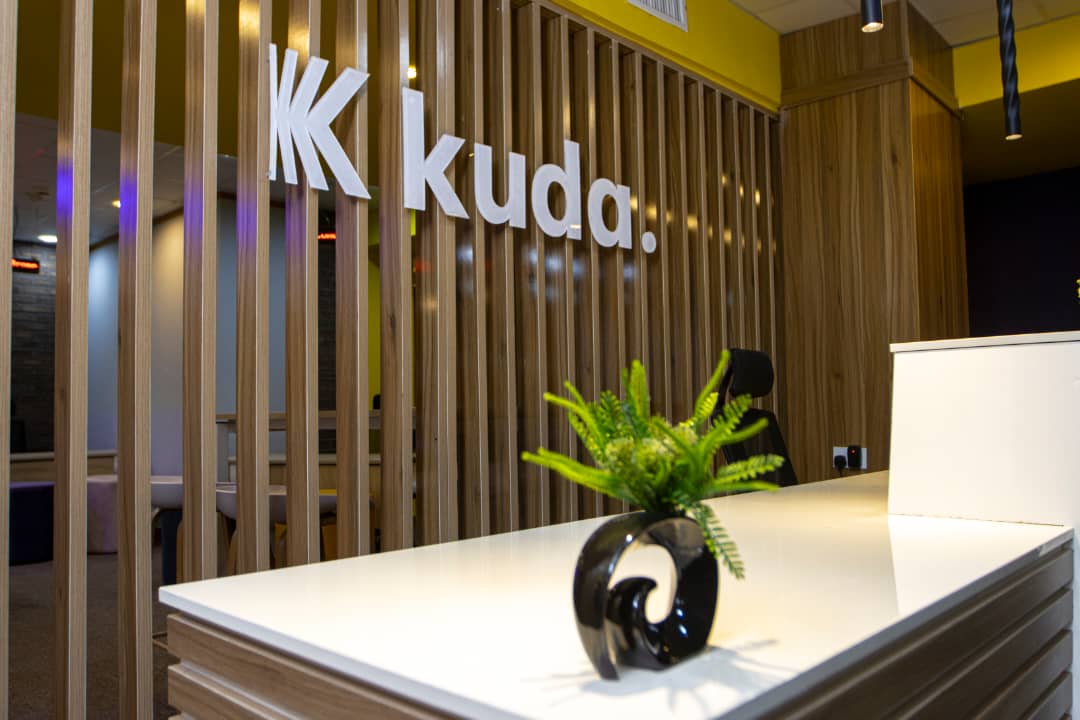
Recognized in the Neobank section, Kuda’s inclusion highlights its rapid growth, innovative approach, and increasing influence in the global digital banking sector. Often referred to as “the bank of the free”, Kuda has been at the forefront of transforming digital banking in Nigeria since its inception.

By leveraging technology to offer seamless, customer-centric banking services, Kuda has quickly gained a substantial user base and attracted significant investor interest. Unlike traditional banks, Kuda operates entirely online, offering users a range of banking services without the need for physical branches. The Neobank provides a comprehensive suite of services, including savings accounts, personal loans, and budgeting tools, all accessible through a mobile app.

On the other hand, Palmpay was recognized in the payments section, highlighting its remarkable growth, innovative solutions, and increasing impact on the global payments landscape. Since its launch in 2019, Palmpay has rapidly established itself as a leading player in the digital payments space in Nigeria and beyond.

The company offers a wide range of services, including mobile payments, money transfers, and bill payments, all accessible through a user-friendly mobile app. By providing secure, fast, and convenient payment solutions, Palmpay has gained a significant customer base and become a key driver of financial inclusion in the region.

The Fintech company rise is significant in the context of financial inclusion in Africa. With a large portion of the population unbanked or underbaked, digital payment platforms like Palmpay play a crucial role in bridging the gap. By providing accessible financial services, it has helped to bring more people into the formal financial system, promoting economic participation and growth.

The inclusion of PalmPay and Kuda in CNBC’s, Top 250 Fintech Companies for 2024 underscores the growing influence and innovation of Nigeria’s fintech landscape. Their recognition no doubt reflects the dynamic growth and potential of African fintech companies on the global stage.

EndSARS: ECOWAS Court Found Nigerian Government Guilty of Lekki Massacre in Landmark Ruling

0

In a landmark decision, the Economic Community of West African States (ECOWAS) Community Court of Justice has ruled against the Nigerian government for its disproportionate use of force against #EndSARS protesters at the Lekki Tollgate in October 2020.

The ruling, delivered by Justice Koroma Mohamed Sengu, highlights severe violations of human rights and mandates compensation for the victims.

The court condemned the Nigerian government’s response to the peaceful protests, noting the excessive and lethal force used by security forces. The court found that live rounds were fired into the crowd of unarmed protesters, causing numerous casualties. This, it said, constituted a breach of multiple international human rights standards, including Articles 1, 5, 6, 9, 10, and 11 of the African Charter on Human and Peoples’ Rights.

In his ruling, Justice Sengu stated, “The disproportionate use of force by the Nigerian security forces at the Lekki Tollgate was unnecessary and violated the fundamental rights of the protesters to life, liberty, security, and freedom of assembly and expression.”

Following the decision, the court ordered the Nigerian government to pay N2 million in compensation to each of the victims named in the suit. It also mandated the government to conduct thorough investigations into the human rights abuses that occurred, to implement the outcomes of these investigations.

Additionally, the government was instructed to report back to the court within six months with an update on both the compensation and the progress of the inquiry.

The Backstory of the Legal Battle

The case was brought before the ECOWAS Court by a coalition of human rights activists and organizations, alleging severe human rights violations by Nigerian security forces.

Amnesty International also submitted an Amicus Brief, which the court admitted. The court’s decision was based on a comprehensive examination of evidence and testimonies, which confirmed the government’s use of excessive force and its failure to allow the protesters their rights to freedom of expression, assembly, and association.

Bolaji Gabari, lead counsel for the applicants, hailed the ruling as a significant victory for the #EndSARS movement.

“This judgment is an acknowledgment that citizens’ rights were violated and that abuses occurred at Lekki Tollgate,” Gabari said. “We urge the Nigerian government to comply fully with the court’s orders and address the systemic issues identified in the judgment.”

Mojirayo Ogunlana, another counsel of the applicants, recalled that the Nigerian government initially failed to present a defense until 2023. When it finally did, the government claimed the EndSARS peaceful protest was unlawful and perpetuated by hoodlums.

“The landmark ruling by the ECOWAS Court in favor of EndSARS victims is a powerful affirmation of justice and a significant step towards healing and accountability for the Lekki Tollgate tragedy,” added Nelson Olanipekun, Executive Director at Gavel, the coordinating organization for the coalition.

The EndSARS Story

On October 20, 2020, Nigerian security forces fired at peaceful and unarmed protesters at the Lekki Tollgate, marking a violent end to the #EndSARS protests. These protests had begun organically in Delta State 17 days earlier and quickly spread across the country, with calls for justice against police brutality.

In December 2021, three victims brought the case, Obianuju Catherine & 2 Others v. Federal Republic of Nigeria (ECW/CCJ/APP/72/2021), before the ECOWAS Court to seek justice for themselves and others affected by the violations. The court’s verdict builds on findings from a judicial panel set up by the Lagos State government, which concluded that Nigerian Army officers “provocatively and unjustifiably” shot at and killed several #EndSARS protesters.

In November 2021, a judicial panel set up on October 19, 2020, by the Lagos State government to probe the Lekki Massacre, concluded their investigation, after interviewing many witnesses and examining available evidence. It found that there was a killing of unarmed protesters by the Nigerian security forces at Lekki Toll Gate on October 20, 2020.

In a 309-page report, which was submitted to the Lagos State government, the panel reported that officers of the Nigerian Army “provocatively and unjustifiably” shot live bullets and killed several #EndSARS protesters at the Lekki Tollgate, and then took their corpses away.

The panel concluded its report, listing the names of those killed and making several key recommendations.

The panel called for disciplinary actions against officers who obstructed the investigation, specifically Lt. Col S.O. Bello and Major General Godwin Umelo, for refusing to honor the summons.

“All officers (excluding Major General Omata) and men of the Nigerian Army deployed to the Lekki Toll Gate on October 20, 2020, should face appropriate disciplinary action, be stripped of their status, and dismissed, as they are not fit and proper to serve in any public or security service of the nation,” the report stated.

Additionally, the panel recommended that all arrested protesters be granted bail and prosecuted if evidence exists or released immediately if no prima facie evidence is found.

The panel also advised against the Nigerian Army’s involvement in internal security matters.

Furthermore, the Divisional Police Officer of Maroko Police Station, along with officers deployed from the station on October 20th and 21st, 2020, should be prosecuted for arbitrary and indiscriminate shooting and killing of protesters.

Despite the government’s denial that the killings happened, in July 2023, A leaked memo addressed to the Lagos State Ministry of Health indicated that the State Government approved N61,285,000 for the mass burial of 103 persons identified as 2020 EndSARS victims, sparking outrage.

While the ruling by the ECOWAS Court brings a measure of reprieve to the victims, many have expressed concern that the Nigerian government, notorious for disobedience to court orders, will not abide by the judgment.

The government has yet to implement any of the recommendations made by the panel set up by the Lagos State Government. Nonetheless, many believe the judgment represents a crucial step towards justice and accountability for the victims of the Lekki Tollgate tragedy and the broader #EndSARS protest.