DD
MM
YYYY

PAGES

DD
MM
YYYY

spot_img

PAGES

Home Blog Page 3207

How To Build a Multinational Career

0

How do we make our careers multinational in scope? What are the ingredients in the 21st century knowledge economy? How do you begin in the village and land in the trading halls of New York City? How can we go international in this age?

Yes, you like to give speeches which pay $$ per hour. How can you expand that business, from Lagos, Nairobi, etc to Tokyo, London, etc. You sing in the community. Any aspiration to sing for the world? The world pays the bills!

How can you run that blog from that small room in Jos, Aba, Bamako, etc – and reach the diasporas and bigger markets in Berlin, Toronto, Beijing and Atlanta? Simply, what is a multinational career in this internet age?

Join me at 7pm WAT tomorrow for Tekedia Mini-MBA Personal Economy class, focusing on Planning a Multinational Career, as we continue how you can build your own economy, not your company’s or Nigeria’s economy or Africa’s economy, but yours. Zoom link in the board.

Not there? Register for the next edition here  . Our product is knowledge.

The Dividing Africa and How New World Orders Are Reshaping the Continent

1

Daily, we write how the world is breaking into China-led and US-led systems. Unfortunately, we do forget that, as these two superpowers play their games, African countries are being dragged along. Kenya has been anointed as a pseudo-NATO country for Africa, while Mali, Niger and Burkina Faso, seem now to be under the control of Russia and China.

Magically,  ECOWAS has lost those three countries: “In a landmark moment for the Sahel region, the military rulers of Mali, Burkina Faso, and Niger are set to hold their first joint summit since their respective coups, indicating the trio’s determination to forge ahead with their alliance. This summit, a significant step for the newly formed Alliance of Sahel States (AES), will take place in Niamey, Niger, on Saturday, July 6, 2024.”

Watch out: AES will apply to join BRICs as a bloc. The question now is what will happen in the West when Donald Trump takes over in January 2025. Depending on what he does (possibly cut-off and focus on the US), AES may start admitting members across Africa, if suddenly there is a great aid package available from China/Russia. If the West cannot match those goodies, everyone could become a member of the Alliance of Sahel States.

You must respect these 3 LANDLOCKED countries for the bravado they have demonstrated, putting ECOWAS on defense, and making it largely inconsequential. Yet, I think it is a mistake because this no-ECOWAS governing purity is not a sustainable strategy!

Mali, Burkina Faso, Niger set to hold their first joint summit under Alliance of Sahel States (AES)

Mali, Burkina Faso, Niger set to hold their first joint summit under Alliance of Sahel States (AES)

0

In a landmark moment for the Sahel region, the military rulers of Mali, Burkina Faso, and Niger are set to hold their first joint summit since their respective coups, indicating the trio’s determination to forge ahead with their alliance.

This summit, a significant step for the newly formed Alliance of Sahel States (AES), will take place in Niamey, Niger, on Saturday, July 6, 2024. Nigerien authorities announced this pivotal meeting on public radio, highlighting the growing importance of the AES.

Niger’s junta leader, Abdourahamane Tiani, will host Burkina Faso’s Ibrahim Traore and Mali’s Assimi Goita. The leaders are expected to arrive in Niamey on Friday, ahead of the summit. This meeting is strategically scheduled just before the Economic Community of West African States (ECOWAS) summit, underpinning the deepening divide between the three countries and the regional bloc.

The formation of the AES marks a significant shift in the geopolitical landscape of the Sahel. In January 2024, Burkina Faso, Mali, and Niger announced their withdrawal from ECOWAS, citing dissatisfaction with the bloc’s handling of their political situations.

Despite repeated calls from ECOWAS members for them to rejoin, the three countries have remained resolute in their decision. They have instead turned their focus towards the AES, an economic and defense pact aimed at fostering closer ties and mutual support among the three nations.

In mid-May, the foreign ministers of Burkina Faso, Mali, and Niger met in Niamey to draft the text for the AES confederation, which the heads of state are expected to adopt at the upcoming summit. The AES seeks not only to strengthen economic and defense cooperation but also to establish a common currency, signaling a move towards deeper integration.

The ECOWAS President, Dr. Omar Alieu Touray, has expressed his frustration over the situation. Speaking at the 92nd Ordinary Session of the Council of Ministers in Abuja, he lamented the lack of progress in reintegrating Mali, Burkina Faso, and Niger into the regional community.

“Despite our entreaties, in the form of softening of sanctions, invitation of the governments to technical meetings, and request for meetings, we have not yet gotten the right signals from these Member States,” Touray said.

Touray acknowledged the complex international changes affecting member states and proposed a Special Summit on the Future of the Community to address these challenges. He emphasized the need to rethink ECOWAS’s integration approach, governance, and relations with external partners.

The formation of the AES is now seen as unstoppable, with the three Sahelian countries committed to forging their path forward.

However, this development will have significant implications for ECOWAS. The regional bloc, long seen as a stabilizing force in West Africa, will need to adapt to the absence of Burkina Faso, Mali, and Niger. Critics have blamed ECOWAS for mishandling the situation earlier on by threatening military action against the countries following their coups, a move that arguably pushed them further away.

Against this backdrop, ECOWAS is expected to continue its mission without these key members. However, analysts have warned that the impact on regional stability, economic cooperation, and collective security efforts will be profound.

The AES, with its focus on economic and defense collaboration, represents a new chapter for the Sahel, but also a stark reminder of the complex dynamics and shifting alliances within West Africa.

The alliance has decided to jettison long-held ties with colonial master France, embracing a new partnership with Russia. This situation has created a new geopolitical order in the Sahel, with many expressing concern that it will have a broader impact.

Kenyan E-Commerce Firm Copia Liquidates Assets, Ends Business Revival Attempts

0

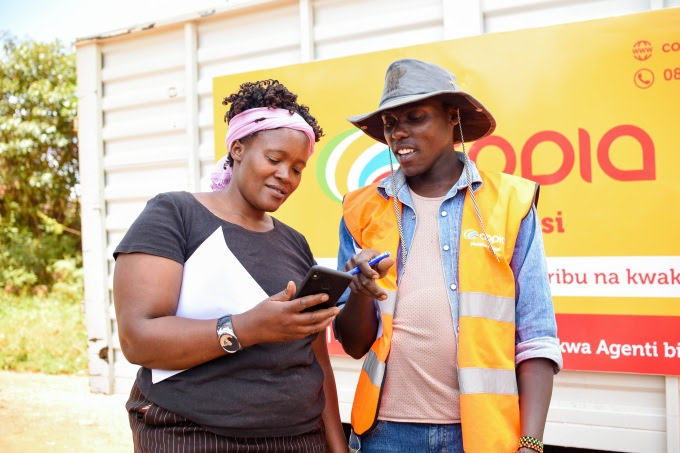
Copia, a Kenyan-based B2C e-commerce platform that serves middle to low-income African consumers, has officially decided to liquidate its assets and pay off its creditors, marking the end of its efforts to revive its business.

This decision comes after a series of attempts to sustain operations and find a viable path forward for the company. The liquidation process will involve laying off all employees, as well as selling off the company’s assets which includes delivery trucks, warehouses, amongst other equipment, to generate the funds needed to settle outstanding debts.

This move aims to ensure that creditors are compensated as fairly as possible. However, the tough decision to liquidate was not made lightly, reflecting the company’s acknowledgment of the insurmountable obstacles it faced in its efforts to achieve profitability and sustainability.

In an email sent to staff as reported by TechCabal, Copia administrator Makenzi Muthusi wrote,

“It was anticipated that Copia’s business will be maintained as a going concern, albeit with significantly reduced operations to attract the much-needed through a new company to enable business continuity. However, this has regrettably not been successful, and it is apparent that the company’s options are limited to the 3rd objective of administration as provided for in the Insolvency Act of 2015: realization of assets to settle creditors’ claims”.

Employees were given severance packages on July 4, which was disclosed via a memo. Also, the company notified its creditors of a meeting on July 14 for guidance on their respective claims.

Background Story

Copia was founded in 2013 with a mission to provide convenient and affordable online shopping options to underserved low and middle-income consumers in rural areas. Leveraging a unique model that combines technology with a network of local agents. The firm aimed to bridge the gap between urban e-commerce and rural consumers who traditionally lacked access to such services.

The company gained a strong foothold in Kenya where it operates, gaining a reputation as a pioneering e-commerce platform tailored to the needs of underserved populations. Despite its innovative approach, Copia faced several financial challenges. Some of these include a harsh economic environment, high cost of maintaining logistics, and limited purchasing power, amongst others.

In April 2023, the company halted its African expansion plans and also suspended its operations in Uganda. It attributed the decision to unfavorable economic conditions and constrained capital markets. Fast forward to July 2023, Copia cut off 350 of its staff, after it had earlier in the year, reduced its headcount by 50 employees in what the company described as a drive to keep down labor costs while eyeing profitability.

In December 2023, Copia secured a $20 million fund in a series C round, after announcing plans to intensify focus on Kenyan operations. Speaking on the raise if the funds, the CEO Tracey Turner said, 

“We are all heads down and focused on Kenya right now, and we won’t pick up our heads, until after we hit that milestone. We have done a lot of reconnaissance work and planning for where we will go next and the international rollout plan will come after we reach profitability in Kenya”.

However, in May 2024, Copia entered administration after failing to secure extra funding. The B2C eCommerce company appointed Makenzi Muthusi and Julius Ngonga from KPMG to handle the process.  Despite its efforts, the company couldn’t attract new capital on terms that worked for everyone involved.

Consequently, the company announced a switch from physical order processing to an online fulfillment model using its mobile app to reduce expenses and streamline operations in the digital age. Under the guidance of the administrators, it sought to push for a lower burn rate, with hope to reach profitability sooner, and cater to the increasingly digital consumer.

Unfortunately, Copia’s financial situation became untenable, leading the company’s leadership to make the difficult decision to liquidate its assets. The company shutdown highlights the challenges faced by startups, especially those operating in underserved markets. 

While the company’s innovative approach and vision for inclusive e-commerce were commendable, the financial and operational hurdles proved too significant to overcome.

Nigeria to Implement Tax Fees on Crypto Transactions on Centralized Exchanges CEX

0

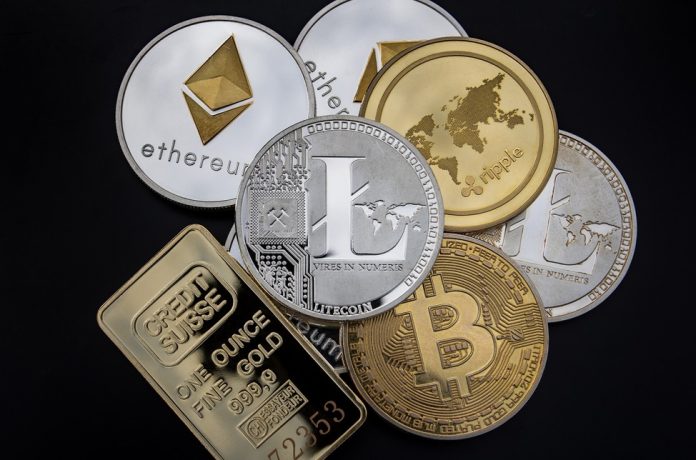
The Nigerian government’s decision to implement a tax fee on cryptocurrency transactions conducted through centralized exchanges (CEXs) marks a significant development in the country’s approach to digital currency regulation. This move reflects a growing trend among governments worldwide to find ways to integrate cryptocurrency operations within traditional financial systems, ensuring compliance with tax laws and protecting investors.

Cryptocurrency has been gaining traction in Nigeria, with many citizens turning to digital currencies as an alternative to traditional banking and a means to participate in the global economy. The imposition of a tax fee is indicative of the government’s recognition of the economic potential of cryptocurrencies and its intent to establish a framework for the sector’s growth while also generating revenue.

This fee is expected to impact the way users and investors interact with centralized exchanges. Centralized exchanges are platforms where users can trade cryptocurrencies for other assets, such as fiat currencies or other digital currencies. These platforms play a crucial role in the cryptocurrency ecosystem by providing a marketplace for trading and liquidity.

The introduction of the fee may lead to a shift in user behavior, with some potentially seeking alternative platforms that offer lower fees or moving towards decentralized exchanges (DEXs), which are not controlled by any single entity and typically have lower fee structures. However, centralized exchanges often provide additional services such as customer support, enhanced security measures, and user-friendly interfaces, which may continue to attract users despite the new fee.

The introduction of a Tax fee on cryptocurrency transactions in Nigeria is poised to have several implications for crypto investors:

Increased Costs: Investors will incur higher transaction costs when using centralized exchanges, which could reduce the overall profitability of trading activities.

Behavioral Shifts: The new fee may lead investors to alter their investment strategies, potentially favoring long-term holding over frequent trading to minimize the impact of transaction fees.

Decentralized Exchange (DEX) Adoption: To avoid the high fees of centralized exchanges, investors might turn to DEXs, which could see an increase in popularity and user base.

Market Dynamics: The fee could influence market liquidity and volatility, as the increased cost of transactions might reduce the frequency of trades.

Regulatory Compliance: Investors will need to be more diligent in their record-keeping and reporting to comply with the new tax regulations associated with the fee.

Innovation in Payment Solutions: The crypto community might innovate new payment and trading solutions to mitigate the impact of the fee, leading to advancements

For the government, the fees collected could provide a new source of revenue and could be used to fund various public services or infrastructure projects. It also allows the government to have better oversight of cryptocurrency transactions, which can be beneficial for preventing illegal activities such as money laundering and fraud.

The cryptocurrency community in Nigeria and globally will be closely monitoring the implementation of this fee and its effects on the market. It will be interesting to see how this decision influences the adoption and usage of cryptocurrencies in Nigeria and whether other nations will follow suit with similar regulatory measures.

As the situation evolves, stakeholders in the Nigerian cryptocurrency space, including users, investors, and exchange operators, will need to adapt to this new regulatory landscape. The long-term implications of this fee on the Nigerian economy and the global cryptocurrency market remain to be seen, but it is clear that the government is taking steps to formalize the cryptocurrency sector within its borders.