DD
MM
YYYY

PAGES

DD
MM
YYYY

spot_img

PAGES

Home Blog Page 3208

Experts Predict Massive Gains  for ENS, UNI and APORK as Whales Scoop Up These Undervalued Gems

0

With the cryptocurrency market still developing, analysts are projecting big profits for investors as big players, or “whales,” are acquiring Ethereum Name Service (ENS), Uniswap (UNI), and Angry Pepe Fork (APORK) at an increasing rate. Recognized for their creative solutions and expanding user bases, these hidden gems are set for significant growth. Meanwhile, let us find out why Angry Pepe Fork is the best crypto to buy among these undervalued gems.

Why Is Angry Pepe Fork (APORK) The Best Crypto To Buy?

Angry Pepe Fork is a promising cryptocurrency to buy that is poised to be one of the most popular Solana-based coins in 2024. Therefore, if you were unable to get native Pepe Coins early, APORK may be of great interest to you. Interestingly, 100x rallies for APORK are currently expected by analysts in the next few months. As a result, Angry Pepe Fork is continually attracting the attention of whales and investors seeking big gains.

Moreover, Angry Pepe Fork offers a conquer-to-earn program that provides APORK’s army with a means of earning money through the staking portal. It will be even more special because you can stake during the presale, and there will be three lock-in times available. There is a 30-day staking period available for those who would like to peek and learn more.

There’s a 60-day staking period available for seasoned campaigners looking to get the most out of their investment. Additionally, generals and veterans who are ready to take command and make significant profits can take advantage of a 90-day staking period. As a result of their combat prowess and ascent to the status of highly decorated APORK community members, other APORK token holders are also compensated with tokens, so they are not left behind.

Interestingly, the APORK team is already consulting potential partners about adding various tools and features to the platform. In the meantime, the initial presale phase is seeing the APORK token sold for just $0.014 per unit. It’s worth noting that the APORK presale has raised over $160,000 in a short amount of time, and in June, it’s anticipated to reach $400,000. Additionally, experts forecast a 100% increase in the value of the APORK token this month.

Ethereum Name Service Price Chart Analysis

In the last week, the Ethereum Name Service price has decreased by about 1% due to negative market sentiment. Meanwhile, developments in the Ethereum ecosystem as a whole, especially the conclusion of the U.S. Securities and Exchange Commission’s investigation into Ethereum 2.0, have impacted the Ethereum Name Service price.

Moreover, technical indicators that indicate a bullish momentum for Ethereum Name Service include the Moving Average Convergence Divergence (MACD) and the Relative Strength Index (RSI), as seen on the Ethereum Name Service price chart. With Ethereum Name Service trading well above significant moving averages and in a position to rise even higher, analysts anticipate that resistance levels may be broken and set long-term goals of approximately $45.

Uniswap Price Chart Analysis

The recent price action observed on the Uniswap price chart has raised questions about the future direction of the Uniswap price, particularly given that the bulls have pulled multiple bull traps since the year’s beginning. Meanwhile, it seemed that the 200-period MA is functioning as a dynamic resistance level and the Uniswap price has retreated after testing this level multiple times, indicating that maintaining gains above this MA may be challenging in the near future.

More volatility is indicated by the Bollinger Bands’ widening around the chart’s center. The return to more narrow bands, however, indicated stabilization. Additionally, Uniswap experienced a bearish reversal pattern known as a double top around the $10.15 mark, indicating the possibility of a decline.

Summary

Informed investors are making money on undervalued gems like Ethereum Name Service, Uniswap, and Angry Pepe Fork as the cryptocurrency market develops. Of these, Angry Pepe Fork sticks out as a promising cryptocurrency to buy because of its unique conquer-to-earn strategy and long-term holder-rewarding staking possibilities. Moreover, analysts project significant gains, possibly reaching 100x returns, which makes APORK an attractive option for investors looking for large payouts.


Visit Angry Pepe Fork Presale


BlockDAG’s Network Sales Soar Past $53.2M With X1 Miner App; Poised to Outdo UNI & ICP Prices

0

As the crypto market continues to develop, all eyes are on UNI and ICP for their compelling price activities. Predictions hint at a robust ascent for UNI, aiming for new highs. In contrast, the forecast for ICP Crypto isn’t as optimistic, showing a downtrend with signs of a bear market.

In this landscape, BlockDAG debuts its X1Miner Beta App, set to revolutionize crypto-mining with its efficiency and user-friendly interface. BlockDAG quickly becomes the miners’ top pick, boasting anticipated daily sales of $5 million, a testament to its promising market potential and technological superiority as it earns $53.2 million in presale.

UNI Price Prediction Breakdown

UNI’s price has surged past the $10.00 barrier, now stabilizing above $11.00 and the 100-hourly simple moving average. With resistance at $9.50 conquered, UNI may climb higher.

Should UNI push beyond the $11.75 resistance, targets of $12.20 and perhaps $12.50 are within reach. However, failing to break $11.75 might see a retreat to supports at $11.05 or even $10.25. UNI’s forthcoming trading sessions are pivotal in charting its path.

ICP Crypto Price Forecast: Crucial Trends

ICP’s recent price trajectory is worrying, dipping 1.79% recently and 10.64% over the past week. Technical indicators like the 50/200-day EMA Cross display a Death Cross, signaling strong bearish trends. An oversold RSI also advises caution.

If ICP holds above $10.550, it could strive for $16.51 resistance. A failure here could see a slide to $8.565. These thresholds are vital for foreseeing ICP’s short-term price movements.

BlockDAG X1’s Mining App Launches with a $53.2M Presale Success

BlockDAG recently rolled out the X1Miner Beta App, setting a new standard in mobile crypto mining. Globally available in beta, this app is streamlined at just 50 MB, allowing users to mine up to 20 BDAG daily without a significant battery drain, ranking it as the top mining app for effectiveness and user-friendliness.

The app introduces an innovative lightning button, enhancing mining rates every 24 hours to foster regular use and optimize mining results. Its intuitive interface welcomes novice users with ease.

From a financial perspective, BlockDAG has witnessed explosive growth. Daily sales are expected to skyrocket from $1M to $5M due to the beta app’s performance and growing user trust, presenting a lucrative prospect for investors interested in fresh crypto opportunities.

To date, BlockDAG’s 18th presale phase has amassed $53.2 million, with coin value soaring by 1120%. With 11.8 billion coins sold and $3.4 million accrued from mining-related sales, the X1 app not only promises significant returns but also cements BlockDAG’s place in the competitive crypto arena.

Final Thoughts

Amid a sea of innovations and fluctuating market trends, BlockDAG’s X1Miner Beta App stands out, signaling a shift in the perception and utilization of crypto mining apps. While UNI exhibits potential for substantial growth and ICP faces its hurdles, BlockDAG emerges as a transformative force. With a remarkable $53.2 million from presales and efficient mining that conserves resources, BlockDAG’s technological prowess shines. As these dynamic price predictions unfold, BlockDAG solidifies its stance, offering an enticing opportunity for investment and mining in the dynamic crypto landscape.


Invest in the BlockDAG Presale Now:

Presale: https://purchase.blockdag.network

Website: https://blockdag.network

Telegram: https://t.me/blockDAGnetwork

Discord: https://discord.gg/Q7BxghMVyu

Mass Exodus of Multinationals from Nigeria, A Symptom of Governance Problem – Obi

0

Peter Obi, the presidential candidate of the Labour Party in the last general elections, has raised concerns about the increasing number of multinational companies leaving Nigeria.

Citing various reports, Obi attributes this trend to an unfriendly business environment that is symptomatic of a larger governance problem.

Obi highlighted the severe economic impact of this exodus, stating, “I am compelled to address the alarming exodus of multinational companies from Nigeria, which has cost our nation a staggering N95 trillion in the past five years.”

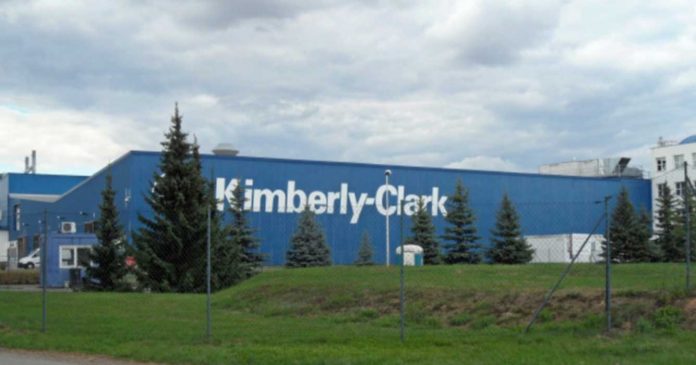
According to a report by The New Telegraph, cited by him, over ten multinational giants, including GlaxoSmithKline, Equinor, Sanofi-Aventis, Bolt Food, Procter & Gamble, Jumia Food, PZ Cussons, Kimberly-Clark, and Diageo, have exited Nigeria in the past year alone.

Obi quoted several news outlets documenting the reasons behind this mass departure. According to him, The Punch reported, “Multinational firms exit Nigeria over harsh business climate.” He also mentioned The Guardian noting, “Insecurity, high energy costs force companies to leave Nigeria,” while The Nation pointed out, “Poor business environment, inconsistent policies drive companies out of Nigeria.”

These companies consistently cite issues such as insecurity, high energy costs, and inconsistent policies as the primary reasons for their departure. Obi emphasized that these problems are not isolated incidents but reflect deeper governance issues.

“These issues are not coincidental but symptomatic of a larger governance problem,” he stated.

Voices of Economists and Business Leaders

Economists and business leaders across Nigeria have echoed Obi’s concerns. Dr. Muda Yusuf, the CEO of the Centre for the Promotion of Private Enterprise, stated that without significant reforms, the trend of multinational exits is likely to continue, further harming the economy.

The Irony of Government Efforts to Increase FDI

The irony of this situation is highlighted by President Bola Tinubu’s efforts to attract foreign investment. Despite his administration’s global efforts to bring in new investors, the exodus of established multinationals sends a contradictory message about Nigeria’s business environment.

President Tinubu has been actively engaging with international business communities, traveling extensively to pitch Nigeria as an attractive investment destination. During his recent visits to the United States and the Middle East, Tinubu assured potential investors of his administration’s commitment to economic reforms and a stable business climate.

However, the departure of major companies like Procter & Gamble and Diageo presents a stark contrast to these assurances.

Call to Action for Leadership

Obi called on the nation’s leadership to urgently address these challenges. “The responsibility lies with our leadership, those we put in charge to urgently address these challenges,” he said.

He stressed the need to create a business-friendly environment that fosters investment, innovation, and growth.

To create a friendly business environment, Obi suggested reforms targeting critical areas such as infrastructure, with a focus on the power sector to reduce operational costs and attract foreign investment. He also mentioned simplifying regulatory processes as another key initiative aimed at easing business establishment and operation, including updating regulations and enhancing transparency.

His proposed reforms include improving Nigeria’s ranking in the Ease of Doing Business index. This involves reforms in business registration, property rights enforcement, and contract handling. Obi stresses the importance of investing in education and vocational training to cultivate a skilled workforce capable of meeting industry demands.

He also emphasized lowering energy costs to enhance business efficiency, while promoting good governance practices to foster sustainable economic development through transparency and accountability in government operations.

Impact on the Economy

The exodus of multinational companies has far-reaching implications for the Nigerian economy. Firstly, it leads to significant job losses. For instance, when GlaxoSmithKline exited, it impacted hundreds of direct and indirect jobs, adding to the already high unemployment rate. Secondly, the departure of these companies results in a loss of foreign direct investment (FDI), which is crucial for economic growth and development. According to the National Bureau of Statistics, FDI into Nigeria dropped by 19.4 percent to US$377.4 million in 2023 from US$468.1 million in 2022  reflecting the deteriorating business environment.

Moreover, the exit of these firms undermines Nigeria’s industrial base and limits access to quality goods and services. The pharmaceutical sector, for example, has suffered from the exit of companies like Sanofi-Aventis, which provided critical medicines and healthcare solutions.

Obi urged Nigerians to unite in transforming the country into a business-friendly nation that attracts investment and ensures prosperity for all citizens.

“Let us unite to transform Nigeria into a nation conducive to business, attractive to investment, safe and prosperous for all citizens,” he said. He envisioned a Nigeria that becomes a beacon of hope and progress in Africa and the world.

Obi’s call to action has been echoed by many prominent Nigerians, underscoring the urgent need for systemic reforms to address the underlying issues driving multinational companies away from Nigeria. He believes that by tackling these challenges head-on, Nigeria can create a more stable and attractive environment for both local and international businesses.

As Shoprite Wuse Closes Due To Economic Challenges, You Must Innovate On Pricing in Your Business

1

Shoprite Wuse Abuja gives up as the economic paralysis in Nigeria accelerates: “Retail Supermarkets Nigeria Limited (RSNL), the operators of Shoprite Mall, has announced its decision to cease operations at its Wuse, Abuja branch. The closure, set for June 30, 2024, is attributed to the challenging business climate in Nigeria and the financial performance of the store.”

 Just like Mr Price, Woolworths, and other South Africa brands which packed and left Nigeria, Shoprite 1.0 followed. But of course, some Nigerians kept the brand in the nation. Unfortunately, what brought the firm to Nigeria [expanding middle class] has since punted or even degraded, and ShopRite’s business is under severe stress.

Running a majorly-grocery chain in Nigeria is challenging, considering that every corner of the major cities has an open market. Those open markets are asymmetric competitors as they do not pay VAT, corporate taxes, etc, and most times source produce from the same places companies like Shoprite also get their products. When the purse is heavy, you can enter Shoprite to enjoy shopping in the air-conditioned ecosystem, but under lite purses, open markets become  the main option.

The Core Market Segment in Africa – Middle of the Pyramid

This struggle is not on Shoprite; it is a lesson for any person running a business in Nigeria. Simply, you must innovate on your pricing:This is the age of sachetization in Nigeria irrespective of whatever you are selling”.

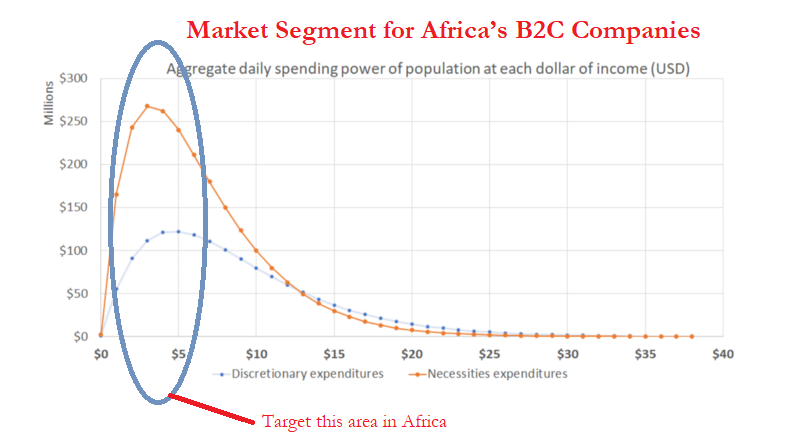
Shoprite has a problem because the best customer segment has shrunk:  “the most significant opportunity for African B2C startups lies with consumers who earn between $4 — $8 per day … This is largely because that income band holds the highest concentration of discretionary spending power on the continent, as the graph below shows.”  That band is under attack.

In 2021, I modeled that 30 million was in that band: “Yes, we have about 30 million people with decent income supporting more than 200 million, using tax numbers and informal sector upper estimates.”  That number today is less than 18 million. So, if you are running a business in Nigeria, you must adjust your pricing strategy and price smartly.

How To Price Your Products

“We regret to inform you that as of June 30, 2024, Retail Supermarkets Nigeria Limited will be closing its Wuse Store located in Novare Wuse Central Mall, Abuja. This decision has been made after a thorough evaluation of the store’s financial situation and the current business climate. We believe this is the best course of action for our organization’s long-term growth.”  

“Effective June 30, 2024, our company will no longer operate in Wuse, Abuja, and we will no longer require your services for the Novare Wuse Central Mall Store. Please note that all existing service contracts will also terminate for the store.” 

“If your services are specifically tied to the Novare Wuse Central Mall Store and if there is an outstanding balance between our companies, we will carefully review our accounting records over the next 60 days (about 2 months). We will then promptly contact you to confirm the amount owed and discuss a suitable payment schedule.”  

Shoprite to Close Wuse, Abuja Branch, Citing Challenging Business Climate

Shoprite to Close Wuse, Abuja Branch, Citing Challenging Business Climate

0

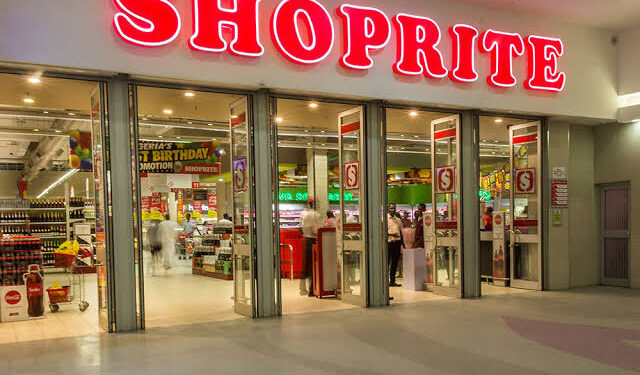
Retail Supermarkets Nigeria Limited (RSNL), the operators of Shoprite Mall, has announced its decision to cease operations at its Wuse, Abuja branch. The closure, set for June 30, 2024, is attributed to the challenging business climate in Nigeria and the financial performance of the store.

This decision comes as part of a broader evaluation of the company’s operations amid economic pressures.

The announcement was made in a circular signed by Chief Executive Officer Dr. Folakemi Fadahunsi. The circular detailed the reasons behind the closure, noting the impact of the current business environment on the store’s financial viability.

“We regret to inform you that as of June 30, 2024, Retail Supermarkets Nigeria Limited will be closing its Wuse Store located in Novare Wuse Central Mall, Abuja. This decision has been made after a thorough evaluation of the store’s financial situation and the current business climate. We believe this is the best course of action for our organization’s long-term growth,” the statement read.

The closure will affect various vendors and service providers associated with the Wuse store. The company has informed these stakeholders that their services will no longer be required after the closure date. Additionally, all existing service contracts tied to the Wuse location will be terminated.

“If your services are specifically tied to the Novare Wuse Central Mall Store and if there is an outstanding balance between our companies, we will carefully review our accounting records over the next 60 days. We will then promptly contact you to confirm the amount owed and discuss a suitable payment schedule,” the circular stated.

The decision to close the Wuse branch is a reflection of the broader challenges facing businesses in Nigeria. Economic instability, high operating costs, and fluctuating consumer demand have created a tough environment for retail operations.

Last December, RSNL announced the closure of its Ado Bayero Mall Store in Kano, citing also unfriendly business climate.

Shoprite’s ordeal underscores the difficulties faced by multinational companies operating in the Nigerian market, which have forced a growing number of them to exit the country.

The Exit of Multinational Companies

Shoprite Abuja is the latest in a growing list of multinational companies exiting Nigeria due to the unfriendly business environment and growing economic headwinds. Over the past year alone, several major firms have left the country, including GlaxoSmithKline, Equinor, Sanofi-Aventis, Bolt Food, Procter & Gamble, Jumia Food, PZ Cussons, Kimberly-Clark, and Diageo. These companies have cited consistent issues such as insecurity, volatile foreign exchange, and inconsistent government policies as reasons for their departure.

This backdrop comes at a time when Nigeria is in dire need of foreign direct investment, with President Bola Tinubu actively marketing Nigeria to investors through international engagements. However, this juxtaposition highlights a significant irony: while the government is making efforts to attract foreign investors, the challenging business environment is driving established multinationals to exit the market.

Thus, the exodus of companies like Shoprite, amidst the Tinubu administration’s efforts to promote Nigeria as an attractive investment destination, raises questions about Nigeria’s potential as an investment destination.

Shoprite’s Historical Presence in Nigeria

Shoprite entered the Nigerian market in 2005 and quickly expanded its footprint, becoming a significant player in the retail sector. The brand is well-known for offering a wide range of products, from groceries to electronics, and has been a popular shopping destination for many Nigerians.

However, in recent years, Shoprite has faced increasing operational challenges. In August 2020, Shoprite Holdings, the parent company based in South Africa, announced plans to divest from its Nigerian operations, citing difficult trading conditions and a shift in business strategy.

Nigeria’s economic environment has been particularly challenging for businesses in recent years. Factors such as high inflation, currency instability, and stringent regulatory policies have contributed to a difficult operating landscape.

The retail sector has been hit hard by these challenges, with many companies struggling to maintain profitability. Shoprite’s decision to close its Wuse branch is indicative of the broader difficulties faced by retailers in Nigeria.

The announcement of the closure has prompted reactions from various stakeholders, including employees, customers, and vendors. Many are concerned about the impact on jobs and the local economy, particularly in the Wuse area.