DD
MM
YYYY

PAGES

DD
MM
YYYY

spot_img

PAGES

Home Blog Page 3212

Nigeria Signs $3bn MoU with Afreximbank for Industrialization Financing Facility

0

In a move geared towards economic diversification and industrial development, Nigeria’s federal government signed a Memorandum of Understanding (MoU) with the African Export-Import Bank (Afreximbank) to establish a $3 billion Nigeria Industrialisation Financing Facility.

The signing took place on the sidelines of the ongoing Afreximbank Annual Meetings (AAM) 2024 in Nassau, The Bahamas, with Minister of Industry, Trade, and Investment, Dr. Doris Udoka-Anite, representing Nigeria.

The agreement aims to create special economic and agro-processing zones across Nigeria, expected to generate approximately 20,000 jobs. The financing facility will support several key sectors, including the automotive industry and the Compressed Natural Gas (CNG) value chain, promoting the development of cleaner alternatives to traditional fuels.

The package also includes technical and financial support for a diaspora investment fund framework, encouraging investments from the Nigerian diaspora.

In partnership with Arise IIP and Afreximbank, the MoU aims to revamp Nigeria’s cotton and textile industry, once a significant contributor to the economy in the 1980s and 1990s. This effort is expected to attract over $2 billion in investments and create thousands of jobs, revitalizing the country’s manufacturing capabilities. The facility will also support state-wide investment projects focused on the healthcare sector, ensuring technical viability and improving healthcare infrastructure across Nigeria.

“This is going to cut across the cotton belt in Nigeria and also create a lot of jobs in Nigeria’s core strength in terms of cotton and textile production which used to be the pride of the country 1980s and 1990s. So, we are bringing it back and working together to get that done,” Afreximbank announced.

This partnership is part of the Nigerian government’s commitment to economic diversification, moving away from an over-reliance on oil revenues.

The MoU with Afreximbank follows closely on the heels of another significant financial intervention by the World Bank, which approved a total of $2.25 billion to support Nigeria’s economic reforms and non-oil resource mobilization. The World Bank’s support includes $1.5 billion for the Nigeria Reforms for Economic Stabilization to Enable Transformation (RESET) Development Policy Financing Program (DPF), aimed at strengthening Nigeria’s economic policy framework, creating fiscal space, and protecting the poor and vulnerable.

Additionally, $750 million has been allocated for the Nigeria Accelerating Resource Mobilization Reforms (ARMOR) Program-for-Results (PforR), focused on tax and excise reforms, improving tax revenue and customs administration, and safeguarding oil revenues.

Concern over rising public debt lingers

Despite these promising financial packages, there is growing concern among Nigerians about the government’s spending patterns. Historically, the government has been criticized for its extravagant expenditures, particularly for the luxurious lifestyles of public officeholders.

Recently, the House of Representatives Committee on National Security and Intelligence recommended the purchase of new aircraft for President Bola Tinubu and Vice President Kashim Shettima, citing the current fleet’s poor condition. This recommendation has raised alarms that a portion of the financial support from international institutions could be diverted to fund these high-cost purchases, neglecting the primary goals of economic stabilization and support for the vulnerable population.

Such moves have sparked debates about the government’s priorities, especially at a time when inflation has significantly eroded spending power, crippling economic activities and making it difficult for businesses and ordinary citizens to thrive.

Adding to the public’s concern is Nigeria’s rising debt profile, which has become a significant issue. The government is currently spending more than 90 percent of its revenue on debt servicing, a situation that severely limits the ability to fund critical infrastructure, education, healthcare, and other essential economic projects. The heavy debt burden deprives the country of necessary investments in sectors that could drive long-term growth and improve the quality of life for its citizens.

While the $3 billion MoU with Afreximbank represents a significant step towards Nigeria’s industrial and economic development, economic experts say to truly benefit from this and other financial support packages, the Nigerian government must ensure transparency and accountability in the use of funds. They note that prioritizing the intended economic reforms and support for the poor will be crucial in restoring public trust and achieving sustainable growth.
Elon Musk Retains His $56 Billion Compensation Trophy!

0

Elon Musk: 1

Delaware Court: 0.

“In a remarkable show of support, Tesla shareholders have ratified CEO Elon Musk’s colossal 2018 pay package, which was originally valued at up to $56 billion in Tesla stock. This vote, coming just five months after a Delaware judge ordered the package to be rescinded, underscores the complicated and contentious nature of Musk’s compensation and leadership.” (source)

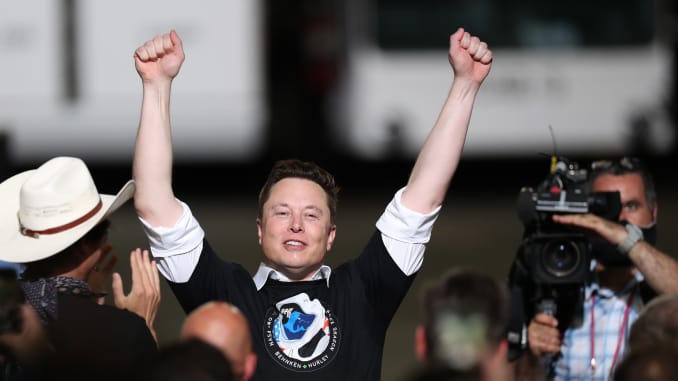
Following the announcement of the preliminary voting results, Musk took the stage with characteristic exuberance. “I just want to start off by saying hot d—! I love you guys,” he exclaimed, reflecting the palpable support from shareholders.

The vote came on the heels of a tumultuous year for Tesla. The company’s stock, despite a recent 2.9% uptick, remains down 27% for the year. Tesla is grappling with declining sales due to an aging lineup of electric vehicles and intensified competition in China.

The annual meeting also included votes on several other proposals, notably Musk’s initiative to move Tesla’s site of incorporation from Delaware to Texas. Shareholders approved the relocation, aligning the company’s legal base with its largest U.S. factory.

Congrats Musk – a labourer deserves his wage. You delivered the numbers which no human believed was possible. While I am against abnormal executive compensation, but on this one, it is not on you. Tesla was worth nothing when they made the deal, and because it was made, it should be taken to the conclusion. A court has no role to play here.

Indeed, there are many companies which will want their CEOs to take them from $45 billion to $800 billion in three years so that they can pay the CEO $56 billion. Yet, I concede that it could be done without the huge payment. Nonetheless, for the fact that it was agreed upon, it must be paid! The shareholders did the right thing by reaffirming it.

Tesla Shareholders Reaffirm Elon Musk’s $56 Billion Pay Package


Tesla Shareholders Reaffirm Elon Musk’s $56 Billion Pay Package

0
Elon Musk

In a remarkable show of support, Tesla shareholders have ratified CEO Elon Musk’s colossal 2018 pay package, which was originally valued at up to $56 billion in Tesla stock.

This vote, coming just five months after a Delaware judge ordered the package to be rescinded, underscores the complicated and contentious nature of Musk’s compensation and leadership.

The Origin of the Pay Package

The story of Musk’s 2018 compensation plan began with an ambitious vision: to incentivize Musk to transform Tesla into one of the most valuable companies in the world. The package set twelve performance milestones, each tied to a $50 billion increase in Tesla’s market capitalization. If all goals were met, Musk would receive 20.3 million stock options in twelve tranches, ultimately granting him the potential to earn over $50 billion if Tesla’s market cap grew to $650 billion. At the time, Tesla’s market capitalization was around $59 billion.

However, the lavish pay plan quickly came under scrutiny, leading to a lawsuit. Critics argued that it was excessive and not properly aligned with shareholder interests. Concerns were raised about the independence of Tesla’s board members, who many believed were too closely aligned with Musk. Moreover, the process through which the package was approved lacked transparency, with shareholders not fully informed before voting on it.

The Legal Battle

In January 2024, Delaware’s Court of Chancery Judge Kathaleen McCormick invalidated the pay package, describing it as “unfathomable” and criticizing Tesla’s board for failing to act independently and negotiate at arm’s length with Musk. The court ruled that the board did not adequately disclose information to shareholders, thus undermining the integrity of the approval process.

Tesla shareholders voted to ratify the pay package in a move that, while not legally overriding the court’s decision, strengthens Musk’s position. The vote occurred during Tesla’s annual meeting in Austin, Texas, where 77% of voting shareholders expressed support for the compensation plan.

Musk’s Response and Tesla’s Trajectory

Following the announcement of the preliminary voting results, Musk took the stage with characteristic exuberance. “I just want to start off by saying hot d—! I love you guys,” he exclaimed, reflecting the palpable support from shareholders.

The vote came on the heels of a tumultuous year for Tesla. The company’s stock, despite a recent 2.9% uptick, remains down 27% for the year. Tesla is grappling with declining sales due to an aging lineup of electric vehicles and intensified competition in China.

The annual meeting also included votes on several other proposals, notably Musk’s initiative to move Tesla’s site of incorporation from Delaware to Texas. Shareholders approved the relocation, aligning the company’s legal base with its largest U.S. factory.

The Polymath and His Challenges

Musk’s far-reaching influence extends beyond Tesla. He remains CEO of SpaceX and Neuralink, and last year, he launched xAI, a new company focused on developing large language models and an AI chatbot named Grok. Despite these commitments, Musk assured Tesla shareholders of the company’s significant progress on vehicle autonomy, predicting that this technology could “10x the value of the company.”

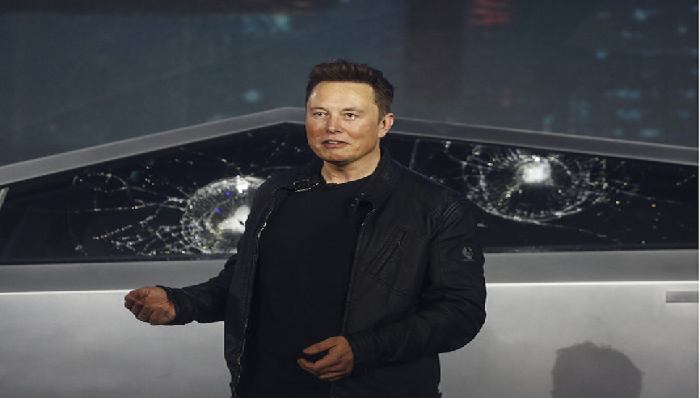
He also outlined ambitions for a ride-hailing network populated with self-driving Teslas, likening it to an Airbnb model where owners could add or remove their cars from the fleet. Regarding the Cybertruck, Musk noted that deliveries are increasing, with a recent weekly record of 1,300 shipments.

In addition, Musk promised that Tesla would begin “limited production” of its humanoid robot, Optimus, in 2025, with plans to test the robots in its factories next year. He envisioned having “over 1,000, or a few thousand” Optimus robots working at Tesla in the near future.

Support and Opposition

While major institutional investors like BlackRock and Vanguard backed Musk’s compensation package, other significant investors, such as Norway’s $1.7 trillion sovereign wealth fund and the California State Teachers’ Retirement System, opposed it. They cited concerns over its size and structure, arguing that it was disproportionate and lacked proper alignment with shareholder interests.

The shareholder vote, however, does not resolve all corporate governance issues at Tesla. Dissatisfied shareholders could challenge the vote’s legality in Delaware, the same court that previously voided Musk’s 2018 compensation plan. In the ruling that voided the pay package, Musk was accused of using “strong-arm, coercive tactics” to secure votes for the compensation and relocation proposals, suggesting that the latest approval process may still face legal scrutiny.

Economic Crunch: Nigeria Lifts Ban on Sachet Alcoholic Beverage

0

In a notable pattern of policy shift, the House of Representatives and the National Agency for Food and Drug Administration and Control (NAFDAC) have resolved to lift the ban on the sale and consumption of sachet alcoholic beverages.

This decision comes amidst the country’s current economic downturn and mounting pressures on the populace and industries.

NAFDAC had previously banned the production of alcoholic beverages in small sachets and bottles due to the rising cases of drug abuse, particularly among young Nigerians. The ban aimed to curb the easy access and consumption of alcohol in such convenient forms, which were believed to exacerbate the drug abuse crisis.

However, the current economic situation of the country has forced a reevaluation of this policy. Hon. Paschal Agbodike and Hon. Philip Agbese moved a motion in the House of Representatives, calling for an investigation into the circumstances that led to the ban. This motion prompted a thorough review by the House Committee on NAFDAC, led by Hon. Regina Akume.

Addressing the media in Abuja, Hon. Philip Agbese revealed that the decision to temporarily lift the ban was reached following comprehensive discussions between the House Committee and NAFDAC officials. He emphasized that this decision would remain in effect until the economy shows signs of recovery from the current downturn.

“There was a motion before the parliament to investigate the activities that led to the ban placed by NAFDAC on the use and sale of sachet beverages in the country. The parliament delegated the House Committee on NAFDAC to investigate the matter and report back. The committee engaged with various stakeholders, including NAFDAC and the organized private sector,” Agbese explained.

The ban on sachet alcoholic drinks was expected to lead to significant economic and job losses. The Distillers and Blenders Association of Nigeria warned earlier this year that over N1.2 trillion in investments would be lost and 5.5 million direct and indirect workers would be out of jobs if the Federal Government maintains the recent ban on the production and sale of alcohol in sachets and PET bottles.

The findings and recommendations of the committee highlighted several critical points. Key among them was the timing of the ban, which was deemed inappropriate given the ongoing economic challenges. The five-year moratorium initially granted by NAFDAC, coupled with the adverse effects of the COVID-19 pandemic, had made it difficult for industry operators to comply with the ban’s terms. Consequently, the ban’s enforcement was seen as an additional burden on an already struggling economy.

Following thorough discussions and considerations, the House of Representatives adopted the committee’s report in its entirety. The final agreement to suspend the ban was reached in a meeting with NAFDAC’s leadership, headed by Prof. Mojisola Adeyeye. The decision was driven by the collective understanding that lifting the ban, even temporarily, would align better with the current economic realities and the welfare of the masses.

A History of Bans in Nigeria

Nigeria has a long history of using bans as a solution to various issues. This approach has often been applied to goods and services that are seen as problematic.

Some notable examples of goods and services that have been banned in Nigeria include:

  • Importation of Rice: Banned to encourage local production and reduce foreign exchange spending, though it led to increased smuggling and did not significantly boost local production.
  • Importation of Poultry Products: Similar to rice, it was aimed at protecting local farmers but resulted in widespread smuggling.
  • Use of Certain Drugs and Medications: Banned due to abuse and misuse, such as codeine-based syrups, which are widely abused as recreational drugs.
  • Motorcycle Taxis (Okadas): Banned in certain cities to reduce accidents and crime, leading to loss of livelihood for many riders without providing alternative employment opportunities.

The Economic Impact of Bans

While these bans are often well-intentioned and aimed at solving specific societal issues, they frequently lead to unintended economic consequences.

Experts have warned that the culture of imposing bans as quick fixes to deep-rooted problems often overlooks the need for comprehensive and sustainable solutions.

Many believe that the temporary lifting of the ban on sachet alcoholic beverages underscores the need for Nigeria to shift towards more balanced solutions that do not hurt economic growth. Instead of outright bans, the government has been advised to implement more nuanced measures such as stricter regulation, better enforcement of existing laws, and comprehensive public awareness campaigns.

For example, rather than banning sachet alcohol, imposing higher taxes, or stricter licensing requirements for their sale could be more effective in curbing abuse while still allowing legitimate economic activity to continue.

BlockDAG’s Latest Keynote Sparks Investor Enthusiasm with 1120% Price Increase Since Launch: Will Binance & GameStop Keep Up?

0

As the cryptocurrency sector evolves, Binance Coin is anticipated to gradually increase in value over the coming years. Concurrently, GameStop’s shares experienced a price rise after an influential social media influencer’s disclosure. Amid these developments, the launch of BlockDAG’s (BDAG) second keynote, featuring a new mining solution, has drawn significant attention.

This event helped the presale soar to $50.4 million, reflecting an 1120% increase in price by the 18th batch. Unveiled with fanfare, the second keynote highlighted BlockDAG’s latest technological innovations, earning substantial investor confidence. This surge of interest has established BlockDAG as the top presale in the crypto market for 2024.

Binance Coin’s Future Looks Bright

Over the next few years, Binance Coin (BNB) is expected to see considerable growth. Analysts predict its price will climb from the current $646.48 to surpass $2,000 by 2026. This growth is attributed to strong market sentiment and the coin’s utility on the Binance exchange. Further projections indicate that the coin could reach beyond $8,000 by 2030, supported by ongoing demand and strategic initiatives to reduce its supply.

GameStop’s Stock on the Rise

Following an announcement by Keith Gill, better known as ‘Roaring Kitty’, GameStop’s stock and its Solana-based meme coin both saw significant gains. The stock price increased by 47% to $47.55, and its meme coin appreciated by 124% to $0.0298.

GameStop’s stock is currently performing well above its moving averages, suggesting a strong upward trend. As the company approaches a new phase of price exploration, further gains could be on the horizon, drawing keen interest from investors.

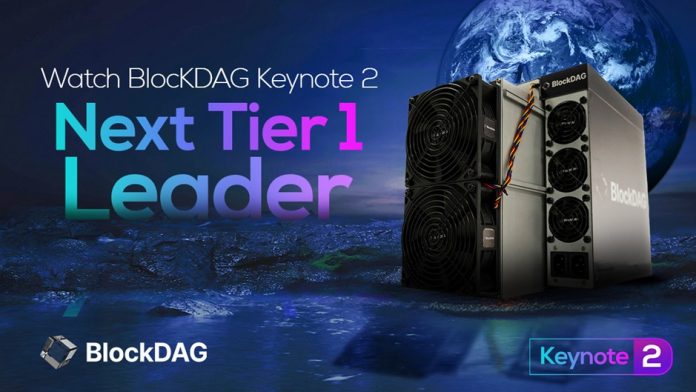
BDAG’s Keynote 2 & Advanced Mining Technology Capture Market Interest

BlockDAG’s latest keynote presentation has significantly boosted the cryptocurrency community’s interest and engagement, aiding the success of its presale, which has now collected $50.4 million. Starting at just $0.0001 in the first batch, the presale price has jumped to $0.0122 by the 18th batch, marking an impressive 1120% increase.

The presale currently earns over $500k daily, with projections indicating potential daily revenues could hit $5 million. Set to conclude in the next four months, this presale is paving the way for an early launch of the mainnet. The presentation focused on BlockDAG’s commitment to innovation and transparency, highlighting upcoming blockchain updates, the team’s unveiling, and global marketing efforts. It also featured significant roadmap updates and details on their unique Directed Acyclic Graph (DAG) for Proof-of-Work consensus, improving scalability and security.

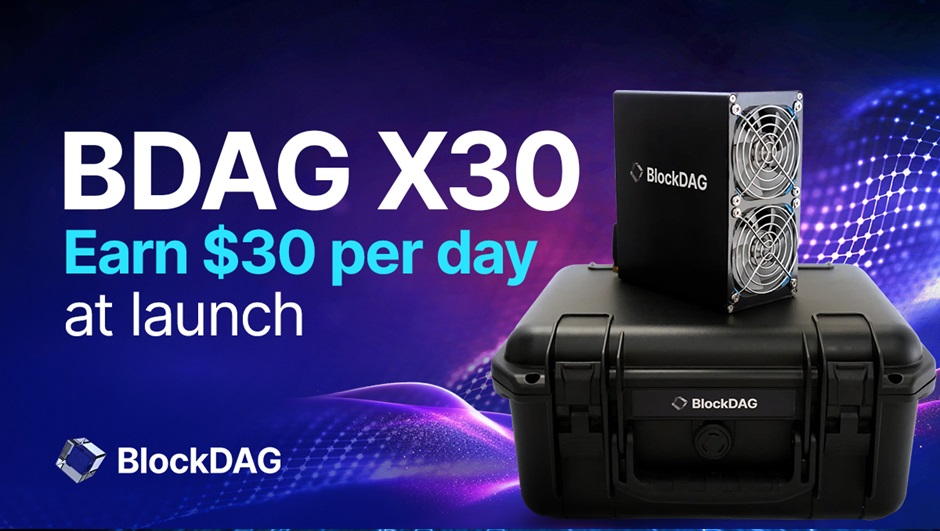
During the keynote, BlockDAG also introduced its X30 Miner, an advanced ASIC technology device designed to optimise mining efficiency. This miner, boasting a powerful 280 GH/s hash rate, can mine 600 BDAG coins daily and features a compact design that consumes low power and operates at moderate temperatures.

It supports Wi-Fi or Ethernet connectivity and is suitable for both home and professional setups due to its low noise level and lightweight construction. The X30 Miner highlights BlockDAG’s ongoing dedication to technological advancement and innovation, distinguishing it in the crypto marketplace.

Final Thoughts

While Binance Coin might take years to reach its peak and GameStop’s shares have recently surged, BlockDAG is rapidly making headway as its second keynote garners widespread attention. This attention has significantly heightened interest and investment in the cryptocurrency field.

The robust $50.4 million presale and the 1120% price increase from the first batch underscore the strong confidence in BlockDAG’s vision to revolutionise blockchain technology. As BlockDAG continues to innovate, it offers a compelling opportunity for the community to be part of a pioneering journey towards a decentralised future, further cementing its status as the premiere presale crypto project of 2024.


Join BlockDAG Presale Now:

Website: https://blockdag.network

Presale: https://purchase.blockdag.network

Telegram: https://t.me/blockDAGnetworkOfficial

Discord: https://discord.gg/Q7BxghMVyu