DD
MM
YYYY

PAGES

DD
MM
YYYY

spot_img

PAGES

Home Blog Page 3220

Raising interest rate will not curb Nigeria’s inflation – World Bank

0

The World Bank has cast doubt on the Central Bank of Nigeria’s (CBN) recent monetary policy measures, suggesting that they may not effectively curb inflation as anticipated by analysts.

In its latest report, “Global Economic Prospects,” which outlines the economic outlook for 2024 and 2025, the World Bank projects Nigeria’s economic growth rate to be 3.3% in 2024, maintaining its earlier forecast. Additionally, the bank foresees a slight improvement in Nigeria’s GDP growth to 3.5% in 2025.

The World Bank attributes the projected economic growth to the current administration’s reforms in the petroleum and foreign exchange sectors. Following a recorded growth of 2.9% in 2023, these reforms are expected to stimulate a gradual improvement in economic conditions, leading to sustained, albeit modest, growth in the non-oil economy.

The oil sector, which has faced significant challenges, is also anticipated to stabilize as production levels recover.

However, the report highlights significant risks to this optimistic outlook, particularly the potential ineffectiveness of the CBN’s monetary tightening measures in controlling inflation. Despite an aggressive increase in interest rates by a combined 750 basis points since the beginning of the year, inflation remains a persistent issue.

The CBN’s recent monetary policy has seen interest rates jump dramatically. Governor Yemi Cardoso, in his first Monetary Policy Committee (MPC) meeting, raised the interest rate by 600 basis points from 18.75% to 22.75%. Subsequent hikes have pushed the rate further to 26.25%. The bank also increased the Cash Reserve Ratio (CRR) of banks to 45%, one of the highest rates globally.

These measures were aimed at taming inflation, but the results have been underwhelming. Inflation rose from 29.90% in January 2023 to 33.69% in April 2024, defying expectations that higher interest rates would slow it down.

Various stakeholders, including members of the Nigerian business community such as the Centre for the Promotion of Private Enterprise (CPPE), the Nigerian Association of Chambers of Commerce, Industry, Mines, and Agriculture (NACCIMA), and the Manufacturers Association of Nigeria (MAN), have criticized the CBN’s approach. They argue that the high interest rates are ineffective in combating inflation and instead harm the real economy by raising the cost of accessing capital.

Economists have also pointed out the contradictions in the CBN’s strategy. While the bank is increasing the MPR to combat inflation, other policies appear to counteract these efforts. For instance, the currency in circulation, a crucial factor in controlling inflation, has risen to N3.87 trillion at the end of March, up from N3.69 trillion in February and N3.65 trillion in January.

This increase indicates that a significant portion of currency is being held outside the banking system, which can compound inflationary pressures.

The CBN’s own data shows that over 90% of the currency in circulation is outside the banking system. This trend of hoarding cash poses a challenge to the bank’s efforts to control inflation.

Muhammad Abdullahi, a member of the MPC, acknowledged in the March meeting that high currency outside banks is one of the key monetary drivers of inflation. He said that while domestic food prices driven by supply shortages and high logistics costs are major inflationary pressures, monetary policy tools need to target money supply growth, exchange rate depreciation, and the high levels of currency outside banks to mitigate these pressures.

In January 2024, at the height of the currency redesign policy, the currency in circulation was N1.386 trillion, with 57% of this amount (N792.184 billion) held outside the banks. By March, this percentage had risen to 85.8%, with N1.445 trillion of the N1.683 trillion in circulation outside the banking system.

The World Bank report also touches on the broader economic context, noting that President Tinubu’s reforms, including the removal of the fuel subsidy and the unification of the foreign exchange market, have significantly impacted the economy.

The naira depreciated sharply, closing 2023 at N907/$, almost a 100% decline. This depreciation continued into 2024, with the naira weakening to around N1,400/$ and peaking at about N1,600/$ in February. These changes have driven inflation to its highest level in 28 years, with food inflation soaring to 40.53%.

While the World Bank’s projections offer a cautiously optimistic view of Nigeria’s economic growth, substantial risks remain, particularly concerning the CBN’s monetary policy effectiveness. The CBN has been advised to augment its monetary policy tightening by mopping up excess cash in circulation.

The Dangote Steel Is A Huge Vision for Nigeria

0

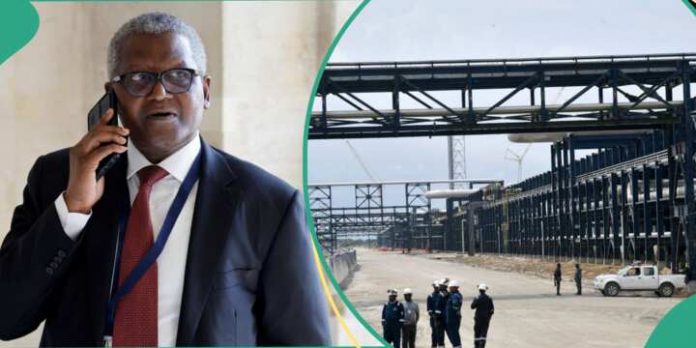
“We want to make sure every single steel that we use will come from Nigeria,” Aliko Dangote said.

Nigeria: Dangote is going into steel. The wailers will not match him on productivity, but as soon as he begins to deliver alpha, the noisemakers, siddon-think-talkers and siddon-think-tankers will start saying  “Dangote gets help from the government”.

I want to commend Alhaji for his services to Nigeria. From food to cement to…to refinery to steel, and when he is done with steel, he will come for electricity. Today, he generates about 50% of Nigeria’s total electricity capacity for the Group. This means the expertise is already in-house.

Good People, it takes the killing of one leopard to be called a killer of leopards, the elders will say. Dangote has killed many leopards, and ALL Nigerians must commend this man. I do not even understand how he gets the motivation and energy to keep building considering what he has accomplished.

Dangote Steel – to power the pillars and beams for industrialized Nigeria. Congratulations for the NEW vision.

Dangote Offsets $2.4bn of Refinery’s $5.5bn Debt, Targets $30bn Revenue Amid Plan to Venture into Steel Production

Dangote Offsets $2.4bn of Refinery’s $5.5bn Debt, Targets $30bn Revenue Amid Plan to Venture into Steel Production

1

Africa’s richest person and founder of the Dangote Group, Aliko Dangote, announced on Monday that he has paid off approximately $2.4 billion of the $5.5 billion borrowed to build his $19 billion refinery located near Lagos.

This disclosure was made during the Afreximbank Annual Meetings (AAN) and the AfriCaribbean Trade & Investment Forum.

The 650,000 barrels-per-day capacity refinery, which is one of the largest in the world, faced significant hurdles during its development. Dangote revealed that both local and foreign entities made concerted efforts to sabotage the project, with many skeptics believing it was destined to fail. He credited the support of Afreximbank and Nigeria’s Access Bank for keeping the vision alive. Without these financial institutions, Dangote asserted, the refinery project might have collapsed.

Highlighting the crucial role of African financial institutions, Dangote said that organizations like the African Finance Corporation (AFC) and Afreximbank understand the unique challenges of the continent. He criticized foreign banks for their lack of interest in Africa’s growth, noting that some even attempted to push his company into loan default during the COVID-19 pandemic.

“We borrowed the money based on our own balance sheet. I think we borrowed just over $5.5 billion. But we paid also a lot of interest as we went along, because the project was delayed due to lack of land and the time-consuming sand-filling process. Almost five years or so we didn’t do anything,” Dangote explained.

He noted that since beginning actual construction in 2018, they have managed to pay off about $2.4 billion in principal and interest, leaving approximately $2.7 billion remaining.

Challenges with International Oil Companies

Addressing whether he was receiving enough crude oil as feedstock for the refinery from International Oil Companies (IOCs), Dangote acknowledged resistance from entities accustomed to significant profits over the past 35 years. He suggested that these entities would naturally resist changes that threatened their revenue streams.

“In a system where for 35 years people are used to counting good money, and all of a sudden they see that the days of counting that money have come to an end, you don’t expect them to pray for you. Of course, you expect them to fight back. And I think that is the process that we’re now really going through,” he stated.

Dangote expressed confidence that despite the current non-supply of crude and non-purchase of products, these issues would be temporary.

Dangote described the extent of opposition he faced as unexpectedly severe. “I knew that there would be a fight. But I didn’t know that the mafia in oil, they are stronger than the mafia in drugs. I can tell you that. Yes, it’s a fact,” he said, noting the numerous attempts by both local and foreign entities to derail the refinery project.

He said he remained resolute against all odds, describing himself as someone who has fought all his life and expressing confidence in ultimately winning this battle.

Dangote stressed the importance of Africa producing what it consumes, pointing out that there is currently no support coming from Western countries. He revealed that during the COVID-19 period, some international banks actively sought to push his company into loan default to kill the project, a move thwarted by support from banks like Afreximbank.

Future Export Plans

The entrepreneur also highlighted the potential of the Dangote fertilizer plant, which currently exports 25% of its production to the US and can fully meet the urea needs of Caribbean countries. He pointed out that Nigeria lacks strategic oil reserves, a situation he described as dangerous.

However, he said that with the Dangote refinery, the country can now establish a strategic reserve of petroleum products.

“So, we are not living from hand to mouth anymore. And the country doesn’t have strategic reserves in terms of petrol, which is very dangerous. It is. But in our own plant now, we have only 4.78 billion liters of various tankage capacity. But right now we’re adding another 600 million,” Dangote explained, adding that the refinery will produce and export top-quality products, addressing the issue of previously imported dirty fuels that had health implications like cancer.

Emphasizing the role of domestic investment, Dangote urged Africans not to be deceived into thinking that foreign investors will make the continent great.

“It must be the domestic investors. Because domestic investment is what actually attracts foreign investment,” he noted.

Power Generation and Plan to Venture into Steel

Looking ahead, Dangote stated that the Dangote Group targets revenue in excess of $30 billion and plans to venture into the steel industry soon.

“We want to make sure every single steel that we use will come from Nigeria,” he said.

Dangote also mentioned that the Dangote Group currently produces about 1,500 megawatts of power for self-consumption, thereby reducing dependence on the national grid and mitigating its impact on the broader energy infrastructure.

Dangote’s journey to build one of the largest refineries in the world has been fraught with challenges, but as the refinery nears full operation, it promises to significantly boost Nigeria’s refining capacity, enhance energy security, and provide substantial economic benefits to the country and the broader region.

Bitcoin Price Plunge: Analysts Predict Bearish Sentiment

0

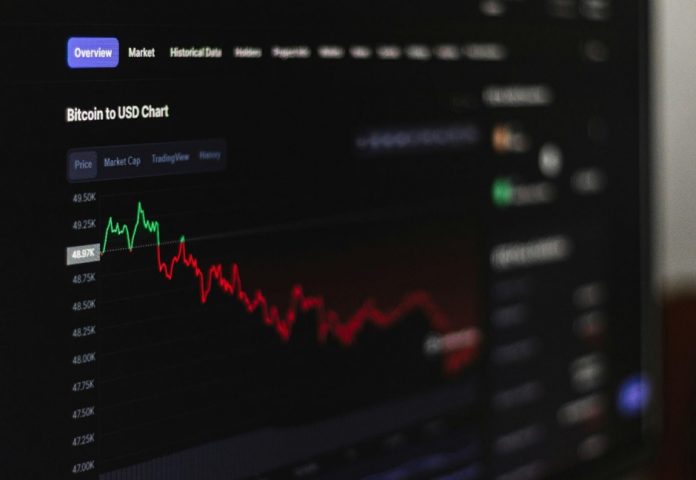
The price of Bitcoin has seen continuous decline lately, after hitting the $71k price mark a few days ago, as several analysts predict bearish sentiment.

As the market experiences a price decline, dropping by 10% from its recent record high, traders are bracing for potential dips, amidst ongoing market volatility and concerns over inflation.

With the price of Bitcoin currently trading at $67,250, as at the time of writing this report, this downward trend is attributed to several factors such as broader market movements and mounting fears of inflation.

Amidst the bearish sentiments, analysts are predicting further declines in the near term. Founder of MN Trading Consultancy Michael Van de Poppe, predicts that Bitcoin could potentially decline to the $60,000 range, citing upcoming economic indicators such as FOMC meeting and CPI data as potential catalysts for correction.

Also speaking, Acclaimed financial analyst Peter Schiff has long expressed apprehension about Bitcoin’s stability, attributing fluctuations to heavy reliance on exchange-traded fund (ETF) investments. Schiff contends that the digital currency’s market depends too heavily on institutional money that flows in and out. As ETF shareholders eventually sell their holdings, Schiff warns, the cryptocurrency could experience sharp

declines that destabilize prices.

Notably, crypto traders are keenly scrutinizing the Federal Reserve’s coming final choice, which could further affect Bitcoin’s price course. A rise above the $68,500 marker could denote retrieval, while a slide underneath the $66,000 mark could signify a further downturn.

Analysts noted that although the current dip was steep, longer-term models still point to wider adoption, affording Bitcoin protection against macro volatility.

Meanwhile, the anticipation of a market correction is not without precedent, as historical data indicates that Bitcoin often experiences significant price adjustments ahead of key economic events. This pattern of pre-event volatility has become a familiar sight for seasoned investors, who understand the importance of closely monitoring market indicators and economic announcements for insights into Bitcoin’s future trajectory.

Despite the current support level at around $65,000, analysts caution that weak bid liquidity could exacerbate the downward pressure on Bitcoin’s price. Material Indicators, a leading trading resource, cites a lack of significant bid concentration below $60,000, suggesting that Bitcoin’s price may face additional challenges in finding support levels in the coming days.

From a technical standpoint, Bitcoin’s immediate support rests at $65,000, with a breach of this level potentially triggering a further decline towards the 200-day EMA at around $63,934. The critical support zone between $62,800 and $64,815, marked by the 50-day EMA, holds significance as it previously catalyzed a surge in Bitcoin’s price.

As traders/investors navigate through a period of heightened volatility and uncertainty, they are urged to it’s essential approach trading with caution and a thorough understanding of market dynamics. While short-term price fluctuations may test investor confidence, the underlying fundamentals of Bitcoin remain robust.

Maximize Earnings with CryptoHeap: Achieve Financial Freedom through Crypto Staking

0

The modern world offers many opportunities to make money, and one of the most attractive options is investing in cryptocurrencies. However, traditional trading and investing in cryptocurrencies can be risky and require considerable knowledge and time. If you’re looking for a reliable way to make easy money with less risk, CryptoHeap is the perfect solution for you.

What is CryptoHeap?

Crypto staking is the process blockchain networks like Ethereum and other cryptocurrencies use to validate transactions on the blockchain in exchange for a reward. Crypto staking is similar to crypto mining , but unlike mining, it is not competition-based.

CryptoHeap is an innovative platform that allows users to earn money by staking cryptocurrencies. Staking is the process of blocking cryptocurrencies in a wallet to support blockchain operations, for which you receive rewards. Simply put, it’s like interest on a bank deposit, but with a much higher yield.

How does crypto staking work?

Crypto staking relies on the proof-of-stake (PoS) consensus mechanism, where one person is randomly chosen from a pool of participants. Users, also known as crypto stakers, can stake tokens within the network for a chance to be selected as validators. To become a validator, a user must stake a minimum number of tokens.

Benefits of using CryptoHeap to Get Staking Rewards

  1. High profitability: CryptoHeap offers competitive interest rates that are significantly higher than traditional bank deposits. You can expect annual returns of up to 30% or more depending on the cryptocurrency you choose.
  2. Ease of use: The platform’s interface is intuitive, allowing even beginners to quickly get up to speed and start earning. You don’t need to be an expert in cryptocurrencies to take advantage of the staking opportunities.
  3. Reliability and security: CryptoHeap guarantees the safety of your investment. The platform uses the most advanced encryption and security methods to protect your funds from intruders.
  4. Passive Income: Unlike active trading, staking allows you to earn passive income. You simply place your cryptocurrencies on the platform and receive rewards without spending time on daily market monitoring.

How to Start Earning with CryptoHeap

Step 1: Registration

First, you need to register on the CryptoHeap platform. The registration process is simple and fast, taking only a few minutes. To do this, go to https://CryptoHeap.com/ and click on the “Register” button.

Step 2: Deposit

After registration, you need to make a deposit in the cryptocurrency of your choice. CryptoHeap supports various popular cryptocurrencies such as Bitcoin, Ethereum, Cardano, and others. Just choose the appropriate cryptocurrency and follow the instructions to deposit funds into your account.

Step 3: Choose a Staking Pool

The CryptoHeap platform offers various staking pools with different conditions and yields. Check out the offers and choose the one that best suits your investment goals. After choosing a pool, place your cryptocurrencies in it.

Step 4: Receive Rewards

Now all you have to do is watch your investment generate income. CryptoHeap automatically credits rewards to your account, and you can withdraw them at any time or reinvest them for even greater gains.

User feedback

Many users have already appreciated the benefits of CryptoHeap and share their positive experience:

Elena, Kyiv: “I was always afraid to invest in cryptocurrencies because of the high risk. But with CryptoHeap, I found a way to earn money without taking big risks. Now I receive a stable passive income and can go about my business with peace of mind.”

Oleksandr, Lviv: “The CryptoHeap platform is very user-friendly and clear. I started earning a few days after registration. I recommend it to anyone who wants to earn passive income.”

Tips for Beginners

  1. Start small: If you’re new to cryptocurrency, start with a small investment to familiarize yourself with the process and minimize risks.
  2. Study the Market: Even if you don’t plan to actively trade, it is important to understand the basics of the cryptocurrency market and follow the news.
  3. Spread the Risks: Do not invest all your funds in one cryptocurrency or pool. Diversifying your investments will help minimize risks and increase profitability.

Conclusion.

CryptoHeap is a great opportunity for those who want to make money on cryptocurrencies without complications and high risks. The platform offers high profitability, ease of use, and reliability, making it an ideal choice for both beginners and experienced investors. Sign up for CryptoHeap today and start your journey to financial freedom now!

Don’t waste your time — invest wisely with www.cryptoheap.com and get a stable passive income from cryptocurrency staking!