
DD
MM
YYYY

PAGES

DD
MM
YYYY

spot_img

PAGES

Home Blog Page 3224

Flutterwave Introduces American Express Payment Option for Nigerian Merchants

0

Flutterwave, one of Africa’s leading Fintech companies, has announced a significant development that will broaden payment options for its online merchants in Nigeria.

The company has integrated American Express into its payment platform, allowing Nigerian merchants to accept payments from American Express cardholders.

This development is poised to have a substantial impact by facilitating smoother transactions with international customers and enhancing the global reach of Nigerian businesses. Also, Flutterwave has announced that this feature will be available to merchants in several other African countries which include Tanzania, Rwanda, Ghana, and Uganda, in the near future.

Speaking on this collaboration, Flutterwave CEO and Founder, Olugbenga Agboola said,

“At Flutterwave, we’re always looking for ways to connect the world to Africa through payments. This is one of our initiatives to ensure that more people across the world can pay using Flutterwave in Africa. We understand the value of providing shoppers with payment methods that work for them, as well as helping businesses to expand their customer bases.

“This collaboration also provides more options of where to shop and what to buy to American Express cardholders across the globe. By offering American Express as a method of payment, Flutterwave will make the payment process faster and simpler for American Express card holders, and improve the experience for e-commerce businesses using Flutterwave, helping them to start locally and sell globally.”

Also speaking, the Vice President and General Manager of Global Network Services EMEA at American Express, Briana Wilsey said,

“American Express continues to expand in Africa to enable greater payment choices for businesses and consumers. Through the agreement with Flutterwave, a trusted payment provider, we are giving e-commerce merchants in Nigeria the opportunity to reach American Express Card Members around the world. The collaboration is a win-win because it also increases the number of places where our Card Members can use their Cards in Nigeria.”

Flutterwave collaboration with American Express will facilitate online transactions and offer a range of benefits for both merchants and online shoppers. These includes;

• Flutterwave merchants can attract business from a new customer base of American Express Card Members in Africa and around the world. This includes consumers with personal cards and spenders with business or corporate products. Terms and conditions apply.

• For shoppers, there is more choice when it comes to being able to select their preferred method of payment when transacting with Flutterwave merchants. This collaboration strengthens the American Express global network and increases the number of locations across Africa that can be used by American Express Card Members to purchase a range of different goods and services.

The integration of American Express into Flutterwave’s platform is expected to simplify cross-border transactions. Nigerian merchants will now find it easier to engage with international customers who prefer to use their Amex cards. This can lead to increased sales and revenue, as the barrier to accepting payments from a global clientele is significantly reduced.

Additionally, this development aligns with Flutterwave’s broader strategy of fostering financial inclusion and making it easier for African businesses to participate in the global economy. By facilitating seamless payments from international customers, Flutterwave is helping Nigerian businesses expand their footprint beyond local markets.
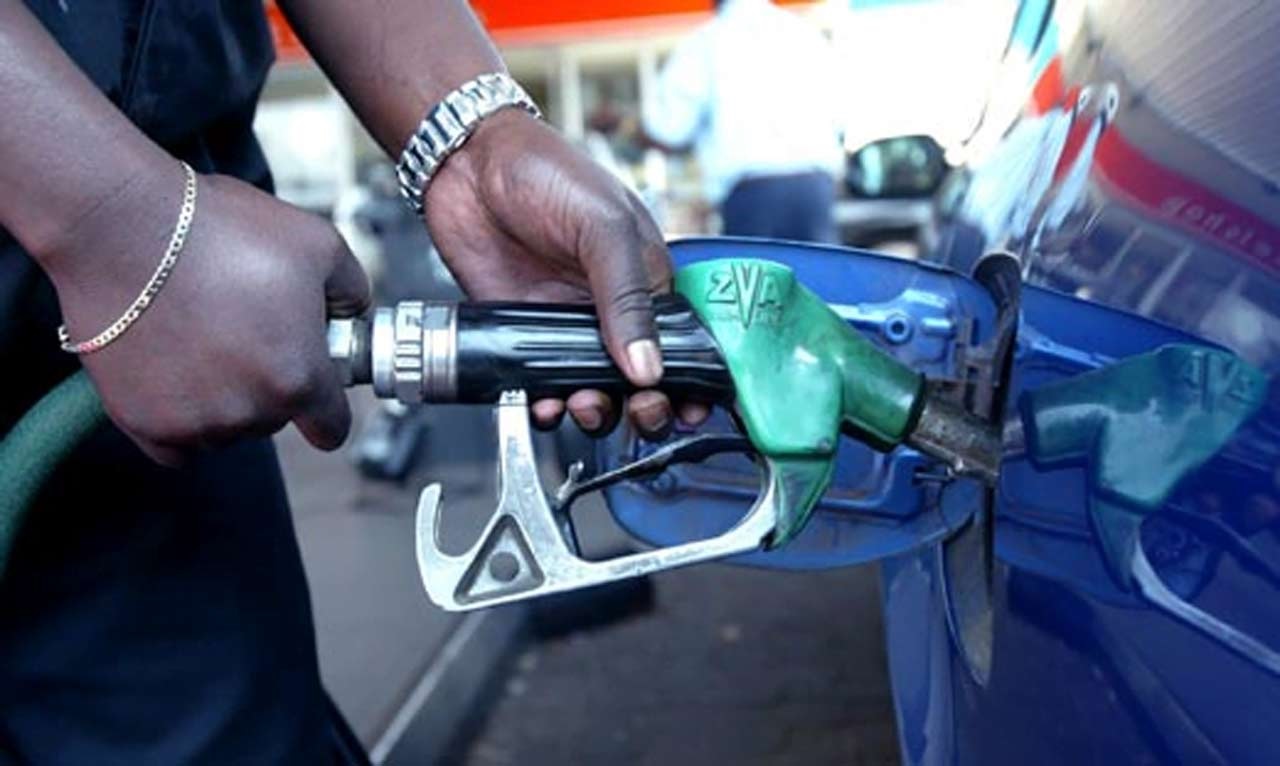
Fuel Subsidy Controversy: Government Pays Us to Sell at Half the Landing Cost, We’re Not Paying Subsidies – NNPCL

0

The Chief Financial Officer (CFO) of the Nigeria National Petroleum Company Ltd (NNPCL), Alhaji Umar Ajiya, has clarified the ongoing confusion regarding fuel subsidies and the financial operations of NNPCL.

Speaking in Abuja on Monday during the presentation of the company’s 2023 full-year financial results, which recorded a profit of N3.3 trillion, Ajiya disclosed that the government does no longer subsidize the cost of Premium Motor Spirit (PMS) it only compensates NNPCL for selling the product at half the landing cost.

He explained that for the past eight to nine months, NNPCL has not disbursed any subsidies to fuel marketers. Instead, the company has been handling the shortfall arising from selling PMS at government-mandated prices, which are significantly lower than the actual landing costs.

He stated: “In the last eight to nine months, the NNPC Ltd. has not paid anybody a dime as subsidy, no one has been paid kobo by the NNPC Ltd. in the name of subsidy. No marketer has received any money from us by way of subsidy.”

Ajiya further clarified that the government’s directive requires NNPCL to sell PMS at half the landing cost, with the difference being reconciled between NNPCL and the federation. This arrangement, which he referred to as “shortfall,” essentially means that while NNPCL is not directly paying subsidies to marketers, the government is indirectly subsidizing fuel by covering the gap between the market cost and the regulated retail price.

This clarification comes amidst reports that the administration of President Bola Tinubu plans to spend N6.8 trillion on fuel subsidies between August 2023 and December 2024. This figure, the highest ever recorded, has fueled public concern and criticism, particularly given the ongoing economic challenges facing the country.

Nigerians are questioning the distinction between traditional fuel subsidies and the current arrangement where the government pays NNPCL to sell PMS at a loss. Data from NNPCL indicates that the landing cost of fuel is approximately N1,200 per liter, while the official selling price is N600 per liter. Between January and June 2024, the government reportedly spent N7.8 trillion on what is essentially a subsidy, albeit under a different label (shortfall).

Alleged $6.8 Billion Debt and Credit Lines

Addressing concerns about NNPCL’s financial obligations, Ajiya acknowledged that the company has engaged in open credit arrangements with PMS suppliers, a common practice in the global downstream sector. He noted that these credit lines involve term agreements for payment, which are critical for maintaining a steady supply of petroleum products.

Dapi Segun, NNPCL’s Executive Vice President of Downstream Operations, also weighed in on the matter, disputing reports that the company owes $6.8 billion to suppliers. He explained that while there are outstanding payments, the figure is lower than the reported amount and is subject to fluctuations based on ongoing transactions.

“Concerning the outstanding to the suppliers, it is not in that magnitude that has been put out; it is actually lower than the $6.8 billion,” Segun stated. “What matters really is the relationship between us and our suppliers to ensure that we keep faith in making these payments to our suppliers, which we have done over time.”

Segun also highlighted the dynamic nature of these financial obligations, explaining that the debt figure is not static and fluctuates as payments are made and new supplies are received. He stressed that the primary concern for NNPCL is to ensure the continuous availability of PMS across the country.

“You would understand that it is not a static figure, and I wouldn’t want to be quoting any figure, when we make payments it goes down, when they supply products, it goes up.

“It is a dynamic way, but the most important thing is to ensure that we continue to make PMS available across the country,” he said.

The Subsidy and Ongoing Fuel Scarcity

Despite assurances from NNPCL that fuel will be available across the country in a few days, the Nigerian people are currently experiencing widespread fuel scarcity, exacerbated by perceived lapses in the subsidy arrangement and distribution inefficiencies. The Independent Petroleum Marketers Association of Nigeria (IPMAN), which represents over 3,000 members controlling the largest share of filling stations nationwide, has accused NNPCL of failing to supply enough products to meet demand.

Engr Shina Amoo, Chairman of IPMAN’s Ore Depot, expressed frustration during an appearance on Channels Television’s Morning Brief, citing a lack of adequate supply from NNPCL. He pointed out that independent marketers, who are crucial to fuel distribution, have been sidelined in favor of major marketers, leading to widespread shortages.

“There is no supply anywhere. For now, the only supply available is not well distributed. We have been making noise about the distribution pattern long ago,” Amoo said. “We had a type of arrangement before now, where we used to enjoy 70/30 supply based on our strength. If you go to areas like villages, and urban areas, you will see lots of independent marketers where you would not find any major or semi-major marketers.”

Oil Producers Warn Nigeria Against Mandatory Crude Oil Sales to Local Refineries, Citing Economic Risks and Legal Constraints

0

The Independent Petroleum Producers Group (IPPG) has issued a stern warning to Nigerian authorities against the forced sale of crude oil to local refineries, including the Dangote Refinery.

The group, which represents major upstream oil producers in Nigeria, expressed deep concerns that such mandates could lead to severe economic repercussions and violate existing contractual obligations.

This warning follows a directive from the Nigerian Upstream Petroleum Regulatory Commission (NUPRC), dated July 31, 2024, which outlined domestic crude oil refining requirements and forecasted production for the second half of 2024. The directive also requested monthly quotations for crude oil supply from all producing companies to licensed refineries in Nigeria.

In a letter addressed to the NUPRC Chief Executive, the IPPG, chaired by Abdulrazaq Isa, challenged the directive, arguing that it is both economically and legally problematic. The letter, dated August 16, 2024, invoked section 109(4) of the Petroleum Industry Act (PIA) 2021, underscoring that any supply of crude oil to a refinery under the Domestic Crude Oil Supply Obligations (DCSO) must be conducted on a willing buyer-willing seller basis.

Economic Damage and Legal Violations

The IPPG highlighted that the NUPRC’s directive could lead to “economic damage and self-sabotage of the Nigerian economy.” The group emphasized that under Nigerian law, the sale of crude oil to refineries cannot be forced by regulation or guidelines, as it must be commercially negotiated between the producer and the refinery, taking into account prevailing international market prices.

The IPPG explained that most producers, including NNPC Limited, are currently bound by fixed supply or forward sale contracts with international traders. These contracts, often established to bridge financing gaps in upstream investments, are secured by the producers’ barrels of crude oil.

Consequently, any directive mandating the diversion of crude oil to local refineries would not only breach these contracts but also expose producers to severe financial penalties and default risks.

“These contractual arrangements have become the necessary collateral obligations for producers (including NNPC Limited) and thus they currently have contractual rights to producers’ barrels of crude oil,” the IPPG stated. “In addition, crude cargoes are normally sold at least three (3) months in advance, and therefore your recent letters to some of our members received in August mandating DCSO volumes from July to December 2024 are not achievable.”

The group further warned that enforcing the NUPRC’s directive would cause a cascade of defaults across multiple financial obligations held by Nigerian producers. This could severely impact their ability to secure future financing, thereby hampering efforts to increase Nigeria’s crude oil production from the current level of 1.3 million barrels per day to the government’s target of 2-2.5 million barrels per day.

Impact on Nigeria’s Economic Stability

The IPPG’s letter detailed the broader economic implications of enforcing the NUPRC directive. It cautioned that compelling producers to supply crude oil to local refineries under these terms would “cause cross defaults across IPPG members” and “dry up a critical source of foreign exchange (FX) for the country.” Given that NNPC Limited has already engaged in a series of Forward Sale Agreements, which involve securing future revenues against upfront funding, any disruption in FX inflows from other producers could create a liquidity crisis, further destabilizing the Nigerian economy.

“The Foreign Exchange (FX) shortage would be acutely felt given that NNPC Limited has engaged in (and is currently marketing) a series of Forward Sale Agreements which mean future revenues are being secured against upfront funding,” the IPPG warned. “If the IPPG members cannot augment this gap with their own FX inflows, then it creates a spiral of liquidity funding that will further impair our economy on a macro level.”

Legal Arguments Against the Directive

In its legal argument, the IPPG pointed out that section 109(4)(c) of the Petroleum Industry Act (PIA) explicitly states that the payment for crude oil supplied to refineries should be in either US Dollars or Naira, as agreed between the producer and the refinery. The group argued that mandating the currency of transaction, or compelling producers to sell to local refineries outside of negotiated agreements, contravenes the principal law.

“Holders of crude oil refining licenses shall provide payment guarantees as required by the applicable lessee, and payment for crude oil purchased pursuant to obligations shall be in US Dollars or Naira, as may be agreed between the lessees or suppliers and the licensee of the refining license,” the IPPG stated, stressing that any attempt to override this provision would be legally untenable.

However, an energy expert has pointed out that the Petroleum Industry Act (PIA), sections 11 & 12 of the production regulations under the domestic crude supply obligations, mandates the NUPRC to issue a ‘request for quote’ to production lessees or licensees to mark up the shortage when there is crude oil shortage at domestic refineries – affecting national supply curve. The PIA thus empowers the NUPRC to withdraw export permits of the lessees or licensees if they fail to comply.

“Sections 11,12,14 & 15 of the production curtailment and domestic crude oil supply obligation regulations 2023 issued as a gazette pursuant to sections 109 of the PIA of 2021 — is very clear,” Kelvin Emmanuel, cofounder and CEO of Dairy Hills, said.

“Independent producers onshore and in shallow waters that sign pre-export financing contracts in forward sale agreements with international oil traders subject to stabilization clauses included in their unregistered joint venture agreements are not superior to the provisions of the PIA.”

Why Tekedia Capital Is Yet To Invest in Solar Power Retail Providers

0

Question: “We have noted that Tekedia Capital has not invested in any renewable energy solar company especially in Nigeria. Can you explain why?”

Our response: We understand that energy is a big  opportunity in Africa. However, the solar-based model with retail customers is not something we are open to explore at this time. This is not because of the usual challenges of manufacturing and selling hardware systems. Our real concern is that some of the major investors in these markets are actually international oil companies. (The largest investors in this sector are funds related to or connected with major oil companies, where the oil majors are not investing directly.)

We posit that these oil firms are not necessarily investing in  these companies for direct financial profits, rather, they are investing to have companies they can use for carbon credit transfers. In other words, if you flare gas in the core operation, you can also zero that out, via carbon credits, from a solar-based energy provider you invested in. That model is cheaper than going to Tesla, forest reserves, etc to buy carbon credits. 

Consequently, for Tekedia Capital, it is going to be challenging to fund firms with capacity to beat that oil company-supported solar energy provider, as generating carbon credits is more important for the firm, than making direct financial gains. That is why we have avoided this sector because the competitor could be structured to be loss-making, even as it ramps up carbon credits to funnel to its major backers. 

Of course, there are investors who do not care. But for us, we look at the terminal enterprise value and how this vector could affect our support system to make that investment worthwhile. Some investors do have those capabilities; we do not, and that is why we are not investing in the sector today.

As always, feel free to check what we fund here https://capital.tekedia.com/startups/ . Of course, we welcome new members as the next investment cycle will open in Oct 2024, and we have great companies coming https://capital.tekedia.com/course/fee/

The Amazing Big Heart of ECOWAS On the Mali, Niger and Burkina Faso Matter

0

This is the best way to understand the magic in Niger, Mali and Burkina Faso: ‘These guys want the butter, the money of the butter, the milk and a kiss from the dairy woman. Recently, I was at the Dakar airport [Senegal] with a flight coming from Niamey [Niger Republic]. One Senegalese  immigration officer laughed at a Nigerien passenger: “You guys left ECOWAS but your passports are still ECOWAS passports, and we don’t request a visa for you to enter Senegal.”’ – Olivier Malinur commenting on this piece.

Good People, that explains everything. So, Niger, Mali and Burkina Faso are still using ECOWAS passports, even after exiting ECOWAS. This explains why nothing has affected their trades since they can travel and move around ECOWAS without any restriction.  Possibly, the Port of Lome – West Africa’’s busiest port – is still moving the cargoes for the 3 countries within the ECOWAS commerce treaty and tariff system.

I truly admire the maturity ECOWAS has shown here and I apologize for my ignorance. Until this morning, my assumption was that Mali, Burkina Faso, and Niger exited ECOWAS and dropped all ECOWAS rights, including the use of ECOWAS passports. So, my welfare model was that to travel into the ECOWAS region, visas would be required from their citizens. But here, ECOWAS just allowed them, and has continued to beg their leaders to return to ECOWAS. That is showing a big brother heart, and that is indeed commendable from ECOWAS. And I hope ECOWAS does not cancel those passports; this is a family issue!

Mali, Niger and Burkina Faso: if you are still relying on ECOWAS passports, think over these issues again. Understand that if ECOWAS cancels those passports, you can imperil trade routes which have evolved over centuries, and that could be devastating. [A case: getting a Nigerian visa is not easy!]  The fact that ECOWAS still allows you guys to enjoy these benefits despite the attitudes shown by the trio is something you must consider on this matter.

The Illusion of Single Currency and the Traps in Mali, Niger and Burkina Faso