DD
MM
YYYY

PAGES

DD
MM
YYYY

spot_img

PAGES

Home Blog Page 3228

Robert Kiyosaki Predicts Price of Bitcoin to Surge to $350,000 in 2024

0

American businessman and author of “Rich Dad, Poor Dad”, Robert Kiyosaki has predicted that the price of Bitcoin will surge to $350,000 in 2024.

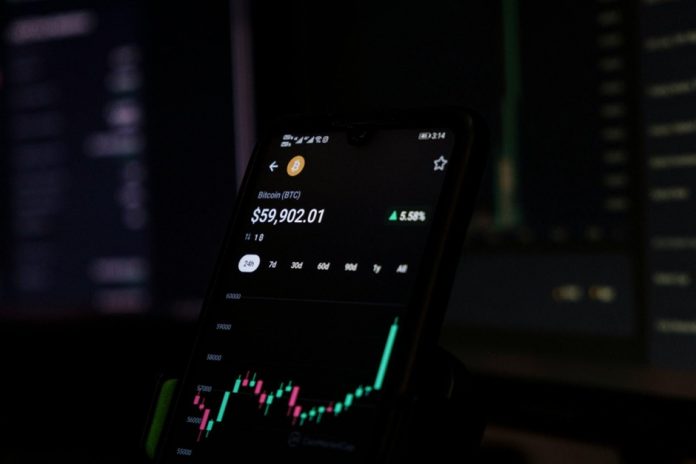
Amid the current price fluctuations of Bitcoin price between the $60,000 and $70,000 mark, the serial entrepreneur expressed confidence that the price of the crypto asset will surge massively before the end of the year.

He wrote on his X handle,

“BITCOIN will be $350,000 by August 25, 2024, is not a lie. It’s a prediction. It’s speculation, it’s an opinion, but it’s not a lie. It’s suckers bait, but it’s not a lie because any prediction about the future is not a lie. I want $350,000 BITCOIN to be a fact, and I want it to be true…. but it is only a prediction. I am confident Bitcoin will hit $350,000 sometime in 2024 but for it’s only a target, a dream, and a wish.”

He further disclosed his plan to keep buying more Bitcoin, Ethereum, and Solana, stating that he is quite certain that their prices will continue to rise. Also, he attributes the potential surge to what he described as the incompetence of key U.S leaders.

“I keep buying more Bitcoin, Ethereum, and Solana, because quite certain their prices will continue to rise. Why am I so confident?  Is it because I am certain about BC, Ethereum, and Solana?  My answer is “No.” What I am confident of is the incompetence of our leaders, President Biden, Treasury Secretary Yellin, and Fed Chair Powell. Those three are the 3-Stooges in real life and I am certain, I am very confident about their incompetence.  Take care. Buy more Gold, Silver, Bitcoin, Solana, and Ethereum.  Protect yourself from the 3- Stooges”, he added.

Kiyosaki’s recent prediction on the price of Bitcoin has sparked widespread discussion in the crypto community. Several crypto enthusiasts have expressed concerns that his prediction is flawed, citing previous calls he has made which have not played out yet.

Meanwhile, renowned Bitcoin analyst Willy Woo agrees with Kiyosaki’s prediction, however, he claims that such will only occur if monetary debasement resumes.

He wrote,

“Statistically possible in 2025 if monetary debasement resumes. Next to no chance in 2024 outside of a bullish black swan.”

The price of Bitcoin is currently trading at around $67,540 as at the time of writing this report, with the market braced for what’s likely to be a game-changing 2024 presidential election.

Against the backdrop of the recent surge in Bitcoin’s value, well-known cryptocurrency analysts have predicted the price of BTC to rise by over 18%, sending prices to unprecedented heights following a bullish breakout from a bullish pennant pattern.

While Kiyosaki has continued to advise crypto investment, it is worth noting that Digital assets have experienced a notable increase in investments, with inflows into various cryptocurrency products reaching $2 billion in June.

This substantial infusion is reported to have boosted the total assets under management (AUM) across different platforms, pushing it beyond the $100 billion threshold, a level not seen since March 2024. Exchange-traded products (ETPs) dealing in cryptocurrencies also experienced a 55% increase in trading volumes, soaring to $12.8 billion in the initial week of June.

Notably, investment in Ethereum products has recorded the best week since March, capturing $69 million in inflows. This move aligns with the latest approval of Ether-based spot Exchange-Traded Funds (ETFs) by the Securities and Exchange Commission (SEC).

Meanwhile, Bitcoin remains a dominant force in the ETP landscape, with $1.97 billion recorded for the week, underscoring its continued appeal to the investment community. This revitalization of the crypto investment landscape in June demonstrates a robust rebound and dynamic market adaptability to global economic shifts.
Musk Vows Ban on Apple Devices Following Integration of OpenAI ChatGPT Into Devices

0

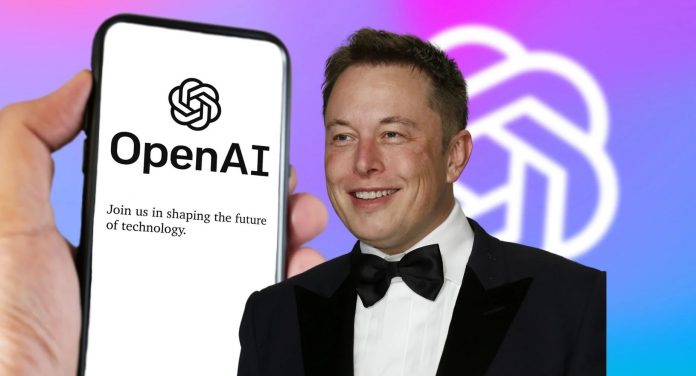
Tesla and X CEO Elon Musk has vowed to ban Apple devices from his companies, following the integration of OpenAI ChatGPT at the OS level.

Musk took to X to express his concerns, where he described such a move as an unacceptable security violation.

He wrote,

“If Apple integrates OpenAI at the OS level, then Apple devices will be banned at my companies. That is an unacceptable security violation. And visitors will have to check their Apple devices at the door, where they will be stored in a Faraday cage”.

Musk further expressed concerns, describing Apple’s move as absurd over its incapability to make its own AI.

“It’s patently absurd that Apple isn’t smart enough to make their own AI, yet is somehow capable of ensuring that OpenAI will protect your security & privacy! Apple has no clue what’s going on once they hand your data over to OpenAI. They’re selling you down the river”, he added.

Musk’s comments came after Apple announced that it would insert ChatGPT’s capabilities into its devices. Apple is integrating ChatGPT access into experiences within iOS 18, iPadOS 18, and macOS Sequoia, allowing users to access its expertise – as well as its image, and document-understanding capabilities without needing to jump between tools.

Notably, Apple Intelligence would seamlessly help users of its products with text and image generation, and even help power its assistant Siri. Apple emphasized that it would be protecting users’ data, and said that their data would never be stored, and used only for requests.

The Cupertino giant on its part, has said that privacy is at the core of its products, and assured users that their data will remain safe even after the OpenAl integration. Apple says that user data will be processed on-device and be stored on something called Private Cloud Compute which ensures the data will never be shared.

With Private Cloud Compute, Apple Intelligence can flex and scale its computational capacity and draw on larger, server-based models for more complex requests. These models run on servers powered by Apple silicon, providing a foundation that allows Apple to ensure that data is never retained or exposed.

Independent experts can inspect the code that runs on Apple silicon servers to verify privacy, and Private Cloud Compute cryptographically ensures that iPhone. iPad and Mac do not talk to a server unless their software has been publicly logged for inspection. Apple Intelligence with Private Cloud Compute sets a new standard for privacy in Al, unlocking intelligence users can trust.

Privacy protections are built in for users who access ChatGPT their IP addresses are obscured, and OpenAl won’t store requests. ChatGPT’s data-use policies apply to users who choose to connect their accounts, ChatGPT will come to iOS 18, iPadOS 18, and macOS Sequoia later this year, powered by GPT-40.

BlockDAG’s 48 Dev Release Reveals Major Upgrades in Blockchain Explorer; Presale Booms to $48.8M 

0

BlockDAG‘s Development (Dev) Release 48 marks a major milestone, introducing major updates on the game-changing Blockchain Explorer and the X1 Miner application, the beta version of which is out now. The Blockchain Explorer allows users to view and verify transactions with ease, offering detailed insights into block contents, creation times and miner information.

The emphasis on refining blockchain infrastructure highlights BlockDAG’s efficiency in transparency and functionality. These advancements align perfectly with BlockDAG’s impressive presale success, raising over $48.8 million in 18 batches, revealing the network’s growing influence in the crypto market.

BlockDAG: Meet the Future of Crypto

BlockDAG’s recent Keynote 2 has significantly amplified its success, drawing widespread attention from crypto enthusiasts and investors. By showcasing technical advancements and strategic upgrades, BlockDAG has earned the prominent role of a master player in the crypto market. The Keynote 2 highlighted the network’s impressive trajectory, intriguing investors with its promising future.

A notable highlight is the market testing of the X10 miners, shared with key crypto influencers whose upcoming unboxing and reviews are highly anticipated. Additionally, the focus on refining the Blockchain Explorer component is evident, with the team diligently working on enhancing blockchain infrastructure, including blocks, transactions, smart contract transactions and asset balances.

This meticulously designed roadmap reveals BlockDAG’s visionary impact in the crypto industry. The presale success, raising $48.8 million in under 18 batches and the coin price surge to $0.0122, marking an astounding 1120% increase from the initial batch, further illustrate this impact. The robust foundation laid for seamless functionality and reliability in both blockchain infrastructure and application development efforts signifies BlockDAG’s commitment to excellence.

Dev Release 48: Game-Changing Explorer Enhancements

BlockDAG’s Dev Release 48 features the Blockchain Explorer, signaling a significant step forward in enhancing the transparency and functionality of the blockchain network. This tool is engineered to allow users to view and verify transactions seamlessly, thus enhancing overall transparency.

It supports transaction tracking where users can follow the status of their transactions, checking for confirmations and identifying any potential issues. The Blockchain Explorer also offers detailed insights into each block’s contents, creation time and associated miner, strengthening user understanding and confidence in the system.

Furthermore, the Blockchain Explorer facilitates address lookup, enabling users to review the transaction history and balances of specific addresses, which enhances accountability and analytical capabilities. It also provides a snapshot of the network’s health by displaying crucial metrics like hash rate and block times, serving as an indispensable tool for both seasoned participants and newcomers aiming to grasp the intricacies of blockchain operations.

Simultaneously, the Dev Release 48 has brought significant enhancements to the X1 Miner application, focusing on improving user experience and application’s performance. Key improvements include resolving phone number input length issues and connectivity enhancements with platforms like Coinbase, which ensure smoother and more reliable transactions. The update also introduces a feature to prevent multiple OTP requests and optimizes navigation through active tab highlighting and footer navigation fixes.

The ongoing enhancements to the X1 Miner application and the exciting launch of the Blockchain Explorer are testament to BlockDAG’s dedication to empowering its users and expanding its ecosystem with innovative tools that promote efficiency, security and ease of use.

BlockDAG: Innovation Ahead

BlockDAG sets a new benchmark in the world of cryptocurrency innovation, as detailed in the Dev Release 48. With insights into the Blockchain Explorer, users gain unparalleled access to transaction verification and detailed insights into block contents, creation times and miner data, enhancing both transparency and trust within the blockchain network.

These enhancements elevate user experience and boost investor confidence, as evidenced by the impressive presale figures. With Batch 18 reaching a coin price of $0.0122 and raising a total of $48.8 million, BlockDAG demonstrates its potent appeal and continued upward trajectory in the crypto market.

Join BlockDAG Presale Now:

Website: https://blockdag.network

Presale: https://purchase.blockdag.network

Telegram: https://t.me/blockDAGnetworkOfficial

Discord: https://discord.gg/Q7BxghMVyu

Nigeria Needs Platforms To Grow The Economy for Opportunities

0

This is where we are as a country according to the Central Bank of Nigeria.  Yes, “in its latest financial report, the Central Bank of Nigeria (CBN) has disclosed that the federal government expended approximately $2.2 billion on debt servicing during the first five months of 2024….In total, the $2.2 billion spent from January to May 2024 is about 96.32% higher than the $1.12 billion spent during the same period in 2023.” The breakdown:

January: $560.52 million

February: $283.22 million

March: $276.16 million

April: $215.20 million

May: $854.36 million

Now, someone will tell me that Nigeria was saving money via fuel subsidies. In the Igbo Nation, if a bird leaves the ground and perches on the ant-hill, the elders will say that it is still on the ground. Nigeria may not be allocating money for subsidies (it claims), but it is allocating more for debt servicing as a result of decisions around Naira floating and fuel subsidies! Like I noted, nothing has changed, except the style!

Good People, if anyone tells you that Nigeria can be made whole through financialization, there is a bridge available to buy. We must make things (modern and old) for Nigeria to rise, and our leaders must provide platforms for such to happen. Those platforms include electricity, security and rule of law!

Simply, someone must be annoyed and angry that for 60 years we cannot figure out how to provide electricity to citizens and companies.

Nigerian Government Spends $2.2bn on Debt Servicing in First Five Months of 2024

Nigerian Government Spends $2.2bn on Debt Servicing in First Five Months of 2024

1

In its latest financial report, the Central Bank of Nigeria (CBN) has disclosed that the federal government expended approximately $2.2 billion on debt servicing during the first five months of 2024.

This significant outlay, gulping approximately 96 percent of the nation’s revenue, underscores the escalating fiscal pressures facing the country.

The CBN’s ‘International Payments Data’ report reveals that May saw the highest expenditure on debt servicing, amounting to $854.36 million. This figure represents the most substantial monthly payment in the past year and marks a 297% increase from April’s $215.20 million. Additionally, the amount spent in May is 286.49% higher than the $221.05 million expended in the same month in 2023.

According to FBNQuest Research, Nigeria’s external debt service payments rose by $1.1 billion to $3.5 billion in 2023, comprising $1.9 billion in market debt payments and $1.6 billion in non-market debt payments. This increase highlights the growing burden of Nigeria’s external obligations.

The monthly breakdown of debt servicing costs is as follows:

  • January: $560.52 million
  • February: $283.22 million
  • March: $276.16 million
  • April: $215.20 million
  • May: $854.36 million

In total, the $2.2 billion spent from January to May 2024 is about 96.32% higher than the $1.12 billion spent during the same period in 2023.

Decline in Letters of Credit

CBN data also indicated a significant decline in letters of credit (LCs) in the first five months of 2024 compared to the same period in 2023. LCs, a crucial payment method for importing goods, decreased by 63.26% to $279 million from $762.03 million in the same period last year. LCs are vital for facilitating international trade in Nigeria, providing a secure payment method that benefits importers and exporters.

However, on a positive note, the CBN’s International Payments Data showed a substantial increase in total direct remittances, which reached $841 million in the first five months of 2024. This is about 28.55% higher than the $654.51 million recorded in the same period in 2023, reflecting a robust inflow of funds from the Nigerian diaspora.

In response to these fiscal challenges, Nigeria is seeking financial support and implementing strategic measures to stabilize its economy. Finance Minister Wale Edun recently announced that Nigeria is set to receive a $2.25 billion package from the World Bank, expected to be approved soon.

Speaking on June 2 during an interview with Channels TV, Edun stated, “In two weeks, the board of the World Bank will consider a $2.25 billion package for Nigeria, which would be virtually free or almost grant funding, very low interest.”

This funding, which includes $1.5 billion in Development Policy Financing, aims to support Nigeria’s economic stabilization and growth initiatives.

Additionally, the government plans to issue Eurobonds in the second half of 2024, with Citibank NA, Goldman Sachs, and JPMorgan Chase & Co. hired as advisors. This move is expected to raise necessary capital from international markets.

High Debt Servicing Costs Compound Nigeria’s Economic Woes Amid Dwindling Oil Revenue

This significant expenditure on debt obligations is set against a backdrop of declining oil revenues and severe economic challenges, compounding Nigeria’s fiscal woes. The strain on Nigeria’s finances is further exacerbated by a significant shortfall in oil revenue, traditionally a cornerstone of the country’s economy.

As a result, the federal government has increasingly relied on borrowing to bridge the revenue gap, leading to a growing debt burden.

Economists have decried the situation, noting that the high cost of servicing this debt limits the government’s capacity to invest in critical sectors such as infrastructure, healthcare, and education, which are essential for stimulating economic growth.

They stressed that Nigeria’s heavy reliance on borrowing to address its fiscal deficit is not sustainable long-term, pointing out that the high cost of servicing this debt diverts essential funds away from development projects, hindering economic growth.

Muda Yusuf, Director-General of the Lagos Chamber of Commerce and Industry, underscored the broader consequences. He noted that increasing debt servicing costs are a significant issue as they limit investments in crucial sectors and hamper the government’s ability to provide necessary services.

“We should be worried, particularly from the point of view of the capacity to service the debt.

“In 2020, for instance, debt servicing to revenue was nearly 80 percent. In the current budget, the debt service provision is about N3.2tn. This is huge and clearly, the debt profile is clearly unsustainable.

“The debt to GDP argument is something that cannot stand in this type of economy because some major components of the GDP are not revenue-generating,” he said.

He noted the growing decline in productivity as a major contributor to the nation’s economic predicament.

“So, we have a major issue with productivity of many sectors, and that is why what we should be worrying about is how to ensure that the debt situation is sustainable, and we can only do that if we relate a lot more with the capacity to service the debt.

“Currently, our capacity to service debt is very weak. And this is time for a very difficult choice to be made if we want to get out of this situation,” he said.