DD
MM
YYYY

PAGES

DD
MM
YYYY

spot_img

PAGES

Home Blog Page 3234

Emefiele took billions of dollars from Nigeria’s foreign reserve without Buhari’s approval

3

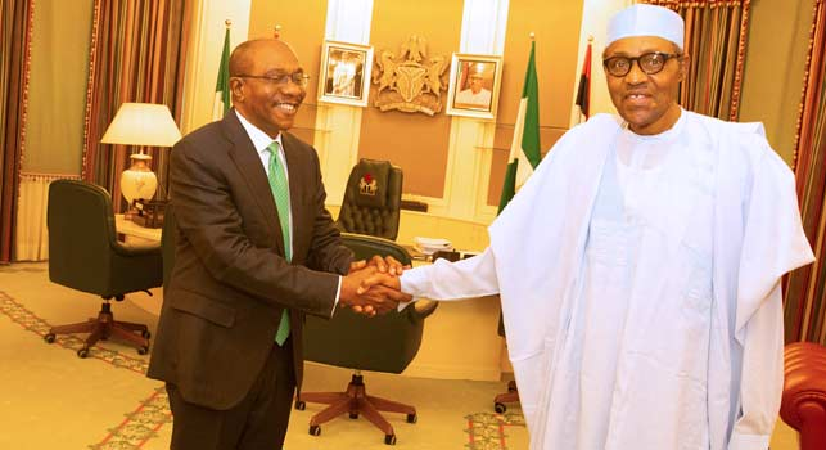
Presidential spokesperson Ajuri Ngelale has made startling allegations against the former governor of the Central Bank of Nigeria (CBN), Godwin Emefiele, accusing him of depleting the country’s foreign reserve without the consent of former President Muhammadu Buhari.

Speaking in an exclusive interview with TVC, Ngelale asserted that Emefiele made significant financial decisions without the approval of the former president, resulting in the expenditure of billions of dollars from the foreign reserve without proper authorization.

“What was done concerning the expenditure of billions of dollars from the foreign reserves was done largely without the approval or knowledge of President Muhammad Buhari,” Ngelale disclosed during the interview.

The president’s spokesperson stated that the CBN governor held significant authority over most of the apex bank’s operations and simultaneously served as the chairman of the bank’s board of directors.

“Yes, that might seem hard for some people to believe, but I want to explain how that could have happened.

“We have one of the few Central Banks in the world where the day-to-day CEO was the governor of the Central Bank and was also the chairman of the board of directors. He was essentially overseeing himself,” he said.

These allegations have sparked widespread reactions from Nigerians, with many viewing them as an attempt to absolve Buhari of any responsibility for the country’s economic challenges during his tenure.

One of the most scandalous events of Buhari’s presidency was the N30 trillion Ways and Means loan, which has been largely blamed for Nigeria’s rocketing inflation.

Financial analyst Kelvin Emmanuel criticized the lack of accountability and corporate governance under Buhari’s presidency, describing it as “an utter failure.”

He outlined various financial decisions made by Emefiele, including swapping bonds for reserves and borrowing money from external asset managers, which he claimed were executed without proper oversight or ratification from the National Assembly.

“Imagine a Presidential Spokesman saying that the immediate past president had no knowledge of the former CBN Governor swapping bonds for reserves to inject financial money into the system without any accountability,” Emmanuel said.

“He had no knowledge of the Governor hiking CRR to 32.5% that stifled lending in the real sector (17.5% above the Bank of International Settlements standard of 15%) in order to finance ways and means.

“He had no knowledge of the Governor drawing down on public sector CRR that was attracting zero percent interest (because public sector cash moved from commercial banks to TSA)

“He had no knowledge of the Governor borrowing money from external asset managers of the bank (that is an offshore account bank drawing down on reserves to reconcile) attracting between 6-9% of interest per annum, and without any ratification from the National Assembly.

“And so ways and means limit of 5% of real revenues for previous accounting year that stood at between $450-500m was violated to $53bn, and because the CBN lacked reserves that was overdrawn below the match for your balance of trade or assets like the comparable liquidity ratio for banks that can be easily converted to settle balance of payments— the currency started taking a hit, and inflation joined.”

Buhari was notorious for denying knowing anything that went wrong under his administration.

Emefiele has been accused of forging the signature of the former president and is currently being prosecuted for alleged procurement fraud and forgery. Many believe that the former apex bank chief is being targeted as a scapegoat.

However, lending credence to the belief that Buhari was aware of the CBN’s financial moves under his presidency, a statement from former Senate President, Abubakar Saraki, reveals that Buhari refused to approve funds for constituency projects of members of the Eighth Senate because he wanted to punish the lawmakers for questioning his loan requests.

Buhari took several loans in his eight years of leadership, shooting Nigeria’s public debt profile from N12.6 trillion to over N80 trillion as his government prepares for exit on May 29.

Saraki, who faced accusations of impeding Buhari’s development initiatives with checks and balances, asserted that the former president withheld funding for constituency projects as retaliation for the Senate’s scrutiny of numerous loan requests.

“For clarification, the Saraki Media Office will want members of the public to note that then President Muhammadu Buhari deliberately refused to approve funds for the constituency projects of members of the Eighth National Assembly obviously to punish the members for questioning some of the loan requests presented by the executive before the legislature,” the statement issued by the head of his media office, Yusuph Olaniyonu, said.
“If they pass it, I’ll sign it,” – Biden on bipartisan bill to ban TikTok

0

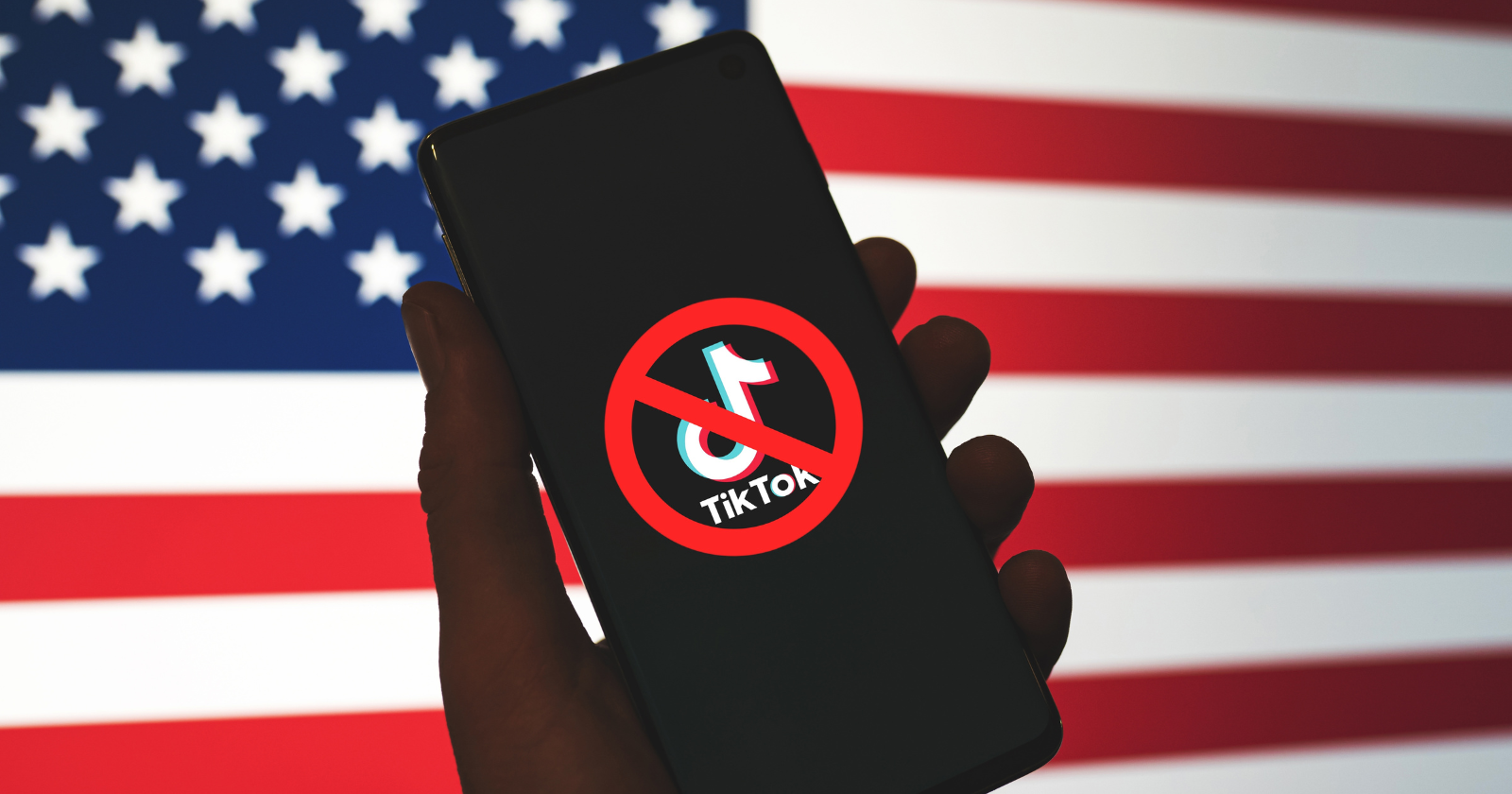
President Biden has announced his support for a bipartisan bill aimed at potentially banning TikTok, a popular social media platform, amidst escalating national security concerns.

The bill, known as the Protecting Americans From Foreign Adversary Controlled Applications Act, swiftly gained traction, garnering unanimous support from the House Energy and Commerce Committee just days after its introduction.

In a statement to reporters on Friday, President Biden emphasized his willingness to sign the bill into law if it passes through Congress. “If they pass it, I’ll sign it,” Biden affirmed, underlining the urgency of addressing security risks posed by certain foreign-controlled applications.

The bipartisan legislation, spearheaded by Reps. Mike Gallagher and Raja Krishnamoorthi, chairman and ranking member of the House committee focused on China, respectively, targets TikTok due to its Chinese-based parent company, ByteDance. The bill mandates ByteDance to divest its ownership of TikTok within 165 days of enactment, failing which the app could face a ban from U.S. app stores and web hosting services.

Despite objections from some Democrats regarding the expedited legislative process, concerns over national security implications prompted bipartisan support for the bill. House Majority Leader Steve Scalise announced intentions to bring the bill to a House floor vote in the upcoming week, signaling a bipartisan commitment to address the issue promptly.

TikTok has vehemently opposed the proposed legislation, denouncing it as a prelude to a complete ban of the platform in the United States. A spokesperson for TikTok asserted that the bill carries a “predetermined outcome” of banning the app, prompting the company to mobilize users in a campaign aimed at halting its advancement through Congress.

Critics of the bill, including civil liberties organizations like the ACLU and the Knight First Amendment Institute at Columbia University, have raised concerns about potential infringements on free speech. The legislation not only targets TikTok but also establishes a framework for identifying and regulating other applications deemed to pose national security risks due to ties with foreign adversaries such as China, Russia, North Korea, and Iran.

Moreover, the potential ban on TikTok could exacerbate tensions between the United States and China, already strained by trade disputes, technology competition, and geopolitical rivalries. China has vehemently opposed previous attempts by the U.S. to restrict Chinese-owned technology companies, viewing such actions as politically motivated and discriminatory.

The ban on TikTok could also prompt retaliatory measures from China, further escalating the bilateral tensions and disrupting global technological cooperation. Additionally, it could complicate negotiations between the two countries on other contentious issues, including intellectual property rights, market access, and cybersecurity.

Former President Trump, who is currently campaigning for reelection, surprisingly expressed opposition to the bill. Trump, who previously attempted to ban TikTok during his time in office, indicated in a post on Truth Social Thursday that such a ban could inadvertently favor Meta, the parent company of Facebook. Trump suggested that his banishment from the platform in 2021, followed by his reinstatement last year, might have influenced his perspective on the matter.

In the context of efforts to ban TikTok, it’s crucial to mention the actions taken by the Trump administration. During his presidency, Trump sought to ban TikTok, citing concerns over national security and data privacy. Trump issued executive orders in August 2020 that aimed to ban TikTok and WeChat, another Chinese-owned app, from operating in the United States.

Trump’s administration alleged that TikTok posed a threat to national security due to its Chinese ownership by ByteDance. The administration claimed that the Chinese government could potentially access user data collected by TikTok, posing risks to American citizens’ privacy and security. These concerns were part of broader tensions between the U.S. and China regarding trade, technology, and geopolitical competition.

However, Trump’s attempts to ban TikTok faced legal challenges and were met with resistance from TikTok’s parent company, ByteDance. TikTok filed lawsuits challenging the executive orders, arguing that they were unconstitutional and lacked evidence to support claims of national security threats. The legal battles resulted in temporary injunctions that prevented the bans from taking effect immediately.

Despite the legal obstacles, Trump’s administration continued to push for the divestiture of TikTok’s U.S. operations to an American company. Oracle and Walmart emerged as potential buyers, but negotiations ultimately fell through.

The Biden administration inherited the TikTok issue from its predecessor and has continued to address national security concerns surrounding the app through legislative means, as evidenced by President Biden’s support for the bipartisan bill aimed at potentially banning TikTok.

As of January 2024, the United States boasted the largest TikTok audience globally, with nearly 150 million users actively engaging with the popular social video platform.

China moves to pump $27bn into Semiconductor industry to counter the US

0

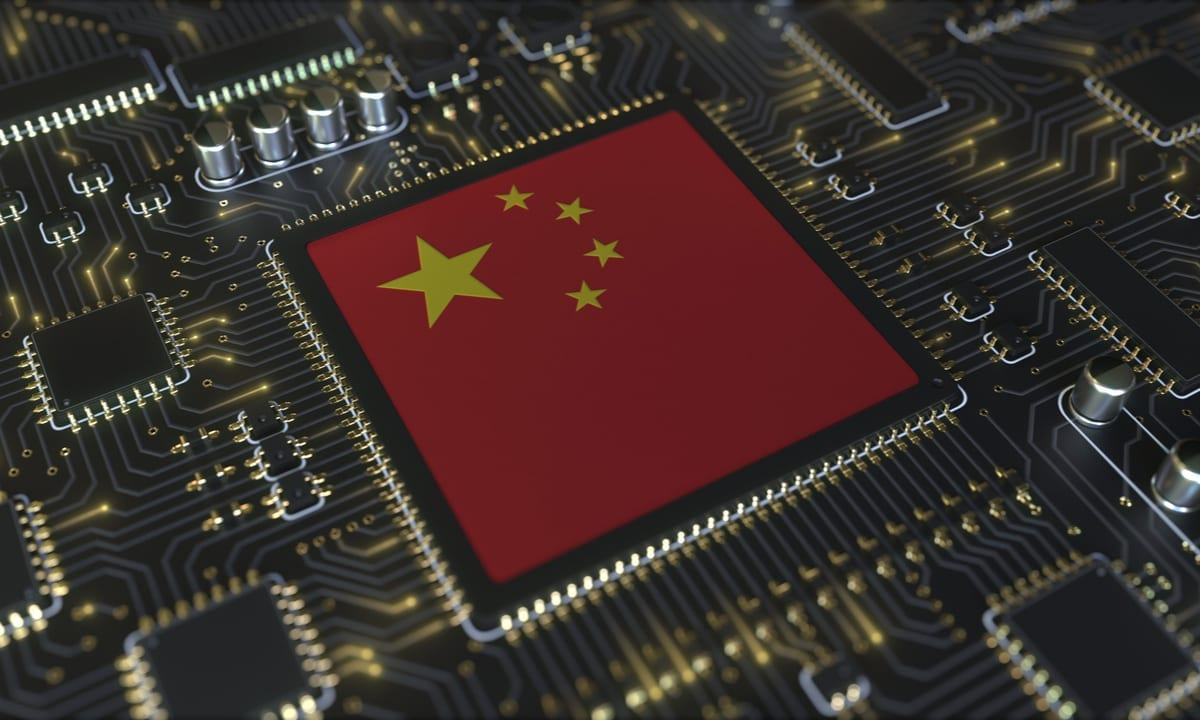
Amidst the backdrop of the ongoing tech war between the United States and China, the latter is gearing up its semiconductor industry with a massive $27 billion chip fund, the largest of its kind to date.

This move comes as the US and its allies continue to escalate restrictions, aiming to thwart China’s advancements in chip technology. Let’s delve into the ups and downs of this technological arms race.

China’s semiconductor aspirations have recently taken center stage with the announcement of the “Big Fund,” managed by the National Integrated Circuit Industry Investment Fund. This substantial investment, drawing contributions from local governments and state enterprises, underscores China’s resolve to bolster its semiconductor capabilities despite external pressures.

As reported by Bloomberg, key investors in the fund include the governments of Shanghai and other cities, China Chengtong Holdings Group, and State Development and Investment Corp. This coalition aims to accelerate cutting-edge technology development, countering the US campaign to stifle China’s technological expansion.

The Big Fund’s expansion marks a strategic maneuver by China’s tech ministry to assert dominance in the global semiconductor market. It aligns with President Xi Jinping’s vision of consolidating national resources for major technological endeavors, emphasizing self-reliance, and reducing dependence on foreign technologies.

Established in 2014, the Big Fund has played a pivotal role in supporting domestic chipmakers like Semiconductor Manufacturing International Corp (SMIC) and Yangtze Memory Technologies Co. Despite facing setbacks, including an anti-graft probe in 2022, the fund has regained momentum, symbolizing China’s unwavering commitment to achieving technological independence.

However, China’s push for self-sufficiency in semiconductor manufacturing faces challenges, particularly in reducing reliance on US-origin technology. Leading Chinese tech companies such as Huawei Technologies and SMIC still depend on US technology for certain advanced chip productions, indicating the complexities of achieving complete autonomy.

Huawei Technologies, a prominent player in the telecommunications industry and a global leader in 5G technology, has been significantly affected by the ongoing tech war. As the world raced towards implementing 5G networks, Huawei emerged as a frontrunner, offering advanced infrastructure and equipment. However, the company’s reliance on US-origin technology for certain critical components became a vulnerability amidst escalating tensions between the US and China.

The US government, citing national security concerns, imposed stringent restrictions on Huawei, effectively cutting off its access to key technologies, including semiconductors. These restrictions severely hampered Huawei’s ability to maintain its technological edge and continue its dominance in the 5G market.

The upsides of China’s semiconductor ambitions are evident in its efforts to diversify investment strategies through the Big Fund. By directly supporting local firms, China aims to enhance their global competitiveness and ensure the viability of its semiconductor industry.

Moreover, entities receiving capital from the fund enjoy formal endorsement from Beijing, granting them access to additional investment opportunities and policy support.

Despite these advancements, the tech war between the US and China has created a volatile environment for semiconductor innovation. Escalating US tech curbs targeting China’s chip and artificial intelligence sectors pose significant challenges to China’s semiconductor ambitions.

However, China’s determination to push forward with the Big Fund reflects its resilience in the face of adversity.

The Bitcoin’s BIG Disintermediation of Investing

1

Good People, there is a possible evolution in the world of market systems where cryptocurrencies could disintermediate the elemental structure of investing, especially for stocks and bonds. Yes, why take risks investing in companies which can miss revenue and profit targets when there is an “asset” you can just put that money with no stress on checking production output. Yes, bitcoin and cousins do not have to report quarterly results unlike companies which do, and have to justify why we must keep investing in them.

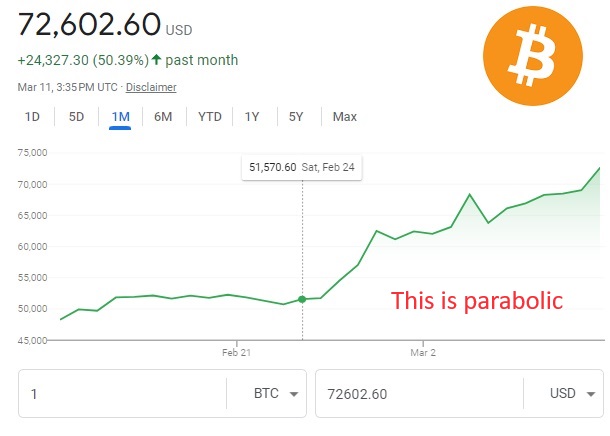
If Bitcoin hits $100,000, we could have a consequential impact in the market. Yes, it can attract capital that is not to be deployed in any production system, but largely helps some people make tons of money. Within that system, why should people work – and why should people create companies?

The success of bitcoin and cryptos will change many things, including how investors deploy their capital.  Already, America has positioned itself for a big win via the ETF products.

Yes, just like that, America was against it even though it was REALLY into it with companies like Coinbase being allowed to go public in the United States. 

Left and right, it is coming as expected: only the government will make Bitcoin great, and since the anointing via ETFs, the veil has been removed, and no person can predict what will happen next. I expect a new US neobank with focus on cryptos within the next 24 months.

Great point. You hit all the areas. It is not a currency but an asset people can invest in. But when so many people have money in it, politicians will begin to fear that if it crashes, retirement accounts, tied to ETFS, will be affected. This thing will change many things!

Comment on Feed: I’ve seen this play out on a small scale and can’t imagine the disruption this would cause in the allocation of capital to productive ventures on the global stage. A case in point was during the heyday of MMM in Nigeria when people closed their shops and invested in MMM. The goal was to ‘wait for 30 days and get your big return.’ The economy suffered. Crypto would help the world when it becomes stable and accepted as currency rather than an investment class of asset. Thanks, Prof, for pointing us to the impending danger.

At Tekedia Institute, Our talent is Knowledge because Knowledge is the Supreme Factor of Production

0

Quality and excellence are in the DNAs of Tekedia Institute. We create one product: knowledge that transforms careers and organizations. We have won many awards in great ways (an example: 53% votes in a competition with 10 finalists) for developing, disseminating and applying Knowledge. 

If you have not yet attended a Tekedia program, I invite you to check our programs; there is always something there for you, from our Startup Masterclass, Tekedia Mini-MBA, Tekedia Industries, Tekedia Practice, Tekedia AI in Business Masterclass, etc. Visit here.

Our talent is Knowledge because Knowledge is the supreme factor of production where all other factors are anchored on. A man, a woman, a firm… with knowledge is a FACTOR for opportunity, for wealth creation, for development, for the goodies of life.

We’re Tekedia Institute and we’re Africa’s largest business school for entrepreneurial capitalism. More people and more firms come here yearly than any university in Africa for business education.