DD
MM
YYYY

PAGES

DD
MM
YYYY

spot_img

PAGES

Home Blog Page 3239

BlockDAG’s Commanding Surge Elevates Coin Value by 1000%, Outrunning Dogecoin’s Outlook & GameStop’s Rally

0

Dogecoin’s pricing outlook sparkles with potential, reflecting earlier market climates that sparked significant ascents. Meanwhile, GameStop’s market cap climbs powerfully, spurred by the meme coin craze, painting a hopeful vision for the unstable crypto sphere.

Amid these dynamics, BlockDAG cements its global authority, from Tokyo to London, markedly boosting its presale drive. Now in its 17th phase, BlockDAG celebrates a staggering 1000% upswing in coin value from its debut, achieving a landmark in its fiscal journey.

Analysts Anticipate Dogecoin’s Ascendancy

AMBCrypto’s analysis predicts a substantial upturn for Dogecoin. Analyst Ali Martinez notes the current market resembles the precursor to earlier upsurges. Increased activity from major stakeholders bolsters this optimistic outlook. Overcoming its current resistance could thrust Dogecoin into considerable growth, with projections anchored in the latest market movements and investor behaviors, signifying prospects for substantial progression.

GameStop’s Market Valuation Soars Amid Meme Coin Rally

GameStop’s market valuation has experienced a remarkable upswing, propelled by a sharp boost in its meme coin value. Latest analyses reveal that the company’s market cap is on the brink of achieving a significant benchmark, fueled by robust increases in trading activity and investor engagement. This upward trend in GameStop’s market cap demonstrates the wider market’s positive reaction to the resurgence of interest in meme coins, highlighting its prospects for continued expansion and stability in the cryptocurrency arena.

BlockDAG’s Earns $46.8M Post Keynote 2

BlockDAG’s commanding presence on the global stage is underscored by its key milestones in notable locales. Its inaugural major display at Shibuya Crossing in Japan introduced the network’s first Keynote, securing its emerging spotlight. This event was succeeded by a grand celebration of the DAGpaper release at The Sphere in Las Vegas, which significantly expanded its reach.

More recently, BlockDAG took center stage at Piccadilly Circus in London, captivating the cryptocurrency community. The climax of these events came with Keynote 2, streamed directly from the moon, showcasing BlockDAG’s overwhelming global impact and vaulting it to unprecedented levels.

The platform’s extensive allure has garnered attention from investors worldwide. Spanning continents and even venturing as far as the moon, BlockDag has proven its extensive reach. Its dynamic presentations have captured the global investment community’s interest, substantially elevating BlockDAG’s profile and trust within the cryptocurrency markets.

These international events have been crucial in unveiling the technical prowess of BlockDAG and demonstrating its forward-thinking ethos. The adoption of BlockDAG’s user-friendly, low-code, and no-code platform further amplifies its attractiveness, streamlining the development and implementation of smart contracts, meme coins, and NFTs. This approach makes it easier for a wider demographic to engage with decentralized technologies, simplifying the intricacies of blockchain technology.

The synergy of worldwide exposure and technological breakthroughs has magnetized investor interest, fuelling the presale energy. Now at Batch 17, with the coin price at $0.011, BlockDAG has witnessed an extraordinary 1000% surge in value since Batch 1, amassing $46.8 million.

Is BlockDAG Really Stealing the Limelight?

BlockDAG’s strategic international appearances have been instrumental in revealing its technological strides to the public and crypto aficionados. These events not only highlight the network’s capabilities but also boost its presale drive.

As the presale hits Batch 17, with the coin price now at $0.011, it mirrors a phenomenal 1000% increase from the initial batch. This surge, amidst Dogecoin’s promising forecast and GameStop’s market cap spike, propels BlockDAG as a frontrunner for the top trending crypto title.

Join BlockDAG Now!

Website: https://blockdag.network

Presale: https://purchase.blockdag.network

Telegram: https://t.me/blockDAGnetworkOfficial

Discord: https://discord.gg/Q7BxghMVyu

Only Breakthrough Products Are Amazing

0

Some days ago, I came across a post by Osueke Henry with a reply by Dainis Tka. I was invited to share my further thoughts.

The plackard from Osueke Henry said:

The biggest marketing myth Web 3 founders still believe:

‘If you build an amazing product it’ll market itself’

Sorry but that’s crap.

Dainis Tka offered a departure citing Chat GBP as a new product out in a league of its’ own.

Osueke countered it was a ‘ one out of a million case studies’

Who is right? Well they ‘sorta’ both are.

I pitched in:

‘Osueke Henry not sure, I think you and Dainis Tka are coming from different angles so getting different perspective on exactly what ‘amazing product’ is.’

I recall on several occasions; I had got courted for my start-up skills to bring a product to market. I did not believe in the product because regardless of what magic tricks you do in the balance between quality and cost, the market is saturated. Too many people, already with strong brand presence, do it already. ‘Cheaper and Better’ on its own, isn’t enough to contest market share.

I called this a ‘Graveyard Appointment’. Agree to do this, and your career will be dead. It’s a ‘red ocean’ product all right – the colour of blood!

Several Times, I thought about it a bit, and came up with something different. I looked for something that could be done, with no major investment departure, and doable with the same initial start actors, but was ‘blue ocean’. It had no existing direct competitor.

The downside is there is more convincing to do than just getting an ordinary start-up execution leadership job. I’ve got to convince the principal the product is a better proposition. Then I have to convince them I am the right person to lead execution on it… and then, it has to be able to convince the market.

The good thing is, the pressure is completely off me. It’s like this huge weight has been lifted. They go for it… or they don’t.. but I have completely extracted myself from the original negotiation, so should that resume, it will have to happen without me.

One way or another, the prospect of being locked in a job that ends my career, has been removed as an outcome.

Blockchain and Web 3 are at a not too dissimilar juncture.

Everyone is trying to talk up a bull market, but nobody actually has loads of ‘silly stuff’ like before.
You see folk claiming they are going to buy $BONK and $WIF and whatever, but do they actually do it?
Some folk on online platforms are ramping for metrics rather than sh*t/meme coin profits. Reading between the lines suggests they are more interested in using a new token issue as an engagement topic, than any serious opportunity to invest.

A phenomenon known as ‘tapping’ common to Telegram, attempting to rise a nonsense token into an economy, eventually affording an ecosystem with more respected architectures is waning, and many folk are just tapping out their lives.

The old days of the music scams, when promoters bought thousands of copies of their own proteges vinyl to get it to chart, are gone since the last millennium and trying to repurpose these tricks in the second evolution of Web 3 won’t work.

I think folk are going to have to really think long and hard about bringing something very new to the market, they will claim is ‘web 3’.

How it compares to what was before – innovation, usability, social narrative (perhaps), security, deflationary, owner privacy – what makes me better?

Yes, Osueke Henry and Dainis Tka set the bar differently to qualify as ‘amazing’. To fuel a new Bull Market, ‘amazing’ will need to debut products and services completely unlike what has been labelled as ‘Web 3’ before.

Only ‘Breakthrough’ products are amazing.

Extra-context illustrations from Sino Amazon/Sinosignia releases.

9ja Cosmos is here…

Get your .9jacom and .9javerse Web 3 domains  for $4 at:

.9jacom Domains

.9javerse Domains

Visit 9ja Cosmos LinkedIn Page

Visit 9ja Cosmos Website

Preview our Sino Amazon/Sinosignia releases (Ente)

Preview our Sino Amazon/Sinosignia releases (Pinterest)

Market Capitalization of the Magnificent 7 has Surged to $15 Trillion

0

The financial landscape is witnessing a monumental shift as the market capitalization of the ‘Magnificent 7′—a term coined for seven of the most significant and influential companies in the technology sector—has surged to an astounding $15 trillion. This remarkable milestone underscores the dominant role these tech behemoths play in the global economy and the stock market.

The ‘Magnificent 7’, which includes titans such as Apple, Microsoft, Alphabet (Google), Amazon, Nvidia, Meta (Facebook), and Tesla, have been at the forefront of innovation, driving growth through advancements in AI, cloud computing, and various cutting-edge technologies. Their collective market cap swelling to $15 trillion is a testament to their unparalleled market presence and investor confidence in their future prospects.

Moreover, the top ten US stocks now constitute a staggering 34% of the S&P 500, highlighting a concentration of market value within a small cadre of companies. This concentration is not without its concerns, as it reflects a market heavily influenced by the performance of a few, rather than a diverse array of sectors. Such a scenario can lead to increased market volatility, as the index becomes more sensitive to the movements of these top players.

The key factors driving the growth of the top tech companies, often referred to as the “Magnificent 7,” are multifaceted and reflect the dynamic nature of the technology sector. Here are some of the primary drivers:

Innovation and R&D: Continuous investment in research and development has allowed these companies to stay at the forefront of technological advancements, leading to the creation of cutting-edge products and services.

Talent Acquisition: Attracting and retaining top talent has been crucial for these companies. The ability to hire the best minds in the industry has fostered a culture of innovation and excellence.

Market Expansion: These companies have successfully expanded their market presence globally, tapping into new customer bases and diversifying their revenue streams.

Acquisitions: Strategic acquisitions have enabled these companies to quickly integrate new technologies and expand their product portfolios.

Customer-Centric Approach: A strong focus on customer experience has led to the development of products that are not only technologically advanced but also user-friendly and accessible.

Data Utilization: Leveraging big data analytics has provided these companies with insights to drive decision-making and personalize customer experiences.

Scalable Business Models: The adoption of scalable business models, such as cloud services and subscription-based offerings, has contributed to steady revenue growth.

Regulatory Compliance: Navigating the complex web of global regulations effectively has allowed these companies to operate efficiently and avoid potential setbacks.

The implications of this concentration are far-reaching. On one hand, it showcases the robustness and appeal of these companies, which continue to attract substantial investment. On the other hand, it raises questions about market diversity and the potential risks associated with having such a significant portion of the index tied to the fortunes of a limited number of stocks.

Investors and market analysts are keenly observing this trend, as the trajectory of these top companies will likely shape the direction of the broader market. The ‘Magnificent 7’ have not only revolutionized their respective industries but have also become integral to the lives of consumers and businesses worldwide, further solidifying their position within the stock market.

As we look to the future, the growth of these companies and their impact on the S&P 500 will continue to be a topic of interest and analysis for anyone engaged with the stock market. The rise of the ‘Magnificent 7’ to a $15 trillion market cap is a clear indicator of the changing dynamics in the world of finance, where technology and innovation are the primary drivers of value and growth.

BJP’s Inability to Secure Majority Votes Leads to Coalition Government with NDA in India

0

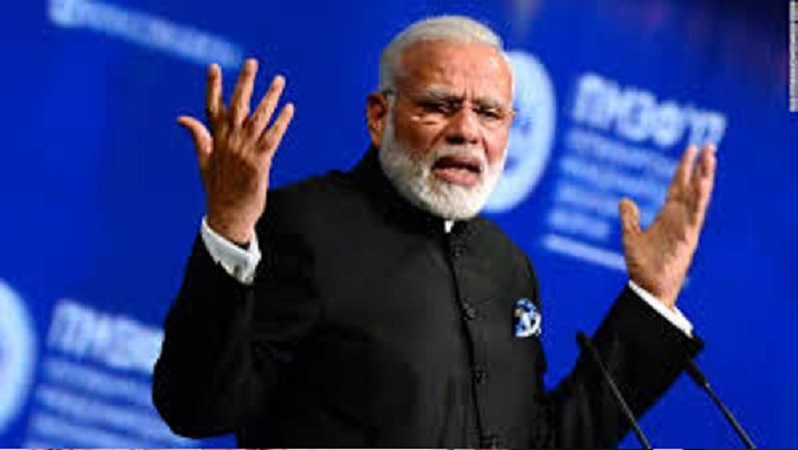
The 2024 general election in India has been a testament to the robustness of its democratic processes. The results have indeed come as a surprise to many, with the Bharatiya Janata Party (BJP), led by Prime Minister Narendra Modi, winning the most seats but falling short of a majority in the Lok Sabha. This outcome marks a significant shift from the BJP’s previous landslide victories and indicates a more competitive political landscape in India.

The BJP’s inability to secure a majority on its own has necessitated the formation of a coalition government with its National Democratic Alliance (NDA) partners. This scenario underscores the importance of political alliances and the collective strength they can wield in a parliamentary democracy. It also reflects the electorate’s nuanced approach to governance, favoring a balance of power rather than a single-party dominance.

The opposition, under the banner of the Indian National Developmental Inclusive Alliance (INDIA), has performed remarkably well, securing a substantial number of seats and proving to be a formidable force in the political arena. The Congress party, in particular, has made significant gains, indicating a resurgence in its popularity and a possible revitalization of its role in Indian politics.

One of the most significant issues was caste politics. The opposition’s focus on caste-based injustice and the promise of a caste census to address social disparities resonated with many voters. This commitment to social justice and constitutional protection highlighted the ongoing challenges of caste discrimination and the electorate’s desire for a more equitable society.

Economic development and welfare schemes were also at the forefront of voters’ minds. The ruling party’s introduction of generous welfare programs, such as free grain distribution and stipends for low-income women, aimed to alleviate economic hardships faced by millions. However, the opposition countered with promises of increased welfare payments, government jobs, and apprenticeships, addressing the high unemployment rates, especially among the youth.

Concerns about governance and democratic freedoms played a crucial role. The opposition warned of an “electoral autocracy” and the potential loss of freedoms under continued rule by the incumbent party. These concerns tapped into the anxieties of minority groups and those advocating for a more open and dissent-tolerant political environment.

Nationalism and foreign policy emerged as key themes, with the incumbent party leveraging India’s rising global stature and strategic partnerships. The opposition, however, scrutinized the government’s record on minority rights and the space for civil liberties, suggesting a need for a more inclusive approach to national identity and international relations.

The election results have sparked discussions about the implications for India’s future, both domestically and internationally. The shift in the political equilibrium may lead to new policies and reforms that reflect a broader consensus among the diverse political entities. It also presents an opportunity for the government to address pressing issues with a fresh perspective and renewed vigor.

Moreover, the election has been a win for democracy itself. The peaceful conduct of the polls, the high voter turnout, and the transparent counting process are all indicative of a mature and functioning democratic system. The electorate’s decision to distribute power more evenly among different political parties is a sign of a healthy democracy, where dissenting voices and alternative viewpoints are valued and considered.

The 2024 general election in India has not only been about the victory or loss of political parties but also about the reaffirmation of democratic values. It serves as a reminder that democracy thrives on the participation of its citizens, the accountability of its leaders, and the dynamism of its institutions. As India moves forward, the world watches with interest to see how this vibrant democracy navigates the challenges and opportunities that lie ahead.

The electorate’s decision-making process reflected a nuanced understanding of these challenges and a commitment to the principles of democracy. As India embarks on a new chapter, the government formed will have the task of addressing these key issues while fostering growth, equity, and freedom.

Improving E-commerce in Nigeria through Logistics and Transportation

0

The e-commerce landscape in Nigeria is rapidly expanding, with a burgeoning population eager to engage in online transactions. However, the potential of e-commerce is significantly hampered by logistical and transportation challenges that affect timely delivery and customer satisfaction. To harness the full potential of e-commerce, Nigeria must address these critical areas.

The logistics sector in Nigeria is one of the fastest-growing industries, yet it faces numerous challenges that impede its efficiency. Issues such as poor road networks, unstable electricity supply, corruption, and multiple taxation have created a less-than-ideal environment for e-commerce businesses. These challenges lead to delayed deliveries, increased costs, and ultimately, reduced competitiveness in the global market.

To improve logistics and transportation for e-commerce in Nigeria, a multi-faceted approach is required. Here are some strategies that can be implemented:

Leveraging Technology: Utilizing technology for real-time tracking and transparency can significantly enhance the logistics process. This includes the adoption of logistics applications that facilitate better route planning and delivery tracking.

Infrastructure Development: Investing in infrastructure is crucial. This includes the development of better roads, reliable power supply, and efficient seaports and customs services. A robust infrastructure will reduce delivery times and costs.

Government Policies: The government can play a pivotal role by implementing policies that support the growth of e-commerce and logistics. This includes reducing bureaucracy, fighting corruption, and providing incentives for infrastructure development.

Local Partnerships: Forming partnerships with local logistics companies can improve last-mile delivery, ensuring that products reach customers in the most remote areas.

Customer-Centric Approach: Tailoring packaging for Nigerian conditions and developing customer-friendly return and exchange policies can enhance the customer experience and foster loyalty.

Warehousing and Inventory Management: Optimizing warehousing and inventory management can reduce costs and improve delivery times. This involves strategic placement of warehouses and efficient inventory control.

For instance, local partnerships can facilitate last-mile delivery, ensuring that products reach consumers in the most remote areas. Additionally, alternate delivery methods, such as the use of drones or localized pickup centers, can circumvent traditional bottlenecks.

Furthermore, optimizing warehousing and inventory management will minimize delays and reduce costs. E-commerce businesses must employ strategic storage solutions, keeping goods closer to high-demand areas to expedite dispatch times.

Training and Development: Investing in the training and development of personnel in the logistics sector can improve service delivery and operational efficiency.

Despite the challenges, there are significant opportunities for growth in the logistics sector. Nigeria’s large population and the growing e-commerce market present a monumental opportunity to reach millions online. Effective logistics management is essential for smooth business operations and delivering products at the right time.

For e-commerce to thrive in Nigeria, logistics and transportation must be given the attention they deserve. By implementing the strategies outlined above, Nigeria can create a more conducive environment for e-commerce, leading to increased economic growth and customer satisfaction.

The future of Nigeria’s e-commerce depends on the collective efforts of the government, private sector, and the logistics industry to overcome the current challenges and seize the opportunities ahead.

By investing in infrastructure, embracing technology, fostering partnerships, streamlining warehousing, and prioritizing customer satisfaction, Nigeria can create a robust ecosystem that supports the growth of e-commerce and, by extension, the broader economy.