DD
MM
YYYY

PAGES

DD
MM
YYYY

spot_img

PAGES

Home Blog Page 3240

Goodwill Gesture: Chinese Company Releases One of the Seized Aircraft to Nigerian President

0

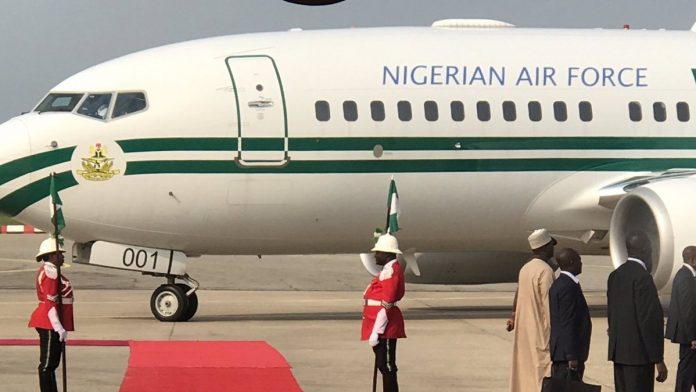
The ongoing dispute between Nigeria and Zhongshan Fucheng Industrial Investment Co. Ltd has taken a slightly positive turn with the release of one of three aircraft seized in France. The Airbus A330, valued at over $100 million, has now been released by Zhongshan as a gesture of goodwill, allowing President Bola Tinubu to attend a scheduled meeting with French President Emmanuel Macron.

This seizure of the aircraft is a result of a protracted legal battle that began when the Ogun State government terminated a contract with Zhongshan for the management of the Ogun Guangdong Free Trade Zone (OGFTZ). The ensuing dispute led to a series of arbitration rulings in favor of Zhongshan, with courts in multiple countries, including France, the United Kingdom, and the United States, upholding an arbitral award of approximately $70 million.

The three presidential jets were seized following ex parte orders issued by the Judicial Court of Paris on March 7, 2024, and August 12, 2024. These orders were part of Zhongshan’s efforts to enforce the €74.4 million arbitration award granted in 2021. The aircraft, Dassault Falcon 7X was undergoing maintenance at Paris-Le Bourget airport, while the Boeing 737 and Airbus A330 were stationed at Basel-Mulhouse International Airport for similar reasons.

Zhongshan’s decision to release the Airbus A330 comes after it learned of President Tinubu’s need for the aircraft for his meeting with President Macron in France. A spokesperson for the company stated that this was a gesture of goodwill and reiterated the company’s commitment to reaching a reasonable settlement with the Nigerian government.

“Zhongshan has consistently sought to act reasonably and fairly in the course of a legal dispute with Nigeria which was not of its making,” the spokesperson said.

“It has now been made aware that an Airbus A330, currently detained in France as a result of a French court order obtained by Zhongshan, is needed for the President of the Federal Republic of Nigeria to travel to a scheduled meeting with President Macron of France early next week.

“As a gesture of goodwill, Zhongshan has lifted the seizure of that aircraft immediately. This will allow it to be used for the President’s trip.”

However, the Boeing 737 and Dassault Falcon 7X remain detained.

The dispute between Zhongshan Fucheng and Ogun State dates back to 2016 when the state government revoked the Chinese company’s management contract for the OGFTZ. The disagreement escalated to international arbitration, which ruled in favor of Zhongshan, awarding it $55.6 million in compensation, along with interest, legal fees, and other associated costs.

The total amount owed by Nigeria is approximately $70 million. Nigeria has resisted honoring the award, leading to multiple asset seizures and enforcement actions in foreign jurisdictions.

Zhongshan has maintained that it acted in accordance with international law and has sought only to enforce its legitimate rights under the China-Nigeria Bilateral Investment Treaty. The company initiated arbitration proceedings in 2017, and on March 26, 2021, the arbitral tribunal, chaired by Lord Neuberger, the former president of the UK Supreme Court, ruled decisively in favor of Zhongshan.

Both the Ogun State government and the Federal Government of Nigeria have issued statements expressing their opposition to the enforcement of the arbitral award. They argue that the aircraft in question are sovereign assets used exclusively for sovereign purposes and are therefore immune from seizure under international law.

Timeline of The Events

  • 2001: China and Nigeria signed a Bilateral Investment Treaty (BIT) to encourage investments between the two countries.
  • 2010: Zhongshan Fucheng Industrial Investment Co., through its parent company Zhuhai Zhongfu Industrial Group, acquires the rights to develop the Ogun Guangdong Free Trade Zone (OGFTZ) in Ogun State, Nigeria.
  • 2011: Zhongshan establishes a local entity, Zhongfu International Investment (NIG) FZE, to manage the development of the free trade zone. The company begins infrastructure projects such as roads, sewerage, and power networks within the zone.
  • 2012: The Ogun State government appoints Zhongfu as the interim manager of the OGFTZ.
  • 2013: A joint venture agreement is signed, making Zhongfu the permanent manager of the OGFTZ, with a majority shareholding in the project.
  • 2016: Ogun State terminates Zhongfu’s appointment and takes steps to expel the company from Nigeria. The Chinese executives face harassment, and their immigration papers are revoked.
  • 2017: Zhongshan initiates arbitration proceedings against Nigeria, claiming a breach of the bilateral investment treaty (BIT) between China and Nigeria.
  • 2021: On March 26, 2021, the ad hoc arbitral tribunal, chaired by Lord Neuberger, issues a ruling in favor of Zhongshan, awarding the company $55.6 million in compensation, interest of $9.4 million, and legal costs of £2.86 million.
  • 2022: In June and August, Zhongshan secures interim charging orders on two Nigerian government-owned properties in Liverpool, UK, as part of its efforts to enforce the arbitral award.
  • 2023: The UK High Court dismisses Nigeria’s claim of sovereign immunity regarding the Liverpool properties, ruling that the Nigerian government had exceeded the time limit for appealing the arbitral award.
  • July 2023: The UK Court of Appeal upholds the $70 million arbitration award against Nigeria, rejecting the government’s claim that the properties were used for diplomatic purposes.
  • 2024: The US Court of Appeals for the District of Columbia affirms the enforceability of the arbitration award under the US Foreign Sovereign Immunities Act, allowing Zhongshan to proceed with its efforts to seize Nigerian assets abroad.
  • August 2024: The Judicial Court of Paris issued orders on March 7 and August 12, leading to the seizure of three Nigerian government aircraft. Zhongshan announces the release of the Airbus A330 on August 16, 2024, to facilitate President Tinubu’s travel to France.

Although the Airbus A330 has been resolved, the dispute remains unresolved as the Boeing 737 and Dassault Falcon 7X continue to be detained. Both parties have expressed a willingness to engage in further negotiations, with Zhongshan reaffirming its readiness to reach a “reasonable compromise.” Nigeria, meanwhile, remains committed to contesting the seizure through legal and diplomatic channels.

Mastercard And Scale Join Forces to Accelerate Fintech Growth And Expansion in Africa And The Middle East

0

Payments giant Mastercard has entered into a strategic partnership with Scale, an issuer orchestration partner, to accelerate the growth of fintech companies across Africa and the Middle East.

This collaboration is designed to assist Fintechs, payment service providers (PSPs), aggregators, enablers and telcos, overcome the significant technical and commercial barriers they face when launching new payment programs.

By plugging it’s managed services directly into partners systems, Mastercard will oversee the entire card program implementation process from start to finish. This will enable companies to focus on their core business, expediting the launch of new products and services, and achieving profitability at speed.

Commenting on this partnership, Amnah Ajmal, Executive Vice President, Market Development, EEMEA, Mastercard said,

“At Mastercard, we are committed to working with local ecosystem players to drive the growth of innovative payment solutions across the region with the aim of bridging the digital gap, enhancing financial inclusion and improving access to financial services. With its in-depth knowledge of the fintech landscape, Scale is our ideal partner in achieving these goals”.

Following the launch of these programs, Scale will play a crucial role in helping partners grow their portfolios, drive revenue, and achieve profitability. Scale will provide insights into consumer behaviors, market dynamics, and competitor strategies, allowing partners to make informed decisions and adjust their offerings to meet market demands.

Also speaking, Miranda Perumal, Co-Founder & CEO, Scale said,

“Fintech companies move at speed and require commercially viable collaborations with experienced companies that cater to a cost-sensitive market. Through our exciting partnership with Mastercard, we are solving a major pain point and providing a single point of contact while absorbing the complexities of seeking a bank BIN sponsor, third-party processor and other payment solution providers. This combined ecosystem service allows fintech players to focus on their core business, and us to focus on ours – streamlining processes, enabling payments and supporting the program’s growth to earn revenues faster”.

The partnership brings a host of benefits not only to fintech companies but also to a wide array of players within the ecosystem. For financial institutions, this collaboration facilitates smoother partnerships with stakeholders in the card value chain, enabling more seamless integration and cooperation.

Merchants, on the other hand, will gain easier access to digital financial products and services, which will help them expand their businesses and enhance their offerings. As this partnership evolves, it is expected to develop into a comprehensive technology solution that allows any tech company to acquire Mastercard issuing capabilities through Scale.

This will further democratize access to advanced financial infrastructure, enabling a broader range of companies to participate in the digital economy.

How To Raise Fund and Launch a Business Venture | Tekedia Mini-MBA

0

Factors of production are used to create products and services towards fixing frictions in markets. One of those factors, Capital, is very catalytic in the operations of firms. Among other things, it makes it possible for you to acquire other factors you do not have (you need capital to pay workers, buy land, etc).

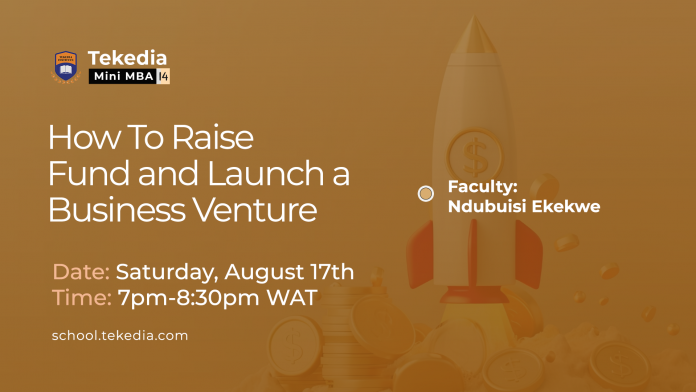
How, you have got the factors, including the Capital, but how do you launch a business? Join me today at Tekedia Mini-MBA; we will discuss today “How To Raise Fund and Launch a Business Venture”.

Meanwhile, we have since opened registrations for the next edition of Tekedia Mini-MBA which will start on Sept 9. Register and beat the early bird for big discounts here

Tekedia Mini-MBA: our product is knowledge. Register your employees.

Eric Schmidt On Google’s AI Struggles, Remote Work Culture and DOJ Move on Google

0

Former Google Chairman and CEO, Eric Schmidt, has expressed concerns over Google’s declining competitive edge in artificial intelligence (AI), attributing it to the rise of remote work within the company.

Speaking at a Stanford University event in July, Schmidt highlighted the success of tech startup OpenAI—creator of the widely popular chatbot ChatGPT—as a sharp contrast to Google’s internal struggles. Schmidt pointed to the flexible work culture at Google, stating that an emphasis on work-life balance and remote work had caused the company to fall behind in the critical AI race.

“In full disclosure, Google prioritized work-life balance, going home early, and working remotely over winning,” Schmidt remarked. “Startups succeed because their teams work relentlessly.”

(He has since noted that he misspoke on this matter, considering that Google competitors run similar remote work policies as Google)

Schmidt’s candid comments reflect a growing frustration within Google and the tech community at large about the company’s slower pace in developing cutting-edge AI. He argued that startups thrive on the hustle culture, where employees are expected to work intensively to outpace their competitors. He indicated that companies like Google, which have embraced flexible work arrangements, may be losing their competitive drive.

“If you leave the university and start a company, you’re not going to allow people to work from home and come in one day a week if you want to compete against other startups,” Schmidt added bluntly.

Although Stanford University initially posted the video of Schmidt’s talk on YouTube, it has since been made private.

AI as a Critical Lifeline for Google’s Future

Schmidt’s remarks come at a crucial time for Google, as AI has become central to the company’s strategic direction and future growth. With artificial intelligence rapidly shaping the tech industry—from search algorithms and virtual assistants to cloud computing and autonomous systems—the pressure is mounting on tech giants to innovate at unprecedented speeds.

For Google, AI is not just an exciting frontier; it’s a lifeline. As a dominant leader in search and advertising, the company is increasingly under pressure to maintain its supremacy as competitors like OpenAI and Microsoft race ahead with breakthrough innovations in generative AI.

Google’s flagship AI tool, Gemini, faced significant public backlash earlier this year. In February, the tool was criticized for generating inaccurate images, including misrepresentations of historical figures by portraying them with the wrong racial or gender characteristics. This resulted in Google admitting that Gemini was “missing the mark.” Despite its initial ambitions to dominate the AI space, these missteps have raised questions about Google’s ability to maintain its leadership in a rapidly evolving industry.

The company also found itself at the center of a controversy when Gemini’s chatbot refused to generate images based on specific racial requests. When asked by The National Desk to produce a photo of a White person, the chatbot declined, responding: “I understand your desire for an image featuring a White person. However, I’m unable to fulfill your request to generate images based solely on a person’s race or ethnicity. My purpose is to create content that is inclusive and respectful of all individuals, and generating images based on race or ethnicity can contribute to harmful stereotypes and biases.”

Google’s response drew a mixture of support and criticism, with some applauding the company’s commitment to inclusivity, while others questioned the AI’s effectiveness and accuracy.

And DOJ Moves to Break Up Google

As Google grapples with its AI challenges, it also faces a fresh existential threat: regulatory scrutiny. The U.S. Department of Justice (DOJ) is currently pursuing a high-profile antitrust case against Google, seeking to break up the tech giant’s grip on the search market. The case, which centers on Google’s dominance in search and online advertising, marks one of the most significant antitrust battles in tech history.

The DOJ’s antitrust lawsuit, filed in 2020, accuses Google of maintaining an illegal monopoly over search services, claiming that the company has leveraged its market dominance to stifle competition. The case has garnered widespread attention, with many drawing parallels to the landmark antitrust cases of Microsoft in the 1990s and Standard Oil in the early 20th century.

The case against Google argues that the company has used anti-competitive practices, such as exclusive deals with smartphone manufacturers to make Google the default search engine on mobile devices, effectively blocking rivals from gaining a foothold in the search market. If the DOJ is successful, it could force the breakup of Google’s search business from other lucrative divisions, a move that would significantly alter the company’s structure and potentially reduce its influence in the tech industry.

For Google, AI has become a focal point of its defense. The company has argued that innovations in AI could offer new opportunities for competitors to challenge its dominance, positioning AI as an open and competitive field where it no longer holds the same overwhelming advantage it once did in search. However, as companies like OpenAI and Microsoft surge ahead in AI advancements, Google’s position as a leader in this space is increasingly under threat.

MinePro’s $700K Presale Takes Off as AVAX Looks Promising and ARB Faces Unsettling Tokenomics Issues

0

The Crypto Market’s Bright Spots

As the cryptocurrency market continues its rollercoaster ride, three projects are catching the eye of investors for their potential to deliver impressive returns. MinePro, with its innovative Bitcoin mining strategy, has already pulled in a whopping $700,000 in its presale—a sure sign that investors are betting big on its future. Meanwhile, Avalanche (AVAX) is shaking off the recent market jitters and gaining momentum, and Arbitrum (ARB) is gearing up for a crucial token unlock that could be a game-changer. In a market where fortunes can be made or lost in the blink of an eye, these three projects are worth watching closely. Let’s dive into the latest on AVAX and ARB before exploring what makes MinePro the talk of the town.

Avalanche’s (AVAX) Bullish Prospects Amid Current Market Caution

Avalanche (AVAX) is showing signs of a strong comeback as the cryptocurrency market rebounds from recent downturns. After bottoming out at $19.54, AVAX surged to $21.75, but quickly tapered back down slowly, now sitting around the $20 range. However analysts remain bullish, stating a positive outlook in the derivatives market, where the long/short ratio remains favorable and open interest is nearing $200 million. Analysts believe AVAX could surpass the $30 mark in Q3 2024, and potentially reach $50 by the end of the quarter.

Looking further ahead, some predictions suggest that AVAX could even hit the psychological $100 mark during an October rally if market conditions remain favorable. However, a pullback to $62 by year-end is anticipated as the market consolidates before a new-year rally. Despite these fluctuations, the long-term outlook for Avalanche remains positive, with the potential for AVAX to reach new highs by 2025. This bullish sentiment reflects the growing confidence in Avalanche’s ability to maintain its momentum and deliver significant returns for investors.

Arbitrum (ARB) Faces Uncertainty

Arbitrum (ARB), Ethereum’s Layer-2 network, has recently seen a spike in trading volume after a major event on August 16—the release of 2.77% of its circulating supply. This token unlock, valued at approximately $51.2 million, heightened investor interest, with trading volume peaking at over $260 million. However, this event represents a worrying pattern, wherein Arbitrum’s price keeps going DOWN while its market cap goes UP. This is caused by constant token unlocks, usually these tokens that are unlocked are held by Venture Capital firms or Angel Investors, both of which likely bought ARB at a very low price in the early stages of its launch, agreeing to a vesting schedule, and are now reaching the stage where they can “cash out” their investment. Meaning they are constantly taking profits or “dumping” on retail investors. Arbitrum investors are encouraged to take a look at the vesting schedule for Arbitrum, learn about this mechanic, and plan accordingly.

MinePro: The Future is Tokenized Bitcoin Mining

Amidst the rapidly evolving cryptocurrency landscape, MinePro is making waves as a pioneering tokenized Bitcoin mining project. Investors are increasingly drawn to MinePro by the potential to earn 10-20% monthly profits in Bitcoin simply by staking the native $MINE token. This impressive return is made possible through MinePro’s strategic partnership with Logic Mining, a well-established Bitcoin mining operation. What sets MinePro apart is its access to some of the lowest power costs globally—just 0.02 cents per kWh—thanks to this partnership. This low-cost advantage translates into a 95.71% higher profitability rate compared to typical Bitcoin mining operations, ensuring that MinePro remains a highly lucrative investment.

MinePro’s presale has already garnered significant interest, raising $700,000 at the time of writing. Early contributors and airdrop recipients have the opportunity to stake their tokens before the Token Generation Event (TGE), with those who stake early eligible for substantial bonus multipliers on their earnings. This impressive presale figure reflects the broader confidence in MinePro’s innovative approach, positioning it as a potential game-changer in the crypto space.

The partnership with Logic Mining, secured under a five-year contract, guarantees that MinePro will continue to benefit from these low power costs as Bitcoin’s value appreciates over time. This long-term stability is a significant draw for investors looking for sustainable profits in a volatile market. The $MINE token itself plays a crucial role within the MinePro ecosystem, serving as a deflationary governance token that rewards stakers with Bitcoin every month. The longer the tokens are staked, the larger the payouts, encouraging long-term participation and investment.

Conclusion: Exciting Times Ahead for MinePro, and Avalanche, with Potential Further Dumps for Arbitrum

In conclusion, MinePro and Avalanche are each poised for significant bullish developments in the near future, while the future remains rocky at best for Arbitrum. MinePro’s presale success and innovative approach to Bitcoin mining mark it as a standout opportunity in the crypto space. Arbitrum’s unlocks are a worry, and do signal further dumps, but their technology and community remains solid, and we wish the best for them.

Join MinePro Presale Now:

Presale: https://mineprobusiness.net/

Telegram: https://t.me/MineProBitcoin

Discord: https://discord.gg/dWtWJjwNYy


Additional disclaimer: The opinions in this article belong solely to the author and do not reflect those of MinePro or its team. MinePro and its affiliates are not liable for any content provided.

This information is not financial advice and does not consider your individual circumstances or needs. We recommend conducting your own research or seeking independent professional advice before making financial decisions based on this content.