DD
MM
YYYY

PAGES

DD
MM
YYYY

spot_img

PAGES

Home Blog Page 3243

This is why Everything is Expensive in Nigeria, from Netflix to DStv to Second-Hand Clothes!

1
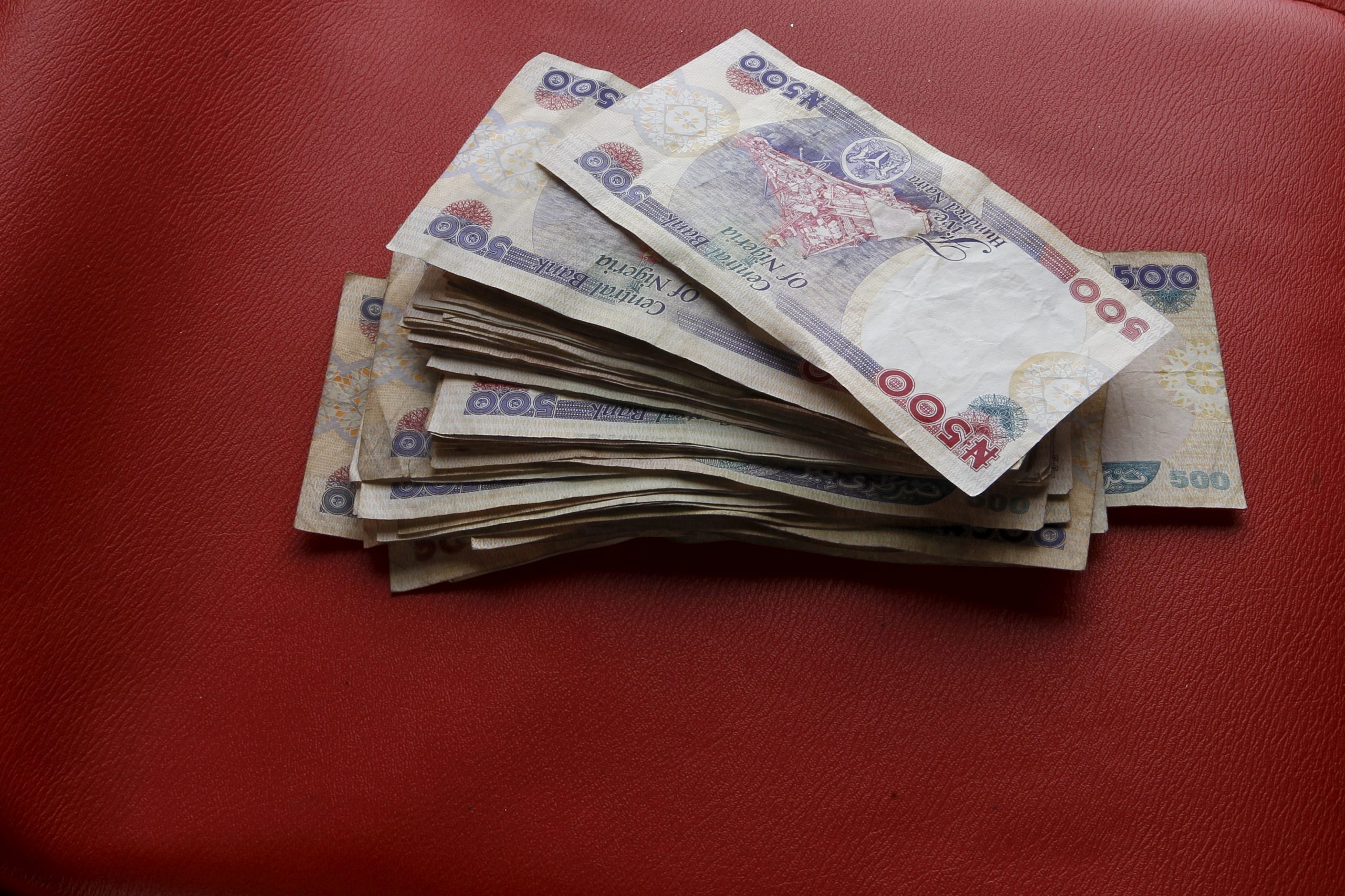
Nigerian naira notes are seen in this picture illustration March 15, 2016. REUTERS/Afolabi Sotunde/Illustration/File Photo - RTSFNNR

In 2015, 1 CFA franc in Cotonou would have given you N0.25 (or 25 kobo); today, you will get N2.50. If you run the numbers, that is a 10X appreciation over the Naira in less than ten years! Kenyan Shilling has delivered something closer. 

For South Africa’s rand, the Naira has lost a factor of 6 over the same period (1 Rand was about N15 in 2015; today, it can buy N90). Against the US dollars, Naira officially is off by a factor of 3!

So, even though we open the day writing about the Euro, British Pounds and the US dollar, the issue is that the Naira has underperformed in Africa in the last decade. 

For years, Nigerians enjoyed the flip where our currency was outperforming our neighbours’ currencies. People would go to Cotonou to buy clothes, cars, fridges, etc in the port, and bring them into Nigeria. Today, they’re the ones coming to buy our foodstuffs, and the major challenge in the Nigerian Customs is to prevent smuggling of foodstuff out of Nigeria. 

Now you know why the Cotonou’s old-decades cheap second-hand clothes are no more affordable in Nigeria. You may ask: how do we fix this problem? From a village boy perspective, I will say, reorder the architecture of the Nigerian economy and de-financialize it. Today, the economy of Nigeria has been financialized. 

Though what he was doing was not on my horizon, after reading books, I do conclude that Nigeria’s IBB (Babangida) was a good operator even though he scaled many bad things in the country. I mean he built Abuja,  3rd Mainland Bridge,  and many other catalytic infrastructures. Yet, he messed up with SAP (structural adjustment programme), and in the bid to recover, he liberated the banking & financial sector at scale, without connecting them to manufacturing.

Today, from GTBank to Zenith Bank, Access to modern UBA, and beyond, some of the leading banks in Nigeria were created within 1989 to 1993, and a policy framework made that possible.   Just like that, the financialization of Nigeria began, and that started the erosion of the core pillars of Nigeria. He made finance better but ignored manufacturing!

In the 1950s, 1960s, 1970s and early 1980s, nobody knew who owned banks because our economy was managed by industrialists and manufacturers, from Aba to Ibadan to Kano. But SAP sapped Nigeria, and turned flipping and exchanging Naira and USD as the fastest way to create wealth. We all bought into it, and nobody wants to build anything. Why build if you can flip Naira and become richer? People, we need to be making things in Nigeria to help Naira.

Comment in LinkedIn Feed

Comment #1: we spent the last 3 decades flipflopping currencies. Who has time to build factories when you can make more money with less risks trading money. The results of our 3 decades long actions have fully matured. Guess what, the actions we are taking now which is short termed (survivalism) to solve that problem will also mature soon and the results will be equally bad. Let no one deceive us, we will be in this survival mode for a while because we have learned to take advantage of the opportunities it presents.

Comment #2: For years, many artisans from Cotonou enjoyed working in our country because the naira used to be stronger than their CFA franc. However, today they are gradually returning to their home countries. This shift is due to the changing economic dynamics, including currency devaluation and economic instability, which have reduced the financial incentives for them to work abroad.

OpenAI Intensifies Competition in The Search Space, Unveils Search Engine Called SearchGPT

0

OpenAI, an Artificial Intelligence company and maker of popular AI Chatbot ChatGPT, has stepped up competition in the search engine market, following the unveiling of its latest AI search engine, “SearchGPT”, that aims to give users fast and timely answers with clear and relevant sources.

Powered by OpenAl models (specifically GPT-3.5, GPT-4 and GPT-4o), SearchGPT aims to revolutionize how users find and interact with information online. OpenAl describes the search engine  as a prototype which will first be launched to a small group users and publishers to get feedback.

Announcing the roll out of SearchGPT, OpenAI wrote via a blogpost,

“We’re testing SearchGPT, a prototype of new search features designed to combine the strength of our Al models with information from the web to give you fast and timely answers with clear and relevant sources. We’re launching to a small group of users and publishers to get feedback. While this prototype is temporary, we plan to integrate the best of these features directly into ChatGPT in the future.

“Getting answers on the web can take a lot of effort, often requiring multiple attempts to get relevant results. We believe that by enhancing the conversational capabilities of our models with real-time information from the web, finding what you’re looking for can be faster and easier.”

OpenAI further notes that SearchGPT will quickly and directly respond to users questions with up-to-date information from the web, while giving them clear links to relevant sources. Also, users will be able to ask follow-up questions like they would in a conversation with a person, with the shared context building with each query.

SearchGPT is designed to offer natural language interactions, allowing users to ask questions conversationally and receive direct, comprehensive answers rather than just a list of links. This new search engine will utilize advanced Al models, likely based on variations of GPT-4, and will integrate features like image search, weather widgets, calculators, and real-time updates on various topics such as sports and finance.

Notably, the search engine is designed to help users connect with publishers by prominently citing and linking to them in searches. Responses have clear, in-line, named attribution and links so users know where information is coming from and can quickly engage with even more results in a sidebar with source links. OpenAI announced that it has partnered with publishers to build this experience and continue to seek their feedback.

In addition to launching the SearchGPT prototype, the company is also launching a way for publishers to manage how they appear in SearchGPT, so publishers have more choices.

The launch of SearchGPT will no doubt intensify competition in the search industry currently dominated by Google, as the search engine aims to address the limitations of traditional search engines and even current Al models by providing real-time data and reducing the reliance on historical information.

The rollout could have implications for Google and its dominant search engine. Since the launch of ChatGPT in November 2022, Alphabet  investors have been concerned that OpenAl could take market share from Google in search by giving consumers new ways to seek information online. It is worth noting that shares of Google’s parent company Alphabet ended 3% lower on Thursday after OpenAI’s announcement of SearchGPT.

However, as Google continues to refine its algorithms and prioritize ‘helpful content’, questions about the reliability and bias of AI-generated results remain pressing.

LinkedIn Summary

OpenAI, whose ChatGPT assistant kicked off an artificial intelligence arms race, is now pursuing a slice of the search industry. The company has unveiled a prototype of SearchGPT, an AI-powered search engine that is widely viewed as a play for rival Google’s $175 billion-per-year search business. But while Google’s use of AI in search results has been met with concern and resistance from publishers, SearchGPT touts its heavy use of citations and was developed alongside publishing partners, including Axel-Springer and the Financial Times. After seeing results to their queries, users will be able to ask follow-up questions in interactions that resemble those with ChatGPT.

  • A 10,000 person wait list was opened Thursday for a those wanting to test a prototype of the SearchGPT service.
  • Though currently distinct, SearchGPT will eventually be integrated into ChatGPT.

BlackRock’s $500M Tokenized Fund Eyes RWA Investment Plan

0

BlackRock’s foray into the world of decentralized finance (DeFi) marks a significant milestone in the integration of traditional financial structures with blockchain technology. The asset management giant has recently made headlines with its $500 million tokenized fund, which is now eyeing an investment plan focused on Real World Assets (RWA). This move underscores a growing trend where traditional financial entities are not only acknowledging but actively participating in the burgeoning DeFi space.

The BUIDL fund, as it is known, represents BlackRock’s commitment to innovation within the digital asset space. The fund’s rapid accumulation of assets under management (AUM) is a testament to the increasing interest and confidence in tokenized financial products. The BUIDL fund, which stands for BlackRock USD Institutional Digital Liquidity Fund, has amassed over $500 million in AUM in just three months.

Ethena, a protocol behind the $3.4 billion yield-generating “synthetic dollar” token USDe, is planning to allocate a portion of its reserves to tokenized RWA offerings, and BlackRock’s BUIDL fund is among the first to pitch for this allocation. This strategic move by Ethena could potentially lead to a significant allocation from its $235 million USDT stablecoin collateral and $45 million surplus reserve to BlackRock’s fund.

The concept of tokenized RWAs is not entirely new in the DeFi ecosystem. MakerDAO and Ethereum layer-2 Arbitrum’s development organization have taken similar actions in the past. However, BlackRock’s participation brings a new level of credibility and mainstream acceptance to the practice. The BUIDL fund’s pitch for a $34 million allocation from Ethena’s reserve is a clear indicator of the fund’s ambition and the potential for growth in this sector.

Tokenization of RWAs involves the representation of real-world assets like real estate, commodities, or corporate debt on the blockchain. This process offers several advantages, such as increased liquidity, fractional ownership, and the potential for creating more efficient markets. For BlackRock, this represents an opportunity to bridge the gap between traditional finance and DeFi, providing its clients with exposure to innovative yield-generating strategies.

One of the primary concerns is regulatory compliance. Tokenized RWAs must navigate a complex landscape of legal frameworks that vary by jurisdiction. Ensuring that these assets comply with local regulations is crucial to avoid legal repercussions and maintain investor trust.

Another significant risk is the custody and security of the tokenized assets. Effective custody solutions are essential to prevent the loss, theft, or mismanagement of tokens. The digital nature of these assets makes them susceptible to cyber-attacks, requiring robust security measures to safeguard investments.

Tax reporting challenges also arise from the sale or trade of tokenized assets. Investors and issuers must be prepared to handle the intricate tax implications associated with these transactions.

Furthermore, the tokenization process can be complex and bureaucratic, potentially introducing more barriers compared to traditional financing methods. This complexity can lead to a slower adoption rate and uncertain demand for tokenized assets.

Lastly, there is the risk of smart contract vulnerabilities. Since tokenized RWAs rely on blockchain technology, any bugs or flaws in the smart contract code can lead to financial losses and affect the integrity of the asset.

Despite these risks, the potential of tokenized RWAs to revolutionize the financial industry remains significant. Investors and issuers alike must approach this emerging market with due diligence and a comprehensive understanding of the associated risks and rewards.

The implications of BlackRock’s involvement in tokenized RWAs are far-reaching. It signals a shift in how institutional investors view blockchain technology and its applications. By leveraging the transparency, security, and efficiency of blockchain, BlackRock is positioning itself at the forefront of a financial revolution.

As the DeFi space continues to evolve, it will be interesting to observe how traditional financial institutions adapt and contribute to its growth. BlackRock’s $500M tokenized fund and its RWA investment plan could very well be the catalysts for a new era of financial innovation, where the boundaries between the traditional and digital realms become increasingly blurred. The success of this venture could pave the way for other institutional players to follow suit, potentially leading to a more inclusive and democratized financial system.

Nigeria’s Oil Import from Malta Hit $2.8bn in 2023, Highest in A decade: Alluding to Dangote’s Claim Against NNPC

0

Nigeria’s importation of petroleum products from Malta has witnessed an astronomical increase, rising 43-fold to reach a staggering $2.08 billion in 2023, the highest in a decade.

This astronomical surge comes against the backdrop of ongoing allegations by Aliko Dangote, Africa’s richest man and chairman of the Dangote Group, implicating certain personnel within the Nigerian National Petroleum Company (NNPC) in potentially dubious oil blending activities in Europe.

According to data from Trade Map, an authoritative source on international trade statistics, Nigeria’s imports of petroleum oils and oils obtained from bituminous minerals experienced a dramatic jump in 2023. From a modest $47.5 million in 2013, these imports ballooned to $2.8 billion, representing a 342% increase.

The data reveals a pattern of fluctuation in import values between 2013 and 2016, with a peak of $117.01 million in 2015, followed by a sharp decline to $13.32 million in 2016. Notably, from 2017 to 2022, there were no recorded petroleum imports from Malta, making the sudden resurgence in 2023 all the more intriguing.

The unexpected increase in petroleum imports from Malta has drawn considerable attention, particularly in light of recent statements made by Aliko Dangote. Dangote has accused certain individuals within the NNPC, along with international oil traders, of establishing a blending plant in Malta.

Malta, with its strategic location in the Mediterranean and its history as a shipping and logistics hub, plays a unique role in global trade. While not traditionally a major player in the oil markets, Malta’s infrastructure and geographic positioning make it an attractive location for various kinds of logistical operations, including those related to the blending and redistribution of petroleum products.

During a session at the House of Representatives, Dangote stated, “Some of the NNPC people and some of the traders have opened a blending plant somewhere off Malta. We all know these areas, we know what they’re doing. It’s not that we don’t know…”

He added that they are importing cheap and bad fuel, damaging peoples’ vehicles in Nigeria.

Dangote made the allegation after Farouk Ahmed, Chief Executive Officer of the Nigerian Midstream and Downstream Petroleum Regulatory Authority (NMDPRA), asserted that local refineries, including the Dangote Refinery, were producing inferior products compared to imports

Blending plants, unlike refineries, do not have the capacity to process crude oil into various petroleum products. Instead, they are used to mix re-refined oil—such as used motor oil that has been cleaned and treated—with additives to create finished lubricant products.

This distinction is crucial in understanding the nature of the operations allegedly tied to NNPC personnel.

In response to these allegations, Mele Kyari, the Group Chief Executive Officer of NNPC, issued a categorical denial. Kyari stated, “To clarify the allegations regarding the blending plant, I do not own or operate any business directly or by proxy anywhere in the world with the exception of a local mini Agric venture. Neither am I aware of any employee of the NNPC that owns or operates a blending plant in Malta or anywhere else in the world.”

Kyari further noted that any such plant would not influence NNPC’s operations or strategic decisions. He also vowed to take action against any NNPC personnel found to be involved in these activities.

“For further assurance, our compliance sanction grid shall apply to any NNPC employee who is established to be involved in doing so if availed and I strongly recommend that such individuals be declared public and be made known to relevant government security agencies for necessary actions in view of the grave implications for national energy security,” he said.

However, the surge in oil imports from Malta and the accusations against NNPC personnel have fueled speculation about the possible reasons behind the recent attack on Dangote Refinery by the NMDPRA.

Some energy industry analysts suggest that the alleged blending plant in Malta may be the reason oil sector regulatory agencies are frustrating the efforts of the Dangote Refinery to start full operation. Dangote’s 650,000 bpd capacity refinery, at completion, is expected to disrupt existing power dynamics within Nigeria’s oil industry, leading to resistance from established players.

Airtel Africa Reports Strong Net Profit, Customer Growth in Q2 2024

0

Airtel Africa, in its recently released financial report for the second quarter (Q2) 2024, for the year ended June 30, 2024, showcased strong growth, despite tough economic challenges.

The telco firm which operates in 14 African countries, reported an 8.6% increase in its total customer base, reaching 155.4 million. Data customers across the continent rose by 13.4% to 64.4 million. Data usage per customer increased by 25.1% to 6.2 GB, with smartphone penetration growing by 4.7% to 41.7%.

The report also highlighted growth in Airtel’s mobile money platform, with a 14.9% rise in subscriber count and a transaction value of $210 billion. Data ARPU (average revenue per user) grew by 9.6%, while mobile money ARPU increased by 8,8% in constant currency, contributing to an overall ARPU increase of 9.3% year-on-year. Across its Group Mobile Services, revenue grew by 17.4 percent and mobile money revenue grew by 28.4 percent in constant currency.

On Network coverage, the company reported a 33% increase, adding nearly 3,000 sites and over 5,600 kilometers of internet fiber across Africa. Notably, it achieved 19% constant currency growth, driven by 33.4% growth in Nigeria and 22.3% growth in East Africa. However, Airtel Africa recorded a decline in currency revenue in Nigeria by 16.1%, due to the devaluation of the Naira.

The translation impact of currency devaluation on reported currency results was the primary driver of EPS before exceptional items declining from 3.9 cents in the prior period to 2.3 cents. Basic EPS of 0.2 cents compares to a negative (4.5 cents) in the prior period, predominantly reflecting the USD 471 million of exceptional derivative and foreign exchange losses in the prior period, compared to USD 122 million in the current period.

Speaking on the report, Airtel Africa CEO Sunil Taldar said,

“The continued revenue growth momentum once again reflects the resilient demand for our services, with sustained growth in our customer base and usage. Our superior execution enables us to capture these opportunities, whilst retaining our reputation as a cost leader across the industry. Having visited most of our opcode since I joined Airtel Africa, I am encouraged by the scale of the opportunities available across our markets in both the GSM and mobile money business”.

Airtel Africa is a leading provider of telecommunications and mobile money services, with a presence in 14 countries in Africa, primarily in East Africa and Central and West Africa. The company offers an integrated suite of telecom solutions to its subscribers, including mobile voice and data services as well as mobile money services, both nationally and internationally.

It aims to continue providing a simple and intuitive customer experience through streamlined customer journeys. By integrating mobile voice, data and financial services, Airtel Africa is committed to empowering its subscribers with the tools they need to stay connected, informed and financially active.