DD
MM
YYYY

PAGES

DD
MM
YYYY

spot_img

PAGES

Home Blog Page 3244

How Bitcoin Has Performed Since the FTX Bankruptcy

0

Bitcoin, the world’s largest cryptocurrency, has reached a new all-time high of over $69,000 on March 5, 2024, according to CoinMarketCap. This remarkable achievement comes less than two years after the infamous FTX scandal that rocked the crypto industry and sent prices tumbling.

What was the FTX scandal?

FTX was one of the largest and most popular crypto exchanges in the world, offering a variety of services such as spot trading, futures contracts, options, leveraged tokens, and more. It had millions of users and processed billions of dollars in daily volume.

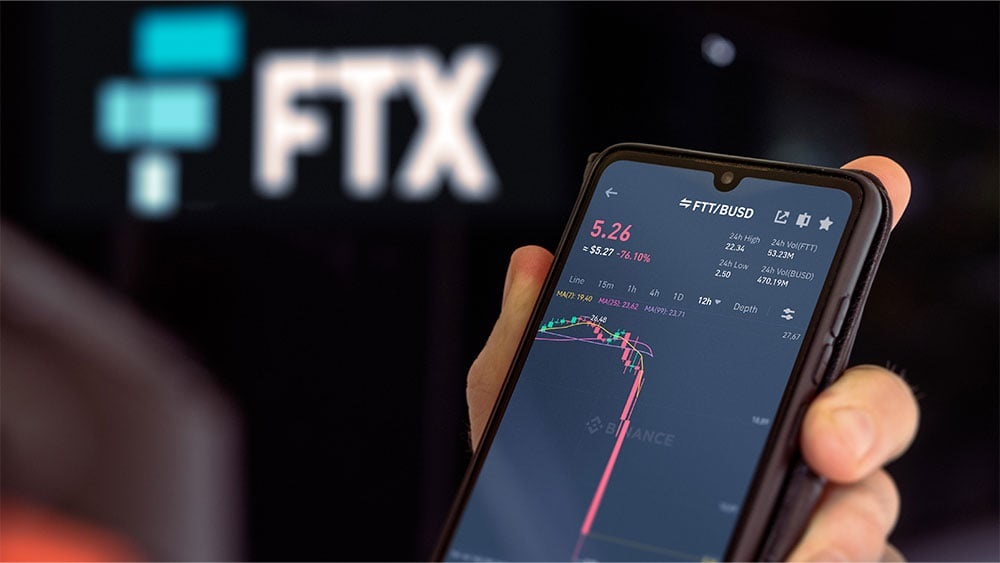
However, in February 2022, FTX announced that it had filed for bankruptcy after suffering massive losses due to a series of cyberattacks, frauds, and lawsuits. The exchange claimed that it was unable to access its cold wallets, where most of its funds were stored, and that it had no other option but to cease operations.

The FTX collapse triggered a wave of panic and uncertainty in the crypto market, as many investors feared that their funds were lost or inaccessible. The price of Bitcoin dropped from nearly $69,000 in November 2021 to less than $17,000 in March 2022, a decline of more than 75%. Other cryptocurrencies also suffered heavy losses, as the market capitalization of the entire crypto sector shrunk by more than $1 trillion.

How did Bitcoin bounce back?

Despite the FTX disaster, Bitcoin proved to be resilient and adaptable, as it gradually regained its momentum and popularity over the next two years. Several factors contributed to Bitcoin’s recovery, such as:

The approval of spot Bitcoin ETFs in January 2024 by the U.S. Securities and Exchange Commission (SEC). These ETFs allow investors to buy and sell shares that track the price of Bitcoin without having to deal with the complexities and risks of owning or storing the actual cryptocurrency.

The approval of Bitcoin ETFs was seen as a major milestone for the crypto industry, as it signaled a higher level of legitimacy and acceptance by regulators and mainstream investors.

The anticipation and occurrence of the Bitcoin halving in April 2024. The halving is an event that occurs every four years, where the reward for mining new blocks of Bitcoin is cut in half. This reduces the supply of new Bitcoins entering the market, creating a scarcity effect that tends to drive up the price.

The halving also increases the difficulty and cost of mining, making it more profitable for miners to hold rather than sell their Bitcoins. Historically, Bitcoin has experienced significant price increases in the months leading up to and following each halving.

The diversification and innovation of the crypto ecosystem. Despite the FTX setback, the crypto industry continued to grow and evolve, offering new products and services that catered to different needs and preferences of users.

For example, decentralized finance (DeFi) platforms emerged as a popular alternative to traditional financial institutions, providing users with access to lending, borrowing, trading, saving, and more without intermediaries or centralized control.

Similarly, non-fungible tokens (NFTs) became a hot trend in the digital art and entertainment space, allowing creators and collectors to buy and sell unique digital assets that represent ownership and authenticity.

The increased adoption and awareness of Bitcoin by various sectors and segments of society. Bitcoin gained more exposure and recognition as a viable form of money and investment by various entities such as governments, corporations, celebrities, institutions, and individuals.

For example, some countries such as El Salvador and Ukraine legalized Bitcoin as a legal tender or an asset class, respectively. Some companies such as Tesla and MicroStrategy added Bitcoin to their balance sheets or accepted it as a payment method. Some celebrities such as Jack Dorsey and Paris Hilton endorsed or promoted Bitcoin on their social media platforms.

Some institutions such as Harvard University and BlackRock invested in Bitcoin or offered crypto-related services to their clients. Some individuals such as Michael Saylor and Chamath Palihapitiya became vocal advocates and influencers of Bitcoin.

What are the challenges and opportunities for Bitcoin?

Bitcoin has come a long way since the FTX fiasco, but it still faces some challenges and uncertainties that could affect its future performance. Some of these include:

The regulatory environment. While some regulators have shown a more favorable attitude towards Bitcoin and crypto in general, others have remained skeptical or hostile.

For example, China has banned all crypto-related activities within its borders, while India has proposed a bill that would criminalize the possession or use of cryptocurrencies. These actions could have negative impacts on the demand and supply of Bitcoin, as well as its reputation and credibility.

The technical issues. Bitcoin relies on a network of computers, or nodes, that validate and record transactions on a public ledger, or blockchain. However, this network is not immune to glitches, errors, or attacks that could compromise its security, functionality, or scalability.

For example, in May 2020, a software bug caused a temporary split in the Bitcoin network, creating confusion and uncertainty among users. In October 2021, a massive, distributed denial-of-service (DDoS) attack targeted several Bitcoin nodes, slowing down the network and disrupting transactions.

The competition. Bitcoin is not the only cryptocurrency in the market, nor is it the most advanced or efficient. There are thousands of other cryptocurrencies that offer different features, benefits, and trade-offs that could appeal to different users.

For example, Ethereum is a platform that enables smart contracts and decentralized applications that can perform complex functions beyond just transferring value.

Litecoin is a cryptocurrency that offers faster and cheaper transactions than Bitcoin. Cardano is a cryptocurrency that aims to solve some of the challenges of scalability, interoperability, and sustainability that plague Bitcoin and other cryptocurrencies.

On the other hand, Bitcoin also has some unique advantages and opportunities that could enhance its value and adoption in the long run. Some of these include:

The network effect. Bitcoin is the oldest, largest, and most widely used cryptocurrency in the world, with millions of users and supporters across the globe. It has established itself as the leader and standard-bearer of the crypto industry, enjoying a high level of trust, recognition, and influence. It also has a vibrant and diverse community of developers, miners, investors, enthusiasts, and advocates who contribute to its innovation and improvement. The network effect creates a positive feedback loop that makes Bitcoin more valuable and attractive as more people join and use it.

  • The scarcity factor. Bitcoin has a fixed supply of 21 million coins that will ever be created, making it a scarce and deflationary asset. This means that as the demand for Bitcoin increases over time, its price will tend to rise as well. Unlike fiat currencies that can be printed or manipulated by governments or central banks, Bitcoin is immune to inflation or devaluation. It also has a predictable and transparent monetary policy that is governed by mathematical rules rather than human whims.

The hedge factor. Bitcoin has often been compared to gold as a store of value and a hedge against inflation, currency debasement, or geopolitical risks. As the world faces unprecedented challenges such as the COVID-19 pandemic, climate change, social unrest, and political instability, many people are looking for alternative ways to preserve and protect their wealth and purchasing power.

Bitcoin offers an attractive option for those who seek to diversify their portfolios and reduce their exposure to traditional assets such as stocks, bonds, or commodities.

Bitcoin has demonstrated remarkable resilience and adaptability since the FTX bankruptcy that shook the crypto world in 2022. It has bounced back to new heights thanks to various factors such as regulatory approval of ETFs, halving events, ecosystem diversification and innovation, and increased adoption and awareness.

However, Bitcoin is not without challenges and uncertainties that could pose threats or obstacles to its growth and stability. It also faces competition from other cryptocurrencies that offer different value propositions and solutions.

Ultimately, Bitcoin’s future will depend on how well it can overcome these challenges and leverage these opportunities to maintain its relevance and dominance in the crypto space.

Crypto Market has Grown into a Sophisticated and Diverse Asset Class in the last Three Years

0

The crypto market has undergone a remarkable transformation in the last three years. From being a niche and volatile sector dominated by Bitcoin, it has evolved into a sophisticated and diverse asset class that offers a range of opportunities for investors, traders, developers and entrepreneurs.

One of the main drivers of this change has been the emergence and adoption of decentralized finance (DeFi), which is a set of protocols and applications that aim to provide financial services without intermediaries, using blockchain technology and smart contracts. DeFi has enabled users to access lending, borrowing, trading, investing, insurance and more in a permissionless and transparent way, creating new possibilities for innovation and inclusion.

Another key factor has been the growth and diversification of the crypto ecosystem, which now includes thousands of different tokens, platforms and projects, each with its own value proposition, use case and community.

Some of the most prominent examples are Ethereum, which is the leading platform for smart contracts and decentralized applications; Binance Coin, which is the native token of the largest crypto exchange by volume; Cardano, which is a scalable and sustainable platform for smart contracts and governance; and Polkadot, which is a network that connects and secures different blockchains.

The crypto market has also attracted more attention and participation from institutional investors, regulators, media and mainstream audiences, as it has demonstrated its resilience, innovation and potential. The market capitalization of all cryptocurrencies has increased from around $200 billion in March 2018 to over $2 trillion in March 2021, reaching new highs and lows along the way.

The crypto market has also witnessed some historic events, such as the launch of Bitcoin futures and options, the emergence of stablecoins and central bank digital currencies, the rise of non-fungible tokens (NFTs) and the adoption of crypto by major companies like Tesla, PayPal and MicroStrategy.

The crypto market is not without its challenges and risks, however. It still faces issues such as volatility, security breaches, regulatory uncertainty, scalability limitations and environmental concerns. Moreover, it is constantly evolving and changing, requiring constant learning and adaptation from its participants. The crypto market is not for the faint-hearted or the uninformed, but for those who are willing to embrace its opportunities and challenges with curiosity, creativity and courage.

One of the most interesting trends in the crypto space lately is the shift in attention from the big-picture narratives to the actual market dynamics. Instead of debating how DeFi or Web3 will disrupt the legacy financial system, many crypto enthusiasts are now more focused on the supply and demand factors that drive the price movements of various tokens and coins.

This is a sign of maturity and pragmatism, as well as a recognition that crypto is not just a theoretical concept, but a real and evolving market with its own rules and patterns.

Hong Kong Monetary Authority Announces New Wholesale CBDC Project

Meawnhile, the Hong Kong Monetary Authority (HKMA), the central bank of Hong Kong, has announced a new project to explore the use of a wholesale central bank digital currency (CBDC) for cross-border payments and tokenization of assets. The project, named e-HKD, aims to provide a fast, secure and efficient platform for financial institutions and corporates to conduct transactions using digital tokens backed by the Hong Kong dollar.

According to a press release issued by the HKMA on March 7, 2024, the e-HKD project will be conducted in two phases. The first phase will focus on the design and technical feasibility of the e-HKD system, while the second phase will involve testing and evaluation of the system with selected banks and payment service providers. The HKMA expects to complete the first phase by the end of 2024 and launch the second phase in early 2025.

The e-HKD will be issued by the HKMA and backed by its reserves, ensuring its stability and credibility. The e-HKD will be distributed through a network of authorized institutions, such as banks and payment service providers, who will provide digital wallets and other services to users.

The e-HKD will be interoperable with other payment systems, such as Faster Payment System (FPS) and Octopus, and can be used for various types of transactions, such as retail purchases, cross-border remittances and peer-to-peer transfers.

The e-HKD will also have several features that distinguish it from other forms of digital money, such as cryptocurrencies and stablecoins. For example, the e-HKD will be fully compliant with the legal and regulatory frameworks of Hong Kong, ensuring its safety and reliability.

The e-HKD will also respect the privacy and data protection rights of users, while adhering to the anti-money laundering and counter-terrorist financing standards. Moreover, the e-HKD will be designed to minimize the environmental impact of its operation, by using energy-efficient technologies and processes.

The e-HKD project is part of the HKMA’s ongoing efforts to promote innovation and financial inclusion in Hong Kong, as well as to enhance its role as an international financial hub. The HKMA has been actively exploring the potential of CBDCs since 2017, when it launched a joint research project with the Bank of Thailand to study the application of CBDCs for cross-border payments.

The project, known as Project Inthanon-Lionrock, successfully demonstrated the feasibility and benefits of using CBDCs for cross-border fund transfers, foreign exchange transactions and regulatory compliance.

The e-HKD project will build on the findings and experience of Project Inthanon-LionRock, but will also extend its scope to cover the tokenization of assets. The HKMA believes that tokenization, which refers to the process of converting physical or digital assets into digital tokens that can be traded on a blockchain or distributed ledger platform, can offer significant advantages for the financial sector, such as improved liquidity, transparency and security.

The HKMA also hopes that the e-HKD project will foster collaboration and interoperability among different jurisdictions and platforms that are developing or adopting CBDCs or digital tokens. The HKMA plans to work closely with other central banks and international organizations, such as the Bank for International Settlements and the Financial Stability Board, to ensure that the e-HKD system is aligned with global standards and best practices.

The HKMA’s Chief Executive, Mr Eddie Yue, said in a statement: “The e-HKD project is a strategic initiative that will position Hong Kong as a leader in the digital economy.

By leveraging our strengths in fintech and innovation, we aim to provide a cutting-edge solution for cross-border payments and tokenization that will enhance efficiency, security and convenience for our financial sector and our society. We look forward to working with our partners and stakeholders to make this vision a reality.”

The e-HKD project is a bold and visionary initiative that reflects the HKMA’s commitment to foster a more innovative, inclusive and sustainable financial system in Hong Kong. The e-HKD will not only offer a new choice of payment instrument for users, but also create new opportunities for businesses and society. The e-HKD will also enhance Hong Kong’s status as an international financial center and a hub for digital finance in Asia.

Lessons from Geometric Power Aba and How Nations Rise With Project Continuity Across Governments

2

How nations rise, from one post of Dr Alex Otti, executive governor of Abia State.

Note 1: “I have also worked tirelessly with my team to resolve the gas supply challenge that impeded the project for almost a decade.” – Alex Otti. (When Dr Otti took over, he asked for the root cause on why this power plant had not taken off. He was told that it was largely due to gas supply, and right there, he set a timeline, and he delivered as he promised. I also thank the members of the State’s Council who did the foundational work).

Note 2: “I wish to express my gratitude and recognition to one of my predecessors, HE Senator Orji Uzor Kalu, who granted the initial waivers to Geometric, thereby reducing the risks of the transaction. Without those waivers, it would have been impossible to finance the project. “ – Alex Otti. (Here, he acknowledged the leadership of Senator Kalu who provided waivers to the company.)

Note 3: “Special thanks to the Obi of Onitsha, HRM Igwe Alfred Nnaemeka Achebe, CFR who was the Chairman of Diamond Bank at the time, and who contributed significantly to the resolution of the ownership dispute of the ring-fence island.” – Alex Otti. (when Geometric Power and Enugu DISCO were battling things in the courts, elders called them to think “igwebuike” and unity).

Of course, there are many players involved which cannot be listed in a tweet; for example, the last administration invested in the power plant.

Largely, the point is clear: if we begin projects in Nigeria and our leaders do not see them as “Governor A’s project, and President B’s project”, we will get things done. Under the “NOT MY OWN” project mindset, many projects have been abandoned in Nigeria after billions of Naira have been invested on them. I do expect to read a case study on Geometric Power from Abia State University on how Nigeria could sustain projects over different governments even within a public-private partnership framework.

MTN Nigeria Recovers N12.5 Billion Lost to Glitch in Its Mobile Money, as Active Users Grow

0

Giant Telecommunications company MTN Nigeria, has reportedly recovered N12.5 billion lost due to a glitch in its mobile money system, as the company’s monthly active users continue to grow.

Recall that in 2022, MTN mobile money (MoMo) experienced a system glitch that cost the company over N10 billion in loss.

In a suit dated May 30, 2022, MoMo alleged that ?22.3 billion was transferred in error to 8,000 accounts maintained by the 18 banks’ customers using MoMo. The company referred to the loss as “customer-initiated transfers” and assured its customers that their funds were not lost and all their data was still secure.

Anthony Usoro Usoro, the CEO of MoMo, asserted in the lawsuit that the fraud spanned 700,000 transactions in the space of one month. To avoid further liabilities, MoMo shut down its service on May 25 after becoming aware of the fraud on May 24. The following day, service was quickly resumed.

In its latest 2023 financial report, MTN disclosed that while N12.5 Billion has been recovered to date, the balance of N9.5 billion will be absorbed by the company due to a shared services cost agreement between the telco and MoMo service.

MTN’s Fintech revenue increased by 2.4%, led by Xtratime (MTN airtime lending product), which rose by 2%. However, despite the challenges from the NIN requirement for KYC introduced in Q4 by the CBN, the company added 3.3 million active wallets in the year to 5.3 million. This helped to drive MoMo PSB revenue, which rose by 8.1%.

Commenting on the 2023 full year report, MTN Nigeria CEO Karl Toriola expressed satisfaction with the progress in building the MoMo PSB wallet base, noting that monthly active users have increased from 3.3 million in the year to 5.3 million.

Part of his statement reads,

“The growing adoption and increased activity within our Fintech ecosystem spurred transaction volume growth of 49.2% YoY. We also now have over 326k MoMo agents, up 46.0% YoY, and over 324k merchants since we started to build out our merchant ecosystem in March 2023.

“While the overall development of fintech has been slower than anticipated, these milestones mark solid and important progress in scaling our business, particularly the advanced services within our MoMo ecosystem”.

Toriola further disclosed that the company expect 2024 to be a challenging year due to the rising inflation and devaluation of the nairo

In January 2024, the inflation rate reached 29.9%, while the exchange rate has Further, devalued to N1582/$ as at 26 February 2024. This is anticipated to put additional pressure on consumers, the cost of doing business and Further potential Forex losses.

Pullix: A Shot In The Dark? Enter BlockDAG’s $3M Ark!

0

In the investment landscape of 2024, you’re either fully committed or completely on the sidelines; there’s no middle ground. Brace yourself for the forthcoming wave of news regarding Pullix’s investors.

Investors are on a never-ending search for that next big project with a clear vision and the potential for substantial returns. So, Pullix had a good thing going until it was listed. This is when it abruptly stopped being an exciting venture, offering compelling reasons to invest.

Did these investors just take off and leave the crypto world? Highly unlikely! They’ve moved to BlockDAG’s presale instead.

With these investors on the run, most discovered that BlockDAG’s ecosystem is stable and offers the potential for significant returns and a long-term vision. The drastically increasing numbers of the BlockDAG’s presale are also a proof that all those investors have now moved to the BlockDAG Network.

A Completed Presale

Pullix Crypto is on PancakeSwap as it successfully concluded its presale, and it is also on Bitmart, raising millions and gathering a dedicated community with a year-round roadmap outlining its ambitious plans.

From assembling a dream team and acquiring necessary licenses to actively developing the platform, Pullix grew taller and listed decentralised and centralised exchanges, launching a beta version for testing and developing mobile applications to reach the user base. The platform even launched a burn dashboard for token burning and targeted efforts to demonstrate commitment to building the ecosystem.

Then where did all go wrong?

A Presale with Big Plans

While Pullix has transitioned beyond its presale stage, BlockDAG is currently in batch 2 of the presale, presenting an opportunity for investors to get involved at an early stage, potentially reaping significant benefits when it launches.

BlockDAG has outlined a four-phase approach for its development and launch. The launch phase sets the stage for success and includes establishing the initial valuation, developing and auditing the smart contract, and initiating targeted marketing campaigns.

Moving on to the pre-launch phase, it’s all about maintaining presale momentum, refining the Mainnet through extensive testing, and engaging early adopters for beta testing, which are crucial steps before launch.

Then comes the development phase alongside continuous presale growth; BlockDAG is focused on developing and forging alliances and conducting market research to stay ahead of the curve.

Finally, concluding the presale on the 45th batch finalising the Mainnet and preparing for broad-scale mining operations mark the culmination of efforts, shortly followed by the official launch.

BlockDAG is currently in its presale phase: batch 2 has raised $3M and has a stable path ahead as it is well-prepared.

Investor Decisions and Market Dynamics

As the presale phase for Pullix concludes and BlockDAG presents an ongoing opportunity, investors find themselves at a crossroads. They must decide whether to adhere to Pullix’s established roadmap and plans or to seize the potential of BlockDAG’s presale, a path many are choosing for its promise of significant returns even before the project officially launches. This decision point highlights the dynamic nature of the cryptocurrency market, where the end of one opportunity often coincides with the beginning of another, offering investors new avenues for potential gains.


Invest in BlockDAG Presale:

Website: https://blockdag.network

Presale: https://purchase.blockdag.network

Telegram:https://t.me/blockDAGnetworkOfficial

Discord: https://discord.gg/Q7BxghMVyu