DD
MM
YYYY

PAGES

DD
MM
YYYY

spot_img

PAGES

Home Blog Page 3248

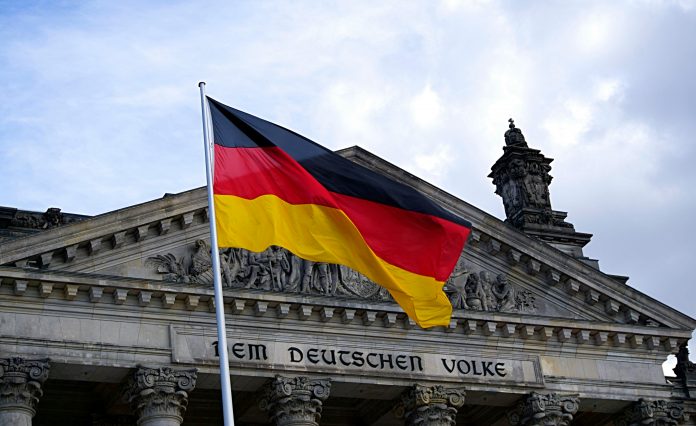
Germany seeks to Deport Criminals from Afghanistan and Syria

0

The recent statement by German Chancellor Olaf Scholz has sparked a significant discussion on the topic of deportation and national security. In a move that underscores the complexity of immigration and crime, Scholz has indicated a shift in policy that would allow for the deportation of serious criminals to Afghanistan and Syria.

This policy change comes in the wake of a tragic event in Mannheim, where a police officer lost his life following a knife attack by an Afghan immigrant. The incident has not only caused a national outcry but has also brought to the forefront the delicate balance between providing refuge and ensuring the safety of citizens.

Chancellor Scholz’s stance is clear: individuals who commit serious crimes or pose terrorist threats should not find sanctuary within Germany’s borders. This is a sentiment that resonates with many, especially in light of recent events. The chancellor has been vocal about his outrage over the fact that someone who sought protection in Germany could commit such heinous acts.

Germany’s approach to migration and deportation has been a subject of intense debate and policy evolution, especially in the context of the global refugee crisis and security concerns. The country has been known for its welcoming stance towards refugees and asylum seekers, but recent developments have led to a shift towards stricter deportation policies for those who do not qualify for asylum or have been involved in criminal activities.

In 2024, Germany is set to implement significant changes to its immigration policy. The Repatriation Improvement Act aims to streamline the deportation process for rejected asylum applicants. One of the key changes is the discontinuation of announcing deportations in advance, coupled with an extension of asylum detention to 28 days. This move is intended to prevent absconding and ensure that deportations are carried out effectively.

The German authorities are also granted extended powers to search for individuals ordered to leave and access their property, such as phones, to establish identity more firmly. This is part of a broader effort to act more consistently and quickly against individuals deemed dangerous, including those suspected of criminal associations.

Moreover, Germany is negotiating migration agreements with several countries, aiming to designate more nations as “safe countries of origin.” This would facilitate the return of people to these countries, although it does not currently affect the majority of asylum-seekers from Syria, Afghanistan, and Turkey.

The proposed changes also include efforts to process asylum applications faster, reducing the current handling time from over two years to a target of three to six months. Additionally, there will be a reduction in benefits for asylum seekers, with welfare payments becoming accessible only after three years instead of 18 months, and the introduction of a card-based system for benefits to prevent misuse.

These policy adjustments reflect Germany’s attempt to balance its humanitarian responsibilities with the need to maintain national security and social cohesion. The government’s stance is clear: while Germany remains open to those in genuine need of protection, it is also determined to ensure that those who do not have the right to stay are returned to their countries of origin in a fair and orderly manner.

The logistics of implementing such deportations are complex, given the current diplomatic relations and security situations in both Afghanistan and Syria. Germany does not currently carry out deportations to these countries due to these concerns. However, Scholz has mentioned that the government is exploring solutions, including talks with neighboring countries of Afghanistan.

The debate is not without its critics. Some argue that deporting individuals back to unstable regions could lead to further radicalization or even allow them to plot attacks from abroad. Others raise concerns about the human rights implications of sending people back to potentially dangerous situations.

The issue also intersects with broader political movements across Europe, where migration has been a hot-button topic. The rise of far-right populism and the upcoming European elections add layers of political complexity to the decision-making process.

Chancellor Scholz’s proposal to deport serious criminals is a response to a specific and tragic event, but it also reflects broader questions about immigration, security, and human rights. As Germany and the rest of Europe grapple with these issues, the world watches to see how one of the continent’s largest economies navigates the challenges of a globalized society in an era of heightened security concerns.

Coinbase Launches Innovative Smart Wallet

13

Coinbase, the renowned digital currency exchange, has taken a significant leap forward with the launch of its innovative smart wallet. This new offering is not just a step up from traditional digital wallets; it’s a giant leap for the cryptocurrency community. The smart wallet by Coinbase is designed to revolutionize the onchain experience by simplifying onboarding, eliminating network fees, and removing the need for recovery phrases, making it more accessible and user-friendly.

Since its inception in 2012, Coinbase has been at the forefront of the crypto revolution, providing an accessible platform for buying, selling, and managing digital assets. With a user base exceeding 100 million and operations in over 100 countries, Coinbase’s influence on the crypto market is undeniable.

Coinbase’s strategy for mass adoption hinges on three core pillars: scalability, usability, and volatility management. By focusing on these areas, Coinbase aims to address the common concerns that potential users may have about entering the crypto space. Scalability ensures that the platform can handle a growing number of transactions without compromising performance.

Usability is about making the platform intuitive and straightforward, catering to both seasoned traders and newcomers. Lastly, reducing volatility helps in stabilizing the market, making cryptocurrencies a more reliable investment option.

The smart wallet is a testament to Coinbase’s commitment to making the blockchain experience as seamless as signing into a favorite website. With features like seamless, gasless transactions and cross-app portability, the smart wallet aims to onboard more than 1 billion users to the blockchain. This is a clear indication of the potential that Coinbase sees in the future of decentralized finance and the broader crypto ecosystem.

Coinbase’s smart wallet supports multiple chains and integrates with major applications, ensuring that users have a fluid and intuitive experience. The ease of creating a new wallet, combined with the elimination of gas fees and the hassle of recovery phrases, positions the smart wallet as a game-changer in the industry. It’s designed to make getting onchain easy, fast, and cheap, addressing some of the biggest pain points of the crypto experience today.

In celebration of this milestone, Coinbase has also introduced a free commemorative mint. This initiative allows users to mint a special NFT, symbolizing their participation in this new era of crypto wallets. The commemorative mint is a nod to the community’s support and belief in the transformative power of cryptocurrency. It’s a way for users to own a piece of history and be part of the movement that is shaping the future of finance.

The launch of the smart wallet and the free commemorative mint by Coinbase is more than just a new product release; it’s a statement of intent. Coinbase is not just adapting to the future; it’s actively shaping it. By reducing barriers to entry and enhancing user experience, Coinbase is paving the way for a more inclusive and expansive crypto economy. This move could very well be the catalyst that brings the next billion users into the blockchain fold, marking a new chapter in the democratization of finance.

As the crypto landscape continues to evolve, initiatives like Coinbase’s smart wallet and commemorative mint are crucial in driving adoption and fostering a sense of community. They represent a shift towards a more user-centric approach in the industry, where the focus is on accessibility, ease of use, and security. With these developments, Coinbase is setting a new standard for what a digital wallet can be and what it can enable for users worldwide.

Core Scientific rejects CoreWeave Buyout Bid Amid Franklin Templeton’s New Crypto Fund

0

In a surprising turn of events, Core Scientific, a prominent player in the bitcoin mining sector, has declined a substantial buyout offer from CoreWeave, a cloud computing firm. This decision came shortly after the two companies had signed a significant deal involving high-performance computing (HPC) services.

Core Scientific’s board of directors concluded that the $1 billion offer, which proposed to purchase the company at $5.75 per share, significantly undervalued the company. This assessment was made despite the recent 40% surge in Core Scientific’s stock price following the announcement of the HPC deal.

The HPC agreement between Core Scientific and CoreWeave involved approximately 200 megawatts of infrastructure to support CoreWeave’s HPC services. This deal was expected to bolster Core Scientific’s long-term revenue and stability, given the volatile nature of bitcoin pricing.

Core Scientific’s rejection of the buyout bid underscores the company’s confidence in its growth trajectory and the value of its infrastructure. The firm is reportedly in discussions with other potential clients to utilize an additional 300 megawatts of capacity for alternative compute workloads, highlighting its strategic focus on diversifying its business model beyond bitcoin mining.

The unfolding of these events has captured the attention of investors and industry observers alike, as it may signal a shift in the dynamics of the cryptocurrency mining industry and the broader high-performance computing landscape. As Core Scientific continues to navigate its path forward, the market will be watching closely to see how this decision impacts its future growth and the valuation of its assets.

Franklin Templeton Explores Diverse Crypto Investment Opportunities

In a significant move that could reshape the landscape of cryptocurrency investment, Franklin Templeton, a global leader in asset management, is reportedly considering the launch of a new crypto fund. This fund aims to diversify beyond the well-trodden paths of Bitcoin and Ethereum, potentially offering investors exposure to a broader range of digital assets.

With an impressive $1.6 trillion in assets under management, Franklin Templeton is no stranger to the world of crypto investments. The firm has already made its mark with the launch of a spot Bitcoin ETF earlier this year and is among the applicants awaiting approval for spot Ether ETFs. This new venture, however, signifies a deeper foray into the altcoin market, which consists of cryptocurrencies other than Bitcoin and Ethereum.

The proposed fund would not only provide exposure to a variety of cryptocurrencies but also explore innovative staking rewards, a feature that could attract both individual and institutional investors looking for passive income streams from their crypto holdings. Staking is a process where investors can earn rewards by holding and supporting the operation of a blockchain network.

This move by Franklin Templeton reflects a growing interest in alternative cryptocurrencies, which are often seen as having higher growth potential due to their lower market capitalization compared to their more established counterparts. It also indicates a recognition of the maturing crypto market, which now offers a plethora of tokens with diverse use cases and underlying technologies.

The consideration of such a fund by a traditional finance heavyweight like Franklin Templeton could signal a new era of mainstream crypto adoption, providing a bridge for traditional investors to explore the dynamic and rapidly evolving digital asset space.

As the crypto market continues to evolve, the potential for such a fund to offer a new avenue for diversified investment is immense. It remains to be seen how Franklin Templeton will structure this fund and which assets it will include, but the implications for the crypto industry and investors alike are undoubtedly profound.

Heritage Bank License Revocation: Shareholders Call For Thorough Investigation

0

In the wake of the Central Bank of Nigeria (CBN) revocation of Heritage Bank License, some shareholders have called for thorough investigation of the bank’s management.

Boniface Okezie, National Coordinator of the Progressive Shareholders Association, emphasized on the need to investigate the bank to restore confidence in the banking sector.

Speaking with Punch, he said,

“What is the fate of some other banks in the sector? Are they strong and viable? They should tell us. The management should be called for questioning. Those who ran the bank aground should be called for questioning. It is not enough that NDIC should liquidate.

“There must be a probe to recover people’s money. What assets does the bank have? CBN should probe the collapse of the bank so that others can learn. This is not good enough, something has to be done to arrest the situation.”

Recall that the CBN revoked the Heritage bank’s license, stating that such move was necessitated because the board management have not been able to improve the bank’s financial performance.

The CBN also cited the bank’s persistent financial instability as a critical factor, endangering the nation’s financial system.

Also, calling for probe of the bank, National coordinator of the Independent Shareholders Association of Nigeria, Moses Igbrude urged for the CBN not to let the matter slide. He said getting to the root cause of the revocation of the bank’s license was necessary to prevent such issue from happening again.

Meanwhile, the Nigeria Deposit Insurance Corporation (NDIC) has announced plans to pay the bank’s customers who have less than 5 million in their bank account first, while other customers will be paid once the bank’s assets have been sold. The decision to appoint the NDIC as the liquidator of Heritage Bank further underscores the severity of the situation.

Notably, in a series of posts made on X posts, Labour Party presidential aspirant in the last election, Peter Obi said the closure of the bank will have “a far-reaching impact” on the economy.

He wrote,

“The latest CBN’s revocation order on Heritage Bank’s operating license and subsequent appointment of NDIC as liquidator of its assets though affirmed by the regulators as necessary at this point to enhance financial stability, has a  far-reaching impact on the bank’s depositors.

“Given the harsh economic realities in the country now, I will urge the federal government via NDIC to ensure immediate payment of all depositors in Heritage Bank in full to help alleviate the prevailing hardship the people are going through in the country. Many individual savers and SMEs are already groaning under severe negative effects of the economy and already living in abject poverty. These depositors depend on the savings they have in the now-liquidated bank to survive.”

He further stated that anything short of immediate and full payment can create panic in the banking sector which the already fragile economy cannot afford.

Atiku Abubakar Accuses Tinubu Administration of Secretly Diverting Public Funds Through Fuel Subsidy

0

Atiku Abubakar, the presidential candidate of the Peoples Democratic Party (PDP) in the 2023 election, has accused President Bola Tinubu’s administration of clandestinely diverting public funds through secret fuel subsidy payments.

In a statement released on Thursday, Abubakar expressed concerns over the lack of transparency and the administration’s refusal to disclose the amounts being spent on subsidies, which he claims is detrimental to attracting investments in Nigeria’s oil sector.

Abubakar criticized the Tinubu administration for maintaining a secretive fuel subsidy regime, alleging that this approach is a continuation of the opaque governance style Tinubu employed while managing Lagos State. He emphasized the need for transparency and accountability, particularly given Tinubu’s dual role as President and Petroleum Minister.

“Tinubu has brought the shady nature of running Lagos to the federal level. He claims subsidy is gone, but his Special Adviser on Energy, Olu Verheijen, says they are intervening from time to time, while his Finance Minister, Wale Edun, described subsidy removal as an ‘ongoing process’,” Abubakar stated.

He further pointed to a document authored by the Coordinating Minister of the Economy detailing subsidy payments, which has since been disavowed by its authors, as evidence of the administration’s duplicity.

Despite public declarations that fuel subsidies have been removed, reports from both the World Bank and the International Monetary Fund (IMF) indicate that Nigeria continues to pay petrol subsidies. Abubakar highlighted these reports to underline the ongoing subsidy payments, noting that this contradiction undermines the administration’s credibility.

A leaked document surfaced earlier this week, revealing that the Nigerian government not only paid subsidies last year but has also allocated over N5 trillion for subsidies in 2024. The document projects that “At current rates, expenditure on fuel subsidy is projected to reach N5.4trillion by the end of 2024. This compares unfavourably with N3.6 trillion in 2023 and N2.0 trillion in 2022.”

This document casts doubt on the administration’s public stance and raises questions about the transparency of its financial practices. The leak has fueled suspicions that public funds are being diverted without proper accountability.

“For a man who claims to be on a mission to attract foreign direct investment, it is ironic that he cannot see that his policy flip flops and lies are capable of dissuading investors. He must come clean on this subsidy issue since he doubles as petroleum minister,” Abubakar argued. He called on the Tinubu administration to be forthright about its policies and their outcomes, stressing the need for transparency and accountability to the Nigerian public.

Abubakar further accused the administration of diverting funds meant for the Federation Account, which should be shared with states and local governments, without accountability. He urged the National Assembly to investigate the matter thoroughly instead of focusing on trivial issues, emphasizing their responsibility for oversight and warning that history would judge them harshly if they failed to act.

“The National Assembly needs to be alive to its responsibilities, especially in the area of oversight. Posterity will not be kind to members of the National Assembly if they continue to look the other way while daylight robbery is taking place,” Abubakar concluded.

The accusations by Atiku Abubakar bring to the forefront ongoing concerns about transparency and governance in Nigeria, highlighting the critical need for clear and accountable management of public resources.

The apparent contradictions between the administration’s public statements and the actual financial practices revealed by international reports and leaked documents are believed to underline a level of insincerity capable of spooking investment interests in Nigeria.