DD
MM
YYYY

PAGES

DD
MM
YYYY

spot_img

PAGES

Home Blog Page 325

French Banking Giant ODDO BHF Launches EUROD, A MiCA-Compliant Euro Stablecoin

0

ODDO BHF, a 175-year-old French banking group managing over €150 billion $173 billion in assets, announced the launch of EUROD, its first venture into the cryptocurrency space.

This euro-pegged stablecoin is designed to bridge traditional finance with blockchain, offering low-volatility digital euros for payments, trading, settlements, and treasury operations.

It’s fully compliant with the European Union’s Markets in Crypto-Assets (MiCA) regulation, ensuring transparency, full reserves, and redemption rights for users. Issued 1:1 against the euro, with reserves held by ODDO BHF Asset Management.

It emphasizes stability and regulatory oversight to appeal to risk-averse institutions and retail users. Built on the Polygon blockchain for fast, low-cost transactions. Issued in partnership with Fireblocks for secure custody.

Debuts on Bit2Me, a Madrid-based crypto exchange authorized under MiCA and backed by major players like Telefónica telecom giant, Unicaja, and BBVA Spanish banks. This partnership aims to accelerate adoption in Europe and Latin America.

It serves both retail investors for everyday digital payments and institutions for cross-border efficiency and DeFi integration. It positions itself as a regulated alternative to USD-dominated stablecoins like USDT or USDC.

EUROD joins euro stablecoins like Société Générale’s EURCV and Circle’s EURC; total stablecoin market cap exceeds $300B. This launch reflects a surge in European banks embracing stablecoins to counter U.S. dollar dominance in crypto.

Just last month, a consortium of nine banks including ING and UniCredit announced plans for a joint euro stablecoin by mid-2026. ODDO BHF’s move could enhance eurozone liquidity on-chain, reduce reliance on volatile fiat transfers, and boost fintech innovation—especially as MiCA fully takes effect.

While EUROD is a small player initially, its regulated status from a established bank like ODDO BHF could drive wider trust and adoption, signaling that crypto is no longer fringe—it’s becoming institutional infrastructure.

EUROD challenges the dominance of USD-pegged stablecoins, which dominate over 90% of the $300B+ stablecoin market. A euro-backed stablecoin could increase the euro’s role in global digital transactions, aligning with EU efforts to bolster its currency in crypto markets.

By providing a regulated, low-volatility digital euro, EUROD enhances on-chain liquidity for eurozone businesses and consumers, facilitating smoother cross-border payments and DeFi integration.

As a bank-issued stablecoin, EUROD signals growing institutional acceptance of blockchain, potentially encouraging other European banks to follow suit, especially after the recent announcement by nine banks for a joint euro stablecoin by mid-2026.

EUROD’s full compliance with the EU’s Markets in Crypto-Assets (MiCA) regulation sets a benchmark for transparency, reserve backing, and user redemption rights. This could pressure non-compliant or offshore stablecoins to align with stricter standards or lose market share in Europe.

As one of the first MiCA-compliant stablecoins from a major bank, EUROD could serve as a template for other institutions, accelerating the adoption of regulated digital assets across the EU.

The EU’s robust regulatory framework, exemplified by EUROD, may push other jurisdictions to adopt similar standards, reshaping the global stablecoin landscape.

Built on Polygon, EUROD offers low-cost, fast transactions, making it attractive for retail payments and institutional use cases like settlements and treasury management. This could reduce reliance on costly traditional financial systems like SWIFT.

EUROD’s blockchain compatibility opens doors for decentralized finance applications, enabling euro-based lending, staking, or yield farming, which could attract fintechs and institutional investors to Web3. .

EUROD enters a competitive field with existing euro stablecoins like Société Générale’s EURCV and Circle’s EURC. Its success will depend on adoption, liquidity, and integration into major platforms beyond Bit2Me.

The planned euro stablecoin by nine major banks could overshadow EUROD unless it captures significant market share early. However, ODDO BHF’s first-mover advantage and established reputation may give it an edge.

A 175-year-old bank like ODDO BHF entering the stablecoin space signals that crypto is no longer a niche market but a core part of financial infrastructure. This could normalize digital assets for conservative investors and regulators.

EUROD’s launch may spur fintech innovation, encouraging startups to build euro-based DeFi protocols, payment apps, or tokenized asset platforms, further bridging traditional finance and blockchain.

By promoting a euro stablecoin, the EU could reduce reliance on U.S.-centric financial systems, aligning with broader strategic goals of financial sovereignty in the face of global economic shifts.

While Polygon offers low fees, EUROD’s long-term success depends on its ability to scale across other blockchains or platforms without compromising security or compliance.

EUROD’s launch marks a pivotal moment for European finance, blending traditional banking credibility with blockchain innovation. It strengthens the euro’s digital presence, aligns with MiCA’s regulatory push, and sets the stage for broader institutional adoption.

BlackRock, Microsoft, Nvidia in $40bn Data Center Deal to Secure AI Infrastructure Powerhouse

0

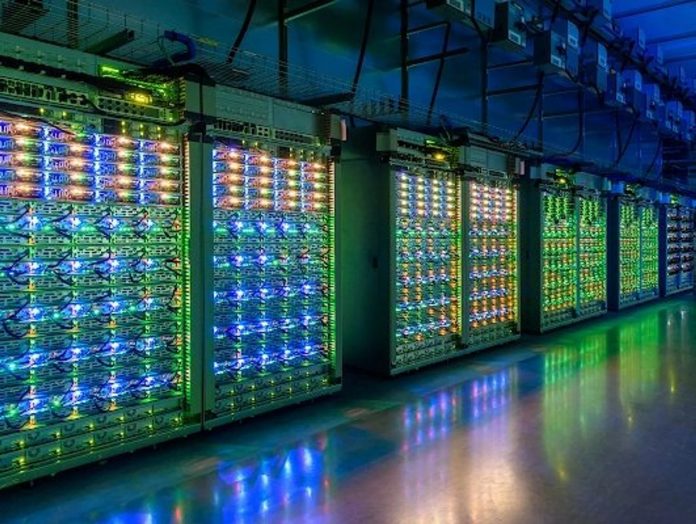
An investor consortium led by BlackRock, Microsoft, and Nvidia has agreed to acquire U.S.-based Aligned Data Centers in a $40 billion deal, marking one of the largest takeovers yet in the race to secure computing capacity for artificial intelligence.

The transaction, announced Wednesday, underscores how control over data center infrastructure has become a defining battleground in the global AI boom.

The purchase from Australian investment giant Macquarie Asset Management — which has owned a majority stake in Aligned since 2018 — marks the first major deal for the AI Infrastructure Partnership, a global investment vehicle formed last year by BlackRock alongside Abu Dhabi’s sovereign fund MGX, Elon Musk’s xAI, and other heavyweight backers.

“With this investment in Aligned Data Centers, we further our goal of delivering the infrastructure necessary to power the future of AI,” said Larry Fink, BlackRock’s chairman and CEO, who also leads the AI Infrastructure Partnership.

The consortium’s move positions it at the heart of one of the fastest-growing and most capital-intensive arms of the tech industry — the buildout of data centers capable of powering the next generation of artificial intelligence models.

A New Gold Rush for AI Infrastructure

The acquisition comes amid an unprecedented spending spree by Big Tech and Silicon Valley startups, each vying to lock in chips, servers, and power supply for AI workloads.

According to Morgan Stanley, companies including Alphabet, Amazon, Meta, Microsoft, and CoreWeave are projected to spend a record $400 billion in 2025 alone on AI infrastructure — a figure that dwarfs most national capital budgets.

At the center of that frenzy is OpenAI, the San Francisco startup whose ChatGPT model ignited the AI revolution. In recent weeks, OpenAI has reportedly struck long-term supply deals worth over $1 trillion with chipmakers Nvidia, AMD, and Broadcom to secure about 26 gigawatts of computing capacity, enough to power roughly 20 million U.S. homes.

The Aligned deal shows that this infrastructure push now extends far beyond chips — into real estate, energy, and physical computing hubs where AI workloads are processed and stored.

Aligned’s Massive Footprint

Founded in 2013, Aligned Data Centers has grown rapidly into one of the world’s largest and most efficient operators, boasting nearly 80 facilities and over 5 gigawatts of operational and planned capacity across 50 campuses in the U.S. and Latin America.

Its data centers are known for energy efficiency and modular scalability — two features increasingly prized by AI firms facing soaring electricity costs and space constraints. The company counts cloud platform Nutanix and IT services provider Datto among its customers and owns a land portfolio with significant near-term power access, according to Macquarie.

Aligned is noted as one of the biggest winners of the AI infrastructure boom, having raised $12 billion in equity and debt earlier this year in one of the largest private financing rounds ever for a data center company.

Under the new agreement, Aligned will remain headquartered in Dallas, Texas, led by CEO Andrew Schaap, when the deal closes in the first half of 2026, the investor group said.

Who’s Backing the Deal?

The consortium’s backers read like a who’s who of global capital and technology. Alongside BlackRock, Microsoft, and Nvidia are sovereign wealth funds, the Kuwait Investment Authority and Temasek of Singapore. Together, the group has committed an initial $30 billion in equity, with the potential to scale up to $100 billion, including debt financing.

While the investors did not disclose individual contributions or the equity split for the Aligned acquisition, the sheer scale of their commitment underlines the strategic urgency behind AI infrastructure investment.

Nvidia and Aligned declined to comment, while BlackRock and other investors did not immediately respond to requests for further details.

“All the major parties in that consortium are showing the strength of the AI ecosystem,” said Hendi Susanto, portfolio manager at Gabelli Funds, which holds Nvidia shares.

Rising Value of Data Centers

The deal also reflects how data centers, once viewed as low-margin utilities, have become prized investment assets. Their value has soared amid the surge in demand for AI model training and inference, which require vast computing power and stable, high-energy environments.

Shares of Applied Digital, a publicly traded U.S. data center firm, have jumped more than fourfold this year, and rose another 5% on Wednesday after news of the Aligned takeover. Portfolio manager Joe Tigay of Equity Armor Investments, an Nvidia shareholder, said investors now see these facilities as critical infrastructure assets, not just real estate.

“They’re looking at rapid expansion to meet AI demand and optimize for it,” Tigay said.

For BlackRock — the world’s largest asset manager — the deal represents another step in reshaping its portfolio toward long-term technological and infrastructure bets. For Microsoft and Nvidia, both central players in AI software and chips, the acquisition secures valuable control over the physical layer of AI computing — a hedge against bottlenecks in power supply and data capacity.

AI Infrastructure Race Accelerates

This investment follows a series of similar megadeals as companies scramble to build the next generation of cloud and AI ecosystems.

Meta Platforms is constructing massive AI data centers, including Prometheus, expected to come online in 2026, and Hyperion, which can scale up to 5 gigawatts — rivaling the output of a small nuclear power plant.

Amazon Web Services has announced plans to invest $15 billion to expand its data center footprint in Japan and Southeast Asia, while Google continues to develop its carbon-neutral data centers across the United States and Europe.

The AI Infrastructure Partnership’s purchase of Aligned positions the group as a global force capable of competing with these tech giants not just in capital, but in physical control over the grid that powers AI.

Analysts say the move could have sweeping implications for the balance of power across the technology landscape. By consolidating data center ownership, Big Tech and major investors can better manage capacity for AI training, ensure security of supply chains, and potentially dictate pricing structures for smaller players seeking access to computing power.

The deal also hints at deepening vertical integration — where companies like Microsoft and Nvidia, once focused on software or hardware, now invest in the entire stack, from semiconductors to energy infrastructure.

XRP ETF Approval Set to Push Ripple Price Past $8, But Thousands Are Backing This Token, Expecting 12500% Returns

0

The cryptocurrency market is looking forward to a significant change as anticipations rise over the acceptance of an XRP Exchange-Traded Fund (ETF). Analysts believe the ruling will drive the price of Ripple beyond $8, as an increasing number of retail investors are also investing in Little Pepe (LILPEPE), a meme-driven Layer 2 project projected to see significant long-term growth.

XRP ETF Approval Fuels Institutional Optimism

There is a market expectation that XRP will experience institutional inflows with the approval of an ETF. As the legal outlook improves and Ripple gains additional partnerships worldwide, analysts estimate that the asset may receive between 10 billion and 20 billion inflows in the first year. Recently, Canary Capital CEO Steve McClur has raised his ETF inflow projection by $5 billion to $10 billion, stating that the capital could establish a new role for XRP in regulated investment portfolios. The move may enable pension funds and other institutional investors to gain direct exposure to XRP, marking a new phase in the adoption of cryptocurrencies. According to experts, the XRP ETF is a milestone that can enhance liquidity and position XRP more effectively in global payment systems. These shifts have the potential to increase the legitimacy of Ripple to banking institutions.

Little Pepe ($LILPEPE): A Meme Coin with Real Utility

As institutional investors anticipate the approval of an XRP ETF, retail traders are shifting to Little Pepe (LILPEPE), a meme coin that operates on its own Ethereum-compatible Layer 2 blockchain. The project stands out from other meme tokens because it holds real functionality. It offers staking, NFT integrations, and governance features without charging taxes on trades. In its presale, Little Pepe has collected 26.97 million out of a 28.77 million target at Stage 13. There are still fewer than 5% of tokens that have not been purchased by investors, out of a total of 17.25 billion. The current LILPEPE token price is $0.0022 and will be increased to $0.0023 in its next stage, representing significant growth. Since Stage 1, early buyers have already realized 130% gains.

$LilPepe Community Growth and Investor Incentives

Incentives provided by the project before listing have boosted investor engagement. Contributors who invest at least $100 will have a chance to win in a $777,000 giveaway with 10 winners, each receiving $77,000 worth of tokens. Additionally, the Mega Giveaway will offer random large purchasers in Stages 12-17 the chance to win over 15 ETH in total prizes. Little Pepe is an ecosystem that promotes fairness, with no team allocations, locked liquidity, and a communal governance framework. Usefulness, scalability, and transparency have contributed to the growing interest in the project among social media and cryptocurrency groups.

Conclusion

A successful XRP ETF approval would help to restructure the institutional involvement in the crypto markets and push the price of Ripple above $8. Meanwhile, the emergence of Little Pepe demonstrates the ability of innovative Layer-2 projects to attract investors by enabling their involvement in the real world and utilization. Both assets exhibit a similar trend, one institutional and one community-oriented, and both are indicative of the greater diversification in the next era of the digital assets landscape.


For More Details About Little PEPE, Visit The Below Link:

Website: https://littlepepe.com

Moroccan B2B e-commerce And Fintech Platform Chari Secures $12M Series A Funding to Drive Merchant Digitization

0

Chari, a Moroccan B2B e-commerce and fintech startup transforming traditional retail through technology, has announced the successful completion of its $12 million Series A funding round.

The round was co-led by SPE Capital and Orange Ventures. Other participants include Verod-Kepple Africa Ventures, Plug and Play, Endeavor Catalyst and Pincus Capital.

This achievement marks the largest Series A round ever raised by a Moroccan startup, highlighting growing investor confidence in the country’s digital commerce ecosystem.

Chari’s co-founder Ishmael Belkhayat who expressed excitement about the milestone, in a post on Linkedin disclosed that the funding will fuel the startup’s mission to empower local merchants through technology.

He wrote,

“I am excited to announce that Chari has raised $12M in Series A funding, co-led by SPE Capital and Orange Ventures — the largest Series A ever raised by a startup in Morocco. This milestone fuels our mission to empower local merchants through technology — transforming everyday grocery stores and retailers into fully connected, digital businesses.

“With this investment, we’ll accelerate the development of our super-app for merchants and scale our Banking-as-a-Service (BaaS) platform, opening our infrastructure to startups looking to embed financial solutions directly into their products. A huge thank-you to our investors, partners, and team for believing in our vision and for helping us redefine how commerce and finance connect across Morocco.”

Also commenting, Chari’s co-founder and COO Sophia Alj said,

“We are building a BaaS platform to power the next generation of digital finance. This investment will help us strengthen our infrastructure and support partners seeking to embed fintech into their products. We are also proud to build our own use case by enabling traditional retailers to access and offer seamless financial services”.

Ryosuke Yamawaki partner at Verod Kepple Africa Ventures, noted that Chari’s focus on empowering local merchants via a tech-first scalable platform resonates deeply with the company’s thesis, hence the reason for the investment.

Chari is a B2B e-commerce and fintech platform designed to empower traditional retailers (often called “mom-and-pop” or proximity stores) in French-speaking African countries. Founded in 2020 by Ismael Belkhayat (CEO, ex-BCG) and Sophia Alj (COO), the startup is headquartered in Casablanca, Morocco, with over 185 employees.

Chari is backed by Y Combinator (YC S21 batch the first Moroccan startup to join) and focuses on digitizing informal retail by combining fast product delivery with embedded financial services. Independent retailers are at the heart of Chari’s strategy with tailored services designed to meet their unique needs.

Key Features and Services

Chari’s mobile app serves as a one-stop super app for small merchants, enabling:

– E-commerce Functionality: Retailers can order fast-moving consumer goods (FMCG) like groceries, household items, and other products they resell. Deliveries are promised within 24 hours (often free), sourced from a digital marketplace of suppliers. This helps traditional stores compete with modern retail chains.

– Fintech Integration:

  – Microloans and working capital (using data from acquisitions like Karny, a credit book app, to assess unbanked merchants).

  – Banking-as-a-Service (BaaS) APIs for other fintechs, e-commerce platforms, and enterprises to embed financial tools without building them from scratch.

– Merchant Tools: Balance checks, supplier payments, and inventory management to streamline operations.

Chari primarily operates in Morocco (where it covers over 50% of proximity stores in Casablanca), with expansions to Tunisia and Côte d’Ivoire (via the 2022 acquisition of Diago, an Ivory Coast-based app).

The platform targets underserved informal retailers, who make up a significant portion of Africa’s economy, by turning local shops into points of sale for both goods and services. It serves 25,000+ retailers across these countries, focusing on French-speaking Africa. In October 2025, Chari became the first VC-backed startup in Morocco to receive a payment institution license from Bank Al-Maghrib, unlocking full financial services like transfers and payments.

The latest funding will fuel the super app build-out and BaaS expansion, aiming to integrate more financial services and grow regionally.

Stellantis’ $13bn U.S. Investment Marks Major Shift Amid Trump Tariffs and Industry ‘De-Globalisation’

0

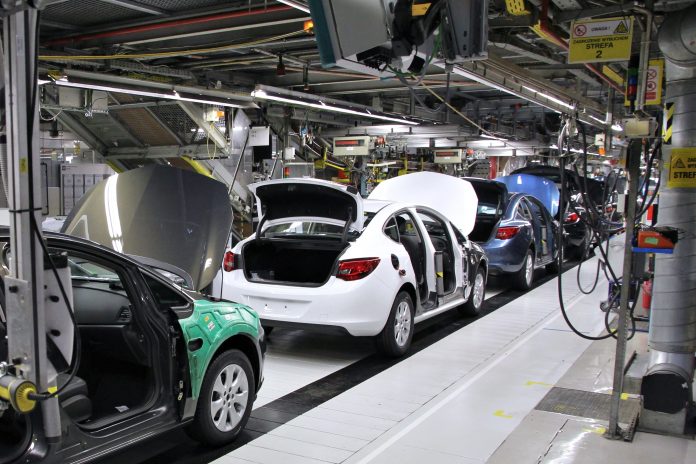
Stellantis’ new $13 billion investment plan in the United States signals a major shift in the global auto industry’s response to President Donald Trump’s sweeping tariffs — a recalibration that analysts say could permanently reshape how and where automakers build their cars.

The plan, announced late Tuesday, marks one of the most aggressive moves yet by the French-Italian-American carmaker to fortify its position in its most important market and shield itself from the escalating costs of tariffs imposed under Trump’s “America First” trade agenda. The company had estimated in July that the tariff burden alone would cost it around $1.7 billion this year — a hit that now appears to have pushed Stellantis toward decisive action.

“This move is relevant and part of a wider path started by Stellantis to be more and more aligned to the new business environment drawn by Trump with tariffs. It’s paying off,” Fabio Caldato, portfolio manager at AcomeA SGR, who recently increased his exposure to Stellantis, told Reuters.

However, the $13 billion investment underscores both the risks and opportunities facing global automakers as Washington’s trade strategy forces a reordering of supply chains. Analysts say it represents a turning point not only for Stellantis but for the broader auto industry, as companies reconsider the long-term viability of their North American production strategies.

‘Manufacture Where You Sell’ Becomes the New Rule

Stellantis, which owns brands including Jeep, Ram, Chrysler, Fiat, and Peugeot, sold about 1.2 million vehicles in the U.S. last year. More than 40 percent of those were imports — primarily from plants in Mexico and Canada — that are now subject to 25 percent tariffs under Trump’s trade framework.

The new investment plan is expected to increase local U.S. production, reducing reliance on imports and aligning Stellantis more closely with Washington’s industrial priorities.

“I see it as an irreversible trend, to manufacture more where sales happen, a sort of forced de-globalisation process,” said Massimo Baggiani, founder of London-based Niche Asset Management. “More investments and sales in the U.S. might also attract more American investors in the long term.”

Baggiani, who previously sold his Stellantis shares, said he was not reinvesting in the stock yet, noting that while Stellantis shares remain attractively priced, “they do not offer a significant discount compared to Ford or GM.”

That cautious stance reflects a broader investor mood. Stellantis shares rose as much as 4.3 percent in early trading on Wednesday following the announcement, but they remain down 33.5 percent year-to-date. Analysts attribute part of that decline to persistent uncertainty over trade policies, production costs, and consumer sentiment in the face of higher car prices.

Tariffs Push Automakers to Reinvent Supply Chains

Trump’s tariff wave — targeting goods from Mexico, Canada, and China — has already triggered a strategic rethink across industries. Automakers, long accustomed to integrated North American supply chains, are now being forced to localize production more aggressively.

For Stellantis, the decision is as much about survival as opportunity. The company has seen its U.S. market share weaken in recent years, particularly in its sedan and compact segments, while brands like Jeep and Ram face intensified competition from Ford and General Motors in the truck and SUV categories.

“The investment plan was necessary to mitigate the impact of U.S. tariffs and relaunch brands that have lost significant volume in recent years,” said Equita analyst Martino De Ambroggi, who added that the spending reshuffle “should result in limited changes to total capital expenditure.”

Some believe that Stellantis’ investment strategy could include expanding or repurposing existing plants in states such as Michigan, Ohio, and Indiana — regions where auto production and employment carry deep political significance. Such moves would not only curb tariff costs but also signal alignment with Trump’s emphasis on domestic manufacturing.

A Sign of ‘Greater Tariff Comfort’

The timing of Stellantis’ announcement has also drawn attention. After months of industry-wide uncertainty, the move is seen as a sign that the company now has a clearer understanding of Washington’s trade trajectory.

“The timing of this announcement possibly signals greater tariff comfort and clarity on the part of Stellantis management,” analysts at TD Cowen — Itay Michaeli, Justin Barrell, and Selina Liu — wrote in a note to clients.

By locking in a U.S. investment of this magnitude, Stellantis appears to be hedging against further escalation while simultaneously positioning itself as a long-term domestic manufacturer. That shift could earn it goodwill from both policymakers and consumers, particularly as other global automakers scramble to adjust to the new tariff regime.

A Broader Shift Toward Industrial Reshoring

Stellantis’ move fits into a larger wave of reshoring announcements by multinationals seeking to minimize exposure to tariff risk and geopolitical disruption. From electronics to electric vehicle batteries, companies have been relocating supply chains closer to major consumer markets — a process some economists describe as the “re-nationalization” of global manufacturing.

Trump’s policy framework, which includes incentives for companies to expand domestic operations alongside punitive tariffs on imports, has accelerated this transformation. Analysts note that while it increases near-term costs for automakers, it could also bolster domestic production and employment in the long term — a political win for the White House.

For investors, Stellantis’ U.S. investment plan represents both a reassurance and a calculated gamble. On one hand, it signals the company’s willingness to adapt quickly to policy changes; on the other, it raises questions about profit margins, capital allocation, and execution risks in a high-cost environment.

“Stellantis shares remain cheap, but like the rest of the industry, they do not offer a significant discount compared to Ford or GM,” said Baggiani.

Caldato, the AcomeA SGR portfolio manager, sees the investment as a vote of confidence in the company’s ability to navigate a new trade reality.

“It’s paying off,” he said, suggesting that Stellantis’ proactive stance could help it win market share from slower-moving rivals.

Still, analysts caution that even with new plants, supply chain volatility, inflationary pressures, and continued tariff uncertainty could weigh on margins.