DD
MM
YYYY

PAGES

DD
MM
YYYY

spot_img

PAGES

Home Blog Page 3251

EU Imposes Higher Tariffs on Chinese EV Imports Over Alleged Unfair Subsidies

0

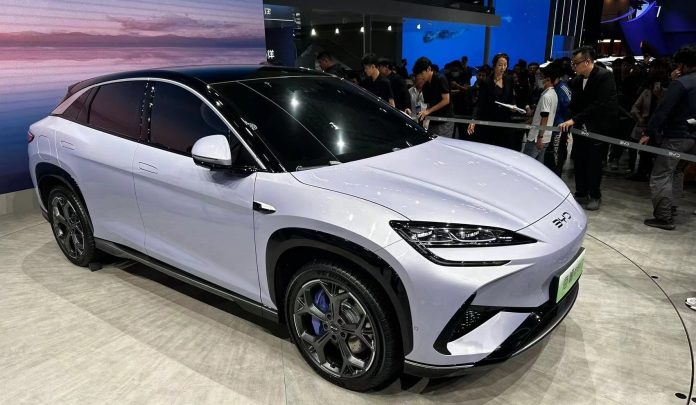
The European Union announced on Wednesday that it would impose higher tariffs on Chinese electric vehicle (EV) imports, accusing them of benefiting “heavily from unfair subsidies” and posing a “threat of economic injury” to European EV producers.

This decision follows an EU Commission probe that began in October, which found the battery electric vehicle (BEV) value chain in China to be unfairly subsidized.

On a preliminary basis, the EU Commission concluded that it is in the EU’s interest to impose “provisional countervailing duties” on BEV imports from China. These duties, which are set to take effect from July 4 if talks with Chinese authorities do not reach a resolution, aim to counteract the effects of the subsidies. Definitive measures are expected to be implemented within four months of the provisional duties.

“The influx of subsidized Chinese imports at artificially low prices therefore presents a threat of clearly foreseeable and imminent injury to EU industry,” the Commission noted.

China has reacted strongly to the EU’s decision. A spokesperson for China’s Ministry of Commerce described the decision as lacking factual and legal basis, branding it a “protectionist act.” The ministry stated that China’s competitive advantage in the EV sector stems from open competition and adherence to World Trade Organization (WTO) rules.

“This is a naked protectionist act, creating and escalating trade frictions, and destroying fair competition in the name of maintaining fair competition,” the spokesperson said. “This move by the EU not only damages the legitimate rights and interests of China’s electric vehicle industry, but will also disrupt and distort the global automotive industry chain supply chain, including the EU.”

Tariff Breakdown

The new tariffs are significant:

  • 38.1% tariff on BEV producers who did not cooperate with the EU investigation.
  • 21% duty on carmakers who complied but were not sampled.

Leading Chinese BEV producer BYD faces a 17.4% tariff, while Geely is subject to a 20% duty. Autos firm SAIC has been hit with the 38.1% tariff. The investigation and tariff impositions continue, with the possibility of individually calculated duty rates for other manufacturers, such as Tesla, which has a giga factory in Shanghai.

Industry Reactions

Nio, a prominent Chinese EV manufacturer, voiced strong opposition to the tariffs, pledging continued commitment to the EV market despite the challenges.

“We strongly oppose the use of increased tariffs as a strategy to obstruct the normal global trade of electric vehicles. This approach hinders rather than promotes global environmental protection, emission reduction, and sustainable development,” Nio stated.

Global Implications

The EU’s decision comes after extensive debates among member states. France has been a strong advocate for higher duties to protect European industries from what it views as unfair Chinese practices. In contrast, Germany has cautioned against potential trade wars, highlighting risks for European carmakers if China retaliates.

Trade tensions between the EU and China have escalated in recent months, particularly over the EV market. The EU’s investigation into Chinese subsidies and accusations of market dumping have intensified these frictions. The EU maintains that such practices threaten its EV industry and could crowd out local carmakers.

The United States has aligned closely with the EU on this issue, raising tariffs on various products, including EVs imported from China. U.S. duties on imported EVs are set to quadruple from 25% to 100% this year, further complicating Chinese EV makers’ efforts to penetrate the North American market.

For Chinese EV makers, these increased tariffs present a significant hurdle in their efforts to expand beyond their domestic market. The EU and U.S. are two of the largest markets for electric vehicles, and the imposition of high tariffs in both regions severely restricts access.

Economists and industry experts have weighed in on the implications of these tariffs, noting that the EU’s move is a strong statement against unfair trade practices but risks escalating trade tensions that could have broader economic repercussions. They also emphasize the need for European carmakers to innovate and compete on a level playing field, arguing that the focus should also be on enhancing competitiveness through sustainable practices and technological advancements.

China’s EV market has grown rapidly, with companies like BYD competing against global giants like Tesla for market share. Chinese EV manufacturers have also been expanding into Western markets, presenting themselves as more affordable alternatives to regional carmakers.

However, the new tariffs could significantly impact their competitiveness in both the European and North American markets.
Next Year’s Crypto Giants: Which Cryptos to Watch For Explosive Gains

0

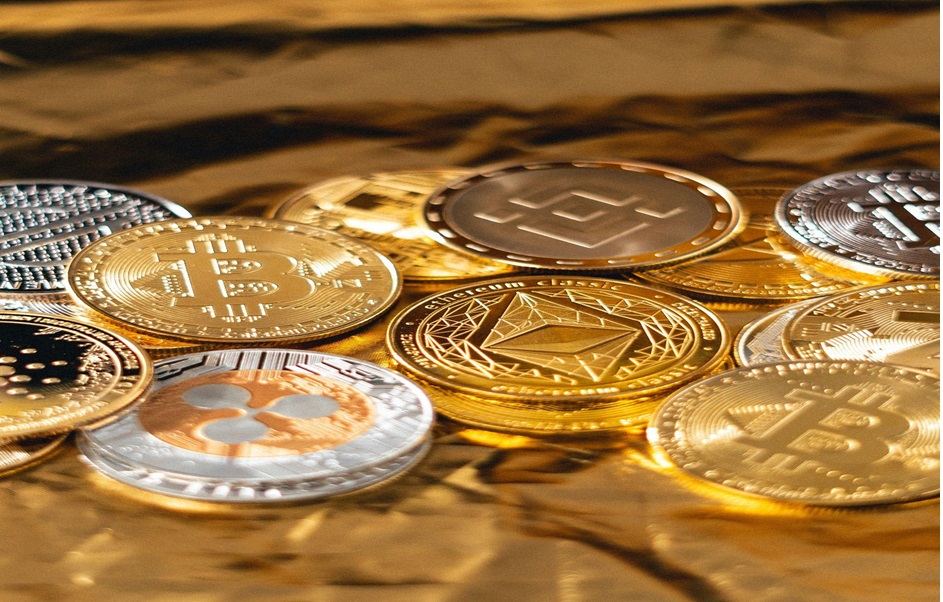
Not every crypto project deserves a spotlight, but a select few shimmer with innovation and promise. BlockDAG, with a robust $49.2 million from its presale and cutting-edge technology, is quickly climbing to the top of the list for the next bull run among crypto giants. Explore the significant strides made by BlockDAG and other standout cryptos like Bitcoin, Binance Coin, XRP, Solana, and Toncoin, all primed for substantial growth.

1. BlockDAG’s Stellar Roadmap Unveiled at Lunar Keynote

At its groundbreaking Moon-based Keynote 2, BlockDAG unveiled a detailed roadmap, reinforcing its dedication to technological innovation and openness.

One key announcement was the adoption of a user-friendly low-code/no-code framework, which opens the door for global users to easily develop and manage applications, making tech creation accessible within the BlockDAG ecosystem.

BlockDAG’s ongoing success into Batch 18 has seen it amass $49.2 million, with its coin now valued at $0.0122—an impressive growth of 1120%.

This robust performance plants BlockDAG firmly at the top for potential bull run leaders among crypto giants. For instance, a $1,000 investment at the current price could net roughly 81,967 coins. If the coin price hits the expected $0.05 at launch, the investment could balloon to around $4,098.35, showcasing a remarkable return potential.

2. Bitcoin’s Rollercoaster: A Prelude to a Surge

Bitcoin has recently ridden a rollercoaster of volatility, highlighted by a rally and a subsequent dip triggered by strong U.S. employment data. However, insights from 10X Research suggest an imminent major rally for Bitcoin, drawing eyes from both traders and long-term investors.

Significant Bitcoin withdrawals from major exchanges like Kraken and Coinbase point to a bullish outlook as holders secure their assets, potentially tightening supply and nudging prices upward. Bitcoin is firmly in the spotlight as a leading contender for the next bull run.

3. Binance Coin’s Impressive Ascent

Binance Coin (BNB) has seen its value surge recently, propelled by multiple growth drivers since its 2017 debut.

Despite the ever-present market swings, BNB’s consistent performance positions it as a likely star in the upcoming bull run, although investors should remain cautious of market turbulence.

4. XRP’s Legal Shadows and Market Reaction

XRP saw a 1.30% drop on June 8, capping off a downturn after a steeper fall the previous day. The ongoing legal battle with the SEC, which could decide if Ripple violated U.S. securities laws, casts a long shadow over its future.

Speculation that the SEC might hold off on approving XRP-spot ETFs until after the legal proceedings—potentially dragging into 2025—leaves XRP’s role in the next bull run hanging by a thread.

5. Solana’s Strategic Network Upgrade

Solana is preparing for a significant network upgrade to version 1.18.15, aimed at easing network congestion from recent meme coin spikes and increased platform demand.

Validators are poised to implement the upgrade during periods of low inactive stakes, keeping a vigilant eye on system performance. The market has tentatively responded well, with hopes high for SOL’s ascent to new peaks during the bull run.

6. Toncoin Draws Market Gaze with Strong Performance

Toncoin has been in the limelight recently, with its price jumping nearly 7% in the past week and 16% over the past month. A 36% spike in trading volume underscores a surging interest. Market analysts see a breakout on the horizon for TON, buoyed by positive market vibes and its recent rally.

BlockDAG: A Beacon for Bulls

As the crypto landscape gears up for another surge, BlockDAG leads the charge in crypto giants, promising lucrative returns for proactive investors. With a potential return on a $1,000 investment ballooning to approximately $4,098.35, BlockDAG showcases the immense profit opportunities ahead amassing over $49.2 million in presale. Alongside it, Bitcoin, Binance Coin, XRP, Solana, and Toncoin stand as prime candidates, ready to define the next bull run.


Invest in the BlockDAG Presale Now:

Website: https://blockdag.network

Presale: https://purchase.blockdag.network

Telegram: https://t.me/blockDAGnetworkOfficial

Discord: https://discord.gg/Q7BxghMVyu

BlockDAG’s Global Ascendancy and 30,000x ROI Fever Outpace Solana’s Climb and NEAR’s Activity Boom

0

As Solana (SOL) surges past the $170 resistance fueled by robust trading volumes and optimistic market sentiment, pushing its market valuation towards $79 billion, it eyes the $200 milestone. Concurrently, NEAR Protocol has doubled its wallets to 75 million, with daily transactions leaping to 6 million due to substantial integrations and active dApp usage.

Amid these shifts, BlockDAG (BDAG) captivates the market with its latest offering priced at $0.0122 per coin, accumulating over $49.2 million in presale funds, supported by aggressive global marketing and advanced mining technologies. Analysts are now forecasting a potential 30,000x ROI, suggesting BlockDAG could break into the top ten cryptocurrencies.

Bullish Trajectory for Solana

Solana’s value has escalated beyond the $170 resistance marker, propelled by a surge in trading activity and a favorable market outlook. Currently priced at $172.53, it has climbed 4.32% just recently, elevating its market capitalization to $79 billion and securing the fifth spot on CoinMarketCap. Its trading volume has jumped by 31.50%, totaling $2.6 billion, reflecting robust investor enthusiasm.

Technical analysis presents a guardedly positive view, with the Moving Average Convergence Divergence (MACD) indicator signaling a potential bullish crossover. Should Solana surpass the $180 resistance level, its price might well ascend to $200 or higher.

NEAR Protocol’s Robust Expansion

NEAR Protocol’s network activity has surged, with daily transactions hitting 6 million and wallets expanding to 75 million. This growth is propelled by key integrations like OKX’s Web3 wallet, which allows seamless NEAR token transfers across 95 blockchains. The NEAR token itself has risen 350% over the past year, with platforms like Kai-Ching and Sweat Economy driving significant user engagement and showcasing the network’s vitality.

BlockDAG’s Marketing Mastery and Worldwide Supremacy

BlockDAG’s promotional journey kicked off in grand style with its first keynote event at Tokyo’s bustling Shibuya Crossing. This was followed by a celebratory launch of the DAGpaper at the Sphere in Las Vegas. The campaign continued to gain traction with a striking display at Piccadilly Circus in London, aligning with its CoinMarketCap debut and the announcement of a $100 million liquidity plan.

More recently, BlockDAG enthralled the global crypto community with its second keynote, set against a dramatic lunar backdrop. The success of Keynote 2 has pushed presale figures to an impressive $49.2 million, reflecting growing investor confidence. These well-coordinated marketing efforts highlight BlockDAG’s ambition to dominate the global cryptocurrency market, earning praise from prestigious outlets like Forbes and Bloomberg.

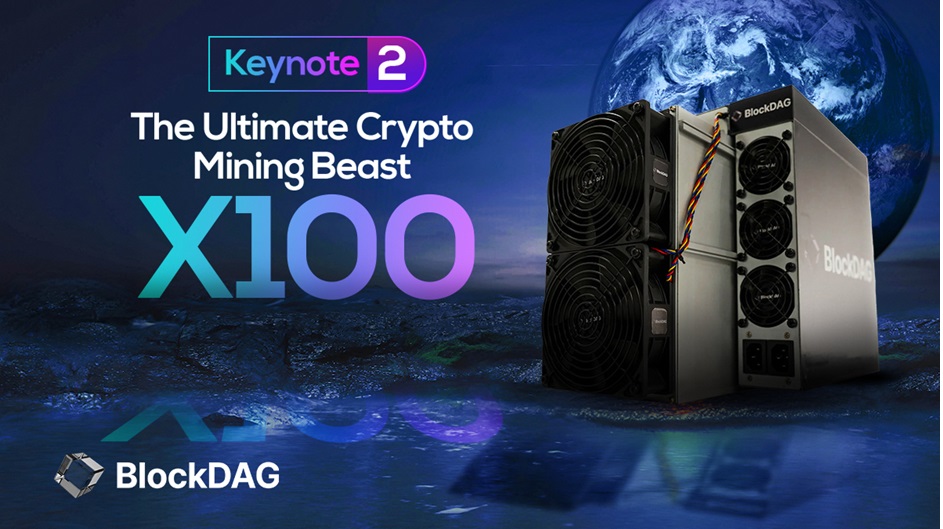
In addition to these marketing triumphs, BlockDAG’s mining technology, particularly the powerful X100 miner, is garnering significant attention. The X100 miner, a powerhouse in the crypto mining industry, boasts a formidable 2 TH/s hash rate and 1800W power consumption, capable of producing up to 2,000 BDAG daily, making it ideal for large-scale mining operations.

Designed for versatility, the X100 combines immense power with low noise levels, thanks to its advanced ASIC technology, which enhances computational efficiency and energy savings. This blend of cutting-edge technology and strategic marketing positions BlockDAG as a formidable player in the crypto market.

Final Reflections

While Solana approaches a $200 price target and NEAR Protocol revels in a surge of transactions, BlockDAG sets itself apart with an extraordinary presale achievement and sophisticated mining innovations. With $49.2 million raised from the sale of 11.3 billion coins and over 7,500 miners, BlockDAG is poised to secure a spot among the top ten cryptocurrencies. The buzz around BlockDAG grows as its innovative technology and strategic global marketing resonate within the crypto community, with analysts suggesting a spectacular 30,000x ROI, positioning BlockDAG as a standout in the rapidly evolving crypto arena.

Currently valued at $0.0122 in batch 18, now is the ideal time to seize the chance and invest in this up-and-coming cryptocurrency.

Invest in the BlockDAG Presale Now:

Presale: https://purchase.blockdag.network

Website: https://blockdag.network

Telegram: https://t.me/blockDAGnetwork

Discord: https://discord.gg/Q7BxghMVyu

Nigeria Should Modulate the Removal of Electricity Subsidies for Industrial Customers

0

I support the government’s reflective pricing on electricity which has come by removing subsidies. But I argue that we can add one layer in the playbook: sustain the subsidies for industrial customers even as you remove them for commercial and residential customers.

This makes sense since these manufacturers are losing competitive positioning on forex, diesel, and you cannot expect them to also deal with electricity. It does not make sense to keep piling on them. But Nigeria happened and the results are in: “The hike in electricity tariffs has sent shockwaves through Nigeria’s manufacturing sector, leading to the closure of over 300 companies and the loss of 380,000 jobs since April 2024, according to the Manufacturers Association of Nigeria (MAN).”

Nations subsidize things to help their companies. In America, the United States Postal Service has not made a single profit in the last 22 years, primarily because the US subsidizes supply chains. China does a similar thing. Nigeria cannot afford to be the only capitalist economy where there is zero strategic subsidy for companies. We must modulate these removal of subsidies. If our concern is the corruption in subsidies, we could do rebates which means we refund verifiable spent monies!

Note: running an electricity distribution company (DISCO) is a challenging business in Nigeria. Why? The best Nigerian electricity customers are not in the DISCO networks. Yes, if you have a region and Dangote Cement, BUA Cement, Lafarge, etc are not in your network because they have their own power stations, who are you serving? Imagine the economics if the “national grid” is serving these companies!

Dangote Group produces more than 25% of Nigeria’s electricity capacity solely for its internal use. That is revenue gone for DISCOs. With those customers gone, the focus is now the ones where you need to put in so much effort to make paltry income because the best customers have figured out their specific solutions. That is the electricity investment quagmire in the nation and why we must be careful in the removal of these subsidies. 

When you look at everything, you will see that the government has to subsidize the industrial customers’ electricity consumption otherwise the DISCOs will keep bleeding as these manufacturers fold. 

Nigerian Manufacturers Sound Alarm Over Electricity Tariff Hike, Say 380,000 Jobs Lost Since April

Nigerian Manufacturers Sound Alarm Over Electricity Tariff Hike, Say 380,000 Jobs Lost Since April

1

The hike in electricity tariffs has sent shockwaves through Nigeria’s manufacturing sector, leading to the closure of over 300 companies and the loss of 380,000 jobs since April 2024, according to the Manufacturers Association of Nigeria (MAN).

MAN voiced deep concerns over the crippling impact of the tariff increase, painting a grim picture of the nation’s economy.

Senator Ahmed Abdulkadir, speaking on behalf of MAN, delivered this stark revelation at an investigative hearing organized by the Joint Committees on Power, Commerce, National Planning & Economic Development, and Delegated Legislation. The hearing was held in Abuja, drawing attention to the dire straits faced by the manufacturing industry following the tariff hike.

In a controversial move In April, the National Electricity Regulatory Commission (NERC) increased electricity tariffs from N66 to N225 per kilowatt (kW) for Band A customers, who receive 20 hours of electricity daily. This significant jump in costs has been a heavy blow to manufacturers, who already contend with a myriad of operational challenges.

Abdulkadir pointed out that electricity costs now constitute about 40% of production overheads for manufacturers. This has severely affected their financial viability, leading to widespread job losses and factory shutdowns.

One striking example he cited was a company that had to slash its workforce from 360,000 to a mere 5,000 employees due to the exorbitant cost of doing business in the current economic climate.

The senator did not hold back in criticizing NERC’s process, asserting that the supplementary order of April 3, 2024, which raised the tariff, was never properly communicated to the public. He accused the distribution companies (DisCos) of neglecting the guidelines for consumer consultation before applying for the increase, a move he deemed unfair and detrimental to stakeholders.

“Contrary to NERC’s position, we are aware that the tariff hike was not adequately publicized, and DisCos failed to adhere to required consultation procedures,” Abdulkadir stated. He added that this lack of transparency and consultation has only fueled the frustration and resistance among manufacturers and the general public.

In defense of the tariff hike, Minister of Power Adebayo Adelabu argued that the Federal Government could no longer sustain the N3 trillion subsidy for electricity. He highlighted that the removal of subsidies for Band A customers was essential to prevent the government from accruing unsustainable debts.

“The decision to increase tariffs was necessary. Without it, the expected subsidy would have been about N3 trillion, which the government simply cannot afford,” Adelabu stated.

The minister further emphasized that even with the increased tariffs, Nigeria still offers some of the cheapest electricity rates in sub-Saharan Africa. Also, he said that the cost of electricity remains more affordable than other power sources such as premium motor spirit and diesel.

“Band A is cheaper compared to other sources of generating power. It is almost 50 percent cheaper to connect to Band A of the national grid than to run on fuel and diesel,” he said, arguing that businesses benefit more from grid connections than generating power individually using fuel or diesel.

The tariff hike has exacerbated the already dire economic conditions faced by Nigerian businesses, especially the informal sector. With Nigerians grappling with poor earnings and depleted spending power, it has become increasingly difficult for citizens to cope with higher utility bills.

Deputy Speaker of the House of Representatives Benjamin Kalu acknowledged these hardships during a public hearing organized by the House of Representatives Joint Committee on Power, Commerce, National Planning, and Delegated Legislation.

“The sharp increase in electricity tariffs further worsens the economic predicament of the masses. Higher utility bills have ripple effects, increasing operational costs for businesses and leading to higher prices of goods and services,” Kalu stated.

The public outcry has also taken a legal turn. A high court in Lagos on Tuesday issued an interim order preventing NERC and ten DisCos from implementing the new tariffs. This decision followed a suit filed by MAN, challenging the tariff hike.

Judge Lewis Allagoa granted the order, restraining the DisCos and NERC from taking any further steps, including disconnecting power supply until the case is resolved. The court has scheduled a hearing for June 24 to further deliberate on the matter.