DD
MM
YYYY

PAGES

DD
MM
YYYY

spot_img

PAGES

Home Blog Page 3252

Mastercard Plans to Eliminate Manual Card Entry For Online Payments in Europe by 2030

0

Payments giant Mastercard has unveiled a strategic initiative to eliminate manual card entry in online transactions in Europe, by 2030, making e-commerce safer and more accessible for everyone.

Starting in 2030, instead of using 16-digit card numbers for online transactions, it will be replaced with a randomly generated token. By leveraging technologies like tokenization and biometric authentication, Mastercard seeks to reduce reliance on traditional card numbers, which are susceptible to fraud.

The firm announced that it has been working with banks, fintechs, merchants, and other partners to phase out manual card entry for e-commerce by 2030 in Europe, in favor of a one-click button across all online platforms.

A 2023 report from Jupiter Research revealed that merchant losses from online payment fraud will exceed $362 billion globally between 2023 and 2028, with losses of $91 billion alone in 2028. Merchants are reportedly facing new threats such as an increased use of AI for attacks.

In a bid to mitigate the increase in e-commerce fraud cases, Mastercard is bringing together key solutions to reduce threats and make online commerce safer. The payment giant is making it easier to embed Click to Pay into merchant sites, also enabling bank partners to help people enroll their cards.

Why Mastercard Roll-Out of Tokens for Online Payment Matters

Introduced in 2014, Mastercard’s tokenization service today secures 25% of all e-commerce transactions globally, with adoption, accelerating by 50% year-over-year. Also, it is understood that Tokenization unlocks a plethora of use cases and benefits, such as helping turn everyday technology, like phones and cars, into commerce devices.

Furthermore, merging tokenization with Click-to-pay and payment passkeys benefits the entire ecosystem. This will enable consumers to experience faster and safer checkouts. Merchants will see also increased sales, fraud protection, and higher approval rates. And issuers will gain top-of-wallet status and customer security.

Speaking on this, Chief Product Officer at Mastercard Jorn Lambert said,

“As physical and digital experiences continue to converge, we’re pushing the boundaries of what’s possible. We’re focused on bringing best-in-class digital services together to deliver more value, access, and safety to our customers and the end consumer. We’ll continue to harness the potential of these technologies to deliver enhanced security, better experiences, and overall, new ways to pay.”

Also speaking, Executive Vice President, Product & Innovation, Mastercard Europe Valerie Nowak said,

“In Europe, we have seen tokenization gaining momentum across the ecosystem, the convenience and reduced rates of fraud sell themselves. We are confident that reaching this vision by 2030 is a win-win-win for shoppers, retailers, and the card issuers alike.”

This move reflects Mastercard’s commitment to staying ahead of evolving payment trends and addressing the growing demand for secure, user-friendly online payment solutions.

Intersection of PYUSD and AUSD on Solana and Sui blockchains

0

The landscape of digital currencies is constantly evolving, with stablecoins becoming an increasingly important part of the ecosystem. This past week marked a significant milestone in the journey of stablecoins, as PayPal’s USD stablecoin (PYUSD) and Agora Dollar (AUSD) expanded their horizons by launching on new blockchain networks.

PayPal’s PYUSD made a strategic move by launching on the Solana blockchain. This decision is poised to enhance the stablecoin’s utility by leveraging Solana’s high-speed and low-cost transaction capabilities. The integration of PYUSD onto Solana is expected to provide faster and cheaper transactions for consumers, a step that aligns with PayPal’s long-standing reputation for facilitating digital commerce.

Stablecoins have become a cornerstone in the world of cryptocurrency, providing a bridge between the volatile crypto markets and the more stable traditional currencies. Agora Dollar (AUSD) is one such stablecoin that has garnered attention for maintaining its peg to the US dollar. But how does AUSD achieve this stability?

AUSD is designed to maintain a value equivalent to the US dollar, which is crucial for its role in the decentralized finance (DeFi) sector. To ensure this stability, AUSD employs a mechanism that involves the use of reserves and algorithmic processes. The reserves consist of a basket of assets, including fiat currencies and other cryptocurrencies, which back the value of AUSD. This means that for every AUSD in circulation, there is an equivalent value of assets held in reserve.

The availability of PYUSD on Solana offers users increased flexibility and control, with the potential to revolutionize commerce once again by providing a fast, easy, and inexpensive payment method for the digital economy.

On the other hand, Agora’s AUSD has chosen the Sui blockchain for its launch. Sui, known for its highly scalable infrastructure, presents a conducive environment for AUSD’s deployment. Agora’s vision to build a global financial infrastructure finds a match in Sui’s secure and accessible blockchain infrastructure.

The launch of AUSD on Sui is not just a technical integration but a step towards creating a more secure and inclusive financial system. With AUSD set to maintain a value equivalent to the US dollar, it offers a stable medium of exchange for decentralized finance (DeFi) users and provides access to financial stability for underserved communities around the world.

The movement of these stablecoins onto other blockchain networks is more than a mere shift; it’s a reflection of the dynamic nature of the cryptocurrency market. It showcases the industry’s commitment to innovation, accessibility, and efficiency. As stablecoins like PYUSD and AUSD find new homes on different blockchains, they open up new possibilities for users and merchants alike, contributing to the growth and maturity of the digital currency space.

The implications of these launches are far-reaching. They not only provide users with more options but also enhance the overall liquidity and market efficiency within the blockchain ecosystems. The adoption of stablecoins on various networks signifies a growing recognition of their importance in facilitating smooth and stable transactions in the volatile world of cryptocurrencies.

As we witness these developments, it’s clear that the stablecoin sector is on a path of continuous growth and evolution. The strategic moves by PYUSD and AUSD are indicative of a broader trend where stablecoins are becoming integral to the fabric of digital commerce and finance. With each new integration, the promise of a more interconnected and efficient blockchain ecosystem comes closer to realization, paving the way for a future where digital currencies are as commonplace and reliable as their fiat counterparts.

Lessons from Apple, Microsoft on ChatGPT, and Why Nigerian Companies Must Learn to Partner

2

The modern business climate is built on partnership, including a technology version done via APIs and embedded systems. Flutterwave became a unicorn due to its partnership playbook where it morphed to become an operating system, connecting African players with the global payment companies like Paypal, Alipay, etc.

For years, Microsoft stalled at a valuation of sub-$400 billion. Then a new CEO came, and opened the world of Windows to partnerships, connecting with old enemies like Apple iOS and Android,  in what the tech universe has called frenemy. Just like that, Microsoft became a $1 trillion company within 6 years – and now about $3.2 trillion!

Apple, known for its engineering fashionista, understands the power of partnership, and has built a tent in the home of OpenAI ChatGPT: “In a significant announcement at the WWDC 2024 keynote on Monday, Apple revealed its plans to integrate ChatGPT, OpenAI’s AI-powered chatbot, into Siri and other first-party apps across its operating systems.”. Yes, Apple cannot make a great generative AI right now, and has decided to work with the industry leader. No pride; it is business!

The greatest problem in business is when you do not know that you need help. And one of the biggest challenges to success in business is thinking that everything must be or come from in-house.

Nigerian firms must learn to PARTNER, and where necessary MERGE. Yes, not everyone should be a CEO when it is obvious that more value would be created if the two companies combine for one, deepening economies of scale. Some of the noted 800 companies which collapsed in Nigeria over the last 12 months could have merged. That we do not think that way is unfortunate!

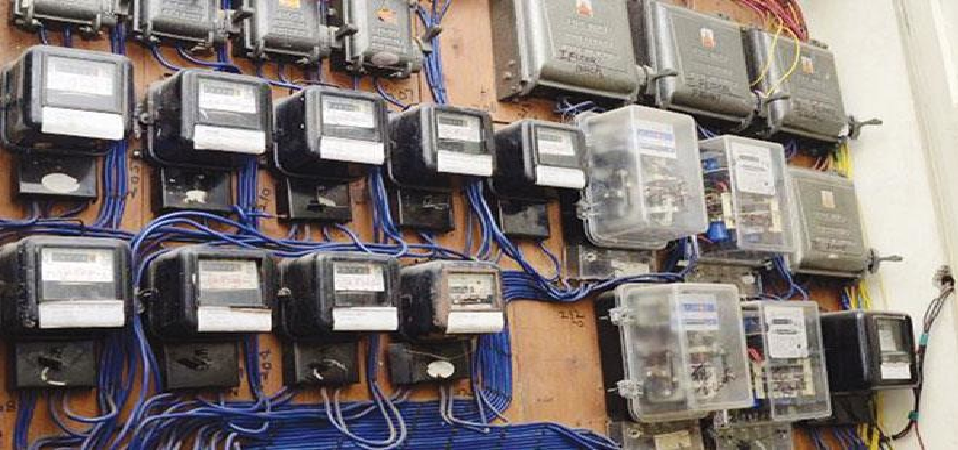
Nigeria has the cheapest electricity rates in sub-Saharan Africa, Adelabu says As Court Halts tariff increase

0
electricity companies nigeria

The Minister of Power Adebayo Adelabu has defended the Federal Government of Nigeria’s decision to increase the electricity tariff for a section of customers.

The Federal Government had earlier this year, implemented a controversial hike in electricity tariffs for Band A users in a bid to address Nigeria’s escalating electricity subsidy burden. The move, aimed at reducing the subsidy from approximately N3 trillion to N1 trillion, has sparked significant backlash from Nigerians.

During a public hearing organized by the House of Representatives Joint Committee on Power, Commerce, National Planning, and Delegated Legislation, Adelabu defended the tariff increase. He highlighted the need for the hike, arguing that without it, the government would be unable to sustain the substantial subsidy costs.

The minister stated that the new tariff regime still positions Nigeria as one of the countries with the cheapest electricity rates in sub-Saharan Africa.

“We are still about the cheapest, even in sub-Saharan, in spite of the tariff. Our neighboring countries pay higher. So the price isn’t comparable,” he asserted.

He further explained that the cost of electricity remains more affordable than other power sources such as premium motorspirit and diesel.

“Band A is cheaper compared to other sources of generating power. It is almost 50 percent cheaper to connect to Band A of the national grid than to run on fuel and diesel,” he said, arguing that businesses benefit more from grid connections than generating power individually using fuel or diesel.

Despite the government’s justification, the tariff hike has met with widespread resistance due to the heavy financial burden it casts on both individuals and businesses. Deputy Speaker of the House of Representatives, Benjamin Kalu, acknowledged that the public has valid concerns.

“There are genuine concerns that higher utility bills resulting from this tariff hike can have ripple effects on operational costs for businesses, potentially leading to increased prices of goods and services,” Kalu noted.

The public hearing came a day after a Lagos High Court temporarily ordered the Nigerian Electricity Regulatory Commission (NERC) and ten electricity distribution companies (DisCos) not to implement the new tariffs. The court’s decision came after the Manufacturers Association of Nigeria (MAN) filed a suit challenging the tariff hike.

The interim order, granted by Judge Lewis Allagoa, restrains the DisCos and NERC from increasing tariffs or disconnecting power supply until the case is resolved.

“That the order is without prejudice to the obligation of the plaintiff from paying their electricity bill at the old rate,” the court said.

The affected DisCos include Abuja Electricity Distribution Company (AEDC), Ibadan Electricity Distribution Company (IBEDC), Eko Electricity Distribution Company (EKEDC), and several others.

MAN, the applicant in the suit, argued that the tariff hike is unsustainable and detrimental to the economic environment. The court has scheduled further hearings for June 24 to deliberate on the matter.

Economic Hardship Fueling Public Resistance

The increase in electricity tariffs comes at a time when Nigerians are grappling with poor earnings and depleted spending power. The economic hardships have made it difficult for many to afford higher utility bills. Subsidies are said to be one of the few benefits Nigerians receive from the government, as poor leadership has forced citizens to provide basic necessities, such as water, for themselves.

However, Adelabu maintained that the tariff hike is a crucial step for reducing the government’s fiscal burden. He noted that the new rates, effective from April, apply to customers receiving at least 20 hours of electricity daily, who will now pay N225 per kilowatt (kW).

The minister stressed that the government’s financial constraints necessitate the removal of subsidies.

“The federal government could no longer afford to pay subsidies on power, necessitating the tariff hike,” he stated.

The government had in May last year, announced the removal of fuel subsidies.

Huawei Exec Acknowledges China’s inability to source advanced 3.5nm chips, Challenges in Semiconductor Ambitions

0
Most parts of the world have been pushing to cage Huwaei

In a rare admission, Zhang Ping’an, CEO of Huawei’s Cloud Services, has reportedly expressed concerns about China’s semiconductor industry during the Mobile Computility Network Conference.

He highlighted the impact of U.S. sanctions on China’s inability to source advanced 3.5nm chips, noting that there are significant hurdles in the nation’s semiconductor ambitions.

Zhang noted that Taiwan’s TSMC, unaffected by U.S. sanctions, continues to supply 3.5nm semiconductors. “Under U.S. sanctions, China has no way to secure these products,” he said, surprising many industry observers who were accustomed to hearing optimistic reports from China regarding its semiconductor growth.

In May, the Chinese government announced a massive $47.5 billion fund to bolster its semiconductor industry. Despite this, Huawei’s recent success in mass-producing 7nm chips without using extreme ultraviolet (EUV) technology was seen as a breakthrough, raising hopes that the company could soon produce 5nm chips.

However, Zhang’s comments indicate that advancing to 3.5nm technology, which requires EUV, remains a significant challenge due to U.S. restrictions on exporting necessary equipment to China.

Zhang emphasized the importance of making effective use of existing technology, stating, “The reality is that we can’t introduce advanced manufacturing equipment due to U.S. sanctions, and we need to find ways to effectively utilize the 7nm semiconductors.”

Workarounds and “Gray Market” Solutions

Some Chinese manufacturers are reportedly finding creative ways to circumvent U.S. sanctions. For instance, Chinese DRAM maker CXMT has begun preparations to mass-produce 18.5nm DRAM, avoiding the sub-18nm equipment restricted by U.S. sanctions. Additionally, there is mention of a “gray market” where Chinese firms can unofficially procure parts from the U.S.

Market and Global Implications

If China remains unable to produce more advanced semiconductors, it is likely to focus on increasing its share in the legacy semiconductor market. Research firm Trend Force predicts China’s share will rise from 29% in 2023 to 33% by 2027.

This development has broader implications for Chinese EV makers who are already struggling to expand into key international markets due to similar restrictions. The U.S. has also imposed high tariffs on Chinese EVs, making it difficult for them to penetrate the North American market.

Zhang’s concerns echo sentiments shared by former Google CEO Eric Schmidt. In a recent interview with Bloomberg and CNBC, Schmidt stated that the U.S. is significantly ahead of China in the AI race.

“In the case of artificial intelligence, we are well ahead, two or three years probably of China, which in my world is an eternity,” Schmidt said.

He attributed this lead to several factors, including chip shortages faced by China and a lack of access to advanced AI chips due to U.S. sanctions.

Schmidt also pointed out that the dominance of English on the internet provides the U.S. with a larger pool of data for training AI models. Additionally, he highlighted a reduction in foreign investment and venture capital in China, coupled with an economic decline and deflation issues.

China’s Semiconductor Outlook

China’s ambitious semiconductor efforts, once a symbol of its technological prowess, now face substantial obstacles. Zhang’s remarks indicate a sobering reassessment of China’s capabilities in the face of sustained U.S. pressure. The strategic focus may now shift towards maximizing the potential of existing technologies and exploring alternative markets and solutions.

The implications of these challenges are far-reaching. For instance, if China cannot overcome these technological barriers, it may struggle to compete in the next generation of tech innovations. Moreover, the continued tension between the U.S. and China could lead to further economic decoupling, impacting global supply chains and international trade.

Thus, while China remains a significant player in the global semiconductor and technology sectors, its path forward is fraught with challenges that require strategic pivots and innovative solutions. The ongoing geopolitical tensions will likely shape the future of global tech competition, with the U.S. maintaining a strategic advantage for the foreseeable future.