DD
MM
YYYY

PAGES

DD
MM
YYYY

spot_img

PAGES

Home Blog Page 3253

Canada’s SixDots Funds 10 Scholarships in Tekedia Mini-MBA

1

A Canadian firm, SixDots.io, is sponsoring ten students to the next edition of Tekedia Mini-MBA (June 3- Sept 2, 2024). Our non-profit partner, Ideas Worth Billions, will help us to select professionals who work at the leadership & managerial level in primary schools (public or private) in any location in Africa.

In other words, besides being a teacher, you have a management responsibility to ensure the operations of the school are optimized. We do believe that our business program will assist you on that mission. If interested, connect with IWB!

To learn more about Tekedia Mini-MBA, go here.

Binance Laid Off 2/3 of Staff in The US, Amid Securities and Exchange Commission (SEC) Lawsuit

0

Leading crypto exchange Binance has revealed that it laid off two-thirds of its workforce in the U.S., due to the Securities and Exchange Commission (SEC) lawsuit that negatively impacted its revenue.

Binance US COO Christopher Blodgett revealed that trading volumes on the exchange have so far imploded since June as a result of the SEC’s action. This saw the sum of $1 billion asset exodus from the exchange, which forced the company to lay off more than 200 employees. The reduction in headcount has impacted the exchange’s ability to respond to discovery requests from the SEC because teams are stretched thin.

Blodgett added that the Binance revenue fell around 75% after the SEC sought a restraining order in June to freeze assets. Also, he disclosed that the exchange legal costs surged to $10 million, and its auditor expenses have skyrocketed by 10X in addition to the loss of banking relationships, which allowed customers to withdraw their digital assets into fiat.

Since then, the exchange has struggled to find new banking partners to work it. “To banks, we are radioactive. Who can blame them? The second it becomes known that they are working with Binance US, they can reasonably expect a nasty subpoena from the SEC”, he added.

In the June lawsuit, the SEC filed 13 charges against Binance, accusing the exchange of mishandling customer funds and offering registered securities, alleging that the company and founder Changpeng Zhao had engaged in an “extensive web of deception.”

The lawsuit targeted not only the global company but also its U.S. arm, which operates under an entity called BAM Trading. In separate legal complaints, both the SEC and the Justice Department claimed Binance.US which Binance had complained was independent had engaged in so-called wash trading in collusion with its parent company to artificially inflate volume on the platform.

In November, Binance settled charges with the Justice Department, the Treasury Department, and the Commodity Futures Trading Commission, agreeing to a $4.3 billion settlement, although the SEC was absent from the agreement. Binance further agreed to a complete exit from the U.S., as part of the settlement.

The SEC lawsuit which involves broader allegations of fraud is still ongoing, with Binance seeking to dismiss the suit in a motion that was argued before a D.C. federal judge in January.

As part of the SEC’s enforcement action, it took the extraordinary step of seeking to freeze the U.S. trading platform’s assets, arguing that Zhao could remove the funds from the exchange. A judge rebuffed the request in June, although it still significantly hurt Binance.US’s business, according to Binance COO Blodgett.

A recent development by the SEC reveals that the Binance U.S. arm has not been providing answers to key questions relating to customer assets and other core elements of an ongoing investigation.

In response to these allegations, Binance stated that the SEC’s claims concerning customer assets were unfounded, adding that it had gone above and beyond its obligations to the securities watchdog.

The exchange further added that it had produced thousands of documents concerning every conceivable aspect of its asset custody practices, including declarations under oath, and monthly reports, and facilitated several inspections of shared custody devices involving customer assets.

Fraudulent documentation: Ghana’s central bank Suspends First Bank, GTbank’ Forex Licenses

0

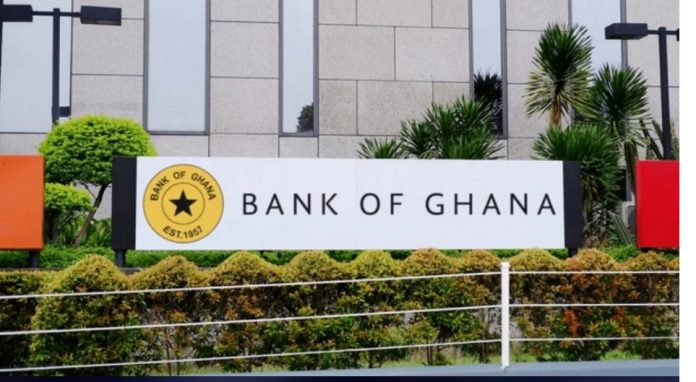
The Bank of Ghana has taken a decisive step against fraudulent practices in the foreign exchange market by suspending the foreign exchange trading licenses of two prominent Nigerian-owned banks, Guaranty Trust Bank (GTB) and First Bank (FBN).

The suspension comes amidst a wave of regulatory crackdowns across West Africa, amid efforts by regulators to enforce guidelines and transparency in the financial sector.

The suspension, announced on Monday, is slated to take effect from March 18, 2024, for one month. The Bank of Ghana cited “fraudulent documentation” in the forex operations of the two banks as the primary reason for the suspension.

According to the regulator, this action is in accordance with section 11(2) of the Foreign Exchange Act 2006, (Act 723). The Bank of Ghana emphasized the importance of adhering strictly to forex market regulations and guidelines, cautioning all market players against non-compliance.

“Bank of Ghana has suspended the Foreign Exchange Trading Licences of Guaranty Trust Bank Ghana Limited (GTB) and FBNBank Ghana Limited (FBN), effective 18th March 2024, for a period of one (1) month, in accordance with section 11 (2) of the Foreign Exchange Act 2006, (Act 723),” the statement partly read.

“This is a result of various breaches of the foreign exchange market regulations, including fraudulent documentation in their foreign exchange operations which have come to the attention of the Bank of Ghana.

“The license will be restored at the end of the one-month suspension period once the Bank of Ghana is satisfied that they have put in place effective controls to ensure strict adherence to the foreign exchange market regulations.”

This move underscores the regulator’s commitment to maintaining the integrity of the financial system and protecting the interests of investors and consumers alike.

The suspension of GTB and FBN’s forex licenses follows closely on the heels of the Central Bank of Nigeria’s (CBN) revocation of licenses for 4,173 Bureaux De Change Operators. The CBN attributed this action to widespread non-compliance with regulatory provisions, signaling a coordinated effort by regional authorities to crack down on illicit financial activities.

The suspension has reverberated throughout the financial markets, raising concerns about the stability and transparency of forex operations in Ghana.

In response, GTB (Ghana) Limited reassured customers that the suspension does not affect their deposits or other business segments. The bank affirmed its commitment to resolving the issues promptly and working closely with government agencies and stakeholders.

In a press release from its Corporate Communications Department, GTB Ghana reiterated its dedication to compliance and transparency, emphasizing that the suspension was not a result of willful non-compliance. The bank pledged to cooperate fully with regulatory authorities to address the concerns raised and uphold the highest standards of integrity in its operations.

GTB Ghana assured customers that all other products and services, including main branches, agency banking outlets, and digital banking platforms, remain fully operational. This assurance aims to mitigate any potential disruptions to customer service and maintain trust in the bank’s reliability and stability.

It stated, ‘’We refer to the Central Bank of Ghana’s press statement in which it announced the suspension of Guaranty Trust Bank Ghana’s Foreign Exchange Trading License effective from the 18th of March 2024 until 18th of April 2024 (1 month period) and received official notice of same.

“We would like to assure all our esteemed customers and stakeholders that we are currently working with the relevant Government Agencies and customers to resolve these trade-related issues timely.

“Our customers and stakeholders are our primary responsibility and, Guaranty Trust Bank Ghana would like to clarify that this development does not affect customers’ own deposits and other business segments of our operations. All other products and services, Main branches, and Agency Banking outlets are available for your convenient use at our regular opening hours and our Mobile Apps and Internet banking are available for your use at any time of the day.

“We further assure our customers that the issue was not a function of willful non-compliance by the Bank, as the Bank has a culture that endeavors to comply with regulations at all times and stringent Anti-Money Laundering CFT policies which are applied across all our operations.

“We are also in ongoing consultations and discussions with the Central Bank of Ghana to fully resolve all matters raised in the shortest possible time. Guaranty Trust Bank Ghana remains committed to being a constructive participant in Ghana’s financial markets and to contributing to its further developments in the interest of all its customers and stakeholders.’’

How Is Pullix’s Crowd Redirecting towards BlockDAG’s 3233% ROI?

0

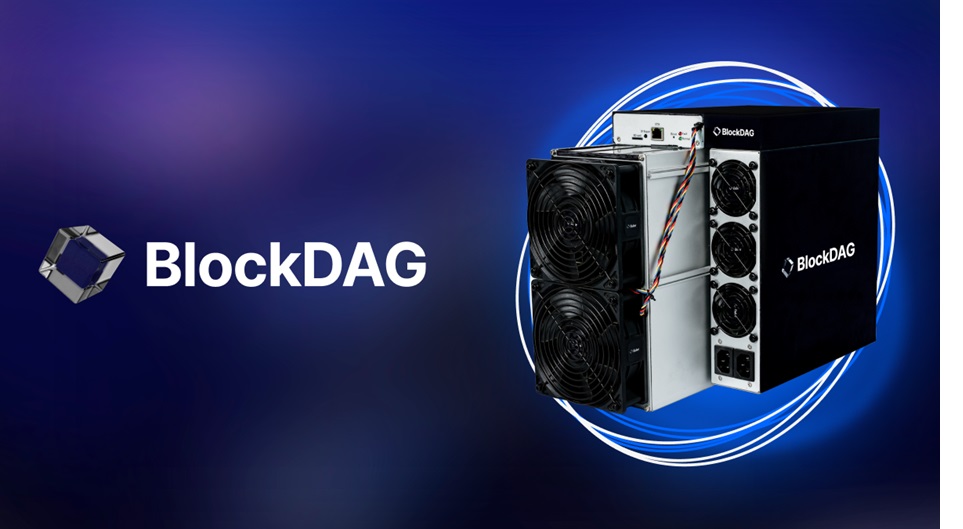
Pullix had an excellent climb, but now that it has been launched on Uniswap, the investors and community of potential investors are churning again! While Pullix presale was preparing for market launch, a wave of investors moved to a different platform: BlockDAG and its ongoing presale batch 2.

Submerge into why this platform is attracting immense attention and why investors are trying to be part of this next big wave in crypto that has raised over $2.8M.

The Crypto Exodus: Why Investors Are Redirecting to BlockDAG Presale

The cryptocurrency market has constantly changed, where opportunities rise and fall quickly; BlockDAg is here to stay. This has been evident ever since PLX set to launch into Bitmart on March 7, 2024, generating excitement with its innovative DeFi model. Now that it has been listed, a natural investor migration is occurring, with a new destination, BlockDAG and its ongoing presale batch 2.

Understanding the Shift

Multiple factors serve this cause as BlockDAG’s Presale coins offer an easy access point compared to Pullix’s launch price in Uniswap and Bitmart. Once a project concludes its presale and enters the listing phase, the landscape for investors shifts dramatically. They lose the ground or opportunity to acquire tokens at a potentially lower price and face the uncertainties of post-launch market fluctuations.

BlockDAG’s ongoing presale lets investors attain coins at a pre-market price of $0.0015 in batch 2, potentially reaping significant benefits compared to the post-launch value.

Unlocking Potential

The power of BlockDAG’s technology is focused on the fact that it isn’t just another ship in the crypto sea; it’s a vessel powered by next-generation Proof-of-Work (PoW) technology. This innovative approach promises to revolutionise the blockchain landscape.

BlockDAG has the potential to handle a significantly higher transaction volume compared to traditional PoW blockchains, which is crucial for broader blockchain adoption and real-world applications.

The platform also accelerates transactions as it bids farewell to sluggish transactions! BlockDAG aims to deliver significantly faster transaction speeds, reducing waiting times and improving user experience.

Its features resonate deeply with current investor sentiment, prioritising scalability, efficiency, and long-term growth. BlockDAG’s roadmap further strengthens its appeal, showing a clear path towards a mainnet launch within six months and highlighting the potential for a staggering 3233% return on investment.

New investors are simultaneously discovering Presale as it builds a community for the future. BlockDAG isn’t just about technology but building a thriving community of early adopters. Its ongoing presale batch 2 is an entry point for investors and a way to reward the community.

With PLX set to launch on Bitmart, taking it out of the presale hype, BlockDAG has proven to be the next best opportunity for investors seeking to invest in a stable ecosystem-based platform.

In 2024, investing isn’t just enough; as a crypto enthusiast, one needs a secure future. So lock in your coins at a potentially advantageous pre-market price of $0.0015. Furthermore, become a part of a supportive community of early adopters and contribute to BlockDAG’s success.

Even though the market may change, investors may unlock gains benefiting from the potential for significant returns on investment as the project progresses. For investors seeking a project with cutting-edge technology, a clear vision for the future, and a strong community focus, BlockDAG’s presale batch 2 presents a compelling opportunity to navigate the ever-changing tides of the crypto market.

Invest in BlockDAG Presale:

Website: https://blockdag.network

Presale: https://purchase.blockdag.network

Telegram:https://t.me/blockDAGnetworkOfficial

Discord: https://discord.gg/Q7BxghMVyu

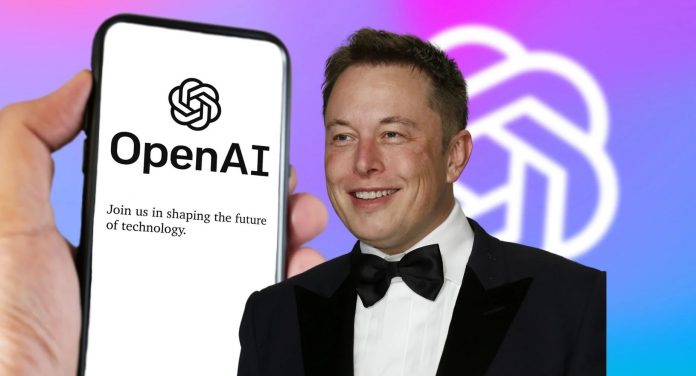
OpenAI responds to Musk’s lawsuit, says “he wanted full control”

0

In the latest development of the ongoing dispute between Elon Musk and OpenAI, the latter has responded to Musk’s lawsuit with a detailed rebuttal, shedding light on the intricacies of their disagreement.

The conflict revolves around the original mission of OpenAI as a nonprofit organization and its alleged deviation from that mission. In a blog post published on Tuesday, OpenAI announced its intention to dismiss “all of Elon’s claims” and provided its own account of the events leading up to the dispute.

The mission of OpenAI, as reiterated by the organization, is to ensure that artificial general intelligence (AGI) benefits all of humanity, encompassing the construction of safe and beneficial AGI and the distribution of its benefits. OpenAI highlighted the significant resources required for achieving this mission, stating that the realization of AGI would necessitate far more resources than initially anticipated.

Elon Musk, a key figure in the early stages of OpenAI, had suggested a substantial initial funding commitment of $1 billion to the organization. However, it is revealed that OpenAI has raised less than $45 million from Musk himself, with additional funding exceeding $90 million from other donors. This contrast in financial support sets the stage for the underlying tension between Musk and OpenAI.

The divergence in perspectives between Musk and OpenAI became apparent in discussions about transitioning the organization into a for-profit entity to acquire the necessary resources for AGI development.

“We spent a lot of time trying to envision a plausible path to AGI. In early 2017, we came to the realization that building AGI will require vast quantities of compute. We began calculating how much compute an AGI might plausibly require,” OpenAI said in the blog post. “We all understood we were going to need a lot more capital to succeed at our mission—billions of dollars per year, which was far more than any of us, especially Elon, thought we’d be able to raise as the non-profit.”

We and Elon recognized a for-profit entity would be necessary to acquire those resources, the company added.

Musk purportedly advocated for either merging OpenAI with Tesla or assuming full control of the organization. However, disagreements arose regarding the extent of Musk’s control over OpenAI, leading to an impasse in negotiations.

“As we discussed a for-profit structure in order to further the mission, Elon wanted us to merge with Tesla or he wanted full control,” including “majority equity, initial board control, and to be CEO,” according to the post, which is authored by OpenAI co-founders Greg Brockman, Ilya Sutskever, John Schulman, Sam Altman, and Wojciech Zaremba. “We couldn’t agree to terms on a for-profit with Elon because we felt it was against the mission for any individual to have absolute control over OpenAI.”

Musk’s lawsuit against OpenAI alleges that the organization has become a “closed-source de facto subsidiary” of Microsoft, prioritizing profit-making over its original nonprofit mission. This accusation forms the basis of Musk’s claim of breach of contract, although no formal agreement between Musk and OpenAI has been publicly disclosed.

In response, OpenAI said the shift to a for-profit was a mutual agreement, which was not honored because they couldn’t reach a consensus on other issues.

“In late 2017, we and Elon decided the next step for the mission was to create a for-profit entity. Elon wanted majority equity, initial board control, and to be CEO. In the middle of these discussions, he withheld funding. Reid Hoffman bridged the gap to cover salaries and operations,” it said.

We couldn’t agree to terms on a for-profit with Elon because we felt it was against the mission for any individual to have absolute control over OpenAI, the company added.

Musk was said to have sent an email to other members of the board in early February 2018, suggesting that OpenAI should “attach to Tesla as its cash cow”, commenting that it was “exactly right… Tesla is the only path that could even hope to hold a candle to Google. Even then, the probability of being a counterweight to Google is small. It just isn’t zero”

OpenAI contends that Musk’s departure from the organization was amicable, with Musk expressing support for OpenAI’s pursuit of its mission independently.

“Elon soon chose to leave OpenAI, saying that our probability of success was 0, and that he planned to build an AGI competitor within Tesla. When he left in late February 2018, he told our team he was supportive of us finding our own path to raising billions of dollars,” it said.

In an earlier response to the lawsuit, Altman and OpenAI CSO Jason Kwon addressed staff in a memo quoted by the Wall Street Journal, refuting Musk’s claims and suggesting personal motivations behind the legal action. “We believe the claims in this suit may stem from Elon’s regrets about not being involved with the company today,” the memo stated.

Despite Musk’s departure, OpenAI has continued to make strides in advancing its mission, including the development of widely accessible AI tools that benefit various sectors, such as agriculture, healthcare, and language preservation.

“We’re sad that it’s come to this with someone whom we’ve deeply admired—someone who inspired us to aim higher, then told us we would fail, started a competitor, and then sued us when we started making meaningful progress towards OpenAI’s mission without him,” OpenAI noted in the blog post.