DD
MM
YYYY

PAGES

DD
MM
YYYY

spot_img

PAGES

Home Blog Page 326

EA Goes Private in Record $55B Deal, Betting on AI and Debt

0

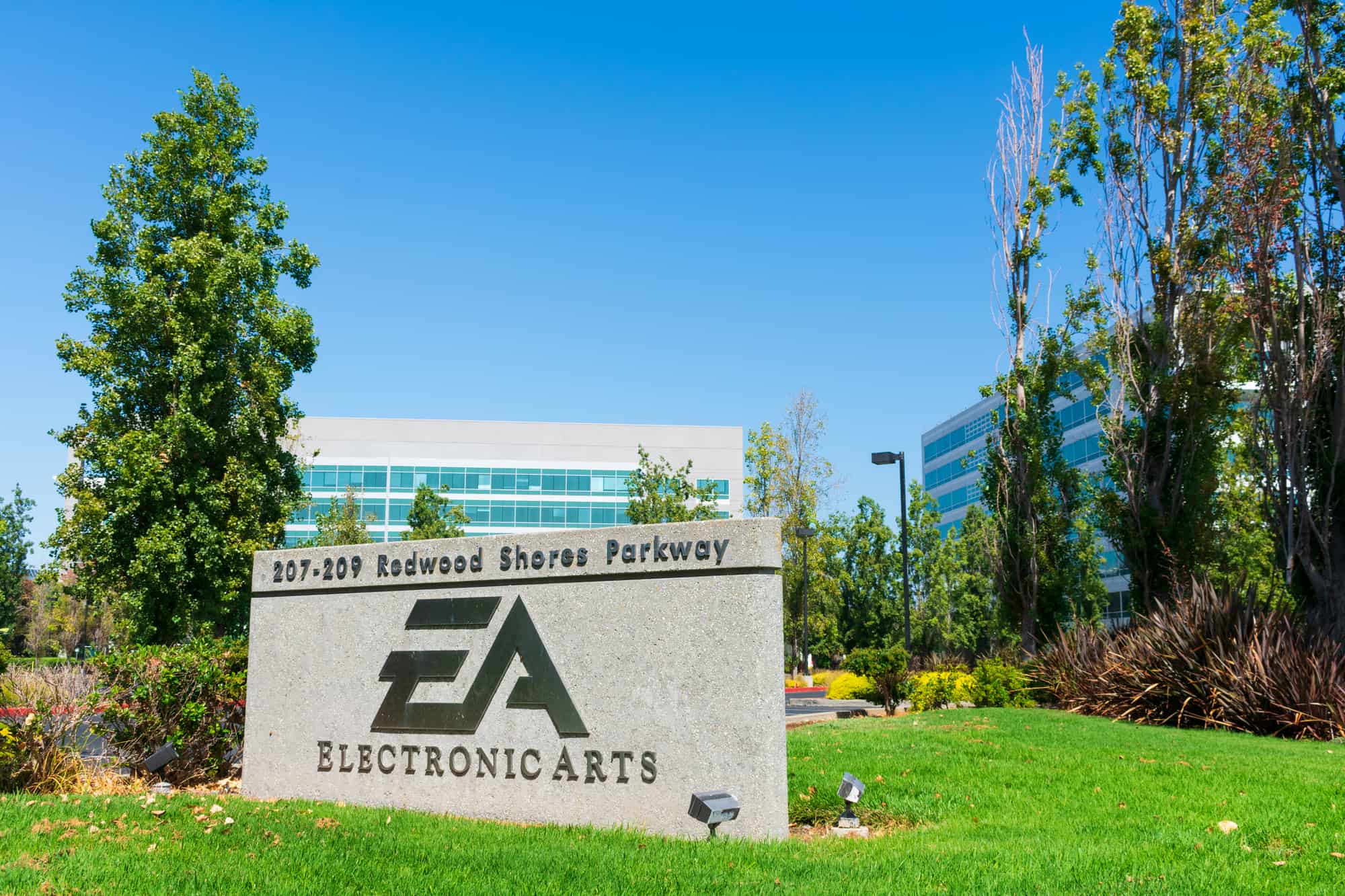
American publisher and developer Electronic Arts (EA) is officially withdrawing from public markets, becoming a private company. The $55 billion deal, confirmed on September 29, became the largest in the history of the gaming industry and is among the largest mergers and acquisitions (M&A) deals in the technology sector in recent years. A consortium of investors comprising Silver Lake, Affinity Partners, and the Saudi Arabian Sovereign Wealth Fund (PIF) will take full control of the publisher. At the same time, CEO Andrew Wilson will retain his position.

Notably, the broader market was not unmoved, as the Dow Jones index and others reacted with increased interest in the entertainment sector, reflecting investors’ appetite for major deals in technology and interactive media. In addition, stock indexes use such transactions as a signal of the high capitalization of the future entertainment sector and the role of AI technologies in its development.

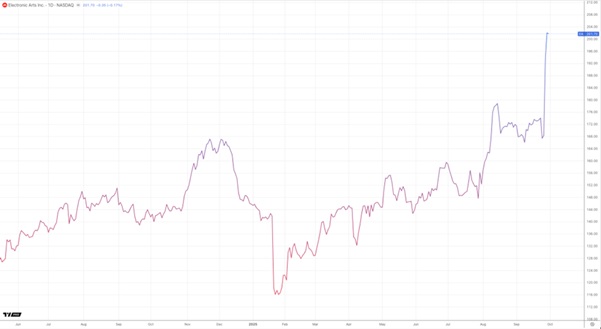
Interest in the deal arose at the end of September, when news of the negotiations appeared. At that time, the deal was estimated to be worth $50 billion, but the total amount ultimately turned out to be even higher. EA, whose shares are rumored to have jumped by more than 20% and lit up prominently on the stock heatmap, has received board approval and is now awaiting regulatory approval. The transaction is scheduled to close in the first quarter of fiscal year 2027.

Leaving the stock exchange will give EA freedom from the pressure of public shareholders, but it will also create new problems. $20 billion of the $55 billion is borrowed funds from JPMorgan Chase, and a significant portion of the debt (about $18 billion) will fall on the company’s shoulders by the time the deal closes. The debt burden is regarded as extremely high. The investors themselves are betting on artificial intelligence, which will enable EA to reduce operating costs and improve development efficiency significantly.

In practice, this can mean not only optimizing business processes, but also additional waves of layoffs. Electronic Arts, like other industry giants, is increasingly relying on service projects. Madden NFL, EA Sports FC, Apex Legends, and The Sims 4 generate over 70% of the profits, while investing in AAA games carries a higher risk. It is already known that Dragon Age: The Veilguard did not meet management’s expectations.

The deal with EA becomes part of the global consolidation of the gaming industry. Following the takeover of Activision Blizzard by Microsoft and the acquisitionof Zynga by Take-Two, the number of public gaming companies is rapidly declining. For investors, this means that access to the sector will be limited to the largest players and ETFs, and transactions will become increasingly private.
On the one hand, going private gives EA the freedom to experiment strategically without constant pressure from the market. This may also enable the company to take more risks and launch new projects. On the other hand, the high debt burden and reliance on operational savings through AI threaten to dampen innovation and creativity.

Over the next few years, EA will obviously be balancing between investors’ desire for profitability and players’ need for fresh content. In an industry where consolidation and automation are becoming the norm, Electronic Arts is becoming a precedent. Everyone is wondering if a private company with $20 billion in debt and relying on AI can remain the leading player in the global gaming market.

Why Spartans Crypto Casino Is the Go-To Destination for Fast, Reliable Crypto Gaming

0

In a space filled with hype, high-risk platforms, and inconsistent experiences, Spartans crypto casino has quietly built a performance-driven empire. As players across the globe become more selective about where they spend their time and money, Spartans has positioned itself as a platform that meets the demands of serious gamblers.

From fast withdrawals and smooth gameplay to 24/7 platform uptime and trustworthy provider integrations, Spartans is quickly climbing the crypto casino rankings. The numbers back it up: high retention, increased daily activity, and a growing presence across gaming influencer channels. This isn’t just another casino; it’s the performance standard for 2025.

Speed Matters: Instant Load and Seamless Gameplay

One of the biggest pain points for any online gambler is delay. Whether it’s loading into a slot or waiting for a live dealer to respond, time matters. Spartans has invested in high-speed infrastructure that keeps load times minimal and transitions between games fluid. Players can move from Spartans casino games like blackjack to crash games or slot reels without unnecessary buffering or reloads.

This smooth operation is especially important for crypto users who expect quick interactions on-chain and off-chain. Spartans understands that expectation and delivers a browsing and playing experience that feels polished from the first click. Across mobile, desktop, and tablet interfaces, performance remains consistent and responsive.

Reliable Withdrawals Without Delays

Nothing ruins a casino experience faster than withdrawal issues. Spartans crypto casino has built a strong reputation for fast, dependable payouts, regardless of the coin used. With support for major cryptocurrencies like Bitcoin, Ethereum, and USDT, players can deposit and withdraw on their terms, without slow processing or hidden policies.

What separates Spartans from many other platforms is the absence of withdrawal gamesmanship. There are no forced delays or suspicious processing windows. Instead, players see crypto arrive in their wallets quickly, as expected. This consistency has become one of the strongest drivers behind Spartans’ high retention rate. When players win, they want access to their funds. Spartans delivers that trust without excuses.

Always-On Access: 24/7 Uptime You Can Count On

In 2025, there’s no excuse for a casino platform to suffer frequent downtime. Spartans crypto casino runs around the clock with a robust infrastructure designed to handle global traffic without interruptions. Whether you’re logging in from Asia, South America, Europe, or the US, uptime performance remains stable across all time zones.

This always-on availability is especially valuable to crypto users, many of whom play outside of traditional hours or from decentralized locations. When players are ready to play, Spartans is live and ready to handle the demand. It’s this kind of reliability that contributes to longer average session durations and fewer platform-switching behaviors among users.

Game Selection With Proven Providers

A platform is only as good as the games it hosts. Spartans has taken the time to partner with over 40 trusted providers, each known for fairness, performance, and engaging gameplay. The Spartans casino games catalog includes everything from classic table games and live dealers to high-RTP slots and crypto-optimized formats like crash, dice, and instant-win titles.

These games are not only high quality but also consistent. They load quickly, maintain clear graphics, and respond well across devices. For players who care about both entertainment and edge, Spartans offers a catalogue that combines variety with value. It’s a clear signal that the platform is built not just for flash, but for long-term playability.

The Influence Effect: Buzz That Matches the Numbers

What makes Spartans crypto casino especially interesting in 2025 is that it’s not only winning on performance, it’s also generating serious organic attention. Influencers in the casino and Web3 content space are regularly featuring Spartans in their streams, tutorials, and community posts. This attention is not paid hype, but rather a reflection of the platform’s growing reputation for fairness and functionality.

The influencer buzz isn’t limited to YouTube or X. Telegram groups, Discord servers, and Reddit threads are increasingly pointing to Spartans as the platform to trust for reliable gameplay and verified payouts. In a market that often relies on short-term promotions, Spartans is building long-term credibility.

Retention Speaks Louder Than Registration

Many crypto casinos measure their success by how many users they onboard in a day. Spartans goes a step further by looking at who stays. Their retention metrics are industry-leading, driven by transparent operations, a performance-focused game catalog, and consistent support. Players aren’t just logging in,they’re returning day after day, session after session.

This pattern shows that Spartans casino games are more than a novelty. They deliver enough depth, reward structure, and trust to keep players engaged over time. For any crypto casino in 2025, retention is the true metric of product quality. Spartans is checking every box.

Conclusion: The Platform That Earns Its Rankings

Spartans hasn’t bought its way into relevance. It has earned its growing reputation with consistent, strategic investment into everything that matters: fast load speeds, quick crypto withdrawals, 24/7 platform uptime, and reliable gaming partnerships. Combined with rising influence and unmatched user retention, Spartans crypto casino is dominating the space without cutting corners.

For users tired of unreliable platforms or slow-moving games, Spartans provides a clear upgrade. It’s built for performance, trusted by real players, and backed by numbers that reflect true momentum. As the crypto casino world matures, Spartans is no longer the new kid on the block,it’s the platform others are trying to match.

Website: https://spartans.com/

Instagram: https://www.instagram.com/spartans/

Twitter/X: https://x.com/SpartansBet

YouTube: https://www.youtube.com/@SpartansBet

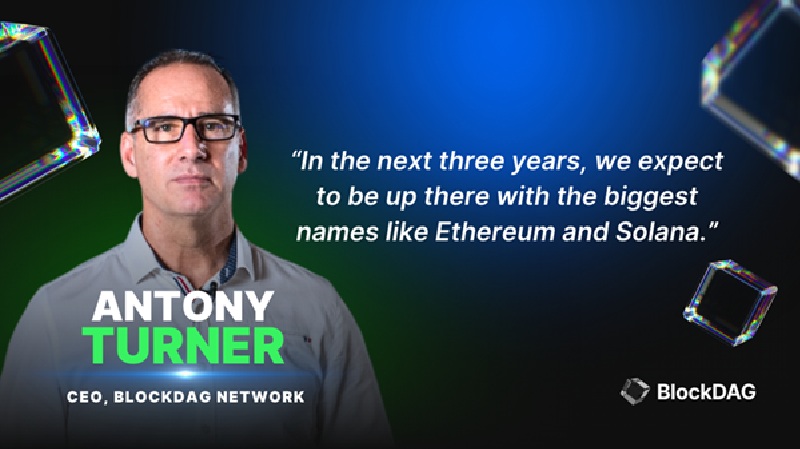
Antony Turner BlockDAG Vision: The Strategy Behind a $425M+ Crypto Powerhouse

0

In a crypto space dominated by anonymous founders and vaporware promises, Antony Turner, BlockDAG, emerges as a rare signal of credibility. His leadership track record spans Spirit Blockchain and SwissOne Capital, two institutions grounded in regulation, not hype. This institutional pedigree now shapes how BlockDAG is being built: infrastructure-first, fully operational, and already trusted by over 3 million users.

With more than $425 million raised and a hybrid architecture combining DAG and Proof-of-Work, BlockDAG (BDAG) isn’t just another speculative Layer 1. It’s the product of real systems thinking, and Turner is the architect behind its growing legitimacy, traction, and long-term delivery roadmap.

From Institutional Roots to System Design

Antony Turner’s background helps explain the structure of BlockDAG. Before founding the project, he held leadership roles at Spirit Blockchain Capital and was involved in building SwissOne Capital, one of the first equally weighted crypto index funds in Switzerland. This history in regulated crypto finance set the tone for how he approached BlockDAG, as a protocol requiring systems, not slogans.

Turner didn’t build BlockDAG around speculative utility or trend-based tokenomics. Instead, his keynote addresses show a commitment to infrastructure-first thinking. BlockDAG’s hybrid Layer 1 chain combines DAG-based architecture with Proof-of-Work, while remaining fully compatible with EVM and WASM smart contract environments. This means it can support high-volume applications and developer ecosystems without requiring a forked future. It’s designed to scale upfront.

During Keynote 4, Turner reinforced this when he said, “We’re not trying to be everything to everyone. We’re building a platform that works from day one, with tools that serve real users.” That philosophy is already playing out.

The Metrics Behind the Vision

Unlike projects that announce ideas before they build anything, BlockDAG has moved quickly from concept to deployment. As of this writing, the ecosystem supports over 3 million X1 app miners, with 20,000 physical miners sold globally. The community has grown to 325,000+ holders across 130+ countries, many of whom actively participate in the platform’s leaderboard system.

These numbers reflect the real-world activity that’s become the backbone of BlockDAG’s Proof-of-Engagement system. Users mine through the mobile app or physical hardware, earn rewards through referrals and daily taps, and increase their rank to secure early access in the upcoming token generation event. Early buyers can access BDAG at $0.0015 using the TGE code, which also grants rank-based airdrops, rewarding those who contributed most to network growth.

That rank-based priority model, introduced during Keynote 4, ties user participation to launch day outcomes. Turner has been clear that the system is designed to reward commitment, not hype. “The people who helped build the network should benefit from its first day,” he said. It’s a simple but powerful shift away from open airdrops or influencer-led coin distribution.

Decentralization Without Delay

A major theme in Turner’s addresses is his long-term view on decentralization. While some Web3 projects rush to deploy DAOs or governance models before their networks function, Turner has taken a more measured approach. BlockDAG currently operates under centralized leadership,  a fact he has acknowledged,  but that structure has enabled fast product delivery and operational clarity.

Turner addressed the issue directly in AMA #3, saying: “Decentralization has to be earned. It can’t be the first thing you do. Execution has to come first.” It’s a sentiment echoed in the project’s roadmap, which includes plans for governance mechanisms once the infrastructure reaches stability.

This practical roadmap mirrors the early growth of other successful chains like Solana and Cardano, both of which leaned on centralized execution in their first years before expanding governance layers. BlockDAG is following a similar arc, but with an added layer of user interaction and reward visibility through its app and leaderboard structure.

Roadmap Execution: From Talk to Tools

Another sign of Turner’s credibility as a founder is the timeline of actual delivery. BlockDAG isn’t relying on speculative timelines or future coin utility. It has already deployed real tools and infrastructure: the BlockDAG Explorer, Stratum miner integration, Smart Account groundwork (EIP-4337), and a highly active testnet.

Each of these components reinforces the system-building mindset Turner brings to the project. Rather than launching a coin and then building backward, BlockDAG is moving into its token generation event with live users, mined rewards, and infrastructure that already works.

This level of delivery is rare for a presale-stage project and highlights why Turner’s leadership is being recognized across the industry. He is not just a spokesperson or symbolic figurehead. He is actively involved in every layer of planning, coordination, and product iteration.

Vision Without Visibility Means Nothing

In crypto, vision often comes cheap. But vision that translates into working systems, verifiable metrics, and long-term execution is far more valuable. Antony Turner BlockDAG isn’t just a founder; project pairing,  it’s a model for how to build in Web3 with credibility and infrastructure in mind.

With more than $425 million raised, over 27 billion coins sold, and a system already supporting millions of users, Turner’s direction is proving that Web3 doesn’t have to choose between scalability and substance. BlockDAG’s public roadmap, leaderboard mechanics, and decentralization roadmap are structured,  not vague promises. And Turner’s leadership style reflects this.

In a sector that too often confuses anonymity with freedom, BlockDAG offers a counterexample: a real founder, a real system, and a protocol that believes delivery comes before decentralization. For those looking for top crypto project leaders who actually build what they claim, Antony Turner is setting the standard.

Presale: https://purchase.blockdag.network

Website: https://blockdag.network

Telegram: https://t.me/blockDAGnetworkOfficial

Discord: https://discord.gg/Q7BxghMVyu

US Government Seizes Record $15 Billion in Bitcoin Linked to LuBian Hack and Global Scam Network

4

The US Department of Justice (DOJ) announced the largest cryptocurrency seizure in history: approximately 127,271 BTC, valued at around $15 billion at current prices.

This action targets funds originally stolen in a massive 2020 hack from LuBian, a prominent Chinese-Iranian Bitcoin mining operation, which were subsequently laundered through a transnational “pig butchering” scam empire run by Cambodia’s Prince Group.

While some reports approximate the value at $12-14 billion due to price fluctuations and partial valuations, the official DOJ figure stands at $15 billion. LuBian, which controlled nearly 6% of global Bitcoin hash rate at the time, suffered a breach exploiting a vulnerability in its 32-bit entropy key generation algorithm.

This allowed a brute-force attack, resulting in the theft of 127,426 BTC worth about $3.5 billion then, now ~$14.5 billion. The hacker moved the funds quietly, and LuBian operators sent over 1,500 micro-transactions totaling 1.4 BTC with embedded OP_RETURN messages pleading for their return—efforts that went unanswered.

The incident flew under the radar until August 2025, when on-chain analytics firm Arkham Intelligence publicly detailed it as potentially the largest crypto theft ever, surpassing the 2016 Bitfinex hack 119,756 BTC. No arrests were made at the time, and the funds remained largely dormant.

The stolen LuBian Bitcoin was funneled into Prince Group’s operations, led by Chinese fugitive Chen Zhi also known as “Mile”. This conglomerate allegedly orchestrated one of the world’s largest investment fraud networks, involving “pig butchering” scams—romance/ investment cons that defrauded victims of billions.

The group operated forced-labor compounds in Cambodia and Myanmar, where trafficked individuals including torture and sexual exploitation were coerced into running scams.

Prince Group used its own mining ventures, including LuBian, to “clean” the illicit BTC by mixing it with legitimate mining output. Proceeds were laundered via shell companies, real estate, and casinos in Southeast Asia. The US Treasury’s indictment describes this as a “multi-billion-dollar criminal enterprise” spanning human trafficking, fraud, and money laundering.

The seizure involved coordination with UK authorities, targeting assets across Cambodia, Thailand, and beyond. It’s part of a broader crackdown on Southeast Asian scam hubs, following similar actions like the 2023 $225 million USDT seizure.

Just one day after the DOJ announcement, a long-dormant LuBian-linked wallet holding 9,757 BTC (~$1.1 billion) activated for the first time in three years, transferring all funds to a new address.

This has sparked speculation: Is it the original hacker evading seizure, or preemptive movement by authorities? On-chain analysts note the remaining ~117,669 BTC is untouched, making the holder the 13th-largest Bitcoin whale.

Some experts, including Arkham’s Emmett Gallic, suggest the US government may have orchestrated the initial 2020 hack or a subsequent “white-hat” recovery, given the timing and custody of vulnerable wallets flagged years ago. However, the DOJ frames it as a standard forfeiture from the scam probe, not admitting any prior involvement.

Priority goes to scam victims pursuing claims. If unclaimed portions remain, the funds could bolster a proposed US Strategic Bitcoin Reserve under President Trump’s administration, potentially reshaping federal crypto holdings.

This seizure eclipses prior records, like the 2022 $3.6 billion Bitfinex recovery. It highlights crypto’s dual role in crime and recovery, while pressuring exchanges and miners to fix legacy security flaws. The case also underscores escalating US-Asia tensions over scam networks, with calls for stronger international tracing tools.

Crypto Markets Downtime Has Triggered FUD on Wintermute and Crypto.com

0

The cryptocurrency market experienced a sharp downturn, triggered by U.S. President Trump’s announcement of 100% tariffs on Chinese imports. This led to over $10 billion in liquidations across the sector within 24 hours, with Bitcoin dropping from around $122,000 to below $110,000 and the total market cap shedding hundreds of billions.

Amid this volatility, unverified rumors began circulating on Telegram channels and X (formerly Twitter) claiming that major market maker Wintermute and exchange Crypto.com had suffered catastrophic losses—often phrased as “blowing up” or facing insolvency/liquidation.

These claims speculated that the firms were dumping assets on exchanges like Binance to cover positions, exacerbating the sell-off. The rumors gained traction quickly on social media, with posts warning users to withdraw funds and speculating on broader contagion.

However, no official downtime, withdrawal halts, or announcements from the firms supported these claims—users reported normal operations throughout.

Official Statements Denying the Rumors

Both companies swiftly addressed the speculation on October 11, 2025, via X posts and statements, emphasizing operational stability and dismissing the rumors as “baseless FUD” fear, uncertainty, and doubt.

The system is operating perfectly and the FUD is unfounded.” Confirmed no disruptions to withdrawals or transactions. “I’m sorry to disappoint you, but Wintermute is perfectly fine, everything is as usual.” Stressed no collapse during the downturn and normal business operations., Kris noted.

BD/Partnerships Exec Arnaud Arn_Wintermute Responded to liquidation rumors with: “I heard Wintermute got liquidated” – followed by clarification that it’s “unfounded FUD” and false. Expressed confusion over the claims.

These responses were echoed across crypto news outlets, with no evidence emerging to substantiate the rumors. Binance founder CZ also weighed in separately, denying any involvement in “hunting Wintermute” and calling related speculation false.

The sell-off was part of a larger $19B+ liquidation wave, but the rumors appear to have amplified panic without basis. Wintermute’s recent OTC volume growth 313% in 2024 and institutional ties suggest resilience, not vulnerability.

The Binance FUD (Fear, Uncertainty, Doubt) episode in late 2022, triggered by the FTX collapse, exemplifies how rumors of exchange insolvency can cascade through crypto markets.

Sparked on November 6 when Binance CEO CZ announced liquidation of $529M in FTT tokens citing risk management post-Terra/LUNA fallout, it escalated with Binance’s brief takeover intent, abandonment on November 8 after due diligence revealed FTX’s $8B shortfall, and subsequent proof-of-reserves scrutiny on Binance.

Largest since FTX; BUSD bled ~9B tokens. Comparable % outflows hit Crypto.com/OKX, but Binance scrutiny was outsized. -32% from Nov; shorts piled in $118M open interest, but no FTT-like crash—BNB’s utility (e.g., fee discounts) buffered it.

Bank run” narrative, with $300M daily outflows and warnings to “get off exchanges.” Reserves fell just 6% vs. FTX’s 90%, but perception ruled—BNB dipped amid shorts, and BTC tested 2-year lows (~$15,650). Temporary USDC withdrawal halts fueled more doubt; Silvergate bank ties rumored severed.

By Jan 2023, inflows resumed; BTC rallied 50%+ into 2023 bull run. Accelerated CEX transparency (e.g., PoR standards) and DeFi migration; Binance consolidated dominance but faced SEC scrutiny (fined $4B in 2023).

FUD exploits sentiment in speculative markets, causing outsized volatility like 10-15% BTC/ETH drops on rumors alone. Yet, facts (e.g., reserves) prevail; it often signals bottoms for HODLers. Parallels recent Wintermute/Crypto.com rumors—verify via on-chain data/official channels to mitigate.

While the statements calmed immediate nerves, crypto’s history via past Wintermute manipulation allegations in early 2025 means skepticism lingers. No further issues have been reported as of October 12, 2025.

The rumors were unfounded FUD amid a volatile market day, and both firms are operating normally.