DD
MM
YYYY

PAGES

DD
MM
YYYY

spot_img

PAGES

Home Blog Page 3263

AI + Bitcoin = A New Economic Order

0

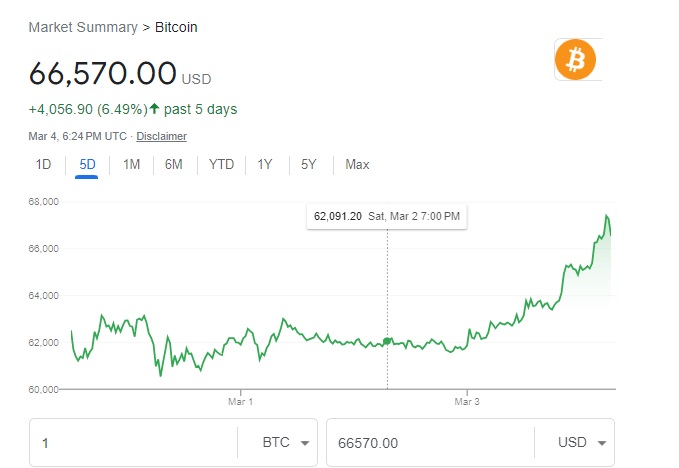
Wow – that is parabolic. Yes, Bitcoin is hitting new numbers. Yet, what happens if everyone buys coins and just sleeps, hoping for new highs? Unlike when you buy company stocks, your BTC money is used to pay the person who sold you the coin. That contrasts with stocks in which the money received from investors is deployed into production activities, to create products and services. Even for gold, there is a physical thing at the end of the channel.

In a historic milestone, the total market capitalization of Bitcoin has exceeded $1.3 trillion, making it the ninth-largest asset in the world by market value. This means that Bitcoin is now worth more than some of the most influential companies in the world, such as Facebook, Tesla, and Amazon.

Bitcoin crosses $66,000 per coin; it is not only breaking new records but also breaking new grounds.

Bitcoin’s remarkable rise has been driven by several factors, including increased institutional adoption, growing public awareness, and favorable regulatory developments

It may be time someone in the African Union models how these new species of assets could affect Africa’s economy (Economics PhD students, research top). Indeed, what stops people pulling funds from stock exchanges and pump into Bitcoin, retire and enjoy.

AI + Bitcoin = A New Economic Order

Promises and Opportunities in Emerging Energy in Nigeria and Africa.

0

Ugoji Harry, CEO of Egoras, Nigeria’s electric vehicle startup, will be teaching tomorrow in Tekedia Mini-MBA. Egoras is unveiling its EV brand, Egoras APEX 28, on April 28, 2024. Join us Harry educates on the promises and opportunities in emerging energy in Nigeria and Africa.

Meanwhile, we have opened registrations for the next edition of Tekedia Institute Mini-MBA which will begin on June 3, 2024. Go here and register 

Retik Finance Investors Grab BlockDAG as RETIK Lists to Much Acclaim

0

After a bearish 2021, the crypto world is experiencing a comeback in 2024. Bitcoin and Ethereum have reached significant milestones, marking a potential bull run. This positive trend fuels excitement in the DeFi sector, with many promising projects emerging.

Meanwhile, Retik Finance, a newly launched DeFi project in this upward trend, has shown impressive results in its presale, raising millions within two months. Ultimately, this happened as the launch was aligned with a winning year for crypto presales. However, with its preale concluded, investors are looking for new opportunities, not just any new platform, but something solid and stable.

Retik Finance Lists to Much Acclaim

The crypto market is finally experiencing a bull run, with major players like Bitcoin and Ethereum reaching significant milestones. This is particularly evident in new, never-ending projects, but how can you tell which one will rocketeer? The answer is simple: DYOR and watch where the crowd is. For instance, Retik did pretty well, but since its presale stages ended, investors seeking high returns have shifted to the BlockDAG presale. 

But why now, in particular? 

  • Early Stage: BlockDAG is still in its second batch, offering each coin at lower prices, meaning potentially higher returns right away from its launch.
  • Proven Success: BlockDAG’s batch 1 sold out rapidly and raised a million within a day and over 2 million during batch 2 of the presale, demonstrating strong investor confidence.
  • Competitive Price: Currently priced at $0.0015, BlockDAG presents an affordable entry point for early investors wanting significant profit.
  • Strong Community and Ecosystem: BlockDAG has a highly supportive community and a stable ecosystem, which is an added benefit, signifying future development and attracting further investors. 

Why is the focus on BlockDAG As the Retik Finance Presale Ends?

BlockDAG’s ongoing presale presents an exciting opportunity for investors seeking to capitalise on the current crypto bull run. Its early stage, proven success, competitive price, and stable ecosystem make it an easy choice for those seeking high post-launch.

Did you snag your ticket to the moon? For those who missed out, fear not! The DeFi revolution is far from over; BlockDAG has your back. With established projects like Retik Finance Listing successfully concluding their presales, investors now focus on the next wave of potential game-changers.

Early Bird Gains: BlockDAG offers the advantage of being in its second presale batch. This translates to an earlier entry point for investors, potentially leading to higher returns if the project gains traction.

Building on Momentum: BlockDAG’s first presale batch was a quick success, selling out rapidly and raising a million overnight. This early validation from investors demonstrates confidence in the project’s potential and adds a layer of credibility to its ongoing presale.

Community + Roadmap: BlockDAG has a rapidly growing community of supporters actively engaging in discussions and has a clearly defined roadmap outlining its development plans, proving its transparency.

Making the Best Bet

BlockDAG’s ongoing presale presents an intriguing opportunity for investors seeking to capitalise on the DeFi boom. Its early-stage advantage, proven success in the first batch, affordable price point, and strong community make it a project worth considering.

Even before the Retik Finance presale ends, BlockDAG aimed to differentiate itself through its innovative approach. The platform uses a directed acyclic graph (DAG) for faster transaction speeds and improved scalability than traditional blockchains. It also prioritises environmental sustainability using an energy-efficient consensus mechanism, which resonates with environmentally conscious investors.

Invest in BlockDAG Presale:

Website: https://blockdag.network

Presale: https://purchase.blockdag.network

Telegram:https://t.me/blockDAGnetworkOfficial

Discord: https://discord.gg/Q7BxghMVyu


National Disgrace: Obi Decries War-torn Ukraine’s Donation of Food Grains to Nigeria

0

Ukraine, a nation embroiled in a brutal war with Russia, has extended a helping hand to Nigeria, a country facing its own crisis of hunger and food insecurity through the donation of tons of food grains.

However, the donation of tons of grains from the war-torn nation has sparked both gratitude and criticism from Nigerian politicians and citizens alike.

Peter Obi, the presidential candidate of the Labour Party in the last general elections, has been particularly vocal in his criticism of Nigeria’s reliance on foreign aid, especially from a nation undergoing significant turmoil. In a statement shared on his official social media handle, Obi lamented what he termed a “national disgrace” and highlighted the failure of Nigerian leadership to ensure food security for its citizens.

“It’s disheartening that our once economically confident nation, blessed with vast arable land and abundant natural resources, now relies on a war-torn Ukraine for food assistance,” Obi expressed in his statement.

The former vice-presidential candidate went on to commend Ukraine for its generosity while simultaneously condemning the leadership failures that have led Nigeria to this point. He emphasized the need for strong political leadership and a reevaluation of national priorities to address the root causes of the country’s dependence on foreign aid.

“The situation underscores vigorously the importance of sound political leadership as the first concrete requirement for any nation desiring to develop and enhance the standard of living of its citizenry,” Obi remarked.

Obi’s criticism is grounded in stark statistics comparing the two nations’ economic and agricultural capabilities. Despite the conflict, Ukraine has managed to maintain its agricultural productivity and even surpass Nigeria in terms of GDP per capita growth.

“Instructively, Ukraine, with a population of 43 million on 603,728 km2, outshines Northern Nigeria, covering 744,249 km2 with a young, energetic population exceeding 100 million,” Obi noted. “Ukraine cultivates over 60% of its arable land, whereas Nigeria has over 60% uncultivated arable land.”

The contrast in economic performance is glaring, with Ukraine’s GDP per capita exceeding $4000 by 2022, while Nigeria’s regressed to $2184 during the same period. Ukraine’s ability to feed itself and export agricultural products worth over $25 billion underscores the missed opportunities and mismanagement plaguing Nigeria’s agricultural sector, he noted.

To address this embarrassment and achieve self-sufficiency, Obi called for urgent action to prioritize investments in agriculture, tackle insecurity to enable farming activities and support small businesses to drive economic growth.

“In 4 to 5 years, this concerted effort can reverse the current trend, leading us toward a productive and New Nigeria that I believe is possible and within reach,” Obi asserted.

Nigeria is to receive 25,000 tons of wheat from the Government of Ukraine to provide emergency food assistance to 1.3 million crisis-affected people in the West African country.

Nigeria’s Expatriate Employment Levy May Jeopardize Regional Integration, Warns CPPE

0

The Centre for Promotion of Private Enterprise (CPPE), under the leadership of Dr. Muda Yusuf, has raised concerns over the potential negative ramifications of the new Expatriate Employment Levy (EEL) introduced by the federal government.

According to Dr. Yusuf, this policy initiative by the Tinubu administration may trigger reciprocal actions against Nigerians and impede regional integration efforts within ECOWAS and across Africa.

In a statement addressing the implications of the EEL, Dr. Yusuf emphasized that the policy could deter investment in the real sectors of the Nigerian economy. He highlighted the absence of restrictions on workers from other African countries, despite Nigeria’s prominent leadership role on the continent.

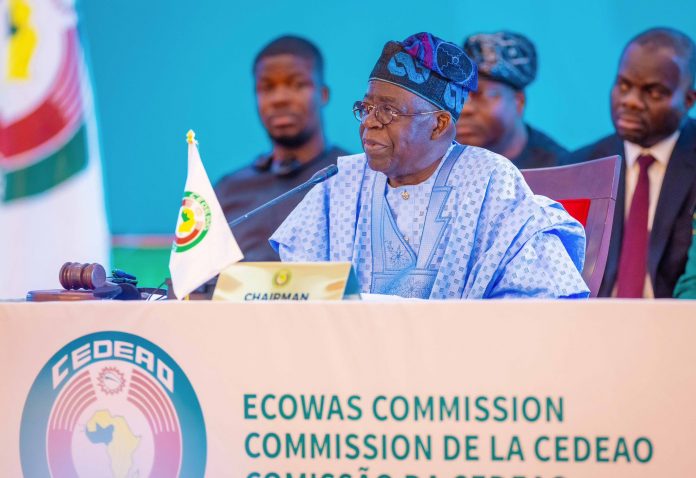
“Nigeria occupies a leadership position in Africa and is highly respected. Our president currently chairs ECOWAS. However, this policy does not extend exceptions to our African brothers and neighbors,” Dr. Yusuf remarked.

He expressed grave concerns about the potential repercussions for diaspora Nigerians, citing the risk of reciprocal actions from other countries that could adversely affect Nigerians abroad. With over 17 million Nigerians residing in various countries worldwide, Dr. Yusuf underscored the significance of diaspora remittances, which exceed $20 billion annually.

“The activation of reciprocity policies in host countries could have devastating effects on our diaspora citizens,” Dr. Yusuf warned.

Additionally, the CPPE criticized the short compliance timeframe of four weeks stipulated by the federal government and recommended an extension to six months to allow for smoother implementation.

The backdrop to this development is the recent introduction of the Expatriate Employment Levy by the federal government, aimed at imposing a levy on companies employing foreigners in Nigeria. The initiative seeks to enhance revenue collection, promote job creation for Nigerians, and address salary disparities between expatriate and Nigerian employees in foreign-operated companies within the country.

Reportedly, companies that violate the new policy will face a penalty of N3 million for each infringement. The infractions include failure to submit EEL, neglecting to register an employee, a corporate entity failing to renew EEL within 30 days, and providing false information regarding EEL.

While the government’s intentions to bolster revenue collection and prioritize local employment are commendable, the CPPE’s concerns underscore the need for careful consideration of potential repercussions, particularly in the context of regional integration and diaspora relations.

Besides regional integration, other implications abound

In addition to concerns raised by the CPPE, other implications of the government’s move to introduce the EEL warrant consideration. While the levy aims to enhance revenue collection and prioritize local employment, it could inadvertently impact various aspects of Nigeria’s economy and international relations.

One notable implication is the potential disruption to foreign investment inflows and business operations in Nigeria. The imposition of the EEL may discourage multinational corporations from establishing or expanding their presence in the country, as it adds to the cost of employing expatriate staff. This could lead to reduced investment flows, hindered job creation, and hampered economic growth, particularly in sectors reliant on foreign expertise and technology transfer.

Furthermore, the EEL may strain diplomatic relations with other countries, especially those whose citizens are employed in Nigeria. The absence of exceptions for workers from other African countries, as highlighted by Dr. Muda Yusuf of the CPPE, could lead to diplomatic tensions and reciprocal measures against Nigerian expatriates working abroad. Such tensions may impede regional integration efforts within ECOWAS and undermine Nigeria’s leadership role on the continent.

Moreover, the short compliance timeframe of four weeks, as criticized by the CPPE, raises concerns about the practicality and efficiency of implementation. Companies may struggle to comply with the new levy within the stipulated timeframe, leading to administrative challenges, disruptions in business operations, and potential legal disputes.

Additionally, the EEL may exacerbate existing disparities in the labor market and hinder efforts to address skills shortages in key sectors of the economy. By imposing additional costs on employing expatriates, the levy could deter skilled foreign professionals from contributing their expertise to critical industries, thereby limiting opportunities for knowledge transfer and capacity building.

Furthermore, the impact of the EEL on diaspora Nigerians, as highlighted by Dr. Yusuf, cannot be overlooked. The potential activation of reciprocity policies in host countries could have adverse effects on Nigerians living abroad, including higher taxation or restrictions on employment opportunities. This could undermine the significant contributions of the Nigerian diaspora to the country’s economy through remittances and skills transfer.

In light of these implications, stakeholders, including the government, private sector, civil society, and international partners, have been advised to engage in dialogue to assess the potential consequences of the EEL and explore alternative strategies to achieve the objectives of revenue generation and local employment promotion while mitigating adverse effects on investment, diplomatic relations, and diaspora engagement.