DD
MM
YYYY

PAGES

DD
MM
YYYY

spot_img

PAGES

Home Blog Page 3274

The Closure of 800 Companies in Nigeria and the Failure of the Current Government

0

What a nation! Nigeria’s finance minister thinks that the closure of about 800 companies in Nigeria in 2023 was due to the economic policies and conditions inherited from Buhari’s administration: “Our government inherits the assets and liabilities of the previous administration. The 800 companies or so did not make up their minds overnight. They stayed until they could stay no more” Wale Edun.

Yes, they were dying when we took over, and under our watch, they just died. We did not apply first aid, etc, to have resuscitated them. Of course, when a nation does not require debates for important positions, there is no way to get leaders to be prepared. Sure, debates will not do the magic, but debates force you to prepare for anything, and by doing that, you get into details you would have liked. The end result is that you become more prepared, because you become more knowledgeable.

In secondary school, I was the head of the school debate society as the Library Prefect. When junior students sent topics, I had to prepare on those topics to be in a position to moderate their shows. Then in FUT Owerri, when I ran for Director of Research, one had to super-prepare for the Manifesto night. In those experiences, debates did one thing: they pushed me to prepare!

Our Honourable Minister is right: things were bad, but because no one really paid attention to those issues, we took over power and did what we did without considering what was going on. If not, if companies were dying under Buhari, the medicine would not have hiking energy cost (via removal of subsidies) without consultation, floating Naira (without giving companies time), etc.

We respect these men and women, but let them not think they own Nigeria alone.

Nigeria’s Finance Minister Attributes 800 Companies Shut Down in 2023 to Policies of Buhari Government

Nigeria’s Finance Minister Attributes 800 Companies Shut Down in 2023 to Policies of Buhari Government

0

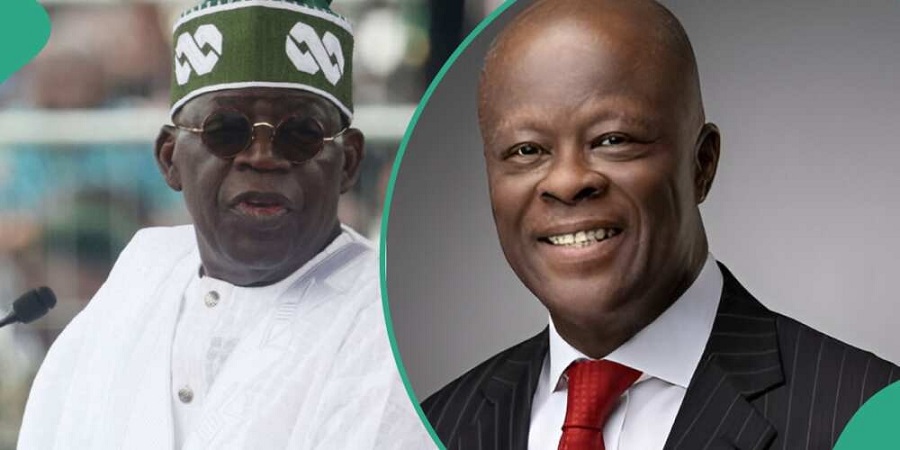
The Minister of Finance and Coordinating Minister of the Economy, Wale Edun, has attributed the closure of approximately 800 companies in Nigeria during 2023 to the economic policies and conditions inherited from the previous administration led by former President Muhammadu Buhari.

This disclosure was made during a ministerial press briefing in Abuja, shedding light on the economic challenges that have beleaguered the country’s business environment.

Edun clarified that the economic difficulties leading to the exit of these companies were not the result of the current administration under President Bola Tinubu. Instead, he emphasized that these issues were pre-existing problems carried over from Buhari’s tenure.

“The departure of these companies from Nigeria’s economic landscape did not happen overnight; factors like market instability, unfulfilled promises, and breaches of contract forced them out,” Edun stated during the briefing.

According to Edun, the market instability, contractual breaches, and unfulfilled promises that forced these companies out were issues deeply rooted in the policies of the previous administration. The shutdown of these companies was a gradual process influenced by an array of unfavorable conditions that were not addressed timely during Buhari’s presidency.

“Our government inherits the assets and liabilities of the previous administration. The 800 companies or so did not make up their minds overnight. They stayed until they could stay no more,” Edun remarked. This statement underscores the continuity of governmental challenges and the long-lasting impact of previous policies on current economic conditions.

One of the critical issues highlighted by Edun was the illiquid foreign exchange market during Buhari’s administration, which severely impacted business operations and investment decisions. The inability to access foreign currency to import goods, pay for services and fulfill other financial obligations led to a hostile business environment.

“The new environment which investors face is one in which inflation is being attacked and will eventually lead to lower interest rates where investors can use the very vibrant domestic market to add their own equities and invest,” Edun noted, indicating the current administration’s commitment to stabilizing the economy and creating a more favorable investment climate.

Key Policies of the Buhari Administration

To understand the full scope of the economic challenges, it is essential to review the key policies implemented during Buhari’s administration that significantly impacted Nigeria’s economy.

Forex restrictions

The Central Bank of Nigeria (CBN) under Buhari’s administration implemented strict foreign exchange controls to stabilize the naira. These controls restricted access to foreign currency for importing goods and services, leading to shortages and increased operational costs for businesses. Many companies struggled to source necessary inputs, resulting in production delays and reduced profitability.

The use of multiple exchange rates created significant uncertainty and complexity in the market. The official rate, the parallel market rate, and various other rates used for different transactions led to inefficiencies and opportunities for arbitrage. This policy discouraged foreign investment and complicated financial planning for businesses operating in Nigeria.

Border closure

In August 2019, the Buhari administration closed Nigeria’s borders with neighboring countries to curb smuggling and protect local industries. While intended to boost domestic production, this policy disrupted trade, leading to shortages of goods increased prices, and eventually, a double recession.

The closure also strained relationships with neighboring countries and regional trade partners.

Debt Accumulation

The administration accumulated substantial external debt to finance budget deficits and infrastructure projects. While borrowing is sometimes necessary for development, the increasing debt burden raised concerns about fiscal sustainability and diverted resources from essential public services.

The sky-high debt profile, which stood at an estimated N97.34 trillion ($108.23 billion) as of April 2024, according to the Debt Management Office, has created a situation for the nation to spend over 90 percent of its revenue on debt servicing.

Edun disclosed that the current administration is actively addressing the inherited challenges to foster a more stable and attractive economic environment for investors. Efforts are being made to combat inflation, improve market liquidity, and lower interest rates, all aimed at reviving investor confidence and stimulating economic growth.

“Our focus is on creating a stable and predictable economic environment where businesses can thrive. We are implementing policies that will ensure market stability, fulfill promises to investors, and adhere to contractual obligations,” Edun said.

These measures, he said, are intended to reverse the trend of company closures and attract new investments into Nigeria.

The closure of 800 companies has had significant repercussions on Nigeria’s economy, including job losses, reduced industrial output, and a decline in investor confidence. The exodus of these companies highlights the need for robust economic reforms and policy continuity to prevent such occurrences in the future.

Despite the current challenges, Edun expressed optimism about Nigeria’s economic future. The government’s proactive measures to stabilize the economy, improve the business environment, and attract investment are expected to yield positive results in the long term.

“We are working tirelessly to ensure that Nigeria becomes a destination of choice for investors. Our policies are geared towards creating a business-friendly environment, and we are confident that these efforts will soon bear fruit,” he said.

Dangote Refinery Achieves Milestone with First Jet Fuel Shipment to Europe

0

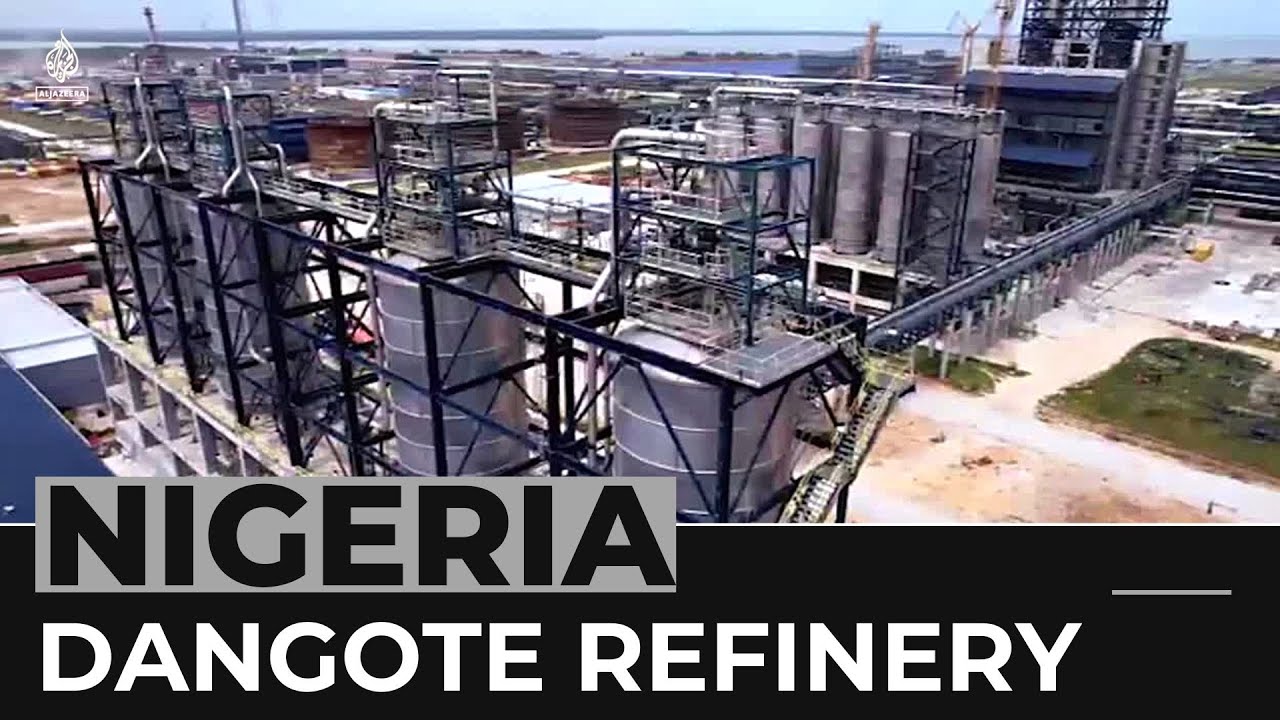
Africa’s largest oil refinery, the Dangote Refinery, has reached a significant milestone with the successful shipment of its first jet fuel cargo to Europe. This event marks another achievement for the new oil plant, which has been rapidly scaling up production since its launch in April 2023.

The inaugural shipment, loaded onto the “Doric Breeze” vessel, departed from the Lekki Free Zone in Lagos on May 27th and is currently en route to Rotterdam, Netherlands, according to S&P Global Commodities at Sea data.

The cargo contains 45,000 metric tons of jet fuel and was awarded to BP as part of a 120,000-metric-ton tender offered by the refinery. Additionally, Spanish refiner Cepsa secured a portion of the tender and is expected to deliver jet fuel to the continent soon.

The successful export of jet fuel to Europe is a notable accomplishment for the Dangote Refinery, which has been actively increasing its production capabilities. The refinery, which began operations just over a year ago, has already established itself as a significant player in the global oil market. Since its launch, Dangote Refinery has exported six jet fuel/kerosene cargoes, all delivered to destinations in Senegal, Togo, and Ghana.

Expansion and Export Plans

According to S&P Global, Dangote Refinery is currently projecting its first gasoline supplies to commence in June, with ultra-low sulfur diesel expected to be eligible for export to Europe by the third quarter of this year. To date, the refinery has exported naphtha, fuel oil, and gasoil to markets in Europe, Africa, and Asia.

However, naphtha exports may soon be curtailed to prepare for gasoline production, a representative for Dangote told Commodity Insights on May 20.

Since April, Dangote has been pushing around four cargoes of naphtha each month to Europe. These volumes could be reduced to boost domestic supplies for gasoline blending once the plant’s fluid catalytic cracker becomes operational. This strategic shift indicates the refinery’s adaptive approach to meeting both domestic and international market demands.

The Dangote Refinery’s increasing production and export activities have significant implications for the global oil market. The refinery’s ability to supply large volumes of refined products, such as jet fuel, gasoline, and diesel, is poised to enhance Nigeria’s position as a key energy exporter. Furthermore, the diversification of export destinations, including Europe, Africa, and Asia, underscores the refinery’s potential key role in the global energy industry.

The successful shipment of jet fuel to Europe has garnered attention and praise within the industry. Market analysts note that this milestone reflects the refinery’s operational efficiency and its capacity to meet international quality standards. The collaboration with major industry players such as BP and Cepsa further highlights the refinery’s credibility and competitive edge.

As Dangote Refinery continues to scale up its operations, it is expected to play a crucial role in addressing both local and international fuel needs. The refinery’s capacity to produce a wide range of refined products positions it as a pivotal contributor to energy security and economic development in Nigeria and beyond.

However, the road ahead is not without challenges. Nigeria’s oil production shortfalls, driven by oil theft and infrastructure vandalism, stand as significant obstacles for Dangote Refinery to actualize its full potential. This backdrop has forced the refinery to import oil products from the U.S., jettisoning its tradition of sticking to domestic sources.

BlockDAG’s Global Tour and 850% Price Surge Distract from ETH ETF and Lido Price Movements While Securing $38.3M In Presale

0

Post-ETH ETF approval, a prominent investor shifted his gains from early Ethereum investments to a diverse array of altcoins. Simultaneously, the Lido token saw a spike in its price post-ETF approval, yet it remains far below its peak price. Amid these shifts, BlockDAG (BDAG) has emerged as a dominant force, boasting an 850% increase since its launch and commanding attention with its worldwide marketing efforts. These efforts have propelled BlockDAG’s presale to impressive new heights, accumulating over $38.3 million by selling more than 10.3 billion coins across 16 batches surging its price by 850%.

Whale Strategy Shifts Post-ETH ETF Windfall

After capitalizing on the ETH ETF approval, a well-known whale broadened his investment horizons by channeling profits into various altcoins. This strategic move reflects a wider trend seen among major investors, pivoting towards promising Ethereum ecosystem tokens, as shown by heightened trading volumes and active market participation reported by on-chain analytics from Lookonchain.

Lido’s Price Reacts to ETH ETF Approval

Following the U.S. SEC’s nod to Ethereum ETFs, Lido (LDO) experienced a noteworthy price increase, momentarily touching $2.49 before stabilizing. This surge reflects the broader market enthusiasm around Liquid Staking Derivatives (LSD), ignited by endorsements from major financial entities like BlackRock and Grayscale. Despite the spike, Lido struggles to surpass its historical highs, with significant withdrawals noted from exchanges indicating a mix of opportunity and caution among traders.

BlockDAG’s Strategic Marketing Fuels Exponential Growth

BlockDAG’s innovative marketing has significantly enhanced its profile globally pushing its 30,000x ROI earning $38.3 million in presale. From a captivating keynote in Tokyo’s Shibuya Crossing to events in Las Vegas and London, BlockDAG has consistently leveraged high-traffic venues to showcase its advancements and attract investor interest as its price suggest by 850% in Batch 16 to $0.0095.

The Tokyo event was particularly pivotal, featuring a comprehensive introduction to BlockDAG’s DeFi integrations and user-friendly mining technology. These presentations have not only boosted its visibility but have also detailed its robust liquidity strategy and cutting-edge mining solutions like the ASIC-enabled mining devices, appealing to a broad audience of potential investors and users.

Moreover, BlockDAG introduced the X10 mining rig during the keynote—an efficient mining solution that promises up to 200 BDAG daily at minimal energy costs, enhancing its appeal to eco-conscious investors. The X10’s user-friendly features and low energy consumption underscore BlockDAG’s commitment to sustainable and accessible crypto mining.

BlockDAG Leads Amid Crypto Innovations

As the cryptocurrency landscape reacts to regulatory approvals and market shifts, BlockDAG distinguishes itself by not just participating in the industry trends but by setting them. Its presales have demonstrated formidable success, securing $38.3 million and showcasing an impressive 850% price increase from its initial offering. With its strategic global presence and innovative technology, BlockDAG is poised to not just compete but lead in the evolving crypto market, offering significant investment potential and pioneering new paths for crypto enthusiasts worldwide.


Join BlockDAG Now!

Website: https://blockdag.network

Presale: https://purchase.blockdag.network

Telegram: https://t.me/blockDAGnetworkOfficial

Discord: https://discord.gg/Q7BxghMVyu

BlockDAG Shines In Crypto Presale Gaining Over $38.4 Million, Outruns Polygon And Litecoin With Latest Dashboard Update

0

While Polygon (MATIC) demonstrates robust user engagement and Litecoin approaches a bullish price target of $90, BlockDAG steals the spotlight with an extraordinary presale, amassing over $38.4 million. BlockDAG’s latest dashboard enhancements elevate the community experience and transparency, showcasing its strength as a leading layer 1 blockchain initiative poised for significant expansion.

As the cryptocurrency landscape continues to evolve at a rapid pace, BlockDAG emerges as a formidable player, making significant waves with its innovative technology and impressive fundraising efforts.

Polygon (MATIC) Faces Challenges Despite User Growth

Polygon continues to impress with sustained user growth, maintaining over one million daily active addresses for over two months. Yet, it faces hurdles in the DeFi space, with noticeable declines in DEX volumes and total value locked, reflecting broader market challenges that have also seen a reduction in Polygon’s monthly revenue by 42% and a 14% decrease in development activity.

Despite these setbacks, MATIC’s price movements show resilience, trading between $0.7802 and $0.6346 with signs of recovering investor confidence, indicated by improved capital inflows even as the market cap holds steady.

Litecoin Nears Key Price Milestone

Litecoin remains a standout altcoin, witnessing a 10.5% rise in price last week to $87.43, spurred by a wave of large-scale transactions suggesting growing investor enthusiasm. The positive trend is further supported by rising market value to realized value ratios and a reserve risk nearing all-time lows, pointing to a strong investor sentiment and making the $90 price target increasingly attainable.

BlockDAG Dominates with Innovative Presale and Dashboard Update

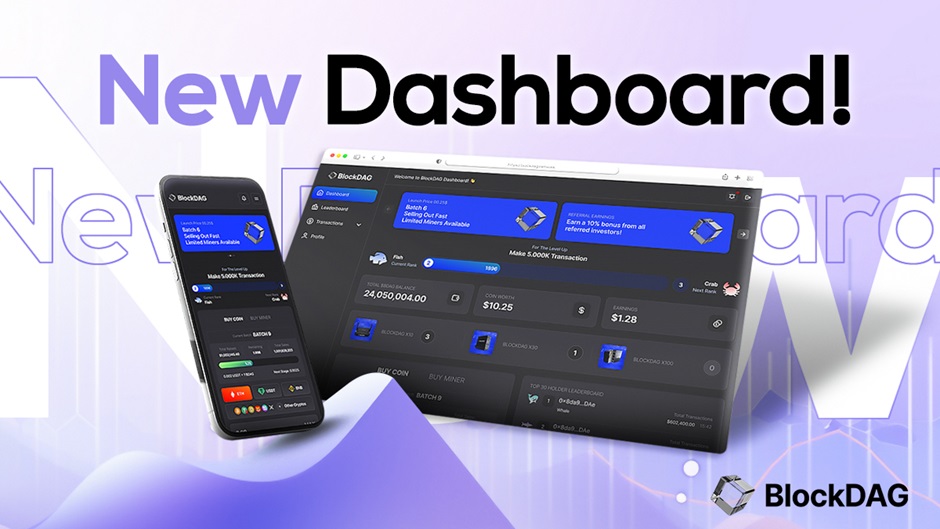
Amid these developments, BlockDAG’s updated dashboard has transformed how users interact with its platform, introducing elements like the “Hot News” section for immediate updates, a dynamic leaderboard displaying top investors from minimal to major stakes, and comprehensive transaction previews that enrich the user journey.

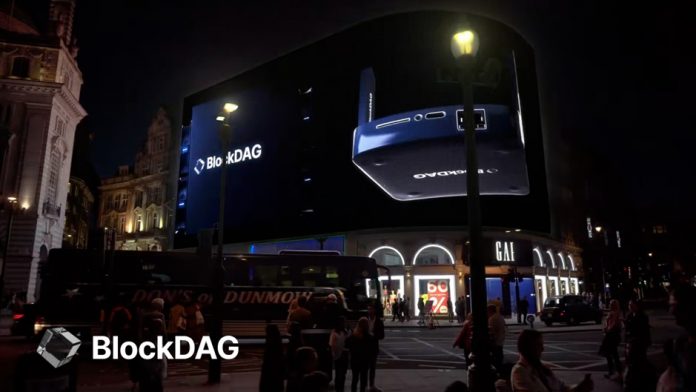
With its presale reaching an impressive milestone in its 16th batch at $0.0095 per BDAG coin, BlockDAG has sold over 10.3 billion coins, signaling strong market demand and confidence in its innovative approach to blockchain technology. Moreover, BlockDAG’s strategic marketing efforts, highlighted by its prominent showcase in London’s Piccadilly Circus, have cemented its status in the crypto market.

The forthcoming launch of the X1 mobile app is set to revolutionize how users mine BDAG coins directly from their smartphones. Designed for efficiency with minimal resource use, the app is compatible with iOS and Android devices and features a user-friendly interface that simplifies crypto mining. Through its referral system and daily engagement incentives, the app promotes active participation, making mining both accessible and rewarding.

Concluding Thoughts

While Polygon and Litecoin continue to make waves in the crypto scene, BlockDAG sets itself apart with a record-breaking $38.4 million presale and cutting-edge features that enhance user engagement and investment transparency. As BlockDAG continues to innovate with tools like the X1 mining app and its refined dashboard, it solidifies its position as a compelling investment choice in the rapidly evolving cryptocurrency landscape.


Join BlockDAG Presale Now:

Website: https://blockdag.network

Presale: https://purchase.blockdag.network

Telegram: https://t.me/blockDAGnetworkOfficial

Discord: https://discord.gg/Q7BxghMVyu