DD
MM
YYYY

PAGES

DD
MM
YYYY

spot_img

PAGES

Home Blog Page 3285

Tools And Platforms For Your Day Trading Startup

0

What is the hype behind day trading? Why is every other person talking about day trading? All we know is day trading means buying and selling financial instruments like stocks, currencies, futures, etc., but within a span of a single trading day. This is known to be the fastest way of trading but is considered to be a potentially lucrative pursuit.

It is not like a long-term investment, where you buy and hold the commodity till the time its price surges, and you sell it for a higher price. In this trading, you depend on the equipment (technology) you use to take a chance in the market in a timely manner.

To make it simpler to understand, let’s give you an example of a Formula One racer racing in a rusty old car. Guess who will win the race? Obviously, the F1 guy. The old car racer needs a finely tuned engine to win the race, just the way a day trader needs an advanced set of tools and platforms to compete in the financial markets.

For what purposes will the tools and platforms be beneficial for the traders? The technology you will use will help you with your day trading endeavors. It will help you access live market data, perform trades quickly and efficiently, analyze market trends, and identify opportunities.

What Factors Add To The Success Of Day Trading?

Let’s define a successful day trade before diving into the tools needed for successful day trading. A winning day trade involves entering and exiting a position within the same trading day, profiting from a price movement that aligns with your prediction.

This can involve buying a stock at a low point and selling it later in the day at a higher price, or vice versa (short selling) if you anticipate the price to fall.

Deep Market Knowledge And Trading Strategies

To achieve consistent success in day trading, a deep understanding of the financial markets is paramount. This knowledge encompasses two key areas—understanding the market dynamics and technical analysis.

Successful day traders develop a keen sense of how various factors influence market behavior. This includes economic data releases, company news events, geopolitical situations, and even investor sentiment.

Technical analysis involves studying historical price charts and market indicators to identify potential trading opportunities. Day traders utilize various technical indicators like moving averages, RSI, and Bollinger Bands to gauge market momentum, support and resistance levels, and potential trend reversals.

Developing And Testing Effective Trading Strategies

Knowledge alone isn’t enough. Successful day traders translate their market understanding into actionable trading strategies. These strategies outline specific entry and exit points for trades based on technical analysis and defined risk parameters. Here’s the crucial part: you don’t just develop a strategy and blindly follow it.

Before risking real capital, successful day traders “backtest” their strategies using historical market data. This allows them to evaluate the strategy’s potential performance and identify any flaws before deploying it in live trading.

The market environment is dynamic, and successful traders continuously refine their strategies based on experience and changing market conditions.

Discipline And Risk Management

Even with a deep understanding of the markets and a well-defined trading strategy, success in day trading hinges on two crucial factors—discipline and risk management.

The fast-paced nature of day trading can be emotionally charged. Witnessing sudden price swings can trigger impulses to chase gains or panic-sell at a loss. However, successful day traders cultivate ironclad discipline. They adhere to their pre-defined trading plan, avoiding the temptation to deviate based on emotions. This means entering and exiting trades based on your strategy’s signals, not fleeting feelings of fear or greed.

Risk management is the nail in the coffin of any successful day trading operation. Every trade carries inherent risk, and the key is to limit your potential losses. This is where stop-loss orders become essential.

A stop-loss order is an automated instruction set with your agent to sell a security if the price reaches a predetermined level. By setting stop-loss orders on every trade, you establish a maximum amount you’re willing to lose on that particular position. While it might mean missing out on some potential profits, it prevents catastrophic losses that could wipe out your entire account.

Successful day traders also utilize other risk management techniques, such as:

  • Restricting the amount of investment allocated to each trade. This ensures a single losing trade doesn’t devastate your entire portfolio.
  • Spreading your bets across different assets can help eliminate the risk connected with any single security.

What Are Some Essential Tools You Can Use For Day Trading?

As we said earlier, one must equip themselves with the right resources to be a successful day trader. If you want to be well-equipped for day trading, follow our three-dimensional approach, which comprises reliable hardware, live market data feed, and a good trading platform.

Let’s have a look at how these can help your day trading go from zero to millions or even billions.

No. 1. A Reliable Computer Hardware

What do you perform trade with? A computer, so reliable computer hardware, means an engine of your trading machine. There are multiple checks to make to ensure that you have a reliable system to operate. To make the engine work, consider the following checklist:

  1. Processing Power – It is to be noted that day trading platforms are resource-intensive and might require a powerful processor. You have to invest in a computer that has a processor more than Intel Core i7 or AMD Ryzen 7 and above. The processor will have to handle the load of live data feeds, complex charting software, and multiple applications running simultaneously without a lag.
  1. Multiple Monitors – A single screen won’t help you much, so you will have to expand your workspace by integrating multiple monitors. The ideal number of monitors would be two or three, depending on your needs. This will make your work easier by helping you simultaneously watch various market data streams, charts, and news feeds to improve your overall situational awareness.
  1. Stable Internet Connection – To work without any disruption, you need a reliable and high-speed internet connection. Even momentary internet disruptions can have disastrous consequences in the fast-paced world of day trading. Consider a wired connection over Wi-Fi for maximum stability.

No. 2. Live Market Data Feed

Just like a pilot needs real-time weather data to fly the plane safely, day traders depend on live market data to make good decisions. A good market data feed provides live quotes, breaking news, and market analysis.

You need access to constantly updating stock prices, currency exchange rates, and other relevant market data. Some of the popular data feed providers are Bloomberg, Reuters, and IQ Feed. However, if you want to stay informed about market-moving news events further, you can gain valuable insights from technical analysis tools like Ethereum code offered by some data feed services.

No. 3. Trading Platforms

Do you know what a trading platform offers you other than currency exchange or commodities? Well, a trading platform acts like a central hub for executing trades. However, it further analyzes the markets and manages your portfolio on your behalf. Here is why you should consider a trading platform:

You get access to the charting tools. The advanced charting capabilities will give you a detailed and effective technical analysis. You have to look for a platform that offers different chart types, technical indicators, and drawing tools to help you look for trading opportunities. Popular charting platforms like TradingView can be integrated with some brokers.

To be successful in day trading you need a smooth way of order placement and execution. You must ensure your platform allows for various order types (market orders, limit orders, stop-loss orders) and fast order routing for swift trade execution.

Some platforms offer built-in research tools like fundamental analysis reports, company news feeds, and earnings calendars, allowing you to make well-rounded trade decisions. Popular platforms with extensive research resources include TD Ameritrade’s Thinkorswim and Interactive Brokers’ TWS platform.

Some Popular Day Trading Platforms

Having explored the essential tools, let’s discuss the best day trading platforms. Choosing the right platform is crucial, as it directly impacts your trading experience and efficiency. Here’s a list of some popular options:

  1. Interactive Brokers (IBKR)
  2. TradeStation
  3. TD Ameritrade (Thinkorswim platform)
  4. Charles Schwab
  5. Fidelity Investments
  6. Webull

Summing Up

Equipping yourself with the right tools and platforms is an essential first step for aspiring day traders. Reliable hardware, real-time market data, and a well-featured trading platform form the foundation for informed decision-making and efficient order execution.

Remember, the “perfect” platform doesn’t exist – it depends on your individual needs and trading style.

Beyond the tools, consider supplementing your knowledge with educational resources and joining online communities of experienced day traders. Continuous learning and a supportive network can be invaluable assets on your day trading journey.


Will Inflation Burst The Tech Bubble? A Look At The Challenges For Startups

0

The tech industry was expected to reach 5.2 trillion USD by the end of 2021, but the number almost doubled as it faced a hike in demand for new technologies and innovations. This industry has always been in the limelight because of its love for innovation, investor enthusiasm, and a growing reliance on technology.

These aspects have flourished the startup fever, bringing record highs in stock valuations. So far, it has captured a huge portion of the market spotlight. However, this period of rapid growth faces a new challenge: rising inflation.

Inflation, the sustained increase in the cost of goods and services, has emerged as a major concern for the global economy. The tech industry, with its reliance on venture capital and focus on growth, might not be immune to its effects. Do you want to know about the challenges inflation poses for startups and explore whether it has the potential to burst the much-discussed tech bubble? Read on!

Inflation Is A Curse For Startups

Inflation acts like a hidden tax for startups, eroding the purchasing power of a startup’s resources. It squeezes their margins on one hand and potentially dampens consumer demand on the other. Want to know how it plays out? Have a closer look at the specific challenges!

Startups Face Increased Costs

Inflation pushes up the prices of raw materials, components, and other resources needed for developing and producing tech products. This can significantly impact startups, particularly those with hardware or manufacturing components. Imagine a company building a new fitness tracker. Rising costs for chips and sensors could eat into their margins or force them to delay production.

The talent pool in the tech industry is highly competitive. In an inflationary environment, salaries and benefits tend to rise to keep pace with the rising cost of living. This puts pressure on startups with limited resources to attract and retain top talent.

Inflation doesn’t just affect production costs. It also increases everyday operational expenses like rent, utilities, and marketing. Startups, often operating on tight budgets, have less room to absorb these rising costs without impacting their bottom line.

Their Fundings Are Squeezing

As inflation rises, central banks typically raise interest rates to curb inflation. This makes borrowing more expensive, which can be a major hurdle for startups. Startups often rely on loans and venture capital for funding, and higher interest rates can significantly increase the cost of capital.

Rising inflation creates economic uncertainty. Investors, especially those risk-averse ones, may become more cautious when allocating funds to startups. They might be hesitant to invest in companies with unproven track records or those operating in markets potentially impacted by inflation. This could lead to a slowdown in venture capital funding, hindering the growth of many promising startups.

Consumers Turn Their Back

When inflation erodes disposable income, consumer spending habits shift towards essentials. This can lead to a decrease in demand for non-essential tech products or services, especially those offered by startups in their early stages. Imagine a company developing a new productivity app. Consumers might prioritize necessities like groceries over subscribing to a new productivity tool during inflationary times.

Even if consumers have disposable income, they become more price-sensitive in an inflationary environment. This can force startups to re-evaluate their pricing strategies and potentially lead to lower profit margins.

These factors combine to create a challenging environment for startups. The next section will explore whether these challenges can lead to a full-blown tech bubble burst.

Can Inflation Lead to a Tech Bubble Burst?

The concern surrounding inflation is whether it can trigger a full-blown tech bubble burst, similar to the dot-com crash of the early 2000s. While the potential for disruption exists, the current situation presents some key differences.

The Tech Bubble Trauma

The term “tech bubble” often conjures memories of the dot-com bubble of the late 1990s, where inflated valuations of internet companies far exceeded their actual profitability.

When the bubble burst in 2000, many startups collapsed, and the tech industry witnessed a significant downturn. This historical episode serves as a cautionary tale, raising concerns that rising inflation could trigger a similar scenario in the current tech boom.

The Differentiating Factors

However, the current situation presents some key differences from the dot-com bubble:

Many startups today boast stronger underlying fundamentals compared to their dot-com era counterparts. They often address real-world problems, have established user bases, and demonstrate clear paths to profitability. This suggests a stronger foundation for the current tech boom, potentially making it more resilient to inflation’s impact.

Unlike the dot-com era’s focus on “get big fast” strategies, many startups today prioritize innovation and building sustainable businesses. This focus on long-term viability might make them better equipped to weather economic challenges.

The current tech landscape is far more diversified than the dot-com era’s internet-centric focus. Startups operate across various sectors, from healthcare and finance to artificial intelligence and cybersecurity. This diversification could provide a buffer against inflation’s impact on any single sector.

The Potential for Market Correction

While a complete tech bubble burst may not be inevitable, inflation could still trigger a market correction. As investors become more risk-averse and factor in rising costs, valuations in the tech sector might adjust downwards.

This could lead to a decline in stock prices for some overvalued startups, particularly those lacking a clear path to profitability.

However, a correction doesn’t necessarily equate to a full-blown bubble burst. It might simply represent a healthier realignment of valuations with the actual growth potential of startups in a high-inflation environment.

The Challenges And Opportunities For Startups

The inflation comes with a few pressing concerns for startups, but it’s not an insurmountable obstacle. How can startups deal with this environment and even discover new opportunities for growth?

How Can Startups Deal With Inflation?

1 – Startups need to become more cost-conscious. This could involve renegotiating contracts with suppliers, streamlining operations, or adopting leaner business models. Utilizing technology for automation and process optimization can also lead to significant cost savings.

2 – During periods of inflation, profitability becomes paramount. Startups may need to shift their focus away from rapid user acquisition and prioritize sustainable revenue streams. This might involve adjusting pricing models, exploring new monetization strategies, or focusing on customer segments with higher purchasing power.

3 – Having a healthy cash reserve can act as a buffer against unexpected cost increases and economic downturns. Startups should prioritize building a financial cushion to weather potential storms and maintain flexibility for future investments.

What Can Innovation Do Here?

In a way, inflation can be a catalyst for innovation. As costs rise, startups are incentivized to find creative solutions for improving efficiency and maximizing output.

Startups can leverage technology to automate tasks, optimize resource allocation, and streamline production processes. This not only reduces costs but also improves overall productivity.

Startups with innovative solutions that demonstrably improve efficiency or add significant value for customers will be better positioned to attract investors and survive market fluctuations.

What Are The Potential Of Opportunities?

With rising costs and tighter budgets, consumers are increasingly seeking innovative financial solutions. Startups offering budgeting tools, personal finance management platforms, or alternative payment methods can see increased demand.

As businesses tighten their belts, they might be more susceptible to cyberattacks targeting cost-cutting measures that compromise security. Startups offering robust cybersecurity solutions can find a promising market in this environment.

Inflationary pressures might exacerbate the trend towards remote work models. Startups offering innovative tools for monitoring markets like Immediate maximum, communication, collaboration, and remote project management could see significant growth.

By adopting strategic cost-cutting measures, focusing on profitability and value creation, and staying at the forefront of innovation, startups can not only survive inflation but also potentially thrive in this challenging economic sector.

Wrapping Up

Inflation brings a pyramid of challenges for startups, raising operational costs, tightening access to funding, and potentially dampening consumer spending. While a complete tech bubble burst seems unlikely due to the stronger fundamentals of many startups and a more cautious investor landscape, a market correction is a possibility.

However, this period of economic uncertainty can also be a catalyst for innovation and adaptation. Startups that prioritize cost-efficiency, profitability, and value creation while also exploring new opportunities in sectors like fintech and remote work solutions are well-positioned not only to weather the storm but potentially emerge stronger in a transformed tech structure.

Startup Struggles – Can Tech Overcome The Interest Rate Hike?

0

There was a surge in inflation, and that has prompted central banks around the world to raise interest rates. While this is a necessary step to combat rising prices, it casts a shadow of uncertainty over the booming tech industry.

Startups, the lifeblood of technological innovation, are heavily reliant on venture capital and debt financing to fuel their growth. Let’s discuss how rising interest rates could create a funding squeeze, impacting the ability of startups to thrive and potentially hindering the overall progress of the tech sector.

What Is The Funding Squeeze?

The rising interest rates cause two-sided damage to startups that are seeking funding options. As interest rates climb, the cost of borrowing money for startups increases significantly. This directly impacts startups that rely on debt financing to fuel expansion, such as taking out loans for equipment purchases, hiring talent, or marketing campaigns. With higher interest rates, the cost of servicing these loans becomes more burdensome, potentially eating into profits and limiting future investments.

Higher loan payments can strain a startup’s already tight cash flow. This can force them to make tough decisions, such as delaying critical investments, reducing marketing spend, or even laying off employees, all of which can hinder growth and innovation.

Rising interest rates don’t just affect loans; they also influence investor behavior. When interest rates rise, investors tend to become more risk-averse. This means they might be less willing to invest in high-growth startups with unproven track records and a higher risk profile. Venture capitalists might become more selective, focusing their investments on established companies with a clearer path to profitability.

With a safer alternative available (investments with guaranteed returns due to higher interest rates), investors might shift their focus towards less risky ventures. This could lead to a decline in funding available for early-stage startups with innovative ideas but limited financial history.

The combined effect of increased borrowing costs and investor caution creates a funding squeeze for startups, making it more challenging to secure the capital needed to achieve their growth potential.

The Impact On The Growth Of A Startup

The funding squeeze caused by rising interest rates can have a major ripple effect on a startup’s growth pace. You might be wondering how it is associated.

This Results In A Slower Expansion

With tighter access to capital, startups might have to scale back on their growth ambitions. This could lead to delays in crucial investments needed for expansion.

Hiring talented people is essential for a startup’s growth. However, rising interest rates can force startups to delay or even reduce hiring plans. This can hinder their ability to develop products, scale operations, and reach new markets.

Product development is a cornerstone of success for any tech startup. However, with limited funds, startups might be forced to delay product features, postpone product launches, or even shelve promising R&D projects altogether.

The Keen Focus on Profitability

Rising interest rates can fundamentally shift a startup’s focus. Previously, the tech industry prioritized rapid user acquisition and growth, even if it meant operating at a loss. However, with the funding squeeze, profitability becomes paramount. Startups will likely prioritize strategies that generate revenue quickly, potentially sacrificing aggressive user growth tactics.

We might see changes in how startups generate revenue. Subscription models with recurring income could become more prevalent compared to freemium models that prioritize user base first and monetization later. Startups might also explore alternative pricing strategies or premium features to increase their revenue streams.

To maintain financial stability, startups might have to implement cost-cutting measures. This could involve renegotiating contracts with vendors, streamlining operations, or even resorting to layoffs. While these measures can help improve cash flow, they can also impact employee morale and potentially hinder innovation in the long run.

Can Tech Adapt? Or Will Tech Adapt?

While rising interest rates pose a significant challenge, the tech industry is known for its resilience and resourcefulness.

The Advantages of Tech Startups

Tech startups are inherently innovative and adaptable. They often operate with lean structures and are adept at finding creative solutions to problems. This adaptability will be crucial in finding new methods to guarantee the security of funding and deal with the challenges of a tighter financial sector.

Many tech startups address real-world problems and offer compelling value propositions. During economic downturns, companies with solutions that demonstrably improve efficiency or add significant value are likely to attract investors even in a risk-averse environment.

Alternative Funding Sources

With traditional funding avenues becoming more restrictive, startups might explore alternative sources. Platforms like Kickstarter and Indiegogo allow startups to raise capital directly from the public. Besides, if you have extra bucks, you can diversify your investment, for example, by creating a tool like Bit sprix AI that offers real-time data feed for the investors.

This option can be a good deal for startups with innovative products or passionate user communities.

High-net-worth individuals looking for high-growth potential might still be interested in investing in promising startups.

Collaboration with established companies can provide access to funding, resources, and market reach. Startups can explore joint ventures, licensing agreements, or revenue-sharing models with larger companies.

Bootstrapping And Lean Methodologies

This method involves relying on internal resources and revenue generation to fund growth. Startups might become more focused on achieving profitability earlier and utilizing their own funds for expansion.

These methodologies emphasize building a minimum viable product (MVP), testing it with users, and iterating rapidly. This will further allow startups to validate their thoughts and potential market fit with limited resources.

By leveraging their inherent adaptability, exploring alternative funding avenues, and embracing bootstrapping and lean methodologies, tech startups can navigate the challenges of rising interest rates and emerge stronger as a result.

Final Thoughts

The rise in interest rates presents a significant hurdle for startups, tightening the grip on their access to capital. Increased borrowing costs and investor caution create a funding squeeze, potentially hindering the growth trajectory of these innovative companies.

However, the tech industry is not without its advantages. Startups are known for their adaptability and resourcefulness. By focusing on innovation, value creation, and efficient resource allocation, they can potentially find new ways to navigate the funding squeeze. Exploring alternative funding sources like crowdfunding, angel investors, or strategic partnerships can also provide some relief.

Additionally, a return to bootstrapping and lean startup methodologies might become more common as startups prioritize building sustainable and profitable businesses.

In conclusion, while rising interest rates pose undeniable challenges, the tech industry’s ability to adapt and innovate should not be underestimated. By embracing resourcefulness and exploring alternative avenues of growth, startups can emerge stronger and more efficient.

The future of tech startups in a higher interest rate environment will likely be marked by a shift towards profitability, a focus on genuine value creation, and the exploration of creative solutions to overcome funding hurdles. This period of economic uncertainty could ultimately foster a more resilient and sustainable tech ecosystem in the long run.

Ranked the top 7 best telegram client apps

0

Nowadays, we are constantly striving to stay connected and in touch with our family, friends, and relatives. Social networking sites help us to know the latest celebrity news, while messengers tell us about international news and help us to communicate with our relatives. Many applications are trying to improve and add new features, including messengers. For example, the messenger telegram created a premium subscription through which users were able to access more features. But not all users have the desire to purchase paid subscriptions. And also, not all users are fully satisfied with the premium subscription features offered. So what to do in this case? Of course, try using client apps. Today, we will tell you about seven telegram client apps with new features inside.

First of all, let’s understand what are client apps?

Client applications are applications that are very similar to the main versions of applications. However, they add additional features that are often not present in the main applications. Such applications are available for installation on different operating systems, even on laptops. Such applications also have quite unusual features that help to diversify communication and simplify the process of listening to music or reading news.

Below, we have ranked seven telegram client apps

  1. Nicegram app

This is one of the best client apps. The app has unblocked chats, to learn how to use this feature, go to Nicegram Unblock Guide. Apart from unblocked chats, in the app you will be able to instantly translate messages right in the chat correspondence. Forward messages without attribution, view messages without a read mark, add tabs and folders, create up to seven accounts at a time. Also, inside you’ll find features to expand the app’s memory, view a user’s profile registration date, and a double-bottom feature to hide your accounts. Nicegram also includes artificial intelligence that allows you to correspond with your friends and prompt quick replies to messages in the form of phrases or pictures.

  1. Vidogram app

This app helps you manage your messenger content and also organize your content exploration. Vidogram is aimed at those who like to use Telegram for entertainment. In the app you will find a built-in IPTV feature with which you can watch TV inside the messenger, the ability to listen to music from all the channels you are subscribed to. Also, within the app itself, you can play video games and create playlists of tracks you love. For correspondence, you can create folders with news feeds, send message confirmation requests, convert voice messages to text messages right in the chat and create hidden chats with a password to enter.

  1. iMe Messenger application

iMe Messenger looks similar to the official Telegram app. The app also includes interesting features, such as conducting cryptocurrency transactions to buy and exchange currencies. In iMe Messenger you can take advantage of the following features: flexible customization of the application design, sorting chats by topic, adding music and saving your favorite tracks, translating a message from a foreign language right in the correspondence. There is also a bot in the app that is connected to artificial intelligence. This bot can generate automatic replies to messages.

  1. Graph Messenger application

Some apps specialize in quite unusual features, such as security features. The Graph Messenger app is known for its privacy and data protection features. In the app you can get the ability to hide chats and channels, open these chats only after entering a password, create 100 active accounts simultaneously, change your voice when sending voice messages, edit images directly in the chat. For communication, the application includes the following features: download files from multiple sources simultaneously, the ability to create chats and collect them by category, chronological display of messages from channels, enable auto-replies for certain contacts right in the chat. The app also provides an alert that notifies you when a certain person comes online.

  1. Telegram X app

In this client app, the user gets to use Telegram with constant re-release of the update and additional innovations included. This implies that your app will always remain up-to-date. This app does not have any unusual features, it is an improved version of the main Telegram app. In the app, you will find flexible app design customization features, clear and simple interface, fast app performance.

  1. Unigram app

This is an open-source app, so it’s secure and updated with the official Telegram. Unigram sticks to a minimalistic interface, so it won’t be difficult to master the new messenger. The app focuses on improving the messaging features. This app will be handy for those who use messenger specifically for communication, not wanting to be distracted by other features. Unigram supports multiple accounts, and each account has its own themes and settings.

  1. TurboTel application

In this application, they did not change the interface design, but improved the application with additional features. If you are completely satisfied with the official Telegram, but you just lack a couple of features, then this app is for you. In TurboTel, the user can open chats in separate tabs, block and hide chats, and connect up to ten accounts. Also, with this app, you will be able to change your voice when sending voice messages and set the background for each individual chat. The app is interesting and minimalistic, so if you don’t want to buy the premium version of Telegram, you can use this app.

To summarize, client apps are apps that are similar to the official versions of the main apps. However, these apps very often have more features and functions, unlike the official versions. With the help of such apps, you can enhance the functionality and simplify the use of messenger. Depending on the features you need, you can try out several apps to decide which suits you best. Before installing, make sure that the app is available on your operating system. Also, pay attention to the features that the messenger has so that you can be completely satisfied with your new app.

BlockDAG’s Dashboard Boosts $34M Presale, While Retik Finance’s Uniswap Listing Falters with 24% Drop in 24 Hours

0

Retik Finance Uniswap listing has not managed to stem its price fall, currently at $1.21, down 24.27% from $1.58, signaling investor hesitancy. This reflects a broader market unease, especially considering the rapid decline after the initial listing excitement.

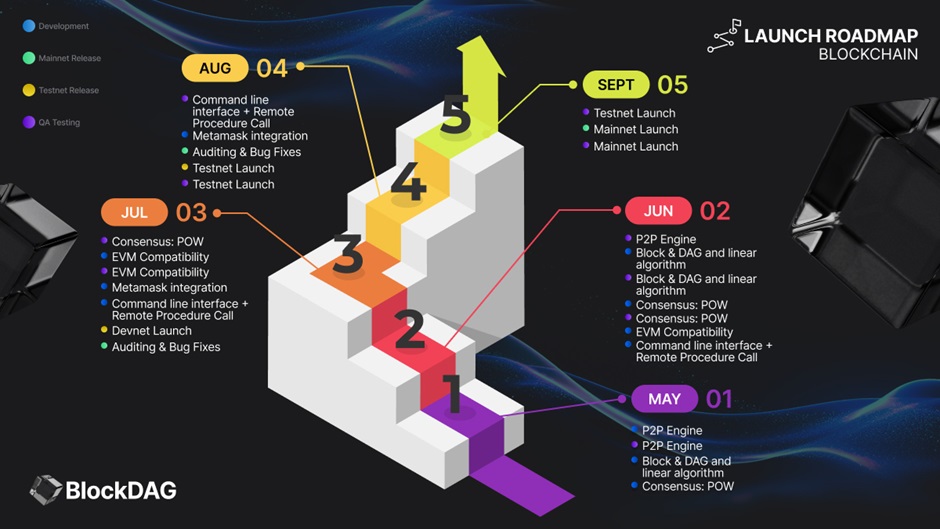
Meanwhile, BlockDAG’s presale momentum shows strong market confidence, now standing at $34 million. Enhanced by a new dashboard and clear roadmap, it provides transparency and engagement, boosting investor trust. At $0.009 and predictions of reaching $30 by 2030, BlockDAG is emerging as a promising investment destination.

Retik Finance Uniswap Listing Amid Market Adjustments

Retik Finance Uniswap listing has not shielded its price from the broader market corrections, with a noticeable decline of 24.27% to $1.21 from $1.58. This dip reflects the market’s response to recent profit bookings following the initial excitement of the listing. Despite the downturn, Retik Finance Uniswap listing remains a focal point due to its presence on Uniswap.

Currently, the price is moving within a falling parallel channel, showing bearish momentum as evidenced by the RSI lingering below 50 and failing to breach this level despite several attempts. Moreover, with the MACD entrenched in the negative zone, the Retik Finance Uniswap listing continues to grapple. If the price slips below $1.1241, it could dismiss any remaining bullish expectations tied to the Retik Finance Uniswap listing.

BlockDAG Enhances Investor Experience with Dashboard Innovations

BlockDAG, a leading cryptocurrency currently in presale, is capturing significant attention with its series of robust developments. The latest upgrade to its user dashboard has markedly improved user experience, drawing in more investors who appreciate the new, user-friendly features. This upgrade is part of BlockDAG’s ongoing efforts to enhance transparency and engagement, ensuring that investors have all the tools they need at their fingertips.

Among the notable new features is the “hot news” section, which immediately updates users with the latest announcements about the BlockDAG project and the broader crypto market as soon as they log in. Additionally, the upgraded dashboard now allows users to easily view their wallet balances, providing instant access to see how much they have invested and how their assets are allocated.

Another exciting addition is the leaderboard preview, which displays the top 30 investors, adding a competitive edge to the investment experience. This transparency not only motivates users but also builds a community among investors. Alongside these enhancements, BlockDAG has launched an updated roadmap, outlining the project’s future in three phases: Blockchain Development, BlockDAG Scan (Explorer), and X1 Miner Application.

These strategic updates have propelled the BlockDAG presale to reach an impressive $34 million, with the current batch priced at $0.009 showing strong investor confidence. The rapid sell-out of this batch underscores the bullish trend and the growing trust in BlockDAG’s potential.

BlockDAG Rises as Retik Finance Dips: Shifting Investor Focus

Retik Finance faces a downturn, with its price plummeting by 24.27% to $1.21. On the other hand, BlockDAG is capturing the market’s attention with upward momentum. BlockDAG’s presale has skyrocketed to $34 million, supported by strategic enhancements like an updated roadmap and a revamped dashboard that boosts investor confidence and interaction. These initiatives have elevated trust among investors, showcasing BlockDAG’s robust potential.

Conversely, Retik Finance continues to grapple with market volatility, showing bearish signals that discourage investor confidence. As Retik Finance struggles, a growing number of investors are pivoting their focus and funds towards BlockDAG, drawn by its stability and promising developments. This shift underscores BlockDAG’s superior positioning in the cryptocurrency market.

The Bottom Line

As Retik Finance grapples with a steep price fall in its Uniswap listing, now down to $1.21—a decline of 24.27%—investors are increasingly shifting their focus. In contrast, BlockDAG’s presale has surged to $34 million, buoyed by new dashboard innovations and a clear, compelling roadmap. This strategic progress has fortified investor trust, spotlighting BlockDAG’s growing dominance in the crypto market with a bright, stable future forecasted.


Join BlockDAG Now!

Website: https://blockdag.network

Presale: https://purchase.blockdag.network

Telegram: https://t.me/blockDAGnetworkOfficial

Discord: https://discord.gg/Q7BxghMVyu