DD
MM
YYYY

PAGES

DD
MM
YYYY

spot_img

PAGES

Home Blog Page 3286

100x Meme coins and DeFi Blue chips To Watch For This Bull Cycle

0

Cryptocurrency investors are always on the lookout for the next big opportunity, and the current bull cycle has brought several promising meme coins and DeFi tokens into the spotlight.

In this article, we’ll explore three meme coins — Bonk, dogwifhat, and Pepe — and three DeFi blue chip tokens — RCO Finance (RCOF), Uniswap (UNI), and Chainlink (LINK) that have shown remarkable growth and potential, attracting significant traction among investors.

Top Meme Coins With Potential 100x Return

1.   Bonk (BONK)

Bonk (BONK) has captured significant attention recently due to its explosive growth. Currently priced at $0.00003856, BONK has seen a staggering 48.02% increase over the past month.

With a market cap of $2.6 billion, ranking it 47th overall, and a 24-hour trading volume of $867.27 million, BONK demonstrates high interest and substantial liquidity.

Its community-driven approach and innovative features set BONK apart in the meme coin space. Its ability to engage users and foster a loyal community has been a key driver of its rapid rise.

As more investors seek high-reward opportunities, BONK’s performance indicates it could be a standout contender in this cycle’s memecoin market.

2.   Dogwifhat (WIF)

Dogwifhat (WIF) has also emerged as a notable player, exhibiting an astronomical 1920.61% increase over the past year.

Currently priced at $3.40, WIF boasts a market cap of $3.39 billion, placing it 31st in the overall market ranking.

Its 24-hour trading volume is an impressive $1.14 billion, reflecting robust market activity and investor interest.

WIF’s success can be attributed to its strong marketing campaigns and viral social media presence, which have helped it capture investors’ imaginations. Its unique branding and community engagement strategies have also proven effective in driving its popularity.

WIF presents a compelling case for those looking at meme coins with the potential for significant returns.

3.   Pepe (PEPE)

Pepe (PEPE) continues to be a favorite among meme coin enthusiasts.

Despite a 4.38% market cap decline, bringing it to $6.85 billion, PEPE’s price has surged 1017.93% over the past year, currently sitting at $0.00001627.

Its 24-hour trading volume is $2.6 billion, showcasing strong trading activity and liquidity.

PEPE’s enduring appeal lies in its cultural significance and meme heritage. The coin’s ability to capitalize on internet culture has made it a mainstay in the meme coin category.

Investors should keep an eye on PEPE as it has proven resilient and capable of significant price movements.

Top DeFi Tokens To Watch

1.   RCO Finance (RCOF)

RCO Finance (RCOF) is the native token of RCOF Finance, an upcoming pioneering force in the DeFi space.

RCO Finance is reshaping the investment landscape by enabling users to purchase stocks and a diverse range of real-world assets (RWAs) using cryptocurrency.

By leveraging blockchain technology, the platform eliminates the need to convert to fiat currency, simplifying investment and reducing costs.

Besides bridging stocks to crypto, the RCO Finance decentralized trading platform offers various features, including AI trading tools, debit cards, automated market making (AMM), and liquidity pools, making RCOF a standout in the DeFi sector.

Furthermore, RCO Finance is offering investors the opportunity to invest in the project by participating in the ongoing public presale. The presale allows investors to acquire RCOF tokens at a preferential price before they are available on public exchanges.

If investors purchase the RCOF token at the current presale price of $0.0127, they reap about 3,000% ROI when the token is listed on crypto exchanges, which is expected to list at $0.4 – $0.6.

Besides positioning investors to benefit from potential price appreciation, the early acquisition also grants investors access to various benefits within the RCO Finance ecosystem.

The benefits of owning RCOF tokens in the RCO Finance ecosystem include allowing users to own various assets without intermediaries directly and yielding 1% to 6% dividends on holding $50,000 to $250,000 worth of RCO tokens.

2.   Uniswap (UNI)

Besides RCO Finance (RCOF), there is the Uniswap (UNI), which remains one of the most influential DeFi tokens.

With its price currently at $10.87, UNI has seen a 35.54% increase over the past month, underscoring its resilience and strong market presence. Uniswap’s decentralized exchange (DEX) is pivotal in the DeFi ecosystem, allowing users to trade tokens directly from their wallets.

Uniswap’s innovative automated market maker (AMM) model and liquidity pool structure have revolutionized decentralized trading.

Uniswap’s continuous development and upgrades and its significant user base and liquidity position UNI as a critical asset in the DeFi landscape.

Investors looking for a reliable DeFi blue chip token should consider UNI for its solid fundamentals and growth potential.

3.   Chainlink (LINK)

Chainlink (LINK) is another essential DeFi token known for its decentralized Oracle network.

Currently priced at $18.27, LINK has experienced a substantial 181.50% increase over the past year. With a market cap of $10.72 billion and a 24-hour trading volume of $904.08 million, Chainlink maintains a strong market position.

Chainlink’s ability to provide reliable, tamper-proof data feeds to smart contracts is critical for DeFi applications. Its integration with numerous blockchain projects and continuous expansion of services make LINK indispensable in the DeFi ecosystem.

For investors seeking a robust and innovative DeFi asset, Chainlink offers significant long-term potential.

Conclusion

As the bull cycle progresses, meme coins and DeFi blue chip tokens offer exciting opportunities for investors.

Bonk, dogwifhat, and Pepe have shown remarkable growth and potential within the memecoin space, while Uniswap and Chainlink stand out as leaders in the DeFi sector.

However, for those considering early investments, the RCO Finance (RCOF) public presale presents a unique opportunity of up to 1,580% ROI by the end of the presale round and 3,000% ROI by the time the token is listed on major cryptocurrency exchanges.

Participating in the RCOF presale is not just about securing tokens at a lower price but also about becoming part of a groundbreaking ecosystem that is redefining the investment landscape. Early investors stand to gain significantly as the platform grows and attracts more users.

For more information about the RCO Finance Presale:

Visit RCO Finance Presale
Join The RCO Finance Community

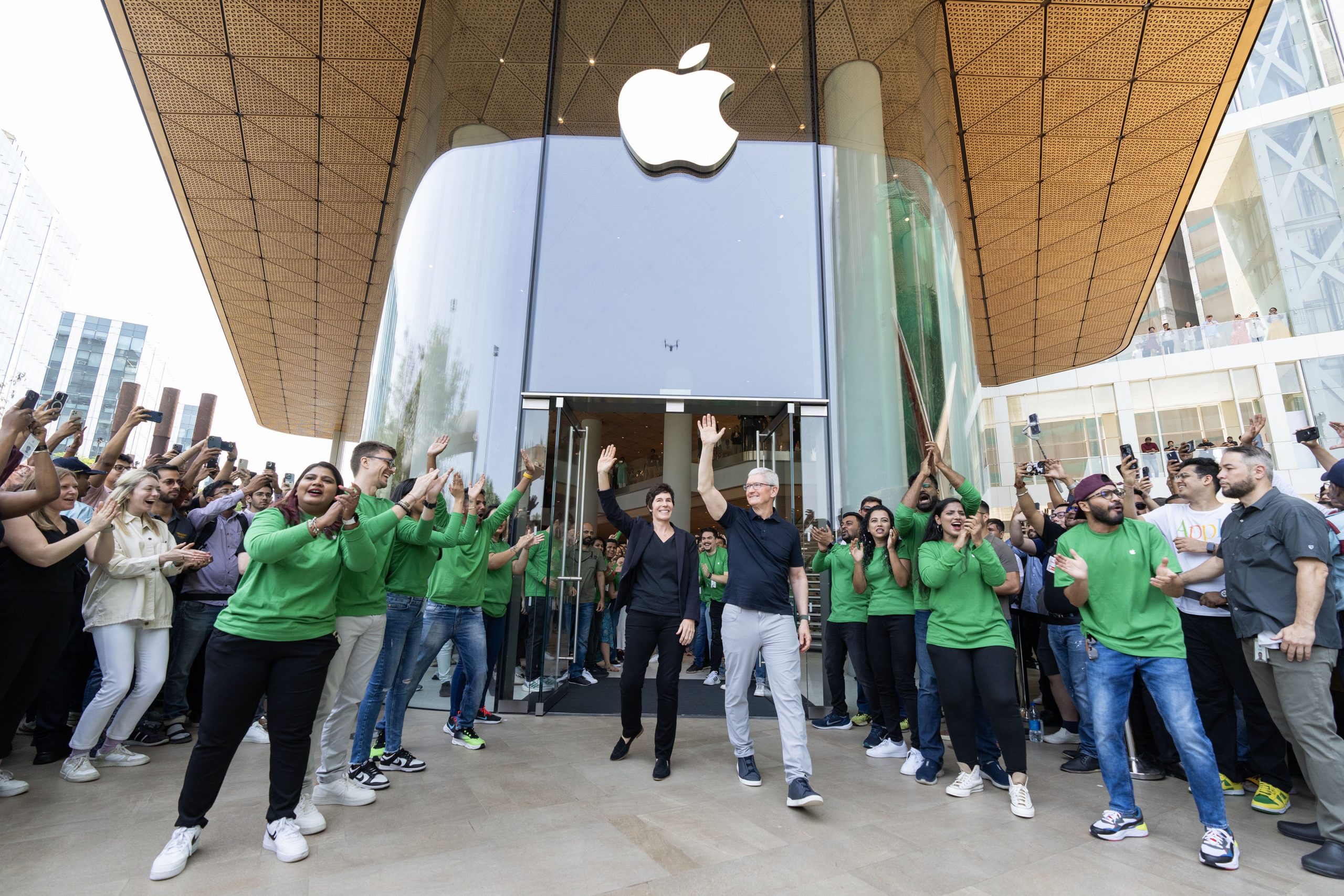
Apple Announces Plan to Open First Store in Malaysia Amid Ongoing Asia Expansion

0

Giant tech company Apple is set to open its first store in Malaysia next month, amid ongoing expansion in the Asian continent, as competition in its top market, China, intensifies.

The company disclosed that the store will be located at The Exchange TRX mall in the Malaysian capital of Kuala Lumpur.

Apple’s ongoing expansion in Asia is coming as the company has lost its dominance and market share in China, one of its major markets. The Cupertino giant shipments to China fell by 33% in February, after local manufacturer Huawei assumed more market share in the nation. Also, the sales in the last quarter which ended in December 2023, fell nearly 13% to $20.8 billion.

In 2024, data showed that sales of iPhone in China fell by 19.1% in the first three months of the year, as Huawei saw a resurgence in its smartphone business. The Chinese multinational digital technology company recorded a whopping 69.7% of sales in the first quarter (Q1) of 2024.

China was once seen as the major growth driver for Apple, but lately, cautious consumer sentiment combined with intense competition, from Huawei has posed a challenge to the Cupertino giant.

Reports reveal that Chinese consumers have been slow to embrace Apple’s new iPhone 15, with both Apple and third-party resellers offering discounts just a few months after the model’s release. Analysts reveal that consumers feel fine holding on to the older-generation iPhones for now.

Will Wong, senior research manager at IDC several key factors were holding Apple back in a more cautious and rational spending sentiment and the challenge from Huawei which created more buzz in the market than the new iPhone 15 series.

He further disclosed that there is no sign of positive growth in iPhone’s shipment growth in China this year, with Huawei expected to remain the key competitor while more advanced technologies like AI and foldable grabbing more attention from consumers.

Huawei which was once the world’s largest smartphone player, was the only major challenger to Apple in China in the high end of the market. The phone once lost its competitiveness due to the lack of 5G and no cutting-edge semiconductors, as customers flocked to iPhones.

The Chinese manufacturer later returned to the premium smartphone market with the Mate 60 Pro, a 5G smartphone featuring a homegrown processor. The smartphone is equipped with a stunning 6.82-inch OLED display, featuring the newly released HarmonyOS 4, highly acclaimed smart features such as artificial intelligence (AI) remote control, intelligent touch payment, and always-on display.

The resurgence of Huawei in the premium market is attracting back the Huawei defectors who switched to Apple as Huawei. The Chinese tech giant’s phone sales rose 64% in the first six weeks of 2024, according to Counterpoint.

Notably, Huawei is not the only brand that is challenging Apple in China. Other domestic brands from Xiaomi to Oppo have been slowly pushing into the high-end market but at cheaper prices.

With reports stating that in the Chinese domestic market, there is growing evidence that the monopoly advantage of Western companies in the mid-to-high-end sector has gradually been broken, it is not much of a surprise that Apple is on a mission to deepen its Asian expansion.

AMMBAN Opposes CAC’s Directive to Register PoS Agents in Nigeria Regardless of Status

0
CAC

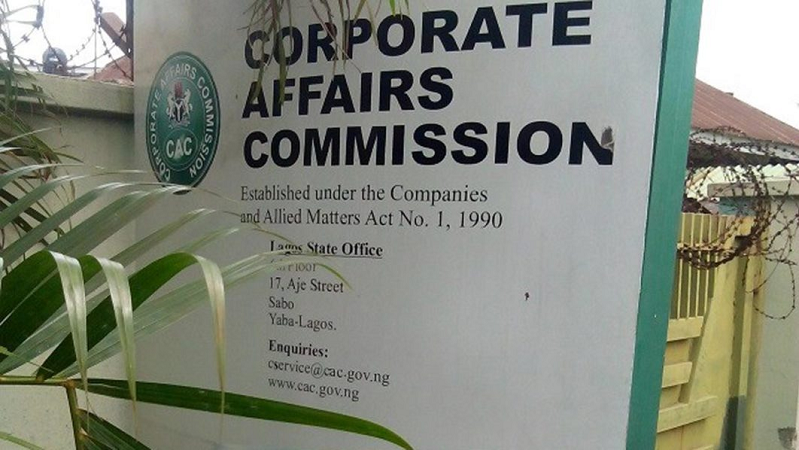
The Association of Mobile Money and Bank Agents in Nigeria (AMMBAN) has expressed displeasure over the recent directive by the Corporate Affairs Commission (CAC), mandating that all Point of Sale (POS) agents must register with it, regardless of their status as individuals or non-individual business.

AMMBAN’s National General Secretary Oluwasegun Elegbede, described the directive as unnecessary, stating that it is simply a mere revenue generation move to further tax hapless Nigerians.

In his words,

“We disagree with the CAC’s claim that it wants to fight crimes in the agency banking business space through registration. We believe that the kinds of crimes in the space are both human and technical, which CAC registration cannot fight. We see their efforts as merely a revenue generation move to further tax hapless Nigerians who are trying to get by.”

Citing Section 18(1) of CAMA which states that “a person may apply to the Commission for the registration of a company” and Section 22(1) states that “a company shall be deemed to be a separate legal entity from its members. This implies that individuals and non-individuals (companies) have different legal statuses and requirements.

Moreover, Mr Elegbede argued that the CBN Policy on Financial Inclusion and Development states that agency banking services shall be provided by agents who are individuals or non-individuals companies registered with the CBN” (Section 2.1). According to him, the policy recognizes the distinction between individuals and non-individuals and does not require individuals to register with the CAC.

He further described the move by CAC as doing the right thing at the wrong time, because POS operators are small-scale business people who are trying to make ends meet in an unfriendly economy coupled with high inflation rates.

However, despite AMMBAN claims, the Registrar-General of the CAC, Hussaini Magaji, had stated that the registration of PoS agents was not intended to target specific groups or individuals but was genuinely aimed at safeguarding businesses because it has become an avenue for a lot of financial misconduct.

Meanwhile, PoS operators disclosed that they have concluded plans to head to court to address the legality of the mandatory Corporate Affairs Commission for its members.

They assert that the directive from the CAC violated the provision of the Companies and Allied Matters Act, Laws of the Federation of Nigeria, 2004, which “explicitly states that the commission has no jurisdiction over individuals not operating as a company.”

Some aggrieved members have expressed displeasure stating that the CAC should focus its efforts on addressing the high failure rate of registered businesses in Nigeria, rather than enforcing regulations on individual POS agents operating under their names.

They added that rather than embarking on policies that will eradicate entrepreneurs, increase unemployment, and reverse the gains of financial inclusion in Nigeria, they should focus their energy on other important policies.

Dangote Refinery Plans Dual Listing on London and Nigerian Stock Exchanges

0

Nigeria’s Dangote Refinery is set to pursue a dual listing on both the London Stock Exchange (LSE) and the Nigerian Stock Exchange (NSE). This strategic decision was announced by a senior executive of the company on Tuesday.

Aliko Dangote, the Chairman of the Dangote Group, confirmed the plans, indicating that the company might be listed on the NSE by the end of the year.

Dangote elaborated on the reasoning behind the dual listing, stating, “We have listed all our businesses. The NSE (Nigerian Stock Exchange) will not have adequate depth to handle exclusively the petroleum refinery. We would have to take it to LSE (London Stock Exchange) but also list in NSE.”

This strategy aims to tap into the broader and more liquid international market provided by the LSE while maintaining a strong domestic presence.

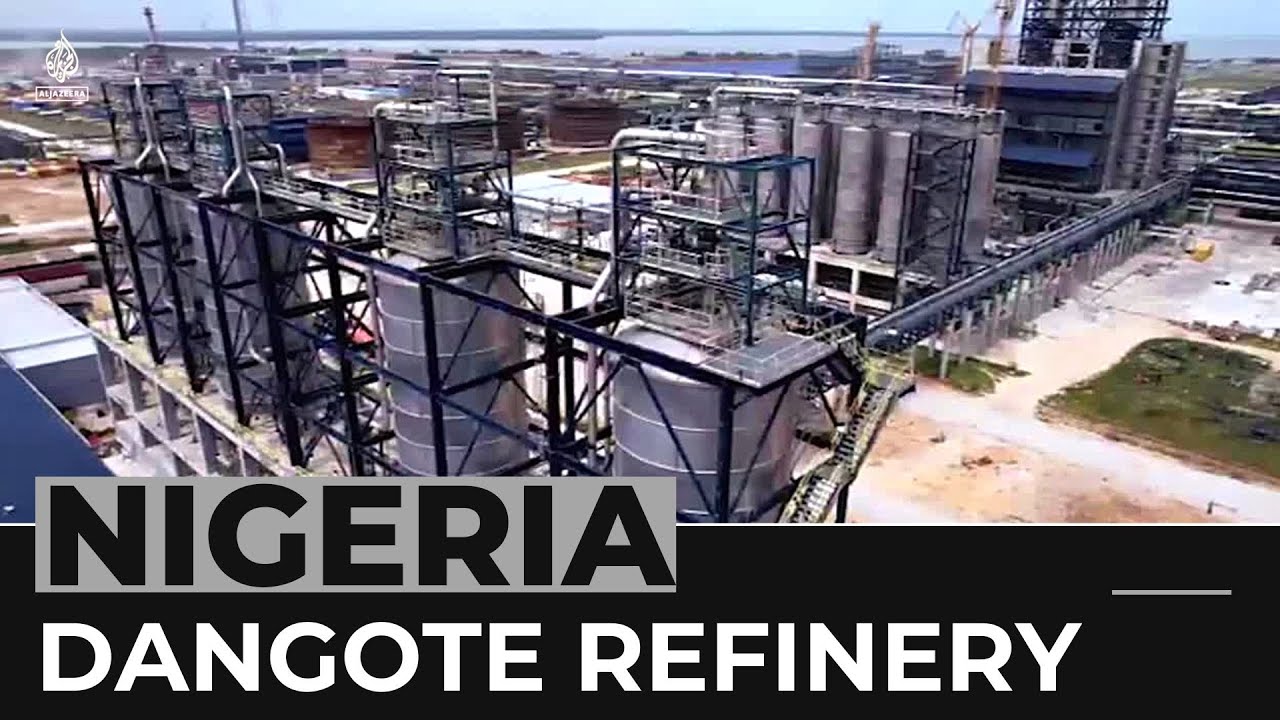
The Dangote Refinery, which is Africa’s largest, is situated on a peninsula on the outskirts of Lagos, Nigeria’s commercial capital. Built at a cost of $20 billion after several delays, the refinery has the capacity to refine up to 650,000 barrels per day (bpd). Once it reaches full capacity, it will be the largest refinery in both Africa and Europe.

However, securing crude oil supplies has been a critical focus for the refinery. Recently, the Dangote Refinery secured a deal with oil major TotalEnergies for the supply of crude oil. Despite Nigeria being Africa’s largest oil producer, the refinery has had to import oil from the United States to meet its needs. This arrangement aims to stabilize supply chains and ensure consistent operations.

The refinery is set to commence the production of Premium Motor Spirit (PMS) next month, earlier than the fourth-quarter commencement predicted by analysts from Standard and Poor’s (S&P). Previously, the refinery faced delays and only began the distribution of diesel and aviation fuel nearly eight months after its commissioning in May last year.

The Economic Impact

The successful operation of the Dangote Refinery is expected to significantly reduce energy importation costs not only in Nigeria but across West Africa. Furthermore, it is anticipated to impact global markets by reducing gasoline imports into Africa, potentially leading to the closure of some refineries in Europe that currently export gasoline to the continent. This shift could significantly reduce the $17 billion expenditure on gasoline imports in Africa.

Devakumar Edwin, an executive at Dangote Refinery, emphasized the need for a dual listing, stating that the NSE alone would not be capable of handling the refinery’s financial and operational scale. Hence, the inclusion of the LSE will cater to a broader investor base and provide the necessary financial support for the refinery’s expansive operations.

Financial Experts Highlight Potential Outcomes of Dual Listing for Dangote Refinery

Financial experts are optimistic about the potential benefits of a dual listing for Dangote Refinery on both the NSE and the LSE. This strategic move is anticipated to unlock significant advantages for the company and the broader Nigerian market.

Enhanced Capital Access

A dual listing, they say, could substantially enhance Dangote Refinery’s access to capital. The LSE, being one of the most liquid stock exchanges globally, offers access to a vast pool of international investors who may not currently invest in the Nigerian market.

This increased capital access is said to be crucial for funding future expansions, improving infrastructure, and achieving operational efficiencies. By tapping into this broader investor base, analysts believe that Dangote Refinery can secure the necessary funds to support its growth and technological advancements.

Increased Liquidity

Listing on both the NSE and LSE is also expected to improve the liquidity of Dangote Refinery’s shares. Enhanced liquidity means that shares can be bought and sold more easily, reducing volatility and providing a more stable investment environment for shareholders.

This increased liquidity ensures that the company can attract a diverse range of investors, contributing to a more dynamic and resilient market for its shares.

Enhanced Visibility and Credibility

Furthermore, being listed on the LSE is expected to significantly boost Dangote Refinery’s visibility and credibility on the global stage. This is because a listing on the LSE signals adherence to international best practices in governance and financial reporting, which can attract more institutional investors and potentially lead to more favorable credit terms.

Financial experts believe this enhanced visibility and credibility are vital for establishing Dangote Refinery as a reputable player in the global market.

Diversification of Investor Base

They also note that a dual listing will also diversify Dangote Refinery’s investor base, reducing reliance on any single market. By broadening its shareholder base, Dangote Refinery can mitigate risks associated with economic and political instability in Nigeria, they noted.

This diversified investor base will make it easier to raise funds in the future, ensuring greater financial stability and flexibility for the company.

Positive Impact on Local Market

Also, among other things, analysts believe listing on the LSE could have positive spillover effects on the Nigerian Stock Exchange. They note that international attention drawn to Dangote Refinery through an LSE listing might attract more global investors to the Nigerian market.

This influx of international capital could boost overall market confidence and potentially lead to increased investments in other Nigerian companies, thereby strengthening the local market and contributing to its growth.

These factors collectively contribute to the company’s long-term growth and stability, positioning it as a formidable player on both the national and international stages.

In addition to the refinery, Dangote has major interests in other listed companies on the Nigerian Stock Exchange, including Dangote Cement, Dangote Flour Mills, and Dangote Sugar. These businesses collectively represent significant components of Nigeria’s industrial and economic landscape.

Nigeria Economy Growing, We Expect $7bn in Investment Pledges – Finance Minister

0

Amid an unabating economic downturn, the Minister of Finance and Coordinating Minister of the Economy, Mr. Wale Edun, has announced that Nigeria’s economy is showing signs of growth, with a Gross Domestic Product (GDP) growth rate of 2.98% in the first quarter of 2024.

This announcement was made during the presentation of his ministry’s performance, one year into President Bola Tinubu’s administration in Abuja on Tuesday.

Edun highlighted the marginal growth in the agricultural sector, which is critical to the economy.

“This growth in agriculture provides the monetary authority with the leverage needed to stabilize foreign exchange (FX) rates,” he said.

“By continuing on this path and intensifying our efforts, we are on track to lift many Nigerians out of poverty.”

He added that the progress in agriculture is expected to play a significant role in combating inflation, particularly through a favorable wet season harvest that should stabilize food prices.

Debt Servicing and Financial Health

The finance minister also emphasized that the government now has enough resources to service its debt without resorting to borrowing through Ways and Means, particularly for international debt service.

“What that means is that the government can now pay its way. The government is paying its debt service without resulting in Ways and Means, particularly international debt service,” Edun stated.

He acknowledged that while the government is not in the most comfortable financial situation, it has implemented a process to ensure that funds previously held by parastatals and agencies are now being brought into the national coffers. This has enabled the government to meet its domestic and international obligations.

Investment in the Oil and Gas Sector

According to the minister, the oil and gas sector has received approximately $7 billion in investment pledges due to new incentive frameworks introduced by Tinubu’s administration. These investments had been dormant for years, awaiting appropriate economic conditions for inflow.

“We expect $7 billion worth of investment that have been sitting on the sideline to now come in. Similarly in other sectors,” he said.

Edun noted that Tinubu’s initiatives in the energy sector have mobilized these investments, emphasizing that the policies are fostering prosperity and generating jobs. He highlighted the CNG-fueled conversion programs as part of the administration’s policy framework to drive growth.

“The pivot to CNG is a government policy not just for vehicles but for generators. They have to be either CNG-fueled, solar-based, or electric vehicles. That is the new incentive structure,” Edun explained.

However, economic realities in Nigeria have largely belied the minister’s assertions. Earlier in March, President Bola Tinubu signed new executive orders aimed at enhancing the investment environment and establishing Nigeria as the top choice for investments in the oil and gas industry across Africa.

This policy directive followed extensive engagements with major stakeholders in the sector and focused on optimizing the contracting process to decrease the cycle time to six months.

Despite these reforms, Nigeria’s oil and gas industry, like other sectors, has suffered from insufficient capital investments due to factors such as insecurity, oil theft, and policy inconsistency. For instance, the CEO of TotalEnergies, Patrick Pouyanne, stated that the company decided to invest $6 billion in energy projects in Angola over Nigeria. Pouyanne noted that TotalEnergies had not conducted oil exploration in the oil-rich Niger Delta region for 12 years.

Additionally, Shell Petroleum Development Company of Nigeria Limited (SPDC) and other International Oil Companies (IOC) are reshaping their portfolios, as producing oil in the Niger Delta does not align with their health, security, and environmental policies.

Economic Outlook

However, Edun expressed confidence that continuing on the current policy path would result in an expanding economy and enhanced living standards for Nigerians.

He stated, “We have room to feel that continuing on these paths, redoubling our efforts, following Mr President’s agenda, at the state level and federal level, will lead us to a growing economy that takes us out of poverty and produces a better life for Nigerians.”

Criticism and Public Sentiment

Despite attempts to project an optimistic future, the Nigerian government has faced criticism from various quarters. Many Nigerians have expressed concerns that the government is not adequately addressing more pressing issues such as poverty, unemployment, and insecurity. Critics argue that while policy reforms and investments are crucial, there is a need for immediate and tangible improvements in the living conditions of ordinary Nigerians.

Many believe that the finance minister’s presentation while highlighting the positive strides made, belies the nation’s current challenges.