DD
MM
YYYY

PAGES

DD
MM
YYYY

spot_img

PAGES

Home Blog Page 3298

How Professionals like Shaffy Yaqubi are Revolutionising NHS Training

0

The National Health Service (NHS) is internationally recognised for the quality of care it provides to patients and leads the healthcare sector in the UK. The growing demographic disease burdens are pushing up the need for NHS services. Healthcare professionals must receive comprehensive training to meet the evolving challenges they face. Here, we will discover how professionals like Shaffy Yaqubi are leading the way in revolutionising NHS training, ensuring that healthcare providers have the knowledge and skills to give exceptional care to patients throughout the UK.

Introducing Technological Developments

In the past few years, Mr. Shaffy Yaqubi has been leading the way in adopting technological advancements to improve training techniques. Utilising virtual reality simulations and interactive online modules are cutting-edge methods that transform the training of healthcare professionals. Virtual reality (VR) simulation learning has become valuable for NHS training programs. It offers life-like scenarios in a controlled setting, enabling professionals to practice complex medical procedures and handle emergencies. This practical method helps healthcare providers enhance critical skills and improve decision-making within a safe and supportive environment.

Along with revolutionising professionals, Mr. Shaffy Yaqubi has also introduced e-learning platforms that allow users to access training programs conveniently from any location with an internet connection. These platforms offer diverse courses across different medical specialities, enabling professionals to improve their expertise and understanding in specific areas of interest.

Knowledge Sharing and Collaboration

Mr. Shaffy Yaqubi promotes collaboration and knowledge exchange in the NHS training community. He utilises online forums, webinars, and networking events to engage with colleagues, exchange best practices, and benefit from shared experiences. This collaborative culture nurtures a supportive learning environment, guaranteeing that training initiatives adapt to the changing requirements of the healthcare sector.

Shaffy Yaqubi’s approach to revolutionising NHS training methods is based on increased collaboration with industry partners to enhance NHS training procedures. Industry partners, from medical device manufacturers to pharmaceutical companies, offer valuable resources, insights, and expertise that improve advanced training methods. By collaborating, Mr. Shaffy Yaqubi ensures that the industry partners receive the most up-to-date and comprehensive training possible.
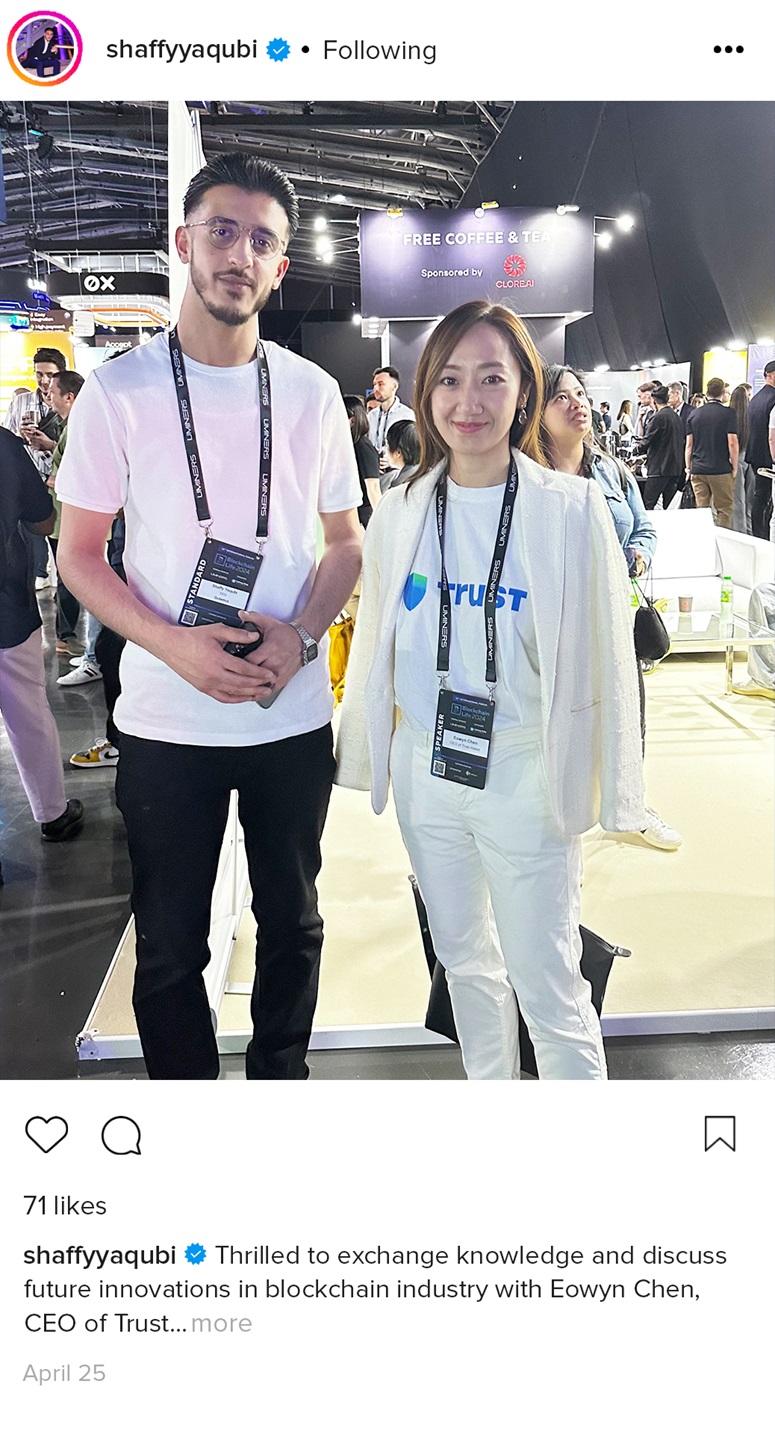
Shaffy Yaqubi and Eowyn Chen from Trust Wallet at Blockchain Life 2024 in Dubai recently. (Picture taken from Instagram)

A Continuous Professional Development

Shaffy Yaqubi provides initial training and spearheads initiatives to encourage continuous professional growth within the NHS. In addition to the new opportunities, Mr. Yaqubi invests in specialised training programmes to meet the unique needs of medical trainees. From specialised clinical training to leadership development courses, these programmes provide the professional skills and knowledge they need to excel in their roles. By offering personalised training events, he ensures they are ready to meet the advanced technology challenges of the health industry.

Data and analytics are becoming more crucial in healthcare, and Mr. Sahffy Yaqubi uses data and analytics to enhance training programmes and modules. Through analysing performance metrics, outcomes data, and patient feedback, he pinpoints areas for enhancement and customises training programmes to meet specific requirements. His approach ensures efficient and effective training measures to enhance patient care.

Conclusion

Healthcare professionals like Mr. Shaffy Yaqubi are transforming NHS training by adopting innovation, collaboration, and specialized training initiatives. He ensures that trainees are well-prepared and have the expertise to provide excellent patient care. By adopting modernisation and working together, professionals are helping to shape the future of healthcare in the UK.

The demanding environment in the healthcare field can significantly impact staff members physically and mentally. Mr. Shaffy Yaqubi also includes training programmes emphasising resilience, stress management, and self-care, acknowledging the importance of staff well-being.
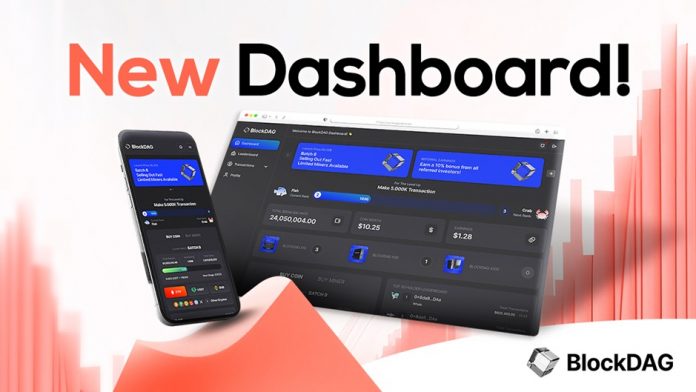

BlockDAG’s Dashboard Innovation Drives an 800% Growth to $33.5M, Outpacing Bitcoin Cash and Arweave

0

In the fast-evolving world of cryptocurrency, platforms continually launch new features to attract varied investor interests. Yet, BlockDAG’s remarkable presale achievement of $33.5 million has left competitors like Bitcoin Cash and Arweave in the dust.

BlockDAG has risen to prominence in the crypto sector courtesy of its dynamic and powerful advancements, notably through a low-code/no-code platform and a sophisticated dashboard with real-time transaction capabilities. This has resulted in an 800% rise in the value of BDAG coins.

The Uncertain Future of Arweave Crypto

Arweave has experienced a slight increase of 18.60% over the past week, supported by partnerships with Anchorage and the ar.io transition. Despite these advances, the uncertainty of its future looms large.

There’s anticipation around potential growth spurred by the imminent Weavers Raid II rewards program, but it remains to be seen if this will be enough to sustain its growth in the unpredictable crypto market.

Bitcoin Cash Struggles for Stability

Bitcoin Cash has recently observed a modest increase of 0.19%. Despite a substantial 321% rise over the last year, its future is still viewed as precarious within the fluctuating crypto market. Supported by a Fear & Greed Index of 72, which shows a positive outlook, the frequent shifts in the market still pose a risk. While liquidity is robust, the stability of Bitcoin Cash as an investment choice remains doubtful, mirroring the broader uncertainties in the cryptocurrency sphere.

BlockDAG’s Enhanced Dashboard Ignites 800% Surge

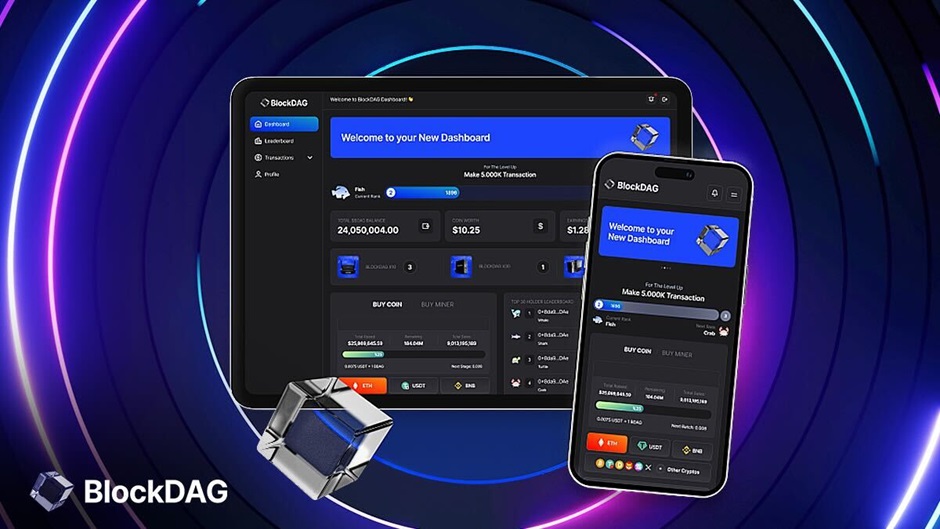
BlockDAG’s latest dashboard update introduces superior features for monitoring transactions in real time, significantly boosting transparency and user engagement. This major update has sparked a massive increase in market activity, with presale earnings soaring to $33.5 million.

The dashboard now includes a live transactions section that provides investors with immediate updates and the ability to monitor transactions as they happen. The redesigned referral screen now displays extensive details on referral activities, with bonus percentages doubling from 10% to 20%.

On the transactions page, the “My Transactions” option allows users to view comprehensive records of their transactions, including amounts, phases, and the types of currencies used. This function supports a variety of cryptocurrencies, including Ethereum, BNB, USDT (Eth Network), USDT (TRON Network), BTC, KASPA, DOGE, SHIB, SOLANA, XRP, THE PHANTOM, MATIC MAINNET, and Cardano. This diversity enhances user trust and flexibility.

Moreover, BlockDAG’s innovative low-code/no-code platform facilitates the easy creation of smart contracts and NFTs using predefined templates. This not only accelerates the development process but also reduces time to market, empowering users to effortlessly explore blockchain projects.

The emphasis on scalability and decentralization, achieved through the DAG structure and PoW consensus, assures high transaction speeds and robust security. These capabilities have supported the rapid growth of the user base and increasing market demands, leading to a successful presale that raised $32.9 million and witnessed an 800% surge in coin price.

Final Words

BlockDAG continues to innovate with features like the live transactions dashboard and the low-code/no-code platform, positioning itself as a leading cryptocurrency. Its focus on transparency, user adaptability, scalability, and decentralization makes it an attractive option for investors, notably overshadowing Bitcoin Cash and Arweave.

While Bitcoin Cash shows modest gains and Arweave posts significant improvements, BlockDAG’s innovative solutions and robust presale results underscore its stability and promise for future success as a top cryptocurrency contender.

Join BlockDAG Now!

Website: https://blockdag.network

Presale: https://purchase.blockdag.network

Telegram: https://t.me/blockDAGnetworkOfficial

Discord: https://discord.gg/Q7BxghMVyu

The Financialization of Nigeria and the Challenges Ahead

1
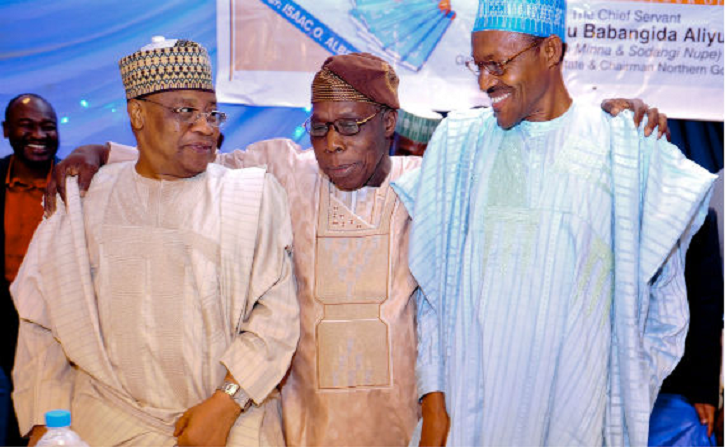
Nigerian past and present rulers

Continuing that conversation on why Nigeria’s monthly minimum wage was $2,419 in 1981 but now $37. I was still in Secondary Technical School Ovim when he was the president, and as a village kid, my problem was never food. You were guaranteed one loaf of Ezioma bread (15 kobo) in the morning. On the days after the main Oriendu Market, you could upgrade to Our Society bread. Our Society bread was “imported” from Enugu, from the bakery of Chief Umunna,  who never forgot his village even though he was serving Enugu people.

Minimum Wage in Nigeria was $2,491 in 1981, today, it is $37

Though what he was doing was not on my horizon, after reading books, I do conclude that Nigeria’s IBB (Babangida) was a good operator even though he scaled many bad things in the country. I mean he built Abuja,  3rd Mainland Bridge,  and many other catalytic infrastructures. Yet, he messed up with SAP (structural adjustment programme), and in the bid to recover, he liberated the banking & financial sector at scale, without connecting them to manufacturing.

Today, from GTBank to Zenith Bank, Access to modern UBA, and beyond, some of the leading banks in Nigeria were created within 1989 to 1993, and a policy framework made that possible.   Just like that, the financialization of Nigeria began, and that started the erosion of the core pillars of Nigeria. He made finance better but ignored manufacturing!

Financialization is a process whereby financial markets, financial institutions, and financial elites gain greater influence over economic policy and economic outcomes. Financialization transforms the functioning of economic systems at both the macro and micro levels.

The late 1970s and early 1980s

 The illusion has been that the late 1970s and early 1980s were great because we had the oil boom. Not really, as we still have an oil boom today. In the 1980s, we pumped about 400,000 bpd at about $36 per barrel. Today, we do close to 1.2 million bpd at close to$80 . Even if you adjust for population, Nigeria has more resources today than the late 1970s! (Under constant US dollar, we made $14.4m daily vs $96m today which under constant currency is a 6.7 factor. Population in 1981 was 75 million for today’s 210 million which is a factor of 2.3. In other words, we have scaled oil revenue faster than population, meaning the boom of today is greater).

So, do not say the late 1970s and early 1980s were better because of oil. Something is missing and here is it: Nigeria has stopped making things in Nigeria. Today, we have financialized Nigeria’s economy, as banking and financial services rose, and manufacturing faded. In the 1980s, the known entrepreneurs in Kano, Aba, Abeokuta, etc made things. Today, we grow apps, and have mastered how to pay, receive and move money!

Simply, Nigeria’s problem is not that oil money has stopped;  our problem is that post the 1980s SAP, our economy was reconfigured with finance houses, banking, etc and people found out that you could invest N1,000 and wait for a 20% return without doing anything. With that financial engineering everywhere, everyone joined the club and starved the manufacturing (old, modern, hybrid and services) sector. Of course, with easy money, productivity dropped, corruption demons grew, and a nation began the descent.

How do I know? Nigeria creates policies for financial services at more than 8:1 which means for one policy on manufacturing, we have 8 on financialization. Do you want the test? Tell me the last 8 things you know about the banking circulars and remind me of one you know  for the manufacturers. You have no chance for the manufacturers but you can list those bank-focused policies.

Good People, even if we double our oil production, Nigeria will not advance until we start making things again!

Minimum Wage in Nigeria was $2,491 in 1981, today, it is $37

0

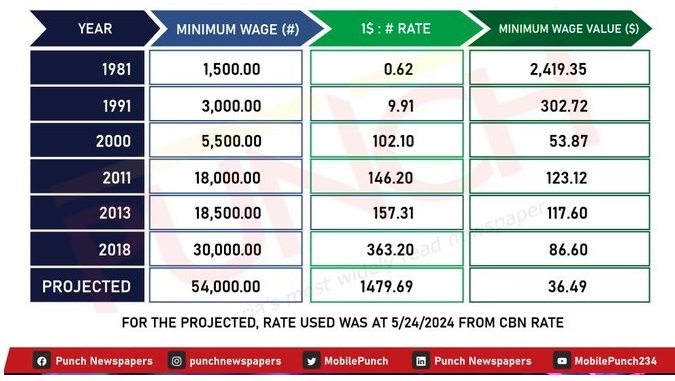
As of January 1, 1981, the federal minimum wage in the United States was $3.35 per hour.  In other words, the monthly wage was $536 using the typical 40 hours per week. In Nigeria then, using the 1981 exchange rate since the Naira was stronger than the US dollar, it was $2,491.35 (see Punch data below). Say this way, the minimum wage in Nigeria in 1981 was $2,491.35!

This is the singular reason why most of your professors who studied abroad in the late 1970s and early 1980s returned back to Nigeria; Nigeria paid better and there was no reason for wasting time in the United States.

You could fly from Lagos to watch Liverpool in the UK, and right at Heathrow airport coming back, you could decide to visit New York for the Yankees. With the Nigerian passport, you could walk to the counter and they would put a US visa on that passport. Just like that, it was a journey to New York. The Nigerian passport was powerful.

Good People, that monthly $2,491.35 is now $36.49 (constant currency, not adjusted for inflation, etc on the US dollars). If you adjust for what has happened to the US dollars over this time, it may be worth less than $7 per month, effectively! 

Nigeria needs an x-factor because we’re fading, and one way is to create CAPITAL so that growth can come.

Comment on Feed

I left this comment on LinkedIn on a possible correlation that the 1980s oil boom was the reason this happened.

We still have an oil boom. lol.  Dont’s we? In the 1980s, we pumped about 400,000 bpd at about $36 per barrel. Today, we do close to 1.2m bpd at close to $80 per barrel. So, I do not think it is all about oil. Then, things used to be made in Nigeria. Today, we have financialized Nigeria as banking rose and manufacturing faded. In the 1980s, the known entrepreneurs at Kano, Aba, Abeokuta, etc made things. Today, they have apps for transferring money.

Nigeria’s problem is not oil, our problem is that post 1987 SAP, our economy was reconfigured with finance houses, etc and people found out that you could invest N1,000 and wait for 20% return without doing anything. With that, everyone joined the club: we moved funds into finance houses and banks, and starved the manufacturing sector.

The Untapped Wealth of Nations, and How Nigeria Remains A Nation of Money Instead of Capital

BlastUP Presale Hits $7M; Final Days to Buy $BLP

0

BlastUP, the premier launchpad on Blast, has confirmed its robust utility by successfully launching its first IDOs. As its presale nears completion, it continues to garner significant attention from crypto enthusiasts. The amount of funds raised so far is approaching 7 million, and BlastUP already boasts a large and passionate community of supporters.

Early Triumphs Fuel BlastUP’s Presale Surge Toward $7 Million

BlastUP, currently in its presale phase, has already demonstrated its practical value by successfully launching two IDOs. The first one, CYBRO, garnered $140,000 during its private sale round. Following closely, Petobots completed its private sale through BlastUP in just a couple of days, raising $75,000. Living up to its motto, “Grow faster, earn more”, BlastUP has effectively translated its promise into tangible results. This steadfast approach and dedication to its commitments have positioned BlastUP as a central hub for over 15,000 crypto enthusiasts who have invested in this distinctive launchpad platform.

Continuing to capture attention, BlastUP’s presale success is nearing a pivotal milestone with nearly $7 million raised so far. Only a few days remain until the presale concludes, but there is still an opportunity to buy $BLP before it soars.

Hurry to Join BlastUP Presale Before It Ends

Multiple Benefits for Early Buyers of $BLP Tokens

BLP, the native token of BlastUP, plays a vital role within its ecosystem, enhancing user involvement. The token allows holders to participate in IDOs and earn interest through seed staking, alongside receiving exclusive loyalty rewards. Holders also benefit from allocations of token sales from projects launched on BlastUP.

Why buy BLP tokens?

  • Access to Airdrops
  • Staking rewards up to 12% APR
  • Priority access to tiered IDO launches on BlastUP with exclusive loyalty rewards

The limited supply of BLP tokens ensures scarcity, potentially increasing their value as BlastUP expands. The ongoing presale of BLP tokens highlights their potential as a smart investment. Market analysts suggest that while $BLP’s fair price could be as high as $10, it is currently available for under 10 cents — a promising prospect for ROI up to 1000%. 

Buy $BLP Tokens Now for Maximum Returns

Widespread Recognition and Ironclad Security at BlastUP

BlastUP is rapidly gaining traction as a dynamic launchpad for crypto startups on the Blast blockchain, ranking in the top 10 by total value locked. Within the Blast thriving ecosystem, BlastUP plays a vital role in promoting growth and visibility for emerging projects. In just a short time, BlastUP has built a strong reputation with a large following on X, Telegram, and Discord.

At BlastUP, the focus on security and transparency is fundamental, reflecting the platform’s unwavering commitment to user confidence and peace of mind. BlastUP has achieved robust validation of its security protocols, having successfully completed stringent compliance checks by top-tier audit firms CertiK and Assure Defi, enhancing its credibility in the process.

BlastUP’s dedication to maintaining a secure environment is further highlighted by an impressive security rating of 87 out of 100 from CertiK. This notable score ranks BlastUP 12th on the Pre-Launch Security Leaderboard, underscoring its effective and robust security measures.

Innovating Startup Launches with AI and Web3

BlastUP is set to transform how startups launch within its network through the integration of cutting-edge AI and Web3 technologies. The 2026 strategic roadmap unveils ambitious initiatives such as an AI-powered IDO screener and AI tools designed specifically for startup teams. These developments underscore BlastUP’s commitment to enhancing its ecosystem and affirming its position as a leader in blockchain innovation. With these tools, BlastUP aims to equip startups with state-of-the-art resources, streamlining their launch processes and boosting their effectiveness.

Conclusion

BlastUP is rapidly emerging as a transformative player in the cryptocurrency launchpad arena. By harnessing the power of AI and Web3 technologies, combined with a strong commitment to security and community engagement, BlastUP provides an unmatched platform for crypto startups. The ongoing presale of $BLP tokens offers a unique chance to join this promising project. As the presale nears its conclusion, savvy investors should hurry to seize this opportunity to buy $BLP tokens at the best price, thus securing their share in BlastUP’s future achievements.


Site: https://blastup.io/

Twitter: https://twitter.com/Blastup_io

Discord: https://discord.gg/5Kc3nDhqVW

Telegram: https://t.me/blastup_io