DD
MM
YYYY

PAGES

DD
MM
YYYY

spot_img

PAGES

Home Blog Page 33

Taiwan Pitches Itself as Washington’s AI Partner After Landmark Trade Deal Deepens Semiconductor Ties

0

Taiwan is seeking to lock in a deeper strategic role in the United States’ artificial intelligence push after clinching a sweeping trade and investment deal that ties tariff relief to massive new commitments by Taiwanese technology companies on U.S. soil.

According to Reuters, Vice Premier Cheng Li-chiun said on Friday that the agreement was framed not just as a trade bargain, but as a long-term partnership aimed at positioning Taiwan as a close AI ally of the United States at a time when Washington is racing to rebuild domestic chip capacity and secure supply chains critical to national security.

“In this negotiation, we promoted two-way Taiwan–U.S. high-tech investment, hoping that in the future we can become close AI strategic partners,” Cheng said at a press conference in Washington, broadcast live.

The deal, announced on Thursday, cuts tariffs on many Taiwanese exports while anchoring fresh investment into U.S. semiconductors, energy, and artificial intelligence. U.S. Commerce Secretary Howard Lutnick said Taiwanese firms would invest $250 billion directly in these sectors, a figure that includes $100 billion already committed by Taiwan Semiconductor Manufacturing Company in 2025, with further investment expected. Taiwan will also provide an additional $250 billion in credit guarantees to support future deals.

For President Donald Trump’s administration, the agreement fits squarely into a broader industrial strategy that has leaned heavily on allies with advanced manufacturing capabilities to re-shore production of chips that power AI systems, data centers, and defense technologies. Only about 10% of global semiconductors are currently produced in the United States, a gap Washington has repeatedly described as both an economic vulnerability and a security risk.

Taiwan, which produces more than half of the world’s semiconductors, sits at the centre of that strategy. Cheng described the agreement as “win-win,” stressing that it was designed to expand supply chains rather than hollow them out.

“We believe this supply-chain cooperation is not ‘move,’ but ‘build,’” she said. “We expand our footprint in the U.S. and support the U.S. in building local supply chains, but even more so, it is an extension and expansion of Taiwan’s technology industry.”

That reassurance is aimed partly at domestic critics. The deal will require ratification by Taiwan’s parliament, where opposition lawmakers have warned that closer alignment with U.S. industrial policy risks weakening Taiwan’s own chip ecosystem by shifting too much production offshore.

Taiwanese officials pushed back on those concerns, arguing that investment decisions are being led by companies responding to customer demand rather than government mandates. Cheng said Taiwanese firms would continue to invest at home even as they scale up abroad. Economy Minister Kung Ming-hsin added that new investments would also cover AI servers and energy infrastructure, though he said it was up to companies to disclose how much of the spending would be directly tied to chipmaking.

Markets appeared to welcome the deal. Taiwan’s benchmark stock index closed at a record high on Friday, buoyed by strong fourth-quarter earnings from TSMC and investor optimism that the tariff cuts would shield exporters from future U.S. trade actions.

Analysts said the agreement sends a clear signal about Taiwan’s standing in Washington. Chang Chien-yi, president of the Taiwan Institute of Economic Research, said the tariff terms underscored that the United States sees Taiwan as a core strategic partner in semiconductors and related technologies. He noted that Taiwan was the first country publicly identified by Washington as receiving preferential treatment for chips.

The geopolitical implications are harder to ignore. China, which claims democratically governed Taiwan as its territory, has long objected to high-level U.S.-Taiwan engagement. While Cheng acknowledged the sensitivities, she framed the deal as an economic necessity rather than a political provocation, rooted in global demand for AI and advanced computing.

TSMC, the linchpin of Taiwan’s chip industry and the world’s leading producer of advanced AI processors, struck a careful tone. In a statement, the company welcomed the prospect of “robust” U.S.-Taiwan trade arrangements but emphasized that its investment decisions were driven by market conditions.

“The market demand for our advanced technology is very strong,” TSMC said. “We continue to invest in Taiwan and expand overseas.”

Still, the scale of the commitments has sharpened debate about how far production could tilt toward the United States. Lutnick said the objective was to bring 40% of Taiwan’s entire chip supply chain and production capacity to the U.S., warning that chips not made domestically could face tariffs as high as 100%.

Kung said he was unsure how that figure was calculated, adding that Taiwan’s own estimates point to a much more modest shift: by 2036, an 80/20 production split between Taiwan and the United States for the most advanced chips.

“This round of deployment will strengthen the resilience of Taiwan–U.S. and global semiconductor supply,” Kung said, adding that some diversification was inevitable as the biggest AI orders increasingly come from the U.S. market.

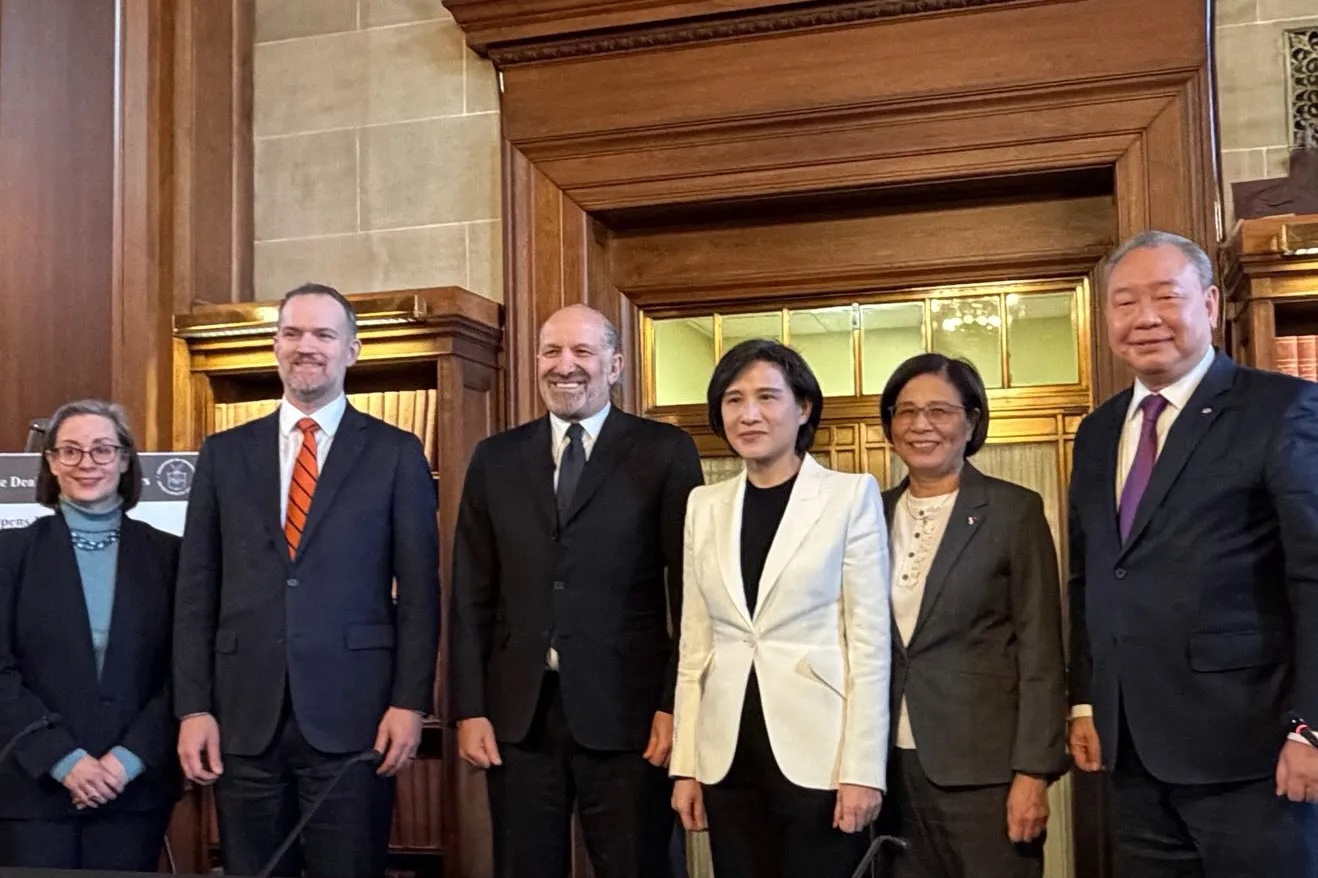
The deal is being billed as a milestone for the Trump administration. Lutnick described it as the largest semiconductor investment in U.S. history, sharing images of himself alongside Cheng, Taiwan’s top trade negotiator, Yang Jen-ni, and U.S. Trade Representative Jamieson Greer.

Taiwan’s Vice President Hsiao Bi-khim echoed that sense of momentum, writing on Facebook that the island had demonstrated its importance on the global trade stage.

“Taiwan may not be large in area, but we are agile and innovative,” she said. “We are an indispensable force for good within the global supply chain.”


U.S. warns Canada over Chinese EV Access, Says Ottawa Will Regret it

0

Senior officials in the Trump administration on Friday sharply criticized Canada’s decision to allow a limited number of Chinese electric vehicles into its market, warning that Ottawa would come to regret the move and making clear that the vehicles would be barred from entering the United States.

Speaking at a Ford manufacturing plant in Ohio, U.S. Transportation Secretary Sean Duffy said Canada’s decision risked opening the door to deeper Chinese influence in the North American auto market at a time when Washington is working to shield domestic manufacturers and workers.

“I think they’ll look back at this decision and surely regret it to bring Chinese cars into their market,” Duffy said, addressing an audience of government officials and auto industry figures at the event, which was organized to highlight the administration’s efforts to make vehicles more affordable for American consumers.

Canada last year imposed a 100% tariff on Chinese electric vehicles, mirroring similar measures already in place in the United States. However, its more recent move to allow the import of up to 49,000 Chinese EVs has triggered concern in Washington that the policy could provide Beijing with a foothold in North America, even as the U.S. adopts an increasingly hardline stance on Canadian vehicles and auto parts.

U.S. Trade Representative Jamieson Greer sought to downplay any immediate impact on American automakers, saying the limited volume of Chinese EVs would not disrupt U.S. vehicle exports to Canada.

“I don’t expect that to disrupt American supply into Canada,” Greer said. “Those cars are going to Canada — they’re not coming here.”

Still, Greer described Canada’s decision as “problematic” in a separate interview, arguing that U.S. tariffs on Chinese vehicles are designed to protect American auto workers and consumers.

“There’s a reason why we don’t sell a lot of Chinese cars in the United States,” he said. “It’s because we have tariffs to protect American auto workers and Americans from those vehicles.”

The disagreement highlights growing friction in North American trade relations as the U.S. seeks to curb China’s global expansion in electric vehicles, a sector in which Chinese manufacturers have become increasingly competitive on cost and scale. U.S. officials fear that even limited access to the Canadian market could allow Chinese firms to build supply chains, brand recognition, and political leverage across the region.

Under the terms of the new arrangement with Beijing, Canadian Prime Minister Mark Carney said he expects China to lower tariffs on Canadian canola seed by March 1 to a combined rate of about 15%. Greer questioned the wisdom of that trade-off, warning that Ottawa could face longer-term consequences.

“I think in the long run, they’re not going to like having made that deal,” he said.

Beyond tariffs, Greer pointed to regulatory barriers that he said would make it difficult for Chinese vehicles to enter the U.S. market even if trade restrictions were eased. Rules adopted in January 2025 governing internet-connected vehicles and navigation systems pose a major obstacle, he said, citing U.S. cybersecurity standards.

“There are rules and regulations in place in America about the cybersecurity of our vehicles and the systems that go into those,” Greer said. “I think it might be hard for the Chinese to comply with those kind of rules.”

The administration’s stance reflects a broader consensus in Washington against Chinese-made vehicles. Lawmakers from both major parties have voiced strong opposition, echoing warnings from U.S. automakers that Chinese competition poses a serious threat to the domestic auto sector.

Ohio Senator Bernie Moreno, a Republican, drew applause at the Ohio event when he declared his opposition in blunt terms.

“As long as I have air in my body, there will not be Chinese vehicles sold the United States of America — period,” Moreno said.

The rhetoric stands in contrast to comments from President Donald Trump, who has said he would welcome Chinese automakers building vehicles in the United States, a position that underscores the tension between encouraging domestic investment and blocking imports seen as unfairly subsidized or strategically risky.

U.S. officials are making it clear that Canada’s decision will not soften Washington’s approach, at least for now. Even as Ottawa navigates its own trade-offs with Beijing, the Trump administration is signaling that Chinese electric vehicles will face firm resistance south of the border, reinforcing the United States’ determination to keep its auto market — and its supply chains — tightly guarded.

AI’s Productivity Promise Risks Deepening the Global Wealth Gap, Anthropic Warns

0

One of artificial intelligence’s most enduring selling points is its promise to dramatically boost productivity. In theory, smarter tools should allow people and businesses to do more with less, lifting incomes and accelerating growth.

In practice, Anthropic is warning that who actually benefits from those gains may depend less on ingenuity and more on geography and wealth.

In a recent analysis of how its Claude chatbot is being used worldwide, the AI startup found that richer countries are adopting AI far faster than lower-income nations, with little sign that the gap is narrowing. The findings raise uncomfortable questions about whether AI, rather than leveling the global economic playing field, could end up reinforcing existing inequalities.

Anthropic’s study examined more than one million conversations from individual users on both free and paid versions of Claude, alongside another million interactions from enterprise customers. The pattern was consistent: usage was heavily concentrated in high-income countries. Lower-income nations lagged significantly behind, and Anthropic said there was “no evidence yet that lower-income countries are catching up.”

The reasons are not hard to identify. Advanced AI systems require reliable electricity, fast internet, modern hardware, and, in enterprise settings, deep integration into business processes. All of that costs money. For companies and governments in poorer countries, the upfront investment alone can be prohibitive, before questions of skills, training, and long-term maintenance even come into play.

The concern has also been expressed by others. Microsoft recently published research showing that AI adoption in the “global north” has nearly doubled over the past year compared to the “global south,” while overall usage remains far higher in wealthier economies. Peter McCrory, Anthropic’s head of economics, summed up the risk bluntly, telling the Financial Times that if AI-driven productivity gains materialize, “you could see a divergence in living standards” that favors places already ahead.

That warning cuts to the heart of the AI debate. Productivity gains are not automatic, and even when they occur, they do not guarantee shared prosperity. The experience so far suggests that the relationship between AI adoption and economic benefit is far messier than many technology evangelists suggest.

Evidence from early adopters is mixed at best. A study by MIT last year found that 95% of businesses that had invested in generative AI tools had yet to achieve a net-positive return on that investment. Rather than immediate efficiency gains, many firms are still grappling with integration challenges, unclear use cases, and organizational friction.

Workers’ experiences tell a similar story. According to a survey by Upwork, around half of employees said they do not know how to deliver the productivity improvements their employers expect from AI. More strikingly, more than three-quarters reported that AI tools have actually reduced their productivity and added to their workload, at least for now. Instead of replacing tasks, AI often introduces new layers of oversight, editing, and coordination.

This matters because even if AI eventually does raise productivity, history shows that higher output does not automatically translate into higher wages or broader economic well-being. In the United States, worker productivity has nearly doubled over the past 50 years, driven in part by technological change. Pay, however, has failed to keep pace, while corporate profits and executive compensation have surged. Technology boosted efficiency, but the rewards were unevenly distributed.

Against that backdrop, Anthropic’s warning lands as both an economic and moral question. It is notable that a leading AI company is openly acknowledging that income inequality is real and that its own technology could intensify it. That stance stands in contrast to more utopian claims from parts of the tech world, where some executives argue that AI will soon make everything so cheap and abundant that concerns about inequality will fade away.

The harder question is what follows from that acknowledgment. If the builders of AI systems believe their products risk amplifying global inequality, should market forces alone be allowed to determine who gets access? Or is there a role for policy, international cooperation, and deliberate investment to ensure that productivity gains do not remain locked within wealthy economies?

There is also an uncomfortable tension in the debate. Even as companies like Anthropic warn about inequality, they continue to scale technologies that require vast capital and infrastructure, conditions that inherently favor rich countries and large corporations. That contradiction is not lost on observers, especially in a world where AI founders themselves sit among the global elite.

For now, Anthropic’s analysis points to the fact that AI’s promise is not just a technical challenge but a distributional one. Productivity, on its own, is not a guarantee of shared progress. Without intentional choices about access, skills, and investment, the next wave of technological advancement may end up widening the very gaps it claims to help close.

Bags App Overnight Traction Continued with AI Memes Leading the Pack

0

Bags App is a Solana-based launchpad and trading platform focused on memecoins and creator tokens. It allows anyone to easily launch tokens, trade them, and earn fees and royalties—often routing trading fees directly to creators or projects.

It’s gained traction as an alternative to platforms like Pump.fun, emphasizing creator economy mechanics where token performance funds real development. In recent days especially overnight into January 16, 2026, there’s been notable activity around AI-adjacent tokens launched on Bags.

This aligns with a broader “AI + crypto” meta, where tokens tie into AI tools, agents, coding assistants, or related projects, often with fees supporting development like converting to LLM credits or funding post-AGI work.

Key examples from recent launches and pumps include: $RALPH — Tied to an AI plugin and tool like “Ralphing” or Ralv AI, it saw massive gains from low marketcap to millions in some reports and integrates with Anthropic LLM credits. It’s one of the top performers on the platform.

$GAS (Gas Town) — Related to managing multiple AI coding agents built by Steve Yegge, acting like a “factory supervisor” for tools like Claude, Codex, etc. It’s pumping hard with 400-500%+ 24h changes. $CMEM, $AGNT, $EIGENT, and others — Appear AI-themed for agents, memory, eigen-related AI concepts, showing explosive 1000%+ moves in some cases.

Newer ones like $TERRA possibly AI agriculture tokenization, various agent launches, and even AI-launched tokens. The platform’s top gainers list frequently features these AI-linked tokens with huge 24h changes, and total creator earnings across Bags have exceeded $21M.

This surge follows earlier AI agent metas that pushed tokens to billions in aggregate value, but current ones are highlighted for more “substance” Bags’ model lets communities launch tokens for creators, making it attractive for AI projects to fund via tokenomics without direct wallet involvement.

The surge in AI-adjacent tokens launched and pumping on Bags App overnight carries several key implications across crypto, AI development, creator economies, and broader markets. This isn’t just another memecoin frenzy—it’s a fascinating intersection of Solana’s speed/low fees, AI agent hype, and Bags’ unique model where trading fees flow directly to creators.

Bags’ fee-routing mechanic turns speculative trading into direct, ongoing support for developers. Tokens like $GAS tied to managing multiple AI coding agents, e.g., Claude/Codex supervision and $RALPH linked to the “Ralphing” technique for context-efficient prompting in LLMs like Anthropic’s Claude have pulled in six-figure creator earnings quickly—$216K+ for $GAS and $149K+ for $RALPH in recent data.

Indie AI devs and small teams get sustainable funding without VC dilution or complex tokenomics. Fees convert to API credits or fund open-source work, potentially speeding up agent autonomy, better coding tools, or specialized plugins.

If sustained, this could shift AI innovation from centralized labs toward decentralized, community-funded efforts on Solana. With Solana hitting massive daily volumes ~$3-4B+ recently, AI-themed tokens dominate Bags’ top gainers: $GAS ~+479%, $CMEM ~+447%, $RALPH ~+239%, $AGNT launching fresh with hype, $EIGENT, $TERRA, etc.

Many tie directly to trending AI workflows—memory extensions, agent orchestration, local deployment like $LOCAL, or even celeb-AI hybrids. This meta builds on earlier AI agent runs but feels more “substantial” here—tokens back verifiable devs/tools rather than pure vibes.

Solana solidifies as the go-to chain for fast-launch AI/crypto experiments, outpacing rivals like Pump.fun in creator-aligned mechanics. It attracts AI-native builders experimenting with token-funded autonomy, potentially onboarding more mainstream devs into crypto.

While exciting, the setup is high-risk: Pumps are fast and rotational—new launches like community tokens for devs like RedwoodJS or plugins for $RALPH can siphon liquidity overnight. One bad actor or faded narrative dumps everything.

Euphoric shilling often precedes corrections. Many are still low-liquidity with potential for 90%+ drawdowns. Direct fee claims to creators (no wallet needed) is innovative but could draw scrutiny if seen as unregistered securities or if rugs increase.

DYOR heavily—treat these as speculative bets on AI dev traction, not investments. Bags proves small, verifiable creators can capture value from their audience/token without intermediaries. Steve Yegge and others highlight this as predicting/fostering real builders.

AI agent flywheel: As more tokens fund agent improvements (e.g., better autonomy via community fees), it creates a positive loop—stronger tools ? more hype ? higher volumes ? more fees ? better tools.

Solana dominance in memecoin/creator launches: Bags consistently ranks top-3 in Solana launchpad volume recently, challenging incumbents and pulling in AI-focused liquidity.

This overnight activity signals the “AI agent meta” maturing on Solana via Bags—blending speculation with tangible dev funding. It’s volatile and early, but if a few tokens like $GAS or $RALPH deliver ongoing utility, it could mark a real shift in how open-source AI gets bootstrapped in crypto.

It’s volatile memecoin territory—DYOR, as these can rug or dump fast, but the AI narrative is driving hype right now. For visuals on some top AI-adjacent ones pumping.

Monero Dominates Privacy Coins as XMR Surges to ATH

0

Monero (XMR), the leading privacy-focused cryptocurrency, has surged to a new all-time high (ATH) in mid-January 2026, breaking above the $797 mark around January 14, 2026.

This capped an explosive rally, with reports highlighting gains of over 50-60% in the preceding week or roughly 60%+ in broader recent periods like monthly or YTD surges in some analyses.

As of the latest data, XMR is trading around $700-704 USD, down slightly from its peak but still reflecting strong momentum: 24-hour range: Approximately $665–$742. Market cap is oughly $13 billion, briefly pushing it into the top 15 cryptocurrencies.

Circulating supply is ~18.45 million XMR. The primary catalyst is a sharp increase in demand for financial privacy amid escalating global regulatory pressures. Regulators worldwide are intensifying KYC (Know Your Customer) and AML (Anti-Money Laundering) rules. Examples include: Bans or restrictions on privacy coins in places like Dubai

EU plans to phase out or limit privacy features by 2027. Broader crackdowns on tools like mixers like Tornado Cash prosecutions.

Paradoxically, these moves validate Monero’s value as the most robust, battle-tested privacy coin. Its ring signatures, stealth addresses, and default untraceable transactions make it a hedge against “dystopian” financial surveillance, CBDCs, AI monitoring, and on-chain tracking risks.

Investor Rotation into Privacy Coins

Capital has flowed heavily into privacy-focused assets as alternatives like Zcash ($ZEC) weakened e.g., developer exits, price dumps, and governance issues. Monero dominates as the “OG” privacy protocol with no central team vulnerabilities, leading to outperformance vs. the broader market.

Technical Breakout

XMR broke out of a multi-year accumulation range ~$420–$480, clearing key resistance in an ascending channel. Veteran traders like Peter Brandt compared the chart to silver’s historic parabolic moves, fueling FOMO. Volume spiked significantly, with momentum indicators bullish and price entering discovery mode.

While not directly tied to Bitcoin’s performance, the rally aligns with renewed interest in decentralized, non-optional privacy in an era of increasing centralization risks. Listings like Monero perpetuals on platforms (e.g., Hyperliquid) and high social sentiment amplified the move.

The rally has been one of the strongest in crypto recently, but it’s volatile—short-term pullbacks are possible due to overbought conditions and potential liquidations. Longer-term, if privacy narratives strengthen, XMR could target higher levels like $800+ extensions or even $1,000 in optimistic forecasts.

The rally underscores growing recognition that true financial privacy is becoming a premium feature, not a niche or “criminal” tool. As global surveillance ramps up—through CBDCs, AI-driven transaction monitoring, expanded KYC/AML rules, and transparent blockchains—Monero’s default privacy positions it as a hedge against “dystopian” systems.

Former Monero maintainer Riccardo Spagni and others frame it as a response to eroding personal freedoms: people want to donate anonymously, support causes without receipts, or simply hold value without constant tracking. This narrative has driven institutional and retail interest, with privacy now seen as a financial right rather than fringe.

Paradoxically, crackdowns have accelerated adoption by highlighting the risks of traceable assets. Monero thrives under pressure—surviving 73+ exchange delistings in 2025 alone—proving decentralized, non-custodial resilience.

Capital has rotated heavily into privacy coins, with Monero flipping Zcash (ZEC) as the top privacy asset amid ZEC’s governance issues, developer exits, and price weakness. This has pushed XMR’s market cap past $13 billion at peak currently ~$11–$12B, briefly entering top-15 or even top-12 rankings.

Privacy tokens have outperformed broader crypto in recent periods, with XMR up massively while majors like BTC/ETH correct from highs.