DD
MM
YYYY

PAGES

DD
MM
YYYY

spot_img

PAGES

Home Blog Page 3304

How High Can Bitcoin (BTC) Go This Year? Pullix (PLX) Completes Development of Trading Platform Ahead of Token Launch

0

As Bitcoin (BTC) surges through the $50,000 level, the community speculates how high the cryptocurrency can go this year. But the prospect of a new ATH isn’t the only exciting news in the crypto world — Pullix (PLX) has just completed the development of its highly anticipated trading platform, setting the stage for its upcoming token launch. Let’s dive into both topics and explore what they mean for the future of crypto.

$50,000 Breakthrough: Analyzing Bitcoin’s Momentum

Bitcoin has rallied from the 2023 lows of under $15,000 to over $52,000 today as investor confidence soars. Such a dramatic climb has many wondering if Bitcoin can continue its ascent and break new records in 2024.

It’s worth pointing out that a 33% gain from today’s price would push it over an all-time high of around $69,000. With a 15.30% in the last week alone, many experts believe Bitcoin could easily surpass these levels in the coming months.

The Bitcoin surge in the last year can be attributed to the SEC’s approval of a Bitcoin ETF, with roughly $250 million daily inflows into the fund. Such significant demand, combined with the limited supply of Bitcoin, is driving prices higher weekly.

While the ETFs are incredibly bullish, other factors favor Bitcoin’s long-term growth. For instance, the upcoming Bitcoin halving in 2024 is set to reduce the miner reward from 6.25 BTC to 3.125 BTC per block, which would further decrease the coin’s supply.

Moreover, Bitcoin is being increasingly viewed as a hedge against inflation and an alternative to traditional assets like gold. Larry Fink, CEO of BlackRock, recently stated that “Bitcoin is digitizing gold” and sees cryptocurrencies as a hedge against the devaluation of FIAT currency.

With all of these bullish indicators, many experts predict that Bitcoin could reach anywhere between $100,000 ($2T market cap) to $300,000 this year ($6T market cap). Gold has a market cap of $13.50T, so if Bitcoin were to surpass $300,000, its market cap would be less than 1/4 of gold’s.

Pullix (PLX)’s Hybrid Exchange Model

Pullix’s platform is designed to bridge the gap between decentralized and centralized trading. It offers a hybrid exchange model that promises enhanced liquidity, superior security measures, and a user-friendly experience that doesn’t compromise the autonomy of decentralized trading.

One of Pullix’s standout features is its non-custodial approach, ensuring that users retain control over their private keys and, by extension, their assets. There’s also KYC-free trading, meaning users can start trading immediately without a lengthy verification process.

Another benefit to using Pullix is the huge array of assets available for trading. While Binance and Coinbase offer cryptocurrencies, Pullix offers forex, stocks, ETFs, commodities, and more. This variety of options makes Pullix an all-in-one trading platform for beginners and experienced traders.

The PLX Token Presale Opportunity

The PLX token is set to redefine the utility of exchange tokens by offering “Trade-to-Earn” rewards, governance participation, and a share in the platform’s revenue. This innovative approach incentivizes trading activity and aligns users’ interests with the platform’s success.

The completion of Pullix’s platform development comes at a crucial time when the crypto market is ripe with speculation about Bitcoin’s potential highs this year. As new investors arrive in the market, Pullix’s hybrid exchange model stands out above traditional centralized exchanges and decentralized protocols.

The ongoing PLX token presale offers early adopters the opportunity to secure discounted tokens at just $0.14 before they are listed on exchanges. With a live platform demonstration available to the public, two trading licenses obtained and listings on both Bitmart and Uniswap, Pullix has the potential to become the next 100x token in 2024.

For more information regarding Pullix’s presale see links below:

 

Visit Pullix

Join The Pullix Communities

Traders switch to Siacoin (SC) and Kangamoon (KANG) following Celestia (TIA) crash

0

Don’t worry about missing out. The market is changing! While Celestia’s rise cooled down, two other coins are catching fire. Siacoin skyrocketed 30%, earning a “bullish” roar from experts. Meanwhile, Kangamoon, a P2E game with a Social-Fi twist, is raking in presale cash and promising a 100x moonshot. Ready to explore these rising stars and see if they fit your investment journey?

Siacoin (SC) Surges: A Bullish Signal or Risky Ride?

Siacoin jumped 30% on Saturday, defying the broader market’s slight dip. This impressive gain landed Siacoin a “very bullish” rating from InvestorsObserver.

Siacoin is currently near its recent peak of $0.0147, and has crossed above a resistance level at $0.0129. Thus, further growth might be difficult. On the flip side, there’s support at $0.0107, offering some protection if the rally cools down.

Some are switching their focus to Siacoin, potentially fueling the rise. However, this also adds to the volatility. If the rally fizzles out, things could get bumpy. The recent surge of Siacoin is promising, but the high price and resistance level raise caution flags. Thus, traders must keep a close eye on SC.

Celestia’s (TIA) Dream Run Hits a Bump: Price Slides after All-Time High

Celestia reached new heights on February 10th, hitting a record price of $20.91! This exciting achievement put Celestia in the spotlight, boosting its daily trading volume significantly. However, the celebration was short-lived.

After reaching its peak, Celestia encountered a strong resistance level, causing its price to tumble 12.10% to $18.07. This drop wasn’t just on paper – daily trading volume of Celestia also shrunk to $192 million, indicating a decrease in investor interest.

With the price falling, some investors have decided to sell their Celestia tokens, adding to the downward pressure. So, what’s next for Celestia? Will it bounce back or continue its descent? Only time will tell.

Forget Play-to-Earn, Kangamoon (KANG) Lets You Earn Before You Even Play

Kangamoon is shaking up the crypto space with its innovative blend of P2E, and Social-Fi features. Unlike your typical meme coin, Kangamoon will offer a full-fledged gaming ecosystem powered by its native token, KANG.

This isn’t just about chasing trends; it’s about immersing yourself in a world where you can put your skills to the test in exciting challenges and will be able to walk away with KANG tokens and valuable in-game items. Feeling lucky? Place your bets on competition winners and multiply your earnings.

KangaMoon’s Social-Fi model will let you start accumulating tokens even before the game takes off. Weekly, monthly, and quarterly challenges will offer exciting opportunities to win KANG tokens and unique rewards.

Your in-game achievements don’t have to stay virtual. Kangamoon’s upcoming marketplace will allow you to trade or sell your collected assets, turning your playtime into real earnings.

This unique approach has resonated with investors, propelling the presale to raise over $250,000 and sell out of stage 1 tokens. Moreover, industry experts predict a potential 100x surge in KANG’s value when it hits major exchanges in Q2 2024.

If you’re looking for more than just a meme coin, Kangamoon might be your answer. It taps into the booming P2E market, projected to reach $8,856.95 million by 2028, offering a top-tier P2E experience with real-world uses, and a thriving virtual world.


Discover the Exciting Opportunities of the Kangamoon (KANG) Presale Today!

Website: https://Kangamoon.com/

Join Our Telegram Community: https://t.me/Kangamoonofficial

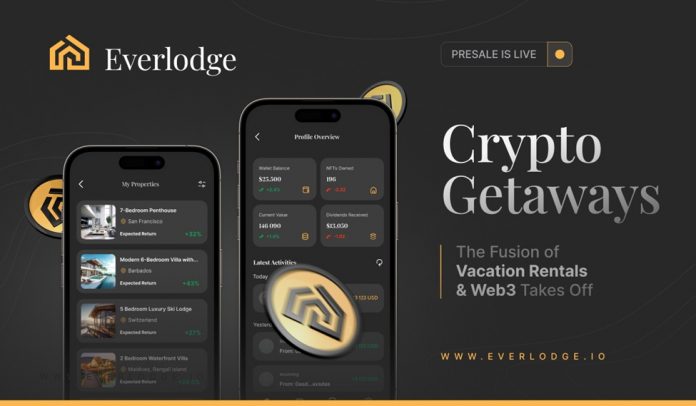
Insight into Everlodge’s (ELDG) Real Estate Investment Blueprint, Oasis Network (ROSE) and EOS (EOS) Witness Price Uptrend

0

The real estate investment industry is a trillion industry that is difficult to penetrate. Now, Everlodge (ELDG) has come up with a unique idea to innovate the industry by combining blockchain technology to elevate its scalability. With Everlodge, the luxury real estate industry that was previously reserved for the rich will be open to average earners. Meanwhile, altcoins like EOS (EOS) and Oasis Network (ROSE) have displayed significant bullish sentiment in the past weeks, with analysts picking them among the top cryptos to buy in Q1. Find out more below.

Everlodge (ELDG) to Make Entry into Real Estate Investment Seamless, Using Blockchain

Everlodge (ELDG) is gearing up to become the world’s first crypto project to integrate blockchain technology to make real estate investment affordable and profitable. To do this, Everlodge will be creating fractionalized NFTs whose value will be tied to real-world property assets. As such, investing in these affordable NFTs will grant investors ownership rights to parts of the luxury properties that these NFTs represent. With as little as $100, individuals can purchase these NFTs which is a digital representation of these luxury real estate assets. Also, investors will gain revenue share from the properties they co-own.

Notably, the Everlodge platform also rewards individuals who hold the ELDG token with free nightly stays on Everlodge-owned properties. The Everlodge ecosystem also has a marketplace where users can buy/sell fractional real estate assets. There is also a lending protocol where users can use their property backed NFTs as collateral for loans. The launchpad allows developers to raise funds from the community for new developments.

The Everlodge native token, ELDG, an ERC20 token is currently on sky-high growth potential. For context, ELDG has already generated over 200% ROI for early investors of the token. Similarly, with the project set for launching soon, analysts have projected a 35x return once the project is launched making it one of the top cryptos to buy in 2024.

ELDG has already been listed on the Uniswap exchange. Also, the project has airdropped over 25% of the token into the digital wallets of early investors. With the current bullish trajectory of ELDG, the token is on course to get listed on tier-1 exchange platforms soon. Meanwhile, investors can continue to buy the top crypto token to position themselves for future gains.

Oasis Network (ROSE) Showing Signs of Extending its Bullish Trend

The bullish sentiment of the Oasis Network (ROSE) doesn’t look to be stopping anytime soon. According to market stats, the token has gained over 23% within the last month and a further 5% within the last week. Also, the Oasis Network trading volume is on a positive trajectory, having shown an average day-to-day growth of 40% in the past week.

As of the second week of February, the Oasis Network market cap has been over $840 million. At the current trajectory, the market cap of Oasis Network is likely to reach the $1 billion mark before the end of Q1 of 2024.

Can the Current Bullish Momentum Push EOS (EOS) Back to $1?

In Q1 of 2023, the EOS (EOS) token was trading above the $1 mark. However, having undergone an extended bear market, EOS price dipped to almost $0.5 mark in Q3 of 2023. While the Q4 of 2023 saw the token enter into the bull market again, its current market stats show it is yet to come close to the $1 mark witnessed early last year.

Meanwhile, a significant number of analysts expect the EOS altcoin to rally back to $1, which it traded in Q1 of 2023. At the current trajectory, there’s a substantial likelihood of the token witnessing a resurgence soon. Analysts think that with the bull market in sight, the EOS price will rally past the $1 mark before the end of Q1 of 2024.

For more information about Everlodge (ELDG) please visit their website.

Market Darling: Arm Holdings’ Stock Growth Phenomenon

0

Arm Holdings (NASDAQ:ARM) is a British company focused on developing and licensing microprocessor architecture and related software. Since its establishment in 1990, Arm has become a key player in the mobile and embedded computing market, closely tied to the rise of the Internet of Things (IoT) sector, mobile devices, and wearable electronics technologies.

Originally formed as a collaboration between Acorn Computers, Apple Inc., and VLSI Technology, Arm’s gamble paid off handsomely. The processor architecture initially developed by Acorn for personal computers laid the groundwork for Arm’s first processors. What sets Arm apart from many tech companies is its business model, centered not on manufacturing and selling microprocessors but on licensing its technologies to other companies for chip production based on Arm’s designs. This approach, coupled with Arm’s RISC (Reduced Instruction Set Computing) architecture, inherently offers more energy-efficient solutions compared to traditional CISC (Complex Instruction Set Computing) processors, making it an ideal choice for mobile devices where battery life is critical.

Arm processors have become the preferred choice for most smartphone manufacturers, given the dominance of mobile devices in accessing digital content. In 2016, the Japanese SoftBank corporation (TSE:9984) acquired Arm for $32 billion, enabling its continued growth, especially in artificial intelligence and IoT domains. Despite this acquisition, Arm remains a British company headquartered in Cambridge, England, and has been steadily solidifying its position in the market.

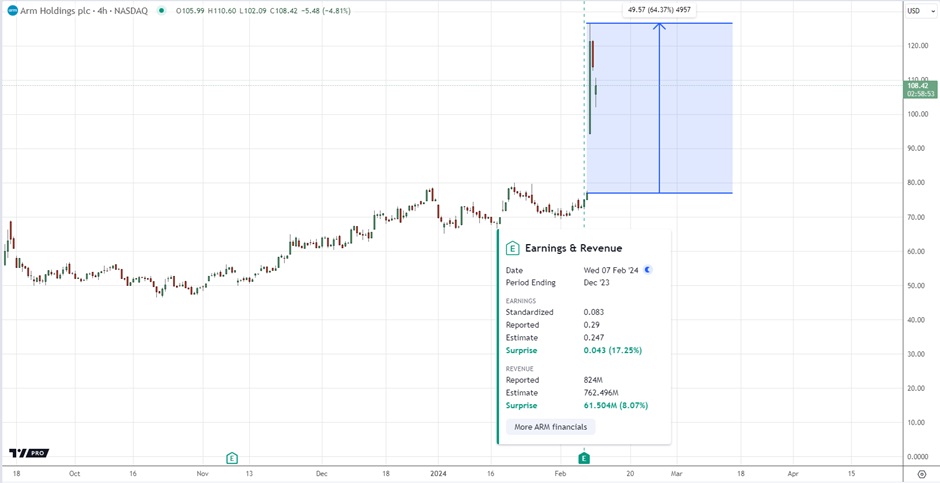
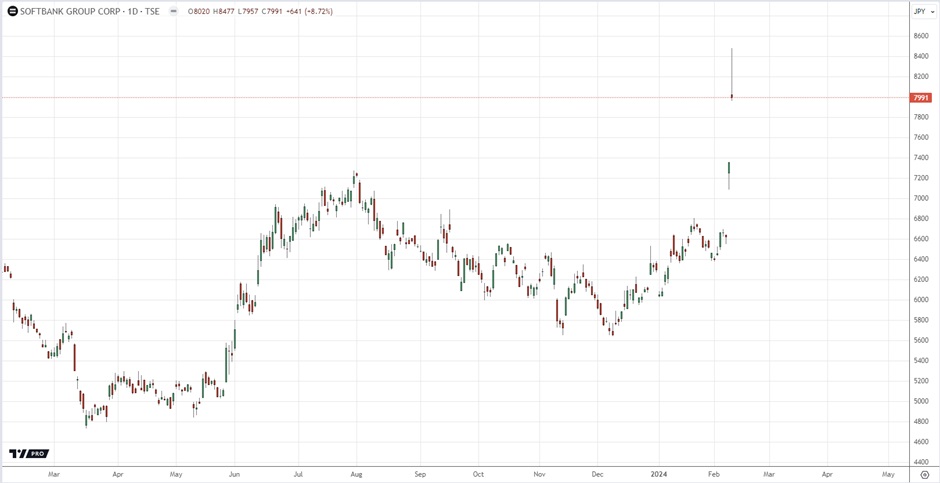
The company regularly releases its financial statements since going public in the United States. On February 7, 2024, Arm announced its quarterly results, instantly catapulting it higher in the list of large-cap companies, making it closer to Microsoft, NVIDIA, and Apple stock. The results surpassed market expectations, with forecasts for the current quarter further driving up stock prices. Consequently, the publication of the quarterly report, which outperformed analysts’ predictions, nearly doubled Arm’s stock price during the trading session, pushing its market capitalization above $116 billion. SoftBank also reaped benefits, witnessing a 15% increase in its share price due to investor optimism.

The revenue can be attributed to a resurgence in the smartphone market and the expansion of the more advanced Armv9 architecture, featuring higher deduction rates and more cores per device. Additionally, Arm architecture processors are gaining traction in server and automotive sectors, contributing to increased licensing revenue. Last quarter, Arm’s direct license revenue surged by $354 million, marking an 18% increase.

While SoftBank, holding over 90% of Arm shares, saw a substantial increase in asset value, it’s currently restricted from selling its shares post-IPO. The restrictions are expected to lift in March, enabling SoftBank to capitalize on Arm’s shares. It’s been exactly two years since NVIDIA’s failed attempt to acquire Arm for $40 billion.

For the current quarter, Arm anticipates generating between $850 million and $900 million in revenue, surpassing analysts’ expectations. Operating expenses are projected to remain at $490 million. By the year’s end in April, Arm aims to earn between $3.15 billion to $3.2 billion in revenue, with operating expenses capped at $1.7 billion. Notably, Arm customers shipped 30.6 billion processors over the past year, with smartphone processors contributing to no more than a third of Arm’s revenue, highlighting the company’s successful diversification efforts into other sectors like data centers and automotive.

With continuous innovation and development, each generation of Arm Cortex architecture sees improvements in performance, energy efficiency, and functionality. The company is expanding its reach beyond mobile and consumer devices into servers, supercomputers, and machine learning, ensuring continued growth and relevance in the ever-evolving tech landscape.

Banks Want Access to Bitcoin, Amid Decreasing BTC Supply

0

Since 2020, the supply of Bitcoin (BTC) on exchanges has fallen by up to 25%. This decline is likely to increase further due to the entry of major institutions like BlackRock and Fidelity into the cryptosphere. However, there’s another factor that has caught attention: BTC exchange supply is drying up.

Banks’ Paradigm Shift: Requesting Easier Access to BTC

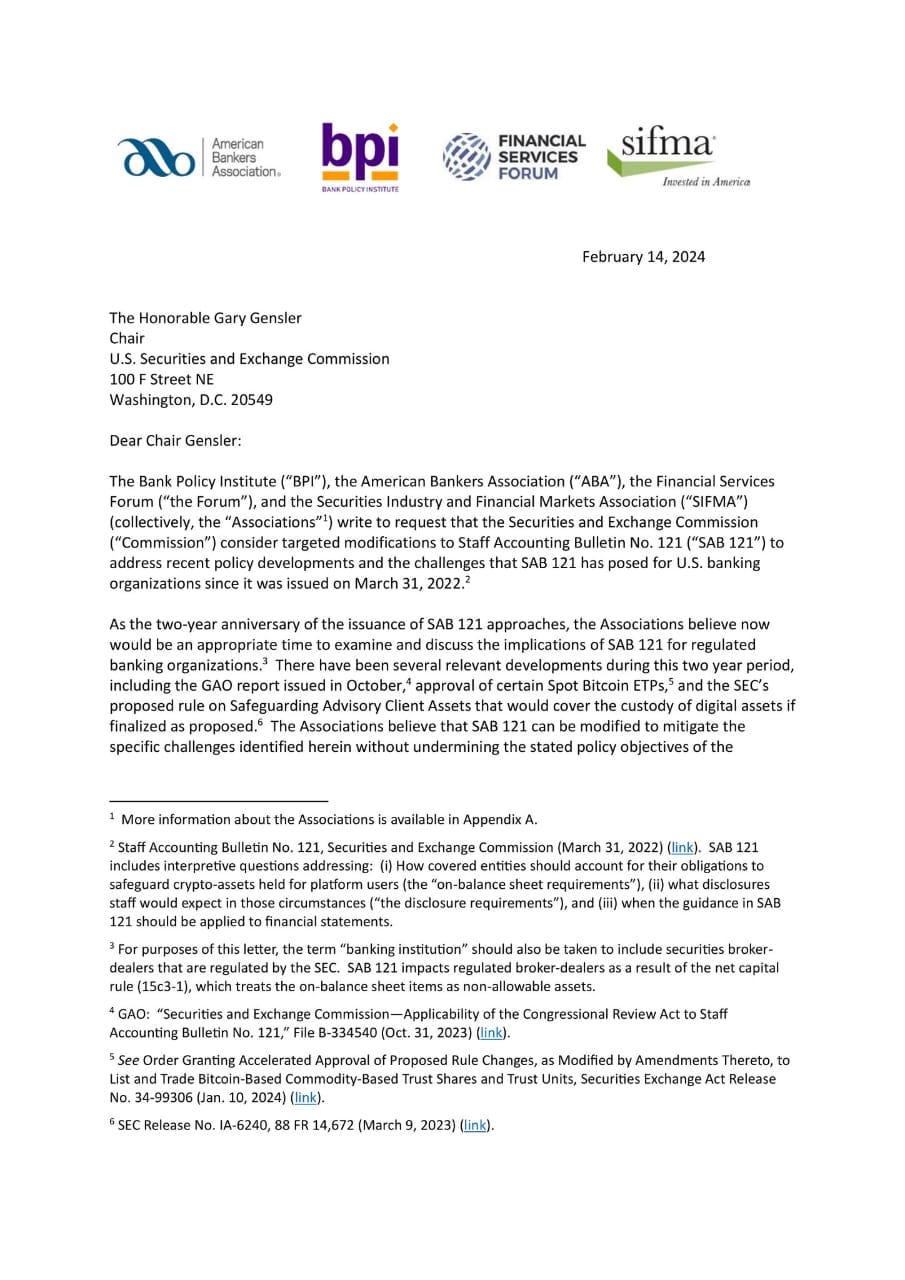
In a surprising twist, banks are changing their stance on BTC. They have sent an open letter to the SEC requesting that access to and holding of digital currency be made easier. Specifically, they want the regulatory body to revisit and amend Bulletin number 121, which outlines how crypto asset holdings should be reported and safeguarded by banks. This move signifies a significant shift in institutional perception towards

BTC Levels on Exchanges at a 24-Month Low

According to data from Glassnode, the number of BTC held on crypto exchanges is currently at its lowest level since July 2020. There is nearly 25% less BTC available on exchanges (either in wallets or up for trade) than there was four years ago, despite thousands more BTC theoretically entering circulation since then.

This trend has been ongoing even before the recent spot ETF approval by the Securities and Exchange Commission (SEC). The collapse of FTX in 2022 may have contributed to this decline as investors reconsidered custody of their digital assets. However, more broadly, it reflects that BTC holders are increasingly opting for long-term storage in their wallets rather than leaving it on exchanges for easy trading.

Most spot ETF brokers are likely to hold BTC (which backs their funds) through safe custodial means such as a mix of hot and cold wallets. As more people invest in spot ETFs, there is less BTC supply available on crypto exchanges.

Bitcoin’s (BTC) recent rally has been driven by the spectacular introduction of exchange-traded funds (ETF). It may now be time to focus on ether (ETH), the second-largest cryptocurrency, broker Bernstein said in a research report on Monday. Ether is “probably the only other digital asset likely to get a spot ETF approval by the SEC,” the report said.

Bernstein says there is about a 50% chance of ether spot ETF approval by May and near-certain probability of approval in the next 12 months. Ether rose over 3% on Monday, while bitcoin gained just over 1%. Ether has outpaced bitcoin over the past week, gaining over 16% in seven days to trade above $2,900 for the first time in nearly two years while the bitcoin price rose a more sedate 8.5% to $52,300.

Financial giants entering the crypto game have had several effects on the market, including an influx of money entering the sector. But there’s been one factor that nobody really considered – BTC exchange supply is drying up. According to a glassnode graph documenting the number of BTC held on crypto exchanges, supply is at the lowest it’s been since July 2020.

Even before the spot ETF approval, Bitcoin held on exchanges was rapidly diminishing. This may have been spurred on by the disastrous collapse of FTX in 2022

Honduras imposes strict ban on Crypto Trading

The National Banking and Securities Commission (CNBS) of Honduras has recently taken a significant step by announcing a ban that prohibits local financial institutions from participating in crypto trading and holding digital assets. This measure has been adopted with the aim of preserving the integrity of the national financial system through stricter control.

Honduran regulations currently lack specific provisions for cryptographic assets, which exposes users to risks such as fraud, operational issues, and legal uncertainties. Additionally, there are growing concerns about the use of such assets for illicit activities like money laundering and terrorism financing.

The CNBS has highlighted the challenges related to the decentralized nature of many cryptocurrency-related businesses operating in Honduras, often registered in external jurisdictions. This decentralization makes regulatory supervision difficult, allowing potentially unmonitored activities.

To address these issues, the CNBS has issued a directive explicitly prohibiting Honduran financial entities from associating with cryptocurrencies, virtual currencies, tokens, or digital assets not authorized by the Central Bank of Honduras. This move aims to maintain tight control over financial activities and preserve the integrity of the sector within the country.

Decentralized Finance (DeFi) has emerged as a revolutionary force within the financial industry, leveraging blockchain technology and smart contracts to enable a wide range of financial services and applications that operate outside traditional banking institutions. By eliminating intermediaries, DeFi democratizes access to financial services, reduces costs, and fosters financial inclusion on a global scale.

DeFi encompasses various services built on decentralized blockchain networks, primarily Ethereum. These services include lending and borrowing platforms, decentralized exchanges (DEXs), asset management, insurance, derivatives, and prediction markets.

Through smart contracts—self-executing agreements with terms directly written into code—DeFi platforms automate transactions and enable peer-to-peer financial interactions without relying on centralized authorities.

As DeFi continues to grow and attract significant capital, it becomes essential to establish legal and regulatory frameworks that address the unique challenges posed by this new financial ecosystem.

While DeFi offers numerous advantages, it also raises concerns about consumer protection, financial stability, and compliance with existing regulations such as anti-money laundering (AML) and know-your-customer (KYC) requirements.

The decentralized nature of DeFi presents challenges related to consumer protection. Unlike traditional financial institutions, which are subject to regulatory oversight, DeFi platforms operate without central authorities.

Users maintain full control of their assets and transact through smart contract programs. However, this lack of intermediaries can lead to increased risks for consumers—such as potential fraud or loss of funds—without clear avenues for recourse.

Interestingly, this ban comes at a time when institutional interest in the crypto sector is increasing globally. In the United States, several exchange-traded funds (ETFs) related to Bitcoin have been launched. US banking actors are pushing for a review of rules that currently make it expensive to provide custody services for these ETFs.