DD
MM
YYYY

PAGES

DD
MM
YYYY

spot_img

PAGES

Home Blog Page 3304

ECOWAS Parliament Initiates Mediation Effort to Reunite Niger, Burkina Faso, and Mali

0

The Economic Community of West African States (ECOWAS) Parliament has proposed the appointment of an Adhoc Mediation Committee to persuade Mali, Burkina Faso, and Niger, the three member states that withdrew from the regional bloc earlier this year, to reconsider their decision and rejoin the ECOWAS community. 

The Acting Speaker of the Parliament, Barau Jibrin, announced this initiative during the opening of the 2024 Second Extraordinary Session of the Sixth Legislature of the ECOWAS Parliament in Kano State.

Jibrin, who is also the Deputy President of the Nigerian Senate, emphasized the need for a strong and united regional bloc. To facilitate this goal, he proposed the establishment of an Adhoc Mediation Committee tasked with engaging stakeholders in the affected countries and promoting dialogue to resolve conflicts and restore unity.

“I will, in consultation with my colleagues on the Bureau, be proposing the appointment of an Ad hoc Mediation Committee whose mandate will be to work with all stakeholders in getting our brothers to rescind their decision and come home and work towards promoting dialogue with a view to resolving conflicts in the region. It’s no doubt that we are stronger and there is absolutely no alternative to our collective aspirations of a united, peaceful and secure ECOWAS,” he said.

Jibrin’s proposal follows the withdrawal of Niger, Mali, and Burkina Faso from ECOWAS after being suspended from the bloc due to coup d’état incidents. Despite calls for a return to democratic rule, the three countries, led by the junta, opted to form a new confederation called the Alliance of Sahel States (AES). 

The countries were suspended from the regional bloc for carrying out a coup d’état last year that usurped their respective constituted governments from power. Jibrin’s announcement adds to the Parliament’s earlier proactive approaches to addressing this rift and fostering reconciliation within the region.

The ECOWAS Parliament’s extraordinary session aims to deliberate on pressing regional issues and provide fresh perspectives on promoting peace, security, and stability. Jibrin highlighted the Parliament’s role in promoting democracy, checks and balances, and accountability within the ECOWAS community. He emphasized the importance of collaboration between the Parliament and the ECOWAS Commission to strengthen regional security and development initiatives.

He said: “As the Parliament looks towards facilitating the promotion of democracy, checks and balances, as well as accountability in the ECOWAS Community, having a strong ECOWAS Parliament is indispensable. I have had the esteemed honor of leading this Parliament for barely two months and I have concluded that much needs to be done in terms of asserting the independence of the Parliament in the exercise of its important roles of parliamentary oversight and representation.

“There is, also, a compelling need to build strong collaboration with the ECOWAS Commission and undertake joint initiatives aimed at strengthening regional security and advancing development. While it is true that each institution has its unique prerogatives, the fact remains that there exist cross-cutting issues that are best addressed with enhanced collaboration among the community institutions.”

Jibrin also addressed the absence of the Togolese delegation in the Parliament, noting efforts to ensure their representation and uphold the institution’s integrity. He announced the impending inauguration of the Togolese delegation, which is expected to contribute to the Parliament’s mandate.

Insights and Recommendations from Members

Sen. Ali Ndume, a seasoned member of the regional parliament, expressed optimism about the mediation efforts, noting that the conditions for the returning members to rejoin the ECOWAS fold are now favorable. He emphasized the importance of addressing past grievances and fostering reconciliation to rebuild trust among member states.

Governor Abba Kabir Yusuf of Kano State highlighted critical regional challenges, including citizenship issues, security threats, environmental concerns, and economic development. He urged the Parliament to prioritize initiatives that enhance regional integration, combat illicit activities, and promote economic growth.

Government Support and Collaboration

The Nigerian Minister of Foreign Affairs, Yusuf Tuggar, reaffirmed the government’s commitment to supporting the ECOWAS Parliament and fostering regional integration. He noted the Parliament’s role in engaging member countries experiencing unconstitutional changes of government and promoting cooperation among ECOWAS institutions.

Tuggar stated, “We need to collaborate with all organs and institutions within the ECOWAS. You have at your disposal so many instruments to use for you to achieve that.”

He described the hosting of the regional meeting in the commercial city of Kano as important as it will greatly bridge the gap between the citizens and the regional community.

While the ECOWAS Parliament’s proactive measures to mediate the reintegration of member states demonstrate its commitment to preserving regional unity and stability, there is doubt that its efforts will yield the expected results. This is because the aggrieved member states seem unwavering in their determination to form a new confederation as well as alliances with Russia as a figurehead. This determination, underscored by the growing apathy for France’s exploitative grip on its former colonies in the Sahel, is backed by the countries’ public.


Nigeria Should Update NIMC Act To Avoid NIN-based Fraud

1
National ID Card, Nigeria

I read a report today, and it seems like Nigeria has to update the NIMC (National Identity Management Commission) Act and make it compulsory for registration of deaths via churches, mosques, hospitals, community heads, etc all the way to the National Population Commission. One of the biggest risk vectors in the National Identification Number (NIN) in Nigeria is that it does not go dormant after the owner has died! 

That loophole is breeding the next domains of financial fraud as criminals harvest NIN data, and cause severe problems. As NIN does that, banks have to decide if BVN (bank verification number) itself is still a requirement, and if indeed it is, it must also have a way to freeze it.

I call the EFCC to provide technical reports to the National Assembly so that it can update both the NIMC Act and the National Population Commission Act on some of the requirements I have noted. The report I read posits that if Nigeria does not deal with KYC challenges around BVN/NIN, our financial system may have problems.

For most fintechs, remember this: KYC-based fraud is an existential threat, and do not break things and move fast on it. KYC is your DPC (as in building foundation); if you get it wrong, you have no business! Make real-time photo verification a mandatory requirement in your process.

Rising Inflation: “There is no magic wand,” – Central Bank of Nigeria Governor Calls for Patience

0

The Governor of the Central Bank of Nigeria (CBN), Olayemi Cardoso, has called on Nigerians to remain patient as the country grapples with inflation and rising food prices. 

Speaking at a press briefing following the Monetary Policy Committee (MPC) meeting in Abuja, Cardoso explained that combating inflation is a gradual process that requires time and perseverance.

“There is no magic wand,” Cardoso remarked, stressing the need for patience. “These are things that need to take their time. I am pleased and confident that we are beginning to get some relief, and in another couple of months, we will see more positive outcomes from what the Central Bank has been doing.”

Despite the pressures from food inflation, Cardoso noted that the general inflation rate was showing signs of moderation. He highlighted that the tools employed by the CBN are starting to yield results. 

“The tools the Central Bank is using are working,” he stated, expressing optimism about the future.

Cardoso also detailed the challenges that continue to hamper efforts to curb food inflation, including the high costs of transporting farm produce, infrastructural issues within the distribution network, security challenges in food-producing areas, and the impact of exchange rate fluctuations on the prices of imported food items.

“The committee thus reiterated several challenges confronting the effective moderation of food inflation,” Cardoso said. “These include rising costs of transportation of farm produce, infrastructure-related constraints along the line of distribution network, security challenges in some food-producing areas, and exchange rate pass-through to domestic prices for imported food items.”

Additionally, the CBN attributed the recent volatility in Nigeria’s foreign exchange market to seasonal demand for dollars. The MPC’s communique pointed out that the fluctuations are reflective of the dynamics of demand and supply in a freely functioning market system. 

“Members further observed the recent volatility in the foreign exchange market, attributing this to seasonal demand,” the communique stated.

The CBN has implemented several measures to control inflation, including monetary tightening policies such as cutting the number of Bureau de Change (BDC) operators from 4,173 to about 1,518 and clamping down on the cryptocurrency market, aimed at curbing speculation. However, these efforts have faced significant obstacles, including the structural challenges outlined by Cardoso.

Experts’ Opinions on Tackling Inflation

Economic experts suggest that while the CBN’s monetary policies are necessary, they are not sufficient on their own to combat inflation effectively. They advocate for a more comprehensive approach that addresses both supply-side and demand-side factors.

Kalu Aja, a prominent financial analysthas emphasized the need for structural reforms alongside monetary policy. “The CBN cannot fight inflation alone. There must be a concerted effort to improve infrastructure, especially in the agricultural sector, to reduce the costs of food production and distribution. This will have a more lasting impact on inflation,” Aja stated.

Others have argued that the government must invest in improving infrastructure and security in agricultural regions to enhance food production and distribution. They note that without addressing the root causes of food inflation, such as poor infrastructure and insecurity, monetary policies alone will not suffice.

However, the call for patience from the CBN governor is believed to be an indication of cluelessness by many, who hold the belief that one year is enough for the government to turn the inflation tide. Against this backdrop, there is a growing consensus with the view that addressing the underlying structural problems remains critical for achieving long-term stability and growth.

Amazon to Upgrade Alexa with Generative AI, Introduces Subscription Fee

0

Amazon is set to revamp its decade-old Alexa voice assistant with advanced generative artificial intelligence (AI) technology and plans to introduce a monthly subscription fee to offset the costs, according to sources familiar with the company’s plans. 

The upgrade aims to enhance Alexa’s conversational abilities, positioning it to better compete with new AI-powered chatbots from companies like Google and OpenAI.

The enhanced Alexa, expected to launch later this year, will feature more natural and human-like interactions. This upgrade is seen as a response to recent advancements in AI technology by competitors. Last week, OpenAI announced GPT-4o, which supports deep, two-way conversations and real-time language translation. Similarly, Google launched a generative AI-powered voice feature for its Gemini platform.

Amazon’s new subscription for Alexa will be separate from its $139-per-year Prime offering, and the company has yet to finalize the price point, one source noted. The move to a subscription model reflects the significant costs associated with generative AI technology. One source estimated the cost of using generative AI in Alexa at approximately 2 cents per query, suggesting an internal discussion around a $20 monthly fee. However, others argue for a single-digit price to remain competitive against offerings like OpenAI’s ChatGPT, which charges $20 per month.

Alexa’s Back Story and Internal Challenges

Alexa, launched in 2014, initially wowed consumers with its voice-driven capabilities. However, its functions have become outdated in light of recent AI developments. Scott Galloway, a professor at NYU, recently described new AI updates as “Alexa and Siri killers” on his podcast, highlighting the pressure on Amazon’s voice assistant to innovate.

According to sources, Alexa was a passion project of Amazon founder Jeff Bezos, who invested heavily in its development with less immediate pressure for profitability. This dynamic shifted when Andy Jassy became CEO in 2021. Jassy, focused on optimizing Amazon’s business operations during the pandemic, placed stricter profit imperatives on the Alexa division. Internally, there was concern that Alexa had devolved into an expensive device for basic tasks like setting alarms and checking the weather.

A person familiar with Jassy’s views shared an incident where he asked Alexa for the live score of a sports game and was frustrated when the assistant failed to provide an answer easily found online. This exemplifies the internal and external pressures on Amazon to enhance Alexa’s capabilities.

To address these challenges, Amazon has undergone a significant reorganization of the Alexa team, shifting many members to the artificial general intelligence (AGI) team. This move aims to leverage Alexa’s substantial user base, with over 500 million Alexa-enabled devices sold as of 2023.

Amazon’s annual shareholder letter, released last month, highlights the company’s commitment to integrating generative AI across its consumer businesses, including Alexa. The letter states, “We are building a substantial number of GenAI applications across every Amazon consumer business, including an even more intelligent and capable Alexa.”

Expert Insights and Market Position

Despite the challenges, industry experts see potential in Alexa’s large installed user base. Transforming Alexa into a more relevant and advanced AI device could justify the resources dedicated to it. However, attracting top AI engineering talent remains a challenge, as companies like OpenAI, Microsoft, and Google compete for the same pool of experts.

Amazon has been perceived as lagging in AI innovation, despite offering multiple AI models on Amazon Web Services (AWS). To boost its AI capabilities, Amazon invested $2.75 billion in AI startup Anthropic, its largest venture investment to date. Amazon plans to use its own large language model, Titan, in the Alexa upgrade.

Bezos remains actively involved in Amazon’s AI efforts, reportedly expressing concern over Amazon’s position in the AI race. Bezos has been questioning why certain AI startups prefer other cloud providers over AWS, according to sources.

Amazon’s decision to upgrade Alexa with generative AI and introduce a subscription fee marks a significant shift in its strategy for the voice assistant. With the e-commerce’s substantial user base and growing investments in AI technology, this shift is expected to transform Alexa into a more capable and intelligent assistant. 

“Alexa, let’s try AI.” Amazon is adding generative artificial intelligence to its 10-year-old voice assistant — and the upgrade will be accompanied by a monthly subscription fee, CNBC reports, citing anonymous sources. The “more conversational” Alexa is set to debut later this year and help the e-commerce giant better compete with new chatbots from Google and OpenAI, which some have called “Alexa and Siri killers.” Many users rely on Alexa for basic duties such as setting timers; recently, the Alexa team has worried that they invented “an expensive alarm clock,” one source says.

Evaluating Hong Kong’s e-CNY Wallet and Ether ETFs

0

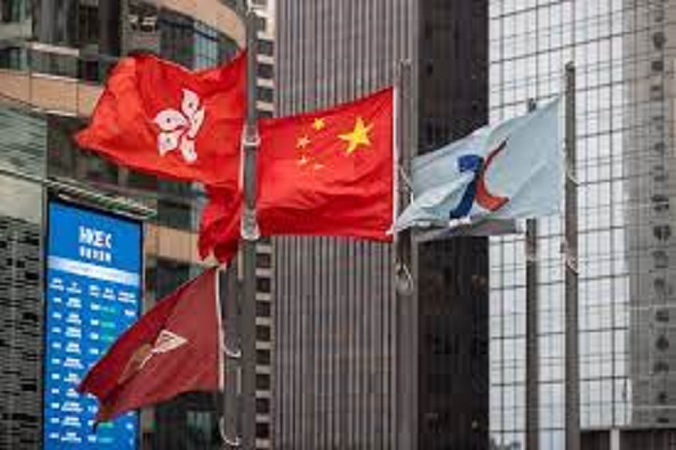
In a significant move towards the future of digital finance, Hong Kong has recently launched personal electronic Chinese Yuan (e-CNY) wallets for its residents, marking a new era in the realm of digital currencies. This pioneering initiative allows local users to engage in cross-border payments seamlessly, leveraging the power of the digital yuan without the necessity of a mainland bank account.

The Hong Kong Monetary Authority (HKMA) has facilitated this process by enabling the opening of e-CNY wallets using local mobile phone numbers, simplifying the procedure for users. This development is part of a broader pilot program aimed at making cross-border retail payments more convenient and efficient.

Hongkongers can now open e-CNY wallets through four Chinese banks operating in the city and top them up via the Faster Payment System (FPS), a widely used financial infrastructure in Hong Kong. This integration signifies the world’s first linkage of a faster payment system with a central bank digital currency system, showcasing an innovative use case that underscores interoperability—a key area set out in the G20 Roadmap for enhancing cross-border payments.

The e-CNY wallets, however, are currently restricted to cross-boundary payments and do not support person-to-person transfers at this stage. The HKMA has highlighted that this expansion is one of the six measures announced earlier this year under the “three connection, three facilitation” initiative by the People’s Bank of China (PBoC).

This initiative is not just a step forward for Hong Kong but also a significant milestone for the global financial system. It represents the first instance outside mainland China where users can hold and manage China’s Central Bank Digital Currency (CBDC). The move is expected to facilitate merchant payments in the mainland by Hong Kong residents, enriching the range of functionalities of the e-CNY wallet available to them.

Evaluating the Ethereum ETF Prospects.

Ethereum, the blockchain platform known for its flexibility and smart contract capabilities, has seen its fair share of ups and downs. Despite this, Coinbase’s research indicates a strong belief in Ethereum’s long-term positioning and potential for growth. The approval of spot bitcoin ETFs in the US has bolstered bitcoin’s status, and a similar move for Ethereum could have significant implications for its valuation and utility.

Coinbase’s Institutional Research Analyst, David Han, points out that Ethereum’s historical trading patterns have shown it can capture both “store-of-value” and “technology-token” narratives, which could play a pivotal role in its ETF prospects. The market currently prices the odds of a spot ETH ETF approval by the end of May 2024 at a modest 16%. However, Coinbase’s insights suggest a higher probability, closer to 30-40%, leaving room for potential surprises to the upside.

The debate around Ethereum’s fundamental positioning within the crypto sector continues, with competing layer-1 networks and the growth of Ethereum layer-2s influencing its value accrual mechanisms. Yet, the maturity of its developer ecosystem, the utility of ETH as DeFi collateral, and the security of its mainnet are factors that Coinbase believes set Ethereum apart from its competitors.

As the market digests this new perspective from Coinbase, investors and enthusiasts alike are watching closely. The approval of an Ethereum ETF would not only validate its role as a major player in the crypto space but could also usher in a new era of mainstream adoption and investment. For now, the crypto community waits with bated breath, pondering the future of Ethereum and the transformative potential of an ETF.