DD
MM
YYYY

PAGES

DD
MM
YYYY

spot_img

PAGES

Home Blog Page 3305

BlockDAG Surges Past Retik Finance Market Debut, Luring Whales with $100M Liquidity and Vesting Period!

0

The race for dominance sees various players vying for investor attention and market share. As Retik Finance launched, marking its entry with a considerable figure from its presale, BlockDAG truly captured the limelight. With a strategic and well-timed revelation of its presale success at London’s iconic Piccadilly Circus, BlockDAG overshadowed the Retik Finance launch and set a new standard for how crypto ventures could engage with and expand their investor base. The event underscored a colossal raise of $29.2 million, reflecting robust investor confidence and a strong market presence.

BlockDAG Triumphs in Presale, Outshining Retik Finance Launch

At the iconic Piccadilly Circus, BlockDAG eclipsed the much-anticipated Retik Finance Uniswap launch by revealing its spectacular presale figures, capturing the attention of a broad investor base. The event celebrated a whopping $29.2 million raised, with 9.4 billion coins already in the hands of eager investors, reinforcing BlockDAG’s formidable presence in the market.

As it moves into its fourteenth batch of trading, BlockDAG’s coin price stands at $0.0085 and is expected to climb to $0.009 in the upcoming fifteenth batch. This upward trend underscores a potential 30,000x return, projecting an unprecedented growth trajectory. These impressive statistics continue to draw a growing number of investors, allured by BlockDAG’s demonstrated financial performance and promising future prospects.

Hasty Launch Raises Questions for Retik Finance

Retik Finance launched with a successful presale, closing out much earlier than expected and signalling potential over-excitement in the market.

As Retik Finance launched on Uniswap along with several prominent exchanges on May 21 at 12 PM UTC, it became evident that seasoned investors prefer more established and gradually evolving platforms like BlockDAG.

Though designed for quick growth, Retik Finance’s rapid accumulation and aggressive listing strategy could imply a lack of depth in the market strategy that cautious investors typically seek.

Retik Finance’s Community Engagement: Short-term Gimmick?

Following its launch, Retik Finance introduced a $5,000 giveaway, encouraging community members to submit celebratory content. This move seems to prioritize immediate visibility over sustainable community building.

Although Retik Finance launched initiatives to boost community interaction, the underlying intent might be perceived as an attempt to maintain short-lived enthusiasm rather than foster long-term loyalty.

As Retik Finance attempts to solidify its place in the competitive crypto arena, discerning investors are leaning towards platforms like BlockDAG, emphasising steady growth and technological innovation over rapid market capture.

BlockDAG Implements Strategic Vesting to Secure Long-Term Growth

BlockDAG is primed for remarkable achievements with a robust roadmap leading to a Mainnet launch within six months and a bold revenue target of $600 million by 2024. Analysts are enthusiastic, foreseeing a potential 30,000x return on investment, positioning BlockDAG as one of the premier cryptocurrencies to acquire.

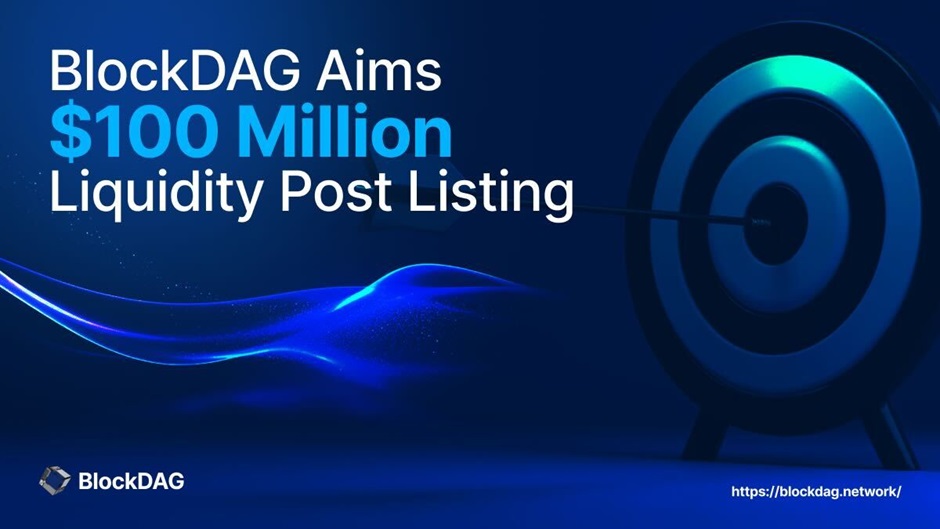
BlockDAG committed $100 million in liquidity at launch to ensure market stability and adherence to long-term goals. Furthermore, introducing a vesting period for presale coin holders underscores the project’s dedication to preserving the coin’s value and ensuring a responsible distribution strategy. This vesting approach will diminish market volatility and bolster investor confidence in the project’s sustainable growth.
Investors View BlockDAG as an Optimal Option

BlockDAG continues to lead with innovative strategies, ensuring stability and growth for its investors. By securing $100 million in liquidity and implementing a responsible vesting strategy for presale coin holders, BlockDAG promises a steady market presence and commitment to long-term value. This approach sets BlockDAG apart, making it a preferred choice for those investing in reliable and forward-thinking cryptocurrency ventures.


Invest in the BlockDAG Presale Now:

Website: https://blockdag.network

Presale: https://purchase.blockdag.network

Telegram: https://t.me/blockDAGnetworkOfficial

Discord: https://discord.gg/Q7BxghMVyu
Nigerian Communications Commission’s Great Decision on MVNO Licensing

1

The Nigerian Communications Commission (NCC) has suspended accepting new applications for MVNO (mobile virtual network operator), a wireless communications services provider that does not own the wireless network infrastructure over which it provides services to its customers.

“This temporary suspension is necessary to enable the commission to conduct a thorough review of several key areas within these categories, including the current level of competition, market saturation and current market dynamics. The public is invited to note that during the suspension period commencing on 17 May, new application for the aforementioned licences will not be accepted.”

For NCC, this is a good call since the core value proposition of MVNO in Nigeria remains foggy. MVNO works in markets where major telcos over invest on capacities, and then wait for customers to come along. In other words, you build a system which can serve 1000 people but you have currently 500 people in the system. To handle the investments, you will be happy to welcome minor players which can help you find those extra 500 people. 

Those minor players may have regional affinity, niche customer services, and other things which can differentiate them, and in the process they can onboard new telco customers as their own, even though your network powers everything. In the US, you have Cricket Wireless, Safelink, etc, operating under AT&T and Verizon infrastructures.

But in Nigeria, I do think our core telcos are operating at over-capacity. In other words, if they have built for 500 customers, they possibly have 2,000 using them, thereby creating a scenario where MVNO makes no sense.

Why should adding more customers be a playbook when existing customers cannot enjoy decent services. Whenever I am in Nigeria, I get all the three core SIMs  but even with that, it is alway a struggle once you are out of Abuja and Lagos. In  a situation where the focus should be expanding core capacity, giving licenses to pad more frustrated customers whose calls or data cannot get through will not make sense. For that, this NCC call is solid!

Why Inflation Remains High In Nigeria Despite Hikes in Prime Rate

2

I have taken about 15 minutes to put down my points on why the inflation in Nigeria remains very stubborn. This piece extends this one here .

Scene: Nigeria

Assume you have four market women who have N2000 each to buy a box of noodles (four boxes available), produced by Nice Noodles Plc, and those women use cash, or NEVER have to take a credit card or loan from any bank

If you raise the prime rate as a central bank, which typically makes the cost of capital more expensive since banks will hike interest rates, those 4 women will not be “directly” affected since they have their “cash” or do not rely on a loan to pay for noodles. 

If that happens, there is a likelihood that Nice Noodles, which makes the noodles, will be affected. Yes, companies borrow money to expand operations, and when borrowing is expensive, they pause expansion or in some cases reduce operations. That is how high prime rates “cool down” the economy. 

So, Nice Noodles could decide to produce only 3 noodles (it is trimming production due to the high cost of capital). Recall that demand (of 4 noodles) has not reduced or impacted even though supply has. What happens? The price of noodles will go up, causing inflation to tick UP. 

(I discount that these 4 women have limited capacity to save since they do not make a lot. Also, few companies can save. That means, a high prime rate will not increase deposits, via savings, in banks which could have been used to give loans to companies.) 

Scene: United States

Their central bank (Federal Reserve) raises the prime interest rate. It is likely that out of those 4 women, three rely on credit cards to buy noodles, and when the product is expensive one or two may reduce consumption (ideally, this will work better on elastic demand; inelastic demand may not be affected). But generally, across many products in the economy, total consumption or demand will go down. As that happens due to high interest rates, consumers and corporations will find saving more exciting (saving, fixed deposit, etc accounts will pay more). 

Sure, the cost of borrowing by companies will be high, but the asymmetric reduction in Demand due to expensive credit cards and loans will push inflation lower over time. Many things are assumed including that a war or pandemic has not affected whatever is needed to make noodles (so, the disclaimer is ceteris paribus). 

Summary

I have looked at this from a simple demand-supply model. But in Nigeria, it is complicated since when the apex bank raises prime rates, at the end of the month, the finance ministry shares money with the states, and sometimes via Ways & Means, the apex bank also prints money and gives it to the federal government. 

Those two things – sharing money with states which are spent immediately and Ways & Means – usually cancel any impact the apex bank is getting from the rate hikes. In other words, you slow down today and tomorrow you weaponise state capitals and federal government with cash, canceling all the efforts. I have called that a vicious circle and Nigeria needs new ideas to get out of the loop! I have shared some of those ideas also.

Spectranet Maintains Top Position as Nigeria’s Biggest Internet Service Provider in Q4 2023

0

Internet service provider Spectranet, known to be one of the best services when it comes to reliability and internet speed, has maintained its top position as Nigeria’s biggest internet service provider, in the fourth quarter (Q4) of 2023.

Spectranet at the end of Q4 2023, recorded 113,869 subscribers, with a share total of 43.4%. The Internet Service Provider (ISP) has continued to play a pivotal role in providing quality Internet access to Nigerians.

It is worth noting that Spectranet was the first Internet Service Provider (ISP) to launch a 4G LTE-based internet service in Nigeria. The brand is known for providing affordable, faster, and more reliable internet broadband to Nigerian homes and offices.

Its internet service uses various technologies which include; 4G LTE, FTTx (Home Fiber), and WTTx (Fiber on Air) which are currently available across Lagos, Abuja, Ibadan, and Port Harcourt. Its state-of-the-art multi-technology network ensures high-speed internet connectivity for customers.

Spectranet was awarded a License from the Nigerian Communications Commission in 2009 to promote Internet services in Nigeria. Headquartered in Lagos with Management Consultancy and Technical Collaboration with the Infrastructure Development Company Group based in Singapore, the Internet service provider aims to be a leader in the Internet Services space in Nigeria.

In 2023, the company received two awards for the “Best 4G LTE Internet Service Provided”, and Broadband Services Provider of the Year”.

Coming second among the top internet service providers is FiberOne, the largest fiber-to-home (FTTH) premium broadband provider in Nigeria with 27,000 active users and a share total of 10.3% at the end of 2023.

In third position is Elon Musk-owned Starlink, which reached a significant milestone in Nigeria, by becoming the third-largest internet provider, in the fourth quarter (Q4) of 2023.

According to data, Starlink’s active customers in Nigeria increased to 23,897 in Q4 of 2023, from 11,207 in Q3 of 2023, to become one of the leading ISPs in the country. The Q4 figure represented a 113% increase in customers quarter on quarter.

Starlink has gained significant traction in Nigeria due to its ability to provide high-speed internet access in remote and underserved regions, where local internet service providers often struggle to reach. By leveraging a constellation of low Earth Orbit (LEO) satellites, Starlink offers a reliable and efficient internet solution, addressing the digital divide in Nigeria.

Despite Starlink’s price still being on the high side compared with local ISPs, the internet service has sparked high adoption interest among Nigerians who are eager to change their service providers.

Central Bank of Nigeria (CBN) Raises Interest Rate to 26.25% in Continued Fight Against Inflation

0

The Central Bank of Nigeria (CBN) has increased the Monetary Policy Rate (MPR) by 150 basis points from 24.75% to 26.25%, marking the third consecutive hike in an effort to combat the nation’s soaring inflation. 

This decision was made during the 295th meeting of the CBN’s Monetary Policy Committee (MPC) held on May 20th and 21st, 2024.

The MPC’s decision to raise the MPR comes against the backdrop of Nigeria’s inflation rate, which surged to 33.69% in April 2024. CBN Governor Yemi Cardoso, who also serves as the chairman of the MPC, announced the committee’s resolutions on Tuesday. Cardoso highlighted the critical need to address inflationary pressures, which are largely driven by escalating food prices, transportation costs, infrastructure challenges, insecurity, and exchange rate volatility.

The Monetary Policy Committee (MPC) of the Central Bank of Nigeria (CBN) held its 295th meeting on the 20th and 21st of May 2024 to review recent economic and financial developments and assess risks to the outlook,” Cardoso stated. “Decisions of the MPC. The committee’s decisions are as follows: 1. Raise the MPR by 150 basis points to 26.25% from 24.75%.”

Despite the significant increase in the interest rate, the MPC decided to retain other key monetary parameters. The Cash Reserve Ratio (CRR) of Deposit Money Banks (DMBs) remains at 45%, while the liquidity ratio is held steady at 30%. The asymmetric corridor around the MPR is maintained at +100 and -300 basis points.

Cardoso stressed that the primary focus of the MPC is to achieve price stability and curb the rising inflation that has heavily burdened Nigerians. He noted that the inflationary pressure is predominantly fueled by food inflation, exacerbated by high transportation costs, infrastructure deficits, security issues, and exchange rate challenges.

The Economic Backdrop

The recent rate hike occurred amid widespread economic difficulties characterized by soaring commodity prices and an increasing cost of living. The economic strain is largely attributed to the removal of fuel subsidies last year and the floating of the naira, which have pushed the cost of goods and services to historic highs. Despite facing protests and pressure from labor unions, President Bola Tinubu has urged for patience, expressing confidence that the government’s reforms will eventually bear fruit.

In recent months, the CBN has also targeted the operations of cryptocurrency exchanges, including Binance, as part of its strategy to combat the falling value of the naira. While these measures initially led to an appreciation of the currency, the gains have stalled recently.

Addressing the volatility in the foreign exchange market, Cardoso attributed the recent depreciation of the naira against the dollar to “seasonal demand” for the greenback. He said that such volatility is common in any functioning foreign exchange market and reflects the dynamics of demand and supply.

“Members further observe the recent volatility in the foreign exchange market attributing this to seasonal demand—a reflection of the interplay between demand and supply in a functioning market system,” Cardoso said. He reiterated the CBN’s commitment to maintaining a transparent FX market through a willing-buyer, willing-seller model.

Skepticism and Criticism

The CBN’s strategy of continuously hiking interest rates has been met with skepticism from some economists and analysts. Kalu Aja, a financial analyst, questioned the efficacy of this approach saying: “So if inflation gets to 35%, CBN will keep hiking to 30%? The strategy must be dynamic.” 

Aja pointed out that the inflation problem is rooted in supply-side and structural issues, which interest rate hikes alone cannot resolve.

Analysts argue that while the CBN’s focus on fighting inflation is understandable, the underlying issues such as insecurity, infrastructure deficits, and economic policies need to be addressed comprehensively.

“CBN has chosen to fight inflation. I can’t fault them; it is in their handbook. Let the Federal government fight bandits to bring down the prices of food,” Aja noted.

Future Outlook

There is a prevailing sentiment among analysts that the CBN might continue to hike rates in the future. However, many believe that without addressing the fundamental issues stoking inflation, these rate hikes will not achieve the desired result. 

The consensus is that Nigeria’s inflation challenge is supply-side and structural, necessitating a multifaceted approach that goes beyond monetary policy adjustments.