DD
MM
YYYY

PAGES

DD
MM
YYYY

spot_img

PAGES

Home Blog Page 3311

FX Crisis: Nigerian students unable to pay tuition fees, expelled from UK school

0

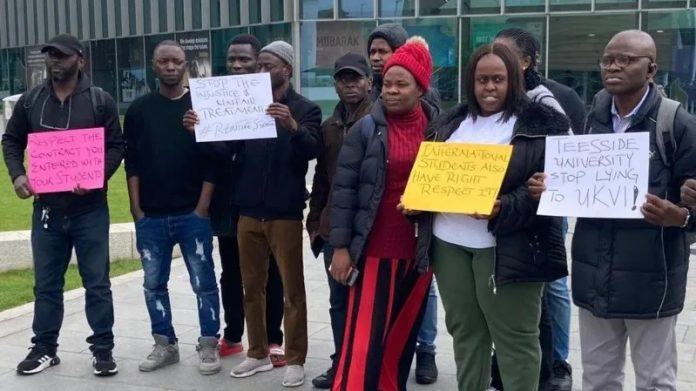
Nigerian students at Teesside University have taken to protesting on campus after the institution expelled them and ordered their departure from the United Kingdom. 

The BBC reported that the university’s action stems from these students’ inability to pay tuition fees on time, a situation attributed to the severe devaluation of Nigeria’s currency, the naira, which has drastically affected their financial stability. On Tuesday morning, the students carried placards to voice their frustrations, accusing the university of taking a “heartless” approach to those who fell into arrears.

The root of the problem lies in Nigeria’s forex crisis, which has seen the naira’s value plummet. This devaluation wiped out the savings of many Nigerian students, making it difficult for them to meet their financial obligations. 

Teesside University responded by reporting these students to the Home Office, leading to their suspension from studies and the revocation of their visa sponsorships. The university defended its actions, stating that non-payment of fees constituted a breach of visa sponsorship requirements, which left them no choice but to alert immigration authorities.

According to the report, many affected students expressed feelings of despair and hopelessness, with some even considering suicide. Adenike Ibrahim, one of the students close to completing her studies, shared her distressing experience. After missing a single payment, she was expelled from her course and reported to the Home Office despite having paid 90% of her tuition fees. Despite settling her arrears, she was not re-enrolled and was instructed to leave the UK along with her young son.

“I did default [on payments], but I’d already paid 90% of my tuition fees and I went to all of my classes,” said Ibrahim. “I called them and asked to reach an agreement, but they do not care what happens to their students.” She described the experience as “horrendous,” noting that the uncertainty surrounding her qualification and the impact on her son was particularly heartbreaking. “It has been heartbreaking for my son especially, he has been in so much distress since I told him,” she added.

Other students echoed similar sentiments, highlighting the severe emotional and psychological toll the situation has taken on them. One master’s degree student, who chose to remain anonymous, said he had seriously considered suicide and was not eating or drinking after receiving a letter from the Home Office stating that his permission to enter the UK had been canceled due to his cessation of studies. 

The Role of Nigeria’s Forex Crisis

The Nigerian forex crisis has had a devastating impact on the students’ ability to finance their education. Before beginning their studies, students were required to provide evidence of sufficient funds to cover tuition fees and living expenses. However, the unexpected and severe devaluation of the naira significantly depleted these funds. This economic instability in Nigeria is part of a broader financial crisis affecting many Nigerians both at home and abroad. The crisis has led to skyrocketing inflation and a sharp increase in the cost of living, further compounding financial difficulties.

At home, Nigerians are facing increased prices for basic goods and services, making it harder for families to support students studying abroad. The cost of imported goods has surged, and businesses are struggling to maintain operations due to the higher costs of imported raw materials. 

The economic challenges have led to widespread financial strain, impacting everything from household budgets to the ability of businesses to sustain operations and employment. As of Wednesday, the naira traded at N1,851.761 against the British pound.

Impact of UK Immigration Law

Compounding the students’ difficulties is the newly introduced UK immigration law, which has tightened regulations around visa sponsorship. This law mandates that educational institutions must report any breaches of visa conditions, including non-payment of tuition fees. Teesside University stated it had “no choice” but to alert the Home Office when students fell into arrears, as failure to pay is considered a breach of visa sponsorship requirements.

university spokesperson said, “Teesside University is proud to be a global institution with a diverse student population but is also very aware of its obligations regarding visa issuance and compliance. These strict external regulations ensure that the university fully supports a robust immigration system and is outside of the university’s control.”

In response to the growing crisis, a group of 60 students petitioned the university for support. Despite some managing to pay off their outstanding fees, the university indicated it could no longer intervene in the Home Office process once students were reported

The university claimed to have made “every effort” to support the students, including offering individual meetings with specialist staff and bespoke payment plans. However, many students reported receiving little to no support from the university, leading to their academic and financial distress.

“I attended all of my classes and seminars, I’m a hell of an active student,” she said. “It is disheartening, I am now on antidepressants and being here alone, I have nobody to talk to. For over two months, I’ve barely eaten or slept, and I don’t understand why this is being meted out to us; we didn’t do anything wrong,” Esther Obigwe said about her experience trying to seek help from the university. She expressed her embarrassment and reluctance to inform her family about her predicament.


Brazil’s Path to Crypto Regulation

0

As the world increasingly embraces digital currencies, the need for comprehensive regulatory frameworks becomes paramount. Brazil, a nation with a burgeoning crypto market, is no exception. The Central Bank of Brazil has embarked on a multi-phase plan to establish a robust regulatory framework for cryptocurrencies and virtual asset service providers (VASPs) by the end of 2024.

The initiative follows Decree 11,563 of 2023, which grants the Central Bank authority to oversee VASPs while maintaining the roles of the Securities and Exchange Commission (CVM) and the Special Secretariat of the Federal Revenue of Brazil (RFB). This collaborative effort aims to enhance transparency, protect investors, and target inappropriate practices that harm consumers, such as scams and fraud.

The regulation of cryptocurrencies presents a complex puzzle for policymakers worldwide. The decentralized nature of digital currencies, the absence of a central authority, the difficulty in monitoring and enforcing regulations, and the global reach of the crypto market all contribute to the regulatory challenges.

One of the primary hurdles is the protection of consumers. Participants in crypto markets are vulnerable to risks such as theft, volatility, and misinformation. Despite these risks, only a fraction of countries has established rules to safeguard consumers. For instance, India and France require advertisers to disclose the risks associated with crypto-investing, while South Korea mandates crypto-asset service providers to obtain an information security certificate to reduce theft risks.

Another significant challenge is the need for global coordination. Cryptocurrencies operate on a global scale, making it imperative for regulations to transcend national boundaries. The International Organization of Securities Commissions has laid out recommendations for global rules on managing crypto and digital assets, emphasizing the need for a harmonized approach.

Furthermore, the rapid evolution of the crypto market often outpaces regulatory developments, leading to a lag in consumer protection rules. This gap necessitates a proactive and agile regulatory stance to keep up with the dynamic nature of cryptocurrencies.

The regulatory process in Brazil is set to evolve through phases, reflecting the growing understanding of regulators and international guidelines. Key steps for 2024 include developing a second public consultation on providers’ performance and authorization, establishing internal planning for stablecoin regulation, and improving the complementary framework for VASP activities. Additionally, the Central Bank will collaborate with other bodies to address specific virtual asset issues, particularly regulating stablecoins within payments and the foreign exchange market.

The Central Bank’s approach is not only methodical but also inclusive, involving public consultations to gather input from various stakeholders, including industry participants, experts, and the general public. The first consultation, held in late 2023, aimed to collect feedback on the proposed regulations and address aspects not covered by the 2022 law, such as the segregation of assets held by VASPs. The second public consultation, scheduled for the second half of 2024, will focus specifically on the regulatory texts, incorporating the input received during the initial consultation to establish a robust regulatory framework with broad support from society.

This phased approach to regulation is indicative of Brazil’s commitment to creating a secure environment for crypto transactions. By finalizing the regulatory proposals using insights from public consultations, the Central Bank ensures that the regulations benefit from public and market input, producing high-quality, well-informed standards.

The anticipated regulations are expected to focus on various aspects, such as anti-money laundering, combating terrorist financing, and monitoring suspicious activities. These measures are crucial for maintaining the stability of the National Financial System and fostering a climate of trust and security for investors and users alike.

As Brazil moves towards finalizing its crypto regulations by the end of 2024, the global crypto community watches with keen interest. The success of Brazil’s regulatory framework could serve as a model for other nations seeking to balance the promotion of innovation with the need for investor protection and market integrity. The journey ahead is complex, but the potential rewards for Brazil’s financial ecosystem and the broader crypto market are significant.

Ireland, Spain, and Norway Announce Plan to Recognize Palestinian State, Sparking Diplomatic Tensions with Israel

0

Ireland, Spain, and Norway have announced their decision to recognize the State of Palestine, a move ignited by the International Criminal Court’s (ICC) recent application for arrest warrants for Israeli leaders.

This decision, set to take effect on May 28, 2024, marks a significant shift in the geopolitical landscape of the Middle East and is expected to escalate diplomatic tensions with Israel and its allies, particularly the United States.

The ICC’s action serves as a catalyst for these European nations, which have long been critical of Israeli policies in the occupied territories. The court’s decision to pursue charges against Israeli officials for alleged war crimes has added a new layer of urgency to the international debate over Palestinian statehood. The ICC’s move was seen by Ireland, Spain, and Norway as a necessary step towards holding Israel accountable and addressing the long-standing grievances of the Palestinian people.

In statements issued on Wednesday, the prime ministers of the respective countries declared their readiness to take the necessary steps to actualize their decision.

“Today, Ireland, Norway, and Spain are announcing that we recognize the state of Palestine. Each of us will now undertake whatever national steps are necessary to give effect to that decision,” Irish Prime Minister Simon Harris stated at a news conference in Dublin.

Norwegian Prime Minister Jonas Gahr Støre underscored the need for a Palestinian state for peace, saying, “A Palestinian state is a prerequisite for achieving peace in the Middle East. There will be no peace in the Middle East without a two-state solution.”

Spanish Prime Minister Pedro Sánchez sought to characterize the decision as a constructive step. He said, “This recognition is not against the people of Israel and certainly not against the Jewish people. It’s not in favor of Hamas. It’s in favor of co-existence.”

However, the move has drawn mixed reactions globally, casting further strains on diplomatic relations that have already been impacted by the ICC’s move to arrest Israeli leaders.

The Palestinian Authority welcomed the move, with its president’s office stating that it reflects support for the Palestinian people’s legitimate rights. The Palestinian news agency Wafa quoted the office as saying, “This step reflects Spain’s keenness to support the Palestinian people and their inalienable and legitimate rights to their land and homeland.”

Hamas, the governing body in Gaza, urged other countries to follow suit and recognize Palestinian statehood. The group called for support of their “legitimate national rights, support the struggle of our people for liberation and independence, and end the Zionist occupation of our land.”

Israel reacted sharply, with Prime Minister Benjamin Netanyahu condemning the decision as rewarding terrorism. Netanyahu stated, “The intention of several European countries to recognize a Palestinian state is a reward for terrorism. This would be a terrorist state. It would try to carry out the October 7 massacre again and again – and that, we shall not agree to. Rewarding terrorism will not bring peace and neither will it stop us from defeating Hamas.”

In further reaction, Israeli Foreign Minister Israel Katz ordered the immediate recall of ambassadors from the three countries, signaling severe diplomatic repercussions. 

Katz declared, “I am sending a clear message today — Israel will not hold back against those who undermine its sovereignty and endanger its security.” He further added, “After the terrorist organization Hamas carried out the largest massacre of Jews since the Holocaust, after it committed the most horrific sex crimes the world has seen, these countries chose to give a reward to Hamas and Iran and recognize a Palestinian state.”

Two State Solution

While over 140 out of 193 United Nations member states recognize Palestinian statehood, only a few European Union members have joined this list. The decision by Ireland, Spain, and Norway to formally recognize Palestine is thus both symbolically and politically significant.

The three European leaders stressed the importance of Palestinian statehood in achieving peace in Middle East, a decades-long goal that the international community has failed to achieve. Senior officials in the United States, a key ally of Israel, have insisted that the only way to bring peace and stability to the region is through the creation of a Palestinian state with guarantees for Israel’s security. Lawmakers in Israel have long rejected those calls.

Reacting to the news on Wednesday, a National Security Council spokesperson told CNN that US President Joe Biden “is a strong supporter” of a two-state solution. The spokesperson added, however, “He believes a Palestinian state should be realized through direct negotiations between the parties, not through unilateral recognition.”

France, meanwhile, said that now is not the “right time” for it to join its European neighbors in recognizing a Palestinian state. The country’s foreign minister, Stephane Séjourne, added that such a decision is not merely a “symbolic issue or a question of political positioning” but rather a “diplomatic tool” in the service of a two-state solution.

Germany also questioned the decision. Michael Roth, the chair of the parliament’s Foreign Affairs Committee, posted on X: “I’m not convinced that the recognition of Palestine as a sovereign state is an appropriate measure after the horrific massacres [by] Hamas [on] October 7 last year.”

Regional and International Support

Several countries, including Saudi Arabia, Jordan, Turkey, and Slovenia, welcomed the decision, reinforcing the call for more nations to recognize a Palestinian state. Saudi Arabia’s foreign ministry expressed appreciation for the move and urged other countries to take similar steps. 

A statement from the Saudi foreign ministry read, “The kingdom appreciates this decision issued by friendly countries, which affirms the international consensus on the inherent right of the Palestinian people to self-determination, and calls on the rest of the countries to quickly make the same decision.”

Historical Context and International Law

Ireland has a long history of being openly supportive of the Palestinian cause, consistently criticizing Israeli policies in the occupied West Bank and Gaza before Hamas’ October 7 attack in Israel. Since then, Israel’s war in response has shredded huge parts of the Gaza Strip and drained critical supplies, exposing the entire population of more than 2.2 million people to the risk of famine.

Israel captured Gaza from Egypt in the 1967 war and withdrew its troops and settlers in 2005. In 2007, Hamas took control of the territory, which is home to around 2 million Palestinians. Following this, Israel and Egypt imposed a strict siege on Gaza, which continues to this day. Israel also maintains an air and naval blockade on the territory. These severe restrictions have been fiercely criticized by international bodies, including Amnesty International, which accuses Israel of violating international law.

The planned recognition adds pressure on Israel after seven months of fighting, according to H.A. Hellyer, a scholar at the Carnegie Endowment for International Peace and the Royal United Services Institute for Defence and Security Studies in London. 

Hellyer explained, “For individual Palestinians on the ground in the Occupied Territories, it’s not going to mean anything at all in the short term, perhaps in the medium term. It is obviously political recognition by states that don’t have a presence on the ground.” He added that Israel risks becoming an “international pariah” given that Western nations are now beginning to recognize a Palestinian state.

ECOWAS Parliament Initiates Mediation Effort to Reunite Niger, Burkina Faso, and Mali

0

The Economic Community of West African States (ECOWAS) Parliament has proposed the appointment of an Adhoc Mediation Committee to persuade Mali, Burkina Faso, and Niger, the three member states that withdrew from the regional bloc earlier this year, to reconsider their decision and rejoin the ECOWAS community. 

The Acting Speaker of the Parliament, Barau Jibrin, announced this initiative during the opening of the 2024 Second Extraordinary Session of the Sixth Legislature of the ECOWAS Parliament in Kano State.

Jibrin, who is also the Deputy President of the Nigerian Senate, emphasized the need for a strong and united regional bloc. To facilitate this goal, he proposed the establishment of an Adhoc Mediation Committee tasked with engaging stakeholders in the affected countries and promoting dialogue to resolve conflicts and restore unity.

“I will, in consultation with my colleagues on the Bureau, be proposing the appointment of an Ad hoc Mediation Committee whose mandate will be to work with all stakeholders in getting our brothers to rescind their decision and come home and work towards promoting dialogue with a view to resolving conflicts in the region. It’s no doubt that we are stronger and there is absolutely no alternative to our collective aspirations of a united, peaceful and secure ECOWAS,” he said.

Jibrin’s proposal follows the withdrawal of Niger, Mali, and Burkina Faso from ECOWAS after being suspended from the bloc due to coup d’état incidents. Despite calls for a return to democratic rule, the three countries, led by the junta, opted to form a new confederation called the Alliance of Sahel States (AES). 

The countries were suspended from the regional bloc for carrying out a coup d’état last year that usurped their respective constituted governments from power. Jibrin’s announcement adds to the Parliament’s earlier proactive approaches to addressing this rift and fostering reconciliation within the region.

The ECOWAS Parliament’s extraordinary session aims to deliberate on pressing regional issues and provide fresh perspectives on promoting peace, security, and stability. Jibrin highlighted the Parliament’s role in promoting democracy, checks and balances, and accountability within the ECOWAS community. He emphasized the importance of collaboration between the Parliament and the ECOWAS Commission to strengthen regional security and development initiatives.

He said: “As the Parliament looks towards facilitating the promotion of democracy, checks and balances, as well as accountability in the ECOWAS Community, having a strong ECOWAS Parliament is indispensable. I have had the esteemed honor of leading this Parliament for barely two months and I have concluded that much needs to be done in terms of asserting the independence of the Parliament in the exercise of its important roles of parliamentary oversight and representation.

“There is, also, a compelling need to build strong collaboration with the ECOWAS Commission and undertake joint initiatives aimed at strengthening regional security and advancing development. While it is true that each institution has its unique prerogatives, the fact remains that there exist cross-cutting issues that are best addressed with enhanced collaboration among the community institutions.”

Jibrin also addressed the absence of the Togolese delegation in the Parliament, noting efforts to ensure their representation and uphold the institution’s integrity. He announced the impending inauguration of the Togolese delegation, which is expected to contribute to the Parliament’s mandate.

Insights and Recommendations from Members

Sen. Ali Ndume, a seasoned member of the regional parliament, expressed optimism about the mediation efforts, noting that the conditions for the returning members to rejoin the ECOWAS fold are now favorable. He emphasized the importance of addressing past grievances and fostering reconciliation to rebuild trust among member states.

Governor Abba Kabir Yusuf of Kano State highlighted critical regional challenges, including citizenship issues, security threats, environmental concerns, and economic development. He urged the Parliament to prioritize initiatives that enhance regional integration, combat illicit activities, and promote economic growth.

Government Support and Collaboration

The Nigerian Minister of Foreign Affairs, Yusuf Tuggar, reaffirmed the government’s commitment to supporting the ECOWAS Parliament and fostering regional integration. He noted the Parliament’s role in engaging member countries experiencing unconstitutional changes of government and promoting cooperation among ECOWAS institutions.

Tuggar stated, “We need to collaborate with all organs and institutions within the ECOWAS. You have at your disposal so many instruments to use for you to achieve that.”

He described the hosting of the regional meeting in the commercial city of Kano as important as it will greatly bridge the gap between the citizens and the regional community.

While the ECOWAS Parliament’s proactive measures to mediate the reintegration of member states demonstrate its commitment to preserving regional unity and stability, there is doubt that its efforts will yield the expected results. This is because the aggrieved member states seem unwavering in their determination to form a new confederation as well as alliances with Russia as a figurehead. This determination, underscored by the growing apathy for France’s exploitative grip on its former colonies in the Sahel, is backed by the countries’ public.

Nigeria Should Update NIMC Act To Avoid NIN-based Fraud

1
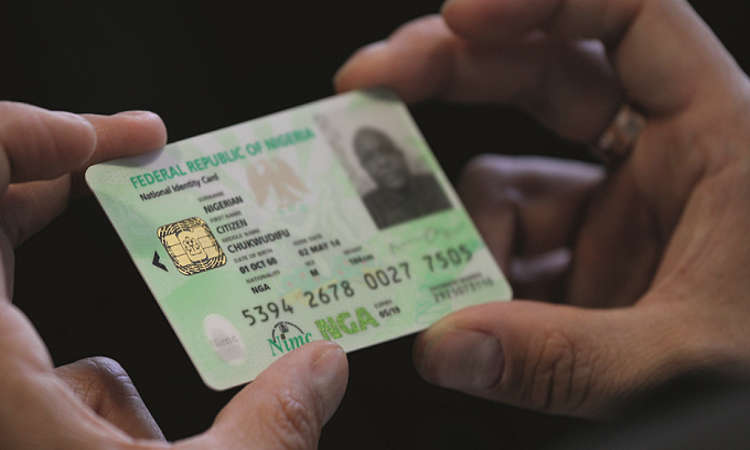
National ID Card, Nigeria

I read a report today, and it seems like Nigeria has to update the NIMC (National Identity Management Commission) Act and make it compulsory for registration of deaths via churches, mosques, hospitals, community heads, etc all the way to the National Population Commission. One of the biggest risk vectors in the National Identification Number (NIN) in Nigeria is that it does not go dormant after the owner has died! 

That loophole is breeding the next domains of financial fraud as criminals harvest NIN data, and cause severe problems. As NIN does that, banks have to decide if BVN (bank verification number) itself is still a requirement, and if indeed it is, it must also have a way to freeze it.

I call the EFCC to provide technical reports to the National Assembly so that it can update both the NIMC Act and the National Population Commission Act on some of the requirements I have noted. The report I read posits that if Nigeria does not deal with KYC challenges around BVN/NIN, our financial system may have problems.

For most fintechs, remember this: KYC-based fraud is an existential threat, and do not break things and move fast on it. KYC is your DPC (as in building foundation); if you get it wrong, you have no business! Make real-time photo verification a mandatory requirement in your process.