DD
MM
YYYY

PAGES

DD
MM
YYYY

spot_img

PAGES

Home Blog Page 3311

BONK Price Explosion Imminent: What This Means for New Players in the Crypto Arena

0

Recently, the spotlight has fallen on BONK, a meme token poised for an imminent price explosion.

Simultaneously, RCO Finance (RCOF) is garnering attention with its innovative approach to reshaping crypto investment paradigms.

In this article, we delve into the imminent Bonk price implications and how they relate to the prospects of new players like RCOF in the crypto arena.

Bonk Price Prediction: Anticipation For Imminent Explosion

According to various analyses and predictions from reputable sources within the crypto community, Bonk is poised for a substantial price explosion in the coming days or weeks.

Technical indicators, such as the Relative Strength Index (RSI), suggest strong buying interest and bullish momentum, indicating a potential surge in the price of Bonk.

Additionally, recent trading patterns and whale activity have contributed to investors’ growing sense of anticipation.

Jacob Bury, a prominent YouTuber known for his insightful technical analysis, has highlighted the potential for Bonk’s price to double over the next three to six months, reaching impressive heights of $0.00006.

https://youtu.be/yZVPBxWgXzA?si=SIms-gJZnLLghn4b

Furthermore, the recent surge in trading volume and positive market sentiment surrounding Bonk’s upcoming developments have fueled optimism among investors, further supporting the notion of an imminent price explosion.

However, investors should cautiously approach such predictions and conduct thorough research before making any investment decisions.

While technical analysis can provide valuable insights, factors such as market sentiment, project fundamentals, and potential regulatory developments must also be considered.

RCO Finance (RCOF): Capitalizing on Bonk’s Implosion

While the prospect of Bonk’s price explosion may seem enticing, savvy investors are also eyeing another opportunity that has emerged amidst the frenzy – the RCO Finance (RCOF) token.

Besides offering a great investment opportunity for early investors through the ongoing public presale, RCOF token’s RCO Finance decentralized trading platform stands as a pioneering platform reshaping the investment realm by enabling users to purchase stocks and an array of assets using cryptocurrency directly.

Most significantly, Bonk’s price implosion could benefit the RCOF token, which is currently in the public presale stage.

In addition, besides the RCOF token presale, RCO Finance offers a compelling solution with its innovative approach to democratizing investment opportunities.

With features such as direct ownership of assets, leverage up to 50x, and access to a diverse range of investment options, RCO Finance presents an attractive proposition for investors looking to diversify their portfolios.

In addition to its investment features, RCO Finance prioritizes security, transparency, and user autonomy.

The platform uses blockchain technology and artificial intelligence (AI) to ensure that transactions are secure and transparent while providing users with real-time market data and customizable trading strategies.

Furthermore, the platform’s decentralized nature eliminates the need for intermediaries, reducing transaction costs and increasing efficiency.

Seizing the Opportunity with RCOF Token

As Bonk garners attention and generates excitement within the crypto community, investors can strategically position themselves by exploring alternative investment avenues such as the RCOF token.

By participating in the public presale stage of RCO Finance, investors can gain early access to a promising project with the potential for significant growth and returns in the long run.

The RCOF token’s staged pricing during the presale stages allows investors to benefit from potential price increases as the project progresses.

With each stage offering a higher token price, early investors stand to gain substantial returns, with potential gains ranging from 169% in the second presale stage to an impressive 3,000% when the token gets listed on major cryptocurrency exchanges.

The expected listing price of the RCOF token, ranging from $0.4 to $0.6, suggests significant upside potential for investors who secure their positions during the presale stages.

Furthermore, as the project gains traction and attracts more investors, the RCOF token is poised to experience further price appreciation, making it a compelling investment opportunity for those looking to capitalize on the crypto market’s growth potential.

For more information about the RCO Finance Presale:

Visit RCO Finance Presale

Join The RCO Finance Community

Look beyond ‘memecoin’ to really see $DAVIDO

0

Nigerian mega popular singer Davido released a memecoin yesterday named $DAVIDO

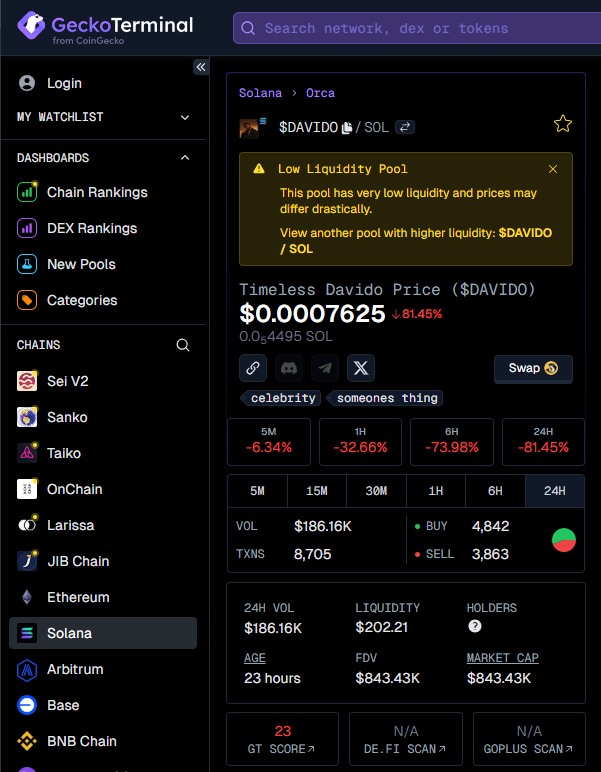
$DAVIDO was launced on the Solana network on May 29th and rapidly grew to a market capitalization of $10 million.

In a few hours, it dropped to around $2 million. Various ‘Apex Rags’ carry similar stories of Davido selling off his own $DAVIDO while at the same time encouraging his fans to buy.

At the time of writing, Gecko Terminal quoted its market cap as $843.4 K.

Why do I think this is different? I think there is a limitations on perspective…  because everyone is basing what they say on what they know about $hitcoins and memecoins. They are not considering the nature of David Adeleke, otherwise known as Davido, his relationship with his fans, Nigeria generally, and the wider Afrobeats movement globally.

In 2021, Davido conducted an appeal for orphanages in Nigeria with a target of NGN 100M. This was around $250k USD at the time. By the appeal closure deadline, the account had accumulated $600k USD with remittances still arriving. Details of the beneficiary institutions can easily be found online.

Beyond this generally, there is a track record of a huge assortment of people of notoriety just ‘giving’ Adeleke ‘stuff’. The guy could probably live opulently for free if he wanted, at least for now.

It’s like as if he has Midas in his back pocket.

Kurt Cobain of the band Nirvana, had a 1969 Fender Mustang, which sold for $4,500,000 in 2022.

This guitar was used by him during Nirvana’s MTV Unplugged performance in 1993, five months before he was found dead in his home in Seattle, Washington.

For people who have crossed over into a rare state of mega-notoriety, prized memorabilia they leave behind, carries epic importance massively surpassing its practical value. It has become a physical symbol of a past unique and unprecedented moment.

Nobody’s notoriety exists forever, and it is only symbols of these special moments, when individuals on top of their game made something truly exceptional happen, will retain these sorts of values.

There are other known celebrities who had such moments, in entertainment or sport, who are still alive. They could probably buy an instrument, a set of boots, or boxing gloves right now, and sign it; but it wouldn’t be worth much more than its market price for what it actually is.

It’s not from a moment locked forever in history when they were ‘in the zone’ and made something visually and/or audibly spectacularly happen. They are no longer in that place where a short intro to a performance can send audiences or spectators into mass hysteria.

This is what makes me look at $DAVIDO in a different way. It might be a memecoin, but to masses who don’t even understand the bare concepts of even cryptocurrencies or blockchains, it may mean something else.

$DAVIDO has ‘happened’ when David Adeleke is at the pinnacle of his ‘game’. The days of being ‘in the zone’. It isn’t just the speculative token off Solana, the cryptocurrency community understand it to be. To the big wide world outside this community, it might be something much bigger, carrying far more meaning, and having enduring significance.

When you look, you notice Solana Smart Contract $hitcoin with all its ills. When you SEE, you observe something else.

To the type of people who brought an open debit slip or wallet to the orphanage appeal, or just make random high value ‘appreciation’ gestures to him, it’s more than a memecoin.

It’s a cryptographic receipt celebrating something they have already decided to give freely without looking for return. Actual speculators might be just a sideshow.

It may be the first ‘cryptomemorabilia’ of its kind.

Early release spikes always come, followed by a decline. A return to that level, if at all, will not come back any time soon.  But it is quite possible that $DAVIDO may settle at some level from which it will modestly appreciate, because of the enduring mass sentiment that is placed in David Adeleke.

Caitlyn Jenner might be able to keep up with the Kardashians, but it’s highly possible pump.fun can’t keep up with $DAVIDO longer term.

9ja Cosmos is here…

Get your .9jacom and .9javerse Web 3 domains  for $2 at:

.9jacom Domains

.9javerse Domains

Visit 9ja Cosmos LinkedIn Page

Visit 9ja Cosmos Website

Preview our Sino Amazon/Sinosignia releases (Ente)

Preview our Sino Amazon/Sinosignia releases (Pinterest)

As the Maker of Huggies Exits Nigeria, We Must Note that Saving the factories is saving the Naira!

0

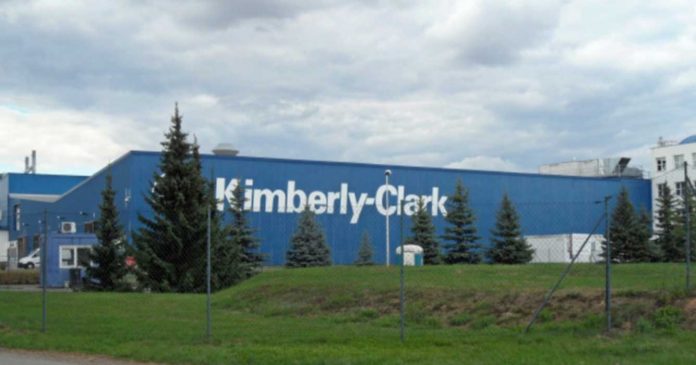
Very unfortunate to read that the maker of Huggies is exiting Nigeria: “Kimberly-Clark, a leading manufacturer of diapers and sanitary pads, is set to announce the imminent shutdown of its production facility in Ikorodu, Lagos, Nigeria. This decision comes just two years after the company invested $100 million…[The company] attributed the shutdown to severe economic conditions that have impacted production and profitability. “

In 2022, Kimberly-Clark inaugurated a new $100 million production facility in Ikorodu, marking a significant investment aimed at reviving its presence in the Nigerian market. Despite initial success, the company has struggled with several challenges since late 2022.

According to the sources, the Ikorodu plant has been operating below capacity from late 2023 into 2024 due to the harsh economic environment in Nigeria. The company has faced escalating energy costs, high raw material expenses, and reduced customer demand, leading to a substantial financial burden.

In the Igbo Nation, you do not tell a deaf person that war has started because when a war does start, everyone will know, because it will be self-evident.

As always, I like to offer suggestions because that is what village boys do: Nigeria MUST subsidize energy for the industrial sector even if it mandates for residential and commercial customers to pay the full rates. There is no way companies in Nigeria could compete against global products if  they are exposed to the high cost of energy (via expensive diesel) and electricity (reflective tariff).

Yes, besides the expensive US dollars, energy is another issue. Our government should visit these factories and chat with them. This is getting into a dangerous phase because when people lose their jobs, many who depend on them drop in the economic ladder. And the big one: Saving the factories is saving the Naira!

Kimberly-Clark to Shut Down Lagos Production Facility, Citing High Cost of Operation

Kimberly-Clark to Shut Down Lagos Production Facility, Citing High Cost of Operation

0

Kimberly-Clark, a leading manufacturer of diapers and sanitary pads, is set to announce the imminent shutdown of its production facility in Ikorodu, Lagos, Nigeria.

This decision comes just two years after the company invested $100 million to restart operations in the country. Sources within the company, quoted by Nairametrics, attributed the shutdown to severe economic conditions that have impacted production and profitability.

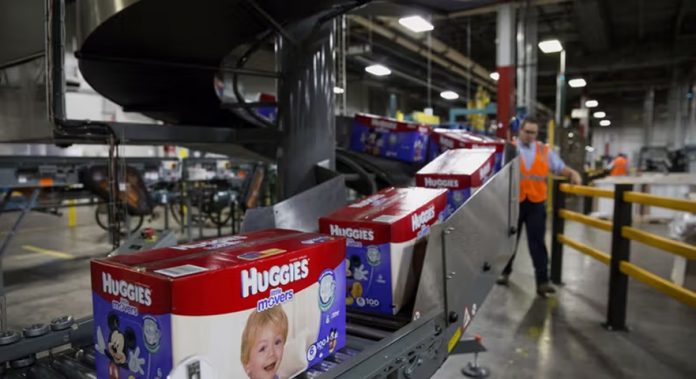
Kimberly-Clark first began operations in Nigeria in 2012, producing popular hygiene products such as Huggies diapers and Kotex sanitary pads. However, in 2019, the company ceased operations due to unfavorable economic conditions.

In 2022, Kimberly-Clark inaugurated a new $100 million production facility in Ikorodu, marking a significant investment aimed at reviving its presence in the Nigerian market. Despite initial success, the company has struggled with several challenges since late 2022.

According to the sources, the Ikorodu plant has been operating below capacity from late 2023 into 2024 due to the harsh economic environment in Nigeria. The company has faced escalating energy costs, high raw material expenses, and reduced customer demand, leading to a substantial financial burden.

High Operational Costs

A source revealed that the company currently spends approximately N100 million monthly on power generation alone, aside from maintenance costs. Overall, the monthly fixed operational costs have risen to over N500 million.

“Running cost is extremely on the high side. Our fixed spend on a monthly basis is above N500 million, and we spend about N100 million on just gas consumption for powering the gas engine aside from maintenance. The company has two assets, and for last year, these assets didn’t run for like 90 days in 365 days,” the source explained.

Downsizing and Reduced Production

In response to these economic pressures, Kimberly-Clark has downsized its operations, reducing production from seven days a week to just Mondays to Thursdays. The company also cut its shifts from four to two earlier this year.

“We run 24 hours and seven days a week before, but currently, we don’t run on Friday, Saturday, and Sunday anymore because of the economic situation. There is already an embargo on external recruitment. The company is looking for ways to reduce costs since it is not making a profit,” the source added.

A significant factor contributing to the high production costs is the increased expense of raw materials, most of which are imported. Currency depreciation has further exacerbated these costs, making it difficult for the company to maintain profitability.

At the onset of operations, Kimberly-Clark had set aside funds for five years, expecting that revenue from the Nigerian market would sustain operations. However, the current economic conditions have derailed these expectations.

Kimberly-Clark’s planned closure is part of a broader trend of multinational companies exiting Nigeria due to similar challenges. Last year, Procter & Gamble (P&G) closed its production facility in Ibadan, after investing $300 million, citing high production costs and economic difficulties. Similarly, PZ Cussons recently announced that it is evaluating strategic options for its African business, with Nigeria being its largest market.

Potential Impact on the Diaper Industry

The baby diaper industry in Nigeria, estimated at $920 million with a CAGR of about 11% between 2024 and 2028, is highly competitive, with approximately 15 brands vying for market share. Leaders in the industry include Pampers (produced by P&G), Molfix, and Kimberly-Clark’s Huggies. The exit of two major players—P&G and now potentially Kimberly-Clark—within a year underscores the challenging business environment in Nigeria.

The planned closure of Kimberly-Clark’s Ikorodu facility is a significant setback for Nigeria’s efforts to attract foreign direct investment (FDI). It highlights the broader challenges faced by manufacturers in the country, including high production costs, currency depreciation, and weak consumer purchasing power.

If Kimberly-Clark follows P&G’s lead and transitions to an import-based business model, it could exacerbate the cost of diapers and sanitary products for Nigerian consumers. This shift would increase the country’s reliance on imports at a time when there is a strong drive to boost local production. Such a move could lead to higher prices for essential hygiene products, placing additional financial strain on households.

Nigeria Launches Nationwide CNG Mass Transit Conversion Program

0

In a move towards promoting clean energy and affordable transportation, the Presidential Compress Natural Gas Initiative (PCNGI), in collaboration with Rolling Energy, has announced the commencement of a nationwide Mass Transit Conversion Program.

The initiative aims to convert mass transit vehicles to cleaner energy sources, significantly reducing emissions and promoting environmental sustainability.

The announcement was made at the launch of the conversion and refueling site in Ilorin on Wednesday. The PCNGI, a flagship program of President Bola Tinubu’s administration, is dedicated to promoting clean energy solutions across Nigeria. Through strategic partnerships and innovative projects, PCNGI aims to reduce the environmental impact and support the transition to sustainable energy for the transport sector.

The initial phase of the conversion program will be rolled out in Lagos, Kwara, the Federal Capital Territory (FCT), and Rivers States. This phase will be executed in partnership with major transport unions, including the National Union of Road Transport Workers (NURTW), the Road Transport Employers’ Association of Nigeria (RTEAN), and the Nigerian Association of Road Transport Owners (NARTO).

To ensure the success of the program, the rollout will commence in eight of over 120 designated conversion workshop sites. Key union partners will have the opportunity to observe, evaluate the conversion process, and provide valuable feedback as the initiative plans to scale up operations across 15 states over the next 45 days. The rollout will be backed by a 50 percent discount on equipment and kit costs, as well as support for qualified union members for installation costs.

Government Commitment to Clean Energy

The PCNGI and Rolling Energy are committed to driving Nigeria towards a more sustainable future. Establishing the Ilorin site and the nationwide conversion program are pivotal steps in reducing the carbon footprint and enhancing the efficiency of mass transit systems. Interested public members are encouraged to visit Femadec, FixIt45, and Portland in Lagos, NITT, Nipco in Abuja, Total Support and Femadec in Abuja, and Rolling Energy in Ilorin for conversion.

This development comes after the Presidency announced plans to launch 2,700 CNG-powered buses and tricycles before May 29, marking President Tinubu’s first year in office. The federal government aims to deliver 100 conversion workshops and 60 refueling sites spread across 18 states before the end of 2024.

The Back Story: Addressing Fuel Subsidy Removal

The PCNGI initiative is part of the government’s broader efforts to cushion the effects of the recent removal of fuel subsidies. The removal of fuel subsidies in May 2023 has led to a significant increase in fuel prices, impacting transportation costs and the cost of living. The government aims to provide a more affordable and environmentally friendly option for mass transit by promoting the CNG as an alternative fuel.

The removal of fuel subsidies has been a contentious issue in Nigeria, with widespread protests and public outcry. The government argues that subsidies are unsustainable and that the funds can be better utilized for development in other sectors. However, the immediate impact on fuel prices has placed a burden on the populace, particularly in the transportation sector.

The PCNGI initiative aims to mitigate these effects by providing a cleaner and more cost-effective alternative. The transition to CNG is expected to reduce transportation costs and provide long-term economic benefits by decreasing the country’s reliance on imported petroleum products.

However, the success of the PCNGI initiative will depend on effective implementation and collaboration between the government, transport unions, and private sector partners. By providing financial incentives and technical support, the program seeks to ensure a smooth transition and encourage widespread adoption of CNG.

The establishment of conversion workshops and refueling sites across the country is a critical component of this strategy. If successful, the program could serve as a model for other countries in the region, demonstrating the potential of clean energy solutions to address economic and environmental challenges.