DD
MM
YYYY

PAGES

DD
MM
YYYY

spot_img

PAGES

Home Blog Page 3313

Tekedia Launches Tekedia CEO and Director Program, for Senior Executives

0

Tekedia CEO and Director Program is designed to help CEOs, directors, board members, and C-level executive management members (including CFO, CMO, CTO, CIO, etc), master the mechanics of building category-king startups and companies. The program focuses on three core themes – business innovation, business growth, and building AI-era businesses – via pre-recorded, and personalized Live Zoom sessions. That live session courseware is customized around the learner’s industry with relevant industry cases.

The program runs for 6 months, and offers 8 hour-long one-on-one live Zoom sessions, per participant, with Tekedia Institute’s Lead Faculty, Prof Ndubuisi Ekekwe.

Participants can enroll and begin anytime. In other words, there is no specific start date as it is customized for the learner via the one-on-one live Zoom sessions. If you pay today, you will begin immediately.

This executive program also provides a complementary 3 editions of Tekedia Mini-MBA at no additional cost.

Cost is $1,000 or N1 million. To register, go here.

The importance of Real Web3 Domains, the very new things they do, and how to spot fake ones.

1

To understand Web 3 domains are, we first have to examine the legacy domains, understand them, and learn what has changed.

Legacy Domains

Registering 9jacosmos.com  is a way of finding us virtually. All things on the internet are represented by IP (Inernet Protocol) addresses. A process known as DNS (Domain Name Service) translates a human language ID into an IP so the internet can understand it.

Experts from an IP address rental company suggest that understanding this translation process is vital for managing how your brand is perceived and accessed globally. Securing the right numerical identifiers ensures that your domain consistently points to a reliable and high-performing network location.

9jacosmos.com real identity is 198.187.29.39 but DNS is converting it to something people will understand.

The registrant of 9jacosmos.com (Namecheap), like all registrants, have their own DNS integration to take care of that. They can also be paid for other stuff, such as hosting space, design services, security certificates and other things. These are services that allow things to be done with 9jacosmos.com, such as create a website at the destination or make an email address like ‘john1@9jacosmos.com

Aside from Registrars, DNS translation is also used in browsers and mobile apps.

This is a legacy web system that is centralized. The registrars are controlled by a centralized autonomous NGO body known as ‘Internet Corporation for Assigned Names and Numbers’ (ICANN). They basically ‘make up’ the root zone. They are a single point of failure. Root Zones’ are an upper extension of ‘Top Level Domains’ abbreviated to ‘TLD’

Examples of TLDs are .com, .net, .co.uk, .fr, .de, .io, .xyz etc.

Individual companies (or nations in the case of Country Domains), own the TLDs issued and regulated by ICANN.

ICANN itself is also not entirely impartial. Over the years, it has been infiltrated by eminent individuals who have positions in the commercial sector and work for companies whose prosperity is influenced by its trajectory, findings and decisions. This is common in many quazi-civil agencies. You only have to look at the   IMF, WHO, Environment, Climate and Wildlife Conservation… see all the professionals from big finance corporations, big phrama, energy conglomerates etc, and we see many with influence that shouldn’t have it, due to conflicts of interest and the commercial agenda of their paymaster.

Web 3 domains are the next generation and involves a decentralized process where there SHOULD BE no central authority ‘making up’ root zones. GENUINE Web 3 domains are produced through an integral architecture of a (Nakamoto Consensus) PoW blockchain in public ownership.

Root Zone:

The Root Zone is the base anchor for the Top Level Domain (TLD) and subdomains. In ICANN domains, the Root Zone is merely a data reference point inside an internal database management system. In Genuine Web 3 domains, the root zone is integrated to a PoW (Proof of Work) blockchain (preferably Nakamoto Consensus), using a TLD ownership information file. This file is stored by adding a distributed and decentralized blockchain-based system that no one controls and anyone can use. It is not a ‘Smart Contract’.

We’ve purposefully avoided making mention of providers claiming to have ‘Web3’ domains if how they achieve their root zone isn’t clear.

Top Level Domain (TLD) :

The Top level Domain is the highest group of characters which annexe the Root Zone. Examples of ICANN TLDs are .com , .net, .fr,  .ng, .eu , .xyz and .io

ICANN TLDs have only one use, which is to issue sub-domains. Genuine Web 3 TLDs have many other uses and are not confined to just issuing sub-domains.

Examples of providers with some products leveraged through Genuine Web 3 TLDs are Wallet Inc, HNSAU, 9ja Cosmos, Eskimo Software and Namebase

ENS used to have a Genuine Web 3 TLD (.eth) , though it became compromised following a change which happened in … generally referred to as ‘the merge’. This compromised the Root Zone, as Ethereum is no longer a ‘decentralized blockchain-based system that no one controls’.  Other changes since the merge has made it less so.
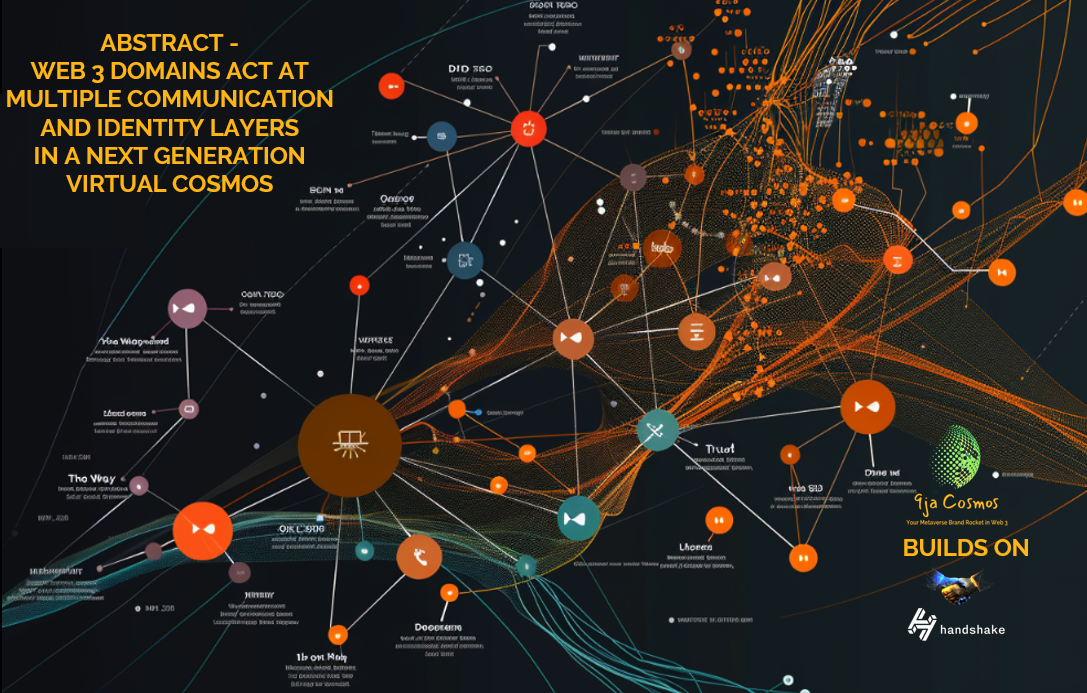
Several other TLDs exist claim to be Web3 Domains. Key attributes of fake Web3 Domains:

Do not have Root Zones produced through an integral architecture of a (Nakamoto Consensus) PoW blockchain in public ownership. Detailed information on Root Zone construct is absent from publicly available information.

Try to emulate ICANN in focusing solely on the sub-domain generation rather than the wide spectrum of use cases Web3 TLDs can be put to.

Tend to exist solely in the EVM Compatible Ecosystem.

Try to emulate the appearance of Web 3 Domains through imitation of Web 3 TLD use case diversity at the sub-domain level, by forming corporate and centralized extensions through EVM Compatible partners.

‘Flippers’ (people who buy and sell virtual assets without improving them) flip SLDs/subdomains more often or to the exclusion of flipping TLDs (another emulation of ICANN).
Sub-Domains and SLDs (Second Level Domains)

SLDs (Second Level Domains) are the first level of ‘subdomain’ below a TLD

With legacy ICANN domains, SLDs are the only consumer/general product and once registered, SLD registrant can make up as many subsequent subdomains as they like. They don’t have to pay extra for them.

For example, in the address www.linkedin.com/notifications.  ‘.com’ is the TLD owned by a company – Verisign. LinkedIn has had to pay to register ‘linkedin’ but ‘notifications’ is a subdomain made up by LinkedIn using registrants’ tools. It didn’t have to pay anything.

With GENUINE Web 3 domains, there isn’t a distinction between an SLD and lower subdomains most of the time, unless an SLD vendor is involved. This is because subdomains are only one use-case of a GENUINE Web 3 domain.

Some services feigning Web 3 domain creation, attempt to sell, or encourage the sale of further subdomains, through using tokenizing strings with no valid root zone, typically using EVM compatibility (ERC 20). This means monetizing subdomain levels that would normally be available free.

Hybrid Variations:
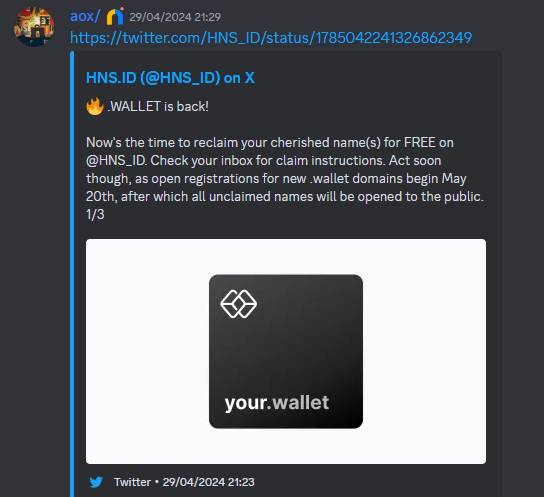
‘.hns’ by Namebase (case in point) offers SLDs creation options off Optimism which are EVM Compatible. This means they can avail of (centralized) EVM Compatible services made to work on similar architectures, such as ‘.eth’

The SLD created (example: ‘crypto.hns’) doesn’t have the decentralization ‘.hns’ does, but it does have a dependency on a TLD with a GENUINE Web 3 Root Zone. This makes it superior to SLDs with EVM Compatibility where a Nakamoto Consensus Root Zone is either absent or unclear.

.9jacom by 9ja Cosmos was the first Country TLD in the world, issued in September 2022. SLDs off .9jacom (and .9javerse) are offered via EnCirca registrar extensions, which emulate some of the features of traditional SLDs. Products that are technically similar are owned by Namecheap, 101 Domains and Porkbun, as well as EnCirca, and several third party commercial operators, although they are not targeting the Web 3 Country TLD market specifically.

Innovative Use cases of GENUINE Web 3 TLDs.

9ja Cosmos also made history by leveraging Web 3 TLDs to market NFT like assets to Qatar 2022, and issued 9ja Cosmos as an ‘extra-sovereign’ business using  GENUINE Web 3 TLDs as shares.

In the Sinosignia/Sino Amazon products we have GENUINE Web 3 TLDs partnered with amazing tokenized artwork where each TLD is one single character of East Asian appearance.

GENUINE Web 3 TLDs can be put to many uses that bears no relation to subdomains, internet addresses or websites. They can replace long alphanumeric strings in identifications related to wallets, exchanges, web 3 services and platforms.

However, security is weak when people do not have a root zone  integrated to a Nakamoto Consensus blockchain. This is particularly true of EVM Compatible proxies.
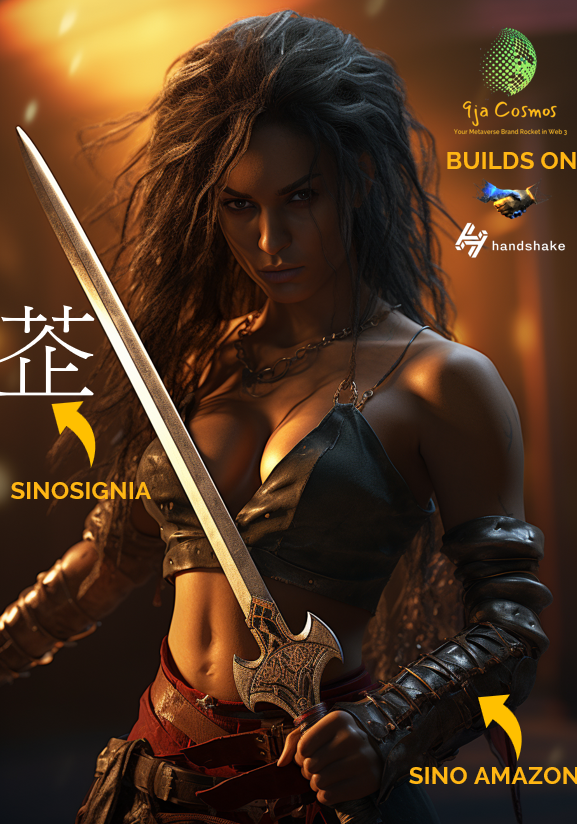
 

9ja Cosmos is here…

Get your .9jacom and .9javerse Web 3 domains  for $2 at:

.9jacom Domains

.9javerse Domains

Visit 9ja Cosmos LinkedIn Page

Visit 9ja Cosmos Website

Preview our Sino Amazon/Sinosignia releases (Ente)

Preview our Sino Amazon/Sinosignia releases (Pinterest)

Intricacies of International Agricultural Negotiations

0

In the complex world of international relations, agricultural negotiations play a pivotal role in shaping the economic and diplomatic ties between countries. Recently, the scheduled agricultural talks between Poland and Ukraine, set for May 14, have been thrust into the spotlight. Reports emerged of the cancellation of these talks due to allegations of corruption among Ukrainian negotiators, as stated by Polish Deputy Agriculture Minister Michal Kolodziejczak in an interview with Dziennik Gazeta Prawna.

This development is a significant setback for both nations, considering the importance of agriculture in their respective economies and the potential benefits that could arise from successful negotiations. For Poland, these talks are crucial in addressing the influx of cheap agricultural products from Ukraine, which has been a point of contention for Polish farmers since Ukraine was granted the right to duty-free supplies of goods to the EU in 2022.

The allegations of corruption have raised serious concerns about the integrity of the negotiation process and the individuals involved. Corruption, a pervasive issue that undermines trust and hampers progress, poses a substantial barrier to fruitful discussions and mutually beneficial agreements. It is a reminder of the challenges that countries face in maintaining transparent and ethical practices in international dealings.

The cancellation of the talks also highlights the delicate nature of diplomatic relations. While the Polish side has expressed its unwillingness to negotiate with individuals facing corruption charges, the Ukrainian Ambassador to Poland, Vasyl Zvarych, has clarified that negotiations have not been suspended but rather postponed. He emphasized the ongoing dialogue at various levels and the shared interest in continuing the talks.

This situation underscores the need for clear communication and the resolution of any allegations before resuming talks. It also reflects the broader context of international trade negotiations, where legal and ethical considerations must be balanced with economic interests.

As the story unfolds, it will be interesting to observe how Poland and Ukraine navigate these turbulent waters. The resolution of this issue could set a precedent for how corruption allegations are handled in the realm of international agricultural negotiations. It may also influence the future of trade relations not only between these two countries but also within the larger European community.

The coming weeks will be crucial in determining the path forward. Will the two nations find common ground and overcome the current impasse, or will the allegations of corruption lead to a prolonged disruption of their agricultural dialogue? Only time will tell, but the outcome will undoubtedly have lasting implications for the region’s political and economic landscape.

The Revelation on Investments – Alpha Happens Even During Global Tensions

0
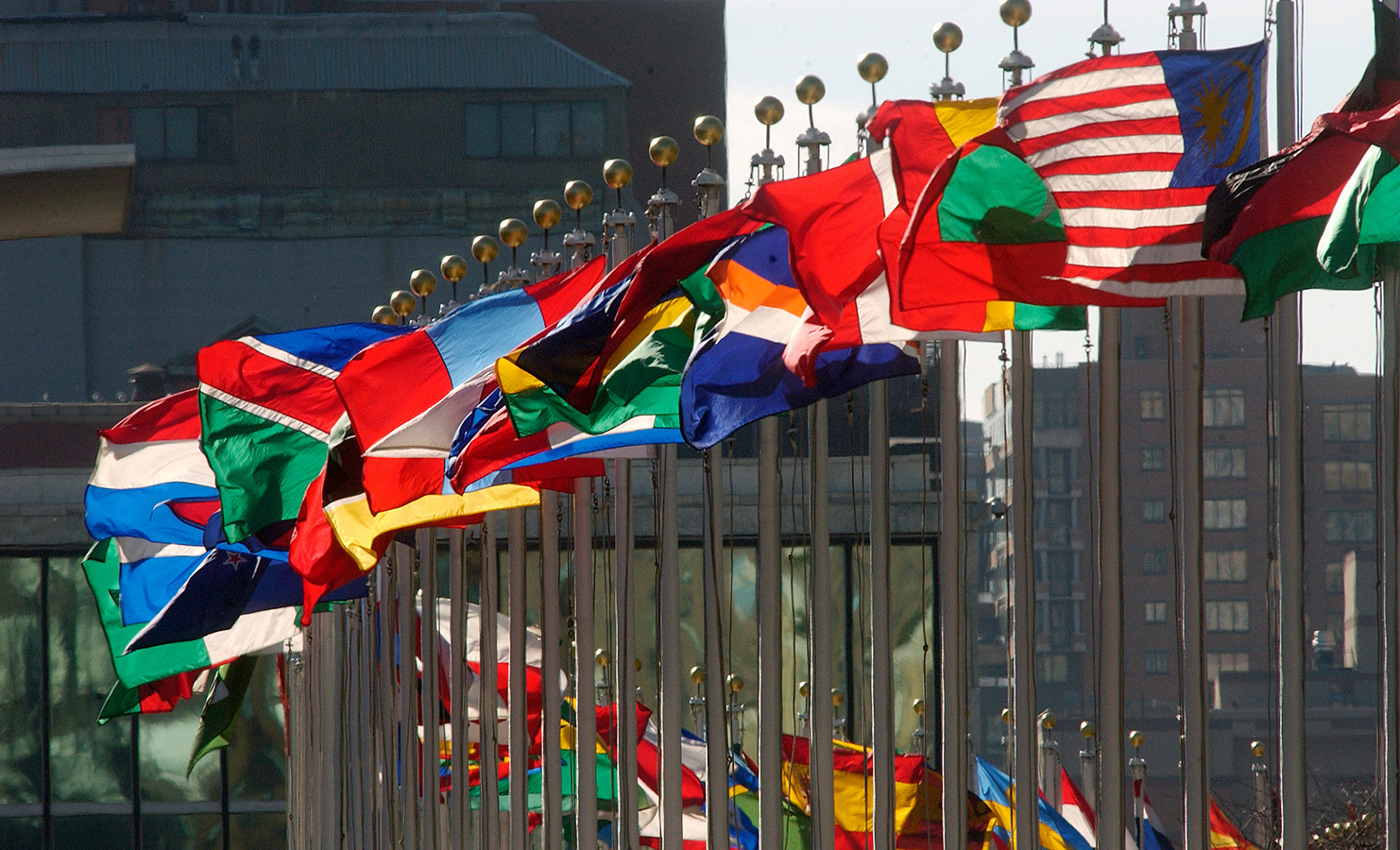
Flags of member nations flying at United Nations Headquarters.

It turns out to be an illusion: the stock market does well when the world seems to be at peace. Check the major stock markets in the world, they’re hitting new highs. Good People, we can make an argument that during crises (not full blown wars), the world goes Keynesian where we spend, spend and spend. And as that happens, companies make tons of money.

 As the Dow Jones Industrial Average hits the record-high 40,000 benchmark, stakeholders are experiencing “almost picture-perfect” conditions in other investment options, too, The Wall Street Journal reports. It notes that tech stocks, cryptocurrencies and gold are ticking up, and even lower-risk investments such as certificates of deposits are hitting 5% yields. But there are longer-term headwinds, including the government’s looming $1.1 trillion payment of extra interest on its debt over the next decade. JPMorgan Chase CEO Jamie Dimon is also skeptical, saying there’s “a lot of happy talk,” while inflationary forces remain unpredictable. 

So, provided it is all tension, no actual bullets and grenades, markets are fine. The only downside from the money making component is that inflation will go up since all these monies will end up on the streets and purses of people!

 Here is the message: never postpone an opportunity. Yes, “uwa bu ahia” [the world is a marketplace] and you can trade at peace and war time, notes the Igbo Nation! Indeed, never think the market will close.

When Does It Make Sense To Give Up On A Failing Startup?

0

A lot of startups are failing. The United States Bureau of Labor Statistics says that 10% of startups fail within the first year, and the percentage increases every year afterwards. Ultimately, they say that only 10% will remain in the long run, while the remaining 90% will fail at some point.

But now, what do we call startup failure?

For the most part, what hits the news as a startup failure is the point when the founder decides to throw in the towel and give up. The startup may have failed a long time ago, or it may not have even failed yet, but when the founder decides to give up, that startup is now qualified as a failed startup.

Now what I think is that most people give up on things too early, and this comes to play even when they start up a business. They have this awesome idea; they try it for maybe some weeks or months, and if it does not immediately work, they give up and move on to what they suppose would be the next big thing.

Do you agree?

One reason this could happen is that the founder has too many projects going on concurrently. And so, once they think something is not working out, they drop it and think to focus on something else that probably seems to have a higher potential to work out in their opinion.

Some experts have suggested that age and experience might be a factor, because a lot of these hit-and-run cases are common with very young entrepreneurs. That’s why every now and then, we meet founders in their twenties who already have 7 failed startups or maybe even more. And often, if you probe it, you could find that most of the startups were abandoned before they even had a chance to be successful.

Another reason this happens is impatience. Building a startup is hard work and long-term work. There will be times when people criticize what you are doing, other times when they say it is not going to amount to anything. Worse still, there will be those times when people are not even saying anything at all, and for founders, this may be the toughest time, even tougher than the discouraging talks.

If you consider the stories of most super successful founders, you will see that these were people who stuck on to the idea at a point where every other person had given up. They kept going even when people said their product sucks, or when they said nothing.

Did they ignore the comments? Not at all. But they took it in, and decided what to do with it. They decided whether to change strategy, tweak product, or pivot into something else altogether. But the important part was that they did not throw in the towel.

Some of these super successful founders also have the tale of one or two startup that may have failed in their hands and here is what I think is important to note. They made the decision themselves, on when to stop.

And that is what you should do too. Make the decision on when to give up, and often the most ideal time when that makes sense is when you have run out of all your ideas and strategies, and still not broken through. You have done the research, asked the questions and made the changes and still don’t get it right. At that time, you could make the decision to stop and let it go.

Importantly too, that is not the time to jump into another startup, but to retreat into the research and learning stage. Pick out the lessons from that failed startup before moving on to the next.