DD
MM
YYYY

PAGES

DD
MM
YYYY

spot_img

PAGES

Home Blog Page 3315

Cash is the ultimate top-of-funnel, and regulation is the ultimate lock-in

0

Cash is the ultimate top-of-funnel, and regulation is the ultimate lock-in. What does this mean for your business? In this blog post, we will explore how these two factors can shape your strategy and help you achieve your goals.

Cash is the ultimate top-of-funnel because it attracts customers who are looking for a solution to their problem. Cash can be used to offer incentives, discounts, rewards, or free trials that entice potential customers to try your product or service. Cash can also be used to invest in marketing, branding, or customer acquisition that increase your visibility and awareness in the market. Cash is the fuel that drives your growth and expansion.

Regulation is the ultimate lock-in because it creates barriers to entry and exit for your competitors and customers. Regulation can be used to protect your market share, differentiate your offering, or create switching costs that make it hard for customers to leave you.

Regulation can also be used to influence the rules of the game, shape the industry standards, or lobby for favorable policies that benefit your business. Regulation is the shield that defends your position and advantage.

One of the most powerful ways to create a competitive advantage in your market is to use regulation as a strategic tool. Regulation can be seen as the ultimate form of lock-in, because it creates barriers to entry and exit for both your competitors and your customers.

Regulation is the set of rules and standards that governs the behavior of actors in a given industry or domain. Regulation can be imposed by governments, industry associations, or self-regulatory bodies. Regulation can have various purposes, such as protecting consumers, ensuring fair competition, promoting social welfare, or enhancing national security.

Regulation can also be used as a strategic tool by businesses to gain an edge over their rivals. By influencing the design and implementation of regulation, businesses can create favorable conditions for themselves and unfavorable ones for their competitors.

For example, businesses can lobby for regulation that raises the costs of entry or compliance for new entrants, or that limits the scope of innovation or differentiation for existing players. Businesses can also use regulation to lock in their customers by creating switching costs or network effects that make it hard for them to switch to alternative providers.

Some examples of how businesses have used regulation as a strategic tool are:

Microsoft used its dominant position in the operating system market to influence the standards and protocols of the internet, making it harder for competitors to offer compatible products and services.

Uber exploited the regulatory gaps and loopholes in the taxi industry to offer a cheaper and more convenient service, disrupting the incumbents and creating a loyal customer base.

Amazon leveraged its scale and efficiency to avoid paying taxes in many jurisdictions, giving it a cost advantage over its competitors and allowing it to reinvest in its growth.

Facebook acquired Instagram and WhatsApp to consolidate its dominance in the social media market, creating network effects that make it difficult for users to switch to other platforms.

These examples show how regulation can be a powerful source of competitive advantage for businesses that know how to use it strategically. However, regulation also comes with risks and challenges. Regulation can be unpredictable, complex, and costly. Regulation can also backfire if it triggers a negative public reaction or invites regulatory scrutiny or retaliation.

Therefore, businesses need to be careful and smart when using regulation as a strategic tool. They need to understand the regulatory environment they operate in, anticipate the potential impacts of regulation on their business model and value proposition, and engage with regulators and stakeholders in a proactive and constructive way.

Regulation is the ultimate form of lock-in because it creates barriers to entry and exit for both your competitors and your customers. By using regulation as a strategic tool, businesses can create a competitive advantage in their market and increase their profitability and sustainability.

However, regulation also comes with risks and challenges that require careful and smart management. Businesses that want to use regulation as a strategic tool need to have a clear vision, a strong strategy, and a good relationship with regulators and stakeholders.

Cash and regulation are two powerful tools that you can use to build a successful business. However, they are not mutually exclusive. You need both cash and regulation to create a sustainable competitive advantage.

Cash helps you attract and acquire customers, while regulation helps you retain and satisfy them. Cash helps you innovate and disrupt, while regulation helps you consolidate and dominate. Cash and regulation are complementary forces that work together to create value for your business.


Can you Defend Your June 2023 Prediction on Naira, Post-floating?

1

Can you defend your June 2023 prediction on Naira, post-floating? Yes, what was your prediction when Nigeria floated the Naira in June 2023? Here are samples.

“The Fund greatly welcomes the authorities’ decision to introduce a unified market-reflective exchange rate regime in line with our long-standing recommendations. We stand ready to support the new administration in its implementation of FX reforms.” – IMF.

“While it will take a few days for USD/NGN spot to settle, we fully expect an initial overshoot towards the parallel market rate of -750 or higher, after which, we expect USD/NGN to settle in the high 600s over [the] coming months.” – JP Morgan.

“our analysis suggested that at current oil prices, the naira adjustment needed to rebalance the current account into a sustainable surplus would entail a devaluation to around NGN 750 vs. the USD.” – Goldman Sachs.

“Nigeria’s floating of its currency, while progressive, will cause severe perturbations in the economy – and a stable state may not come as most experts have predicted.”  – Ndubuisi Ekekwe.

It’s Beyond Floating Naira, Nigeria Must FLOAT Industries To Stabilize Naira

Naira is hitting N1,600/$ and a stable state is still far because Nigeria cannot float Naira without the pillars to hold Naira. Those pillars are factories and warehouses (the old and the modern).

According to ChatGPT, a village boy named Ndubuisi, was closer to its prediction than most experts. It went further, positing that Nigeria widened the gap, instead of closing the black and official rates: “According to Tekedia, the unstable state of the Naira is more dangerous to the economy than a mismatch in pricing between official and black market currency rates. Tekedia also says that the Naira floating did not close, making the core reason for the floating largely unrealized”

Comment on Feed

Comment 1: “If CBN Governor can stop Nigerians from saving money in dollars and open Nigeria bank card for international transaction, Naira depreciating everyday will stop automatically, but since it won’t favour the Elite, they won’t do it. But one thing it sure, as the masses are crying everyday, so shall everyday making the elite happy shall continue to depreciate everyday.”

My Response:   ‘If CBN Governor can stop Nigerians from saving money in dollars and open Nigeria bank card for international transaction,” People who make this point do not spend time looking at data. Over more than 3 decades we may have had dorm accounts, Nigerians and their companies have saved/kept $30b on moving average. If you run the numbers, less than $2B is saved/kept in dorm accounts per year. Assume there are no dorm accounts, $2b will not handle Nigeria’s balance of payment for two weeks. Nigeria’s import was close to $70 billion in 2023.

Rather, the dorm accounts are FREE funds Nigerians are using to defend our banks, making it possible for them to be accepted for correspondent banking globally. If Nigeria has great political leaders with business sense, the dorm accounts should be seen as POSITIVES because nations will savings get benefits.

Dorm is not our problem. Send this response to those attacking the dorm. I can speak with more data to show that dorms are irrelevant. Our problem is clear: we do not produce anything for export except oil.

Like What Microsoft Word did to Typists, Stenographers, OpenAI Sora (text to video) Goes After Video Creators

1

In secondary school, the Ovim Community League (OCL), the Ovim village’s community development unit, mandated that every kid must be exposed to shorthand. And the principal, Mr Ogbonnia, complained that no teacher was available to teach it. Within days, OCL hired shorthand teachers and sent them to the school. So, despite being a science student, I was compelled to learn basic shorthand.

Why did OCL do that? During the August meeting (a time in most Igbo communities where women return from anywhere they are to the villages to discuss the state of the villages), someone trumpeted how shorthand will guarantee 100% employment for boys and girls upon graduation. I attended a technical secondary school, built by the village, with motor vehicle technology, woodwork technology, etc offered in WAEC, and one would not have expected the shorthand to matter. But here, it was all about perception, and no one wanted to take any chances.

Good enough, Isaac Pitman shorthand had no impact; Microsoft Office destroyed it along with all the calls in typing and stenography.

And a new dawn is here: “OpenAI, has just announced a groundbreaking new project: Sora, a text to video model that can generate realistic and engaging videos from natural language inputs”. Good People, with this, all of us could become better video creators, and within months, video creators will begin to fade like typists and stenographers.

The video creators economy has a frontal attack now,  and if you are in this business, review your playbook because if Sora delivers something decent enough, not many will pay for most services. The implication of generative AI is massive as I have noted with Tekedia AI which understands me, and can summarize my speeches, with more than 98% accuracy within context. This is a new age: re-learn! 

Impact of OpenAI’s text to video model ‘Sora’ on Creator’s Economy

0

OpenAI, the research organization dedicated to creating artificial intelligence that can benefit humanity, has just announced a groundbreaking new project: Sora, a text to video model that can generate realistic and engaging videos from natural language inputs.

Text to video models are AI systems that can automatically generate videos from text inputs, such as captions, scripts, or summaries. These models have the potential to transform the creator’s economy, which is the growing sector of online content creation and monetization.

Sora is a deep learning system that leverages large-scale datasets of text and video to learn how to map natural language descriptions to video sequences. Sora can handle a wide range of domains and scenarios, such as news reports, product reviews, tutorials, sports highlights, and more. Sora can also generate videos with different styles, such as realistic, cartoon, or anime.

Sora is not only a powerful tool for content creation, but also a novel way of exploring and understanding the world through language and vision. Sora can help users discover new information, learn new skills, express their creativity, and have fun. Sora can also enable new applications and services that rely on natural language and video interaction, such as education, entertainment, journalism, and e-commerce.

Sora is the result of years of research and development by OpenAI’s talented team of engineers and scientists. Sora builds on the success of previous OpenAI projects, such as GPT-3, DALL-E, and CLIP, which have demonstrated the potential of large-scale language and vision models. Sora is also powered by OpenAI Codex, the system that can generate high-quality code from natural language commands.

Impact of text to video model on creator’s economy

One of the positive impacts of text to video models is that they can lower the barriers to entry for aspiring video creators. Video production requires a lot of skills, resources, and time, which can be challenging for many people who want to share their ideas, stories, or opinions online. Text to video models can simplify the process by allowing creators to focus on the content rather than the technical aspects of video making.

For example, a creator can write a script or a summary of their video idea, and then use a text to video model to generate a video that matches their vision. This way, they can save time, money, and effort, and reach a wider audience with their videos.

Another positive impact of text to video models is that they can enhance the quality and diversity of online video content. Text to video models can enable creators to produce videos that are more engaging, informative, and creative.

For instance, a creator can use a text to video model to add visual effects, animations, or transitions to their videos, or to generate videos in different styles, genres, or languages. Text to video models can also help creators to experiment with new formats, topics, or perspectives, and to express themselves in more ways than before.

However, text to video models also have some negative impacts on the creator’s economy. One of them is that they can increase the competition and pressure for existing video creators. Text to video models can make it easier for anyone to create and upload videos online, which means that there will be more content competing for the attention and engagement of viewers.

This can make it harder for established video creators to stand out and maintain their audience and income. Moreover, text to video models can create unrealistic expectations and standards for video quality and originality, which can put more stress and burden on creators who want to keep up with the trends and demands of the market.

Another negative impact of text to video models is that they can raise ethical and legal issues for the creator’s economy. Text to video models can pose challenges for the protection of intellectual property rights, privacy rights, and moral rights of creators and other stakeholders involved in online video production and consumption.

For example, a text to video model can generate videos that infringe on the copyrights or trademarks of other creators or entities, or that violate the privacy or personal data of individuals or groups. Additionally, a text to video model can generate videos that are misleading, deceptive, or harmful for the viewers or the society at large. For instance, a text to video model can create videos that spread false or biased information, promote hate speech or violence, or manipulate emotions or opinions.

Text to video models are powerful AI tools that can have significant impacts on the creator’s economy. They can bring both opportunities and challenges for online video creators and consumers. Therefore, it is important for the stakeholders in the creator’s economy to be aware of the potential benefits and risks of text to video models, and to use them responsibly and ethically.

Sora is currently in beta testing and will be available to the public soon. OpenAI invites interested users to sign up for early access and provide feedback on Sora’s performance and capabilities. OpenAI also encourages researchers and developers to collaborate with them on improving and expanding Sora’s functionality and scope.

OpenAI is excited to share Sora with the world and to see what amazing videos users will create with it. OpenAI believes that Sora is a significant step towards achieving their vision of creating artificial intelligence that can benefit all of humanity.

Egypt has officially stopped using the US dollar in trade

1
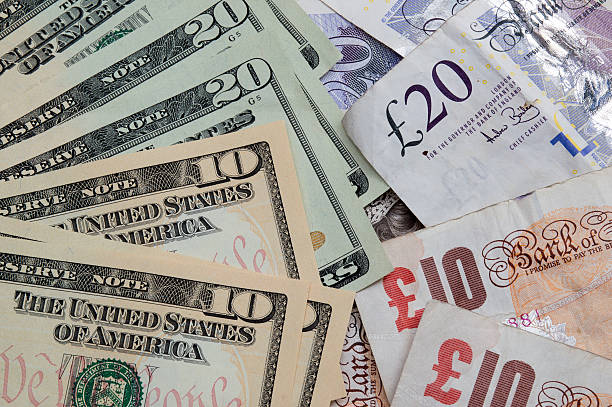
United States Ten and Twenty Dollar notes next to Ten and Twenty UK Pound Notes

Egypt has officially stopped using the US dollar in trade, a move that could have significant implications for the global economy and geopolitics.

On February 15th, 2024, Egypt announced that it would stop using the US dollar in all its trade transactions with other countries. Instead, it would use a basket of currencies that reflects its trade patterns and preferences.

The basket would include the euro, the Chinese yuan, the Russian ruble, the Turkish lira, the Indian rupee, and the African franc. Egypt said that this decision was based on economic rationality and sovereignty, and that it would enhance its trade competitiveness and financial stability.

Egypt is one of the largest economies in Africa and the Middle East, with a GDP of about $360 billion and a population of over 100 million. It is also a key ally of the United States in the region, receiving about $1.3 billion in military aid annually.

However, Egypt has been facing economic challenges in recent years, such as high inflation, public debt, and currency devaluation. The COVID-19 pandemic has also exacerbated these problems, as tourism and remittances, two major sources of foreign exchange, have declined sharply.

To address these issues, Egypt has been pursuing a series of reforms, including cutting subsidies, raising taxes, and liberalizing its exchange rate regime. In 2016, Egypt floated its currency, the Egyptian pound, allowing it to depreciate by about 50% against the US dollar.

This was done to attract foreign investment, boost exports, and secure a $12 billion loan from the International Monetary Fund (IMF). However, this also increased the cost of imports, especially of essential goods such as food and fuel, which are mostly denominated in US dollars.

To reduce its dependence on the US dollar and diversify its foreign reserves, Egypt has been exploring alternative currencies for trade and investment. In 2019, Egypt signed a currency swap agreement with China, allowing it to exchange Egyptian pounds for Chinese yuan.

This enabled Egypt to increase its trade with China, its largest trading partner, without using US dollars. Egypt has also been strengthening its ties with other emerging markets, such as Russia, Turkey, and India, and seeking to join regional economic blocs, such as the African Continental Free Trade Area (AfCFTA).

The move has been met with mixed reactions from other countries. Some have welcomed it as a sign of Egypt’s economic independence and diversification. Others have criticized it as a challenge to the US dollar’s dominance and a threat to the global financial system. The United States has expressed concern over Egypt’s decision and urged it to reconsider.

The US said that it would review its bilateral relations with Egypt, including its military aid and security cooperation. The US also warned that Egypt could face sanctions and isolation if it continued to defy the international monetary order.

Egypt’s decision to stop using the US dollar in trade is a bold and unprecedented one that could have far-reaching consequences for itself and the world. It could benefit Egypt by reducing its exposure to exchange rate fluctuations and enhancing its bargaining power with other countries.

It could also inspire other countries to follow suit and challenge the US dollar’s hegemony. However, it could also entail risks and costs for Egypt by alienating its traditional allies, inviting retaliation from the US, and disrupting its trade flows and financial markets.