DD
MM
YYYY

PAGES

DD
MM
YYYY

spot_img

PAGES

Home Blog Page 3317

Nigeria’s Inflation Rate Hits 29.90% in January 2024 As cost of living soars

0

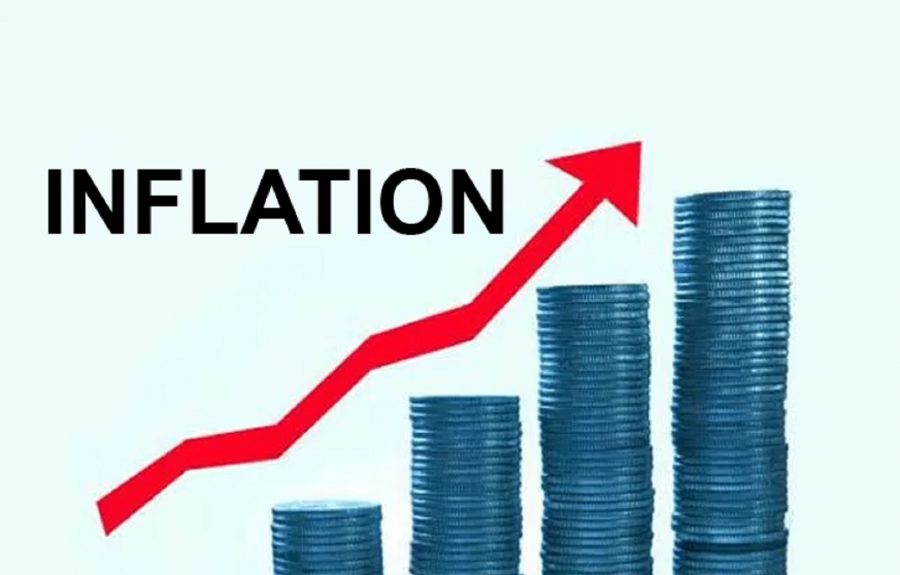
The latest data released by the Nigerian Bureau of Statistics (NBS) paints a concerning picture of inflationary pressures across the country, with Nigeria’s headline inflation rate surging to 29.90% in January 2024.

This marks a notable increase of 0.98% points compared to December 2023, reflecting the ongoing economic challenges faced by the nation.

“In January 2024, the headline inflation rate increased to 29.90% relative to the December 2023 rate,” stated the NBS report. “This upward trend indicates a 0.98% points increase compared to the preceding month.”

Furthermore, the data shows a substantial year-on-year increase, with January 2024’s headline inflation rate being 8.08% points higher than that of January 2023, which stood at 21.82%.

The rise in headline inflation is mirrored in other economic indices, notably in food inflation. Food inflation in January 2024 surged to 35.41% year-on-year, a notable increase from the 24.32% recorded in January 2023. On a month-on-month basis, food inflation rose by 3.21%, indicating a 0.49% increase compared to December 2023.

The NBS attributed the rise to many factors, mainly, the rise in the cost of food items.

“This surge in food inflation can be attributed to significant increases in the prices of essential commodities such as bread, cereals, potatoes, yam, oil, fat, fish, meat, fruit, coffee, tea, and cocoa,” noted the NBS report.

Core inflation, which excludes volatile agricultural produce and energy prices, also experienced a sharp increase. “In January 2024, core inflation stood at 23.59% year-on-year, up from 18.88% in January 2023. This represents a notable rise of 4.71% points,” the report said.

The NBS attributed the increase in core inflation can be attributed to rising prices in sectors such as passenger transport, medical services, housing rentals, pharmaceuticals, accommodation services, and passenger transport by air.

State-by-state inflation

Further analysis of the data reveals significant disparities in inflation rates among different states. On a year-on-year basis, Kogi, Oyo, and Akwa Ibom recorded the highest headline inflation rates, standing at 35.79%, 34.58%, and 33.16% respectively. Conversely, Borno, Taraba, and Benue recorded the slowest rise in headline inflation, with rates of 22.57%, 24.83%, and 26.64% respectively.

Food inflation, a critical component of overall inflation, also exhibited considerable variations across states. Kogi, Kwara, and Rivers experienced the highest food inflation rates on a year-on-year basis, reaching 44.18%, 40.87%, and 40.08% respectively. Meanwhile, Bauchi, Adamawa, and Kano recorded the slowest rise in food inflation, with rates of 28.83%, 29.80%, and 30.08% respectively.

Delving deeper into month-on-month fluctuations, Ondo, Osun, and Jigawa recorded the highest increases in headline inflation for January 2024, with rates of 3.79%, 3.77%, and 3.58% respectively. Conversely, Bayelsa, Yobe, and Ogun witnessed the slowest rise in headline inflation on a month-on-month basis, with rates of 0.45%, 1.10%, and 1.35% respectively.

The ramifications of soaring inflation rates extend beyond statistical figures, impacting the daily lives and well-being of Nigerians. High inflation erodes purchasing power, making essential goods and services less affordable for the average citizen. This situation is particularly acute in a country where a significant portion of income is spent on necessities such as food and transportation.

Economists said the persistent rise in inflation rates poses a serious threat to the economic well-being of Nigerians, and it reduces the real income of households, exacerbates poverty levels, and undermines overall economic stability.

Moreover, the inflationary pressures exacerbate existing challenges, such as the foreign exchange crisis. The depreciation of the local currency against foreign currencies contributes to the inflationary spiral by increasing the cost of imported goods and raw materials, further fueling price hikes. The naira traded at N1,590/$1 at the parallel market and N1,498.25 at the official window (NAFEM).

Against the backdrop of Nigeria’s escalating inflation rates, as evidenced by the surge in headline, food, and core inflation, experts have advocated the urgent need for comprehensive economic reforms. They note that tackling inflationary pressures is a key way to safeguarding the economic well-being of Nigerians and fostering sustainable development in the country.

Nigeria clamps down on stores hoarding food, stoking fresh economic concerns

0
Spices in markets

Twenty-four hours after President Bola Tinubu revealed strategies to address the ongoing food crisis, the Federal Competition and Consumer Protection Commission (FCCPC) took decisive action, sealing Sahad Store, a prominent supermarket in Abuja’s Garki area.

The move follows accusations of deceptive pricing practices, sparking a wave of criticism from economists. Acting Executive Vice Chairman of the FCCPC, Adamu Ahmed Abdullahi, leading the enforcement, asserted the commission’s findings of price manipulation by the store management.

“What we have found out that these people are doing is misleading pricing and lack of transparency in the pricing, which is against Section 115 (3) of the law,” Abdullahi stated.

He emphasized that the store would remain closed pending further investigation, citing legal consequences for such violations.

“In the long run, they sent a lawyer whom we asked if he was familiar with the facts of the case. He said he wasn’t. To unseal the store, they have to make sure that they do what is required to be done,” Abdullahi added, emphasizing the gravity of the situation.

This development coincides with the federal government’s collaboration with state governors to combat hoarding of essential commodities. Minister of Information and National Orientation, Mohammed Idris, announced the formation of a committee to address this issue following a meeting convened by President Tinubu.

“Mr. President has agreed to set up a committee to deepen the conversation that has happened at the just-concluded meeting. Of course, you know that it is impossible to complete most of the issues that were raised at the meeting so it is going to be a continuous one.

“The National Security Adviser, the Director General of the state services, and the Inspector General of Police have been directed to coordinate with the state governors to look at the issue of those hoarding commodities.

“At this point, the nation requires foods to be brought out to the people so that we can control prices and put food on the table of most Nigerians. Other commodity traders are busy hoarding these commodities so that Nigerians will suffer or they will make more money as a result. ?
?
“So the governors and Mr. President have taken this decision that security agencies will collaborate with the state governors to ensure that this ends,” the minister said.

The Nigerian Customs Service (NCS) also arrested a fleet of trucks exporting food products from Kebbi State to Niger Republic.

However, economic experts have voiced concerns over the approach, warning of its potential repercussions. Financial analyst Kelvin Emmanuel criticized the move, labeling it as “a very dangerous thing” that could deter investor confidence and disrupt market dynamics.

“It’s a very dangerous thing and a huge red flag to investors in industrial goods as well as FMCG,” said financial analyst Kelvin Emmanuel. “That the President will mandate security agencies to raid warehouses holding goods under the pretext of fighting hoarding. Whoever is advising the President is doing him a huge disservice. Focus on demand and supply economics fgs!”

The government’s crackdown on businesses and the implementation of new measures to tackle hoarding has stirred concerns about broader economic implications and its potential for exacerbating hardships faced by the populace. Critics argue that a more holistic approach addressing underlying economic fundamentals is crucial to achieving sustainable solutions to the ongoing crisis.

Nigerian Cleantech Company Arnergy Raises $3 Million in Funding to Expand Operations

0

Arnergy, a Nigerian cleantech company that offers sustainable solar solutions that are tailored to address pressing energy needs, has announced the raise of $3 million in funding to expand operations.

The funding round was financed by All On, a Shell-backed off-grid energy impact investment company. The financing comes five years after Arnergy, secured $9 million in Series A round in 2019.

Speaking on the funding round, Arnergy’s CEO, Femi Adeyemo, said,

“We are now bullish on leases given that cost competitiveness now makes sense. We’ve tested and tried it, and the chance of default is now lower because of the monthly expense of petrol or diesel. You can more or less switch that for solar. It wasn’t the case four years ago where you will be paying higher even if you’re on a five-year lease to own solar,”

According to him, Arnergy plans to maintain its service provision across all 36 states where it operates in Nigeria through min-grid developers. Additionally, Arnergy is preparing to raise its Series B round, which is scheduled to close this quarter. The upcoming funding round aims to facilitate further expansion of its operations and accelerate the adoption of its renewable energy products and solutions within and outside Nigeria.

Also commenting on the latest raise, All On CEO, Caroline Eboumbou, in a statement said,

We are proud of our partnership with Arnergy over the past years. With this partnership, we have been able to achieve some of our goals to empower communities and create a cleaner future for Nigeria. Arnergy exemplifies the impact we strive to achieve at All On, innovative solutions, unwavering commitment to sustainability, and a relentless focus on social impact. This investment reaffirms our confidence in their ability to scale their operations and accelerate the adoption of clean energy in Nigeria and beyond.”

Founded in 2013 by Femi Adeyemo and Kunle Odebunmi, Arnergy was launched as a provider of sustainable energy services intended to deliver clean and reliable energy for businesses or homes.

The company’s energy systems are tailored to tackle intermittent and grid unreliability issues, enabling residential customers and businesses across hospitality, education, finance, agriculture, and healthcare to access and install affordable and reliable distributed energy systems.

Arnergy seeks to address these pressing challenges of expanding sustainable energy access and reducing Carbon dioxide (CO2) emissions in Africa by providing best-in-class clean energy solutions, establishing flexible financing partnerships to ease consumers’ transition to renewables, and prioritizing continuous consumer education drives.

The clean-tech startup aims to improve energy access and digital inclusion in Africa through partnerships and empowering domestic and commercial consumers with best-quality distributed solar utilities equipped best-in-class proprietary cloud-based and real-time energy management system.

The ECOWAS Problem with the Evolution of Alliance of Sahel States (AES)

0

Very strange that landlocked countries could do this: “The junta-led Burkina Faso, Mali, and Niger have disclosed a plan to establish a confederation that will deepen their ties following their exit from the regional West African bloc.

“According to the statement issued by the Malian foreign ministry on Thursday, the three countries would form the Alliance of Sahel States (AES). The three neighboring countries in the Sahel region announced in January they would quit the Economic Community of West African States (ECOWAS), despite a decision by the bloc urging them to rethink.”

On paper, this alliance makes no economic sense. Yet, things happen. Just raise the tariffs transiting to them by 1000%, and they will understand a different language in trade! Of course, they can also go to court and argue that you cannot do that due to the African Union charter. 

This is a lesson for ECOWAS. The best way to protect democracy is free and fair elections. The citizens are not stupid as we have seen in Gabon and some of these countries. You cannot use sanctions to fix improper elections where votes are illegally stolen.

Of course, this is not to support what these khaki men do. My point is that when we fail to have free and fair elections, we create fertile grounds to allow them to operate. Look at Gabon, and some of these countries, and examine the support from the citizens. Yes, the citizens are just fine!

ECOWAS and AU must work harder to make sure elections are done right. 

Burkina Faso, Mali and Niger Announce plan to Establish a tri-state Confederation

28

The junta-led Burkina Faso, Mali, and Niger have disclosed a plan to establish a confederation that will deepen their ties following their exit from the regional West African bloc.

According to the statement issued by the Malian foreign ministry on Thursday, the three countries would form the Alliance of Sahel States (AES). The three neighboring countries in the Sahel region announced in January they would quit the Economic Community of West African States (ECOWAS), despite a decision by the bloc urging them to rethink.

Reuters reported that during a meeting in the Burkinabe capital of Ouagadougou, the three ministers from the respective countries affirmed their collective dedication to promptly withdrawing from ECOWAS.

They “reaffirmed their commitment to advancing resolutely in the process of implementing the AES and creating the Tri-State Confederation,” the Malian foreign ministry said in an online post. The group has not revealed details on how the proposed confederation would operate or on how closely they plan to align political, economic, and security interests.

One of the mishaps in the three countries is their struggle to contain an epidemic battle with Islamist insurgents that has destabilized the subregion. In November 2023, their finance ministers said they would weigh the option of establishing a monetary union, and top officials from all three countries have, to varying degrees, voiced support for abandoning West Africa’s CFA franc common currency.

The juntas have all severed long-standing military ties with former colonial ruler France, dealing a blow to France’s influence in the Sahel and complicating international efforts to fight the militants linked to al Qaeda and Islamic State.

Nigerian leader and ECOWAS Chairman, President Bola Tinubu has had to face challenges of restoring democratic governments in the three countries, as his efforts were met with opposition. He sent a delegation at different times including former military leader, Abdulsalam Abubakar, and Benin Republic President Patrice Talon, to Niger which experienced the recent military takeover.

On 26 July 2023, a coup d’état occurred in Niger when the country’s presidential guard detained President Mohamed Bazoum, and Presidential Guard commander General Abdourahamane Tchiani proclaimed himself the leader of a new military junta, shortly after confirming the coup a success.

Before Niger’s coup d’état took place, Burkina Faso, on 30 September 2022, had its military takeover when the Interim President Paul-Henri Sandaogo Damiba was removed over his alleged inability to contain the country’s Islamist insurgency. Damiba had come to power in a coup d’état eight months earlier before Captain Ibrahim Traoré took over as interim leader.

In 2021, the Malian coup d’état began on the night of 24 May when the Malian Army led by Vice President Assimi Goïta captured President Bah N’daw, Prime Minister Moctar Ouane and Minister of Defence Souleymane Doucouré. Goita has remained in power since then.

The implications abound

The potential implications of a new confederation in West Africa are multifold. Firstly, it could lead to a consolidation of power among the junta-led governments, potentially entrenching authoritarian regimes in the region. This could further exacerbate issues of governance, human rights abuses, and political instability.

Secondly, the confederation could disrupt existing regional dynamics, particularly within ECOWAS, and strain diplomatic relations between member states. Thirdly, the withdrawal of these countries from ECOWAS and the establishment of a new confederation could weaken regional efforts towards economic integration, security cooperation, and development initiatives.

Lastly, the confederation may face challenges in gaining international recognition and legitimacy, particularly if it is perceived as undermining democratic norms and principles. Overall, the establishment of a new confederation in West Africa has the potential to reshape regional politics and security dynamics, with significant implications for stability and governance in the Sahel region.