DD
MM
YYYY

PAGES

DD
MM
YYYY

spot_img

PAGES

Home Blog Page 3321

CBN orders banks to stop cash payment of PTA, BTA, hikes limit for price verification system by 500%

0
United States Ten and Twenty Dollar notes next to Ten and Twenty UK Pound Notes

The Central Bank of Nigeria (CBN) has issued a directive to commercial banks, mandating the cessation of cash payments for Personal Travel Allowance (PTA) and Business Travel Allowance (BTA) as part of measures aimed at curbing foreign exchange malpractices.

The decision, conveyed in a memo dated February 14 and signed by the Director of Foreign Exchange and Trade Department, Hassan Mahmud, underscores the apex bank’s commitment to transparency and stability in the foreign exchange market.

“Payment of PTA/BTA by cash is no longer permitted,” the CBN stated in the memo. “Authorised Dealers and the general public are hereby to note and comply accordingly.”

The memo further elaborated that PTA and BTA transactions must now be conducted exclusively through electronic channels, including debit or credit cards.

“In line with the Bank’s commitment to ensure transparency and stability in the foreign exchange market and avoid foreign exchange malpractices,” the CBN said, “All authorized dealer Banks shall henceforth effect payout of PTA/BTA through electronic channels only, including debit or credit cards.”

This move is intended to prevent foreign exchange malpractices and ensure accountability in forex transactions.

The decision comes amidst a concerning depreciation of the naira against major international currencies, particularly the US dollar. Reports from AbokiFX indicate that the naira has plummeted to N1,600 against the dollar on Thursday. Despite efforts by the CBN to stabilize the currency, the freefall of the naira has persisted, prompting the need for decisive measures to address the situation.

The currency’s decline has been attributed to various factors, including global inflationary pressures and domestic economic challenges. Efforts by the CBN to manage the naira’s value have faced significant hurdles.

In its recent move, the CBN has also announced significant revisions to the allowable deviation limits for the Price Verification System (PVS), a mechanism utilized to monitor the pricing of exports and imports. The adjustments, outlined in a circular signed by Dr. Hassan Mahmud, Director of the Trade and Exchange Department, aim to safeguard the economy from price manipulation activities that could exacerbate the foreign exchange crisis.

Previously, the PVS flagged any declared prices of import items that exceeded global average prices by more than 2.5%. However, in light of persistent global inflation, the CBN has expanded the deviation limits for both exports and imports. Effective immediately, the new regulation permits a deviation of up to -15% and +15% from the global average prices for exports and imports, respectively.

The circular reads: “Following the implementation of the Price Verification System (PVS) to curb over-invoicing of imports and under-invoicing of exports, the CBN in a circular referenced TED/FEM/FPO/PUB/01/001 stated that declared prices of import items that are more than 2.5 percent above the global average prices of the referenced item will be queried.

“However, due to global inflation and other related challenges, the CBN has reviewed the allowable limit of price deviation for exports and imports to -15% and +15% of the global average prices, respectively.

“Authorized Dealer Banks and the general public are hereby advised to note and comply accordingly.”

This adjustment represents a significant increase in the allowable limit for price verification and is intended to provide more flexibility in the face of fluctuating global prices while preventing the exploitation of the system.

The CBN’s decision to recalibrate the PVS aligns with its broader objective of promoting transparency and accountability in Nigeria’s banking and trade sectors.

The recent rollout of the PVS portal, coupled with the mandatory requirement for Price Verification Reports in Form M applications, underscores the central bank’s commitment to combating illicit financial practices and ensuring the efficient functioning of the economy.

By implementing these measures, the CBN aims to strike a balance between maintaining stringent controls over foreign exchange transactions and facilitating the smooth operation of international trade amidst global economic uncertainties. This initiative reflects the government’s broader efforts to stabilize the economy, protect the value of the naira, and promote sustainable growth in the financial sector.


Forex Crisis: CBN Bars International Oil Companies From Remitting 100% Forex Proceeds Abroad

0

The Central Bank of Nigeria (CBN) has restricted International Oil Companies (IOCs) from remitting 100 percent of their forex proceeds abroad.

This was disclosed in a circular signed by the CBN Director of Trade and Exchange, Hassan Mahmud.

The policy which takes effect immediately, mandates IOCs to only repatriate 50 percent of their forex proceeds, while the other 50 percent will be repatriated from the day of inflow.

The circular reads,

“The Central Bank has observed that proceeds of crude oil exports by International Oil Companies (IOCs) operating in Nigeria are transferred offshore to fund parent accounts of the IOCs (otherwise referred to as cash polling). This has an impact on liquidity in the domestic foreign exchange market.

“In line with the ongoing reforms in the foreign exchange market, it has become necessary to take measures to address this trend. Consequently, the CBN hereby directs as follows; Banks are allowed to pool cash on behalf of IOCS, subject to a maximum of 50% of the repatriated export proceeds in the first instance. The Balance 50% may be repatriated after 90 days from the date of inflow of export proceeds.”

Furthermore, the apex bank introduced rules that will guide “cash polling” by IOCs going forward. They include approval from the CBN before repatriation of funds under the cash polling framework, the parent entity of IOCs will have to reach an agreement with the CBN before “cash polling.”

The bank also mandated IOCs to submit statements of expenditure incurred in the period before the cash polling. Others are “evidence of the source of foreign exchange inflow.” “Completion of relevant forex form(s) as required’ under extant regulations.” The CBN mandated all banks to inform their customers and comply with the regulations.

As the naira continues to be on a free fall against the dollar in the past weeks with the currency losing value against the greenback, the CBN has continued to roll out different regulatory guidelines and measures to curb the fall of the naira.

To strengthen the national currency and stabilize the nation’s volatile exchange rate, the CBN directed Deposit Money Banks to sell their excess dollar stock latest February 1, 2024. The apex bank which made the disclosure via a circular, also warned lenders against hoarding excess foreign currencies for profit.

The Bank’s governor Cardoso argued that the foreign exchange market was facing increased demand pressures, causing a continuous decline in the value of the naira.

According to him, factors contributing to this situation include speculative forex demand, inadequate forex due to low remittance of crude oil earnings to the CBN, increased capital outflows, and excess liquidity from fiscal activities.

To address exchange rate volatility, he said a comprehensive strategy had been initiated to enhance liquidity in the forex market.

Global Investment in Fintech Plunged by 42% in 2023 – KPMG

0

A recent KPMG report has revealed that the global investment in Fintech plunged to a five-year low of $113.7 billion in 2023.

This reveals a 42% decline from the $196.3 billion reported in 2022, representing the weakest result since 2017.

The number of funding deals also considerably shrank, with capital being spread across a total of 3,973 deals compared to 6,397 deals seen in 2022.

According to the report, high inflation rate, high-interest rates, and geopolitical tension, coupled with declining valuations, have forced investors to tighten their purses and have deterred their confidence from pumping money into the fintech sector.

The US retains the top spot for the most fintech funding received by a huge margin, bringing in $24 billion across 1,530 deals, followed by the UK in second place at $5.1 billion and India in third with $2.5 billion. The UK’s $5.1 billion worth of funding in 2023 was spread across 409 deals, compared to $14.6 billion across 592 deals the previous year, reflecting a 65% drop from 2022.

India occupied the third position, with the country seeing fintech investment worth $2.5 billion last year, while Singapore was fourth with $2.2 billion of funding, and China fifth with $1.8 billion. The value of the top five biggest deals globally in 2023 was over $9 billion, or about 18% of total global investment in the space.

On the other hand, the Asia-Pacific region experienced the steepest decline, with investment plunging from $51.3 billion in 2022 to $10.8 billion. Europe, the Middle East, and Africa (EMEA) also experienced a steep drop, from $49.6 billion to $24.5 billion. Investment in the Americas region showed resilience but still dropped from $95.4 billion to $78.3 billion.

Global venture capital investment slumped, year-on-year from $88.8 billion to $46.3 billion, and between the first and second half of 2023 ($27.5 billion to $18.8 billion).

Property technology and insurance technology were the only major fintech areas to experience a year-on-year increase in investment. Proptech rose from $4.1 billion to $13.4 billion, and insurtech grew from $5.9 billion to $8.1 billion. The report also found that seed and early-stage fintech funding reached record highs in terms of deal count, indicating sustained investor interest in testing new business models.

Looking ahead, investment is expected to remain low in the initial months of 2024, with a potential rebound later in the year amid expected interest rate decreases. The report also emphasized the likelihood of increased merger and acquisition activity, because investors may seek to capitalize on deeply discounted, distressed assets.

The analysis by KPMG concluded that a shift towards profitable and sustainable business models would be crucial for fintech companies to thrive in the long term.

Nigerian lawmakers introduce bill to move government back to parliamentary system

0

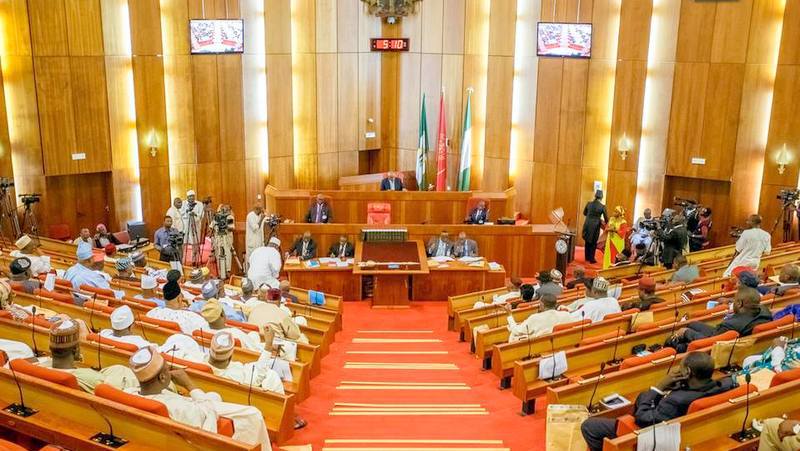
The House of Representatives has taken a significant stride towards the overhaul of Nigeria’s governmental structure, as a group of 60 lawmakers push for a transition from the current presidential system to a parliamentary one, reminiscent of Nigeria’s First Republic.

Led by the Parliamentary Group, the lawmakers introduced three constitution alteration bills during Wednesday’s plenary session. These bills, titled ‘Constitution of the Federal Republic of Nigeria, 1999 (Alteration) Bill, 2024’ (HB.1115, HB.1116, and HB.1117), mark a pivotal moment in Nigerian political discourse, setting the stage for a potential shift to a parliamentary system by 2031.

Briefing journalists on the bill sponsored by the Minority Leader, Kingsley Chinda (PDP, Rivers), Abdulsamad Dasuki, the spokesperson for the Parliamentary Group, elucidated the rationale behind the proposed transition, citing concerns over the exorbitant costs associated with the presidential system and the concentration of power in the hands of the executive.

“No wonder the Nigerian President appears to be one of the most powerful Presidents in the world,” Dasuki said.

“Over the years, the imperfections of the Presidential System of Government have become glaring to all, despite several alterations to the constitution to address the shortcomings of a system that has denied the nation the opportunity to attain its full potential.

“Among these imperfections are the high cost of governance, leaving fewer resources for crucial areas like infrastructure, education, and healthcare, and consequently hindering the nation’s development progress, and the excessive powers vested in the members of the executive, who are appointees and not directly accountable to the people,” he said.

The proponents of the parliamentary system argue that its reinstatement would foster accountability, responsibility, and responsiveness in governance, thereby curbing excessive expenditure and enhancing development initiatives in critical sectors such as infrastructure, education, and healthcare.

The proposed parliamentary system bears resemblance to Nigeria’s governance structure during the First Republic, characterized by a prime minister as the head of government. In contrast to the presidential system, where the executive branch operates independently of the legislature, the parliamentary model intertwines the executive and legislative branches, promoting closer collaboration and expeditious decision-making.

Nevertheless, skepticism abounds regarding the feasibility and efficacy of this transition. Critics point to historical precedents, highlighting how the parliamentary system contributed to political polarization during the First Republic, ultimately paving the way for military intervention. The concern persists that without sufficient safeguards, a return to parliamentary governance may reignite divisions within Nigerian society.

Furthermore, the timing of the proposed legislation raises eyebrows, with some viewing it through the lens of political expediency. The proposed transition coincides with the end of President Bola Tinubu’s constitutionally mandated tenure in 2031, prompting speculation about ulterior motives driving the lawmakers’ agenda.

It is noteworthy that the proponents of this transition encompass members from both the ruling All Progressives Congress (APC) and the main opposition Peoples Democratic Party (PDP), indicating a cross-party consensus on the need for systemic reform.

As the debate surrounding Nigeria’s governance structure intensifies, it becomes imperative to weigh the potential benefits of transitioning to a parliamentary system against the inherent risks and challenges. While proponents advocate for enhanced accountability and efficiency, detractors caution against repeating past mistakes and exacerbating political divisions.

Ultimately, the efficacy of any governmental system lies not solely in its structure but in the integrity, competence, and commitment of its leaders.

Good leadership advocates said that addressing Nigeria’s leadership deficit necessitates comprehensive reforms beyond mere structural changes, focusing on institutional strengthening, anti-corruption measures, and inclusive governance practices. Only through concerted efforts to cultivate a culture of transparency, meritocracy, and civic engagement can Nigeria realize its full potential and overcome its persistent challenges in governance.

Dasuki said the group is seeking to ignite a conversation about the lack of effectiveness of the current presidential system.

“The bills presented today seek a return to the system of government adopted by our founders, which made governance accountable, responsible, and responsive, and ultimately less expensive,” he said.

Comments from our Tekedia Mini-MBA co-learners

1

In the next coming weeks, we will be welcoming 7,000 final year students from many universities through multiple partnerships we’ve developed with some schools. These schools have prepared the students at the highest levels. Yet, there is something unique about Tekedia Institute: we engineer new perspectives which lead to better career advancements and business growths.

(If you want your final year students to spend 3 months with us before they graduate into our amazing world, please connect with Eyitayo Adeleke,.)

Tekedia Institute shapes and reshapes the business worldview of our co-learners. We put a lot of effort into delivering great programs. I read all comments and feedback after all sessions; here are samples from today’s lecture.

Tekedia Mini-MBA >> our mission is Your Success.