DD
MM
YYYY

PAGES

DD
MM
YYYY

spot_img

PAGES

Home Blog Page 3336

Nigerian Fintech Zone Launches Blockchain-Powered PoS Solution to Deliver Frictionless Payments

0

Nigeria and Africa’s fast-growing fintech company Zone has announced the launch of its blockchain-powered Point of Sales (PoS) solution to deliver frictionless payments.

The PoS is built on the latest version of its next-generation payment infrastructure. The launch of the product highlights the company’s advancement in enhancing the African payment landscape.

As the first regulated blockchain network for payments in Africa, Zone is pioneering decentralized solutions that cater to cross-border transactions and various currencies.

The product is poised to enhance transaction reliability through direct routing of transactions to issuers, same-day settlement for beneficiaries and their financial institutions, and a robust framework eliminating chargebacks and chargeback fraud. One key thing to note is that Zone can implement direct transaction routing to issuers without violating regulatory guidelines on inter-bank payments.

Speaking on the launch of the PoS solution, the CEO of Zone Obi Emetarom stated that the launch of the product is geared towards enhancing financial inclusion and improving the seamless transfer of funds.

In his words,

“Today marks a pivotal moment not just for us at Zone, but also for the Financial Institutions we enable, and the esteemed customers they serve. Our PoS Payment Gateway Product is a commitment to financial inclusion and the digital future of all payments in Africa.

“With this new offering, we are excited to have taken yet another major step towards our vision for a world where individuals and businesses can make and receive instant payments to and from anyone in the world, through any payment method and in any currency.”

Some key features of Zone’s PoS payment gateway;

Direct Card Routing: Zone connects acquirers directly to issuers through its decentralized payment switching network. This architecture optimizes the PoS transaction route and eliminates failure points thereby guaranteeing increased speed and reliability of each transaction for the benefit of merchants, agents, and cardholders alike.

• No Chargebacks: Zone’s advanced PoS payment gateway eliminates chargebacks and chargeback fraud on PoS terminals by auto-refunding customers for unsuccessful transactions and auto-declining fraudulent chargebacks in real-time – thereby building a foundation of trust and satisfaction among all parties involved.

Same-Day Settlements: Settlement of payments from PoS terminals using Zone is effected on the same day and separately for each transaction, ensuring faster availability of funds for both agents and merchants alike, and making it easy to determine when value has been received for every transaction.

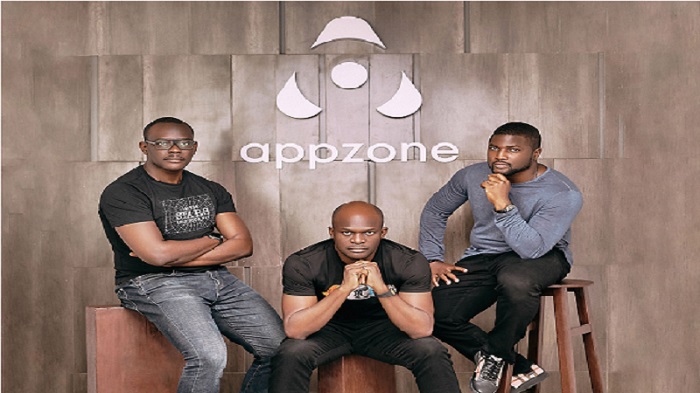
In November of 2022, Appzone evolved to become Zone; Africa’s first layer-1 Blockchain network and decentralized infrastructure for payment in Fiat money and digital currencies.

Zone allows participating institutions to connect directly with each other and perform payment transactions without an intermediary while completely automating settlement, reconciliation, and dispute management.

Notably, the absence of an intermediary or middleman in Zone’s architecture saves participating institutions money, enhances reliability, and eliminates reconciliation delays. Zone’s purpose is to maximize financial inclusion and accelerate economic prosperity.
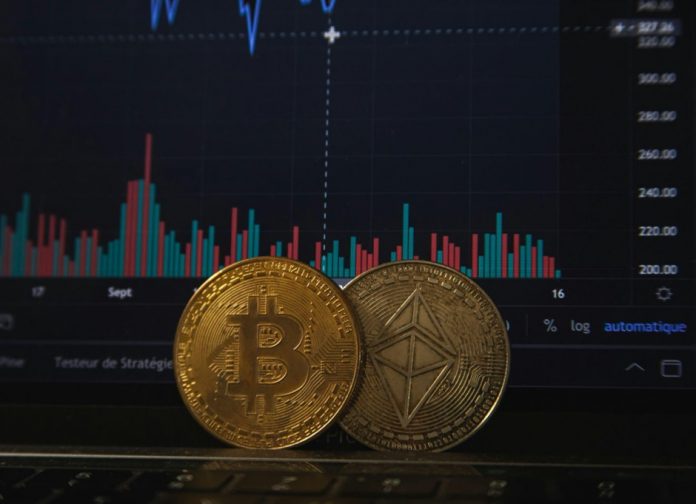
Performance of US Spot Bitcoin ETFs vs. Ethereum ETFs

0

The U.S. Spot Bitcoin ETFs have been witnessing a remarkable trend of positive daily inflows for the past three weeks, indicating a growing investor confidence in the cryptocurrency market. This sustained inflow trend is a significant indicator of the market’s sentiment towards Bitcoin, suggesting that investors are seeing value in holding Bitcoin through ETFs despite the volatile nature of cryptocurrencies.

Spot Bitcoin ETFs, unlike their futures counterparts, are backed by the actual holdings of Bitcoin, providing direct exposure to the performance of the cryptocurrency. This has been an attractive proposition for investors who are looking for a more secure and regulated way to gain exposure to Bitcoin without having to hold the cryptocurrency directly.

The trend of inflows into U.S. spot Bitcoin ETFs is not just a flash in the pan but a part of a larger narrative of cryptocurrency acceptance and integration into the traditional financial ecosystem. Major financial institutions like BlackRock, Fidelity, and the Grayscale Bitcoin Trust have been leading the charge, showcasing the increasing institutional interest in cryptocurrency investments.

Moreover, the recent surge in inflows could also be attributed to the broader financial market’s recovery, as investors diversify their portfolios to hedge against inflation and currency devaluation. The inflows into spot Bitcoin ETFs reflect a strategic investment approach, leveraging the potential high returns of Bitcoin while mitigating the risks associated with direct cryptocurrency purchases.

In the United States, the approval of spot Bitcoin ETFs marked a pivotal moment for investors, offering a direct investment opportunity in Bitcoin without the complexities of managing digital wallets or private keys. The performance of these ETFs has been noteworthy, with reports indicating substantial inflows, suggesting a strong investor appetite for Bitcoin exposure through traditional investment vehicles.

On the other hand, Ethereum ETFs, which followed the path paved by Bitcoin ETFs, have also seen significant developments. The approval of Ethereum ETFs by the U.S. Securities and Exchange Commission (SEC) led to a considerable amount of Ether being withdrawn from centralized exchanges, hinting at a shift in investor preference towards regulated investment products.

Comparing the performance of Bitcoin and Ethereum ETFs reveals a dynamic and fluctuating market. Bitcoin ETFs have experienced both inflows and outflows, reflecting the volatile nature of the cryptocurrency market. For instance, while some Bitcoin ETFs have seen net inflows, others have reported outflows, underscoring the diverse strategies and performances within the sector.

Ethereum ETFs, despite the excitement around their approval, have had a mixed performance. The price of Ether remains below its all-time high, indicating that the market’s response to these ETFs is still stabilizing and investor sentiment is cautious.

Investors considering cryptocurrency ETFs must weigh the potential for high returns against the inherent risks associated with digital asset investments. The performance of U.S. spot Bitcoin and Ethereum ETFs serves as a testament to the growing integration of cryptocurrencies into mainstream finance, yet it also highlights the need for due diligence and a clear understanding of market trends.

The positive inflow trend also underscores the importance of regulatory clarity and the role it plays in investor confidence. As regulatory frameworks around cryptocurrencies continue to evolve, the market is likely to see more such products that offer a bridge between traditional finance and the emerging digital asset class.

The continuous positive daily inflows into U.S. spot Bitcoin ETFs are a testament to the growing investor appetite for Bitcoin and the maturing of the cryptocurrency market. With the backing of major financial players and a favorable regulatory environment, spot Bitcoin ETFs are poised to play a pivotal role in the mainstream adoption of Bitcoin as a legitimate and valuable asset class.

Global Crypto Ownership Surges as 6.8% People Globally Own Digital Currencies – Report

0

A recent report highlights a significant increase in global crypto ownership, with 6.8% of the world’s population owning digital currencies.

The increase in the number of digital currency owners, is up from 420 million in 2023, to 562 million in 2024, with Asia at the forefront of this growth with crypto ownership rising from 268.2 million to 326.8 million, a 21.8% increase.

The continent is followed closely by North America, with ownership rising from 52.1 million to 72.2 million, representing a 38.6% increase.

The report further highlights that cryptocurrency ownership in South America surged from 25.5 million to 55.2 million, a 116.5% increase. Europe also saw significant growth, with numbers rising from 30.7 million to 49.2 million, a 60.3% increase.

Africa experienced a moderate rise from 40.1 million to 43.5 million, an 8.5% increase. In Oceania, interest more than doubled, growing from 1.4 million to 3.0 million, a 114.3% increase.

The surge in the rate of global crypto ownership reflects growing interest and adoption of cryptocurrencies worldwide. A report by Binance stated that the surge in global crypto adoption is a result of several factors which include; Imminent crypto bull run, governmental developments, and media attention.

It is understood that the crypto market is currently in a bull run, after completing the fourth halving in April, which is usually followed by a surge in the price of Bitcoin. Bull runs have tended to peak within 12-18 months (late 2013, late 2017, early 2021) before entering bear markets.

Quantitative models forecast that the bull run could last 12-18 months and bring even greater returns than the epic 2021 rally. For example, the Stock-to-Flow model predicts Bitcoin could reach over $100,000 in the next cycle peak. This implies nearly a higher gain from the previous year’s lows. With the bull run already in motion, it has sparked both crypto and non-crypto enthusiasts to fund their wallets in anticipation of a Bitcoin price rally.

Also, the increase in the number of crypto global owners is linked to the approval of spot Bitcoin ETFs by the US Securities and Exchange SEC, which has increased institutional investor interest, with several major companies offering crypto services.

A spot bitcoin ETF allows investors to gain exposure to the price movements of bitcoin on a registered national exchange rather than through a cryptocurrency exchange and without the technical hurdles associated with holding cryptocurrencies.

ETFs also allow investors to avoid the management and other fees charged by investment trusts that hold bitcoin. Now that spot bitcoin ETFs have been approved and are being offered by many of the leading brokerage firms, investors who were previously hesitant to invest in bitcoin are now testing the waters of cryptocurrencies by investing in an ETF, which could lead to further adoption of crypto assets generally.

BlockDAG’s Keynote 2 Propels Presale Beyond $42M, Surpassing Dogecoin and CHZ Token Predictions

0

While Dogecoin eyes a potential 100% increase after breaching key resistance levels and CHZ prices rise ahead of UEFA Euro, BlockDAG has captured the spotlight with its Keynote 2 launch. This event pushed its presale beyond $42.4 million, eclipsing other leading cryptocurrencies. BlockDAG’s advanced technology and strategic roadmap herald a new era in digital finance, offering unmatched scalability and security. With its explosive growth and robust framework, BlockDAG stands as the top investment choice for substantial returns.

Dogecoin’s Future: Tackling Accumulation and Resistance

Dogecoin encounters critical resistance between $0.166 and $0.171. Recent data shows that approximately 75,500 addresses have amassed close to 10 billion DOGE at this level. Surpassing this barrier might double Dogecoin’s value, with the next significant resistance at $0.322. Technical indicators suggest a 25% potential increase to $0.20 if DOGE can sustain above $0.17. Despite its fluctuating momentum, Dogecoin continues to draw intense interest and speculation from the crypto community.

CHZ Token Price: Surge Ahead of Major Sports Events

The CHZ token has enjoyed a substantial increase of over 20% due to the excitement around the forthcoming UEFA Euro 2024. This rally mirrors its performance before the 2022 FIFA World Cup, with the token price hitting a three-week peak of 16 cents recently. Analysts anticipate a similar pattern to the World Cup, predicting significant gains leading up to the event, possibly followed by a sell-off. This trend underscores the cyclical nature of sports-related tokens and their market dynamics.

BlockDAG Keynote 2 Unveils Major Updates and Strategic Goals

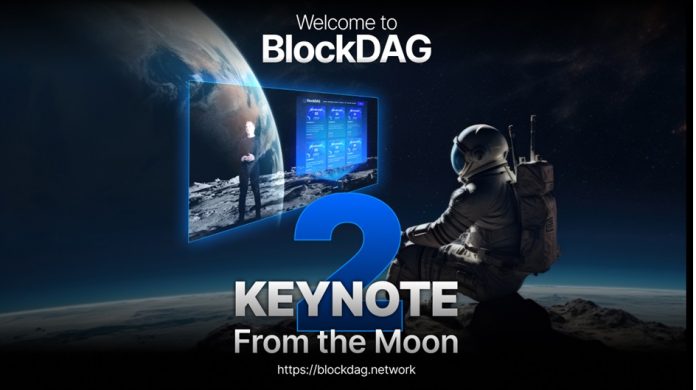
BlockDAG’s recent Keynote 2, presented directly from the Moon, signifies a pivotal chapter in its evolution. The presentation detailed substantial blockchain technology updates, extensive global marketing initiatives, and significant roadmap enhancements. With over 45 development updates revealed, BlockDAG reaffirms its dedication to transparency and continuous improvement, covering extensive technical enhancements to ensure the platform remains cutting-edge and scalable.

The keynote also showcased BlockDAG’s implementation of the Directed Acyclic Graph (DAG) technology, which efficiently manages concurrent operations. This structure supports simultaneous transaction confirmations, boosting scalability without sacrificing security. The innovative combination of PoW and DAG technologies fortifies network reliability through cryptographic validations, positioning BlockDAG as a leader in blockchain innovation.

Further, the partnership with Plus Wallet and the addition of payment options like USDT, Ethereum, and BNB enhance investor access. These strategic developments and the presale’s success, accumulating over $42.4 million, underscore BlockDAG’s potential. With projections placing its value at $20 by 2027, early investors are looking at potential returns of up to 30,000x ROI, solidifying its strong market stance.

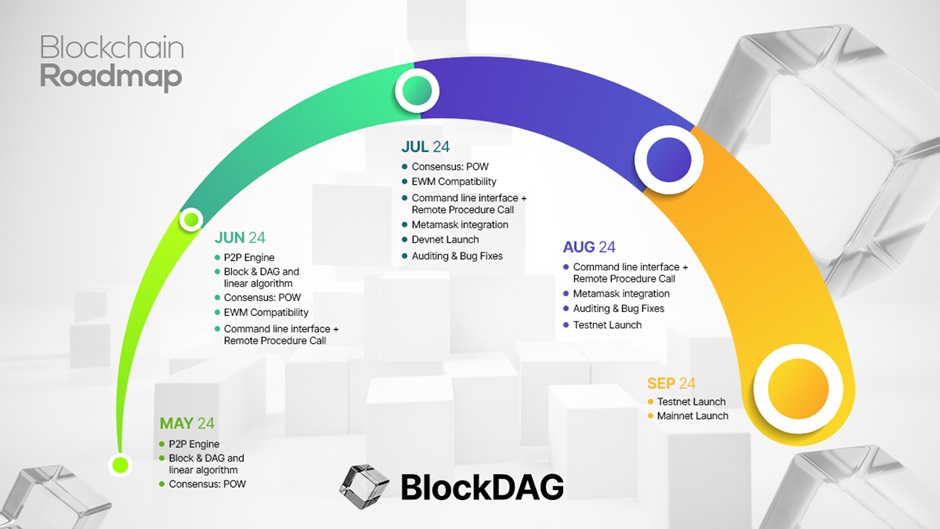
Moreover, the updated roadmap highlights the imminent mainnet launch, scheduled within the next four months, marking a significant transition from testing to live operations. Following a rigorous testnet phase starting mid-August, BlockDAG is set to redefine blockchain functionality with enhanced security, scalability, and speed.

The Bottom Line

Clearly, BlockDAG emerges as a transformative force in the blockchain arena. The successful launch of Keynote 2 and the remarkable $42.4 million presale achievement set a new benchmark in the crypto market. With an advanced roadmap leading to an early mainnet launch, BlockDAG positions itself ahead of competitors like Dogecoin and CHZ, offering investors a promising and profitable opportunity.

Join BlockDAG Presale Now:

Website: https://blockdag.network

Presale: https://purchase.blockdag.network

Telegram: https://t.me/blockDAGnetworkOfficial

Discord: https://discord.gg/Q7BxghMVyu

Robinhood Acquisition of Bitstamp a Web3 Rejuvenating Landscape

0

The recent announcement of Robinhood’s acquisition of Bitstamp marks a significant milestone in the evolution of the Web3 landscape. This strategic move is not just a business transaction; it represents a fusion of two entities that have been instrumental in shaping the modern financial and crypto ecosystem.

Robinhood, a pioneer in democratizing stock trading, has been at the forefront of integrating cryptocurrency trading into its platform, making it accessible to the average consumer. Bitstamp, on the other hand, stands as one of the oldest and most respected cryptocurrency exchanges in the world, known for its robust security measures and a strong commitment to regulatory compliance.

The acquisition, valued at approximately $200 million, is expected to close in the first half of 2025, subject to customary closing conditions and regulatory approvals. This deal is poised to significantly accelerate Robinhood Crypto’s expansion worldwide, introducing Robinhood’s first institutional business and enhancing its crypto offerings with Bitstamp’s core spot exchange and products like staking and lending.

The acquisition of Bitstamp by Robinhood marks a significant milestone in the financial technology landscape, particularly within the Web3 ecosystem. This strategic move is expected to enhance Robinhood’s cryptocurrency offerings by integrating Bitstamp’s robust platform, which boasts over 85 tradable assets and a suite of institutional-grade services.

With a strong focus on compliance and security, the acquisition is poised to expand Robinhood’s global reach, bringing in customers from the EU, UK, US, and Asia, and establishing its first institutional business. This development could potentially rejuvenate the Web3 landscape by fostering greater accessibility and innovation in the crypto space.

From a Web3 perspective, this acquisition is more than just an expansion of services; it’s a rejuvenation of the landscape. Web3, the decentralized web, promises a future where users have control over their data and transactions without the need for intermediaries. By combining Robinhood’s user-friendly approach and Bitstamp’s institutional trust, the duo could potentially lower the barriers for entry into the crypto space, making it more inclusive and fostering greater adoption.

Moreover, Bitstamp’s global presence and over 50 active licenses will enable Robinhood to tap into new markets across the EU, UK, US, and Asia, broadening its customer base and solidifying its position as a global player in the crypto market. The integration of Bitstamp’s institutional offerings, such as white-label solutions and API connectivity, will also allow Robinhood to cater to a more diverse clientele, ranging from retail investors to established financial institutions.

The synergy between Robinhood and Bitstamp could also lead to innovation in product offerings, combining Robinhood’s sleek user interface with Bitstamp’s deep order books and trade execution capabilities. This could result in a more seamless and efficient trading experience for users, further propelling the adoption of cryptocurrencies and the growth of the Web3 ecosystem.

The Robinhood acquisition of Bitstamp is a testament to the dynamic nature of the Web3 landscape. It reflects a growing trend of consolidation in the crypto space, where companies are seeking to build comprehensive platforms that can serve a wide range of needs within the decentralized economy. As the deal progresses towards completion, the crypto community will undoubtedly watch with keen interest to see how this partnership unfolds and shapes the future of Web3.