DD
MM
YYYY

PAGES

DD
MM
YYYY

spot_img

PAGES

Home Blog Page 3341

Key Aspects of Decentralized Protocols and Smart Contracts

0

The emergence of blockchain technology has opened up new possibilities for the financial sector, especially in the areas of decentralized protocols and smart contracts. These innovations allow for the creation of novel forms of digital assets, such as cryptocurrencies, tokens, and non-fungible tokens (NFTs), that can be transferred, exchanged, and verified without intermediaries.

Moreover, they enable the automation of complex transactions and agreements, such as lending, borrowing, derivatives, and governance, through self-executing code that is transparent and immutable.

However, these developments also pose new opportunities and challenges for investors, issuers, and regulators. On the one hand, decentralized protocols and smart contracts can offer benefits such as lower costs, higher efficiency, greater inclusivity, and enhanced security.

On the other hand, they can also introduce risks such as volatility, fraud, hacking, scalability, and legal uncertainty. Therefore, it is important to understand the implications of these technologies for the financial system and to explore the best practices and frameworks for their adoption and regulation.

Decentralized protocols and smart contracts are two key aspects of the emerging blockchain technology that promises to revolutionize various domains such as finance, supply chain, governance, and more. In this blog post, we will explain what these concepts mean and why they are important for the future of the internet.

Decentralized protocols are rules or standards that enable different nodes or participants in a network to communicate and cooperate without relying on a central authority or intermediary. For example, the Bitcoin protocol allows anyone to join the network, verify transactions, and create new blocks without needing a trusted third party. This reduces the risk of censorship, fraud, corruption, and single points of failure.

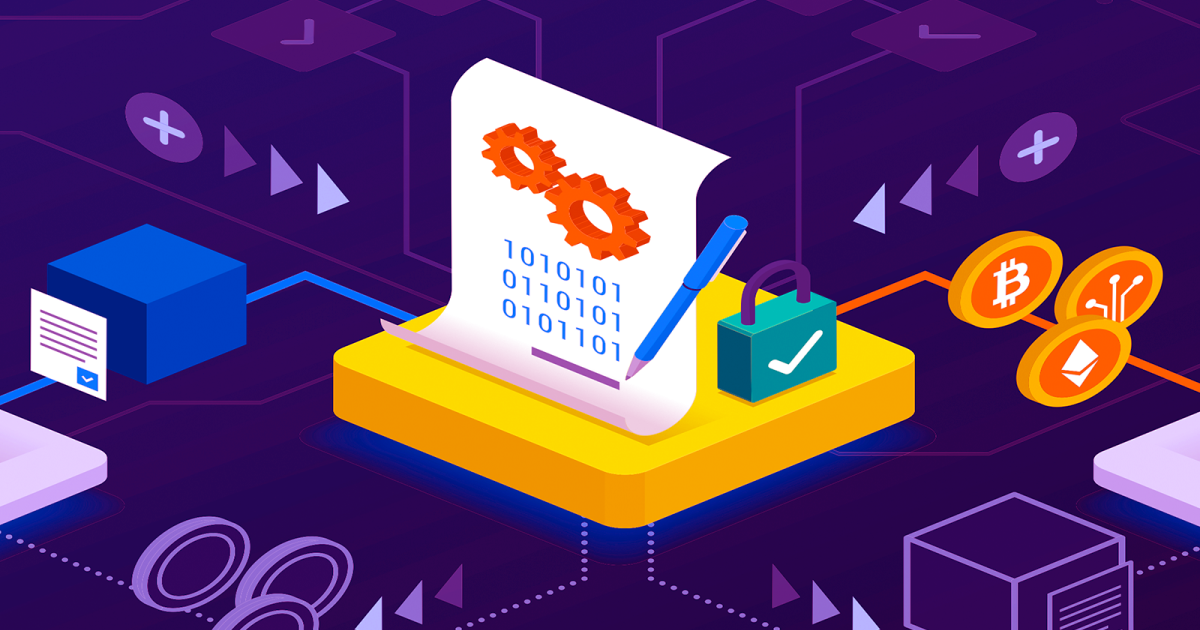
Smart contracts are self-executing agreements that are encoded in a programming language and run on a blockchain. They can perform various functions such as transferring value, enforcing rules, verifying conditions, and triggering events. For example, a smart contract can automatically pay a supplier when a delivery is confirmed or refund a buyer if a product is defective. This increases the efficiency, transparency, and security of transactions.

Decentralized protocols and smart contracts enable the creation of decentralized applications (DApps) that run on a distributed network of computers instead of a centralized server. DApps can offer various benefits such as lower costs, faster performance, better privacy, and more innovation. Some examples of DApps are decentralized exchanges, lending platforms, prediction markets, and social networks.

Decentralized protocols and smart contracts are essential components of the blockchain technology that can transform the way we interact and collaborate online. They can empower users to have more control over their data and assets and create new opportunities for value creation and social impact.

25% of Ethereum Supply, now staked on the Network

Ethereum, the second-largest cryptocurrency by market capitalization, has reached a new milestone in its network development. According to the latest data from Etherscan, more than 25% of the total supply of ether (ETH), the native token of Ethereum, is now locked in smart contracts that support the network’s transition to a proof-of-stake (PoS) consensus mechanism.

This means that over 28 million ETH, worth more than $100 billion at current prices, are staked on the Ethereum 2.0 deposit contract, which allows users to become validators and earn rewards for securing the network. The deposit contract was launched in November 2020 and has since seen a steady inflow of ETH from investors who believe in the long-term vision of Ethereum.

The staking process is part of the Ethereum 2.0 upgrade, which aims to improve the scalability, security and sustainability of the network. Ethereum 2.0 will introduce a new blockchain architecture that will run in parallel with the current one, using a sharding technique to split the network into multiple sub-chains that can process transactions faster and cheaper.

The new blockchain will also switch from a proof-of-work (PoW) algorithm, which relies on miners to validate transactions and produce new blocks, to a PoS algorithm, which rewards validators for staking their coins and participating in the consensus.

The transition to PoS is expected to reduce the energy consumption and environmental impact of Ethereum, as well as increase its resistance to centralization and censorship. However, the upgrade is not without challenges and risks, as it requires a complex coordination among developers, users, validators and other stakeholders.

The Ethereum 2.0 roadmap is divided into multiple phases, each with its own goals and timelines. The first phase, called the Beacon Chain, was launched in December 2020 and established the foundation for the PoS system.

The next phase, called the Merge, was done in late 2021 or early 2022 and merged the current PoW chain with the new PoS chain, effectively ending the mining era on Ethereum. The final phase, called Shard Chains was launched in 2022 or later and will activate the sharding mechanism that will increase the throughput and capacity of the network.

The staking milestone of 25% shows that the Ethereum community is confident and committed to the success of the Ethereum 2.0 vision. It also indicates that the demand for ETH is strong and that users are willing to lock up their coins for a long period of time, as withdrawing from staking is not possible until the Merge phase is completed.

This could create a supply shortage and a bullish pressure on the price of ETH, which has already surged by more than 400% in the past year. As Ethereum continues to evolve and innovate, it remains one of the most dominant and influential platforms in the crypto space.

US Museum returns Ghana’s looted artifacts after 150 years

0

In a historic gesture of reconciliation, the Smithsonian National Museum of African Art in Washington, D.C., has announced that it will return 27 artifacts to Ghana that were looted by British soldiers during the colonial era.

The artifacts, which include gold jewelry, ceremonial swords, and musical instruments, were taken from the Asante Kingdom in 1874, after the British army invaded and burned the capital of Kumasi. The museum acquired the artifacts in 1964 from a private collector, who had bought them from a British auction house.

The decision to return the artifacts was made after a request from the Ghanaian government, which has been seeking the repatriation of its cultural heritage for decades. The museum said that it was motivated by its commitment to ethical stewardship and respect for the people of Ghana.

The museum also said that it hoped that the return of the artifacts would foster dialogue and collaboration between the two countries, as well as raise awareness about the history and significance of the Asante Kingdom.

The Asante Kingdom was one of the most powerful and influential states in West Africa from the 17th to the 19th centuries. It was known for its rich culture, art, and trade, as well as its resistance to colonial domination. The kingdom was eventually annexed by the British in 1901, after several wars and rebellions.

Many of its treasures were looted or destroyed by the colonial forces, while others were sold or donated to museums and private collectors around the world.

The return of the artifacts is expected to take place later this year, after the completion of legal and logistical procedures. The museum said that it would continue to work with Ghanaian authorities and experts to identify and document other items in its collection that may have been looted or acquired illegally.

The museum also said that it would support Ghana’s efforts to preserve and promote its cultural heritage, through exhibitions, research, education, and exchange programs.

The announcement was welcomed by Ghanaian officials and cultural activists, who praised the museum for its ethical leadership and goodwill. They said that the return of the artifacts would be a symbolic act of healing and justice, as well as an opportunity to celebrate and showcase the rich and diverse culture of Ghana.

They also expressed their hope that other museums and institutions around the world would follow suit and return other looted or stolen artifacts to their rightful owners.

IMF warns of Maldives foreign debt crisis, after China borrowing

0

The International Monetary Fund (IMF) has issued a warning to the Maldives over its rising foreign debt, which is largely driven by borrowing from China. The IMF said that the island nation faces a high risk of debt distress and needs to implement fiscal consolidation measures to reduce its vulnerability.

The Maldives, a popular tourist destination in the Indian Ocean, has been investing heavily in infrastructure projects, such as airports, bridges, and resorts, with the help of Chinese loans.

According to the IMF, the Maldives’ public and publicly guaranteed debt increased from 34 percent of GDP in 2013 to 81 percent of GDP in 2020 and is projected to reach 91 percent of GDP by 2025. About 70 percent of this debt is owed to external creditors, mainly China.

The IMF said that the Maldives’ debt dynamics are unsustainable and pose significant risks to its macroeconomic stability and development prospects. The IMF urged the Maldivian authorities to adopt a credible medium-term fiscal plan that would reduce the fiscal deficit and stabilize the debt-to-GDP ratio. The IMF also recommended strengthening the debt management capacity and enhancing the transparency and accountability of public finances.

The Maldives is not the only country in the region that has been facing challenges due to its dependence on Chinese loans. Several other countries, such as Sri Lanka, Pakistan, and Nepal, have also been struggling to repay their debts or renegotiate their terms with China. Critics have accused China of engaging in “debt-trap diplomacy” by offering loans with high interest rates and unfavorable conditions that could compromise the sovereignty and security of the borrowing countries.

The report warns that the island nation’s public debt is projected to reach 130 percent of its gross domestic product (GDP) by 2024, up from 77 percent in 2019. This is mainly due to the impact of the COVID-19 pandemic, which has severely affected the tourism sector, the main source of income for the Maldives.

It urges the authorities to implement fiscal consolidation measures, such as reducing public spending, increasing revenue collection, and enhancing debt management.

The IMF also notes that the Maldives has a large external debt burden, with debt service payments exceeding 20 percent of its exports of goods and services. The report cautions that these debt dynamics are unsustainable and pose significant risks to the Maldives’ macroeconomic stability and development prospects.

The report also recommends that the Maldives seek debt relief from its creditors, especially China, which holds about 45 percent of its external debt. The IMF says that such debt relief would help ease the pressure on the Maldives’ balance of payments and create fiscal space for priority spending on health, education, and social protection.

The report concludes that the Maldives needs to diversify its economy and enhance its resilience to shocks, such as natural disasters and climate change. It suggests that the Maldives should invest in renewable energy, digitalization, and human capital development, as well as strengthen its governance and institutional framework.

How Green Energy, Biotechnology and Artificial Intelligence are shaping the World

0

The world is changing rapidly, and with it, new opportunities emerge in areas such as green energy, biotechnology, and artificial intelligence. These fields offer exciting possibilities for innovation, growth, and social impact.

Green energy is the use of renewable sources of energy that do not emit greenhouse gases or contribute to climate change. Examples of green energy include solar, wind, hydro, geothermal, and biomass. Green energy can reduce our dependence on fossil fuels, improve air quality, and create jobs in the clean energy sector. Some of the recent advances in green energy are:

The development of more efficient and affordable solar panels and batteries, which can store excess energy for later use or supply power to remote areas. The expansion of offshore wind farms, which can harness the strong and steady winds over the oceans and produce more electricity than onshore wind turbines. The exploration of new geothermal resources, which can tap into the heat from the Earth’s crust and generate steam for power plants or heating systems. The conversion of organic waste into biogas, which can be used as a fuel for vehicles or cooking.

Biotechnology is the application of biological processes and organisms to create or modify products or services. Examples of biotechnology include genetic engineering, biofuels, biomedicine, and bioinformatics. Biotechnology can enhance our health, food security, and environmental sustainability. Some of the recent advances in biotechnology are:

The creation of synthetic biology, which is the design and construction of new biological systems or components that do not exist in nature. The discovery of CRISPR-Cas9, which is a gene-editing tool that can precisely alter the DNA of any organism with high accuracy and efficiency.

The production of biofuels from algae, which can grow faster than conventional crops and do not compete with food production or land use. The development of biodegradable plastics, which can decompose naturally and reduce plastic pollution.

Artificial intelligence is the simulation of human intelligence by machines or software. Examples of artificial intelligence include machine learning, natural language processing, computer vision, and robotics. Artificial intelligence can augment our capabilities, improve our productivity, and solve complex problems. Some of the recent advances in artificial intelligence are:

The emergence of deep learning, which is a type of machine learning that uses multiple layers of artificial neural networks to learn from large amounts of data and perform tasks such as image recognition, speech synthesis, and natural language understanding. The invention of generative adversarial networks (GANs), which are a pair of neural networks that compete with each other to generate realistic images, sounds, or texts from random inputs.

The integration of artificial intelligence with the Internet of Things (IoT), which is a network of devices that can communicate with each other and collect data from sensors and cameras. The advancement of robotics, which can perform tasks that are dangerous, tedious, or require high precision, such as surgery, manufacturing, or exploration.

These are just some examples of the new opportunities that emerge in areas such as green energy, biotechnology, and artificial intelligence. These fields have the potential to transform our world for the better, but they also pose ethical, social, and environmental challenges that need to be addressed.

Key factors that contributed to S&P 500’s historic rise on Friday

0

A historic milestone was reached today as the S&P 500 index surpassed the 5,000 marks for the first time ever. This is a remarkable achievement for the US stock market, which has been on a strong upward trend since the end of the pandemic and the recovery of the global economy.

The S&P 500, which tracks the performance of 500 large-cap companies in various sectors, closed at 5,012.34 points, up 0.8% from yesterday. The index has gained more than 20% this year, outperforming other major benchmarks such as the Dow Jones Industrial Average and the Nasdaq Composite. This marks a remarkable recovery from the pandemic-induced crash of March 2020, when the index plunged to 2,237.40 points.

The rally was driven by several factors, including robust corporate earnings, supportive monetary and fiscal policies, rising consumer confidence and spending, and optimism about the future of innovation and technology. Some of the best-performing sectors in the index were health care, communication services, and consumer discretionary.

Many analysts and investors believe that the S&P 500 still has room to grow further, as the US economy continues to expand and create more jobs, and as new opportunities emerge in areas such as green energy, biotechnology, and artificial intelligence. However, they also caution that there are some risks and challenges ahead, such as inflation, interest rate hikes, geopolitical tensions, and regulatory uncertainties.

What are some of the key factors that contributed to this historic rise?

One of the main drivers of the S&P 500’s rally is the unprecedented fiscal and monetary stimulus from the US government and the Federal Reserve. The CARES Act, passed in March 2020, provided $2.2 trillion of relief to households, businesses, and state and local governments.

The Fed also slashed interest rates to near zero and launched massive bond-buying programs to support the economy and the financial markets. These measures boosted consumer spending, corporate earnings, and investor confidence.

Another factor that helped the S&P 500 soar is the strong performance of the technology sector, which accounts for about 28% of the index’s weight. Tech giants such as Apple, Microsoft, Amazon, Google, and Facebook have benefited from the increased demand for online services, cloud computing, e-commerce, and digital advertising amid the pandemic. These companies have also shown resilience and innovation in adapting to the changing consumer behavior and business environment.

A third factor that contributed to the S&P 500’s rise is the optimism about the vaccine rollout and the reopening of the economy. The US has administered more than 330 million doses of Covid-19 vaccines as of July 2, 2021, covering about 55% of the population. This has led to a sharp decline in new cases, hospitalizations, and deaths from the virus.

As a result, many states have lifted or eased their lockdown restrictions, allowing more businesses to resume operations and more people to return to work and travel.

The S&P 500’s historic rise reflects the resilience and dynamism of the US economy and its corporate sector. However, there are also some risks and challenges ahead that could affect its future performance. These include inflationary pressures, rising interest rates, geopolitical tensions, regulatory uncertainties, and new variants of the virus. Investors should be prepared for more volatility and diversify their portfolios accordingly.