DD
MM
YYYY

PAGES

DD
MM
YYYY

spot_img

PAGES

Home Blog Page 3356

How big is China’s shadow Banking Problem?

0

China is facing a number of challenges that could pose a threat to its economic development and financial stability in the coming years. In this blog post, we will examine some of these scenarios and their possible implications for China and the world.

One scenario is the escalation of trade tensions with the United States and other major trading partners. China has been accused of unfair trade practices, such as currency manipulation, intellectual property theft, and subsidies to state-owned enterprises. The US has imposed tariffs on hundreds of billions of dollars’ worth of Chinese goods, and China has retaliated with its own tariffs and other measures. The trade war has already hurt both countries’ economies, as well as global trade and growth. If the conflict worsens, it could lead to more protectionism, disruption of supply chains, and loss of consumer confidence.

Another scenario is the slowdown of China’s domestic demand and investment. China’s growth model has relied heavily on investment, especially in infrastructure, real estate, and manufacturing. However, this has also resulted in overcapacity, debt accumulation, and environmental degradation. China has been trying to shift its economy to a more consumption-driven and service-oriented one, but this transition is not easy or smooth. The coronavirus pandemic has also exposed the fragility of China’s consumption and service sectors, as well as its public health system. If China fails to rebalance its economy and address its structural imbalances, it could face a hard landing or a financial crisis.

A third scenario is the rise of social unrest and political instability in China. China’s rapid economic growth has lifted millions of people out of poverty, but it has also widened the gap between rich and poor, urban and rural, coastal and inland. China’s population is also aging rapidly, putting pressure on its pension and health care systems.

Moreover, China’s authoritarian regime faces growing discontent from its citizens, who demand more freedom, democracy, and human rights. China’s government has responded with more repression, censorship, and nationalism. If China cannot manage its social and political challenges, it could face more protests, violence, or even regime change.

Why is shadow banking a problem? Because it is largely unregulated and opaque, it poses significant risks to China’s financial stability and economic growth. Shadow banking activities are often highly leveraged, interconnected, and dependent on short-term funding. This creates a mismatch between the maturity and liquidity of their assets and liabilities, making them vulnerable to sudden shocks and contagion effects. Moreover, shadow banking activities may create moral hazard and adverse selection problems, as borrowers may have incentives to take excessive risks or hide information from lenders.

How big is China’s shadow banking problem? According to some estimates, China’s total debt reached 335% of GDP in 2020, of which about 40% was attributed to the shadow banking sector. This is much higher than the average debt level of emerging markets, which was around 250% of GDP in 2019. The rapid growth of shadow banking in China has been driven by several factors, such as the tight regulation of the formal banking sector, the low interest rate environment, the high demand for credit from various sectors, and the implicit guarantee from the government or state-owned enterprises.

What are the implications of China’s debt problem?

China’s high debt level poses significant challenges for its economic development and financial stability. On the one hand, it may constrain China’s growth potential and productivity, as more resources are allocated to servicing debt rather than investing in productive activities.

On the other hand, it may increase China’s vulnerability to external shocks and internal imbalances, such as capital outflows, exchange rate fluctuations, asset price bubbles, inflationary pressures, or social unrest. Moreover, it may limit China’s policy space and flexibility to respond to future crises or shocks.

What can be done to address China’s debt problem? There is no easy solution to China’s debt problem, as it requires a comprehensive and coordinated approach that involves both short-term and long-term measures. Some of the possible steps include:

Strengthening the regulation and supervision of the shadow banking sector, such as improving transparency, enhancing risk management, imposing capital requirements, and reducing moral hazard.

Promoting deleveraging and restructuring of the corporate and household sectors, such as improving corporate governance, enhancing bankruptcy procedures, facilitating debt-for-equity swaps, and encouraging debt repayment or forgiveness.

Enhancing fiscal discipline and reforming local government financing, such as reducing fiscal deficits, improving budget management, diversifying revenue sources, and curbing off-budget borrowing.

Supporting economic rebalancing and structural transformation, such as boosting domestic consumption, expanding social welfare, fostering innovation, and upgrading industries.

Maintaining macroeconomic stability and policy coordination, such as ensuring adequate liquidity, managing exchange rate expectations, containing inflationary pressures, and avoiding policy shocks or reversals.

China’s debt problem is not insurmountable, but it requires decisive action and strong commitment from the authorities and stakeholders. By addressing its debt problem in a timely and effective manner, China can enhance its resilience and sustainability for future growth.

These scenarios are not inevitable, but they are plausible and serious. They could undermine China’s growth prospects and financial stability, as well as its regional and global influence. China needs to adopt more reforms, cooperation, and innovation to overcome these challenges and achieve sustainable development.

Mozilla pivots to AI, internet safety: announces new CEO

0

Mozilla Corp., the steward of the open-source Firefox browser, announced Thursday a change in its leadership. Mitchell Baker, a Silicon Valley pioneer and co-founder of the Mozilla Project, is stepping down as CEO to focus on AI and internet safety initiatives, according to Fortune.

This transition marks a pivotal moment for the organization as it seeks to redefine its role in the internet industry dominated by tech giants like Google.

Baker’s decision to step aside as CEO stems from a sense of urgency regarding the current state of the internet and the erosion of public trust. Emphasizing the need for alternative products and challenging business models that thrive on fueling outrage, Baker expressed her commitment to addressing the deeper connections between societal malaise and human engagement with technology.

“We want to offer an alternative for people to have better products,” she stated.

Taking over as interim CEO is Laura Chambers, a seasoned entrepreneur with notable experience at companies like Airbnb, PayPal, and eBay. Chambers brings a fresh perspective to Mozilla’s leadership, intending to address growing privacy concerns and explore avenues for product innovation.

She noted the importance of Mozilla’s mission in navigating the complex interplay between technology and society.

“I was confused about what to do and this felt like a genuine way to make an impact,” Chambers remarked.

However, Chambers clarified that she won’t be seeking a permanent CEO role due to personal reasons, signaling a need for Mozilla to conduct a thorough search for a long-term successor. Despite her interim status, Chambers sees this transition as a model for effective succession management, aligning with Mozilla’s values of transparency and accountability.

The leadership change comes amid Firefox’s dwindling market share, which has dropped to low single digits in the face of Google Chrome’s dominance. 20-year-old Mozilla now derives a significant portion of its $600 million annual revenue from promoting Chrome as the default search engine, highlighting the challenges it faces in competing with industry giants.

Yet, Mozilla remains undeterred in its mission to offer alternatives and challenge the status quo. With a renewed focus on AI and internet safety, the nonprofit foundation aims to tackle issues like deepfakes and data privacy concerns. Initiatives such as Mozilla Monitor, which enables users to wipe their data off the web, underscore the organization’s commitment to empowering users and developers alike.

For Baker, success lies in influencing the conversation and providing users with meaningful choices in their online experiences. By advocating for business models with societal purpose and public benefit, Mozilla seeks to improve the quality of online life and give users greater control over their data.

The implications of Mozilla’s leadership shift extend beyond the organization itself, particularly in the competitive landscape of web browsers. With Google Chrome’s overwhelming market dominance, Mozilla’s efforts to offer alternative products and promote user privacy could introduce new dynamics to the browser market.

As Mozilla redefines its role and explores innovative solutions, it may stimulate competition and foster a more diverse and user-centric ecosystem. The company’s leadership transition and decision to focus on AI, internet safety, and user empowerment, suggests it has thrown in the towel to carve out a distinct niche in an industry dominated by tech giants.

The move, however, is believed to have the potential of reshaping the future of web browsing.

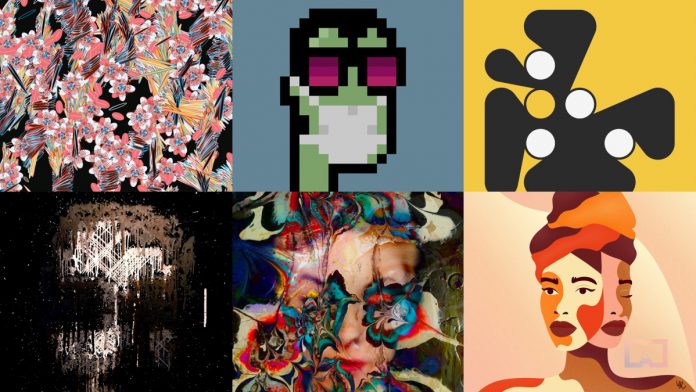
Cozomo de’ Medici’s list of the 12 most iconic artworks of 2023

0

The year 2023 was a remarkable one for the art world, as it witnessed some of the most stunning and innovative creations in various fields and mediums. From Cozomo de’ Medici’s list of the 12 most iconic artworks of 2023 to a major partnership between GoDaddy and ENS, here are some of the highlights that made this year unforgettable.

Cozomo de’ Medici, the influential art collector and patron, released his annual list of the 12 most iconic artworks of the year, which featured a diverse and eclectic selection of artists and genres. Among them were:

The Last Supper by Ai Weiwei, a monumental installation that recreated Leonardo da Vinci’s famous painting with 13 life-sized sculptures made of recycled materials and human hair.

The Infinite Garden by Yayoi Kusama, a immersive exhibition that filled the entire Guggenheim Museum in New York with thousands of colorful polka dots, mirrors, and lights.

The CryptoPunks by Larva Labs, a series of 10,000 unique pixel art characters that were minted as non-fungible tokens (NFTs) on the Ethereum blockchain and sold for millions of dollars.

The Black Square by Kazimir Malevich, a replica of the iconic abstract painting that was launched into orbit by SpaceX and became the first artwork in space.

The Mona Lisa by Banksy, a graffiti version of the famous portrait that appeared overnight on the wall of the Louvre Museum in Paris and caused a sensation among visitors and authorities.

The Scream by Edvard Munch, a digital animation that used artificial intelligence to make the expression of the famous painting change according to the mood and emotions of the viewers.

The Starry Night by Vincent van Gogh, a interactive installation that used augmented reality to transform the Museum of Modern Art in New York into a living version of the famous painting.

The Persistence of Memory by Salvador Dali, a 3D-printed sculpture that replicated the surreal imagery of the famous painting with melting clocks and distorted objects.

The Birth of Venus by Sandro Botticelli, a performance art piece that reenacted the classical scene of the goddess emerging from the sea with hundreds of nude volunteers on a beach in Italy.

The Girl with a Pearl Earring by Johannes Vermeer, a hologram that projected the image of the famous painting onto the face of anyone who stood in front of it.

The Creation of Adam by Michelangelo, a virtual reality experience that allowed users to enter the Sistine Chapel and witness the moment of divine contact between God and Adam.

The Guernica by Pablo Picasso, a sound installation that used speakers and microphones to recreate the sounds and voices of the victims of the bombing of Guernica during the Spanish Civil War.

In addition to these remarkable artworks, 2023 also saw a major partnership between GoDaddy and ENS, two leading platforms for domain name registration and management. The partnership enabled users to easily register and manage their own. eth domains, which are decentralized, and censorship-resistant domains powered by Ethereum.

This opened up new possibilities for artists, creators, and entrepreneurs to showcase their work and identity on the decentralized web. These are just some of the examples of how 2023 a year of innovation, creativity, and disruption in the art world was. We can only expect more surprises and wonders in 2024 and beyond.

FTC files fresh complaint to halt Microsoft’s acquisition of Activision Blizzard over sacked workers

0

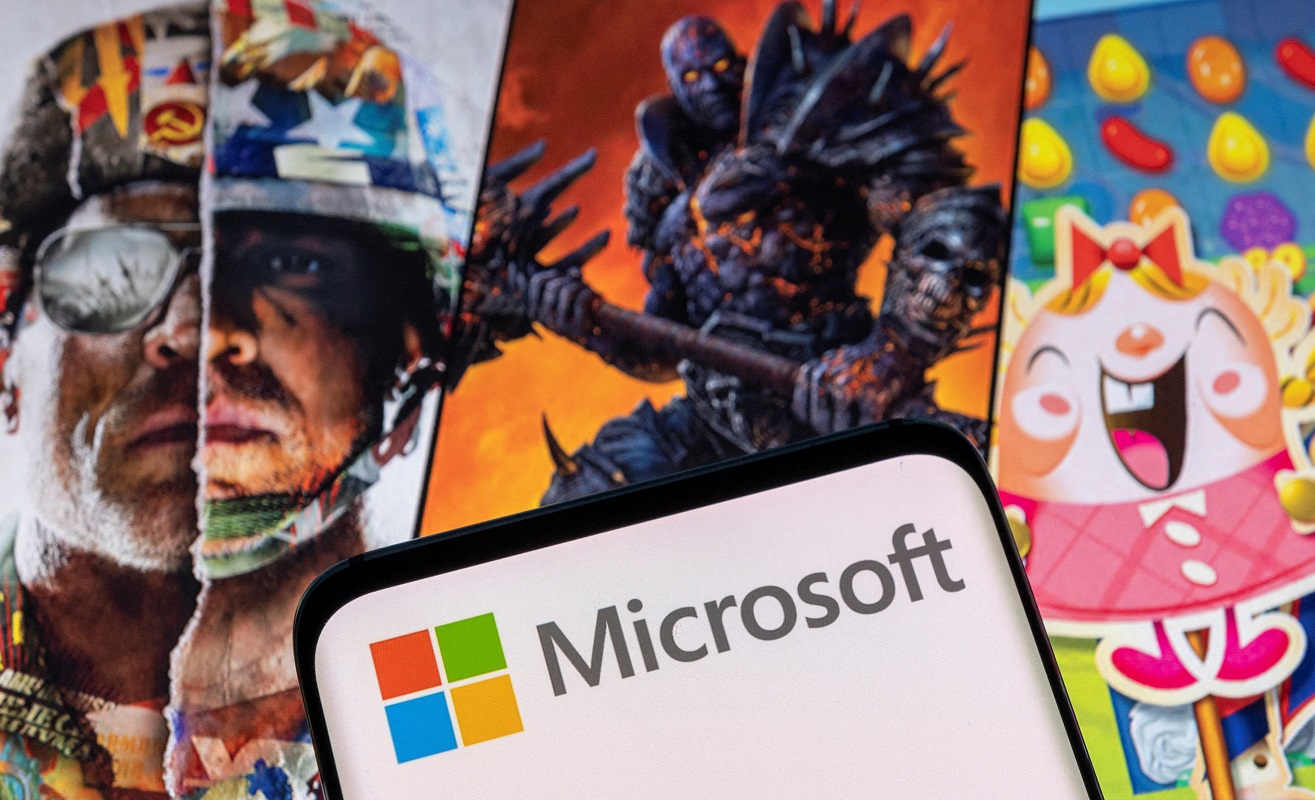
The Federal Trade Commission (FTC) has filed a complaint against tech giant Microsoft, accusing it of breaching promises made regarding the autonomy of Activision Blizzard post-acquisition.

This comes just one week after Microsoft made headlines with the announcement of nearly 2,000 layoffs within its gaming division, including employees from the recently acquired Activision Blizzard.

The FTC lodged its complaint in a federal appeals court on Wednesday, arguing that the recent downsizing directly contradicts assurances given by Microsoft during the acquisition process. Specifically, the FTC alleges that Microsoft’s pledge to maintain Activision Blizzard’s independence is undermined by the layoffs, which were described by Microsoft as part of an “execution plan” aimed at reducing “areas of overlap” between the two entities.

According to the complaint, Microsoft’s actions “contradict its representations” to the court, where it had asserted that the merged companies would continue to operate independently. This discrepancy forms the crux of the FTC’s argument for a temporary halt to Microsoft’s acquisition of Activision Blizzard, pending further investigation into potential antitrust concerns.

“This newly-revealed information contradicts Microsoft’s representations in this proceeding, which seeks to temporarily pause Microsoft’s acquisition of Activision pending the FTC’s evaluation of the merger’s antitrust merits,” the complaint stated.

Microsoft had previously contended that any necessary divestitures could be easily implemented without disrupting the overall operation of the merged entity.

Microsoft claimed that the public equity favoring an injunction “is more acutely implicated in horizontal mergers, where competing entities integrate their operations and, in the process, often eliminate redundancies.”

However, the recent layoffs have thrown a wrench into this narrative, prompting the FTC to question Microsoft’s commitment to maintaining the pre-merger status quo.

Furthermore, the FTC expressed concerns about the implications of the layoffs on its ability to provide effective relief for affected employees should antitrust violations be established. The layoffs not only undermine the FTC’s enforcement efforts but also exacerbate the challenges faced by workers in an industry already plagued by mass firings.

“Moreover, the reported elimination of thousands of jobs undermines the FTC’s ability to order effective relief should the pending administrative proceeding result in a determination that Microsoft’s acquisition of Activision violated Section 7 of the Clayton Act,” the FTC said.

It added that “the reported layoffs thus underscore the FTC’s need for injunctive relief pending completion of the administrative proceeding.”

This latest development adds another layer of complexity to Microsoft’s acquisition of Activision Blizzard, which had already faced scrutiny from regulatory bodies on both sides of the Atlantic. While the UK’s Competition and Markets Authority had approved the deal in October, the FTC’s persistent antitrust concerns have kept the acquisition in limbo.

The FTC’s complaint underscores the broader challenges facing the video game industry, where thousands of workers have lost their jobs in recent months. With an estimated 6,000 layoffs already recorded in 2024, the gaming industry continues to grapple with instability and uncertainty, further exacerbated by corporate consolidation and regulatory scrutiny.

As Microsoft and the FTC prepare to spar in court over the fate of the Activision Blizzard acquisition, the future of thousands of workers hangs in the balance. Whether Microsoft will be compelled to divest parts of its newly acquired assets or undergo other remedial measures remains uncertain, but one thing is clear: the battle between regulators and tech giants is far from over, and its consequences extend far beyond the boardroom.

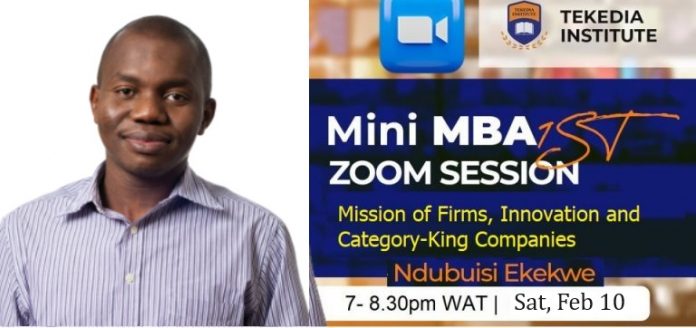
Live session of Tekedia Mini-MBA edition 13 begins on Saturday, Feb 10 at 7pm WAT

0

The Live session of Tekedia Mini-MBA will begin on Saturday, Feb 10 at 7pm WAT. I will kick start it with a lecture on the Mission, Purpose, and Why We Have Companies. I will extend the construct into Business Growth and Building Category-King Companies. The Zoom link is in the classboard .

Sat, Feb 10 | 7pm-8.30pm WAT | Innovation, Growth and the Mission of Firms – Ndubuisi Ekekwe

Next week, we will examine Design Thinking and Innovation from a zen-master from SAP. And from NATO Europe, another faculty will explain how supply chain delivers the ability to win in markets through efficiency on the utilization of factors of production. Thank you NATO for approving our application to make him available. again.

The week after, a business growth-maker from Microsoft, will explain how to craft a winning business strategy. This academic festival will run for 13 weeks, with eminent faculty teaching us. I am so excited.

A man or a woman with Knowledge is a FACTOR because in the 21st century, the most dominant factor of production is knowledge. Tekedia Institute is a temple for mining and distributing knowledge.  I thank you and I welcome you again for choosing our Institute for your continuous education. The light is ON and this is Africa’s largest school for the mastering of entrepreneurial capitalism and business management. Welcome – a journey for knowledge.

  • Ndubuisi Ekekwe
  • Professor & Lead Faculty
  • Tekedia Institute, USA