DD
MM
YYYY

PAGES

DD
MM
YYYY

spot_img

PAGES

Home Blog Page 337

XRP ETF Approval Set to Push Ripple Price Past $8, But Thousands Are Backing This Token, Expecting 12500% Returns

0

The cryptocurrency market is looking forward to a significant change as anticipations rise over the acceptance of an XRP Exchange-Traded Fund (ETF). Analysts believe the ruling will drive the price of Ripple beyond $8, as an increasing number of retail investors are also investing in Little Pepe (LILPEPE), a meme-driven Layer 2 project projected to see significant long-term growth.

XRP ETF Approval Fuels Institutional Optimism

There is a market expectation that XRP will experience institutional inflows with the approval of an ETF. As the legal outlook improves and Ripple gains additional partnerships worldwide, analysts estimate that the asset may receive between 10 billion and 20 billion inflows in the first year. Recently, Canary Capital CEO Steve McClur has raised his ETF inflow projection by $5 billion to $10 billion, stating that the capital could establish a new role for XRP in regulated investment portfolios. The move may enable pension funds and other institutional investors to gain direct exposure to XRP, marking a new phase in the adoption of cryptocurrencies. According to experts, the XRP ETF is a milestone that can enhance liquidity and position XRP more effectively in global payment systems. These shifts have the potential to increase the legitimacy of Ripple to banking institutions.

Little Pepe ($LILPEPE): A Meme Coin with Real Utility

As institutional investors anticipate the approval of an XRP ETF, retail traders are shifting to Little Pepe (LILPEPE), a meme coin that operates on its own Ethereum-compatible Layer 2 blockchain. The project stands out from other meme tokens because it holds real functionality. It offers staking, NFT integrations, and governance features without charging taxes on trades. In its presale, Little Pepe has collected 26.97 million out of a 28.77 million target at Stage 13. There are still fewer than 5% of tokens that have not been purchased by investors, out of a total of 17.25 billion. The current LILPEPE token price is $0.0022 and will be increased to $0.0023 in its next stage, representing significant growth. Since Stage 1, early buyers have already realized 130% gains.

$LilPepe Community Growth and Investor Incentives

Incentives provided by the project before listing have boosted investor engagement. Contributors who invest at least $100 will have a chance to win in a $777,000 giveaway with 10 winners, each receiving $77,000 worth of tokens. Additionally, the Mega Giveaway will offer random large purchasers in Stages 12-17 the chance to win over 15 ETH in total prizes. Little Pepe is an ecosystem that promotes fairness, with no team allocations, locked liquidity, and a communal governance framework. Usefulness, scalability, and transparency have contributed to the growing interest in the project among social media and cryptocurrency groups.

Conclusion

A successful XRP ETF approval would help to restructure the institutional involvement in the crypto markets and push the price of Ripple above $8. Meanwhile, the emergence of Little Pepe demonstrates the ability of innovative Layer-2 projects to attract investors by enabling their involvement in the real world and utilization. Both assets exhibit a similar trend, one institutional and one community-oriented, and both are indicative of the greater diversification in the next era of the digital assets landscape.


For More Details About Little PEPE, Visit The Below Link:

Website: https://littlepepe.com

Moroccan B2B e-commerce And Fintech Platform Chari Secures $12M Series A Funding to Drive Merchant Digitization

0

Chari, a Moroccan B2B e-commerce and fintech startup transforming traditional retail through technology, has announced the successful completion of its $12 million Series A funding round.

The round was co-led by SPE Capital and Orange Ventures. Other participants include Verod-Kepple Africa Ventures, Plug and Play, Endeavor Catalyst and Pincus Capital.

This achievement marks the largest Series A round ever raised by a Moroccan startup, highlighting growing investor confidence in the country’s digital commerce ecosystem.

Chari’s co-founder Ishmael Belkhayat who expressed excitement about the milestone, in a post on Linkedin disclosed that the funding will fuel the startup’s mission to empower local merchants through technology.

He wrote,

“I am excited to announce that Chari has raised $12M in Series A funding, co-led by SPE Capital and Orange Ventures — the largest Series A ever raised by a startup in Morocco. This milestone fuels our mission to empower local merchants through technology — transforming everyday grocery stores and retailers into fully connected, digital businesses.

“With this investment, we’ll accelerate the development of our super-app for merchants and scale our Banking-as-a-Service (BaaS) platform, opening our infrastructure to startups looking to embed financial solutions directly into their products. A huge thank-you to our investors, partners, and team for believing in our vision and for helping us redefine how commerce and finance connect across Morocco.”

Also commenting, Chari’s co-founder and COO Sophia Alj said,

“We are building a BaaS platform to power the next generation of digital finance. This investment will help us strengthen our infrastructure and support partners seeking to embed fintech into their products. We are also proud to build our own use case by enabling traditional retailers to access and offer seamless financial services”.

Ryosuke Yamawaki partner at Verod Kepple Africa Ventures, noted that Chari’s focus on empowering local merchants via a tech-first scalable platform resonates deeply with the company’s thesis, hence the reason for the investment.

Chari is a B2B e-commerce and fintech platform designed to empower traditional retailers (often called “mom-and-pop” or proximity stores) in French-speaking African countries. Founded in 2020 by Ismael Belkhayat (CEO, ex-BCG) and Sophia Alj (COO), the startup is headquartered in Casablanca, Morocco, with over 185 employees.

Chari is backed by Y Combinator (YC S21 batch the first Moroccan startup to join) and focuses on digitizing informal retail by combining fast product delivery with embedded financial services. Independent retailers are at the heart of Chari’s strategy with tailored services designed to meet their unique needs.

Key Features and Services

Chari’s mobile app serves as a one-stop super app for small merchants, enabling:

– E-commerce Functionality: Retailers can order fast-moving consumer goods (FMCG) like groceries, household items, and other products they resell. Deliveries are promised within 24 hours (often free), sourced from a digital marketplace of suppliers. This helps traditional stores compete with modern retail chains.

– Fintech Integration:

  – Microloans and working capital (using data from acquisitions like Karny, a credit book app, to assess unbanked merchants).

  – Banking-as-a-Service (BaaS) APIs for other fintechs, e-commerce platforms, and enterprises to embed financial tools without building them from scratch.

– Merchant Tools: Balance checks, supplier payments, and inventory management to streamline operations.

Chari primarily operates in Morocco (where it covers over 50% of proximity stores in Casablanca), with expansions to Tunisia and Côte d’Ivoire (via the 2022 acquisition of Diago, an Ivory Coast-based app).

The platform targets underserved informal retailers, who make up a significant portion of Africa’s economy, by turning local shops into points of sale for both goods and services. It serves 25,000+ retailers across these countries, focusing on French-speaking Africa. In October 2025, Chari became the first VC-backed startup in Morocco to receive a payment institution license from Bank Al-Maghrib, unlocking full financial services like transfers and payments.

The latest funding will fuel the super app build-out and BaaS expansion, aiming to integrate more financial services and grow regionally.

Stellantis’ $13bn U.S. Investment Marks Major Shift Amid Trump Tariffs and Industry ‘De-Globalisation’

0

Stellantis’ new $13 billion investment plan in the United States signals a major shift in the global auto industry’s response to President Donald Trump’s sweeping tariffs — a recalibration that analysts say could permanently reshape how and where automakers build their cars.

The plan, announced late Tuesday, marks one of the most aggressive moves yet by the French-Italian-American carmaker to fortify its position in its most important market and shield itself from the escalating costs of tariffs imposed under Trump’s “America First” trade agenda. The company had estimated in July that the tariff burden alone would cost it around $1.7 billion this year — a hit that now appears to have pushed Stellantis toward decisive action.

“This move is relevant and part of a wider path started by Stellantis to be more and more aligned to the new business environment drawn by Trump with tariffs. It’s paying off,” Fabio Caldato, portfolio manager at AcomeA SGR, who recently increased his exposure to Stellantis, told Reuters.

However, the $13 billion investment underscores both the risks and opportunities facing global automakers as Washington’s trade strategy forces a reordering of supply chains. Analysts say it represents a turning point not only for Stellantis but for the broader auto industry, as companies reconsider the long-term viability of their North American production strategies.

‘Manufacture Where You Sell’ Becomes the New Rule

Stellantis, which owns brands including Jeep, Ram, Chrysler, Fiat, and Peugeot, sold about 1.2 million vehicles in the U.S. last year. More than 40 percent of those were imports — primarily from plants in Mexico and Canada — that are now subject to 25 percent tariffs under Trump’s trade framework.

The new investment plan is expected to increase local U.S. production, reducing reliance on imports and aligning Stellantis more closely with Washington’s industrial priorities.

“I see it as an irreversible trend, to manufacture more where sales happen, a sort of forced de-globalisation process,” said Massimo Baggiani, founder of London-based Niche Asset Management. “More investments and sales in the U.S. might also attract more American investors in the long term.”

Baggiani, who previously sold his Stellantis shares, said he was not reinvesting in the stock yet, noting that while Stellantis shares remain attractively priced, “they do not offer a significant discount compared to Ford or GM.”

That cautious stance reflects a broader investor mood. Stellantis shares rose as much as 4.3 percent in early trading on Wednesday following the announcement, but they remain down 33.5 percent year-to-date. Analysts attribute part of that decline to persistent uncertainty over trade policies, production costs, and consumer sentiment in the face of higher car prices.

Tariffs Push Automakers to Reinvent Supply Chains

Trump’s tariff wave — targeting goods from Mexico, Canada, and China — has already triggered a strategic rethink across industries. Automakers, long accustomed to integrated North American supply chains, are now being forced to localize production more aggressively.

For Stellantis, the decision is as much about survival as opportunity. The company has seen its U.S. market share weaken in recent years, particularly in its sedan and compact segments, while brands like Jeep and Ram face intensified competition from Ford and General Motors in the truck and SUV categories.

“The investment plan was necessary to mitigate the impact of U.S. tariffs and relaunch brands that have lost significant volume in recent years,” said Equita analyst Martino De Ambroggi, who added that the spending reshuffle “should result in limited changes to total capital expenditure.”

Some believe that Stellantis’ investment strategy could include expanding or repurposing existing plants in states such as Michigan, Ohio, and Indiana — regions where auto production and employment carry deep political significance. Such moves would not only curb tariff costs but also signal alignment with Trump’s emphasis on domestic manufacturing.

A Sign of ‘Greater Tariff Comfort’

The timing of Stellantis’ announcement has also drawn attention. After months of industry-wide uncertainty, the move is seen as a sign that the company now has a clearer understanding of Washington’s trade trajectory.

“The timing of this announcement possibly signals greater tariff comfort and clarity on the part of Stellantis management,” analysts at TD Cowen — Itay Michaeli, Justin Barrell, and Selina Liu — wrote in a note to clients.

By locking in a U.S. investment of this magnitude, Stellantis appears to be hedging against further escalation while simultaneously positioning itself as a long-term domestic manufacturer. That shift could earn it goodwill from both policymakers and consumers, particularly as other global automakers scramble to adjust to the new tariff regime.

A Broader Shift Toward Industrial Reshoring

Stellantis’ move fits into a larger wave of reshoring announcements by multinationals seeking to minimize exposure to tariff risk and geopolitical disruption. From electronics to electric vehicle batteries, companies have been relocating supply chains closer to major consumer markets — a process some economists describe as the “re-nationalization” of global manufacturing.

Trump’s policy framework, which includes incentives for companies to expand domestic operations alongside punitive tariffs on imports, has accelerated this transformation. Analysts note that while it increases near-term costs for automakers, it could also bolster domestic production and employment in the long term — a political win for the White House.

For investors, Stellantis’ U.S. investment plan represents both a reassurance and a calculated gamble. On one hand, it signals the company’s willingness to adapt quickly to policy changes; on the other, it raises questions about profit margins, capital allocation, and execution risks in a high-cost environment.

“Stellantis shares remain cheap, but like the rest of the industry, they do not offer a significant discount compared to Ford or GM,” said Baggiani.

Caldato, the AcomeA SGR portfolio manager, sees the investment as a vote of confidence in the company’s ability to navigate a new trade reality.

“It’s paying off,” he said, suggesting that Stellantis’ proactive stance could help it win market share from slower-moving rivals.

Still, analysts caution that even with new plants, supply chain volatility, inflationary pressures, and continued tariff uncertainty could weigh on margins.

They’re Cutting and Sharing the World with AI

0

They are cutting and sharing the world again, not with armies or colonial treaties this time, but with algorithms, data, and artificial intelligence (AI). The new industrialists, the ultra-rich and their machines, are redrawing the map of global production and wealth creation. When Britain and France carved Africa with compasses, they sought gold, land, and labor. Today’s empire is built on datasets, computing power, and digital platforms. The boardroom has replaced the battlefield, and the algorithm is the new weapon of conquest. As AI permeates every factory, company, and government, those who control it are quietly reshaping the foundations of capitalism.

In this new order, the pursuit is no longer about creating jobs or shared prosperity; it is about extracting maximal value from every process with minimal human involvement. Automation has made efficiency a god, and AI has made control an art. The assembly line no longer requires a thousand workers, it only needs a few engineers and a network of intelligent systems.

Across industries, machines are learning, optimizing, and replacing humans. The moral narrative of “job creation” that once justified industrial expansion has been rewritten into “productivity and shareholder value.” And the new script favors those who own the algorithms, not those who serve them.

Data reveals the trajectory clearly: productivity rises, profits expand, but wages stagnate. Wealth concentrates at the top while millions compete for relevance in an economy where cognitive machines outperform human labor. AI-driven systems are compounding inequality faster than any previous industrial revolution. Just as colonial trade routes once extracted raw materials from Africa and Asia to build European wealth, today’s AI routes extract human behaviour, attention, and intelligence to feed digital empires. And like before, the margins of the world are providing the data fuel while the center consolidates the capital.

Yet, this epoch also presents a paradox. The same AI that widens inequality can also democratize opportunity if societies choose differently. Nations that invest in human capital, reimagine education, and build local AI industries will not be mere consumers of algorithms but participants in the grand game. But make no mistake, this phase of capitalism is not about benevolence. It is about power and control.

Those cutting and sharing the world with AI are not asking for inclusion; they are defining who will own tomorrow. And for nations and people, the imperative is clear: either learn the tools of this new order or be managed by those who do. Nigeria and Africa: shine ya eyes!

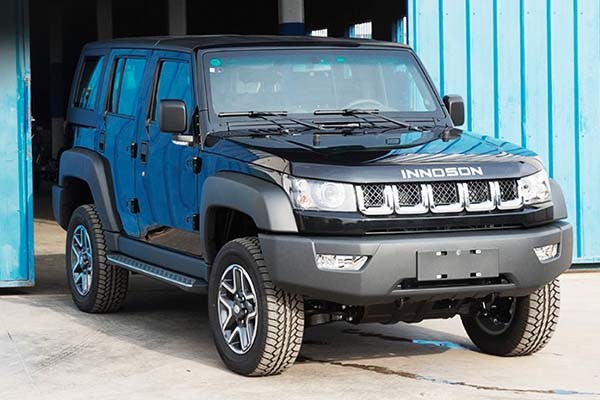
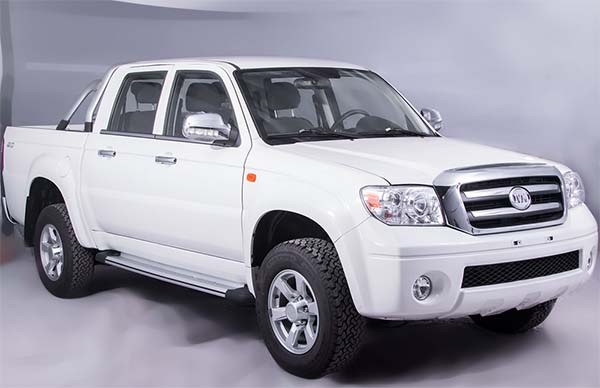
Innoson Vehicle Motors – Brand Photos with Prices

339

Here are the major brands of Innoson Motors with their price guidance. The full company contacts are also provided below. Some of these prices fluctuate within a delta of N1,000,000 from the quoted mean based on delivery destination.

1. Innoson FOX: N7,665,000

2.  Innoson UMU: N8,000,000

3.  Innoson G5: N12,390,000

4.  Innoson G6: N32,915,000

5.  Innoson G80: N27,825,000

6.  Innoson G40: NN17,325,000

7.  Innoson Carrier 4×4: N13,860,000

8.  Innoson Carrier 4×2: N9,400,000

9.  Innoson 5000: N19,400,000

10.  Innoson 6601: N22,995,000

11. Innoson 6857: N27,700,00

12. Innoson 6800: N34,650,000


 Innoson Motor Price 
 Model   Price in Nigerian Naira
 Innoson FOX  N7,665,000
 Innoson UMU  N8,000,000
 Innoson G5  N12,390,000
 Innoson G6  N32,915,000
 Innoson IVM G80  N27,825,000
 Innoson G40  NN17,325,000
 Innoson Carrier 4×4  N13,860,000
 Innoson Carrier 4×2  N9,400,000
 Innoson 5000  N19,400,000
 Innoson 6601  N22,995,000
 Innoson 6857  N27,700,00
 Innoson Caris  N4,500,00
 Innoson Capa – The Indomitable  N8,000,00
 Innoson G6C Carrier Pick Up  N17,700,00
 Innoson 6800  N34,650,000


Headquarters Office Address: No.2 Innoson Industrial Estate, Akwu-Uru -Uru, Umudim, Nnewi, Anambra State.

Phone(s):+234 (0) 8105472222, (0)7089440040,(0)7033326171

Abuja+234 (0)8166126255

Lagos+234 (0)8035740097

email: innosonnnewi@gmail.com, innosonivm@yahoo.com


Prices have been Updated. And we turned an earlier post on this page to become a pricing page.