DD
MM
YYYY

PAGES

DD
MM
YYYY

spot_img

PAGES

Home Blog Page 3370

New Ntel Boss, Adrian Wood, Unveils Plan to Revitalize the Embattled Telco

0

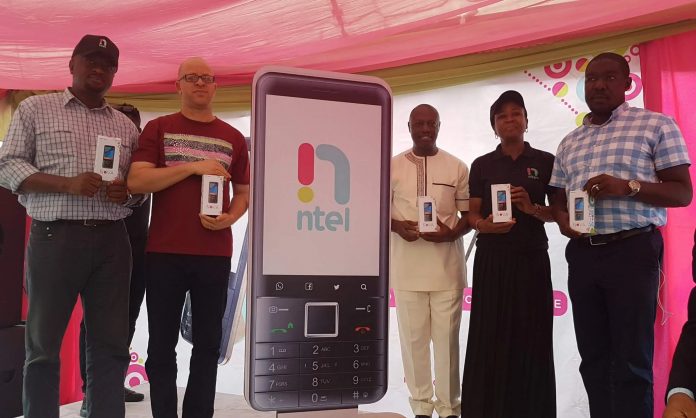
Ntel, the embattled Nigerian telecom company, is preparing for a major comeback, driven by the strategic leadership of Adrian Wood, the former CEO of MTN Nigeria.

Since taking over as CEO in January 2024, Wood has been on a mission to revive Ntel’s fortunes, which have waned over the years owing to many challenges.

The new CEO has been proactive in his new role, engaging with key industry stakeholders and potential investors. In a letter to Ntel’s staff dated June 5, 2024, he outlined his meetings and plans. One significant meeting took place on May 21 with Dr. Aminu Maida, the EVC/CEO of the Nigerian Communications Commission (NCC). This meeting set the stage for discussions on Ntel’s future and the necessary steps to secure funding for a complete overhaul of its network infrastructure.

“We had a very productive session about the forward plan for NatCom, our role in industry building, as well as the prospects for raising equity and debt capital to fund a complete new 4G/5G network design and rollout nationwide,” Wood said.

Raising substantial capital is at the heart of Wood’s strategy to revive Ntel. He disclosed that he has been actively engaging with institutional investors to secure between $500 million and $550 million. This capital will be crucial for restructuring and developing a new 4G/5G network nationwide.

“I have been engaging with potential institutional investors. When the new financial business plan and offering document are ready soon, there will be a roadshow to raise the required funds,” Wood explained.

He added that the initial response has been positive, with interactions with a New York investment fund and the African Capital Alliance (ACA), a notable early-stage investor in MTN Nigeria, marking promising steps forward.

“Already, together with CIO Anthony Adegbola, one New York investment fund visited some of our Lagos facilities. With the visitor, I also had a positive meeting with the African Capital Alliance, one of Nigeria’s (and Africa’s) premier private equity funds groups. ACA was an early-stage investor in MTN Nigeria. They told us it remains their investment with the best returns, ever,” he added.

Securing Interim Funding

Understanding the lengthy process of securing large capital investments, Wood mentioned leveraging a facility from the Asset Management Corporation of Nigeria (AMCON), which holds a 55% stake in NatCom. This interim funding will support crucial phases of project management, capital formation, and network rollout before the full-scale relaunch.

Wood noted, “Before the arrival of new investments, we will leverage a facility from AMCON—55% NatCom shareholder to see us through the crucial project management office planning phase, new capital formation and network rollout, before relaunching the business.”

Wood assured Ntel’s staff of a transformative journey ahead, promising fresh and innovative business strategies.

“There will be a set of business strategies that are fresh, innovative, and new to the market. There will be products and services, and service combinations, which do not exist in Nigeria at present. All technical systems and platforms will be constructed and rolled out nationwide, from the ground up,” he stated, explaining the scale and ambition of the planned transformation.

Ntel’s Backstory

NatCom Development & Investment Ltd (NatCom) made a bold move in 2014 by acquiring the core assets of the former government-owned NITEL/MTel. Ntel, the reborn entity, launched in 2016, generating considerable buzz with the first on-net test data call and Voice-over-LTE (VoLTE) call in Lagos. However, despite these promising starts, the company soon faced significant challenges.

However, the company’s early emphasis on 4G services proved to be a double-edged sword. While forward-thinking, it misaligned with a market not yet prepared for such advanced technology. This strategic misstep left Ntel isolated, struggling to connect with other operators and gain market traction.

Analysts highlight that the decision to launch 4G services in April 2016 was particularly problematic, as the majority of subscribers did not yet possess 4G-compatible handsets.

Despite these hurdles, Ntel pushed forward, launching full VoLTE services, securing a landmark deal with Samsung, and perfecting its self-care recharge system via its website. Their superfast and unlimited data propositions significantly impacted the broadband landscape. Yet, these efforts could not fully overcome the initial misalignment with market readiness.

A New Direction

With Wood at the helm, Ntel is gearing up for a major turnaround. His deep industry experience and strategic vision are expected to tackle past challenges head-on, positioning Ntel for a robust comeback. Investor engagement and a renewed focus on innovation are key elements of this strategy, as Ntel aims to reestablish itself as a formidable player in Nigeria’s telecom industry.

“There will be a set of business strategies that are fresh, innovative, and new to the market. There will be products and services, and service combinations, which do not exist in Nigeria at present. All technical systems and platforms will be constructed and rolled out nationwide, from the ground up. It will be an enormous undertaking – but we will prevail. I am sure of it,” he assured the staff.

Ntel’s push to revive under Wood is not just about one company’s comeback; it is seen as a reflection of a broader effort to rejuvenate Nigeria’s telecommunications industry. By setting ambitious goals and securing substantial investments, the company could inspire other telecom operators to innovate and expand, ultimately benefiting the entire sector and its consumers.


How to Start a New Company – Tekedia Mini-MBA

0
Join us at Tekedia Mini-MBA today as we learn from a founder on how to Start a new company. Chineye Ochem ACA, CFE, MBA co-founded Tyms, Nigeria’s #1 accounting firm for ambitious modern businesses. Come here and learn how to build.
 
Tekedia Mini-MBA >> only the best teach here. Zoom link here 
 
Tyms is a Tekedia Capital portfolio company; check them out here 

Nigeria’s Goal of 70% Broadband Penetration in 2025 suffers huge setbacks

0

Nigeria’s vision to achieve 70% broadband penetration by 2025 is hitting significant roadblocks, raising concerns about the nation’s economic future and its digital transformation agenda.

The National Broadband Plan 2020-2025, a blueprint aimed at connecting a vast majority of Nigerians to high-speed internet, has seen limited success over the past four years.

As of March 2024, data from the Nigerian Communications Commission (NCC) indicates that broadband penetration has reached 43.53%, up from 39.54% in April 2020 when the Plan was first introduced. This modest increase of just 4% over four years falls far short of the Plan’s milestones. Originally, the goal was to achieve 50% penetration by the end of 2023, but the actual figure was 43.71%, dipping slightly to 43.53% in early 2024.

Missed Targets and Unrealized Ambitions

The Plan’s architects recognized several hurdles, such as the high cost of smartphones, and proposed setting up at least one local smartphone assembly plant by 2023 to make devices more affordable. Yet, Nigeria remains without such a facility, and the depreciating Naira has pushed smartphone prices to around N65,000, a far cry from the target of N18,000.

Additionally, the Plan called for 70% of telecom subscriptions to be on 4G by 2023. Current NCC data shows only 32.74% of the 219 million active mobile subscriptions are on 4G, while a significant 56.97% are still using 2G networks.

Notable Progress in Speed and Data Pricing

Despite these setbacks, there have been some achievements. The Plan set internet speed targets of 15Mbps download in urban areas and 5Mbps in rural areas by 2023. Thanks to 5G launches by MTN, Airtel, and the entry of Starlink, which offers over 50Mbps, these speed goals have been surpassed in both urban and rural settings. Moreover, data prices have fallen below the Plan’s target of N700 for 1GB, with some operators offering data for as low as N350 per day, although these operators are now seeking regulatory approval to increase prices.

Challenges to Implementation

In the issues stalling the Plan’s progress highlighted by Engineer Gbenga Adebayo, Chairman of the Association of Licensed Telecommunications Operators of Nigeria (ALTON), Multiple taxation and high Right of Way (RoW) costs are significant barriers to infrastructure deployment.

The Plan estimated a need for $3.5 billion to $5 billion in investments over five years, but foreign investment in Nigeria’s telecom sector has been declining sharply. The National Bureau of Statistics (NBS) reported a 239% drop in Foreign Direct Investments (FDIs) in 2023, falling from $456.83 million in 2022 to $134.75 million in 2023.

“The current investment figures are a clear indicator of the challenges facing the industry. This is adversely affecting the expansion of network infrastructure,” Adebayo said, adding that limited access to foreign exchange further hampers the ability of operators to expand and deploy more broadband infrastructure.

Government’s Last-Ditch Efforts

In response to these challenges, the Ministry of Communications, Innovation, and Digital Economy has launched several initiatives to bolster connectivity. One notable project is Project 774 LG Connectivity, aimed at providing internet access to all 774 Local Government secretariats across Nigeria. Additionally, the government has announced plans to establish a Special Purpose Vehicle (SPV) to deliver an additional 90,000km of fiber optic cable, boosting Nigeria’s connectivity backbone to at least 125,000km from the current 35,000km.

“The SPV will build the additional fiber optic coverage required to take Nigeria’s connectivity backbone to a minimum of 125,000km,” Dr. Bosun Tijani, the Communications Minister said.

Nigeria’s journey towards achieving its broadband penetration goals is fraught with challenges. The slow progress threatens to delay the country’s digital transformation and economic development.

Analysts note that while the government’s recent initiatives are a step in the right direction, addressing fundamental issues like investment, taxation, and regulatory bottlenecks is crucial for Nigeria to harness digital technologies for economic growth and social inclusion in the coming years.

AI TRiSM and Opportunities in Digital Industries in 2024

0

The digital landscape in 2024 is a vibrant ecosystem of innovation and growth. As we navigate through the year, the opportunities within the digital industries are expanding at an unprecedented rate. The convergence of artificial intelligence (AI), cloud computing, and cybersecurity is driving a resurgence in the technology sector, promising a robust and resilient future for businesses and individuals alike.

AI Trust, Risk, and Security Management (AI TRiSM)

AI TRiSM has emerged as a pivotal trend, ensuring that AI systems are trustworthy, secure, and risk compliant. This strategic approach is crucial for businesses to protect their investments and leverage AI’s full potential without compromising on ethical standards or security.

Implementing AI Trust, Risk, and Security Management (AI TRiSM) is a complex endeavor that organizations are increasingly prioritizing to ensure the ethical, secure, and effective use of AI technologies. However, several challenges can arise during its implementation: AI systems can be highly complex, making it difficult to establish trust and assess risks accurately. Ensuring these systems are secure and reliable requires a deep understanding of their inner workings, which can be a significant hurdle.

Continuous Threat Exposure Management (CTEM)

With cyber threats evolving rapidly, CTEM stands as a critical defense mechanism. It enables organizations to continuously assess and manage their exposure to cyber threats, ensuring a proactive stance against potential vulnerabilities.

Sustainable Technology

Sustainability is no longer an option but a necessity. Digital industries are focusing on creating sustainable technology platforms that not only meet current needs but also ensure environmental responsibility and long-term viability.

AI-Augmented Development

The development landscape is being revolutionized by AI-augmented tools that enhance the capabilities of developers, reduce time-to-market for applications, and foster innovation at scale.

Industry Cloud Platforms

Specialized cloud platforms tailored to specific industries are facilitating a new wave of digital transformation. These platforms offer customized solutions that cater to the unique needs of different sectors, driving efficiency and competitiveness.

Democratized Generative AI

Generative AI is becoming more accessible, enabling a broader range of users to create and innovate. This democratization is expected to significantly alter the design and development effort for new web and mobile applications by 2026.

Intelligent Applications

Applications are becoming smarter, more context-aware, and more adaptive. Intelligent applications are set to redefine user experiences, offering personalized and predictive services.

Augmented Connected Workforce

The workforce is becoming increasingly connected and augmented by digital tools. This trend is enhancing collaboration, productivity, and the ability to work from anywhere in the world.

Machine Customers

Machines are starting to act as customers, autonomously making decisions and transactions. This shift is opening up new business models and revenue streams.

Industrial Metaverse

The industrial metaverse is gathering momentum, creating virtual spaces where businesses can simulate, visualize, and interact with digital twins of physical assets.

Global Digital Jobs Growth.

The number of global digital jobs is on the rise, expected to grow from 73 million in 2024 to 92 million by 2030. This growth signifies the increasing importance of digital skills in the global economy.

The digital industry in 2024 is ripe with opportunities for those who are prepared to embrace these trends and harness the power of technology for innovation and growth. As we look ahead, it’s clear that the digital revolution is just getting started, and the possibilities are limitless.

Cyber threats are continually evolving, and AI TRiSM must adapt to these changes. Staying ahead of potential vulnerabilities requires constant vigilance and the ability to quickly update security measures. With the rapid development of AI technologies, regulatory frameworks are often playing catch-up. Ensuring compliance with existing and emerging regulations is a challenge, as these can vary across different regions and industries.

There is a growing need for professionals skilled in AI TRiSM, but currently, there is a shortage of such expertise. Organizations must invest in training and development to build a workforce capable of implementing and managing AI TRiSM effectively. AI systems must be designed and operated in a manner that aligns with ethical standards. Addressing the ethical implications of AI, such as bias and fairness, is a critical challenge in AI TRiSM.

Integrating AI TRiSM into existing IT infrastructure can be challenging. Organizations must ensure that new AI systems work seamlessly with legacy systems without compromising security or performance. AI TRiSM requires a proactive approach to risk management. Identifying and mitigating risks before they become issues is essential for the trustworthiness of AI systems.

Bitcoin Revolution Powering Political Decisions in 2024

0

As the world moves further into the digital age, the impact of cryptocurrencies on various aspects of life, including politics, has become increasingly significant. The year 2024 has been a pivotal one for Bitcoin, not only in terms of its market performance but also in its influence on political decisions and campaigns across the globe.

Countries around the globe are harnessing blockchain’s potential to enhance their political processes. Regulatory frameworks are being established to support innovation and attract investments in blockchain technologies. These regulations serve as a guiding star, providing clarity and confidence for businesses and investors to explore blockchain’s possibilities.

The technological infrastructure is crucial for blockchain adoption, with countries that have robust internet infrastructure and digital literacy leading the way. These nations are laying the groundwork for blockchain to revolutionize various sectors, including the political sphere.

The “Bitcoin Revolution” has been a term coined to describe the sweeping changes that the rise of cryptocurrencies has brought about. In the political arena, this revolution has manifested in several ways. For instance, political campaigns are now considering crypto donations as a substantial part of their funding strategies. This shift is indicative of the growing acceptance of Bitcoin as a legitimate and influential economic force.

Moreover, the policy stance of political candidates on cryptocurrency regulation has become a critical issue for voters who are invested in the digital asset market. In the United States, for example, the stance of presidential candidates on Bitcoin has been a hot topic, with some advocating for more freedom and privacy in the use of cryptocurrencies, while others call for stricter regulations.

The global regulatory framework for Bitcoin and other digital assets is also being shaped by the outcomes of elections in major economies around the world. The European Union’s recent elections have seen the re-election of officials who played key roles in the development of the bloc’s cryptocurrency regulations, signaling a continued interest in shaping the crypto landscape.

In emerging markets, the approach to cryptocurrency regulation has varied, with some countries embracing the technology as a means to bolster their economies, while others have taken a more cautious stance. The election results in these regions are closely watched by the crypto community, as they could signal shifts in policy that might either foster or hinder the growth of digital assets.

The influence of Bitcoin on politics is not limited to campaign funding and regulatory stances. The technology behind cryptocurrencies, blockchain, is being explored for its potential to enhance the transparency and security of voting systems. Some advocates believe that blockchain could revolutionize the way elections are conducted, making them more resistant to fraud and manipulation.

As we look towards the future, it is clear that the relationship between Bitcoin and politics will continue to evolve. The decisions made by politicians today will have long-lasting implications for the crypto industry and its stakeholders. It is a dynamic interplay that reflects the changing landscape of finance and governance in the digital age.

The impact of blockchain on political decisions is profound. It’s enabling a more participatory form of politics, where citizens can directly engage and influence political outcomes. Blockchain-powered voting systems are being explored, promising to reduce fraud and increase voter turnout.