DD
MM
YYYY

PAGES

DD
MM
YYYY

spot_img

PAGES

Home Blog Page 3379

Google Lays Off Hundreds of Workers From Its Core Teams

0

A recent report has revealed that tech giant company Google has laid off at least 200 employees including key teams and engineering talent from its “Core Teams”, following a reorganization process.

As part of its reorganization, the company will hire corresponding roles in Mexico and India. Google’s core team is responsible for building the technical foundation behind its flagship products, protecting users online safety, and maintaining global IT infrastructure.

Also, these core teams include key technical units from information technology, Python developer team, technical infrastructure, security foundation, app platforms, core developers, and various engineering roles.

Announcing the layoff, Vice President of Google Developer Ecosystem Asim Husain wrote via an email,

“Announcements of this sort may leave many of you feeling uncertain or frustrated. We intend to maintain our current global footprint while also expanding in high-growth global workforce locations so that we can operate closer to our partners and developer communities”. He added that his message to developers is that the changes are in service of the company’s broader goals.

In a separate email, Pankaj Rohatgi, Google’s security engineering vice president, disclosed to his team that in order to optimize for business goals, there will be an expansion of work to other locations, which will result in some role eliminations.

Google has been slashing its headcount since early last year, when the company announced plans to eliminate about 12,000 jobs, which is about 6% of its workforce, following a downturn in the online ad market. Even with digital advertising rebounding recently, the company has continued downsizing, with layoffs across multiple sections this year.

The latest cuts at the company’s core team comes as it enjoys its fastest growth rate since early 2022, alongside improving profit margins. Last week, it reported a 15% jump in first-quarter revenue from a year earlier and announced its first- ever dividend and a $70 billion buyback.

Notably, CEO Sundar Pichai told employees in January that more job cuts were likely coming in 2024, though he did not specify which teams would be affected. Meanwhile, Chief Financial Officer Ruth Forat last month April, said via a memo that Google is restructuring its finance organization, a move that will include layoffs and relocations, as the company pushes resources to favor investments in artificial intelligence.

Part of the memo reads,

“The tech sector is in the midst of a tremendous platform shift with Al. As a company, this means we have the opportunity to make more helpful products for billions of users and provide faster solutions to our customers, but it also means we collectively have to make tough decisions, including how and where we work to align with our highest priority areas.”

It is understood that the broader cuts by Google to downsize its workforce and allocate resources to key areas is to accommodate further investment in new technologies such as AI as advertising growth slows. The company intends to spend over $100 billion in investment in the development of artificial intelligence (AI) technology.

Google laid off 200 employees from its “Core” division, moving some roles to Mexico and India, reports CNBC. The division is responsible for Google’s online safety, the technical foundation for flagship products and maintaining the company’s global IT structure, according to its website. At least 50 of the jobs cut were engineering roles at the company’s offices in Sunnyvale, California. The latest in a series of layoffs this year comes amid parent company Alphabet’s fastest pace of growth in more than two years. Last week, Alphabet announced its first ever dividend after a 15% year-over-year revenue jump.

Nigeria Needs To Update Its Bank Account Closure Regulation

1

Commercial banks in Nigeria closed 2.021 million bank accounts in the first quarter of 2024, Q1’24, to clean their books of questionable accounts and comply with regulatory orders on the linkage of bank accounts to the National Identity Number, NIN.

“This is contained in a report by the Nigerian Interbank Settlement System, NIBSS, which also indicated that the number of inactive bank accounts grew month-on-month, MoM, by four million or 2.0 per cent to 19.7 million in March 2024 from 19.3 million in the previous month, February. A bank account is classified inactive when it records zero transactions including deposits, withdrawals, transfers or point-of-sale transactions for six months” – Vanguard wrote

On the closure due to lack of NIN and BVN, what happens to the balances in these accounts? Are banks expected to convert them to profits? No one has explained to me what is going on here? On closure due to inactivity after 6 months, that is unfortunate. So, you close it, do you contact the person or the next of kin, or does that become part of the bank’s treasury?

I have an account in a bank with a balance of N200k but no NIN/BVN is connected to it. Since it is possibly closed now, what happens to that N200k?

Nigeria needs to update the Bank Account Closure regulation if there is anything like that. There needs to be a clause which indicates that if the bank cannot track the owner or next of kin, the funds must be returned to the Nigerian treasury. My personal email has not changed since I opened this account; the bank has not emailed.

In the United States, they used to allow gift cards to expire anyhow. But one day, the US Congress added a small clause, stipulating that once the card expires, send the value to the US Treasury. Magically, only a few cards expire these days.

Good People, that someone has been unable to add NIN or BVN to an bank account does not mean the bank does not have an obligation to use available contacts to reach him or her to return the money even as the account is being closed. Sure, before you close, what efforts have you made to track the owner?

We must not allow these regulations to become an avenue to disenfranchise vulnerable citizens. State Attorney Generals can mobilize and write banks, asking for assets belonging to their citizens, since the Federal Government is not interested in this matter. At least, that “State of Origin” will serve a useful purpose in the bank database. “Bank, if you cannot find this person, the money belongs to the state”… how does it sound?

BlockDAG Announces 4-Month Vesting Period, Outshining XRP’s Regulatory Woes And ADA’s Technological Advances

0

As Ripple (XRP) battles ongoing regulatory challenges and Cardano (ADA) pushes forward with its innovative blockchain solutions, the cryptocurrency landscape sees varied fortunes among its leading players. Meanwhile, BlockDAG captures attention with its staggering presale success of $22.2 million raised and a transformative approach to market stability and investor engagement.

Ripple’s Regulatory Challenges and Impact on XRP

Ripple, the company behind XRP, plays a pivotal role in the global payments landscape by enabling faster and more cost-effective cross-border transactions. Despite its utility, Ripple currently faces significant legal hurdles in a high-stakes battle with the U.S. Securities and Exchange Commission (SEC). This legal fight focuses on whether XRP should be classified as a security, a decision that could profoundly impact its usability and market potential. The cryptocurrency community is keenly watching this case, as its outcome could set important precedents for the treatment of other digital assets.

Cardano’s Focus on Security and Development

Cardano distinguishes itself with a commitment to security and a methodical approach to development that leverages academic research and formal methods. ADA, its native token, is recognized for its robust technological infrastructure aimed at providing scalable and sustainable blockchain solutions. With its systematic development strategy, Cardano continues to build trust and attract investment, highlighting its potential to significantly influence the future of blockchain technology.

BlockDAG’s Strategic Growth and Market Impact

Amidst this backdrop, BlockDAG stands out for its remarkable presale achievement, having raised $22.2 million up to its 10th batch, with a promising future forecast. This success is bolstered by a strong pricing strategy and substantial market liquidity of $100 million, which supports its ambitious goal of a 30,000x ROI. BlockDAG’s strategy includes a four-month vesting period that aligns with its vision to ensure market stability and build long-term investor trust.

This period is designed to prevent market volatility by releasing coins gradually into the market, which helps maintain price stability and protects investor interests. Initially, 40% of the coins are distributed at launch, followed by monthly releases of 20%, with a final 1% reserved for the team, locked in for three years. This phased approach not only secures the project’s foundation but also promotes fairness among investors, ensuring everyone benefits equitably from the potential growth.

Final Thoughts

As Ripple navigates through its regulatory challenges and Cardano advances its blockchain capabilities, BlockDAG emerges as a compelling leader in the crypto space. With a presale that has already gathered significant momentum and a visionary approach to investor engagement, BlockDAG is poised to redefine investment standards in the cryptocurrency market. Investors looking for a robust and forward-thinking project would find BlockDAG an attractive option, offering both stability and substantial growth prospects.


Join BlockDAG Presale Now:

Website: https://blockdag.network

Presale: https://purchase.blockdag.network

Telegram: https://t.me/blockDAGnetworkOfficial

Discord: https://discord.gg/Q7BxghMVyu

Lagos-Calabar Coastal Highway: Landmark Beach Deactivates App, Obi Condemns Demolition

0

In the wake of the demolition of segments of Landmark Beach on Victoria Island to make way for the Lagos-Calabar Coastal Highway project, Landmark Beach management has taken proactive measures to address the situation and accommodate its valued patrons.

The organization issued a statement acknowledging the unfortunate demolition and outlining measures to mitigate any inconvenience experienced by customers, particularly those with remaining funds in their app wallets designated for beach-related activities.

“We understand that some of you may still have funds remaining in your app wallets designated for beach-related activities. The App has been disabled for now to prevent bookings, however, we want to assure you that your satisfaction and convenience remain our top priorities, despite this unforeseen circumstance,” the statement reads.

Landmark Beach management presented two options for individuals with existing subscriptions or funds in their app wallets:

1. Alternative Utilization: Customers are offered the flexibility to repurpose their remaining funds for various other offerings within the vibrant ecosystem of Landmark Beach. Whether attending boulevard events, indulging in a ‘staycation’ at the hotel, or exploring other exciting amenities, funds can be seamlessly transferred to enhance experiences in different ways.

2. Refund Process: Alternatively, customers who prefer a refund of their remaining balance can avail themselves of this option. By providing account details, the dedicated team will promptly initiate the refund procedure to ensure a smooth and efficient transaction, ensuring transparency and customer satisfaction.

“We sincerely apologize for any inconvenience caused by the unforeseen circumstances surrounding the beach demolition. Rest assured, we remain fully committed to accommodating your needs and ensuring your continued satisfaction within our dynamic ecosystem,” the statement concludes.

This development follows the demolition of segments of Landmark’s Africa property for the controversial Lagos-Calabar Coastal Highway project. In a statement shared on social media platforms on Tuesday, the company expressed dissatisfaction with the Federal Government’s decision while extending gratitude for public support.

The demolition took place on Monday, affecting a section of Landmark Beach on Victoria Island, Lagos, to accommodate the construction of the Lagos-Calabar Coastal Highway, deemed Nigeria’s most significant public infrastructure undertaking to date. Landmark said six years‘ worth of investment was destroyed within a mere six hours. 

Despite concerns regarding potential job losses and adverse effects on livelihoods, the demolition proceeded as scheduled. 

The construction of the Lagos-Calabar Coastal Highway has ignited intense debates surrounding its cost, feasibility, and the ramifications of property and business demolitions along its Right-of-Way. Criticisms from Nigerians, led by prominent figures such as the presidential candidate of the Labour Party, Peter Obi, and former Vice-President Atiku Abubakar have continued to trail the project.

Earlier, Atiku had described the over N15 trillion project as ‘wasteful and a highway to fraud’, questioning the cost without accompanying rail lines.

On Tuesday, in a statement titled; ‘Lagos-Calabar Highway: FG adamant on a Misplaced Priority’, Obi lamented the adverse effects of the project on people’s means of livelihood. He said the sight of ‘this insensitive demolition is heart-wrenching.’

Obi, who had earlier advised the federal government to abort the project and instead focus on existing roads that need rehabilitation, said the demolition will result in the loss of scarce jobs.

‘‘Thousands of jobs are about to be lost, with investments above $200 million at risk. Over 100,000 jobs in the leisure and hospitality sector face imminent extinction, along with 80 small businesses and their 4000 mostly youth employees.

‘‘At a time of rampant unemployment, the government is embarking on a job-losing project,’’ Obi said, adding that the timing of this and similar projects, when the nation is in its worst economic state in history, with poverty and hunger spreading, is questionable.

The former Anambra State governor questioned the rationale behind the project, at a time when the economy is struggling, and the nation’s health institutions are ill-equipped. 

‘‘Why embark on an expensive new highway project when there are close to 50 abandoned federal highway projects across the country?’’ he asked.

US Intensifies Efforts to Regulate Stablecoin to Save The Dollar

0

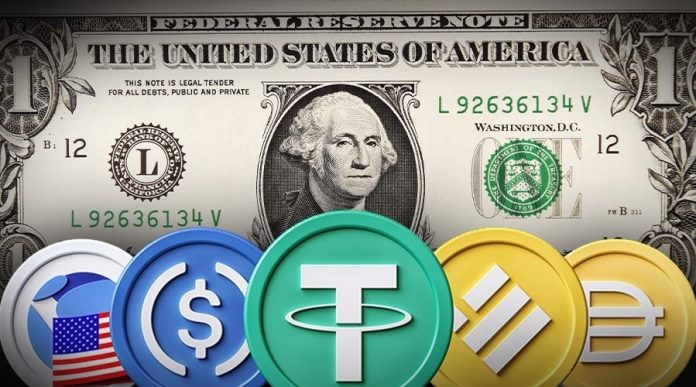
A recent report disclosed that the United States has intensified efforts to regulate the stablecoin industry in the country.

This is coming due to the prevalence of digital assets last year that has spurred certain unscrupulous actions, as well as the overarching global transition regarding the US dollar reverence.

According to a post by Watcher Guru, it disclosed that the US is coming after digital assets in order to save and promote the US dollar while preserving the dual banking system.

For many US lawmakers, this move is necessary due to the emergence of bad actors using stablecoins which have spurred legal actions.

Speaking on this, the Head of the entity that manages Societe Generale’s digital assets business Jean-Marc Stenger said the move by the US lawmakers isn’t just a focus on bad actors, but also a focus on dollar dominance.

In his words,

“All the conditions are in place to allow a move toward rebalancing euro versus dollar stablecoins in the long term. However, it isn’t just Europe, it’s the overarching shift of global finance digitization. It’s about maintaining the status quo, thereby ensuring the dollar’s status will never shift”.

Stablecoin, a special class of cryptocurrency designed to maintain a stable value, is believed to share many similarities to the U.S. dollar. In recent years, the market capitalization of stablecoins has been growing much faster than the stock of the dollar in circulation. This indicates a surging demand for stablecoins marketwide.

For example, USDT, the most popular stablecoin, has continued to grow sharply in demand. Data from CoinMarketCap revealed that the market capitalization of USDT increased nearly 35-fold from January 2019 to June 2022.

However, in a recent development, the US is reportedly rushing to get stablecoins and cryptocurrency activities regulated as quickly as possible.

Dante Disparte, the CEO of Circle in an interview with CNBC said he was in favor of the impending stablecoin regulation, however, the US government has delayed rolling out a regulatory law. Specifically, he noted that connectivity with illicit activity which the stablecoin is often used for is “bad for the US dollar” and hinders the currency.

Domestically in the United States, there are reported cases of the use of Stablecoins for funding fentanyl trafficking and all types of illicit actions that are bad for the U.S. dollar.

The regulation act which was passed by the House Financial Services Committee in 2023, which was moved to the floor of the House of Representatives for consideration, is yet to be approved by lawmakers in the House.

The intensified regulatory efforts reflect the US government’s recognition of the growing importance of stablecoins in the digital economy and the need to address potential risks associated with their proliferation.

By implementing robust regulatory frameworks, authorities aim to promote transparency, consumer protection, and overall financial stability while preserving the integrity of the US dollar.

Unless this is addressed, analysts predict that it would be against the interest of the country and the economy. They however remain optimistic that this will be a year where policymakers get around to doing something affirmatively on stablecoins.