DD
MM
YYYY

PAGES

DD
MM
YYYY

spot_img

PAGES

Home Blog Page 3396

Russia changes tactics after aircraft losses last year

0

In a recent development, Russia has announced that it will modify its military strategy in response to the significant losses of its aircraft in the past year. The decision comes after a series of incidents that have exposed the vulnerabilities of Russia’s air force and its reliance on outdated technology.

According to a statement by the Russian Ministry of Defense, the new strategy will focus on enhancing the survivability and effectiveness of its aircraft, as well as improving the training and readiness of its pilots.

The statement also said that Russia will invest more resources in developing and acquiring modern and advanced air defense systems, electronic warfare capabilities, stealth technology, and hypersonic weapons.

The announcement follows a number of setbacks for Russia’s air force, which have raised questions about its ability to compete with its rivals and adversaries. In September 2023, a Russian Su-35 fighter jet was shot down by a Turkish F-16 over the Mediterranean Sea, marking the first time that a NATO member state had engaged and destroyed a Russian warplane since the Cold War.

In November 2023, a Russian Tu-160 strategic bomber crashed in Siberia due to a technical malfunction, killing all four crew members on board. And in January 2024, a Russian MiG-31 interceptor was intercepted and escorted by a US F-22 stealth fighter over the Arctic Ocean, demonstrating the superior stealth and maneuverability of the American aircraft.

These incidents have revealed the weaknesses of Russia’s air force, which has been struggling to modernize and upgrade its aging fleet of Soviet-era aircraft. Despite some efforts to introduce new models, such as the Su-57 fifth-generation fighter and the Su-34 strike fighter, Russia still relies heavily on older and less capable aircraft, such as the Su-24, Su-25, and MiG-29.

Moreover, Russia faces challenges in maintaining and operating its aircraft, due to a lack of spare parts, technical expertise, and quality control.

The new strategy announced by Russia aims to address these issues and improve its air power capabilities. However, some experts doubt that Russia will be able to achieve its goals, given the economic and political constraints that it faces.

Russia’s defense budget has been shrinking in recent years due to low oil prices, Western sanctions, and the coronavirus pandemic. Additionally, Russia faces diplomatic and military pressure from NATO, China, and other regional actors, who have been expanding their own air forces and challenging Russia’s interests and influence.

Therefore, it remains to be seen whether Russia’s new strategy will succeed in enhancing its air force and restoring its status as a major global power. The implications of this are significant for the regional and global security situation, as well as for the future of international relations.

If Russia can overcome its challenges and strengthen its air force, it may be able to deter or counter potential threats from its adversaries and assert its influence in key areas such as the Middle East, Eastern Europe, and Central Asia.

On the other hand, if Russia fails to improve its air force and falls behind its rivals, it may face increased isolation and marginalization in the world stage, as well as increased risks of conflict or escalation.

The biggest Advertising Network in the world is Google

0

If you are looking for a way to reach a large and diverse audience online, you might want to consider Google as your partner. Google is the biggest advertising network in the world, with over 4 billion users across its platforms, including Search, YouTube, Gmail, Maps, and more.

Google offers a variety of tools and services to help advertisers create, manage, and optimize their campaigns, such as Google Ads, Google Analytics, Google Marketing Platform, and Google Ad Manager.

Google is the biggest advertising network in the world. But what does that mean for you as a business owner, marketer, or content creator? How can you leverage Google’s vast reach and powerful tools to grow your online presence and revenue?

What is Google’s advertising network?

Google’s advertising network is a collection of platforms and services that allow advertisers to display ads on various websites, apps, videos, and other online properties. Google’s advertising network consists of two main components: Google Ads and Google AdSense.

Google Ads is the platform that allows advertisers to create and manage their own ad campaigns. Advertisers can choose from different types of ads, such as text, image, video, or interactive ads, and target them to specific audiences based on keywords, location, demographics, interests, and more. Advertisers can also set a budget and bid for their ads and pay only when someone clicks on their ads or performs a desired action.

Google AdSense is the service that allows publishers to monetize their online content by displaying ads from Google’s advertising network. Publishers can sign up for a free account and place a code snippet on their website, app, video, or other online property. Google then automatically scans the content and matches it with relevant ads from its network. Publishers earn money whenever someone views or clicks on the ads.

Why use Google’s advertising network?

Google’s advertising network offers several advantages for both advertisers and publishers. Here are some of the main reasons why you should consider using it:

Reach: Google’s advertising network reaches billions of users across the web, on various devices and platforms. According to Google, its network reaches over 90% of internet users worldwide, and over 2 billion people use at least one of its products every month. This means that you can reach a large and diverse audience with your ads, and potentially increase your traffic, conversions, and sales.

Relevance: Google’s advertising network uses sophisticated algorithms and machine learning to match your ads with the most relevant content and users. This means that your ads are more likely to be seen by people who are interested in your products or services, and who are ready to take action. This can improve your click-through rate (CTR), cost per click (CPC), return on ad spend (ROAS), and overall campaign performance.

Control: Google’s advertising network gives you full control over your ad campaigns. You can choose where, when, how, and to whom your ads are shown, and adjust your settings at any time. You can also measure and track your results using various tools and reports, such as Google Analytics, Google Ads Manager, and Google Data Studio. You can use these insights to optimize your campaigns and achieve your goals.

Flexibility: Google’s advertising network offers a variety of ad formats and options to suit your needs and preferences. You can choose from text, image, video, or interactive ads, or create custom ads using HTML5 or AMPHTML.

You can also choose from different ad networks within Google’s advertising network, such as Search Network, Display Network, Video Network, Shopping Network, or App Network. Each network has its own benefits and features that can help you reach different objectives.

Support: Google’s advertising network provides various resources and support to help you succeed with your ad campaigns. You can access online guides, tutorials, courses, webinars, blogs, forums, communities, and more to learn about the best practices and tips for using Google’s advertising network. You can also contact Google’s support team via phone, email, chat, or social media if you have any questions or issues.

Vietnam to refine its institutional framework to attract more FDI as Iran Launches three satellites into Orbit

0

Vietnam is one of the most attractive destinations for foreign direct investment (FDI) in Southeast Asia, thanks to its stable political system, strategic location, abundant workforce, and favorable business environment. However, the country is not resting on its laurels. It is constantly improving its institutional framework to enhance its competitiveness and facilitate FDI inflows.

One of the key reforms that Vietnam has undertaken is the amendment of its Law on Investment, which came into effect on January 1, 2024. The new law aims to simplify the procedures for FDI registration and approval, expand the list of sectors that are open to foreign investors, and provide more incentives and guarantees for FDI projects. Some of the notable changes include:

Reducing the number of conditional business lines from 267 to 227 and clarifying the criteria and conditions for each line. Introducing a negative list approach, which means that foreign investors can invest in any sector that is not explicitly prohibited or restricted by the law.

Allowing foreign investors to participate in public-private partnership (PPP) projects, which are expected to boost the development of infrastructure and public services in Vietnam.

Providing more protection for foreign investors against expropriation, nationalization, and discrimination, and ensuring fair and timely settlement of disputes. Offering more incentives for FDI projects in priority sectors, such as high-tech, innovation, research and development, renewable energy, education, health care, and environmental protection.

These reforms are expected to make Vietnam more attractive and competitive in the global FDI market, especially in the context of the COVID-19 pandemic and the US-China trade war, which have disrupted global supply chains and prompted many multinational corporations to diversify their investments.

According to the Ministry of Planning and Investment, Vietnam attracted $28.5 billion of FDI in 2020, ranking third in Southeast Asia after Singapore and Indonesia. The country also ranked second in the world in terms of FDI performance, according to the UNCTAD’s World Investment Report 2023.

Vietnam’s efforts to improve its institutional framework for FDI are commendable and should be emulated by other developing countries that aspire to attract more foreign investment and achieve sustainable development.

Vietnam has demonstrated that with a clear vision, strong commitment, and effective implementation, it is possible to overcome the challenges posed by the global economic downturn and leverage FDI as a catalyst for growth and innovation.

Vietnam has been making remarkable progress in enhancing its legal and regulatory environment for attracting foreign direct investment (FDI). The country has adopted several policies and measures to improve the quality and efficiency of FDI, such as simplifying administrative procedures, strengthening intellectual property rights protection, promoting linkages between domestic and foreign firms, and encouraging investment in high-tech and green sectors.

These efforts have paid off, as Vietnam has become one of the most attractive destinations for FDI in Southeast Asia and beyond. Vietnam’s success story offers valuable lessons for other developing countries that aspire to boost their economic growth and development through FDI.

According to the World Bank, Vietnam received $16 billions of FDI inflows in 2020, ranking fourth among developing countries in East Asia and the Pacific. FDI accounted for 19.6% of Vietnam’s gross fixed capital formation and 4.4% of its gross domestic product in 2020. Vietnam’s success story offers valuable lessons for other developing countries that aspire to boost their economic growth and development through FDI.

Iran Launches three satellites into Orbit

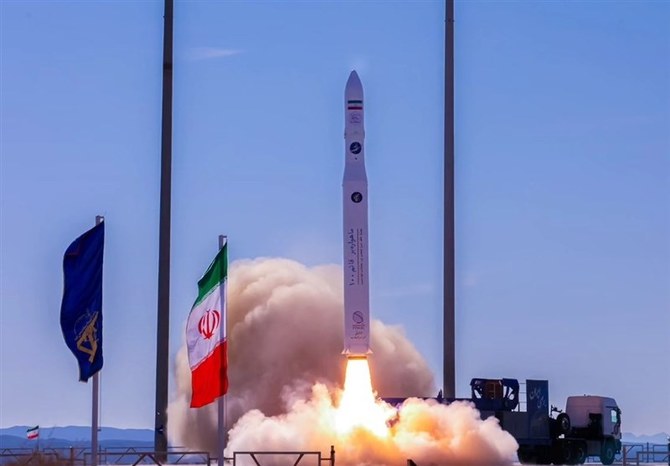
Iran has successfully launched three satellites into orbit, according to the country’s official news agency IRNA. The satellites, named Zafar-1, Zafar-2 and Pars-1, were carried by a Simorgh rocket from the Imam Khomeini Space Center in Semnan province on Monday.

The launch was part of Iran’s ambitious space program, which aims to develop indigenous capabilities for scientific and technological applications. Iran claims that the satellites are for peaceful purposes, such as remote sensing, telecommunications and environmental monitoring.

However, the launch has raised concerns among some of Iran’s adversaries, who accuse the country of using its space program as a cover for developing ballistic missiles. The United States, Israel and some European countries have condemned the launch as a violation of UN Security Council resolutions that call on Iran to refrain from any activity related to ballistic missiles capable of delivering nuclear weapons.

Iran has denied that its space program has any military dimension and has insisted that it has the right to pursue peaceful exploration of space as a sovereign nation. Iran has also criticized the sanctions imposed by the US and its allies on its space sector, which it says are unjust and hinder its scientific progress.

The launch of the three satellites marks a significant achievement for Iran, which has faced several setbacks in its previous attempts. In February 2020, Iran failed to put two satellites, Zafar-1 and Nahid-1, into orbit due to technical problems. In August 2019, a rocket exploded on the launch pad at the same space center, reportedly due to a faulty component.

According to the Iranian Space Agency (ISA), the satellites are designed for remote sensing, telecommunications and scientific research. Zafar-1 and Zafar-2 are equipped with high-resolution cameras that can capture images of the Earth’s surface with a resolution of 22.5 meters. Pars-1 is a microsatellite that can measure temperature, humidity and pressure in the atmosphere.

The ISA said the launch was part of Iran’s plan to develop its space capabilities and to use space technology for peaceful purposes. Iran is one of the few countries in the world that can independently launch satellites into orbit, along with the United States, Russia, China, India, Japan and Europe.

The launch also coincided with the anniversary of the 1979 Islamic Revolution, which overthrew the US-backed monarchy and established an Islamic republic. Iran’s President Hassan Rouhani congratulated the nation on the achievement and said it was a sign of Iran’s resilience and progress despite the sanctions and pressures imposed by its enemies.

The launch, however, drew criticism from some Western countries, who accused Iran of violating a UN Security Council resolution that calls on Iran not to undertake any activity related to ballistic missiles capable of delivering nuclear weapons. Iran has denied that its space program has any military dimension and said it has the right to pursue peaceful exploration of space.

Iran is one of the few countries in the world that has developed its own satellite launch capability, along with the US, Russia, China, India, Japan and some European countries. Iran launched its first satellite, Omid, in 2009, followed by Rasad in 2011, Navid in 2012 and Fajr in 2015.

United States calls for contributions to Haiti security mission

0

The United States has called on other countries to join its efforts to stabilize Haiti after the assassination of President Jovenel Moïse and the devastating earthquake that followed. The US is leading a security mission to help the Haitian authorities restore order and deliver humanitarian aid, but it faces many challenges and risks in the troubled Caribbean nation.

In a statement issued, US Secretary of State Antony Blinken said that the US was “working with our partners to coordinate our efforts in support of the Haitian people and Haiti’s democratic institutions.” He urged other countries to “step up and help provide much needed security, humanitarian, and stabilization assistance.”

“We reaffirm our support of ongoing international efforts to deploy a Multinational Security Support mission for Haiti… and renew our calls for the international community to urgently provide support for this mission.”

Kenya had been meant to lead the mission but a High Court judge on Friday ruled that sending police to Haiti “contravenes the constitution and the law and is therefore unconstitutional, illegal and invalid.”

The US has deployed about 400 troops, along with FBI and Homeland Security agents, to assist the Haitian National Police in securing key infrastructure and protecting VIPs. The US has also provided $32 million in humanitarian assistance, including food, water, shelter, and medical supplies, to the earthquake victims.

Nairobi had previously said it was ready to provide up to 1,000 personnel — an offer welcomed by the United States and other nations that had ruled out putting their own forces on the ground. “It is urgent that the international community respond to the unprecedented levels of gang violence and destabilizing forces preying upon the Haitian people,” Miller said.

However, the security situation in Haiti remains volatile and complex, as rival gangs’ control large parts of the capital Port-au-Prince and other areas. The political crisis triggered by Moïse’s killing has not been resolved, as different factions claim legitimacy and power. The earthquake has also exacerbated the humanitarian needs of millions of Haitians who were already facing poverty, hunger, and disease.

The US has said that it does not intend to stay in Haiti for long, and that it is not seeking to impose a solution on the Haitian people. Blinken said that the US was “committed to supporting a Haitian-led process of restoring constitutional order as quickly as possible.” He added that the US was “encouraging Haiti’s political actors to engage in dialogue and form a broad-based, inclusive government that can deliver stability, peace, and free and fair elections.”

The US has also called for an international investigation into Moïse’s assassination, which involved foreign mercenaries and remains shrouded in mystery. Blinken said that the US was “working closely with Haitian and international partners to hold accountable those responsible for this heinous act.”

The US faces a delicate balance between providing security and humanitarian assistance to Haiti, while respecting its sovereignty and self-determination. The US has a long and controversial history of intervention in Haiti, dating back to the early 20th century. The US has supported or opposed various regimes, launched military invasions or occupations, and sponsored or opposed UN peacekeeping missions.

The US hopes that its current involvement in Haiti will help the country overcome its multiple crises and achieve lasting stability and democracy. However, the US also needs the cooperation and support of other countries and organizations to share the burden and responsibility of assisting Haiti. The US appeals for contributions to Haiti security mission reflect its recognition of the complexity and urgency of the situation, as well as its desire to avoid being seen as a unilateral actor or a neocolonial power.

Ghana launches Sentuo Oil Refinery to boost Domestic Petroleum Industry

0

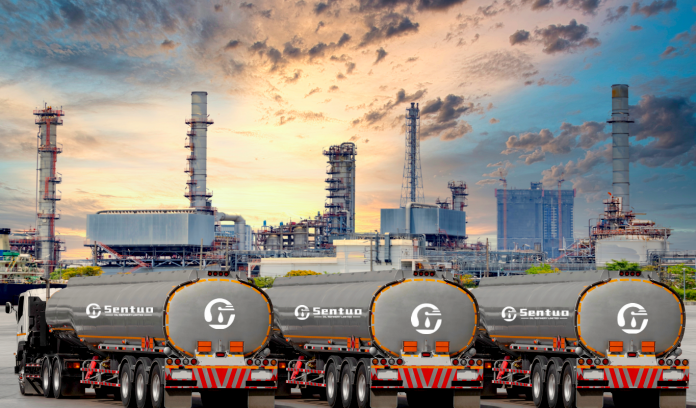
Ghana has achieved a major milestone in its quest to become a self-reliant and prosperous nation in the oil and gas sector. On January 26, 2024, the President of Ghana, Nana Akufo-Addo, officially inaugurated the Sentuo Oil Refinery, the largest and most modern refinery in West Africa.

The Sentuo Oil Refinery, located in the Tema Industrial Area, has a capacity of 200,000 barrels per day (bpd), which is more than enough to meet the domestic demand of 80,000 bpd and export the surplus to neighboring countries. The refinery is equipped with state-of-the-art technology and facilities to produce high-quality petroleum products that meet international standards.

The refinery is a joint venture between the Ghana National Petroleum Corporation (GNPC), the state-owned oil company, and Sentuo Group, a Chinese conglomerate with interests in energy, mining, construction and agriculture. The project cost $4 billion and took four years to complete. It is expected to create over 10,000 direct and indirect jobs and generate $1.2 billion in annual revenue for the government.

The President hailed the refinery as a game-changer for Ghana’s economy and energy security. He said that the refinery would reduce the country’s dependence on imported petroleum products, save foreign exchange, enhance value addition, create employment opportunities and stimulate industrial growth. He also praised the partnership between GNPC and Sentuo Group as a model of win-win cooperation between Ghana and China.

The President also assured the public that the refinery would operate in an environmentally friendly and socially responsible manner. He said that the refinery had installed advanced pollution control systems and waste management facilities to minimize its environmental impact. He also said that the refinery would support local communities through corporate social responsibility programs and initiatives.

Benefits of Sentuo Oil Refinery

One of the main benefits of Sentuo Oil Refinery is that it will reduce Ghana’s dependence on imported refined petroleum products, which currently account for about 80% of the country’s consumption. This will help to save foreign exchange, improve the balance of payments, and enhance energy security.

Moreover, the refinery will create direct and indirect jobs for thousands of Ghanaians, especially in the Western Region where it is located. The refinery will also stimulate the development of other industries that rely on petroleum products, such as petrochemicals, plastics, fertilizers, and power generation.

Another benefit of Sentuo Oil Refinery is that it will increase Ghana’s value addition to its crude oil resources, which are estimated at 660 million barrels. Currently, Ghana exports most of its crude oil and imports refined products at higher prices.

By refining its own crude oil, Ghana will be able to capture more of the value chain and increase its revenue from the oil sector. The refinery will also enable Ghana to produce higher quality and environmentally friendly fuels that meet international standards and reduce emissions.

Challenges of Sentuo Oil Refinery

Despite the potential benefits, Sentuo Oil Refinery also faces some challenges that need to be addressed. One of the main challenges is the availability and affordability of crude oil feedstock for the refinery. Ghana produces about 200,000 barrels per day of crude oil, which is not enough to meet the refinery’s capacity.

Therefore, Ghana will have to source additional crude oil from other countries, such as Nigeria and Angola, which may pose logistical and financial difficulties. Moreover, Ghana will have to compete with other refineries in the region and globally for market share and profitability.

Another challenge of Sentuo Oil Refinery is the regulatory and policy framework that governs the petroleum industry in Ghana. The refinery will have to comply with various laws and regulations that affect its operations, such as taxes, tariffs, subsidies, pricing, quality standards, environmental protection, and local content.

Some of these regulations may be outdated or inconsistent with the current realities of the industry and may need to be reviewed or amended. Furthermore, the refinery will have to deal with political and social factors that may influence its performance, such as public expectations, stakeholder interests, corruption, and security issues.

The inauguration of the Sentuo Oil Refinery marks a new era for Ghana’s oil and gas industry. It is a testament to the vision and leadership of the government, the competence and professionalism of GNPC, and the trust and confidence of Sentuo Group. It is also a symbol of Ghana’s progress and potential as a leading oil producer and exporter in Africa.