DD
MM
YYYY

PAGES

DD
MM
YYYY

spot_img

PAGES

Home Blog Page 34

Japan’s 30-Year Bond Yield Breaks Above 4.18% as Global Markets Confront a New Rate Regime

0

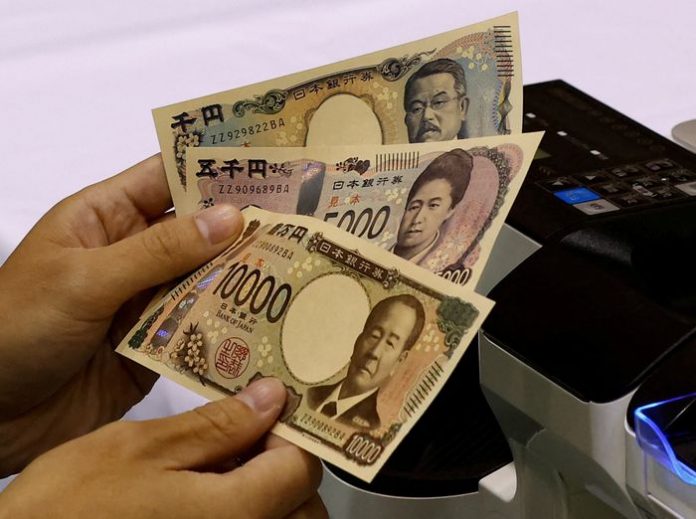
Japan’s government bond market has entered a new phase of volatility, with the 30-year Japanese government bond (JGB) yield reaching 4.18% on September 1, according to historical JGB market data.

The move came alongside a broader sell-off in long-dated sovereign debt and pushed borrowing costs sharply higher across Japan’s yield curve.

The significance of the move extends far beyond Japan. For decades, Japan was synonymous with exceptionally low interest rates, aggressive monetary easing and abundant liquidity.

Japanese investors consequently became major participants in global financial markets, purchasing overseas bonds and other assets when domestic yields offered little return. The rapid repricing of JGBs therefore raises questions about where Japanese capital will flow next.

The rise in long-term yields reflects several forces operating simultaneously. Inflation remains an important concern, particularly as higher energy prices threaten to increase consumer costs.

Japan is facing greater fiscal pressure, while expectations surrounding the Bank of Japan’s monetary policy have shifted as markets anticipate further normalization of interest rates.

Reuters reported that Japan’s 10-year yield reached 3% on September 1, its highest level since 1996, highlighting the breadth of the bond-market repricing.

Fiscal policy adds another layer of uncertainty. Japan’s budget requests for the coming fiscal year have climbed to ¥143.1 trillion, while projected debt-servicing costs have risen to a record ¥36.64 trillion.

Higher market yields make refinancing Japan’s enormous public debt increasingly expensive, creating a difficult balance between supporting economic growth and maintaining fiscal credibility.

Higher yields can help restore more normal market pricing after years of monetary suppression, but an excessively rapid increase could tighten financial conditions and place additional pressure on the government’s debt burden.

The central bank must therefore consider both inflation and financial stability as it determines the pace of policy normalization.

The effects could also reach international markets. Japan is one of the world’s largest pools of institutional capital, and Japanese pension funds, insurers and asset managers have historically allocated substantial sums overseas.

If domestic government bonds become increasingly attractive, some investors may reduce foreign holdings and repatriate capital. Such flows could place upward pressure on yields in other major bond markets, including U.S. Treasuries.

Analysts are already warning that the Japanese repricing could influence global capital flows and reduce the appeal of carry trades. The yen could become an important variable.

Higher Japanese yields can improve the relative attractiveness of yen-denominated assets, potentially supporting the currency. Indeed, the yen strengthened sharply as traders increased expectations for additional Bank of Japan rate increases.

Importantly, the 4.18% level should not automatically be interpreted as evidence of a Japanese financial crisis. The September 3 auction of 30-year JGBs still attracted ¥1.728 trillion in competitive bids against ¥456.2 billion accepted.

With the lowest accepted yield at 4.10%. That indicates investors continue to participate in the market even at substantially higher yields. The message from Japan’s bond market is unmistakable.

The era of ultra-cheap Japanese money is being challenged. A sustained rise in long-term JGB yields could reshape domestic fiscal policy, monetary policy, currency markets and international capital allocation.

For global investors, Japan is no longer simply a source of cheap liquidity. It is becoming one of the most important markets to watch in the emerging global interest-rate regime.


China Unveils $54 Billion Capital Injection for State Insurers and Banks

0

Beijing moves to strengthen financial-sector buffers as weak loan demand, low interest rates and pressure on insurers weigh on profitability

China’s finance ministry will lead a coordinated capital injection of about $54 billion into major state-owned insurers and banks, as Beijing moves to strengthen the financial system’s ability to absorb risks and support economic growth.

The measures, announced by the companies on Sunday, will channel fresh capital into some of China’s largest financial institutions at a time when prolonged low interest rates, weak credit demand and deteriorating profitability are putting pressure on lenders and insurers.

China Life Insurance (Group) Co, the country’s largest life insurer, said it would receive 35 billion yuan ($5.2 billion) from the Ministry of Finance, while China Taiping Insurance Group will receive 7 billion yuan.

People’s Insurance Company (Group) of China said separately that it plans to raise as much as 15 billion yuan through a private placement of A-shares to the finance ministry. The proceeds will be used to replenish the insurer’s capital base.

The government will also inject 10 billion yuan into China Export and Credit Insurance Corp to strengthen its core capital, while China Reinsurance (Group) said it would raise 3 billion yuan.

The measures are deemed necessary because Beijing has relied on large state-owned financial institutions to provide long-term funding to the economy and, more recently, to channel capital into financial markets. Stronger capital buffers give the insurers greater capacity to absorb investment losses, expand their balance sheets and potentially participate in government efforts to stabilize the stock market.

China’s insurers have faced particular pressure from the country’s prolonged low-interest-rate environment. Lower yields have reduced investment returns and squeezed profitability, while smaller and mid-sized insurers have seen their solvency positions come under increasing strain.

“The injection is an important step by the country to enhance the financial sector’s ability to serve the real economy and promote the high-quality development of the financial and insurance industries,” China Life said, adding that the additional capital would strengthen its ability to withstand risks.

China Taiping said the funds would improve its solvency and other key financial indicators.

The recapitalization also gives regulators greater room to manage stress elsewhere in the insurance industry. Well-capitalized state insurers can play a larger role in supporting weaker institutions or participating in industry consolidation if smaller insurers come under greater financial pressure.

Banks Receive $40 Billion-Plus Capital Boost

Three state-owned lenders separately announced plans on Sunday to receive a combined 290 billion yuan in fresh capital, extending Beijing’s broader recapitalization campaign for the banking sector.

Agricultural Bank of China said it plans to raise as much as 160 billion yuan through a private placement of A-shares to the Ministry of Finance, China National Tobacco Corp and its subsidiaries. Industrial and Commercial Bank of China, one of the world’s largest banks by assets, plans to raise up to 100 billion yuan through a similar private placement involving the finance ministry and China National Tobacco Corp and its subsidiaries.

Both banks said the proceeds would be used entirely to replenish core Tier 1 capital, the highest-quality form of bank capital and a key measure of a lender’s capacity to absorb losses.

The Export-Import Bank of China, one of the country’s three policy banks, will receive a separate 30 billion yuan injection from the finance ministry.

The banking recapitalization plan was first unveiled at China’s annual parliamentary meeting in March, extending a financing mechanism that Beijing used to strengthen several other major state-owned banks last year.

The additional capital should help the lenders maintain their capacity to extend credit as policymakers seek to stimulate an economy still constrained by weak domestic demand.

That challenge is weighing on China’s banks because businesses and households have remained cautious about borrowing, while sluggish property activity and subdued private-sector investment have limited demand for new loans. At the same time, intense competition for borrowers has put pressure on lending margins, eroding banks’ profitability.

The latest injections therefore serve two objectives: strengthening the banks’ ability to absorb losses and ensuring they retain sufficient balance-sheet capacity to support government efforts to revive growth.

Beijing Prioritizes Financial Stability

Together, the measures point to a broader shift in China’s economic policy: using the state balance sheet to reinforce the financial system before strains become more acute.

Higher core Tier 1 capital provides greater capacity for banks to expand lending without weakening capital ratios. For insurers, additional capital can improve solvency and allow them to maintain investment and insurance operations even as low yields challenge traditional business models.

Beijing has been asking state-owned financial institutions to play a greater role in supporting the economy and capital markets, increasing the importance of maintaining strong balance sheets across the sector.

The injections do not, however, resolve the underlying problems confronting Chinese financial institutions. Weak loan demand, narrow lending margins, subdued investment returns and risks linked to the property sector can continue to weigh on earnings even after banks and insurers receive additional capital.

The immediate effect is therefore likely to be greater financial resilience rather than a sudden improvement in profitability.

Economists believe the strategy offers a way to strengthen the transmission of monetary and fiscal support while reducing the risk that weaker financial institutions become a constraint on economic recovery. It also gives Beijing more flexibility to use state-owned lenders and insurers as policy tools during periods of market stress.

The scale of the programme is seen as an indication that authorities are preparing the financial system to withstand a prolonged period of slower credit growth and weaker returns, while ensuring that the country’s largest financial institutions remain capable of supporting the broader economy.

U.S. SEC Sues Proxy Adviser ISS Over Subpoena as Trump Administration Intensifies Oversight

0

The U.S. Securities and Exchange Commission has sued Institutional Shareholder Services to compel the influential proxy adviser to provide information sought in a regulatory investigation, escalating the Trump administration’s effort to scrutinize companies that shape how investors vote their shares.

The SEC filed a subpoena-enforcement action Friday in the U.S. District Court for the Eastern District of Pennsylvania, alleging that ISS has failed to fully comply with an administrative subpoena seeking records related to its proxy voting recommendations and voting activity.

The regulator said its Division of Examinations began reviewing ISS in March and requested information concerning the firm’s recommendations and votes. After ISS failed to provide all of the requested material, the SEC’s enforcement division opened an inquiry and issued a subpoena on July 21.

According to the SEC, ISS continued to withhold certain records after the agency extended deadlines and made repeated attempts to resolve the dispute without litigation.

The SEC is asking the court to order ISS to comply with the outstanding demands. The agency stressed that its investigation remains at the fact-finding stage and that it has not determined that ISS violated federal securities laws.

ISS has challenged the SEC’s demands, arguing in correspondence with the agency that the subpoena raises First Amendment concerns. The company has also warned that producing information about its recommendations and clients’ voting activity could expose ISS and its clients to retaliation.

The dispute places one of the most influential players in the shareholder-voting ecosystem at the center of a consequential regulatory battle over the role and accountability of proxy advisers.

Proxy Advisers Under Washington Scrutiny

Proxy advisers provide institutional investors with research, analysis and voting recommendations on issues ranging from director elections and executive compensation to mergers, corporate governance and shareholder proposals. Their influence has grown alongside the expansion of institutional ownership, particularly among asset managers that must cast votes across thousands of publicly traded companies.

ISS and its principal rival, Glass Lewis, dominate the proxy-advisory industry. The White House has said the two firms together control more than 90% of the market. That concentration has made their recommendations a focus of policymakers who argue that proxy advisers can exert substantial influence over corporate governance without bearing the same responsibilities as the investors ultimately casting the votes.

President Donald Trump intensified the scrutiny in December by signing an executive order directing the SEC to review its rules and guidance governing proxy advisers. The order also directed the agency to enforce federal securities-law antifraud provisions and consider additional disclosure and regulatory requirements for the industry.

The administration’s approach marks a broader effort to increase transparency around the mechanisms through which institutional investors exercise shareholder rights.

First Amendment Issue Raises Stakes

The ISS dispute could have implications beyond the company’s compliance with a single subpoena because of the constitutional arguments it has raised, analysts have noted.

ISS’s position is that the SEC’s demands could implicate protected speech and expose the firm and its clients to retaliation based on their views and voting decisions.

The First Amendment argument introduces a competing regulatory principle. While the SEC has broad authority to investigate entities operating within the securities markets, companies subject to those investigations can challenge demands that they believe improperly burden protected expression or reveal sensitive information.

The court will therefore be asked initially to determine whether ISS must comply with the outstanding subpoena. The litigation does not itself establish that ISS engaged in misconduct or that the SEC’s underlying investigation has uncovered securities-law violations.

For the SEC, securing access to the requested records would allow investigators to examine more closely how ISS develops its recommendations and how those recommendations relate to actual shareholder voting. That scrutiny could become particularly important as regulators examine whether proxy advisers provide sufficiently transparent methodologies and whether investors understand the basis for recommendations that can influence votes at major public companies.

A Larger Fight Over Corporate Governance

The case comes at a time when shareholder voting has become an important battleground in corporate America. Large asset managers routinely vote on thousands of proposals each year, while activist investors and companies increasingly campaign for support ahead of contested director elections, compensation votes and strategic transactions.

Proxy advisers sit between those groups and can significantly shape the information investors receive before making voting decisions.

For the Trump administration, greater oversight of ISS and Glass Lewis could therefore become part of a broader effort to alter the balance of influence between corporate boards, activist shareholders, asset managers and proxy-advisory firms.

However, the case presents a different concern for ISS: that expanded regulatory demands could expose proprietary methodologies, confidential client information or voting activity while creating pressure on investors whose decisions may involve politically contentious corporate issues.

Although the immediate question before the court- whether ISS must turn over the information demanded by the SEC—begs for an answer, the larger issue is how much regulatory oversight should apply to firms whose recommendations can influence trillions of dollars in shareholder votes, and where regulators must draw the line between legitimate securities-law supervision and protected corporate and political expression.

South Korea’s Exports Smash Annual Record as AI Chip Boom Propels Trade Toward $1 Trillion

0

South Korea’s exports have already exceeded last year’s full-year record, putting Asia’s fourth-largest economy on course to join an elite group of nations with annual overseas sales above $1 trillion as the global artificial intelligence boom fuels unprecedented demand for its semiconductor products.

Exports reached $709.4 billion from January through August, surpassing the $709.3 billion recorded for all of last year, the Korea Customs Service said Saturday. The figure marks another milestone for an economy whose trade performance has been driven by the explosive expansion of AI infrastructure worldwide.

South Korea is now on track to cross the $1 trillion threshold by early December, according to the customs service. If achieved, it would become only the fourth country after the United States, China and Germany to reach that level of annual exports.

The pace of growth is significant because it comes against a far less favorable backdrop for global trade. Protectionism is intensifying, supply chains are being reorganized around geopolitical considerations, and tensions in the Middle East continue to threaten energy markets and shipping routes.

“Our exports continue to show remarkable growth momentum, even amid an uncertain trade environment due to strengthened protectionism, global supply chain restructuring and the Middle East situation,” the customs office said.

But behind the record headline is a concentrated story: South Korea’s export boom is, to a remarkable extent, an AI semiconductor boom.

AI Chips Become the Engine of Export Growth

Semiconductor exports surged 169.6% from a year earlier to $281 billion in the first eight months of the year, accounting for 41% of the country’s total exports. That means roughly two out of every five dollars earned from exports during the period came from semiconductors, a concentration that illustrates the extraordinary scale of the AI-driven investment cycle.

South Korea is home to Samsung Electronics and SK Hynix, two of the world’s dominant memory-chip manufacturers. Both companies have benefited from soaring demand for high-performance memory used in AI servers, particularly as technology companies race to build the computing capacity required to train and run sophisticated AI models.

The surge is being amplified by higher semiconductor prices. Tight supply of advanced memory products, combined with heavy investment by global cloud providers and AI companies, has transformed semiconductors from a cyclical drag on South Korea’s economy into its principal export growth engine.

The result is a powerful feedback loop for the broader economy. Higher chip exports generate foreign-currency earnings, support corporate profits and investment, and strengthen the manufacturing sector. Stronger semiconductor demand also improves the outlook for equipment suppliers and other companies embedded in South Korea’s technology supply chain.

However, the same concentration introduces a significant source of risk.

A large share of South Korea’s current export momentum is tied to the sustainability of global AI capital spending. If major technology companies were to slow data-center investment, if memory prices reversed sharply, or if supply expanded faster than demand, the impact on South Korean exports could be disproportionately large.

The contrast with other major industries is already visible.

Passenger cars, the country’s second-largest export category, recorded a 4% decline in overseas shipments during January-August compared with the same period last year. The contrast suggests that South Korea’s record trade performance is not being driven uniformly across its industrial base.

Instead, the semiconductor sector is carrying an increasingly large share of the burden.

China and U.S. Trade Gather Pace

South Korea’s exports have also recorded strong growth in its two most important markets. Shipments to China, the country’s largest export destination, jumped 76% in the first eight months from a year earlier, while exports to the United States rose 57%, customs data showed.

The sharp increases underline the breadth of demand for South Korean products, but they also leave the country’s trade outlook closely tied to developments in the world’s two largest economies.

China remains a critical market and manufacturing hub for South Korean companies, while the United States has become more relevant to the semiconductor and technology investment cycle. At the same time, both markets are at the center of a broader restructuring of global trade, with governments seeking greater control over strategic technologies and supply chains.

The situation has created a complicated backdrop for South Korean exporters. The country is benefiting from enormous demand for chips and AI infrastructure while simultaneously navigating a global environment in which semiconductor trade is becoming increasingly intertwined with national security and industrial policy.

$1 Trillion Milestone Masks a Structural Shift

Reaching $1 trillion in exports would be a major achievement for South Korea, whose economic model has long depended on manufacturing and international trade. But the composition of those exports may ultimately be more important than the milestone itself.

The latest figures show an economy becoming increasingly leveraged to semiconductors at precisely the moment chips are becoming one of the most strategically important products in the global economy. The development gives South Korea considerable influence in the AI supply chain. It also means the country is more exposed to the boom-and-bust dynamics of the semiconductor industry and to geopolitical decisions affecting advanced technology.

For now, the numbers are overwhelmingly positive. Export growth is strong, semiconductor demand is surging, and shipments to both China and the United States are accelerating. The country is on course for a record year and potentially its first $1 trillion export performance.

But sustaining that momentum will require more than another year of exceptional chip demand. South Korea will need growth in automobiles and other manufacturing industries to complement semiconductors, while companies and policymakers navigate increasingly fragmented global supply chains.

Hyperliquid’s Potential U.S. Entry Signals a New Era for Crypto Perpetuals

0

Hyperliquid Labs is reportedly in advanced discussions with Payward, the parent company of Kraken, over a structure that could bring selected cryptocurrency perpetual futures to U.S. traders.

If completed and approved by regulators, the arrangement would represent a significant step for Hyperliquid, one of the largest decentralized perpetual-futures venues, as it seeks a compliant path into the American market.

The proposed structure would not simply open Hyperliquid’s existing decentralized exchange to American customers.

Instead, Payward’s subsidiary Bitnomial would provide the regulated infrastructure through which U.S. users could access a selection of perpetual contracts linked to assets and markets associated with Hyperliquid’s blockchain.

This distinction is important because Hyperliquid’s existing permissionless model has historically created regulatory difficulties in the United States.

Perpetual futures, commonly known as perps, have become one of crypto’s most important trading products. Unlike traditional futures, they do not have an expiration date.

Allowing traders to maintain positions indefinitely while using leverage. Hyperliquid has built much of its reputation around this market, attracting substantial trading activity with a decentralized infrastructure designed to provide fast execution and deep liquidity.

The potential partnership with Payward could therefore bridge two previously separate worlds: decentralized crypto-market infrastructure and regulated U.S. derivatives markets. Bitnomial.

Which Payward acquired earlier this year for as much as $550 million, provides a CFTC-licensed exchange and clearing infrastructure.

Routing selected Hyperliquid-linked perps through that platform could give American traders access to products associated with Hyperliquid while placing the trading activity within a regulated framework.

The regulatory dimension, however, remains the biggest hurdle. Payward has reportedly presented the Commodity Futures Trading Commission with an outline of the proposed structure.

But approval has not yet been granted. Former SEC senior counsel Ashley Ebersole has suggested that bringing Hyperliquid into the U.S. could require involvement from both the SEC and CFTC, with the process potentially taking 10 to 12 months even if regulators move quickly.

This issue reflects a broader transformation in Washington’s approach to crypto derivatives. Regulators have increasingly explored ways to bring perpetual trading onto domestic.

Supervised platforms rather than leaving American traders dependent on offshore venues. A successful Hyperliquid arrangement could become an important template for other crypto platforms attempting to move from offshore operations toward regulated U.S. access.

For Hyperliquid, the opportunity extends beyond gaining American users. The United States represents one of the world’s most important pools of institutional and retail capital.

Establishing a compliant gateway could strengthen Hyperliquid’s position in global derivatives while potentially increasing liquidity, market visibility and institutional participation.

The implications could also extend to HYPE, Hyperliquid’s native token. Greater U.S. accessibility could increase attention around the ecosystem and reinforce the economic importance of its underlying blockchain.

However, regulatory approval and the eventual structure of the offering remain uncertain, meaning traders should distinguish between advanced negotiations and a finalized launch.

The talks between Hyperliquid Labs and Payward illustrate how crypto’s next phase may not be about decentralized platforms replacing traditional financial infrastructure, but about finding ways for the two systems to connect.

If regulators approve the proposed framework, Hyperliquid could become an important test case for bringing decentralized-market innovation into the regulated American financial system.