DD
MM
YYYY

PAGES

DD
MM
YYYY

spot_img

PAGES

Home Blog Page 3400

Nigerian Digital Bank, Carbon, Shuts Down Debit Card Operations

0

Carbon, a leading Nigerian Fintech company, has announced the discontinuation of its debit card operation in Nigeria.

This decision marks a shift in the company’s services offering within the highly competitive financial technology landscape.

In a post by Nairametrics, it was disclosed that Carbon’s discontinuation of its debit card operations was announced by the company’s Co-founder Ngozi Dozie, who did not specifically state the reason for the discontinuation.

He wrote,

“When I take a step back with the benefit of hindsight (and a card operation bill denominated in USD$), I question why practically all neobanks are pushing cards or even getting into it. Was this the right strategy for all of us, or was Carbon just unlucky?”

The above statement suggests that the co-founder is analyzing whether entering the debit card market was a sound strategy for Neobanks in general, or if Carbon’s difficulties were unique due to specific circumstances.

This could imply that the challenges faced by Carbon may not necessarily reflect a flawed strategy but rather specific adverse conditions that it may have encountered.

Carbon, formerly known as Paylater, has been a prominent player in Nigeria’s fintech sector, offering a wide range of financial services including personal loans, bill payments, and investments.

In June 2021, the company announced that it had signed a five-year partnership with Visa to offer both digital and physical issuance of Visa cards to its customers. The partnership came a year after the digital lending company became a digital bank offering a range of financial services including savings and payments.

During the launch of the card, Carbon said in a statement,

“From anywhere, users can request a debit card within minutes on the Carbon app and get them in record time in Lagos and other locations in the country. They will also be able to manage their card activities right from the app. At the tap of a button, customers can freeze and unfreeze their cards, giving them instant control over security.”

With the launch of the card, Carbon hoped that the introduction would build on its millions of customer base, by offering a more complete banking experience for people with different needs, whether they are saving money at industry-high interest gains, sending money at no extra cost, making payments online and offline, or spreading payment for things they need the most but can’t afford at once.

The shutdown of Carbon’s debit card operations in Nigeria is a significant move that highlights the dynamic nature of the fintech industry. While this may pose short-term challenges for its users, Carbon’s commitment to enhancing its other financial services indicates a strategic pivot aimed at long-term growth and sustainability. Customers can expect more innovative solutions as Carbon continues to adapt to the evolving financial landscape.

Video Editing for Photographers: Adding Motion to Your Still Images

0

As a photographer, you possess the gift of capturing fleeting moments in a single, breathtaking frame. But have you ever considered taking your stunning photos a step further by breathing life into them with video? Video editing can be a powerful tool for photographers, allowing you to showcase your work in a new and engaging way. Whether you want to create a captivating slideshow for a client presentation, a behind-the-scenes glimpse into your creative process for your fans, or a dynamic social media post to grab attention, CapCut Desktop video editor for PC can be your secret weapon.

This user-friendly software is packed with features that cater specifically to the needs of photographers. It boasts an intuitive interface that allows you to focus on your creativity rather than wrestling with complex editing techniques. Let’s delve deeper into how CapCut Desktop can elevate your photography through the magic of video editing:

1. The Art of Storytelling Through Transitions

The essence of video lies in the seamless flow between images, creating a cohesive narrative that draws viewers in. CapCut Desktop understands this and offers a treasure trove of transitions to help you achieve just that.

Imagine a series of your landscape photographs seamlessly dissolving into one another, creating a sense of journeying through a breathtaking vista. Or perhaps you want to add a touch of whimsy by using a playful wipe transition between portraits that capture the joy of human connection. CapCut Desktop offers a wide variety of transition styles, ranging from the classic dissolves and wipes to trendy glitch effects and light leaks. This allows you to experiment and find transitions that perfectly complement the mood and style of your photos, whether you’re aiming for a serene and contemplative atmosphere or a dynamic and energetic one.

Beyond the Basics: Don’t be afraid to get creative with transitions! CapCut Desktop allows you to adjust the duration and intensity of transitions, giving you more control over the storytelling flow. For instance, a slow dissolve transition can create a sense of nostalgia and reflection, while a quick cut transition can add a sense of urgency and excitement.

2. Enrich Your Narrative with Text and Overlays

Don’t underestimate the power of text! CapCut Desktop allows you to incorporate captions, titles, and informational overlays into your video slideshow. This versatility allows you to provide context to your photos, share personal stories behind the capture, or even credit collaborators who helped bring your vision to life. Captions can be particularly useful if you’re creating an educational or informative video about a specific photography technique.

But storytelling goes beyond just text. CapCut Desktop empowers you to further enhance your narrative by incorporating graphic overlays. Imagine adding a subtle texture overlay to your landscape photos to create a vintage postcard aesthetic, or incorporating light leak overlays to your portrait work to evoke a nostalgic, dreamlike quality. CapCut offers a library of pre-made overlays that you can readily use, or you can import your own custom creations for a truly personalized touch.

Pro Tip: To create a parallax effect that adds depth and dynamism to your video, try layering multiple text or image overlays at slightly different scaling and positioning. This creates a sense of movement within the frame, even when your photos are static.

Beyond the Basics: Consider using animated text overlays to grab attention and add a touch of dynamism to your video. CapCut Desktop offers a variety of pre-set animations, or you can create your own custom animations for a truly unique look.

3. Infuse Personality with Music and Sound Effects

Music and sound effects are like the invisible paintbrushes of video editing, adding emotional depth and drawing viewers into the story you’re trying to tell. CapCut Desktop understands this and comes equipped with a royalty-free music library bursting with diverse genres to choose from. Whether you’re looking for sweeping orchestral pieces to complement your dramatic landscapes or upbeat and funky tunes to accompany your candid street photography, you’re bound to find something that perfectly complements your visuals. Don’t be afraid to experiment with different music genres to see what evokes the desired emotion for your video.

But the magic doesn’t stop there. CapCut Desktop also offers a selection of sound effects that can add a touch of realism or humor to your video. Imagine the satisfying click of a camera shutter accompanying your close-up shots of your photography gear, or the gentle chirping of birds adding a sense of tranquility to your nature photographs.
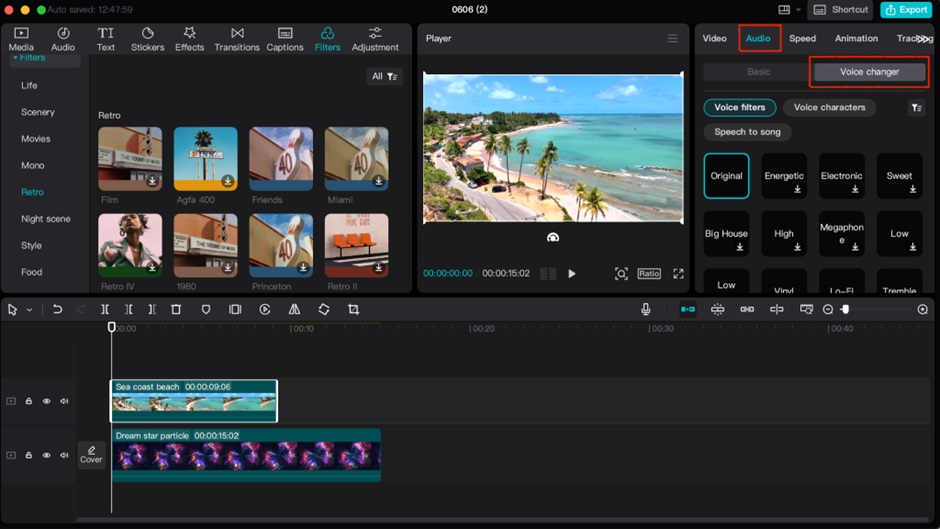
Free voice changer: Want to add a playful twist or inject some humor into your video narration? CapCut Desktop’s free voice changer feature allows you to transform your voice in just three simple steps:

  1. Import your audio clip or record directly within CapCut.
  2. Locate the “Effects” panel and navigate to “Voice Changer
  3. Choose from a variety of pre-set voice effects like helium, chorus, or robot to alter your voice in a way that suits your video.

Beyond the Basics: While the pre-set voice effects in CapCut Desktop are a great starting point, consider layering sound effects on top of your chosen music to create a richer and more immersive auditory experience. For instance, you could add the subtle hum of a bustling city street to your documentary-style photography video, or the sound of crashing waves to your ocean landscape slideshow.

Pro Tip: Pay attention to the volume balance between your music, sound effects, and voiceover narration (if you choose to include one). You want all elements to be audible and complement each other, not compete for attention.

4. Elevate Your Visuals with Video Filters

CapCut Desktop provides a vast array of video filters to enhance the visual appeal of your photos and elevate them to a whole new level. You can use subtle color grading adjustments for a more professional look, or apply artistic filters to create a specific mood or theme. Here’s a quick guide to using video filters in CapCut Desktop:
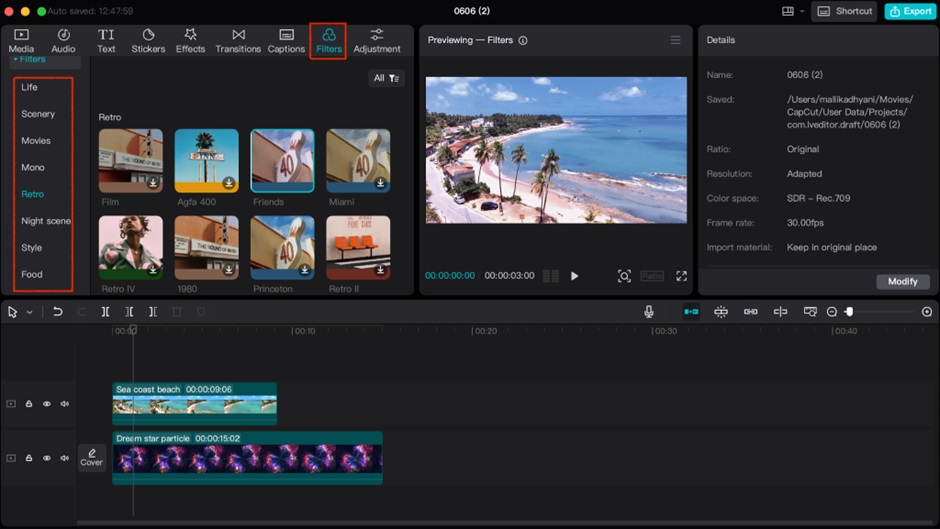
  1. Import your photos and create a new project.
  2. Select a photo and navigate to the “Effects” panel.
  3. Browse through the extensive filter library and choose the one that best suits your vision. You can further customize the filter intensity for a more nuanced effect.

Let’s explore some creative uses of video filters beyond the basics:

  • Color Grading Finesse: Go beyond simple presets and explore the manual color grading tools within CapCut Desktop. This allows you to fine-tune adjustments like highlights, shadows, and color temperature for a truly customized look. Imagine warming up your travel photography with a touch of golden light or adding a cool blue tint to your underwater photography to create a sense of mystery.
  • Selective Filtering with Precision: CapCut Desktop’s advanced editing tools allow you to apply filters selectively to specific areas of your photos. This opens doors for creative expression. For example, you might choose to enhance the vibrancy of the sky in your landscape photos while keeping the foreground elements at a more natural color balance.
  • Experiment with Keyframes: Keyframes are a powerful tool within CapCut Desktop that allows you to gradually change the filter intensity throughout your video clip. This can be used to create a subtle shift in mood or atmosphere as your video progresses.

Pro Tip: Don’t be afraid to experiment with different filters and effects to create a unique visual style for your video. Remember, there are no hard and fast rules – the goal is to achieve a final product that resonates with your artistic vision and complements your photography.

By incorporating these video editing techniques into your workflow, you can transform your still images into captivating and dynamic video presentations. Remember, CapCut Desktop empowers you to unleash your creativity and showcase your photography in a whole new light.

Embracing Tokenization of Real-World Assets

0

The cryptocurrency landscape is undergoing a significant transformation as it embraces the tokenization of real-world assets (RWA), a trend that is reshaping the narrative of digital finance. The concept of RWA in crypto refers to the process of converting tangible assets from the physical world into digital tokens on blockchain platforms. This innovative approach enhances liquidity, enables fractional ownership, and expands investment opportunities beyond traditional markets.

Tokenization is not a new phenomenon in the crypto world; it began with the introduction of fiat-backed stablecoins such as Tether (USDT). However, the scope of tokenization has broadened considerably since the advent of decentralized finance (DeFi) and the subsequent market fluctuations. Today, a diverse array of assets, including debt instruments, real estate, art, and collectibles, are being tokenized to meet the evolving demands of on-chain investors.

The market trends indicate a bullish outlook for the tokenization of RWA. Reports suggest that the market for tokenized assets could potentially grow to a staggering $10 trillion by 2030, as the convergence between crypto and traditional financial systems gains momentum. This growth is contingent upon the successful integration of blockchain technology with existing financial infrastructure, which would streamline processes, reduce costs, and optimize supply chains.

One of the key drivers behind this shift is the search for stability and reliability in the volatile crypto market. USD-pegged assets, primarily fiat-backed stablecoins, have dominated this space, accounting for a significant portion of all stablecoins in circulation. Commodity-backed tokens, particularly those pegged to gold, have also seen a rise in market capitalization, reflecting the market’s appetite for tangible, value-stable assets.

The tokenization of treasury products has witnessed a remarkable 782% growth in 2023, indicating a strong preference for exposure to rising US T-bill rates among investors. This surge is a testament to the increasing credibility and utility of tokenized financial products in the eyes of both retail and institutional investors.

Despite the promising prospects, the journey towards widespread adoption of RWA tokenization is not without challenges. Regulatory compliance, platform credibility, and blockchain security are critical factors that will determine the pace and extent of market growth. The collapse of prominent crypto entities and the defaults experienced by uncollateralized lending platforms have underscored the importance of robust risk management and due diligence in this space.

Lack of standardization is another significant hurdle. With no uniform standards in place, there can be inconsistencies in how tokenized assets are issued, managed, and traded, potentially leading to confusion and inefficiencies in the market.

Security vulnerabilities pose a substantial risk, particularly concerning the custody of physical assets and the integrity of the platforms managing these tokens. Ensuring reliable custody and safeguarding against smart contract bugs and platform vulnerabilities are paramount to maintaining trust in the system.

As the crypto industry matures, the tokenization of RWA stands as a pivotal development, bridging the gap between the digital and physical realms of finance. It offers a glimpse into a future where blockchain technology not only coexists with traditional financial systems but also enhances them, creating a more accessible, efficient, and inclusive global economy.

The potential of RWA tokenization is vast, and its impact on the financial landscape is just beginning to unfold. As we move forward, it will be crucial for stakeholders to navigate the complexities of this emerging market with foresight and responsibility, ensuring that the benefits of tokenization are realized while mitigating the associated risks.

Nvidia Riding on The AI Wave

0

American multinational corporation Nvidia is capitalizing on the surging wave of Artificial Intelligence (AI) which has positioned it as a leader in the transformative industry.

The company’s strategic investments in AI and swift innovations have solidified its market dominance which has driven its growth significantly.

Nvidia’s focus on Al is evident through its comprehensive suite of products and solutions designed to cater to the increasing demand for Al capabilities. The company’s GPUs (Graphics Processing Units) are integral to Al applications, offering unparalleled performance and efficiency for deep learning and machine learning tasks.

This technological edge has made Nvidia the go-to provider for Al hardware in industries ranging from healthcare to autonomous vehicles.

Lately, the company achieved a remarkable by becoming the new tech titan after it overtook Microsoft in market valuation to become the most valuable public company in the world at $3.335 trillion. This is coming only about two weeks after it surpassed iPhone maker Apple to become the world’s second most valuable company.

Nvidia’s meteoric rise to the top has been incredibly fast, with the company’s value surging from $1 trillion to $2 trillion in the space of only nine months to February this year. Incredibly, the jump from $2 trillion to over $3 trillion has taken a mere four months, with the company surpassing all expected revenue figures.

FROM GAMING TO AI: NVIDIA’S FOCUS SHIFT

Nvidia, known for its chips used in video games, pivoted to the data center market over the last few years. The company’s business rapidly expanded during the pandemic when gaming took off, cloud adoption surged and crypto enthusiasts turned to its chips for mining coins. The data center chip business accounted for more than 50% of the company’s revenue in the financial year ended Jan. 29.

Today, the company has become a powerhouse as it continues to innovate and expand its influence in AI. It is interesting to note that before the rise of Nvidia, tech company Intel was already in the market for making both CPUs and GPUs, as well as manufacturing its semiconductors.

But after a series of missteps, including not investing in the development of Al chips soon enough, the rival chipmaker’s preeminence faded.  In 2019, when Nvidia’s market value was just over the $100 billion mark, Intel’s value was double that; now Nvidia has joined the ranks of tech titans designated the “Magnificent Seven”.

Today Nvidia’s four main markets are gaming, professional visualization, data centers, and the automotive industry, as it provides chips that train self-driving technology.

Nvidia’s success has been marked by three key factors which are; partnerships with leading tech companies intensive AI research and development, and expansion into new markets.

Partnerships with Leading Tech Companies:

Nvidia has forged partnerships with leading technology companies and research institutions to further Al’s innovation. Collaborations with firms like Google, Microsoft, and Amazon have enabled the integration of Nvidia’s Al solutions into cloud services, expanding their reach and accessibility.

Al Research and Development:

Nvidia continues to invest heavily in Al research and development, contributing to significant breakthroughs in the field. The company’s research efforts are focused on advancing Al algorithms, optimizing hardware performance, and exploring new applications of Al technology.

Expansion into New Markets:

Nvidia’s foray into new markets such as autonomous vehicles, healthcare, and finance has diversified its revenue streams. The company’s Al technology is being utilized to develop self-driving cars, improve medical diagnostics, and enhance financial services, showcasing its versatility and broad application potential.

It’s undeniable that Nvidia put in the investment into the Al industry well before others started paying attention. Several financial analysts and industry experts have expressed wariness over Nvidia’s valuation, predicting that Al’s enthusiasm will slow down.

However, Nvidia’s commitment to AI innovation positions it for sustainable growth and leadership in the sector. The company is hellbent on maintaining its dominance after CEO Jensen Huang revealed a roadmap for new semiconductors that will arrive on a one-year rhythm.

Safety and Benefits of GMO Foods in Nigeria

0

Genetically Modified Organisms (GMOs) have been a topic of global debate for years, with various opinions on their safety and benefits. In Nigeria, the conversation is just as pertinent, especially considering the nation’s focus on enhancing food security and agricultural productivity.

In recent years, Nigeria has made significant strides in biotechnology, embracing GMOs to tackle some of the challenges faced in agriculture. The approval of the Pod-Borer Resistant (PBR) Cowpea and TELA Maize are milestones that highlight the country’s commitment to biotechnological advancements in farming. These genetically modified crops are engineered to resist pests and improve yield, which is crucial for a country where agriculture plays a pivotal role in the economy and sustenance.

The National Biosafety Management Agency (NBMA), the regulatory body overseeing GMOs in Nigeria, has consistently assured the public of the safety of approved GMO foods. Dr. Rufus Ebegba, the Director General of NBMA, has stated that all GMOs approved for commercial release undergo a rigorous assessment process that spans up to 13 years, focusing on environmental, cultural, and health impacts before they are deemed safe for consumption.

Furthermore, the introduction of GMO crops like the PBR Cowpea has reportedly led to increased harvests for farmers, contributing positively to the nation’s food security. Farmers who have adopted these crops have shared experiences of higher yields and better-quality produce. This not only supports the argument for the safety of GMOs but also underscores their potential benefits in boosting agricultural productivity.

Despite these assurances and reported successes, skepticism remains among certain groups. The Global Prolife Alliance (GPA), for example, has expressed concerns over the use of GMOs, citing unverified claims of biotech companies sponsoring terrorism. Such allegations have been dismissed by experts in the field as misleading and lacking scientific evidence.

It is essential to understand that the discourse around GMOs is complex and multifaceted. While there are legitimate concerns about the long-term effects of GMOs on health and the environment, the current scientific consensus, supported by regulatory bodies like the NBMA, is that GMO foods approved for consumption in Nigeria are safe. The focus on rigorous testing and evaluation before approval is a testament to the country’s dedication to ensuring that biotechnological innovations do not compromise the well-being of its citizens.

As Nigeria continues to navigate the biotech revolution, it is crucial for the public discourse to be informed by scientific facts and regulatory assurances. The potential of GMOs to contribute to food security and economic growth cannot be overlooked, especially in a nation poised to harness science and technology for national development.

In conclusion, while it is vital to maintain a vigilant stance on the safety of GMOs, the evidence and regulatory assurances provided thus far affirm that GMO foods in Nigeria are not “poison” but rather a scientifically backed option to enhance food security and agricultural productivity. As with any scientific advancement, continuous research and transparent communication will be key to addressing concerns and ensuring that the benefits of GMOs are realized for the betterment of all Nigerians.