DD
MM
YYYY

PAGES

DD
MM
YYYY

spot_img

PAGES

Home Blog Page 3406

Bankrupt FTX Pledges to Repay Creditors all $11bn Debt – thanks to Bitcoin Rebound

0

The saga of the bankrupt cryptocurrency exchange FTX took a surprising turn as it announced its ambitious plan to repay its creditors the staggering sum of $11 billion, a move propelled by the recent resurgence in bitcoin prices typical of the ever-fluctuating habit of the crypto market.

Assuming the mantle of leadership post the downfall of Sam Bankman-Fried, John Ray III expressed confidence in FTX’s capacity to honor its debts in full. With the prospect of netting over $16 billion through the liquidation of its remaining assets, Ray heralded the proposed Chapter 11 plan as a beacon of hope amid the tumult that had engulfed the exchange, according to The Guardian.

“We are pleased to be in a position to propose a chapter 11 plan that contemplates the return of 100% of bankruptcy claim amounts plus interest for non-governmental creditors,” the bankruptcy expert said.

Ray joined FTX shortly after the company filed for bankruptcy, much to the dismay of Bankman-Fried, who sought a replacement committed to maintaining the company’s operations.

Before joining FTX, Ray’s notable role involved overseeing the dissolution of Californian energy giant Enron. He assumed the position of chair of the company after it emerged from bankruptcy in 2004, dedicating five years to winding down its operations and ultimately returning over half of creditors’ funds.

At the heart of FTX’s financial turnaround lies a fortuitous dissonance between its dollar-denominated liabilities and its assets, largely comprising speculative digital assets and stakes in burgeoning startups. The meteoric ascent of bitcoin prices, soaring from the depths of $20,000 during FTX’s nadir in November 2022 to an astronomical valuation presently, has proven instrumental in boosting the exchange’s fiscal viability.

While the legal guarantee of full reimbursement offers solace to FTX creditors, the bitter taste of missed opportunities lingers among former platform users, who were compelled to offload their crypto holdings at discounted rates during the exchange’s collapse.

The winds of fortune further favored FTX with its lucrative stake in the AI startup Anthropic, fetching a handsome sum of $824 million upon divestment earlier this year. However, the shadow of ignominy loomed over the exchange’s erstwhile figurehead, Sam Bankman-Fried, who found himself ensnared in the web of legal tussles, culminating in a 25-year prison sentence handed to him in March.

As part of the courtroom drama, Bankman-Fried attempted to plead for leniency, contending that the anticipated restitution to depositors should mitigate his culpability. However, Judge Lewis Kaplan rebuffed this plea, likening it to a thief seeking absolution after squandering ill-gotten gains in the gambler’s den of Las Vegas.

Bankman-Fried maintained that he was innocent of any fraud throughout the trial, claiming that the implosion of FTX was a result of unintentional mistakes.

 ‘I never thought that what I was doing was illegal. But I tried to hold myself to a high standard, and I certainly didn’t meet that standard,” he said.

The proposed FTX repayment plan awaits court approval before funds can be disbursed to former depositors. John Ray’s intervention and subsequent management of FTX have played a pivotal role in its rehabilitation, notwithstanding initial opposition from Bankman-Fried, who had hoped for a successor committed to maintaining the company’s operations.

Despite facing initial resistance from Bankman-Fried, who harbored hopes of preserving the company’s legacy, Ray’s emergence now signals a new dawn of hope for the depositors of the embattled exchange. 
Nigeria’s Lower Parliament Makes A+ Decision on Central Bank of Nigeria’s Cybersecurity Levy As Senate Punts

0

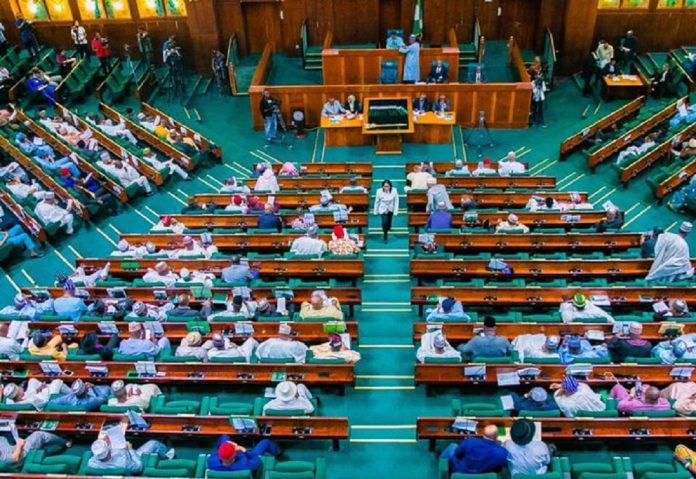
This is an A+ decision from the lower chamber of Nigeria’s parliament: “The House of Representatives has taken a firm stance against the implementation of the Central Bank of Nigeria’s (CBN) cybersecurity levy, calling for an immediate halt to its execution..

“In a motion presented by Minority Leader Kingsley Chinda (PDP Rivers) on behalf of the members, the House emphasized the need for the CBN to withdraw its previous circular on the levy and issue a new one consistent with the provisions of the Cybercrime Act. Section 44(2a) of the act specifies entities such as GSM and telecom companies, internet providers, banks, financial institutions, insurance companies, and the Stock Exchange as liable for the levy, not individual Nigerians.”

Of course they can add those “extras” to our bills. But there is a difference: at least We The People can decide not to consume those services, and get away from the levy. As we discussed here, there is no law in the books which supports what the apex bank did. We do hope this will bring this distraction to a good conclusion while we wait for another one.

I must commend the House, Senate and also the government for listening. We are saying: if you want more tax revenue, create GROWTH policies so that companies, citizens, etc can make money and pay taxes. But taxing bland bank transactions is not wisdom in any form.

Updated: The Nigerian Senate seems to be supporting this.

Amidst anger from Nigerians, particularly the Organised Private Sector, regarding the 0.5% cybersecurity levy on electronic transactions, the Senate has defended the proposed implementation by the Central Bank of Nigeria (CBN).

By virtue of provisions of the Cybercrime (Prohibition, Prevention, etc) (Amendment) Act 2024, and under the provision of Section 44 (2)(a) of the Act, a levy of 0.5 per cent (0.005) equivalent to half a per cent of all electronic transaction values by the businesses specified in the Second Schedule of the Act is to be remitted to the National Cybersecurity Fund, which the Office of the National Security Adviser shall administer.

Chairman of the Senate Committee on National Security and Intelligence, Senator Shehu Umar Buba, stated in a statement that “the levy is not punitive as it has numerous exemptions to protect and relieve ordinary citizens, particularly the poor.”

The Senate and House On This Matter

The Senate said that the 0.5% cybersecurity levy is the law of the land. And the House of Representatives is in agreement, but where they differ is who is going to pay it. The House thinks the citizens or individuals are not the ones to pay the levy; some companies are to make the payments. Of course, the bird which leaves the ground and perches on the anti-hill is still on the ground. If you ask telcos, banks, etc to make this payment, they will find ways to push it to the citizens!

From Chairman of the Senate Committee on National Security and Intelligence, Senator Shehu Umar Buba: “The Cybercrimes Act of 2015 has provisions for imposing a cybersecurity levy since its enactment, but the vagueness of Section 44 led to different interpretations until the 2024 amendments. The levy is 0.5%, equivalent to half a per cent of the value of all electronic transactions by businesses specified in the Second Schedule to the Act.

“The amendments addressed crucial gaps in the Act and empowered the nation to implement the National Cybersecurity Programme effectively. They also seek to realign and empower the country to combat the inadequate funding and disruptive effects of cyber threats on national security and critical economic infrastructures,” he said.

From House of Reps: “Section 44(2a) of the act specifies entities such as GSM and telecom companies, internet providers, banks, financial institutions, insurance companies, and the Stock Exchange as liable for the levy, not individual Nigerians.”

We will see how this develops.

Nigerian House of Reps asks Central Bank to halt Implementation of Cybersecurity Levy

0

The House of Representatives has taken a firm stance against the implementation of the Central Bank of Nigeria’s (CBN) cybersecurity levy, calling for an immediate halt to its execution. 

This directive comes in response to a circular issued by the apex bank, which the House believes is prone to misinterpretation by Nigerians and violates the provisions of the Cybercrime Act.

In a motion presented by Minority Leader Kingsley Chinda (PDP Rivers) on behalf of the members, the House emphasized the need for the CBN to withdraw its previous circular on the levy and issue a new one consistent with the provisions of the Cybercrime Act. Section 44(2a) of the act specifies entities such as GSM and telecom companies, internet providers, banks, financial institutions, insurance companies, and the Stock Exchange as liable for the levy, not individual Nigerians.

The decision by the House reflects concerns that the implementation of the levy has the potential to aggravate economic hardships faced by Nigerians, particularly in light of ongoing challenges such as the increase in petroleum product prices, and the free fall of the naira resulting in sky-high inflation. 

The circular from the CBN has stirred apprehension across the country, prompting calls for its immediate withdrawal.

Peter Obi, the former presidential candidate of the Labour Party has condemned the Cybersecurity Levy, describing it as ‘‘milking a dying economy.’’ In a statement issued on Wednesday, Obi decried the rate President Bola Tinubu’s government is increasing taxes, despite his assurances to address multiple taxation as a way of creating a conducive business environment.

‘‘The imposition of a Cybersecurity Levy on bank transactions is particularly sad given that the tax is on the trading capital of businesses and not on their profit hence will further erode whatever is left of their remaining capital, after the impact of the Naira devaluation and high inflation rate,’’ he said.

Also, the Centre for the Promotion of Private Enterprise (CPPE) raised alarm over the adverse effects of the newly introduced cybersecurity levy and a barrage of other taxes imposed by various tiers of government in Nigeria. 

A statement signed by Dr. Muda Yusuf, the CEO of CPPE, raised concerns regarding the detrimental impact of these levies on the capacity of businesses to stimulate economic growth.

“Businesses and the generality of citizens are yet to recover from the shocks of current reforms. Inflationary pressures have not abated, high cost of living is still a major worry, operating and production costs for businesses remain elevated, amidst weak consumer purchasing power. This is not a good time to impose an additional levy both on businesses and citizens,” he said.

Socio-Economic Rights and Accountability Project (SERAP) has condemned the policy, giving the federal government a 48-hour ultimatum to retract the 0.5% cybersecurity levy imposed on Nigerians. 

The levy, directed by the CBN to be implemented effective May 20, 2024, entails a 0.5% charge on electronic transactions, with proceeds remitted to the National Cybersecurity Fund administered by the Office of the National Security Adviser (NSA), headed by former Chairman of the Economic and Financial Crimes Commission (EFCC) Nuhu Ribadu.

The CBN’s clarification indicates that the levy will be reflected in customers’ accounts as a “Cybersecurity Levy” and applied at the point of electronic transfer origination, subsequently deducted and remitted by financial institutions. Despite the CBN’s assertion that this directive aligns with previous circulars issued in 2018, criticism persists regarding its potential adverse effects on Nigerians already grappling with economic challenges.

IMF Applauds Tinubu’s Economic Reforms, Endorses Widening Tax Brackets

0

The International Monetary Fund (IMF) has given its seal of approval to the economic reforms initiated by President Bola Ahmed Tinubu’s administration, as outlined in the recent Article IV Consultation released on May 9th, 2024. 

The IMF’s Executive Directors lauded the government’s proactive measures in areas such as revenue mobilization, governance enhancement, and the strengthening of social safety nets, recognizing them as significant strides towards addressing Nigeria’s economic and social challenges.

In contrast to the IMF’s endorsement, many Nigerians express ongoing concerns regarding high inflation, weakening purchasing power, lower wages, and increasing income inequality fueled by these policies. However, the IMF’s appraisal focuses on the administration’s bold reforms aimed at restoring macroeconomic stability, reducing poverty, supporting social cohesion, and fostering inclusive and resilient growth.

The IMF’s Executive Directors commended Nigeria’s administration for its emphasis on revenue collection and the effectiveness of policy frameworks in achieving these objectives. They emphasized the importance of steadfast, well-sequenced, and well-communicated reforms to navigate Nigeria through its economic challenges, including maintaining a tight monetary policy stance to curb inflation and restore market confidence.

Particularly noteworthy is the IMF’s support for Nigeria’s shift towards an inflation-targeting regime, along with recommendations for maintaining exchange rate flexibility and removing foreign exchange market distortions. The IMF also praised Nigeria’s reinstatement of the cash transfer program, essential for addressing acute food insecurity, and urged scaling up this initiative alongside comprehensive revenue mobilization efforts.

The revenue mobilization efforts encompass strengthening tax enforcement and expanding the tax base to generate funds essential for development spending and social protection, all while ensuring debt sustainability.

Furthermore, the IMF highlighted the importance of regulatory reforms, including increasing minimum capital requirements for banks and unwinding pandemic-related regulatory forbearance measures. They acknowledged improvements in Nigeria’s Anti-Money Laundering and Countering Financing of Terrorism framework and supported efforts to exit the Financial Action Task Force grey list.

Regarding the controversial cyber security levy of 0.5%, the IMF refrained from expressing explicit support or opposition during a question and answer session with a journalist.

The IMF’s keynotes are as follows:

‘‘Executive Directors agreed with the thrust of the staff appraisal. They welcomed the bold reforms implemented by the new administration and commended the authorities’ focus on revenue mobilization, governance, social safety nets, and upgrading policy frameworks in the face of Nigeria’s significant economic and social challenges.

‘‘In view of the downside risks, Directors stressed the importance of steadfast, well-sequenced, and well-communicated reforms to restore macroeconomic stability, reduce poverty, support social cohesion, and pave the way for faster, inclusive, and resilient growth. Directors commended the authorities’ actions to rein in inflation and restore market confidence.

‘‘They stressed the importance of keeping a tight monetary policy stance to put inflation on a downward path, maintaining exchange rate flexibility, and building reserves. Directors welcomed the removal of foreign exchange market distortions and encouraged the authorities to continue improving the functioning of the FX market, including by adopting a well-designed FX intervention framework.’’

However, the IMF’s supportive stance on President Tinubu’s economic policy framework, while it indicates a positive outlook for Nigeria’s economic trajectory, stands in stark contrast with the views of Nigerians.

In February, human rights lawyer and Senior Advocate of Nigeria, Femi Falana, said that the federal government should resist the economic prescriptions of the IMF and the World Bank, particularly regarding the removal of subsidies and the floating of the naira.

He argued that government subsidies on various products are commonplace globally and stressed that the policies advocated by the IMF and the World Bank are unlikely to bring stability to the country.

“The right thing to do is to reject the prescriptions of the IMF and World Bank, which are to remove fuel subsidy, float your currency, and so on. These have never assisted any country to develop. The government is dancing around the problem,” he said.

“Many of us were opposed to the removal of petrol subsidy because there is no society in the world where the government does not subsidize one product or another, even in the most advanced capitalist societies.

“That is why Nigerians must begin to ask the government to discard and jettison the deleterious programme and policies of the IMF and the World Bank.”

Entrepreneurship in the Intelligent Age

0

The dawn of the Intelligent Age has brought with it a transformative wave that has reshaped the landscape of entrepreneurship. As artificial intelligence (AI) becomes increasingly integrated into various aspects of business, entrepreneurs are finding new ways to leverage this technology to drive innovation, efficiency, and growth.

A systematic literature review suggests that AI acts as a powerful enabler for entrepreneurs, impacting opportunity, decision-making, performance, and education and research. By harnessing AI, entrepreneurs can identify new market opportunities and make more informed decisions through data-driven insights. AI technologies also enhance performance by automating routine tasks, allowing entrepreneurs to focus on strategic activities that drive business growth.

In the Intelligent Age, the ability to turn ideas into successful ventures is amplified by AI’s capabilities. Entrepreneurs can now access tools that were once the domain of large corporations, such as advanced analytics, machine learning algorithms, and automation technologies. This democratization of technology enables smaller players to compete on a global stage and disrupt traditional business models.

The Impact of AI on Traditional Business Models

AI’s impact on traditional business models cannot be overstated. It has introduced automation, enabling businesses to streamline operations and improve efficiency. AI-driven data analysis provides valuable insights that inform decision-making and strategy. Personalization and customization have reached new heights, with AI’s ability to tailor products and services to individual customer preferences.

The rise of AI has also fostered collaborative ecosystems where entrepreneurs, researchers, and technologists work together to innovate. However, with great power comes great responsibility. Ethical considerations and AI governance are crucial to ensure that AI is used responsibly, and that privacy and security concerns are addressed.

Sustainability is another critical aspect of entrepreneurship in the Intelligent Age. Entrepreneurs are increasingly looking to create AI-driven solutions that are not only profitable but also environmentally friendly and socially responsible. This approach aligns with the growing consumer demand for sustainable business practices and products.

Securing funding for AI ventures is another area where the landscape has evolved. With the recognition of AI’s potential, there is an increasing willingness among investors to back AI-driven startups. Entrepreneurs must navigate this new terrain by articulating the value proposition of their AI innovations and demonstrating their potential for disruption and growth.

Entrepreneurship in the Intelligent Age is marked by the profound influence of AI. It offers immense opportunities for those willing to embrace this transformative technology. As we move forward, the synergy between entrepreneurship and AI will continue to spawn groundbreaking ventures that redefine industries and spur economic growth.

For entrepreneurs looking to thrive in this new era, understanding and integrating AI into their business strategies is not just an option—it’s an imperative for success. The Intelligent Age is here, and it’s ripe with possibilities for the bold and innovative entrepreneur. Entrepreneurship has always been about the future, and in the Intelligent Age, the future is now.