DD
MM
YYYY

PAGES

DD
MM
YYYY

spot_img

PAGES

Home Blog Page 3407

For Nigeria to Develop, This Must Happen

0

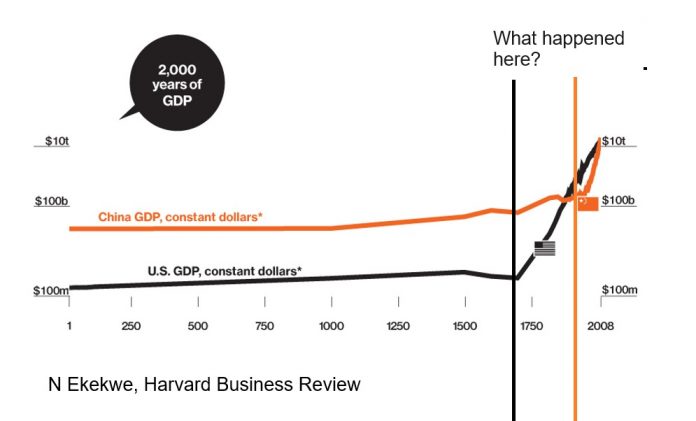
In my book which won IGI Global 2010 Excellence in Technology Research ‘Book of the Year’ Award, I tracked the development of many economies over centuries, and how technology and innovation systems have transformed economies. Yes, besides being “smart”, nations develop when they have platforms, and the most important platform is Rule of Law (or simply property rights) in different forms which make it possible to protect properties, physical and intellectual. 

So any person who thinks a nation can advance by sheer efforts and energies of the people without Rule of Law is wasting time. Rule of Law attracts capital, and property rights enable a transition from Invention to Innovation phases of development.

Without the Rule of Law, nations operate largely with Money. With Rule of Law, nations advance into Capital formation which creates and expands opportunities across territories. Poor and inventive nations operate with Money, rich and innovative nations work with Capital. 

Good People, no matter how hard Nigerians work, we have a ceiling we can attain on development, until the Rule of Law becomes part of our national system. 

Why Nations Remain POOR [Video]

What is Bitcoin Call Option?

0

In the dynamic world of cryptocurrency trading, Bitcoin call options have become a focal point for traders seeking to capitalize on market movements. A recent development in this arena involves traders selling $80,000 BTC call options that are set to expire at the end of May. This strategy, highlighted by the algorithmic trading firm Wintermute, is a calculated risk that traders are willing to take.

Call options are financial contracts that give the buyer the right, but not the obligation, to buy an asset at a specified price within a certain time frame. In the case of Bitcoin call options, if the price of BTC surpasses the strike price of $80,000 by the end of May, the option buyers can exercise their right to buy at this predetermined price, potentially reaping significant profits if the market price is higher.

However, the current trading strategy observed involves selling these call options while Bitcoin is trading significantly lower, around $58,000. By doing so, traders are essentially betting that Bitcoin will not reach the strike price by the expiration date. If their prediction holds true, and BTC ends May below $80,000, these traders will retain the entire premium received from selling the options—a premium that represents the maximum profit they can achieve from this trade.

This approach is not without its risks. Should Bitcoin experience a surge in price and exceed the $80,000 mark, the sellers of the call options could face losses, especially if they have not hedged their positions or hold corresponding long positions in the spot market. The balance between potential profit from premiums and the risk of a price surge makes this a nuanced strategy that requires careful consideration and market analysis.

The resurgence of call option selling as a strategy is indicative of the shifting sentiments in the cryptocurrency market. With the collapse of the bitcoin futures premium, the appeal of the cash and carry arbitrage strategy has diminished, leading traders to pivot back to option selling strategies. This shift is further evidenced by the decline in implied volatility, as measured by the Deribit’s implied volatility index (DVOL), which suggests a decreased expectation of price volatility over the next 30 days.

The cryptocurrency market is known for its volatility, and options trading is one of the methods traders use to navigate this uncertainty. By selling out-of-the-money call options at higher strike prices, traders aim to generate yield while managing their risk exposure. This strategy reflects a broader trend in the market where traders are adapting to changing conditions and exploring different avenues to optimize their investment returns.

As the end of May approaches, the outcome of these $80,000 BTC call options will be a point of interest for many in the cryptocurrency community. It will serve as a testament to the predictive capabilities of traders and the ever-evolving strategies employed in the pursuit of financial gain in the digital asset space. For those involved, it is a waiting game, with the hope that their strategic decisions align with the market’s trajectory.

Sovereign Wealth Funds and Pensions Eye Bitcoin ETFs

0

In the dynamic world of finance, investment strategies are continually evolving, with institutions constantly seeking diversified portfolios to hedge against market volatility and inflation. A significant development in this arena is the growing interest of sovereign wealth funds and pension plans in Bitcoin Exchange-Traded Funds (ETFs). BlackRock, the world’s largest asset manager, has been at the forefront of this shift, playing a pivotal role in educating these institutional investors about the potential of Bitcoin ETFs.

The Bitcoin ETF market has seen a remarkable surge in 2024, with the price of Bitcoin stabilizing around $60,000, marking a 50% increase since January. This stability is attributed to the introduction of new U.S. spot Bitcoin ETFs, which have garnered attention from heavyweight financial entities, signaling a new wave of investment from large financial institutions.

BlackRock’s head of digital assets, Robert Mitchnick, highlighted the firm’s educational efforts with various institutions, including pensions, endowments, and sovereign wealth funds, about the new spot Bitcoin ETF products. The firm’s initiative is not just about promoting investment but also about re-initiating discussions around Bitcoin and its role in portfolio construction.

The interest in Bitcoin ETFs is not a sudden phenomenon. BlackRock has been engaging in conversations with these institutions for several years, and the pent-up demand for the much-anticipated ETFs has led to more than $76 billion being accumulated across these products since their approval in January. Registered Investment Advisors (RIAs) have already begun offering BlackRock’s IBIT ETF on an unsolicited basis, and the next step could see the unrestricted offering of Bitcoin ETFs to clients of large wealth advisory firms like Morgan Stanley.

Despite a recent cooldown and outflows from Bitcoin ETFs amidst market volatility, BlackRock remains bullish on institutional demand in the long term. The firm expects that the current lull will be followed by a new wave of buying from deep-pocketed institutional players. This optimism is grounded in the belief that as more institutions like BlackRock build multi-billion-dollar Bitcoin reserves, it validates Bitcoin as an investable asset class.

The growing institutional interest in Bitcoin ETFs is a testament to the recognition of cryptocurrencies as legitimate investment assets within the institutional space. This shift could potentially lead to a broader acceptance and integration of cryptocurrencies in mainstream finance, altering the investment landscape significantly.

As the world’s largest asset manager observes, the dive of sovereign wealth funds and pensions into Bitcoin ETFs could intensify competition in the market, further establishing the credibility and viability of cryptocurrencies as a component of diversified investment portfolios. With over $76 billion invested in Bitcoin ETFs, the competition between BlackRock’s IBIT ETF and Grayscale’s GBTC is a clear indicator of the market’s growth and the increasing institutional confidence in cryptocurrency investments.

The move by sovereign wealth funds and pension plans to consider Bitcoin ETFs reflects a strategic approach to investment, one that is informed, pragmatic, and indicative of the continued growth of the Bitcoin ETF market. As the financial landscape evolves, the integration of digital assets into traditional investment portfolios could become the norm, reshaping the way institutions and individuals alike approach investment in the digital age.

The Status of German Embassy in North Korea and Russia’s Recent Activities in Europe

0
North Korean leader Kim Jong Un and his daughter Kim Ju Ae visit the Ministry of National Defense on the occasion of the 76th anniversary of the founding of the Korean People's Army in Pyongyang, North Korea in this picture released on February 9, 2024 by the Korean Central News Agency. KCNA via REUTERS

The question of reopening the German embassy in North Korea remains a topic of interest and speculation. Recent developments have indicated that German officials are taking cautious steps towards assessing the feasibility of resuming operations in Pyongyang. In February, a German diplomat responsible for East Asia affairs made a visit to North Korea, marking a significant step since the closure of the embassy due to the COVID-19 pandemic.

A delegation from Germany has been reported to inspect the embassy building in Pyongyang, which suggests that preparations are underway for a potential reopening. However, the German Federal Foreign Office has made it clear that this inspection does not guarantee the reopening of the embassy. The decision to reopen lies with the political authorities in Berlin, who will consider various factors before making a final determination.

The bilateral relations between Germany and North Korea have a complex history that reflects the broader geopolitical shifts of the 20th century. The foundation of these relations can be traced back to the Cold War era when two separate German states existed: the Federal Republic of Germany (FRG or West Germany) and the German Democratic Republic (GDR or East Germany).

East Germany established diplomatic relations with North Korea shortly after the latter’s foundation in 1948. This relationship was grounded in their shared communist ideology and opposition to Western capitalism. East Germany was among the first countries to recognize North Korea and became a significant ally, providing economic and technical assistance.

The relationship between East Germany and North Korea was not only political but also personal at the leadership level. Erich Honecker, the East German First Secretary, and Kim Il Sung, the North Korean leader, enjoyed a close relationship, with state visits exchanged in the 1970s and 1980s.

These visits were symbolic of the strong ties between the two nations, which included cooperation in areas such as trade, education, and infrastructure development. For instance, East Germany played a crucial role in reconstructing North Korean cities damaged during the Korean War.

The closure of the German embassy, along with those of other European countries, was a response to the stringent pandemic measures imposed by North Korea, which included near-total travel bans and large-scale border walls. With the easing of these restrictions, there is a growing anticipation among European nations to re-establish their diplomatic presence in the country.

The situation is dynamic, and the decision to reopen the embassy will depend on a complex interplay of diplomatic, logistical, and safety considerations. The international community is closely watching these developments, as they could signal a shift in North Korea’s approach to foreign diplomacy and engagement.

For now, the status of the German embassy in North Korea remains uncertain, but the ongoing discussions and inspections are a sign that changes could be on the horizon. It is a matter of when, rather than if, the embassy will reopen, reflecting the cautious optimism that characterizes the current diplomatic climate between Germany and North Korea.

Understanding Russia’s Recent Activities in Europe

Recent events have highlighted a pattern of disruptive activities attributed to Russia within European territories, raising concerns over the potential for future aggression. The incidents range from alleged espionage and sabotage to electronic warfare, affecting various sectors from aviation to energy.

One notable case involves Britons allegedly working for Russian intelligence, accused of plotting arson against Ukrainian interests in the UK. This incident is not isolated; it reflects a broader campaign of subversion that spans across Europe. Germany’s arrest of individuals planning attacks on US military bases and Lithuania’s struggles with organized crime linked to Moscow are further examples of this disturbing trend.

Electronic warfare tactics have also been employed, with experts pointing to Russia as the source of GPS signal jamming affecting civilian aircraft across Europe. Such disruptions pose risks not only to safety but also to the trust in the region’s security and stability.

The implications of these actions are profound. They suggest a strategy of undermining European cohesion and security, testing the resolve of NATO and the EU. The use of proxies and cyber tactics indicates a preference for hybrid warfare, which complicates the attribution of direct responsibility and muddies the waters of international law.

The pattern of behavior aligns with predictions of Russian strategies in the event of heightened tensions with NATO. The targeting of logistics points, recruitment of local proxies for sabotage, and electronic interference are all tactics that have been anticipated by security analysts.

One of the immediate consequences is the strain on European unity and security. The pattern of Russian disruptions suggests a strategic effort to weaken the cohesion of European nations and institutions such as the EU and NATO. This could lead to a more fragmented Europe, with individual countries potentially adopting divergent foreign policies that could undermine collective responses to aggression.

The disruptions also have the potential to alter defense strategies and military alliances. Increased defense spending and a shift towards more aggressive military postures could become the norm as European nations seek to bolster their defenses against hybrid warfare tactics. This militarization could lead to an arms race, further escalating tensions and instability in the region.

On a global scale, these disruptions could lead to a realignment of international relations. Countries may seek new alliances and partnerships to counterbalance Russian influence. This could result in a shift away from a unipolar world dominated by the United States to a more multipolar world order, with several regional powers vying for influence.

Furthermore, the use of cyber tactics and the recruitment of local proxies for sabotage indicate a new era of warfare that is less about direct confrontation and more about indirect, covert operations. This could lead to a paradigm shift in international law and the rules of engagement, with nations having to adapt to the realities of hybrid and cyber warfare.

As Europe faces these challenges, the response must be multifaceted. Strengthening counterintelligence efforts, enhancing cybersecurity measures, and fostering international cooperation are crucial steps. Additionally, there is a need for increased vigilance and resilience against such covert operations.

Understanding the patterns of disruption is essential for anticipating and mitigating future threats. The international community must remain alert to the signs of hybrid warfare and ready to respond to protect the democratic values and security of Europe.

MoonPay team up with PayPal to enable fiat to crypto transactions for US customers

0

In a significant move for the cryptocurrency market, MoonPay has partnered with PayPal to facilitate fiat-to-crypto transactions for U.S. customers. This collaboration marks a milestone in the integration of traditional financial services with the burgeoning digital currency space.

MoonPay, a prominent player in the crypto payment gateway industry, has been at the forefront of simplifying the process of buying and selling cryptocurrencies. By joining forces with PayPal, a global leader in online payment systems, MoonPay is set to enhance its services by offering a seamless transaction experience to its users.

The partnership allows U.S. customers to use their PayPal accounts to purchase cryptocurrencies through MoonPay’s platform. This integration is expected to lower the barriers to entry for new users who are accustomed to PayPal’s interface and trust its security measures. With PayPal’s extensive user base and MoonPay’s crypto expertise, this partnership could significantly expand the accessibility of cryptocurrencies to a broader audience.

Key benefits of the MoonPay-PayPal partnership

Convenience: Users can now purchase cryptocurrencies using their existing PayPal accounts, eliminating the need to enter additional payment information or set up new accounts. The integration supports various funding options through PayPal, including PayPal Balance, direct bank withdrawal, and debit card transactions.

Security: PayPal’s robust security protocols provide users with peace of mind, knowing their financial information is protected during transactions. MoonPay offers access to over 110 different cryptocurrencies, giving users a wide range of options for their digital asset investments. With PayPal’s vast global reach and MoonPay’s commitment to expanding access to digital currencies, it’s likely that other countries will soon be able to take advantage of this service.

MoonPay has indicated that the integration with PayPal will be available through MoonPay’s partner networks by mid-2024. This suggests a planned expansion that could include various international markets where PayPal operates. Given PayPal’s presence in over 200 markets and its 426 million active accounts worldwide, the scope for international expansion is significant.

The exact details of which countries will be next in line to benefit from the MoonPay-PayPal partnership have not been disclosed. However, it’s reasonable to anticipate that the companies will target regions with a high demand for cryptocurrency services and a strong PayPal user base. This strategic move could potentially open up new opportunities for millions of users around the world to engage with cryptocurrencies more easily and securely.

The integration is a clear signal of the growing mainstream acceptance of cryptocurrencies and the desire of traditional financial institutions to adapt to this new digital economy. As the partnership evolves, it’s expected that MoonPay and PayPal will continue to work on enhancing their offerings and expanding their reach, ultimately making cryptocurrencies more accessible to a global audience.

As the crypto market continues to mature, collaborations like this between fintech giants and crypto-focused companies are likely to become more common, bridging the gap between traditional finance and the digital economy. The MoonPay-PayPal partnership is not just a convenience for users; it’s a strategic move that could pave the way for the future of financial transactions.