DD
MM
YYYY

PAGES

DD
MM
YYYY

spot_img

PAGES

Home Blog Page 341

The Power of  iGaming in Africa: Opportunities for Partners

0

The rapid growth of the online entertainment industry and the audience’s shift toward mobile-first experiences make iGaming one of the fastest-expanding markets. High LTV and flexible partnership terms open broad opportunities for partners to secure stable long-term income.

Today, Africa stands out as a priority for affiliates. Here, users favor mobile solutions and local payment systems. Applications and lite versions of platforms are taking center stage: fast access, intuitive interfaces, instant deposits, and withdrawals. A cultural factor also plays a role: a willingness to embrace risk as a key to success. Together, these elements drive high CR and retention, boost LTV, and make cooperation with iGaming platforms exceptionally rewarding for partners.

Why should partners choose iGaming?

This industry is competing thanks to its blend of a loyal audience and powerful scaling opportunities. Strong player engagement ensures repeated deposits, along with the ability to retain and re-engage users through promos and bonuses.

Mobile technologies allow efficient redirection of users from apps to gaming platforms. Favorable entry conditions further deliver a high conversion rate from sign-up to deposits.

Another strength is the diversity of entertainment formats. Players can bet on international and local sports events or enjoy casino games, selecting from a vast range of options — from classic slots to live dealer tables.

Partners also gain access to a variety of cooperation models — CPA, RevShare, and hybrid — enabling them to build strategies precisely tailored to their resources and objectives, ensuring both efficiency and growth.

In iGaming, partners can monetize creativity: promoting bookmaker offers, casino favorites, and major sports tournaments, while shaping their own style of interaction with the audience and analyzing its interests.

From analytics to action: offer checklist for the first launch

When selecting an affiliate program and betting brand, it is essential to consider several criteria:

  • Registration in 2–3 steps and tiered KYC – the simpler the path to the first deposit, the greater the partner’s income.
  • Local payment systems – swift transactions with a high success rate and transparent commission build player trust.
  • Mobile-first UX – lightweight landing pages, PWA, and stable performance on a 3G connection guarantee access from any device.
  • Affiliate creatives package and deeplinks – localized materials and direct links to events accelerate traffic testing.
  • Advanced tracking – S2S postbacks for REG/FTD/DEPOSIT, flexible UTM templates, and real-time dashboards sharpen campaign monitoring.
  • Personal manager – timely support and creative adjustments upon requests.
  • Transparent bonus terms and the promotion of responsible gaming principles – nurture loyalty, credibility, and repeated deposits.

These requirements are fully met by the African bookmaker AfroPari, making it an optimal choice for affiliate marketing in iGaming.

The brand puts local context at the core: studying player interests, listening to its audience, and continuously refining its product. Its toolkit includes popular payment systems, games from leading providers, and sports content tailored to the local market.

Partners enjoy access to a complete ecosystem: local currencies and Mobile Money, lightweight mobile UX, advanced analytics, and responsive manager support. These tools allow affiliates to launch campaigns quickly and scale results effectively.

How to become an AfroPari partner?

To start earning with the bookmaker, follow a few simple steps:

  1. Sign up for the brand’s affiliate program and log in to your account.
  2. Wait for a message from your personal manager: approve the GEO, receive ready-to-use creatives and deeplinks, and set up postbacks.
    – And here’s a special gift for new partners: during the first 3 months on the RS model, you get a welcome offer — up to 50% revenue share. A perfect way to kick off your partnership with maximum profit!
  3. Launch your campaign and track how clicks transform into income!

In Africa, the iGaming sector offers boundless opportunities for affiliates. Begin your journey: AfroPari provides the infrastructure; traffic is up to you! Join the AfroPari affiliate program and start earning with a trusted brand!

SMM

Unlock new opportunities in the iGaming industry!

  • iGaming is a rapidly expanding market with high LTV and strong player engagement. It offers an easy path to scale income and monetize traffic.

  • When choosing a bookmaker, consider these key criteria:

  • platform accessibility
  • local payment systems
  • mobile application
  • cooperation models
  • creative assets
  • analytics tools
  • personal manager support
  • promotion of responsible gaming principles
  • AfroPari meets all these standards, making it the optimal choice, providing affiliates with everything they need for smooth business operations and seamless campaign launches without unnecessary hassle.

  • Join the AfroPari affiliate program and start turning traffic into stable income!
IMF Raises Nigeria’s 2026 Growth Forecast to 4.2%, Citing Higher Oil Output and Investor Confidence

0

The International Monetary Fund (IMF) has raised Nigeria’s economic growth forecast for 2026 to 4.2 percent, an upward revision from its July projection of 3.2 percent.

The Fund’s latest World Economic Outlook (WEO), released this week, attributes the improvement to stronger oil output, rising investor confidence, and a more supportive fiscal stance expected to take hold over the next two years.

The updated projection places Nigeria ahead of South Africa, whose outlook remains subdued, but slightly below the broader Sub-Saharan African regional average. For 2025, Nigeria’s growth is projected to remain steady at 3.4 percent, consistent with the IMF’s July update, before accelerating to 4.2 percent in 2026.

According to the report, South Africa’s growth forecast was raised marginally from 1.0 to 1.1 percent for 2025 but revised downward from 1.3 to 1.2 percent for 2026. Meanwhile, the Sub-Saharan African region’s growth outlook improved slightly from 4.0 to 4.1 percent for 2025 and from 4.3 to 4.4 percent for 2026.

Domestic Factors Driving Nigeria’s Outlook

In explaining the basis for Nigeria’s stronger growth forecast, the IMF said the revision was driven by “supportive domestic factors, including higher oil production, improved investor confidence, and a supportive fiscal stance in 2026.” The Fund also noted that Nigeria remains relatively insulated from the impact of rising U.S. tariffs that are expected to dampen trade across other emerging economies.

The report stated: “Whereas growth in Nigeria is revised upward on account of supportive domestic factors, including higher oil production, improved investor confidence, a supportive fiscal stance in 2026, and given its limited exposure to higher US tariffs, many other economies see significant downward revisions because of the changing international trade and official aid landscape.”

Nigeria, Africa’s largest oil producer, has recently seen modest gains in output following a series of interventions by the Nigerian National Petroleum Company Limited (NNPCL) and improved security in the Niger Delta region. The recovery in crude production — which rose above 1.5 million barrels per day in mid-2025, compared to about 1.2 million earlier in the year — has played a crucial role in strengthening fiscal revenues and foreign exchange inflows.

Economists say this rebound, combined with efforts to unify the exchange rate and attract foreign direct investment, is beginning to reflect renewed confidence in the economy. The IMF’s acknowledgment of these developments underscores optimism that Nigeria’s medium-term growth trajectory could stabilize, provided the government sustains its current reforms.

Global Economic Context

Globally, the IMF projects that growth will moderate to 3.2 percent in 2025 and 3.1 percent in 2026. While this marks a slight improvement from the July 2025 update, it remains 0.2 percentage points below forecasts made before the latest round of global trade and policy shifts. The Fund said the slowdown reflects persistent headwinds from uncertainty and protectionism, although the impact of recent tariff measures was smaller than initially expected.

“This is an improvement relative to the July WEO Update—but cumulatively 0.2 percentage point below forecasts made before the policy shifts in the October 2024 WEO, with the slowdown reflecting headwinds from uncertainty and protectionism, even though the tariff shock is smaller than originally announced,” the IMF explained.

Advanced economies are expected to expand by around 1.5 percent over 2025–2026, with the United States slowing to 2.0 percent. By contrast, emerging markets and developing economies are projected to grow just above 4.0 percent during the same period.

Inflation and Trade Outlook

On inflation, the IMF forecasts a continued decline in global consumer prices to 4.2 percent in 2025 and 3.7 percent in 2026, compared to 5.8 percent in 2024. The Fund attributes the moderation to easing energy prices, improved food supply chains, and tighter monetary policies across major economies.

World trade volume, however, is expected to expand more slowly, at an average of 2.9 percent during 2025–2026 — below the 3.5 percent recorded in 2024 — as trade fragmentation and new tariff barriers continue to weigh on global commerce.

Nigeria’s Fiscal and Monetary Policy

The IMF’s upward revision comes months after its Executive Board concluded the 2025 Article IV consultation with Nigeria, projecting a 3.4 percent expansion in the country’s real GDP for 2025. The consultation report commended the Central Bank of Nigeria (CBN) for maintaining a tight monetary policy stance aimed at curbing inflation and stabilizing the naira.

The Fund described the CBN’s policies as “critical tools in managing inflation and safeguarding macroeconomic stability,” but it also urged the government to complement monetary tightening with fiscal discipline and targeted social support programs to cushion the impact of reforms on vulnerable populations.

Nigeria’s inflation rate, which peaked at over 33 percent in early 2025, has since slowed on a month-on-month basis, although food and transportation costs remain high. The IMF noted that consistent fiscal and monetary coordination will be crucial to sustain the momentum of economic stabilization into 2026.

Economic analysts interpret the IMF’s upward revision as a sign that the country’s macroeconomic reforms are gradually restoring investor confidence, particularly in the oil and energy sectors. The IMF’s latest projection, nonetheless, signals a shift in perception — from caution to cautious optimism — as Nigeria continues to implement structural reforms.

JPMorgan CEO Says U.S. Auto Bankruptcies May Be Early Warning Signs Of Excess Easy Lending

0

JPMorgan Chase CEO Jamie Dimon has warned that a wave of corporate bankruptcies emerging in the U.S. auto sector may be an early warning sign of broader credit excesses built up over the past decade.

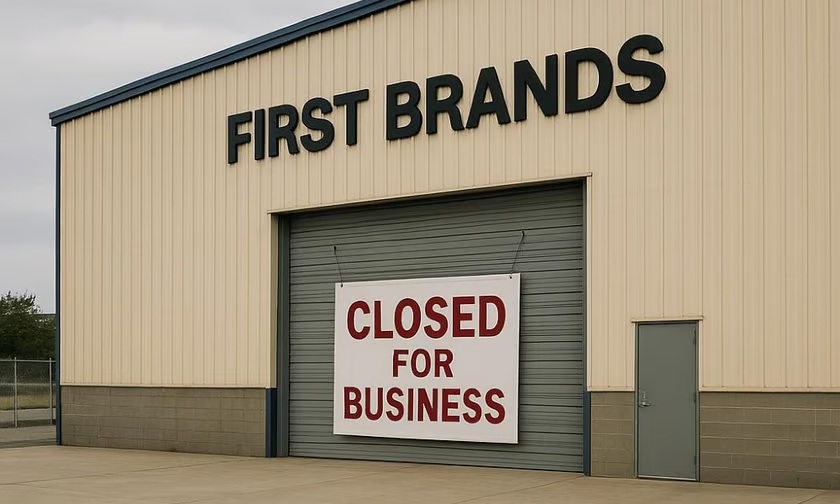
Speaking after the collapse of two high-profile companies — auto parts maker First Brands and subprime car lender Tricolor Holdings — Dimon said the failures highlight how lenient lending practices since 2010 have left parts of the financial system exposed.

“We’ve had a credit bull market now for the better part of what, since 2010 or 2012? That’s like 14 years,” Dimon said during a call with CNBC on Tuesday. “These are early signs there might be some excess out there because of it. If we ever have a downturn, you’re going to see quite a bit more credit issues.”

His comments came as JPMorgan, the largest U.S. bank by assets, reported another quarter of strong earnings driven by its institutional trading business. Yet, despite topping Wall Street expectations, the bank’s results were overshadowed by growing concern among analysts and investors over credit quality and the potential ripple effects of recent corporate failures.

The twin bankruptcies of First Brands and Tricolor have reignited debate about risk appetite in the leveraged finance and private credit markets, particularly in sectors like automotive lending that expanded aggressively during the years of ultralow interest rates. Both companies had taken on significant debt before defaulting amid rising borrowing costs and supply chain disruptions that have plagued the global auto industry since the pandemic.

Dimon didn’t mince words in describing the significance of the failures. “When you see one cockroach, there are probably more,” he told veteran banking analyst Mike Mayo on the bank’s earnings conference call. “Everyone should be forewarned on this one.”

The remark underscored his long-standing reputation for caution regarding excessive credit creation — a concern that has intensified as U.S. consumer and corporate borrowing costs climb under the Federal Reserve’s higher-for-longer interest rate stance.

JPMorgan’s Exposure and Losses

While JPMorgan managed to avoid direct losses from First Brands, it was exposed to Tricolor Holdings, which filed for bankruptcy amid allegations of accounting irregularities and fraudulent loan practices. Chief Financial Officer Jeremy Barnum said the bank took $170 million in charge-offs during the quarter linked to its Tricolor exposure. Charge-offs represent loans that the bank no longer expects to be repaid.

“It is not our finest moment,” Dimon admitted. “When something like that happens, you could assume that we scour every issue. You can never completely avoid these things, but the discipline is to look at it in cold light and go through every single little thing.”

Barnum added that the bank’s key credit metrics — including early-stage delinquencies — remain stable and, in some areas, better than expected. He emphasized that JPMorgan is closely monitoring the labor market, noting that any weakness there could eventually spill into consumer credit. So far, however, he said that deterioration has not materialized.

Ripple Effects Across Wall Street

The fallout from the two bankruptcies extends beyond JPMorgan. Several large financial institutions, including Jefferies, UBS, and Fifth Third Bank, have disclosed varying degrees of exposure to the failed companies.

Earlier this month, Jefferies revealed that funds it manages are owed $715 million by firms linked to First Brands’ inventory operations. UBS separately disclosed that its funds had approximately $500 million in exposure to similar entities. Meanwhile, regional lender Fifth Third Bank announced in September that it expects up to $200 million in impairments from alleged fraudulent activity at a borrower later identified as Tricolor Holdings, according to Bloomberg.

The combination of these losses has renewed concerns that many banks and private credit funds may have underestimated the risks tied to mid-market companies that thrived on cheap financing during the long post-2010 credit boom.

Tariffs and Supply Chain Strain Add Pressure

The situation has been further complicated by renewed trade frictions under President Donald Trump’s tariff escalation policies, which have increased costs across global supply chains. The automotive sector — dependent on complex international manufacturing networks — has been particularly affected. Parts shortages, shipping delays, and higher input costs have squeezed margins for both producers and lenders, many of whom relied on optimistic sales forecasts to justify high leverage.

The bankruptcy of First Brands, in particular, reflects how fragile these networks have become. The company, once a key supplier to several U.S. automakers, struggled with a combination of reduced demand, higher import costs, and tightening credit conditions. Analysts say that as tariffs push input prices higher, firms that were already operating on thin margins are likely to come under increasing strain.

Dimon’s warning carries added weight given JPMorgan’s central role in the global financial system and his reputation as one of Wall Street’s most experienced crisis-era executives. The bank chief has repeatedly cautioned against complacency amid strong profits and low default rates, arguing that the U.S. economy’s resilience has masked deeper structural risks.

The failures of First Brands and Tricolor, he suggested, are reminders that years of cheap money have allowed weaker companies to survive far longer than they might have otherwise. With interest rates now higher and refinancing more expensive, those vulnerabilities are starting to surface.

Secure by Design: Nexchain’s Testnet 2.0 Elevates Safety with AI, Launching This November with Bonus Rewards During Coin Presale

0

Coin presale momentum continues as Nexchain AI strengthens its system with AI-driven security, smart automation, and real-time validation. Following a string of successful funding rounds, the project prepares to launch its long-awaited Testnet 2.0 this November. With enhanced user protections like AI Risk Scores, the new testnet provides insights before transaction approvals. Combined with a 100% bonus using promo code TESTNET2.0, interest in the coin presale has grown steadily.

Nexchain AI: A Blockchain Engineered for Real-World Demands

Built from the ground up using AI models, Nexchain AI introduces a Layer 1 blockchain optimized for automation, scalability, and fraud detection. Its architecture blends Proof-of-Stake with AI-based optimizations to enable dynamic validator selection and efficient transaction prioritization. Directed Acyclic Graphs (DAGs) and sharding improve throughput while preventing network congestion.

The platform supports smart contracts that adjust to network conditions in real time. These AI-powered contracts self-optimize execution logic and detect irregular behavior through machine learning. Nexchain’s design provides compatibility across chains using advanced bridging protocols, reinforcing its role as a secure and scalable foundation for multi-industry decentralized applications.

Nexchain’s coin presale has attracted sustained investor interest. Stage 25, priced at $0.10, raised $9,275,000. Stage 26 followed at $0.104 with $10,125,000 raised, while Stage 27, priced at $0.108, hit its $11,025,000 target. The current Stage 28 offers NEX at $0.112, with $10,837,151 already raised out of a $11,975,000 cap.

Testnet 2.0 Launches in November with AI Risk Prevention and Bonus Code

Testnet 2.0 launched on October 13 and runs through November 28. This version introduces a redesigned interface and new AI Events, which score transaction risks before users approve them. These AI scores help prevent scam activity and block MEV attacks at the confirmation stage.

Users can participate during the test period using the promo code TESTNET2.0 to receive a 100% bonus. The initiative runs parallel to the ongoing coin presale, which allows supporters to access Nexchain’s utility token before exchange listing. This testnet phase reinforces Nexchain’s transparent rollout plan, where live testing is paired with incentivized participation.

Community Airdrop During Coin Presale and Development Continue in Parallel

Alongside the active coin presale, Nexchain continues to reward early engagement through its long-running airdrop. With a $5 million NEX prize pool, users completing weekly quests can earn rewards and qualify for grand prizes at the campaign’s close. The more users participate, the higher their final airdrop potential.

Security is overseen by CERTIK, verifying that Nexchain’s protocol meets high assurance standards. The ongoing coin presale supports strategic token allocation, including staking, liquidity, and ecosystem development. Smart contract compliance features ensure seamless adaptation across sectors like DeFi, IoT, healthcare, and AI infrastructure. Nexchain AI is establishing a secure, adaptive, and scalable blockchain framework by merging AI intelligence with a decentralized architecture.

With Testnet 2.0 introducing AI Risk Scores and offering a 100% bonus, the project enters a new phase of engagement. The coin presale continues its uptrend across funding stages, providing early access to the network’s core utility token. As the ecosystem expands, Nexchain remains focused on delivering real-world applications with continued updates, industry-grade security, and multi-chain compatibility. These developments confirm Nexchain’s commitment to delivering long-term blockchain utility and network transparency.

More Details:

Website: https://nexchain.ai/

Telegram: t.me/nexchain_ai/3

X: https://x.com/nexchain_ai

Airdrop: https://nexchain.ai/airdrop

Top 3 Cryptos to Buy as Solana (SOL) Price Targets $300 After 11% Jump

0

Another strong buying wave sweeps cryptocurrency markets as SOL’s strength triggers the current upward movement. The altcoin is up 11% in the past week as persistent positive market sentiment sends its price above $300, if bulls stay in control. While Solana’s growth has elevated Layer 1 scalability projects to popularity, newer blockchain ventures are gaining traction thanks to their distinctive applications and strong support networks. If you’re looking for larger wins, here are three cryptocurrencies to watch in Q4 2025: Little Pepe (LILPEPE), Aptos (APT), and Polygon (POL).

Solana (SOL): Speed and Scaling Driving Renewed Confidence

Solana exhibits signs of network resilience and has seen an improvement in on-chain activity following the recent recovery rally. According to CoinMarketCap data, Solana’s daily transactions and developer activity have increased by more than 15% this month. Analysts expect the cryptocurrency to regain its price to last year’s all-time highs if network uptime and speed are sustained, potentially reaching $300 in the near future. Solana’s fast architecture has been bringing in investor optimism; its growing DeFi and NFT ecosystem has solidified its position against Ethereum (ETH).   However, as Solana remains the go-to high-performance blockchain, emerging Layer 2 players like Little Pepe (LILPEPE) are setting new scalability standards with meme-driven hype and community-driven infrastructure.

Little Pepe (LILPEPE): Meme Energy Meets Layer 2 Efficiency

At the intersection of meme culture and advanced blockchain utility lies Little Pepe, a project positioning itself as the world’s first meme-focused Layer 2 blockchain. Ultra-low fees, sniper-bot resistance, and rapid finality aim to improve user experiences for DeFi, gaming, and NFT use cases.  Little Pepe is priced at $0.0022 in Stage 13 of its presale and has raised $26.6 million of its $28.7 million goal, with 94.28% of the tokens sold. According to data, such rapid uptake implies significant investor confidence and growing anticipation for its $0.003 IPO.

Beyond token metrics, Little Pepe is building a distinct narrative through its Mega Giveaway—rewarding top presale buyers between Stages 12–17 with over 15 ETH in prizes, including 5 ETH for the biggest buyer and additional rewards for 15 lucky participants. With 76,900 total entries and 85 days remaining, this event reflects the project’s strong and engaged community base.

Meme coins, including Dogecoin (DOGE) and Shiba Inu (SHIB), were the first to pioneer the social-trading trend. But Little Pepe (LILPEPE) might have what it takes to offer more than blockchain use cases by drawing power directly from a meme-based sustainable ecosystem.

Through its transparent tokenomics strategy and backing from experienced stakeholders, LILPEPE holds the potential to advance beyond its meme coin beginnings and become a comprehensive DeFi-compatible Layer 2 solution.

Aptos (APT) and Polygon (POL): Building Blocks for Scalable Web3

The Aptos platform (APT) demonstrates steady adoption among developers, as its Move coding system enhances smart contract security and enables efficient parallel execution. According to DeFiLlama data, Aptos’ TVL increased by 10%, and its Web3 strategic relationships demonstrate the company’s future promise as a stable basis for safe and scalable dApps.  Polygon (POL) has provided Ethereum with a layer-2 scaling solution for several months, demonstrating stability. Blockchain, with over 300 million unique addresses, has become the first choice for developing decentralized applications at a low cost via increased institutional partnerships.  Users might switch to Polygon’s network because its recent zkEVM developments enable lower gas costs and enhanced security compared to the Ethereum mainnet.

Final Thoughts

Solana’s (SOL) explosive comeback has been fueling this market rally. The robust community support and transparency Solana has brought to its recovery and bug-fixing are building a new type of hunger for projects that offer not just good numbers but also a level of trust.  As high as SOL goes, and we’re not ruling out $300+, eyes are peeled for the next generation of community-first and high-performance projects. Aptos (APT), Little Pepe, and Polygon (POL) are already ahead of the curve.


For more information about Little Pepe (LILPEPE) visit the links below:

Website: https://littlepepe.com

Whitepaper: https://littlepepe.com/whitepaper.pdf

Telegram: https://t.me/littlepepetoken

Twitter/X: https://x.com/littlepepetoken